Jewish Cairo & Ben Ezra Synagogue: A Complete Cultural Guide
Moses was supposedly found here. The Cairo Geniza hidden inside this synagogue rewrote medieval history. Most visitors spend 20 minutes. That is the mistake.

Quick Facts
- Best time to visit
- October to March. Cooler temperatures make the walking-heavy Old Cairo compound comfortable, and the low winter light entering the upper windows of the synagogue is worth seeing in the morning hours.
- Entrance fee
- Ben Ezra Synagogue: free. Coptic Museum (adjacent): EGP 200 adults (approx $4 USD), EGP 100 students.
- Opening hours
- Daily 9am to 4pm. Closed on Jewish holidays and occasionally for private events. Confirm before visiting.
- How to get there
- Cairo Metro Line 1 to Mar Girgis station, EGP 7 (approx $0.15). Five-minute walk south along the Corniche. Taxi from Downtown Cairo approximately EGP 60 to 80 (approx $1.30 to $1.70).
- Time needed
- 45 minutes to 1 hour for the synagogue alone. 3 to 4 hours for the full Coptic Cairo compound including the Coptic Museum and major churches.
- Cost range
- Budget EGP 300 to 500 for a half-day including Metro, museum entry, and a meal nearby. Mid-range EGP 700 to 1,200 if adding a private guide and the Egyptian Museum on the same day.
Quick Facts
Best time to visit: October to March, when Coptic Cairo is cool enough to walk slowly and the light through the synagogue's upper windows turns the restored woodwork gold.
Entrance fee: Included in the Coptic Cairo area ticket. The Coptic Museum ticket is EGP 200 (approx $4 USD); students pay EGP 100. Entry to Ben Ezra Synagogue itself is free once inside the compound.
Opening hours: Daily 9am to 4pm. Closed on Jewish holidays and occasionally for private events. Check before you go.
How to get there: Take the Cairo Metro Line 1 to Mar Girgis station (EGP 7, approx $0.15). Walk south along the river for five minutes. Alternatively, take a taxi from Downtown Cairo for roughly EGP 60 to 80 (approx $1.30 to $1.70). The area is walkable from the Hanging Church.
Time needed: 45 minutes to 1 hour for the synagogue alone. Plan 3 to 4 hours minimum if you are combining it with the Coptic Museum and the Church of St. Sergius and Bacchus next door.
Cost range: Budget EGP 300 to 500 for a half-day in Coptic Cairo including transport, entry, and a meal at a local restaurant on Amr ibn al-As Street.
---
Why This Place Matters
In 1896, two Scottish sisters named Agnes Lewis and Margaret Gibson arrived in Cambridge with 250 pages of manuscript fragments they had purchased in Cairo. They showed them to Solomon Schechter, a Romanian-born Cambridge scholar of Talmudic studies. Schechter immediately recognised what they had: fragments from a medieval Jewish archive so large it would take scholars more than a century to fully catalogue. He traveled to Cairo, negotiated access to a storage room in Ben Ezra Synagogue, and shipped approximately 300,000 manuscript fragments to Cambridge University Library. That collection became known as the Cairo Geniza, and it remains one of the most important documentary discoveries in the history of the medieval world.
A geniza is a storage room where Jewish law requires worn or damaged sacred texts to be preserved rather than destroyed, because they may contain the name of God. Ben Ezra's geniza had been sealed and mostly forgotten for centuries. What Schechter found inside was not just Torah scrolls. He found personal letters, merchant accounts, legal documents, shopping lists, and medical prescriptions from the 10th through 13th centuries, written by the Jewish community of medieval Fustat, the city that preceded and underlies modern Cairo. These documents proved that Jewish, Muslim, and Christian merchants in medieval Cairo did ordinary business together, negotiated contracts in Arabic, and lived in close economic proximity. Historians of the medieval Mediterranean rewrote their assumptions based on what was inside that room.
The room itself is no longer accessible to the public. The fragments are in Cambridge. But the building around that absence is the point.
---
What the Building Actually Is, and What It Was Before
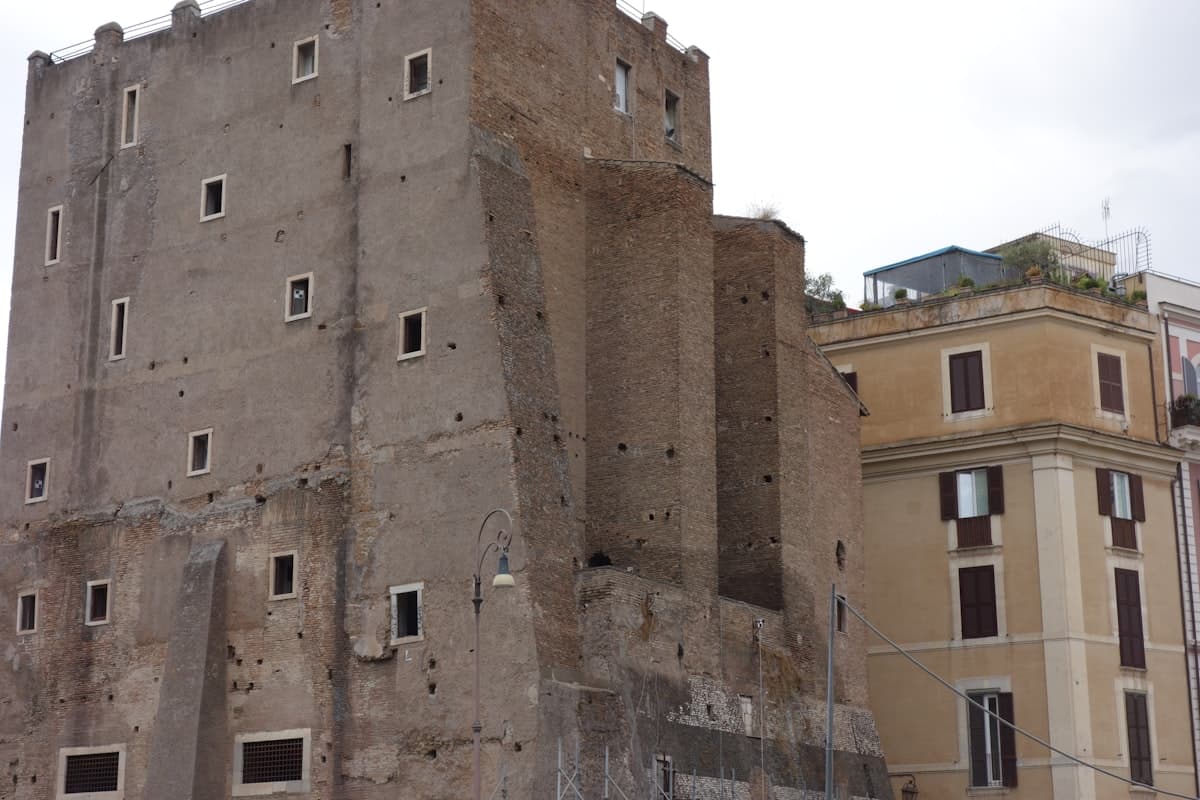
Ben Ezra Synagogue sits inside the Coptic Cairo compound, which is itself built within the walls of the Roman fortress of Babylon, a structure begun under the Emperor Trajan in the first century CE and completed under Diocletian around 300 CE. The fortress walls, which you walk through when you descend from Mar Girgis Metro station, are still largely intact. The Coptic compound was built inside those walls. The synagogue was built inside the Coptic compound. Every layer is still present if you know to look.
The original church on this site was Coptic, dedicated to Saint Michael. According to tradition, the Coptic community sold it to the Jewish community in the 9th century, reportedly for 20,000 dinars, to help pay a tax levied by the Abbasid caliph Ahmad ibn Tulun. The sale itself tells you something about the period: Coptic, Jewish, and Muslim institutions were negotiating practical transactions within a shared urban economy, not operating in sealed communal silos.
The synagogue was rebuilt in its current form in 1892, funded largely by Baron Adolphe de Rothschild of the Paris banking family. What you see today is a 19th-century restoration of a medieval structure on a Roman and Coptic foundation, which makes it a perfect architectural metaphor for Cairo itself. The interior is elaborate: a women's gallery runs along three sides supported by 22 rose granite columns, the woodwork is carved cedar and cypress, and the eastern wall holds an ornate ark for the Torah scrolls, now mostly empty.
The tradition that Moses was found here as an infant, in the bulrushes of the Nile at a spot now marked by a small plaque near the synagogue entrance, has no archaeological basis. It has enormous cultural staying power. Several Egyptian Jewish families maintained this story as a point of local pride for generations. Whether you find it moving or merely interesting probably depends on your relationship to the idea that sacred geography is as much a community's claim as it is a historical fact.
---
The Jewish Community That Actually Lived Here
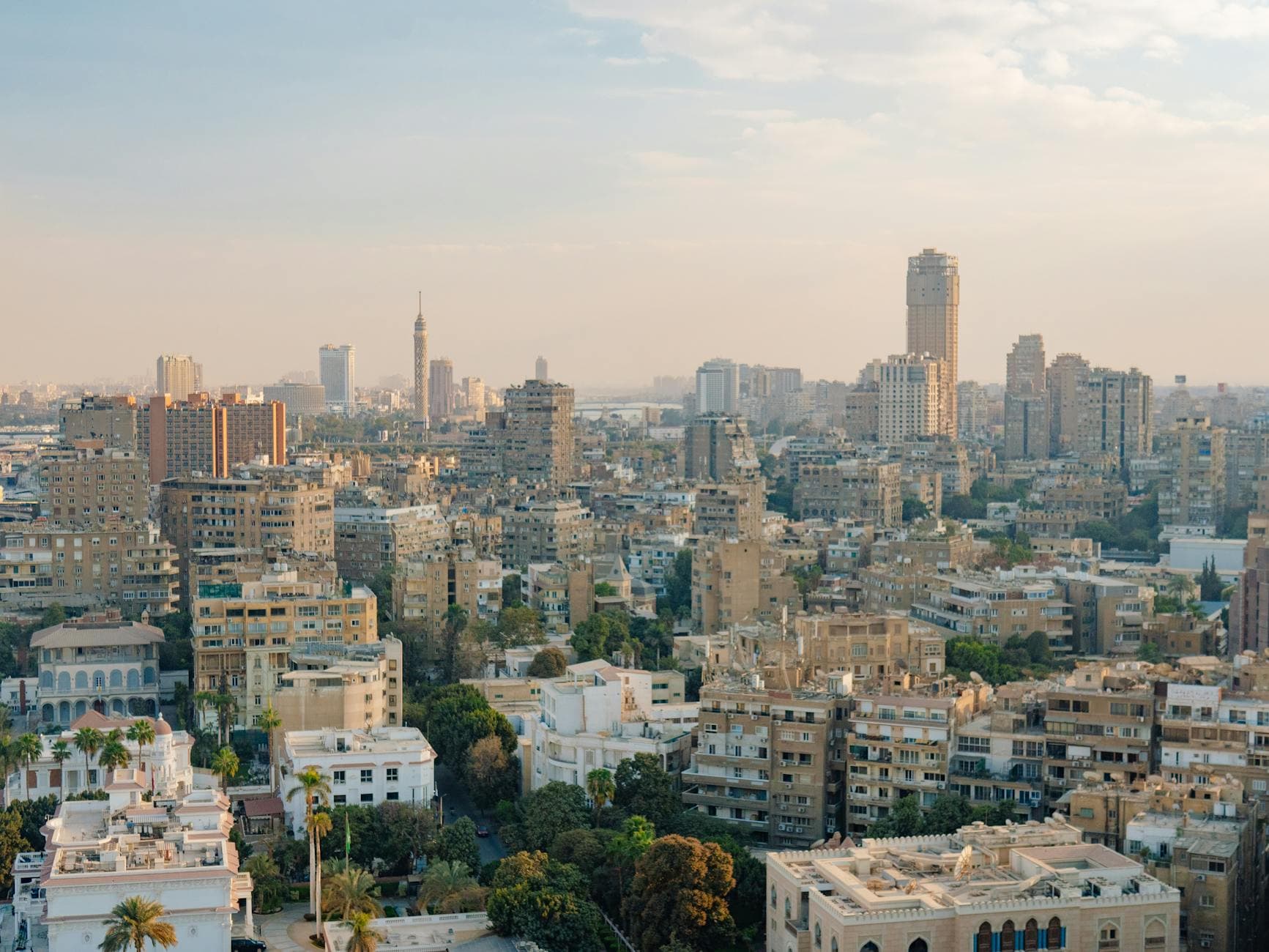
At its peak in the early 20th century, Cairo's Jewish community numbered approximately 80,000 people. They were not a monolithic group. There were Sephardic Jews who had come from Spain after the 1492 expulsion, Romaniote Jews whose presence in Egypt predated the Islamic conquest, Karaite Jews who rejected the Talmud and had their own distinct traditions and synagogues in the nearby neighborhood of Abbasiyya, and Ashkenazi Jews who arrived from Eastern Europe in the 19th and early 20th centuries. Ben Ezra served primarily the Rabbanite community, the mainstream of Talmudic Judaism, as it had since the medieval period.
Fustat, the medieval city whose remains lie directly beneath modern Old Cairo, was home to what the Geniza documents describe as a thriving, cosmopolitan Jewish quarter. Merchants from this community traded across the Mediterranean and into the Indian Ocean, writing letters in Judeo-Arabic (Arabic written in Hebrew script) to business partners in Sicily, Aden, and Mangalore. The Geniza letters reveal figures like Abraham Ben Yiju, a 12th-century Jewish merchant based in India who conducted most of his business in Arabic, employed Muslim and Hindu agents, and maintained a correspondence with his family in Fustat that spanned decades. His letters are in Cambridge now. He lived, effectively, in the city beneath your feet.
The community shrank dramatically after 1948 and again after 1956, when the Suez Crisis led to mass expulsions and departures under pressure. By the 1970s, fewer than a few hundred Jews remained in all of Egypt. Today, the number is estimated at under 20. The synagogue is maintained primarily for tourists and for the small remaining community's use on major holidays. A Jewish Egyptian woman named Carmen Weinstein served as president of the Jewish Community of Cairo for years until her death in 2013. Her successor continued the work of maintaining what the community describes not as a living congregation but as a form of institutional memory.
This is not a sad story requiring your sympathy. It is a history requiring your attention.
---
The Connections: What Surrounds This Place
Leave the synagogue and walk 50 meters to the Church of St. Sergius and Bacchus, also called Abu Serga. The crypt below it is the traditional site where the Holy Family sheltered during the Flight into Egypt. Whether or not you hold that belief, the crypt itself dates to the 4th or 5th century CE and is one of the oldest continuously venerated Christian spaces in Cairo. Walk another 100 meters and you are at the Hanging Church, the Coptic Cathedral of Saint Virgin Mary, whose nave is suspended over two Roman towers of the Babylon fortress. The Roman towers are visible in the floor through glass panels.
From the synagogue, you can also walk 10 minutes to the Mosque of Amr ibn al-As, the first mosque built in Africa, constructed in 641 CE by the Arab general who conquered Egypt from the Byzantines. The mosque has been rebuilt so many times that almost nothing of the original 7th-century structure remains, but its location matters: it was built in Fustat, the new garrison city that Amr founded alongside the existing Roman and Coptic settlement. The Jewish, Coptic, and early Islamic cities were built on top of each other and alongside each other for centuries before Cairo, the Fatimid city, was founded in 969 CE several kilometers to the north.
If you take the Metro one stop north from Mar Girgis to Sadat station, you are at the Egyptian Museum in Tahrir Square. The museum holds ancient Egyptian artifacts; the Coptic Museum 2 kilometers south holds Coptic artifacts; Ben Ezra holds Jewish history; the Mosque of Amr holds Islamic history. The entire sweep of Egyptian civilization exists within a 3-kilometer walk and a single Metro line.
---
Common Mistakes
Arriving without context. Ben Ezra without knowing about the Geniza is just a restored 19th-century synagogue with an interesting ceiling. Read about Solomon Schechter and the Cairo Geniza before you arrive. The Princeton Geniza Lab has free resources online. Twenty minutes of reading transforms the visit.
Spending your time in the main hall and nowhere else. The courtyard outside the synagogue, which connects it to the Church of St. Sergius and Bacchus, contains worn stone markers and architectural fragments that most visitors walk through without stopping. The spatial relationship between the synagogue and the church, both inside a Roman fortress wall, is itself the story.
Booking a guided tour of Coptic Cairo that skips the synagogue. Many standard Coptic Cairo tours, particularly those sold at hotel desks for EGP 400 to 600 per person, focus entirely on the churches and the Coptic Museum and give Ben Ezra five minutes at the end. If Jewish Cairo history is your reason for coming, go independently.
Going on a Friday afternoon. The area around Mar Girgis becomes very crowded after Friday prayers, and traffic near the Corniche makes taxi travel slow and unpleasant. Saturday morning is a better choice for a calm visit.
Paying for the Coptic Cairo sound and light show. It costs EGP 300 per person, runs infrequently, covers only the churches, and contains nothing you will not get from reading a basic history of the area. Skip it completely.
Expecting an active religious community. If you arrive hoping to see the synagogue functioning as a place of worship with a resident congregation, you will be disappointed. It is a preserved historical space. Understanding it as such makes the visit more, not less, meaningful.
Rushing through to get to the Egyptian Museum. The Egyptian Museum is better understood after you have spent time in Old Cairo. Coptic Egypt and Pharaonic Egypt are not separate chapters. They are the same community, converting over time, reusing the same stones.
---
Practical Tips
Dress modestly. The Coptic Cairo compound has multiple active churches, and covering your shoulders and knees is expected throughout, not only inside the synagogue.
Bring cash in small denominations for the Metro and any food purchases nearby. Most of the restaurants and cafes on Amr ibn al-As Street are cash-only and inexpensive.
The area is safe and well-traveled by both Egyptian families and international visitors. The main nuisance is persistent unofficial guides near the Mar Girgis Metro exit who will try to walk you into the compound and charge for narration you did not request. A firm but polite "la shukran" (no thank you) is sufficient.
The Coptic Museum is directly adjacent and should not be skipped. It holds one of the world's great collections of Coptic textile, manuscript, and architectural material, including decorated columns removed from Pharaonic temples and reused as Christian architectural elements. Entry is EGP 200. It is rarely crowded before noon.
Photography inside Ben Ezra Synagogue is generally permitted in the main hall. Asking permission from the staff before photographing the Torah ark area is courteous and usually met with a warm response.
Frequently Asked Questions
The Weekly Dispatch
More on Egypt, every Friday.
Cultural depth and places most guides never mention.
No spam. Unsubscribe anytime.