Jewish Cairo & Ben Ezra Synagogue: The Full Cultural Guide
Moses was supposedly found here, but the synagogue's real secret is older: it held 300,000 medieval documents that rewrote world history.

Quick Facts
- Best time to visit
- October to April for cooler temperatures. Arrive at 9am to beat tour groups that arrive from Nile cruise boats by 11am.
- Entrance fee
- EGP 100 (approximately $3 USD). Cash only, no student discount.
- Opening hours
- Sunday to Thursday, 9am to 4pm. Closed Friday, Saturday, and Jewish holidays. Verify before visiting as restoration closures occur without much notice.
- How to get there
- Metro Line 1 to Mari Girgis station (EGP 8, 5-minute walk to site). Taxi from central Cairo EGP 60 to 100. Uber approximately EGP 55 to 80.
- Time needed
- 45 to 90 minutes for the synagogue alone. 3 to 4 hours combined with Coptic Museum, Hanging Church, and St. Sergius Church.
- Cost range
- EGP 200 to 400 for a half-day in Coptic Cairo including all entrance fees, metro, and coffee.
Quick Facts
Best time to visit: October to April, when Cairo temperatures are tolerable and the light inside the synagogue's clerestory windows is softer.
Entrance fee: EGP 100 (approximately $3 USD). There is no student discount. The price is almost insultingly low for what you get.
Opening hours: Sunday to Thursday, 9am to 4pm. Closed Friday, Saturday, and Jewish holidays. Confirm before going, as closures for restoration work happen without much warning.
How to get there: The synagogue is in the Coptic Cairo (Mari Girgis) area. Take the Cairo Metro Line 1 to Mari Girgis station, about EGP 8 (under $0.30). It is a five-minute walk from the station. Taxi from central Cairo costs EGP 60 to 100 depending on traffic and your negotiating patience. Uber runs about EGP 55 to 80.
Time needed: 45 minutes to 90 minutes for the synagogue alone. Allow 3 to 4 hours to combine it with the Hanging Church, the Coptic Museum, and the Church of St. Sergius next door.
Cost range: EGP 200 to 400 for a half-day in Coptic Cairo including entrance fees, transport, and a coffee.
---
Why This Place Matters
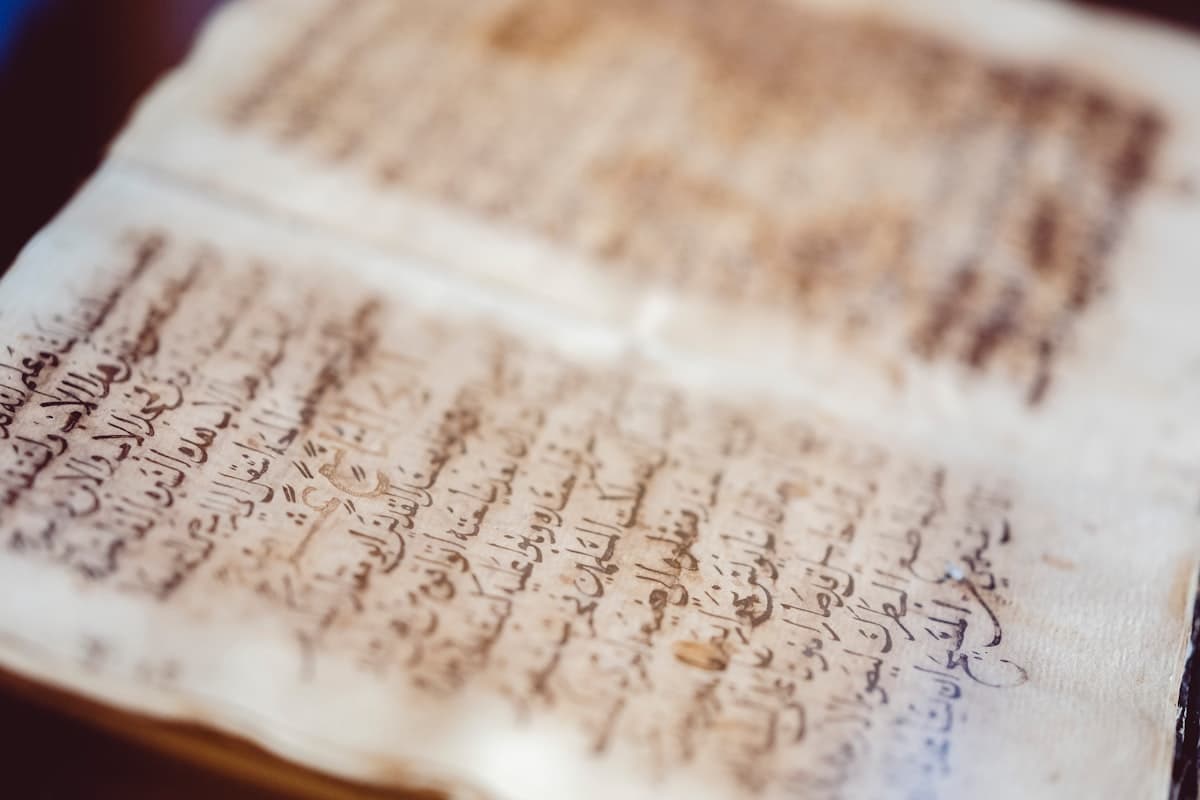
In 1896, a Cambridge scholar named Solomon Schechter climbed into a geniza, a sealed storage room attached to Ben Ezra Synagogue, and found approximately 300,000 manuscript fragments that had been accumulating since the 11th century. Jews do not destroy documents containing the name of God, so every letter, contract, shopping list, marriage certificate, court record, and philosophical treatise written by Cairo's Jewish community for 800 years had been piling up in this room. What Schechter pulled out of that chamber is now split between Cambridge, the Jewish Theological Seminary in New York, and dozens of other institutions. It took scholars more than a century to catalogue it all. The Cairo Geniza, as these documents are collectively known, remains the single most important source for understanding daily life in the medieval Mediterranean world, Jewish, Muslim, and Christian alike.
None of this is mentioned on any sign inside or outside the synagogue.
Ben Ezra sits inside the walled compound of Coptic Cairo, which itself sits on the remains of the Roman fortress of Babylon, which was built around 30 BC to guard a critical crossing point on the Nile. The Jewish history here is correspondingly ancient. Egyptian Jews trace their presence not to the diaspora that followed the destruction of the Second Temple in 70 AD, but to earlier migrations, some voluntary, some not, stretching back to the Babylonian exile and beyond. The community that eventually built and rebuilt Ben Ezra had been in Egypt for well over a thousand years before the mosque of Ibn Tulun went up three kilometers to the north.
The synagogue's name comes from Abraham Ibn Ezra, the 12th-century Spanish Jewish poet and philosopher, who visited Cairo and, according to tradition, helped the congregation raise money for their building. Whether this is historically precise is secondary to what it tells you: this congregation in medieval Cairo had enough international connections that a distinguished Andalusian intellectual passed through, fundraised with them, and left his name on their walls.
---
What You Are Actually Looking At
The building you enter today dates primarily from a 19th-century restoration funded by wealthy Cairene Jews, particularly the Cattaui family, who were among the most prominent figures in Egyptian finance and politics for three generations. The structure beneath that restoration is older, though exactly how old is contested. The most defensible claim is that the current building occupies the site of a Coptic church that the Jewish community purchased in 882 AD, during the Tulunid period, when Cairo as a city did not yet exist and the center of power was a place called al-Fustat.
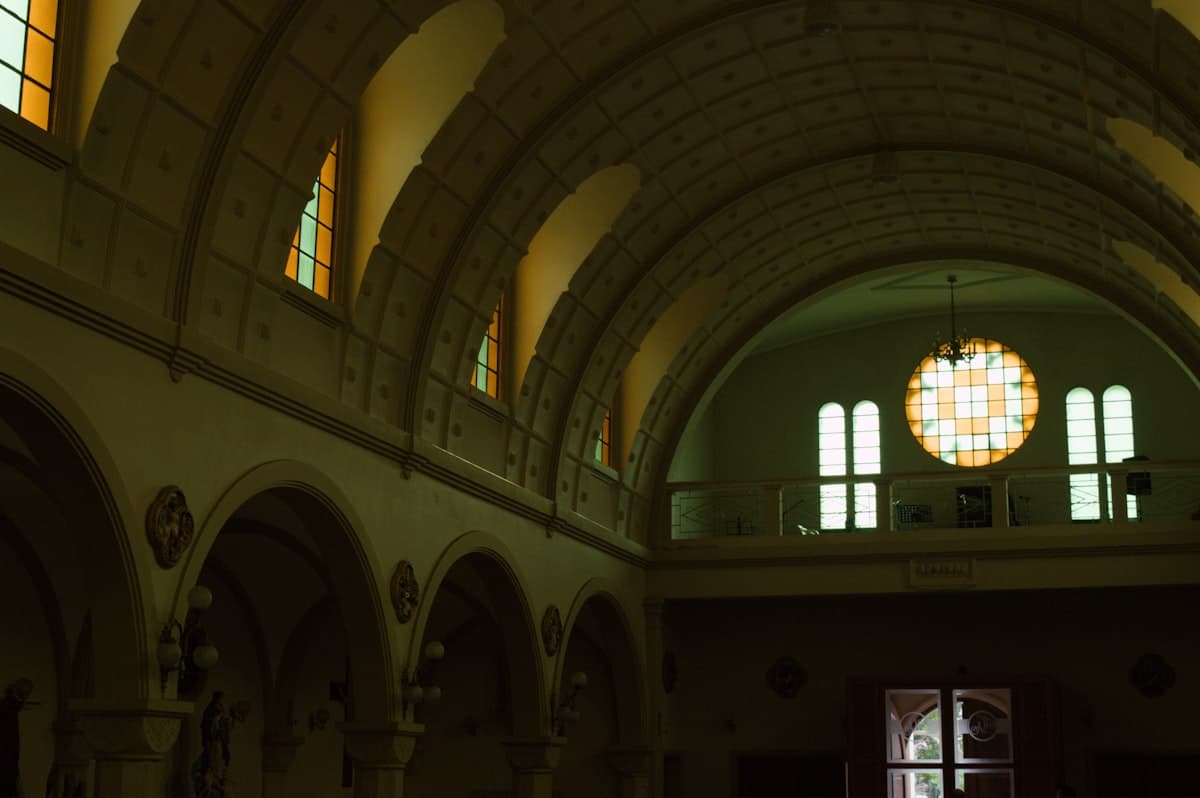
The interior is airy and painted in pale blue and white, with a women's gallery running along three sides above the main floor. The wooden bimah, the raised platform from which the Torah is read, sits in the center. Two Torah arks face Jerusalem. The overall feeling is less ornate than you might expect, which is appropriate: Egyptian synagogue architecture historically borrowed more from Coptic churches and Islamic hypostyle halls than from European models.
The small room near the entrance where the geniza was located is now sealed and unremarkable. You will walk past it without knowing what happened there unless you already know to look for it.
Along the outer wall, near the entrance to the women's gallery stairs, there is a well. The well is there because of a tradition, almost certainly not historical but persistent regardless, that this is the spot where Pharaoh's daughter drew Moses from the Nile. The Nile has shifted significantly in two millennia and this area was once much closer to the riverbank, which is the thin geographic thread that keeps the story alive. The well itself is probably Roman or early Islamic in origin.
---
The Community That Built This

At its peak in the early 20th century, Cairo's Jewish population was around 80,000 people, a community with deep internal divisions: Sephardic Jews who came via Spain and the Ottoman Empire, Ashkenazi Jews who arrived more recently from Eastern Europe, and Rabbanite Egyptian Jews whose families had never left at all. They ran department stores on Qasr el-Nil Street, sat in parliament, founded banks, edited newspapers in Arabic and French, and played significant roles in Egyptian nationalist politics in ways that confuse the later narrative of departure and loss.
Lucie Duff Gordon, the Victorian English writer who lived in Luxor for years and wrote some of the finest descriptions of 19th-century Egyptian life, noted with some surprise that the Jews of Cairo seemed to her more thoroughly Egyptian than anyone else she met, partly because their roots went so much deeper. That observation, from an outsider in 1862, captures something that the later history of emigration tends to obscure.
By 1967, after two Arab-Israeli wars, the Suez Crisis, and the nationalizations of the Nasser era, fewer than 500 Jews remained in Cairo. Today, the number is estimated at under 20, almost all elderly women. Ben Ezra is maintained by the Egyptian government, which is either a touching preservation or a melancholy irony depending on your mood. The community it was built for no longer exists to use it.
There are no regular religious services here. The synagogue functions as a museum and cultural monument, not a living congregation. If you light a candle at the small shrine near the entrance, you are participating in a memorial practice, not a communal religious one.
---
The Connections
Coptic Cairo, the compound that contains Ben Ezra, is one of the densest layering sites in Egypt. You are standing on Roman Babylon, inside an Islamic Cairo that hasn't been called Islamic Cairo for long, visiting a Jewish synagogue next to the oldest Christian church in Egypt, the Hanging Church, which is itself built atop two Roman towers. The Church of St. Sergius and Bacchus, 50 meters from Ben Ezra, marks the spot where the Holy Family is said to have sheltered during their flight into Egypt. Whether you take any of these traditions literally, the fact that this small neighborhood has been theologically important to three separate Abrahamic traditions for two millennia is not nothing.
The Fustat connection matters too. When Amr ibn al-As completed the Arab conquest of Egypt in 641 AD, he established his capital at Fustat, just south of Coptic Cairo. The early Islamic city grew around and among existing Christian and Jewish neighborhoods rather than displacing them. Maimonides, the greatest medieval Jewish philosopher and physician, lived in Fustat from 1168 until his death in 1204. He served as court physician to Saladin's vizier and wrote much of his most important work here, including the Mishneh Torah, the systematic codification of Jewish law that is still studied today. His connection to this neighborhood is documented in the geniza documents themselves.
The proximity of Ben Ezra to the Ibn Tulun Mosque (884 AD) and the Gayer-Anderson Museum directly to its north creates an accidental tour of four different civilizations within a one-kilometer walk: Roman, Jewish, Coptic Christian, and Islamic Mamluk-era. No other city in the world offers this particular sequence at this density.
---
Common Mistakes
Treating Ben Ezra as a fifteen-minute stop. Most tour groups spend less than half an hour here because their guide has already moved on to the Hanging Church. The building rewards slow attention. Stand in the women's gallery and look down at the proportions. Read the dedicatory inscriptions near the arks. This is not a speed site.
Not knowing about the geniza before you arrive. The single most significant thing that happened in this building is not explained inside it. Read about the Cairo Geniza, even a summary, before you walk through the door. S.D. Goitein's work, particularly his six-volume "A Mediterranean Society," is the scholarly standard, but there are accessible popular histories as well. You will see the same building and understand something completely different.
Combining this with the Egyptian Museum on the same day. You will be exhausted and the afternoon light in Coptic Cairo is the better light anyway. Give Coptic Cairo a morning of its own.
Paying for a private guide at the synagogue entrance. The guides who approach you outside are not affiliated with the site and their historical information is frequently garbled, mixing the Moses legend with the geniza story in ways that serve neither. The site is small enough to explore independently.
The sound and light show at the Pyramids the same evening. This is not specific to Ben Ezra but if you are on a compressed Cairo itinerary, know that the Pyramids sound and light show costs EGP 350, runs about 45 minutes, and tells you less about Egyptian history than spending that time with this article. It is spectacular as a light display and hollow as an educational experience. Skip it if you are choosing.
Skipping the Coptic Museum next door. This is the contrarian take in reverse: almost everyone skips it in favor of the churches, and almost everyone is wrong. The Coptic Museum contains 16,000 objects tracing 2,000 years of Egyptian Christian art and culture, including some of the finest Fatimid-era textiles in existence and manuscripts that predate the Arab conquest. Entrance is EGP 200. It takes two hours to do properly and is almost never crowded.
Assuming it will always be open. Ben Ezra has undergone multiple restoration phases and has closed without significant public notice. Check with your hotel or the Egyptian Ministry of Tourism website the day before you plan to visit.
---
Practical Tips
Dress conservatively. This applies to the entire Coptic Cairo compound. Covered shoulders and knees are expected, and the modest dress code is enforced more consistently here than at some Islamic sites.
Arrive when it opens at 9am. By 11am, tour groups arrive from the big Nile cruise boats that dock nearby, and the compound becomes genuinely packed. The early hours are quieter and the light through the eastern windows of the synagogue is the best of the day.
Bring cash. The entrance fee is cash only. The nearest ATM is near the Mari Girgis Metro station.
The compound also contains the Church of Saints Sergius and Bacchus and the Greek Orthodox Church of St. George, both worth seeing. Budget your time accordingly and do not let the synagogue become a rushed prelude to the Hanging Church.
Photography is permitted inside Ben Ezra, but use discretion. This is still a consecrated site and the custodians who maintain it do so with considerable care. Ask before photographing the Torah arks in detail.
If you read Hebrew, look closely at the dedicatory plaques near the entrance. They record the names of donors to the 19th-century restoration, a roll call of a Cairo Jewish upper class that has mostly dispersed to Paris, London, and Tel Aviv. It is one of the stranger ways to encounter diaspora history.
Frequently Asked Questions
The Weekly Dispatch
More on Egypt, every Friday.
Cultural depth and places most guides never mention.
No spam. Unsubscribe anytime.