Jewish Cairo History and the Ben Ezra Synagogue: Full Guide
The Ben Ezra Synagogue was nearly sold for scrap timber in the 19th century. Inside its walls, 300,000 medieval documents rewrote what we know about the ancient world.

Quick Facts
- Best time to visit
- October to April. Cooler temperatures make the walk through Old Cairo comfortable, and the morning light in the synagogue interior is best in winter months.
- Entrance fee
- EGP 100 (approximately $3 USD). Fees are subject to periodic revision by Egyptian heritage authorities.
- Opening hours
- Daily 9am to 4pm. Closed Saturdays and Jewish holidays. Confirm the schedule around Passover, Rosh Hashanah, and Yom Kippur.
- How to get there
- Metro Line 1 to Mar Girgis station (EGP 7 to 10), four-minute walk to the synagogue. Taxi from Downtown Cairo costs EGP 60 to 100.
- Time needed
- One hour for the synagogue alone. Two to three hours combining it with the Coptic Museum and the Hanging Church. A full morning covers all of Old Cairo.
- Cost range
- Budget EGP 300 to 500 for the full Old Cairo circuit including metro, entry fees to the synagogue and Coptic Museum, and a simple lunch nearby.
Quick Facts
Best time to visit: October through April, when the heat is manageable and the light in Old Cairo turns gold by mid-morning.
Entrance fee: EGP 100 (approximately $3 USD) for general admission. Note that fees at Egyptian heritage sites are revised periodically, so confirm at the gate.
Opening hours: Daily 9am to 4pm. The synagogue is closed on Saturdays and Jewish holidays. Arrive before 11am to avoid the cruise-ship groups that flood Old Cairo from mid-morning onward.
How to get there: Take the Cairo Metro to Mar Girgis station (Line 1, EGP 7 to 10 depending on distance). The synagogue is a four-minute walk from the station. Taxis from Downtown Cairo cost roughly EGP 60 to 100. Avoid the tourist shuttles that charge five times this.
Time needed: One hour for the synagogue alone. Two to three hours if you combine it with the Coptic Museum next door, the Hanging Church, and the Roman Towers of Babylon. A full morning covers all of Old Cairo comfortably.
Cost range: Budget EGP 300 to 500 for the full Old Cairo circuit including transport and entry fees.
---
Someone tried to buy the Ben Ezra Synagogue for its timber. In 1889, the Coptic community that had been using the building as a church offered it back to Cairo's Jewish community for 3,600 gold sovereigns. The Jewish community paid. When they began restoration work and pried open a storage room in the women's gallery that had been sealed for centuries, they found paper. Hundreds of thousands of sheets of paper. Medieval correspondence, court documents, marriage contracts, shopping lists, business ledgers, biblical manuscripts, and poems. The oldest fragments dated to the ninth century. The collection, now known as the Cairo Geniza, would eventually end up distributed across institutions in Cambridge, New York, Philadelphia, and Budapest, and it would fundamentally reshape scholarship on medieval Mediterranean trade, Jewish law, daily life in Fatimid Egypt, and the social history of the Islamic world. The Ben Ezra Synagogue did not make history once. It made it continuously for a thousand years, and most visitors walk through it in twenty minutes.
Why This Place Matters
The Jewish presence in Egypt is not a footnote to the more familiar Pharaonic and Islamic narratives. It is woven through every period. Jewish communities settled in Egypt following the Babylonian conquest of Jerusalem in 586 BCE. By the time Alexandria was founded in 331 BCE, Egypt had one of the largest Jewish populations outside Judea, perhaps constituting a fifth of Alexandria's total population at its peak. The Septuagint, the Greek translation of the Hebrew Bible that would eventually shape both Christian and Islamic textual traditions, was produced in Alexandria in the third century BCE.
Fustat, the first Islamic capital of Egypt, founded in 641 CE after the Arab conquest, absorbed this existing Jewish community. The Ben Ezra Synagogue stands in what was Fustat, and the site itself carries earlier layers: tradition holds that it marks the place where the infant Moses was drawn from the Nile, a claim shared by several sites across Egypt and not verifiable, but meaningful as an index of how deeply Jewish memory was rooted here. What is historically documented is that a church stood on this site before the synagogue, that it was sold by the Coptic Patriarch Abraham to the Jewish community around 882 CE to help pay a tax imposed by the Abbasid governor Ahmad ibn Tulun, and that the structure has been rebuilt at least twice since then.
The synagogue you see today dates primarily from the late nineteenth century restoration, paid for largely by Jacob Cattaui, a prominent member of Cairo's Sephardic Jewish banking aristocracy. But its bones are medieval.
What You Will See: The Interior and What It Hides
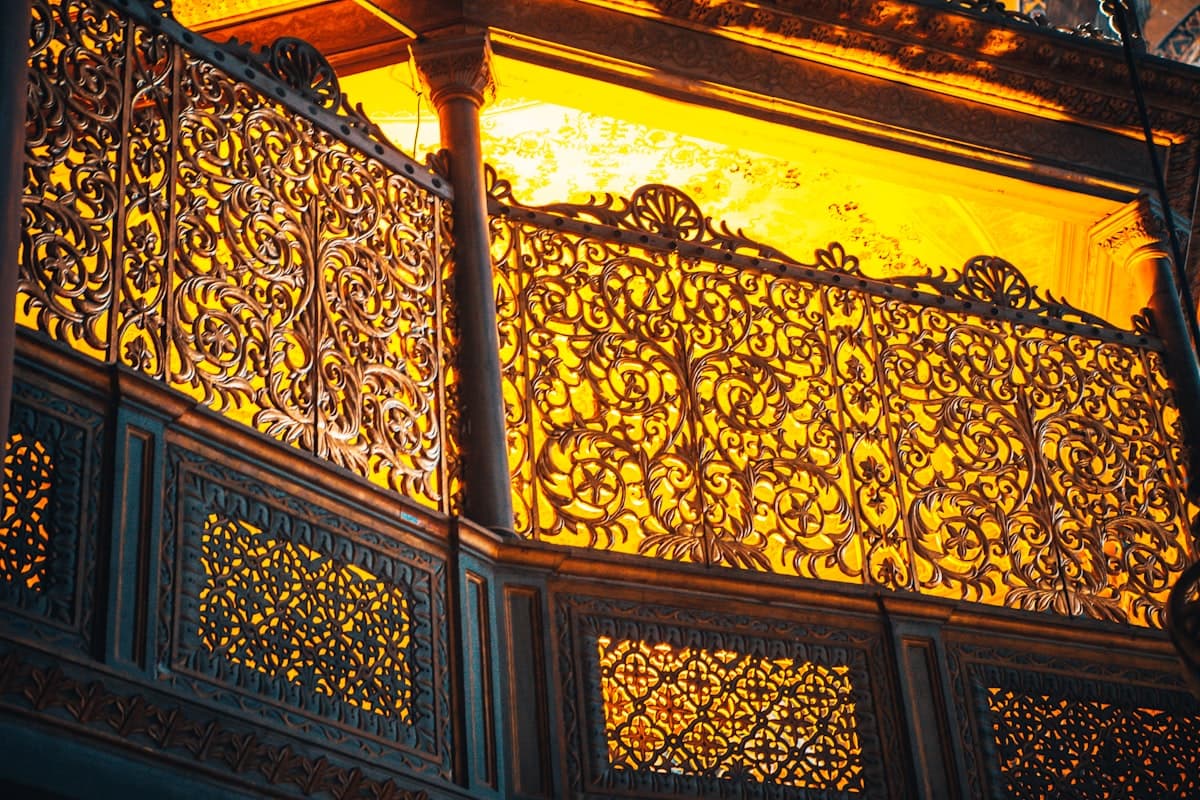
The building follows the Sephardic plan: a rectangular hall with two tiers of wooden galleries on the upper level, originally designed so women could observe services from above without being visible to the congregation below. The woodwork, particularly the carved screens and the ark housing the Torah scrolls, is where your attention should go. The central bimah, the raised platform from which the Torah is read, sits in the middle of the hall rather than at the front, a layout that reflects medieval Sephardic tradition and distinguishes the building architecturally from most contemporary synagogues.
The restoration completed in the 1980s under Egyptian Jewish philanthropist Shehata Haroun was thorough enough to make the space feel somewhat sterile. The stone is clean, the wood polished, the atmosphere respectful but slightly inert. This is the honest version: the building is more significant than it is atmospheric. You are not going to feel the medieval Cairo Geniza in the room as it stands now. What you feel instead is the weight of absence. Cairo's Jewish community numbered around 80,000 in 1948. By 1979, following decades of nationalizations, the 1956 Suez Crisis, the 1967 war, and sustained emigration, fewer than 200 Jews remained in Egypt. Today the figure is in the dozens, nearly all of them elderly. The synagogue is maintained by the Egyptian government and staffed by non-Jewish employees who can answer basic questions about the space.
Ask the staff about the small room near the entrance, sometimes pointed out, sometimes not. It is here, or in a room adjacent to it depending on which account you read, that the Geniza documents were found packed to the ceiling.
The Cairo Geniza: 300,000 Documents That Changed Everything
A geniza is a storage room for worn or damaged sacred texts. Jewish law prohibits the destruction of documents containing the name of God, so communities stored them until they could be given a proper burial. The Ben Ezra Geniza was unusual in that it was never buried. The documents simply accumulated over centuries, and the sealed room protected them from moisture and insects in ways that open archives rarely manage.
The scholar who recognized their significance was Solomon Schechter, a Romanian-born Cambridge academic who traveled to Cairo in 1896 and negotiated to bring approximately 193,000 fragments back to Cambridge, where they are now held at the Cambridge University Library. Other collectors and dealers had already removed portions; today the Geniza fragments are distributed across more than 60 institutions worldwide.
What the documents revealed was a functioning society in extraordinary detail. A letter from a Tunisian merchant complaining about a dishonest business partner in India. Marriage contracts specifying the exact household goods a bride was to receive. Medical prescriptions. A checklist for a traveler packing for a journey from Fustat to Palermo. Letters written in Judeo-Arabic, Hebrew, Aramaic, and occasionally Arabic script. The Geniza gave historians a ground-level view of medieval trade across the Indian Ocean and Mediterranean that no official chronicle had preserved. The historian Shlomo Goitein spent thirty years analyzing the documents and published a five-volume study, A Mediterranean Society, that remains a landmark of medieval social history.
None of this is explained inside the synagogue itself. There is a small display panel. It is inadequate. Read before you go.
The Connections: Old Cairo as a Layered City
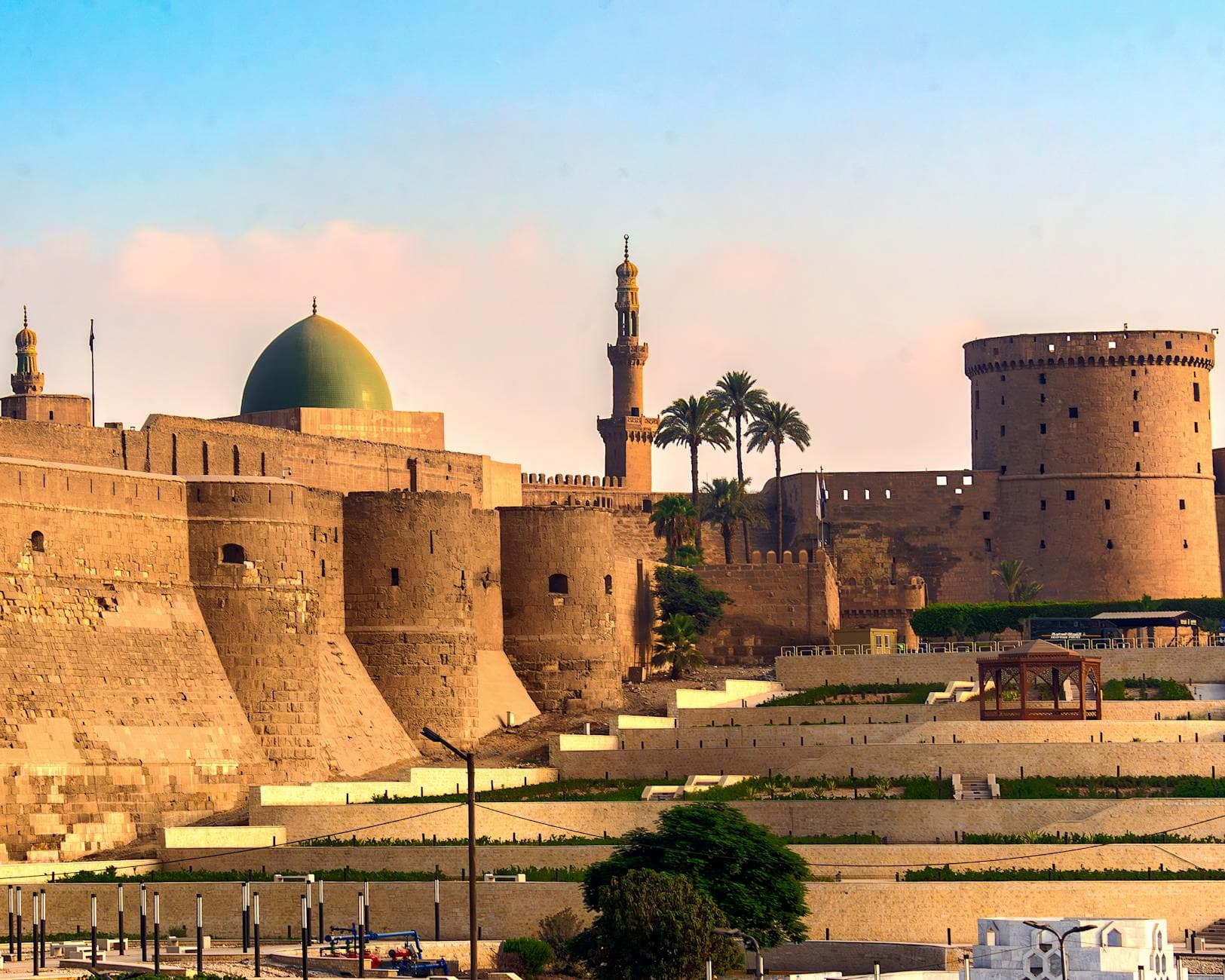
The Ben Ezra Synagogue sits inside a compound that also contains the Coptic Museum, the Hanging Church (al-Muallaqah), the Church of Saints Sergius and Bacchus (Abu Serga), and the remains of the Roman Fortress of Babylon. This is not coincidence. The fortress, built by the Emperor Diocletian around 300 CE and expanded by the Emperor Trajan earlier, was the administrative and military anchor of Roman Egypt in this region. The Coptic churches and the synagogue all grew up in its shadow, using its walls for protection and occasionally for building material.
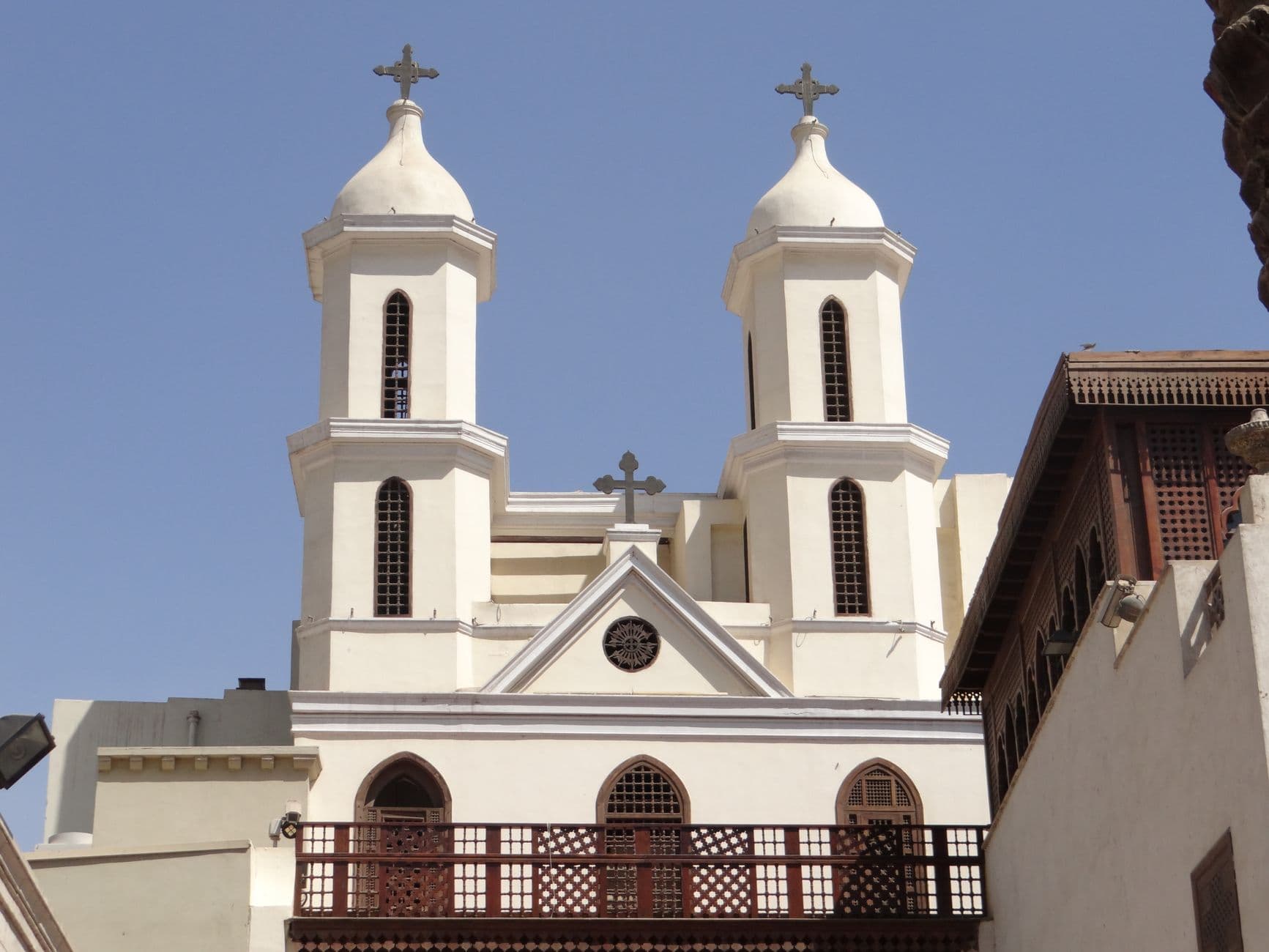
The Hanging Church gets its name from the fact that it is suspended above the southern gatehouse of the Babylon fortress. Abu Serga, a few minutes' walk from Ben Ezra, sits over a crypt where Coptic tradition says the Holy Family sheltered during their flight into Egypt. Whether or not you find this credible, the fact that Jewish, Coptic Christian, and later Muslim communities all settled in the same compact area and maintained their institutions in close proximity for over a millennium is itself a historical argument worth making in physical space.
The Islamic layer is right outside: Fustat was the precursor to what became Cairo, and the Amr ibn al-As Mosque, the first mosque built in Africa, stands less than a kilometer away. It was founded in 642 CE and has been rebuilt and expanded many times since, but its location has never moved. The Ben Ezra community and the first Muslim community in Egypt were neighbors.
Common Mistakes
Skipping the Coptic Museum next door. It holds the world's largest collection of Coptic art and houses the Nag Hammadi codices, early Gnostic texts found in Upper Egypt in 1945 that include the Gospel of Thomas. Entry is EGP 200. It takes ninety minutes to do properly. The combination of the museum and the synagogue gives you a layered picture of minority religious life in Egypt across two thousand years that no other site in Cairo can match.
Coming on a Saturday or without checking the holiday calendar. The synagogue is closed on the Jewish Sabbath and major Jewish holidays. This is listed on most travel sites but people ignore it anyway and find the gates shut. Confirm before you go.
Assuming the staff can give you historical depth. The employees managing the site are cordial and professional, but they are not historians of Jewish Cairo. Hire a specialist guide in advance or, at minimum, read a solid account of the Geniza before arriving. The on-site interpretation is minimal.
The horse-and-carriage ride through Old Cairo. Operators near Mar Girgis station offer these for EGP 150 to 300. They are slow, the horses are visibly overworked, and you will see nothing you cannot walk to in fifteen minutes on your own. Skip it.
Rushing to the Citadel afterward. Old Cairo and the Citadel are sold as a natural pairing, but they are forty minutes apart by taxi in traffic, belong to completely different historical periods, and each demands real attention. Trying to do both in an afternoon means doing neither well. Pick one per day.
Buying the Geniza-related books sold outside. The vendors near the gate sell photocopied pamphlets on the Geniza for EGP 50 to 100. They are superficial. Goitein's work is the standard, or Mark Cohen's edited volumes on the Geniza world. Both are available from academic libraries and online.
Expecting a living community. This one is worth saying directly: the Ben Ezra Synagogue is not a functioning house of worship in any regular sense. It is a preserved monument. There are no services for visitors to observe, no community events open to the public, no rabbi in residence. The absence is the point. Understanding why the community is gone, and at what speed it disappeared, is as important as any architectural detail in the building.
Practical Tips
Dress conservatively. Shoulders and knees should be covered for both men and women, as is standard at all religious sites in Egypt. A scarf in your bag is worth carrying throughout Old Cairo.
Bring cash in Egyptian pounds. The ticket office does not reliably accept cards. The nearest ATM is at the metro station.
Photography is permitted inside the synagogue, though staff occasionally ask you not to photograph certain areas near the Torah ark. Ask before raising your camera.
The best light in the interior comes from the upper clerestory windows in the late morning, roughly between 10am and noon. If you are trying to photograph the woodwork, this is your window.
Old Cairo is walkable and safe. The streets between the metro and the synagogue are narrow, well-signed, and lined with Coptic craft shops that are worth a slow look. The area is less chaotic than Khan el-Khalili and genuinely pleasant on foot.
For specialist guides covering Jewish Cairo specifically, contact the Cairo Egyptian Jewish community organization or ask your accommodation to recommend an Egyptologist with knowledge of the period. The going rate for a private specialist guide in Cairo is EGP 800 to 1,500 for a half-day, and for this particular site it is worth every pound.
Frequently Asked Questions
The Weekly Dispatch
More on Egypt, every Friday.
Cultural depth and places most guides never mention.
No spam. Unsubscribe anytime.