Jewish Cairo & the Ben Ezra Synagogue: A Complete Guide
Moses was supposedly hidden here as a baby. The world's most important medieval Jewish archive was found in its attic. Most visitors spend 20 minutes. That is not enough.

Quick Facts
- Best time to visit
- October to March for cool temperatures. Early morning on weekdays for smallest crowds.
- Entrance fee
- EGP 100 (approx $2 USD) covers the Coptic Cairo compound including Ben Ezra. Coptic Museum separate at EGP 200 (approx $4 USD) for foreigners.
- Opening hours
- Daily 9am to 4pm. Closed on certain Jewish holidays. Confirm before visiting.
- How to get there
- Metro Line 1 to Mar Girgis, EGP 7. Uber from central Cairo EGP 60 to 100. Taxi EGP 60 to 80.
- Time needed
- 45 minutes for synagogue alone. 3 to 4 hours combining with Coptic Museum and Hanging Church.
- Cost range
- Budget half-day EGP 300 to 500 including transport and entry. Mid-range with lunch EGP 800 to 1,200.
The Ben Ezra Synagogue sold itself to the Copts for 20,000 dinars in 882 CE, then the Jewish community bought it back. That transaction alone tells you more about medieval Cairo than most guidebooks manage in a hundred pages. This is a building that has been a synagogue, almost a church, a site of Biblical legend, and the accidental home of one of the greatest archival discoveries in human history. It sits in the Coptic quarter of Cairo, surrounded by churches, built over a Roman fortress, on soil that once lay at the edge of the ancient world's most important city. Nothing about it is simple.
Quick Facts
Best time to visit: October through March, when the Coptic Cairo neighbourhood is bearable on foot. Early morning, before 9am, gives you the space to actually look.
Entrance fee: EGP 100 per person (approx $2 USD) for the Coptic Cairo area, which includes access to the synagogue and surrounding churches. No separate ticket for Ben Ezra.
Opening hours: Daily 9am to 4pm. Closed during Jewish holidays. Confirm current closures before visiting as restoration work occasionally restricts interior access.
How to get there: Take the Cairo Metro Line 1 to Mar Girgis station, which deposits you directly at the entrance to Coptic Cairo. Fare is EGP 7 (under $0.25 USD). Uber from central Cairo (Zamalek, Downtown) runs EGP 60 to 100 depending on traffic. Taxis should be under EGP 80 if metered, though negotiating in advance is still common.
Time needed: 45 minutes for the synagogue alone, 3 to 4 hours if you combine it with the Coptic Museum, the Hanging Church, and the Church of St. Sergius. Do the combination. They are 50 metres apart.
Cost range: Budget day in this area: EGP 300 to 500 including transport, food, and entry. Mid-range, with a sit-down lunch in Old Cairo: EGP 800 to 1,200.
---
Why This Place Matters
Jews have lived in Egypt since at least the 6th century BCE, when a military colony of Jewish mercenaries settled on Elephantine Island near Aswan under Persian rule and built a temple there. By the time Alexander the Great founded Alexandria in 331 BCE, Jewish Egyptians were already several centuries deep into the country. The Ben Ezra Synagogue sits on land that the Jewish community has occupied in some form since the period of the early Christian church, and possibly before.
The building you see today dates largely from the 12th century CE, reconstructed under the patronage of Abraham Ben Ezra, a Jerusalem rabbi whose name the synagogue now carries. But underneath it runs a far longer story. The Romans built the fortress of Babylon on this site, and the walls of that fortress are still visible at the base of the neighbourhood's streets. The Coptic community settled inside and around the fortress after Rome Christianised in the 4th century. The Jewish community occupied a section of the same enclave. These were not separate worlds: they were neighbours sharing Roman infrastructure in a city that would later become the capital of an Islamic empire.
When the Arab conquest of Egypt arrived in 641 CE, the new administration did not displace these communities. It taxed them, regulated them, and in some periods persecuted them, but Jewish and Coptic life in this enclave continued with remarkable continuity across the entire medieval Islamic period. The synagogue's 882 CE sale to the Copts, and subsequent repurchase, was a commercial transaction between neighbours in a shared neighbourhood, not an act of forced displacement. That context matters.
---
The Cairo Geniza: The Accidental Archive
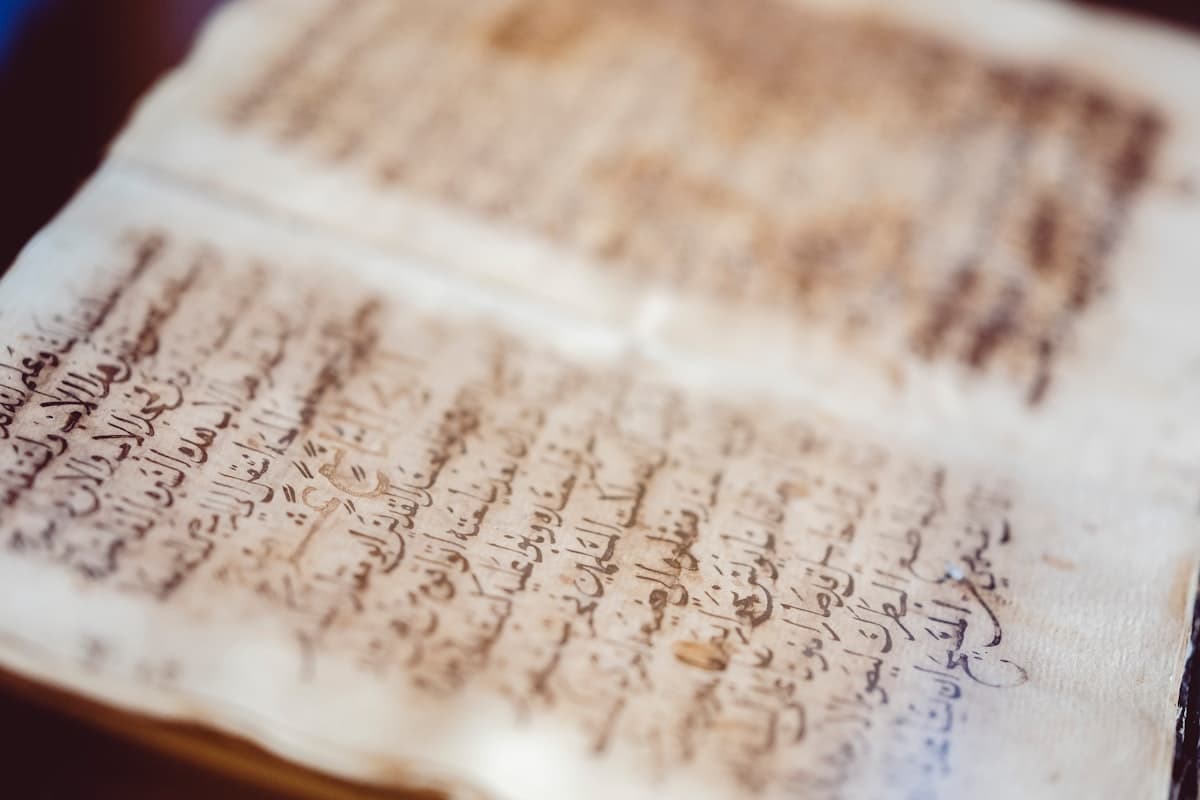
In 1896, two Scottish sisters, Agnes Lewis and Margaret Gibson, brought fragments of old manuscript to Solomon Schechter, a Cambridge academic and rabbi. He recognised what they had and travelled to Cairo. In the attic storage room of Ben Ezra, the synagogue's geniza, he found approximately 300,000 fragments of manuscript, spanning roughly 800 years of Jewish life in Cairo and the Mediterranean world.
A geniza is a storage room for documents that contain the name of God. Jewish law prohibits destroying such documents, so communities accumulated them in sealed rooms until they could be buried. The Cairo Geniza had not been properly cleared since the 11th century, meaning it preserved 300,000 fragments of medieval Jewish life in near-perfect condition: letters, contracts, marriage documents, medical prescriptions, shopping lists, poetry, biblical commentary, trade records, and personal correspondence across the Mediterranean, India trade routes, and the Jewish diaspora.
Schechter removed the collection to Cambridge in 1896. Today most of it lives at Cambridge University Library, with significant portions at the Jewish Theological Seminary in New York, the Bodleian in Oxford, and dozens of other institutions. The geniza room itself is small, plain, and usually overlooked by visitors who spend their time in the main sanctuary below. Look for it on the upper level. It does not look like the birthplace of one of the most important archival discoveries of the 19th century. That is the point.
The Geniza documents revealed, among many other things, that medieval Jewish merchants operated trade networks between Egypt and India as early as the 10th century, with Cairo as the hub. The documents also showed that medieval Jewish women in Cairo could own property, initiate divorce proceedings, and litigate in court, which complicated several earlier historical assumptions considerably.
---
What You Will Actually See
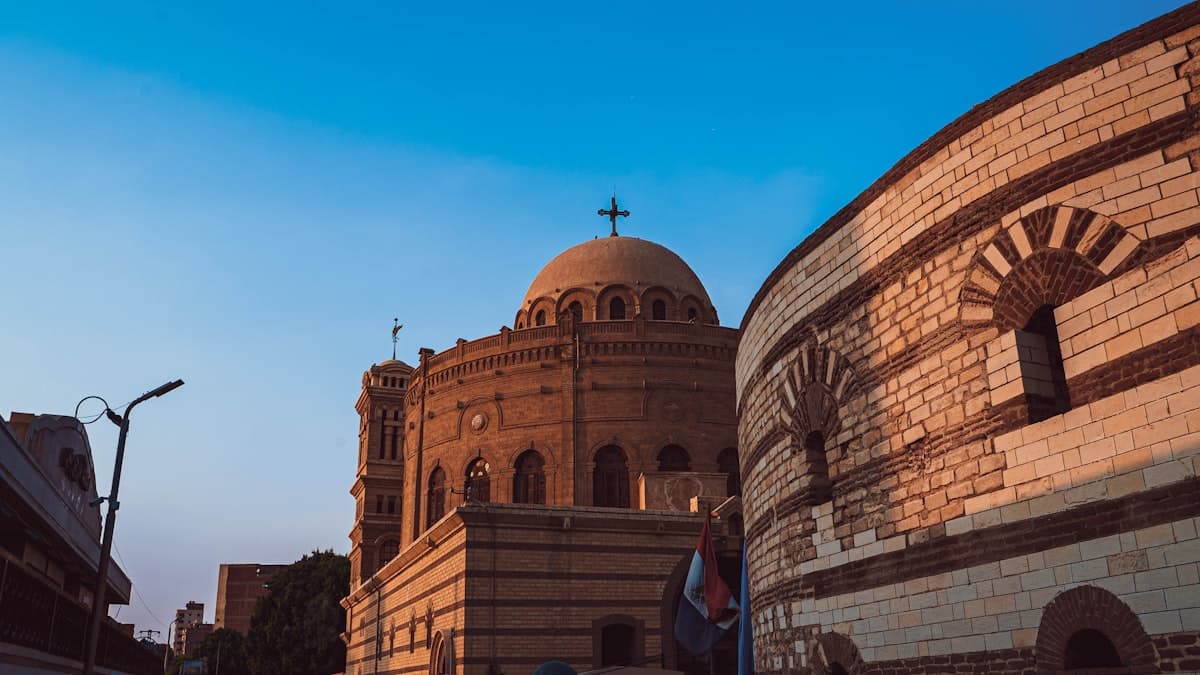
The building is not large. It is a basilica-plan synagogue, rebuilt in the 12th century and restored several times since, most recently in the 1980s and again in the early 2000s. The restoration is careful and the interior is genuine: the carved wooden ark, the raised bimah from which the Torah is read, and the women's gallery above are all authentic elements, not reconstruction for tourism.
The columns inside are ancient, removed from earlier structures and reused here, which was standard medieval practice across Cairo regardless of faith. The Hanging Church 50 metres away did the same thing. The Ibn Tulun Mosque, built in 879 CE, has a minaret that deliberately copies the design of a Pharaonic structure. Architectural recycling is not laziness in Cairo. It is a theological statement about continuity.
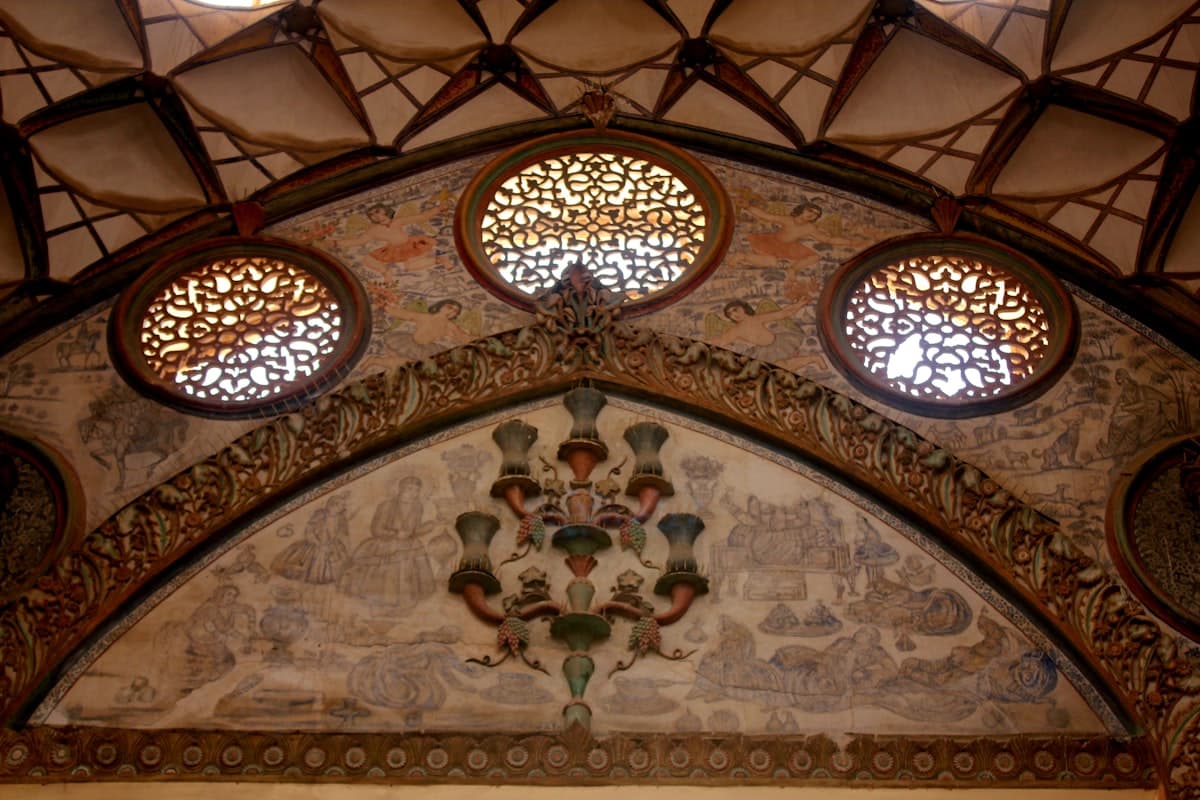
Look at the Hebrew inscriptions on the walls and the carved wooden screens. The craftsmanship is Fatimid in style, meaning it was produced by Muslim Egyptian woodworkers during the Fatimid Caliphate period for a Jewish patron. Religious identity and artistic tradition did not always map neatly onto each other in medieval Cairo. The same workshops produced decorative woodwork for mosques, churches, and synagogues.
There is a courtyard beside the main building, with a well. Local tradition holds that this is the site where Pharaoh's daughter found the infant Moses in the Nile. The Nile was considerably closer to this spot 3,000 years ago, but the tradition is late and unverifiable. Do not come here for the Moses story. Come here for the real history, which is more interesting.
---
The Connections: Coptic Cairo as a Layered Map
You cannot understand Ben Ezra without walking the rest of Coptic Cairo, because the neighbourhood is itself the argument. The Babylon Fortress wall, built by the Romans around 300 CE, frames the entire enclave. The Coptic Museum, opened in 1910, holds the world's largest collection of Coptic Christian art. The Hanging Church, formal name the Saint Virgin Mary's Coptic Orthodox Church, was built inside the Roman gatehouse and sits suspended over the towers. The Church of St. Sergius and Bacchus is built over a crypt where tradition holds that the Holy Family sheltered during their flight to Egypt.
These traditions are not historical claims in the modern evidentiary sense. They are community memory made physical, which is a different thing and worth treating seriously on its own terms. What is historically documented is that Jewish, Coptic Christian, and later Muslim communities occupied this small enclave continuously for over 1,400 years, sharing Roman walls, arguing over buildings, buying and selling property to each other, and producing art in shared visual languages.
The area immediately outside Coptic Cairo is Old Cairo, or Masr al-Qadima, a predominantly working-class Muslim neighbourhood that grew around the medieval port on the Nile. The amr ibn al-As Mosque, the first mosque built in Africa, stands about 500 metres from Ben Ezra. It was founded in 642 CE, one year after the Arab conquest. The oldest minaret in Cairo is a few minutes' walk. The neighbourhood is continuous history compressed into a very small radius.
---
Common Mistakes
Coming only for the synagogue. The Ben Ezra Synagogue makes sense as part of a half-day in Coptic Cairo, not as a standalone visit. The Coptic Museum next door contains Pharaonic, Roman, Coptic, and Islamic objects in a single building, which is the physical argument for Egyptian civilizational continuity. Skipping it because you think of it as a Christian museum is a mistake.
Spending your time in the main sanctuary and ignoring the upper level. The geniza room is on the upper floor. Most visitors do not find it or do not know to look. The room where 300,000 medieval manuscripts sat for 800 years deserves more than a glance from the ground floor.
Visiting on a Friday. The surrounding neighbourhood becomes very busy with Friday prayers at the nearby mosques, and transport into the area is harder in the early afternoon. Saturday morning is quieter.
Taking the organised tour from central Cairo. Most group tours allocate 20 to 30 minutes at Ben Ezra, which is enough to see that it exists but not enough to read anything, look at the woodwork properly, or find the geniza room. Come independently via the Metro. It is faster, cheaper, and leaves you in control of your own time.
Expecting the Nile to look like it did. Visitors sometimes stand at the courtyard well and struggle to imagine the river nearby. Cairo's Nile channel shifted significantly over the medieval period. In the 7th century CE, the Nile ran approximately where the street now runs. The geography of the visit requires historical imagination.
Skipping the Coptic Museum because of queue anxiety. The museum rarely has long queues. It is one of the least crowded significant museums in Cairo relative to what it contains. Entry is EGP 200 (approx $4 USD) for foreigners. This is not a high price for 1,600 years of Christian Egyptian art.
Buying the sound and light commentary audio guide available at the Coptic Cairo entrance. It is generic, poorly recorded, and tells you almost nothing about Ben Ezra specifically. Read before you arrive. The work pays off here in a way it does not at sites where visual spectacle carries the experience.
---
Practical Tips
Dress modestly. This is standard advice for all of Coptic Cairo and is genuinely enforced at the synagogue entrance, both for religious respect and because you will be moving between a synagogue, churches, and a neighbourhood where the majority of residents are Muslim. Shoulders and knees covered is the baseline.
Bring a small torch or use your phone light in the upper level of the synagogue. The geniza room and the women's gallery can be dark and the artificial lighting is uneven.
Photography is generally permitted in the synagogue but ask at the entrance before shooting. Rules have changed after restoration work and can vary by day.
The neighbourhood around Coptic Cairo is safe and genuinely worth walking slowly. The streets between Mar Girgis metro station and the fortress entrance have small shops selling Coptic icons, pottery, and papyrus. The quality varies dramatically. If you want a Coptic icon as a serious object rather than a souvenir, the shops inside the enclave itself tend to carry better work.
A small number of licensed guides specialise in Jewish Cairo history and the Geniza specifically. They are worth finding if you want depth. Ask your hotel to contact the Egyptian Tourism Authority for registered guides, or contact the Ben Ezra synagogue administration directly by email before your visit. A specialist guide makes this a three-hour experience rather than a thirty-minute one.
Combine this visit with the Ibn Tulun Mosque and the Gayer-Anderson Museum in the same day. They are a short taxi ride from Coptic Cairo (EGP 30 to 50) and together the three sites make an argument about Cairo's layered identity that no single site can make alone.
Frequently Asked Questions
The Weekly Dispatch
More on Egypt, every Friday.
Cultural depth and places most guides never mention.
No spam. Unsubscribe anytime.