Nubian Villages Aswan: A Cultural Guide to the Living South
The Nubian villages near Aswan are not a relic. They are a civilization that outlasted every empire that tried to erase it. Here is how to actually understand them.
Quick Facts
- Best time to visit
- October to February. Aswan winters keep temperatures below 30°C, the light is sharp and warm in the afternoons, and the villages are walkable without heat risk.
- Entrance fee
- Villages: free. Nubian Museum: EGP 200 adults (approx $4 USD), EGP 100 students. Elephantine Island archaeological site: EGP 180 (approx $3.50 USD). Some family home visits: EGP 30 to 50.
- Opening hours
- Villages have no formal hours; best visited 8am to 4pm. Nubian Museum: daily 9am to 5pm. Elephantine Island site: daily 8am to 4pm.
- How to get there
- Shared motorboat from Aswan Corniche to Gharb Soheil: EGP 50 to 80 per person. Private boat hire: EGP 200 to 300. Public ferry to Elephantine Island: EGP 5. Organized half-day cultural tours from Aswan hotels: EGP 400 to 700 per person including boat and guide.
- Time needed
- Half day for Gharb Soheil alone. Full day for Gharb Soheil plus Elephantine Island. Add 90 minutes for the Nubian Museum, ideally visited first.
- Cost range
- Budget EGP 300 to 600 per day self-organized with public ferries and village tea houses. Mid-range EGP 1,200 to 2,000 per day with guided tour and family home lunch.
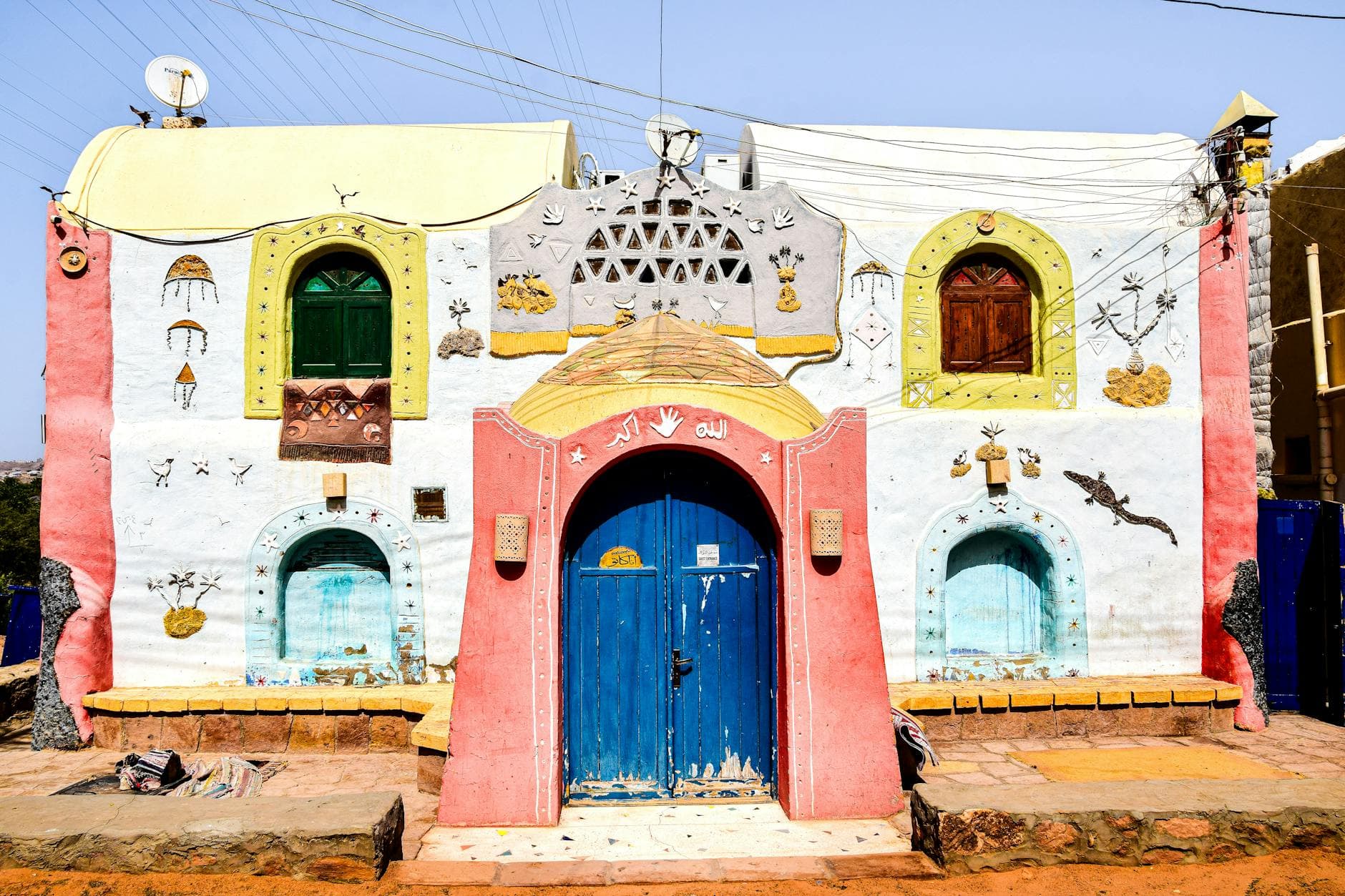
The crocodiles painted above the doorways are not decorative. In Nubian villages along the west bank of Aswan, a crocodile painted on a house front signals that a Nile crocodile was once kept inside as a living guardian, fed raw meat and river fish. The practice is largely gone, but the symbol remains, layered over turquoise and saffron facades, watching you as you arrive by motorboat with absolutely no idea what you are looking at. That is where this guide begins.
Quick Facts
Best time to visit: October through February, when Aswan temperatures stay below 30°C and the light on the west bank turns the painted houses gold by late afternoon.
How to get there: From the Aswan public ferry dock at the Corniche, a felucca or motorboat to Gharb Soheil, the most accessible Nubian village, costs roughly EGP 50 to 80 per person for a shared crossing, or EGP 200 to 300 to hire a boat privately. Taxis to the north tip of Elephantine Island and the nearby village of Siou can be arranged through your hotel; factor EGP 150 to 250 for a half-day hire. Organized cultural tours from Aswan hotels run EGP 400 to 700 per person and typically include a guide, lunch, and boat transfer.
Entrance fees: The villages themselves have no entrance fee. The Nubian Museum in Aswan city, which provides essential context for any village visit, charges EGP 200 (approximately $4 USD) for adults and EGP 100 for students. Some village homes that function as informal guesthouses or henna studios charge EGP 30 to 50 for entry or demonstrations.
Opening hours: Village life has no posted hours, but the productive window for visitors is 8am to 4pm. Arrive before 10am if you want to walk through without crowds.
Time needed: Half a day for Gharb Soheil alone. A full day if you combine it with Elephantine Island and the Nubian Museum in the evening.
Cost range: Budget EGP 300 to 600 per day if you self-organize with public ferries and eat at village tea houses. Mid-range EGP 1,200 to 2,000 per day with a guided cultural tour and a meal in a family home.
Why This Place Matters
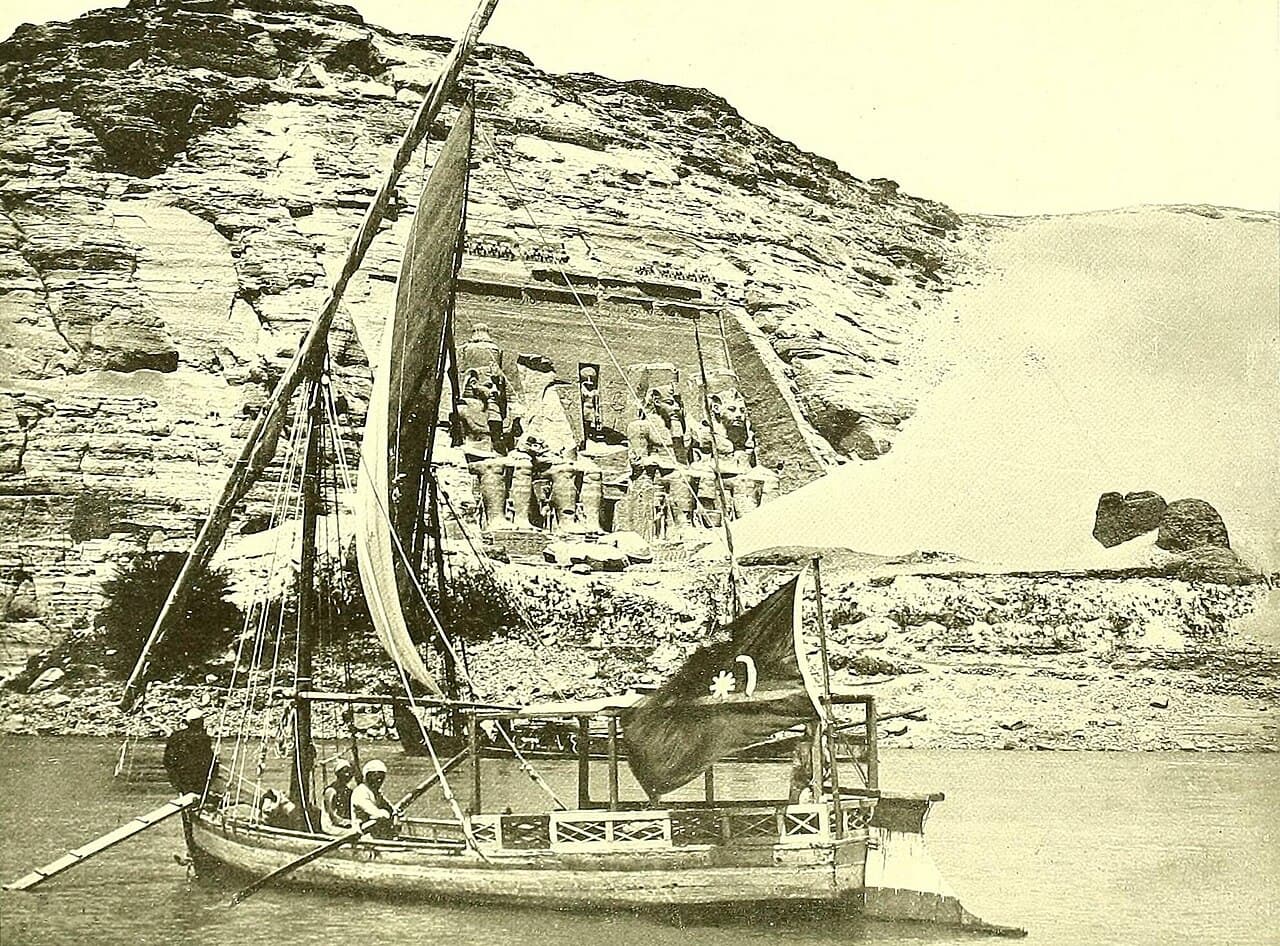
Most visitors to Aswan arrive knowing that Nubia was flooded. They know the name Nasser, and they have seen the Abu Simbel photographs. What they do not know is the scale of what was erased, or the specific cruelty of how it was done.
Between 1960 and 1970, the construction of the Aswan High Dam displaced approximately 100,000 Nubian people. Egyptian Nubians were moved north, primarily to the area around Kom Ombo, into houses built by the state on desert land far from the river. Sudanese Nubians were relocated to Khashm el-Girba in eastern Sudan, where the agricultural land was unsuitable and the Atbara River bore no resemblance to the Nile they had known for millennia. Around 40 Nubian villages vanished entirely under Lake Nasser's rising water. Entire cemeteries, churches, mosques, temples, and the mud-brick archives of a continuous civilization were submerged.
The Nubian villages that survive near Aswan today, particularly Gharb Soheil and the communities on and around Elephantine Island, are not the original villages. They are reconstituted communities, rebuilt by people who returned despite official discouragement, or who never fully left. The painted houses are an act of cultural insistence. The language, Nobiin and Kenzi, still spoken by elders and increasingly taught to children in informal settings, is an act of defiance. This is not a heritage performance. It is an ongoing argument about the right to exist as a distinct people within a nation-state that once told them, politely but clearly, that their homeland was worth less than a hydroelectric dam.
What makes this more complicated, and more interesting, is that Nubia's history with displacement did not begin with Nasser. The British-built Aswan Low Dam, raised twice between 1902 and 1933, flooded Nubian lands incrementally for decades before the High Dam finished the job. Philae Temple, which you can visit by boat from Aswan, was itself partially submerged during those earlier floods before it was relocated to Agilkia Island in the 1970s. The Nubians were already living with a flooded history long before the postcard images of Abu Simbel were shot.
What You Will Actually See in Gharb Soheil
Gharb Soheil sits on the west bank of the Nile south of Aswan, about 7 kilometers from the city center. The boat ride takes roughly 20 minutes from the Aswan Corniche, crossing through felucca traffic and past the granite outcroppings that made this stretch of river the ancient world's primary source of obelisk stone. The quarries are visible from the water.
The village architecture is immediately disorienting if you have spent any time in Cairo or Luxor. The colors are specific: cobalt blue, terracotta orange, pale green, yellow that reads almost white in the midday sun. The pigments are not purely decorative. Blue was traditionally associated with protection against the evil eye across the Nile Valley, a thread running from ancient Egyptian lapis lazuli symbolism through Islamic folk practice and into Nubian village life without interruption. The crocodile motifs, as mentioned, carry their own weight. Fish, palm trees, and geometric patterns derived from the textiles for which the region was historically known also appear.
Inside the village, the lanes are narrow and the houses built around courtyard structures that moderate the heat more effectively than anything you will find in a modern Egyptian apartment block. Women sell woven baskets, beaded jewelry, and textiles. The quality varies considerably. Some items are made locally; others are brought in from Cairo suppliers who have identified a market. The honest way to tell the difference is to ask who made a specific piece, and watch what happens to the answer.
The tea houses serve karkadeh, dried hibiscus steeped in cold water, the taste of which you will associate with Aswan for years afterward. It is not performative. Nubians have drunk it for centuries. Doum palm fruit drinks are also available, slightly sweet and starchy, from a palm that grows throughout Upper Egypt and into Sudan.
The Family Home Experience
Several families in Gharb Soheil and in the village communities on Elephantine Island open their homes to visitors. This is not, as the organized tours sometimes frame it, a cultural show. It is an economic arrangement that has allowed some families to stay in or return to the region by generating income from tourism. Treat it accordingly: arrive on time, do not photograph people without asking, do not refuse the tea without a reason, and consider purchasing something directly from the family rather than from the vendor cluster at the boat landing.
If you speak any Arabic, even basic phrases, you will get considerably more from these encounters. Nubian Arabic has its own cadences and particular vocabulary; older community members may have limited formal Arabic if they received their schooling primarily in Nubian-language contexts before relocation. Younger people are largely bilingual.
Elephantine Island: Where the Time Gets Complicated

Elephantine Island, sitting in the Nile opposite the Aswan Corniche, contains one of the more disorienting archaeological layering situations in Egypt. A Nubian village, Siou on the northern tip and Khunou on the southern, shares the island with pharaonic temples, a nilometer used continuously from antiquity through the medieval Islamic period, ruins of a Jewish temple from the 5th century BCE (one of only two known temples to Yahweh outside Jerusalem, both in Egypt), Greco-Roman remains, and a modern luxury hotel.
The Nubian community on Elephantine was partially displaced during the island's archaeological development and the construction of the Sofitel Legend Old Cataract hotel complex nearby. The remaining village is small, the streets hand-painted, and the residents in an ongoing negotiation with the Egyptian Tourism Ministry, the Supreme Council of Antiquities, and the commercial interests that treat Aswan as primarily a gateway to Abu Simbel.
The Aswan Museum on Elephantine Island, housed in a former colonial villa, displays artifacts from the island's excavations. The entrance is included in the archaeological site ticket, approximately EGP 180 for adults. It is worth two hours of anyone's time.
The Connections
The Nubian villages near Aswan sit at the intersection of at least five distinct historical civilizations, none of which treated Nubia as peripheral. Kerma, the earliest major Nubian kingdom, was trading with and fighting Egypt from at least 2500 BCE. The Napatan kings of the 25th Dynasty, known as the Kushite pharaohs, ruled all of Egypt for roughly a century and built more pyramids than any Egyptian dynasty, most of them now standing in Sudan. The Meroitic civilization that followed developed its own script, still only partially deciphered, and maintained Nile trade networks well into the Roman period.
The Coptic Christian community reached Nubia before the 6th century CE, and Nubia remained predominantly Christian for several centuries after Egypt itself had converted to Islam. The last Nubian Christian kingdom, Makuria, did not fall until the 14th century. This means that the grandparents of the Islamic Nubian communities that were displaced by the High Dam were themselves the grandchildren of communities that had only converted to Islam within the previous five to seven centuries. The paint on those houses in Gharb Soheil covers a very long argument about identity.
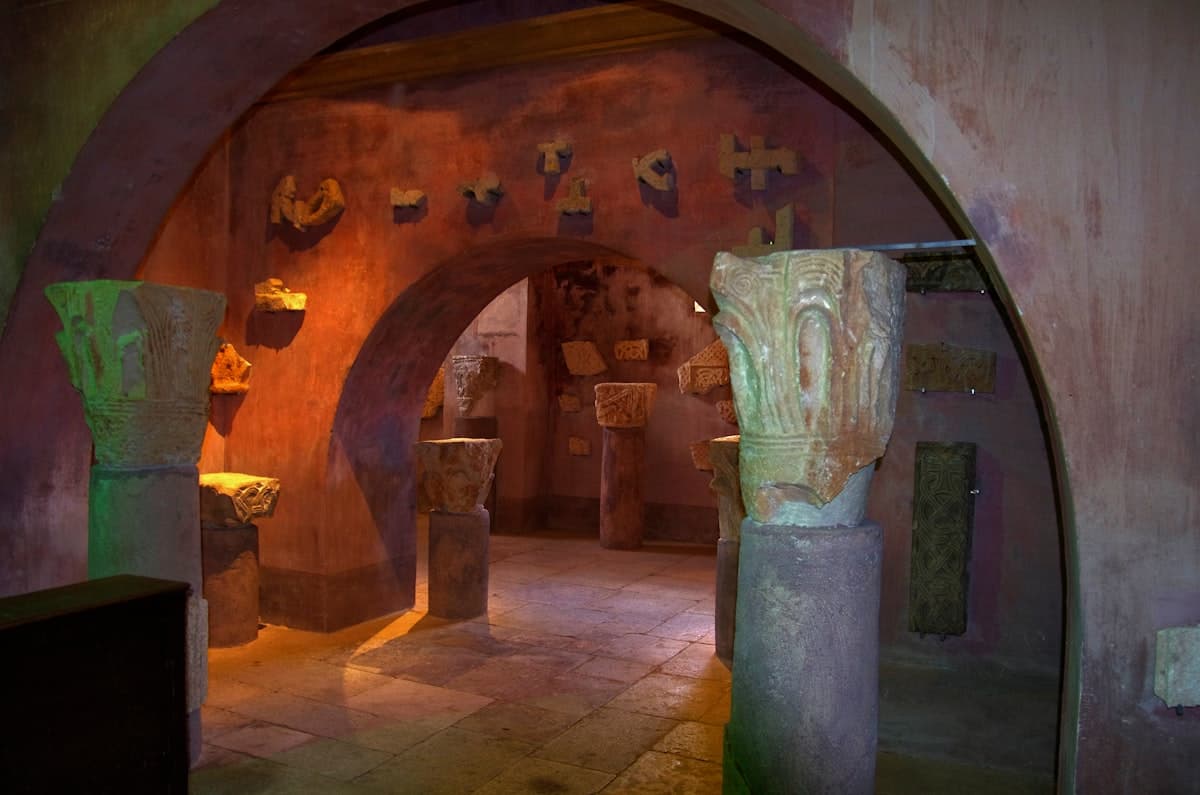
The Nubian Museum in Aswan city, opened in 1997 with UNESCO support partly in acknowledgment of what the dam destroyed, draws this entire arc in one building. Do not skip it.
Common Mistakes
Arriving without context. The villages make little sense without some understanding of the displacement history. Spend an hour in the Nubian Museum before you go, not after.
Taking a group tour that schedules 45 minutes in a village. This is enough time to buy a bracelet and photograph a painted wall. It is not enough time to have a real encounter. If your tour allocates less than two hours in the village, you are on a photo tour, not a cultural one.
Visiting only Gharb Soheil. It is the most organized and the most touristically developed, which means it is also the least representative of quotidian Nubian life. The smaller communities on Elephantine and north of Aswan near Sehel Island offer different textures. Sehel Island also contains over 250 ancient rock inscriptions, including records of Nubian traders and Egyptian officials from 3,000 years of river commerce.
Assuming the crocodile houses are a performance. They are not, and treating them as staged Orientalism will close down every conversation you might otherwise have had.
Bargaining aggressively. This is not a Khan el-Khalili souvenir stall. These are people selling handicrafts in the village where they live. The margins are not what you think they are.
Coming in July or August. Aswan in summer is genuinely harsh, with temperatures regularly exceeding 43°C. The village experience relies on walking, sitting outside, and being present. None of that is comfortable or safe in peak summer heat.
Conflating Nubian culture with Upper Egyptian culture. They are neighbors with centuries of exchange, but they are distinct. The language, the architecture, the food traditions, and the historical trajectory are different. Treating Gharb Soheil as an extension of Luxor tourism does a specific kind of damage to your understanding of both places.
Practical Tips
The most culturally substantive guides to the Nubian villages near Aswan are Nubian people themselves. Several community members in Gharb Soheil operate as independent guides, charging EGP 200 to 400 for a two to three hour walk. Ask at the village entry or through guesthouses in Aswan; the Mövenpick and the Basma Hotel both have staff who can make introductions. Avoid booking only through hotel tour desks, which typically route you to commercial operators with little community connection.
If you want to eat in a family home, arrange it in advance through your guide or guesthouse. A Nubian home-cooked lunch, typically including fried Nile perch or tilapia, okra stew, rice with lentils, fresh bread, and karkadeh, costs roughly EGP 150 to 250 per person and is worth significantly more than the advertised Nubian restaurant experiences in Aswan city.
Wear clothes that cover your shoulders and knees. The villages are not conservative in a severe way, but the respect signaled by modest dress opens doors.
Bring cash. There are no ATMs in Gharb Soheil and very few on Elephantine Island.
The light on the west bank villages is best between 4pm and 6pm, when the sun drops toward the Western Desert and every painted surface intensifies. If your schedule allows, time your return boat for after sunset. The Nile at that hour, with the Aswan city lights beginning across the water and the feluccas still running, is one of the things that will actually stay with you.
Frequently Asked Questions
The Weekly Dispatch
More on Egypt, every Friday.
Cultural depth and places most guides never mention.
No spam. Unsubscribe anytime.