Nuweiba Sinai Travel Guide: What Nobody Tells You
Plan your trip with this Nuweiba Sinai travel guide: real prices, ferry schedules, best camps, snorkeling spots, and the mistakes that ruin first visits.
Audio Guide: Nuweiba Sinai Travel Guide: What Nobody Tells You
Quick Facts
- Best time to visit
- October to April. March and November are optimal for swimming and hiking without extreme heat.
- Entrance fee
- No beach entrance fees. Colored Canyon trip 600 to 900 EGP per person (approx $12 to $18 USD) including guide and transport. Camp huts 300 to 600 EGP per night ($6 to $12 USD).
- Opening hours
- Town operates all day. Ferry terminal opens from approximately 9am with departures typically mid-morning. Colored Canyon best visited 7am to 10am.
- How to get there
- From Cairo: East Delta Bus 300 to 400 EGP ($6 to $8 USD), 7 to 8 hours. From Dahab: microbus 80 to 120 EGP ($1.60 to $2.40 USD), 90 minutes. From Sharm el-Sheikh: microbus or taxi 500 to 700 EGP ($10 to $14 USD), 3 hours.
- Time needed
- 2 nights minimum. 3 to 4 nights to include Colored Canyon, snorkeling, and a mountain dinner.
- Cost range
- Budget 400 to 700 EGP per day ($8 to $14 USD). Mid-range 1,500 to 2,500 EGP per day ($30 to $50 USD) including private room, restaurant meals, and one guided excursion.
Nuweiba Sinai Travel Guide: What Nobody Tells You
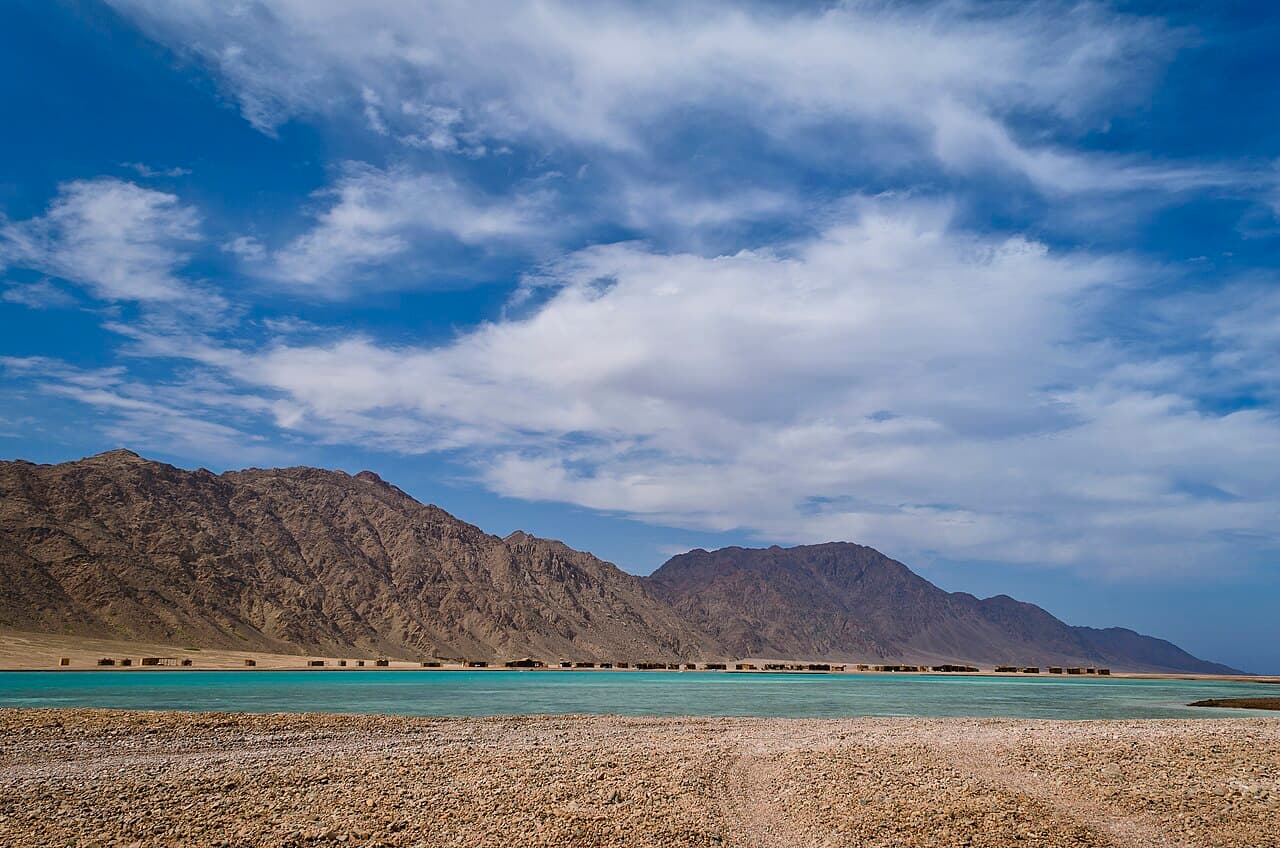
At four in the morning, the Gulf of Aqaba goes absolutely flat. The water turns the color of dark glass and the Saudi mountains across the water glow faintly pink before the sun has even committed to rising. You will not see this from the lobby of a Sharm el-Sheikh resort. You will see it from a palm-mat bed on the beach at Nuweiba, with sand between your toes and the smell of low tide drifting in from the reef. That specific combination of remoteness and accessibility is exactly what makes Nuweiba worth the effort of getting there.
Nuweiba sits about 90 kilometers north of Dahab on the Sinai's eastern coast, pressed between the Sinai mountains and the Gulf of Aqaba. It is not a polished destination. The main port town has crumbling concrete shopfronts, a supermarket with unreliable stock, and a taxi scene that will test your negotiating patience. But Nuweiba also has Tarabin, the low-key beach strip to the north where Bedouin camps charge 300 to 600 EGP (roughly $6 to $12 USD) per night for a hut or a mat, and Muzaina, a quieter Bedouin settlement further along. The reef running along the shore is largely undamaged. The Colored Canyon day trip from here takes you through sandstone formations that look nothing like anything else in Egypt. And the ferry to Aqaba, Jordan makes Nuweiba a genuine junction point for overland travelers moving between Africa and the Levant.
Quick Facts
Best time to visit: October through April. Summer temperatures regularly exceed 40°C and the humidity from the water makes it genuinely unpleasant. March and November are ideal: warm enough for swimming, cool enough for hiking. Entrance fees: There are no entrance fees to access Nuweiba's beaches or Tarabin. The Colored Canyon trip costs approximately 600 to 900 EGP ($12 to $18 USD) per person including transport, negotiated directly with Bedouin guides or through your camp. St. Catherine's Monastery (a common day trip) charges 150 EGP (approx $3 USD). Opening hours: Nuweiba operates as a town, not a site. The ferry terminal opens from around 9am but schedules shift constantly. Camps receive guests all day. Colored Canyon hikes depart best between 7am and 9am. How to get there: By bus from Cairo's Turgoman or Sinai Terminal, East Delta Bus Co. runs daily services taking approximately 7 to 8 hours, costing around 300 to 400 EGP ($6 to $8 USD). From Dahab, microbuses run for about 80 to 120 EGP ($1.60 to $2.40 USD) and take 90 minutes. From Sharm el-Sheikh, expect 3 hours by microbus or private taxi costing 500 to 700 EGP ($10 to $14 USD). Time needed: Two nights minimum to feel the rhythm of the place. Three to four nights if you plan Colored Canyon, a snorkeling day, and a Bedouin dinner in the mountains. Cost range: Budget 400 to 700 EGP per day ($8 to $14 USD). Mid-range with a private room, meals at a restaurant, and a guided trip: 1,500 to 2,500 EGP ($30 to $50 USD) per day.
The Two Nuweibas: Port and Tarabin
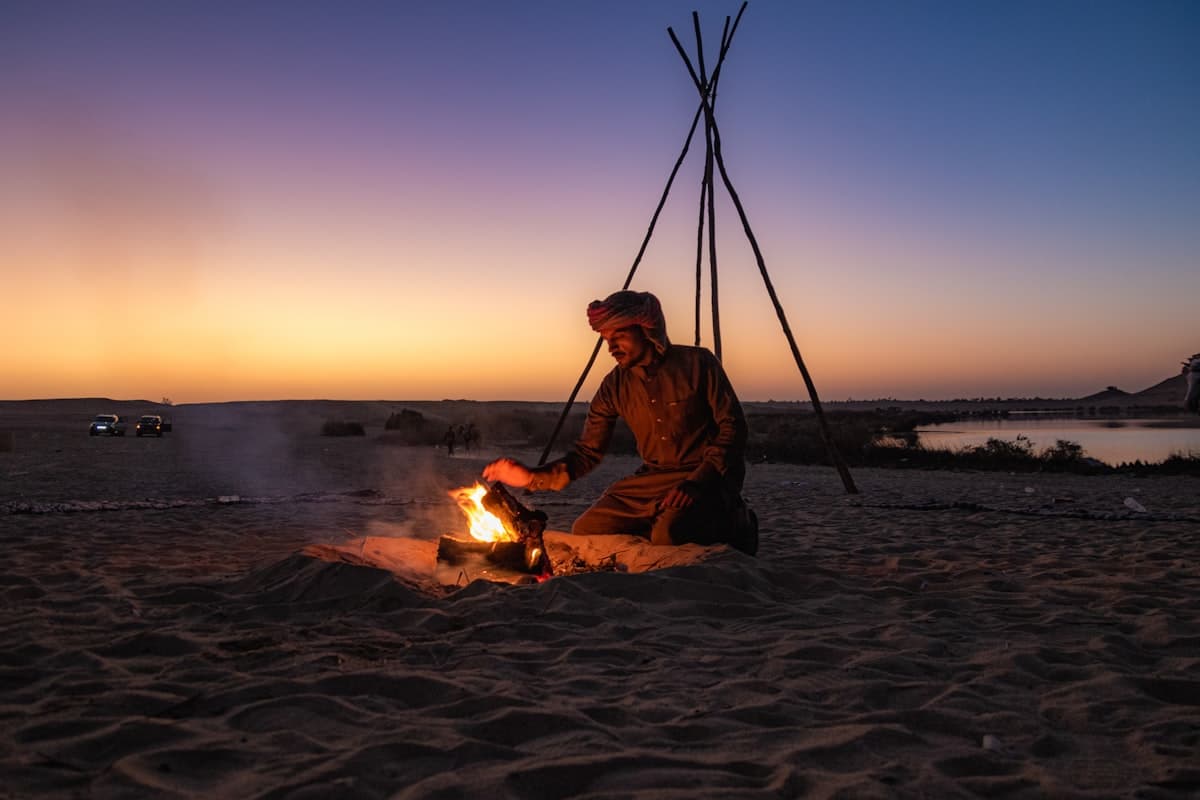
First-time visitors sometimes arrive at the port area, look around at the scruffy concrete, and wonder what they got wrong. Nothing. You just need to move north.
The port district (called Nuweiba City locally) handles the ferry traffic and has the bus depot, a few functional hotels, and the large Hilton Nuweiba Coral Resort, which is perfectly comfortable if you want air conditioning and a pool but will disconnect you entirely from the Sinai you came for. ATMs cluster near the port. The Banque Misr branch here is more reliably stocked than the one near Tarabin.
Tarabin, about 4 kilometers north of the port, is where most independent travelers end up and where the Nuweiba Sinai travel guide conversation actually gets interesting. The beach here stretches for several kilometers under a row of palm-mat and bamboo camps. Habiba Camp and Dr. Shishini are two camps with good reputations for cleanliness and fair pricing. A basic hut runs 300 to 500 EGP ($6 to $10 USD). Meals at the camp kitchens typically cost 80 to 150 EGP ($1.60 to $3 USD) for grilled fish, koshary, or foil-baked vegetables. The snorkeling directly off the Tarabin beach is genuinely good: the coral starts shallow and you can spot parrotfish, sergeant majors, and the occasional octopus without renting a boat.
Colored Canyon: The Logistics No One Explains
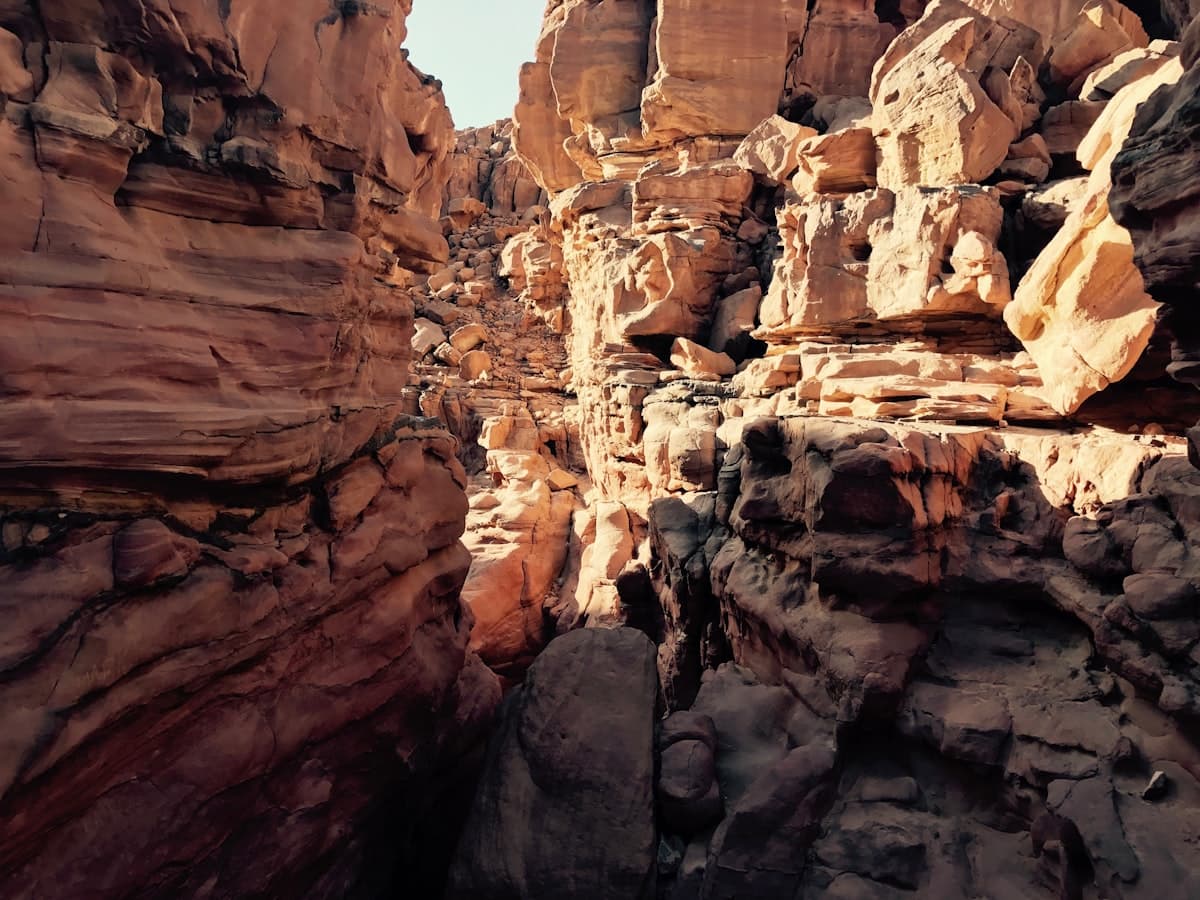
The Colored Canyon is a sandstone slot canyon about 14 kilometers west of Nuweiba, carved by ancient flash floods into layers of pink, orange, red, and purple. The colors are most saturated in the hour after sunrise and the hour before sunset. Any camp in Tarabin can arrange a trip; the going rate for a shared 4WD with a Bedouin guide is 600 to 900 EGP per person depending on group size, sometimes dropping to 500 EGP if you assemble your own group of four or more.
The hike itself takes between 90 minutes and 3 hours depending on pace and how far you continue past the main canyon into the secondary wash. Wear closed shoes. In the narrowest sections you squeeze through sideways and occasionally scramble over boulders. The canyon floor can be wet after rain and becomes genuinely dangerous during flash flood season (July and August). Go in the morning to avoid both midday heat and tour groups from Sharm.
Your guide matters here. A good Bedouin guide will tell you the Nabataean history of the trade routes through this rock, point out fossil shells embedded in the sandstone, and take you to a secondary viewpoint that tour groups miss entirely. An indifferent guide will walk ahead of you and check his phone. Ask your camp specifically for Mohamed Awad Hamdan from the Muzaina tribe, or ask them who they personally recommend. The Bedouin community in this area is tightly networked and quality guides are known by name.
The Ferry to Aqaba
Nuweiba is one of only two crossing points between Egypt and Jordan (the other being Taba, for the Wadi Araba crossing by land). The AB Maritime fast ferry does the crossing in about 60 to 75 minutes; the slow ferry takes 3 to 4 hours. In practice, schedules are suggestions more than commitments. Ferries have been known to leave 90 minutes late or 30 minutes early.
Fast ferry tickets cost approximately $65 USD for economy class, payable in dollars, euros, or Jordanian dinars at the terminal. Egyptian pounds are not accepted for ferry tickets. Jordan visa on arrival at Aqaba port costs 40 Jordanian dinars (approx $56 USD) unless you enter Jordan as part of the Jordan Pass, in which case the visa is included. Bring more cash than you think you need: the ATM at the Nuweiba ferry terminal runs out frequently.
Arrive at the terminal at least 2 hours before your scheduled departure. Egyptian exit taxes and the port processing are slow, and the queue for the manifest stamp is unpredictable. Keep your Egyptian visa documentation and all accommodation receipts: border officers occasionally ask.
Snorkeling and the Reef
The reef running along the Tarabin beach is accessible directly from shore and requires no boat, no guide, and no entrance fee. Rent a mask and fins from any camp for 100 to 150 EGP ($2 to $3 USD) per day. The best entry point is at the northern end of the Tarabin beach where the reef drops more sharply and you get deeper coral in less distance from shore.
For more serious snorkeling, the Stone House area south of the port has a coral garden that most day visitors miss. A local fisherman with a small boat can take you there for 200 to 350 EGP round trip, negotiated at the port jetty early morning.
Avoid touching anything. The Sinai's reefs have recovered significantly since the tourism crash of 2011 to 2017, and that recovery is fragile. The reef here gets a fraction of the pressure that the Dahab Blue Hole or Sharm el-Sheikh sites receive, and the relative health of the coral shows.
Common Mistakes Tourists Make
Arriving without Egyptian cash. Tarabin camps do not accept cards. The port ATMs run dry on weekends and before ferry days. Bring more EGP than you plan to spend.
Booking the slow ferry without checking the fast ferry price first. The price difference is often under $15 USD and the slow ferry can take 4 hours in a hot, crowded cabin with no outdoor deck access for passengers in economy.
Assuming Colored Canyon is walkable from Tarabin. It is a 14-kilometer drive across desert track requiring 4WD. Travelers who try to hire a regular taxi end up stranded or overcharged. Book through your camp.
Underestimating the wind at Muzaina. The northern Sinai channel funnels strong north winds down the gulf from November through February. If you are camping in an exposed location, your mat roof will lift and your belongings will be sandy by morning. Ask for the most sheltered hut the camp has.
Changing money at the port exchange kiosks. Their rates run 15 to 20 percent below the real rate. Change money before you leave Cairo, or use the Banque Misr branch near the port for a better rate.
Going to Colored Canyon at midday in summer. The canyon has no shade cover except in its narrowest sections and the reflected heat from the rock walls can raise apparent temperatures significantly above air temperature. People have needed evacuation from heat exhaustion on this trail.
Ignoring the Bedouin dinner invitation. If your camp or a guide invites you to a dinner in the mountains or a Bedouin tent, the correct answer is yes. These are not organized tourist performances. They are family meals to which you have been genuinely invited. Bring dates or a bag of tea as a small gift. The flatbread cooked directly on coals and eaten with herb-seasoned oil is a completely different food experience from anything you will eat in Cairo or Sharm.
Practical Tips
Phone coverage is patchy in Tarabin and nearly nonexistent in the canyon and mountain areas. Download offline maps via Maps.me before leaving the port area. Vodafone Egypt has slightly better signal than Orange in the northern Tarabin zone.
Taxis between the port and Tarabin should cost 50 to 80 EGP. The first price quoted will be 200 to 300 EGP. Agree on the price before getting in and confirm it is per vehicle, not per person.
The single pharmacy near the port bus station has a reasonable stock of basics including antihistamines, rehydration sachets, and sunscreen. The nearest hospital is in Dahab, 90 kilometers south.
If you are doing the Colored Canyon in winter, carry one warm layer. The canyon sits at 700 to 900 meters elevation and the temperature drops sharply in the shade. Morning starts can be genuinely cold in December and January.
For Israeli border crossings: you can cross from Aqaba into Eilat, Israel, by foot from the Jordanian side. This opens a practical route from Nuweiba through Jordan into Israel without any Sinai overland complications. Check current political conditions before planning this routing, as crossing schedules and security protocols change.
Fresh water is scarce. Every camp sells bottled water at 20 to 30 EGP per 1.5 liter. Bring a refillable bottle and use it. The tap water throughout Nuweiba is desalinated and not recommended for drinking without treatment.
Frequently Asked Questions
The Weekly Dispatch
More on Egypt, every Friday.
Cultural depth and places most guides never mention.
No spam. Unsubscribe anytime.