The Italian Community of Alexandria: A Cultural History Guide
At its peak, Alexandria had 100,000 Italians. Most left within a decade of Nasser's 1956 nationalizations. Their buildings, cemeteries, and cafés still stand.

Quick Facts
- Best time to visit
- October to April. Mediterranean humidity drops significantly, making walking the European quarter and visiting the Latin Cemetery comfortable. Summer (June to August) is hot and hazy, though the city is lively with Egyptian summer visitors.
- Entrance fee
- Latin Cemetery: Free (caretaker admission). Cathedral of Saint Catherine: Free. Cavafy Museum: EGP 30 (approx $0.60 USD). Bibliotheca Alexandrina day pass: EGP 70 (approx $1.40 USD).
- Opening hours
- Latin Cemetery: Saturday to Thursday, 8am to 4pm. Cathedral of Saint Catherine: Sunday 10am mass, weekday visits by arrangement with the parish office. Cavafy Museum: Tuesday to Sunday, 10am to 3pm.
- How to get there
- Egyptian National Railways from Cairo Ramses Station to Alexandria Misr Station: EGP 85 to 220 depending on class, approx 2.5 hours. Within Alexandria, taxi from Misr Station to Raml Station district: EGP 30 to 50. Tuk-tuk to Latin Cemetery: EGP 15 to 20.
- Time needed
- Half day for Latin Cemetery, Cathedral of Saint Catherine, and Raml Station walk. Full day if adding Cavafy Museum, Bibliotheca Alexandrina archive visit, and Athineos café.
- Cost range
- Budget EGP 400 to 700 per day including transport and entry fees. Mid-range EGP 1,200 to 2,000 with a specialist guide and lunch at a historic-district restaurant.
Quick Facts
Best time to visit: October to April, when Mediterranean humidity drops and walking the corniche or exploring cemeteries is comfortable. Summer heat makes outdoor exploration exhausting by 11am.
Entrance fees: Catacombs of Kom el-Shoqafa (closest major site to Italian-era Alexandria): EGP 180 (approx $3.60 USD), students EGP 90 Latin Cemetery (Catholic): Free, but ring the bell at the gate and a caretaker will admit you Greek Orthodox Patriarchate Museum: EGP 50 (approx $1 USD) Villa Ambron (exterior only, now a cultural center): Free to visit the garden during events
Opening hours: Latin Cemetery is open Saturday through Thursday, 8am to 4pm. Most Italian-era churches open for Sunday mass and by appointment through the Apostolic Vicariate of Alexandria.
How to get there: From Cairo, take the Egyptian National Railways express from Ramses Station to Alexandria Misr Station, around EGP 85 to 220 depending on class, roughly 2.5 hours. Within Alexandria, a taxi from Misr Station to the Raml Station district (the historic European quarter) costs EGP 30 to 50. Tuk-tuks reach the Latin Cemetery for EGP 15 to 20.
Time needed: A focused half-day covers the Latin Cemetery, the Cathedral of Saint Catherine, and a walk through the Raml Station neighborhood. A full day adds the Cavafy Museum, Villa Ambron, and the Athineos building (now a café) for context on how polyglot Alexandria actually functioned.
Cost range: Budget EGP 400 to 700 per day including transport and entry. Mid-range EGP 1,200 to 2,000 if you add lunch at a surviving old-city restaurant and a guide.
---
Why This Place Matters
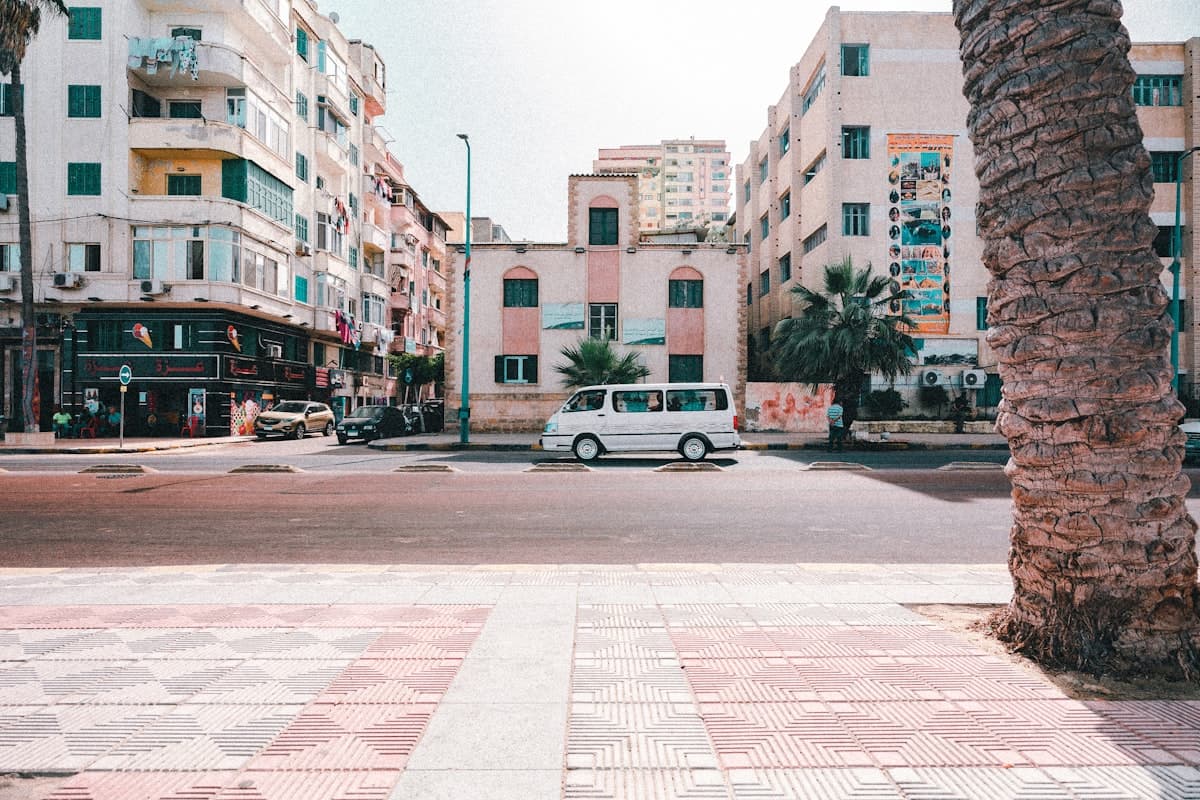
At its absolute peak in the 1920s and 1930s, Alexandria was home to roughly 100,000 Italians, making it one of the largest Italian communities outside of Italy itself. They were not colonial administrators in the British or French sense. They were merchants, architects, pharmacists, jewelers, photographers, and, crucially, builders. The men who physically constructed much of what we now call the historic European quarter of Alexandria were Italian craftsmen: the mosaicists, the ironworkers, the marble-layers who gave the city its particular weight and texture.
This is the fact most visitors miss entirely. When you walk down Fouad Street and look at the arched loggias, the ornate balconies, the terracotta facades, you are not looking at a European fantasy imported wholesale. You are looking at what happened when Italian building traditions collided with Egyptian commissions, Ottoman tastes, and a climate that punishes anything not designed for salt air and summer glare. The result was its own thing.
The legal framework that made this community possible was the Capitulations, a system of extraterritorial legal protection that exempted European nationals in Egypt from Egyptian courts. Italians in Alexandria lived under Italian law, buried their dead in Italian-designated sections of cemeteries, and sent their children to Italian schools funded partly by the Italian government, which saw the community as a soft-power asset in the Mediterranean. When the Capitulations were abolished in 1937, the community began its slow legal integration into Egyptian civic life. When Nasser nationalized the Suez Canal in 1956 and then nationalized foreign-owned businesses and property between 1956 and 1961, the economic basis of the community collapsed almost overnight. Within a decade, the population fell from roughly 60,000 to fewer than 5,000.
What they left behind is what makes the Italian community Alexandria Egypt history guide genuinely worth following on foot.
---
The Latin Cemetery: Where the Community Buried Its Identity
The Latin Cemetery on El-Horeyya Road is the most concentrated record of the Italian presence in Alexandria, and almost no tourists go there. This is their loss.
The cemetery was established in the early nineteenth century, when Alexandria's European population was small enough that Catholics of all nationalities shared one burial ground. By the early twentieth century it had been subdivided into national sections, with the Italian plots expanding to accommodate merchants, architects, consular officials, and their families. The headstones are a social history of the community in miniature: the dates, the professions carved in stone, the photographs sealed under glass that show faces from a world that no longer exists here.
Look for the tomb of Pietro Avoscani, the architect responsible for several of Alexandria's most significant public buildings, including the original Cecil Hotel structure and portions of the Raml tram depot. Avoscani arrived in Alexandria in 1892 and never left. His tomb is modest relative to some of the merchant families buried nearby, which tells you something about where money and status actually sat in this community.
The cemetery also contains the graves of Italian Jews, a fact that complicates the simple nationalist narrative. The Italian-Jewish community of Alexandria was substantial and largely distinct from both the Sephardic Egyptian Jewish community and the Italian Catholic mainstream. They had their own clubs, their own social networks, and their own complicated relationship with the Italian Fascist racial laws of 1938, which technically applied to them as Italian nationals. Some families converted or obtained false documentation. Others quietly lost their Italian citizenship and became stateless. Their graves here sit within the Catholic section because the logic of the cemetery's geography did not always track the logic of religion.
---
The Built City: What the Italians Actually Constructed
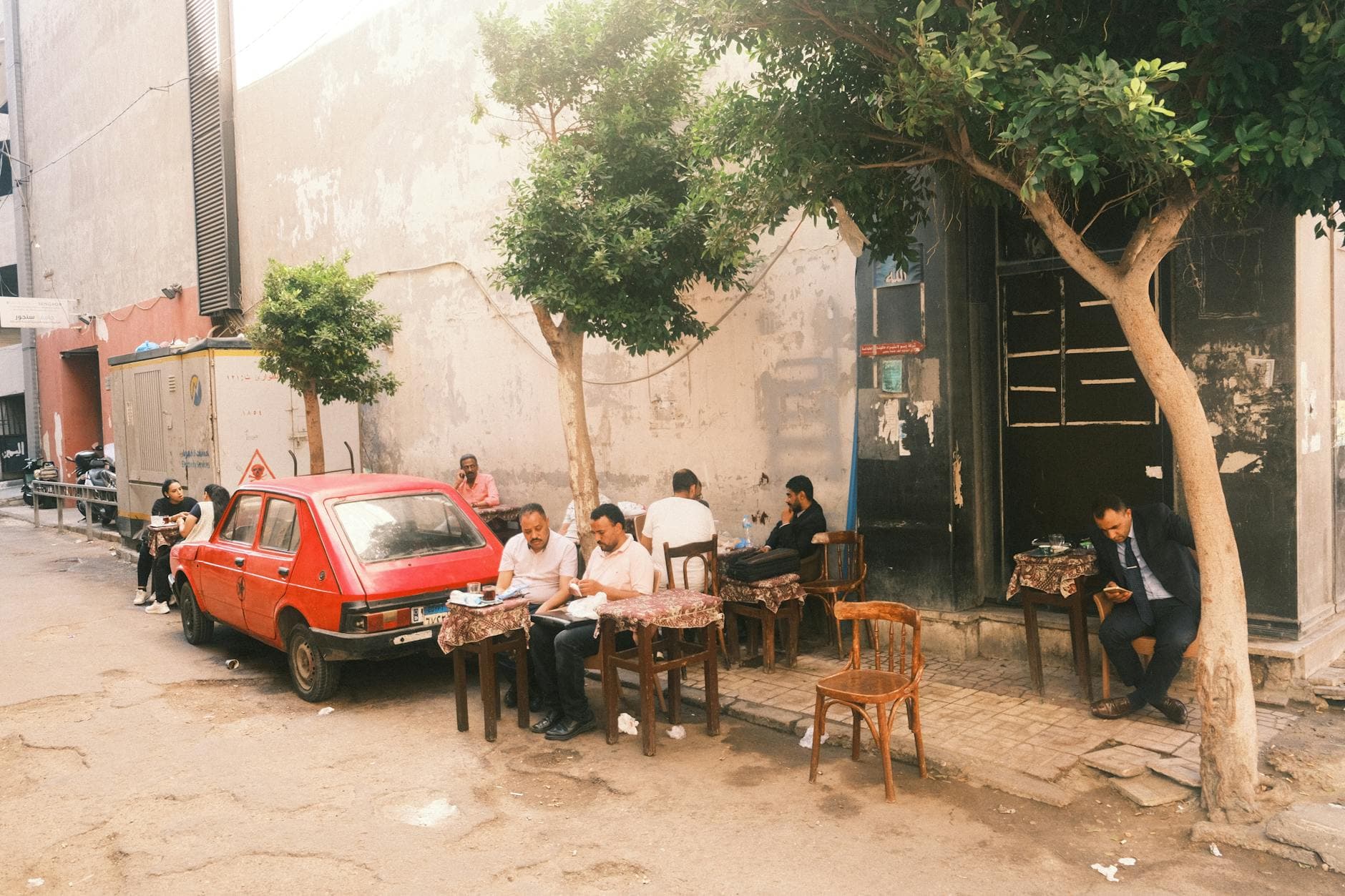
The architect Ernesto Verrucci Bey built the Montazah Palace complex for King Fuad in the 1920s, combining neo-Moorish and Florentine Gothic elements in a combination that should not work and somehow does. Verrucci also worked extensively in Cairo, and his career illustrates the key truth about Italian professionals in Egypt: they were not decorating the margins of Egyptian cultural life. They were, in many cases, physically building the infrastructure of the modern state.
On a smaller scale, the pharmacies matter. The Italian community established and ran many of Alexandria's most prominent pharmacies through the early twentieth century, and the tradition of the farmacia as a social institution, a place where you received medical advice, compounded prescriptions, and heard neighborhood news, shaped Alexandrian urban culture in ways that persist. The Pharmacie Centrale on Fouad Street operated under Italian management from 1898 until nationalization in 1961. The building still stands. The pharmacy still operates, now under Egyptian management, still with some of its original wooden cabinetry.
The Athineos building at the corner of Saad Zaghloul Square is usually claimed by the Greek community (Athineos means Athenian), and the café was indeed Greek-owned. But the building's construction in 1929 involved Italian contractors, and the mosaicwork on the floor of the original ground-floor café was laid by Italian craftsmen from Friuli, who had been brought specifically to Alexandria for projects of this kind. The floor survives. You can sit on it and order coffee for around EGP 120.
The Cathedral of Saint Catherine on Nabi Daniel Street, completed in 1855, is the formal center of the Catholic community in Alexandria. The interior contains donated artworks from Italian parishes and a memorial register of Italian nationals who died in Alexandria during the First World War, a reminder that Italians in Alexandria were liable for Italian military service even while living in Egypt. The register has 247 names.
---
The Connections: How Italian Alexandria Links to Everything Else
The polyglot European community in Alexandria did not exist in a separate city from the Arabic-speaking, Greek-speaking, and Jewish city. They occupied the same neighborhoods, used the same infrastructure, and were connected by commerce.
The Raml tram line, still running in reduced form today, was built by a Belgian company but operated with Italian technical staff. It connected the European commercial district to the beach suburbs where the wealthier Italian families built their summer villas, some of which survive along the coast toward Montazah. The tram itself is one of the oldest continuously operating urban rail systems in Africa, predating Cairo's metro by nearly a century, having opened in 1863.
The Italian community's departure is also inseparable from the departure of the Greek, Jewish, Maltese, and Armenian communities that made Alexandria cosmopolitan in the specific way that Cavafy, Durrell, and Forster all documented. Constantine Cavafy, the Greek poet whose apartment on Lepsius Street is now a museum, wrote his most important poems in an apartment above what was then an Italian-run brothel, a fact his estate long preferred to omit. His poems about Alexandria describe a city where these communities overlapped constantly, where a Greek merchant might speak Italian at work, French in the afternoon, and Arabic to his doorman.
The Cavafy Museum is worth half a morning and costs EGP 30 (approx $0.60 USD). It is one of the most underpriced cultural experiences in Egypt.
---
Common Mistakes
Treating the European quarter as a separate city. The Italian buildings, the Greek churches, the Jewish synagogues, and the Ottoman commercial architecture are all within walking distance of each other because this was one city. Walking between them without a rough map and some background reading means you will miss how they relate.
Expecting curated museum experiences. There is no dedicated Italian community museum in Alexandria. The story is distributed across a cemetery, several churches, surviving buildings, and the archives of the Alexandrian municipal library. If you need everything packaged and labeled, this is not your subject.
Skipping the Latin Cemetery because it sounds grim. This is where most of the actual human evidence lives. The cemetery is peaceful, the caretaker is helpful, and an hour here with a notebook gives you a social history that no guidebook summarizes adequately.
Paying for a general Alexandria tour that includes a fifteen-minute mention of the cosmopolitan period. These tours are optimized for the Catacombs, Pompey's Pillar, and the Bibliotheca. The Italian community gets a paragraph. Hire a private guide who specializes in the cosmopolitan era, or walk independently using a detailed neighborhood map from the Bibliotheca Alexandrina's map collection, which is free to consult on-site.
The Alexandria National Museum's Italian section is worth about twenty minutes. The museum overall is good, but its coverage of the cosmopolitan communities is thin and the labels are often inaccurate on specific dates. Do not rely on it for your understanding of this subject.
Confusing the Italian consulate garden events with serious cultural programming. The Italian Consulate in Alexandria occasionally hosts events that touch on the heritage of the community. Some are excellent. Most are social occasions for the small remaining Italian-origin population and diplomatic staff. Check the programming before attending.
Assuming the community is entirely gone. A small number of Alexandrian families with Italian surnames and partial Italian heritage remain, most now entirely Arabic-speaking and Egyptian in identity. Some families who left in the 1950s and 1960s have descendants who have returned as Italian nationals with Egyptian roots, a quiet reversal that is beginning to reshape the story.
---
Practical Tips
The Bibliotheca Alexandrina on the corniche (EGP 70 entry for non-Egyptians, approx $1.40 USD) holds the best archival photographs of the Italian community in Alexandria, including images from the 1920s and 1930s showing the commercial district at its peak. The photography archive is accessible with a day pass and a request to the librarian on the third floor. This is not advertised.
For the Latin Cemetery, go between 9am and 1pm when the light is best and the caretaker is reliably present. Bring water. The cemetery is not shaded. The bell at the main gate produces results within about five minutes on weekdays.
For the Cathedral of Saint Catherine, Sunday mass at 10am is the best time to see the building used as intended. It is not a tourist event. Dress appropriately: shoulders and knees covered. The parish bulletin board sometimes lists visiting Italian priests who can provide more detailed historical context than the standard sacristan.
A knowledgeable local guide for a focused Italian community Alexandria Egypt history walk costs between EGP 800 and 1,500 for a half-day. The Bibliotheca Alexandrina occasionally offers structured heritage walks at lower prices. Check their events calendar a week before you arrive.
Frequently Asked Questions
The Weekly Dispatch
More on Egypt, every Friday.
Cultural depth and places most guides never mention.
No spam. Unsubscribe anytime.