The Italian Community of Alexandria: A Vanished Mediterranean World
At its peak, Alexandria had 60,000 Italian residents. They built the opera house, ran the trams, and shaped the city's entire café culture. Almost none remain.

Quick Facts
- Best time to visit
- October to April. The Mediterranean climate is mild, light is flattering for walking and photography, and the summer humidity that makes August unpleasant is gone. November is particularly good.
- Entrance fee
- Most sites free or low cost. Alexandria National Museum: EGP 120 (approx $4 USD) for foreigners, EGP 40 for Egyptians. Bibliotheca Alexandrina: EGP 70 (approx $2.25 USD). Latin Cemetery Chatby: free, tip caretaker EGP 50 to EGP 100.
- Opening hours
- Alexandria National Museum daily 9am to 4:30pm. Bibliotheca Alexandrina Sunday to Thursday 9am to 7pm, Friday and Saturday 3pm to 7pm. Latin Cemetery Chatby approximately 8am to 1pm, irregular.
- How to get there
- From Cairo: Spanish train from Ramses Station, EGP 110 to EGP 200, approximately 2 hours. From Alexandria Misr Station: tram to Raml Station EGP 2 to EGP 5, taxi EGP 50 to EGP 80. Chatby from Raml Station by tram or microbus EGP 2 to EGP 10.
- Time needed
- Minimum one full day for walking tour, Chatby Cemetery, and one museum. Two full days recommended to include Bibliotheca Alexandrina archives and residential neighborhoods of Ibrahimiya and Bacos.
- Cost range
- Budget EGP 400 to EGP 700 per day including transport, sites, and local meals. Mid-range with hotel near Raml Station: EGP 1,500 to EGP 2,500 per day.
Quick Facts
Best time to visit: October to April, when Mediterranean light is soft and the humidity drops. Alexandria's Corniche in November is one of Egypt's great sensory pleasures.
Entrance fees: Most sites connected to the Italian community are public streets, churches, and cemeteries. The Latin Cemetery (Chatby) is free. The Greek Orthodox Patriarchate Museum charges approximately EGP 50 (about $1.60 USD). The Alexandria National Museum, which holds artefacts spanning all of Alexandria's communities, charges EGP 120 (approximately $4 USD) for foreigners and EGP 40 for Egyptian nationals. The Bibliotheca Alexandrina, which documents the cosmopolitan city through its archives, charges EGP 70 (approximately $2.25 USD) general admission.
Opening hours: The Alexandria National Museum is open daily from 9am to 4:30pm. The Bibliotheca Alexandrina is open Sunday to Thursday 9am to 7pm, Friday and Saturday 3pm to 7pm. The Latin Cemetery in Chatby opens most mornings between 8am and 1pm but requires patience: knock, wait, and someone will eventually appear with a key.
How to get there: From Cairo, take a first-class seat on the Spanish train (EGP 110 to EGP 200 depending on service) from Ramses Station. Journey time is roughly two hours. From Alexandria's Misr Station, take a tram eastward along the Corniche (EGP 2 to EGP 5) or a microbus (EGP 5 to EGP 10) toward Raml Station, the historical heart of European Alexandria. A taxi from Misr Station to downtown Alexandria runs EGP 50 to EGP 80.
Time needed: A serious walking tour of the Italian quarter, Chatby, and the Corniche requires a full day. Add the Alexandria National Museum and Bibliotheca Alexandrina and you need two days, minimum.
Cost range: Budget EGP 400 to EGP 700 per day covering transport, sites, and meals at local restaurants. Mid-range, including a hotel near Raml Station and a meal at one of the surviving old Alexandrian restaurants, runs EGP 1,500 to EGP 2,500 per day.
---
Why This Place Matters
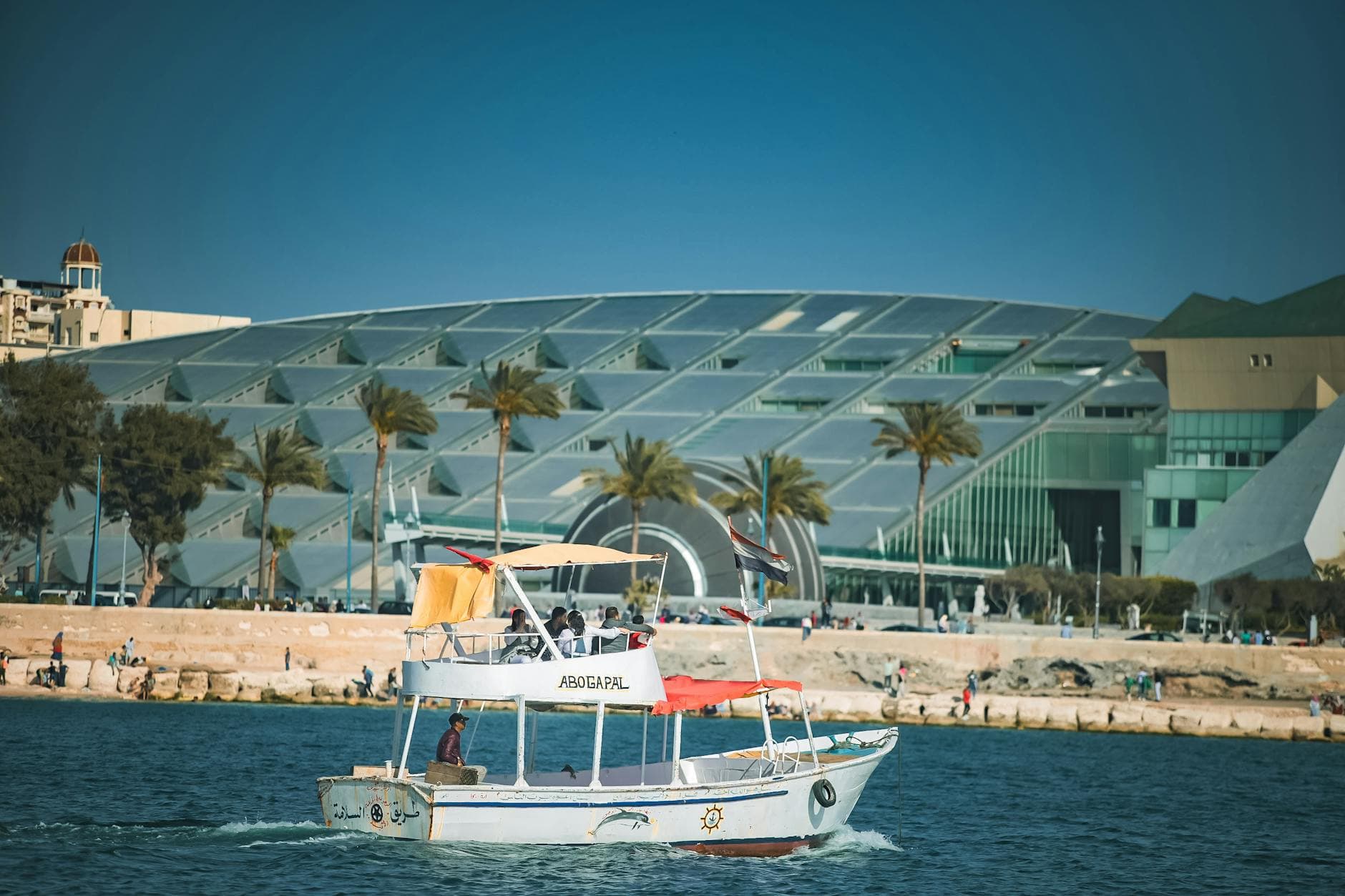
At its highest point, in the 1920s and 1930s, the Italian community of Alexandria numbered somewhere between 55,000 and 65,000 people. They were the largest single European community in the city. They ran pharmacies, built theaters, laid tram lines, opened schools, and composed operas performed in a house they built on a street that still bears faint traces of them. The conductor and composer Leopoldo Mugnone, who conducted the world premiere of Puccini's Tosca in Rome in 1900, also conducted in Alexandria. This was not a provincial outpost receiving second-rate culture. This was a city that competed with Rome.
Alexandria's Italian community arrived in waves. The earliest Italians came with Mehmet Ali's modernization campaigns in the early nineteenth century, recruited as engineers, architects, and agricultural experts. Later waves brought merchants, artisans, and families from Sicily, Calabria, and Venice, drawn by the cotton trade that made Alexandria the financial capital of the Mediterranean between roughly 1860 and 1914. The city's cotton exchange was one of the most powerful trading floors in the world, and Italian brokers, factors, and shipping agents took their share.
What makes this history remarkable, and largely unknown outside Egypt, is how completely it has vanished. Not erased deliberately, but dissolved by history: by Nasser's nationalization decrees of the 1950s and 1960s, by the Suez Crisis of 1956 which prompted mass departure of European communities, and by the simple arithmetic of a century. The Alexandria that produced Lawrence Durrell's Alexandria Quartet, the novels of E.M. Forster, and the poetry of Cavafy was not an Egyptian city with European visitors. It was a genuinely polyglot Mediterranean capital where Greek, Italian, French, Levantine Arab, Jewish, and Egyptian communities built institutions side by side, competed in business, and married across religious lines with a frequency that scandalized everyone equally.
The Italian community history guide to Alexandria cannot be a simple walking tour because almost nothing is labeled. You will stand in front of buildings that were once Italian schools and find Arabic signs advertising mobile phone repairs. This is not a failure of heritage preservation. It is an accurate record of what happened to a city.
---
What Remains: Reading the City's Bones
The best place to begin is not a museum but the downtown grid between Saad Zaghloul Square and the Corniche. This area, once called the Frank Quarter, was built almost entirely by Italian architects between 1870 and 1930. The buildings are Italianate in their bones: ornate iron balconies, loggia facades, decorative keystones, and the particular proportion of windows to wall that Piedmontese architects brought with them and never entirely abandoned even as they adapted to the Egyptian climate.
Look at the apartment buildings on Tariq al-Hurriya (formerly the Rue Fouad) and you will find carved stone heads above doorways, coats of arms that belonged to families now two generations gone, and the occasional mosaic floor in an entrance hall still intact beneath decades of foot traffic. The architects who built these include Antonio Lasciac, an Italian-born architect who became the chief architect of the Egyptian Royal Court under Khedive Abbas Hilmi II. Lasciac designed dozens of major buildings in Cairo and Alexandria, including the Khedivial Opera House in Cairo, and his work remains the visual grammar of downtown Alexandria even today.
The Italian Hospital, built in 1891 on Sharia Abdel Monem Riyad, still functions as a medical facility. Its original facade has been heavily altered, but the building's scale tells you something about the community's ambition and resources. A community of immigrants built a full hospital for its sick within three decades of establishing itself in significant numbers. That is not nostalgia. That is organizational power.
The Dante Alighieri Society, founded in Alexandria in 1909 to preserve Italian language and culture among the diaspora, maintained a library and lecture hall until the mid-twentieth century. The society still exists in a much reduced form. Locating its current office requires asking locally and accepting that the answer may change.
---
The Latin Cemetery at Chatby: The Most Honest Archive in Alexandria
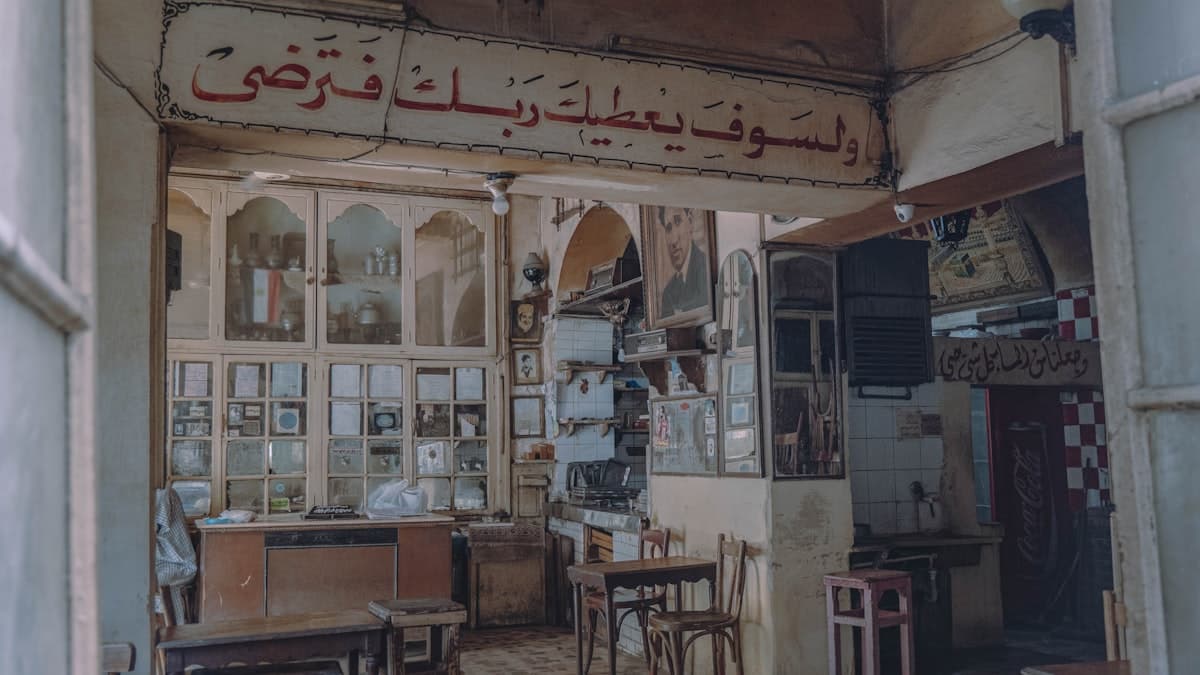
If you make one specific journey in pursuit of the Italian community Alexandria history, make it to the Latin Cemetery in Chatby, roughly three kilometers east of Raml Station. This is where the community buried its dead, and the dead are more informative than most museums.
The cemetery is large, overgrown in sections, and entirely extraordinary. The headstones record the geography of a vanished world: family names from Genoa, Palermo, Naples, Venice, and Rome, dates of death spanning from the 1860s to the 1970s, and the occupations and honorifics of a merchant class that genuinely believed Alexandria was their permanent home. There are the graves of cotton brokers, consuls, priests, railway engineers, a conductor, a pharmacist who died in 1924 having built the most respected pharmacy in the city, and dozens of children, because before antibiotics, Mediterranean Egypt was not kind to European children.
One specific grave worth finding, if the caretaker is willing to guide you, is the section containing the Mosseri family vault, which illustrates the city's layered identity perfectly: the Mosseris were Jewish Italians, Italian nationals of Jewish faith who had lived in Egypt long enough that by the early twentieth century they were simultaneously Italian subjects, Sephardic Jews, Egyptian residents, and major patrons of both Italian cultural institutions and Egyptian nationalist causes. Their complicated allegiances were entirely normal in Alexandria. The city produced this kind of person routinely.
The cemetery is free but the caretaker deserves a tip of EGP 50 to EGP 100 for opening locked sections and providing rough guidance. Bring water. Bring a hat. Go in the morning when the light comes in at an angle and the oleander smells strongest. There is no sign explaining any of this history at the gate. There never is.
---
The Connections: One City, Forty Layers
Alexandria makes no sense examined in a single period. The site of the Latin Cemetery at Chatby is itself layered: below the nineteenth-century graves lie Hellenistic tombs, some of which have been excavated and can be seen at the nearby Chatby Necropolis. The Greeks buried their dead here before the Romans arrived, the Romans added their own layers, and then the Christian communities of the Byzantine period added chapels, and then the medieval city contracted and forgot, and then European merchants arrived in the nineteenth century and built over everything without knowing what was underneath.
The Corniche itself, which feels like a natural feature of the city, is largely a twentieth-century construction. The waterfront where Italian shipping agents once watched cotton bales loaded onto boats was restructured repeatedly, most dramatically in the 1930s under Governor Muhammad Tahir Pasha. The current Corniche road was expanded and formalized after the 1952 revolution. The sea has always been here; everything else has been negotiated.
The Bibliotheca Alexandrina, opened in 2002 on a site near where ancient Alexandria's library may have stood, holds the archives of the Alexandrian community through a project called the Alexandria and Mediterranean Research Center. If you are serious about the Italian community Alexandria history, the Bibliotheca's archive collections are worth half a day. They have digitized significant portions of the Italian-language newspapers that served the community between 1880 and 1950, including Il Messaggero Egiziano and La Riforma, both of which provide a granular record of community life: sports clubs, theatrical performances, school prize days, court notices, and death announcements.
The Alexandria National Museum on Tariq al-Hurriya has a section on the modern cosmopolitan city that is better than it sounds. It includes photographs of the European communities, artifacts from Italian merchants' households, and maps showing the expansion of the city's European quarters. It is not comprehensive, but it is honest about what Alexandria was, which is more than most Egyptian public history institutions manage on this subject.
---
Common Mistakes
Expecting labeled heritage. Almost nothing connected to the Italian community is officially marked or explained. If you go looking for plaques, interpretive signage, or guided tours that address this history specifically, you will be disappointed. The Italian community's physical legacy has been absorbed into a living city without commentary. Accept this as the condition of the visit and bring your own knowledge.
Skipping the residential streets for the monuments. The grand buildings on Tariq al-Hurriya are impressive, but the real texture of Italian Alexandria is in the residential side streets of Bacos, Ibrahimiya, and Cleopatra, neighborhoods where Italian middle-class families built villas in the 1910s and 1920s that still stand, now divided into apartments, with the original terrazzo floors and wrought-iron gates intact.
Taking the Corniche horse-carriage tour as a historical experience. The carriage drivers are personable and the ride is pleasant, but the commentary is entirely fabricated and the route bypasses every site of real significance to the cosmopolitan city. It costs EGP 150 to EGP 300 for twenty minutes and tells you precisely nothing. Walk instead.
Going to Montaza Palace as your primary Alexandria excursion. Every group tour includes Montaza. It is a royal palace built by Khedive Abbas Hilmi II in 1892 and expanded by King Farouk, and the gardens are pleasant enough. But it has essentially nothing to do with the Italian community or the cosmopolitan Alexandria that shaped the city's character. The time spent on a bus to Montaza is time not spent in downtown where the actual history lives.
Missing the timing for Chatby Cemetery. The cemetery keeps irregular hours and the gate is sometimes locked by noon. Go early, by 9am if possible, and accept that you may need to wait or return the next morning. There is no phone number that reliably reaches anyone.
Eating at the Corniche tourist restaurants. The restaurants immediately facing the sea are priced for tourists and the food is indifferent. Walk one block inland and the price drops by half and the quality improves significantly. For a genuine trace of old Alexandrian café culture, visit Athineos on Saad Zaghloul Square, one of the few surviving establishments that dates from the cosmopolitan period, though its current quality is uneven and more interesting as an architectural experience than a culinary one.
Assuming the Alexandria National Museum will explain everything. The museum is worth visiting, but its coverage of the European communities is selective and stops well short of the political history of their departure. For the full picture of what happened after 1952, the Bibliotheca Alexandrina archive or secondary reading before arrival is essential.
---
Practical Tips
Alexandria is an easy day trip from Cairo but a poor one if you care about this specific history. Stay at least two nights, ideally in a hotel in or near Raml Station. The Cecil Hotel, famously mentioned in Durrell's Alexandria Quartet and once patronized by Somerset Maugham and Winston Churchill, still operates on Saad Zaghloul Square. It is no longer the establishment it was and the rooms are overpriced at EGP 2,500 to EGP 4,000 per night relative to quality, but breakfast on the upper terrace looking at the Mediterranean is genuinely worth something and the building itself is part of the story. Mid-range alternatives around Raml Station run EGP 800 to EGP 1,500 and are functionally comfortable.
The best single preparation for this visit is reading Michael Haag's Alexandria: City of Memory, which covers the Greek, Italian, Jewish, and Levantine communities with precision and affection. Robert Ilbert and Ilios Yannakakis edited an academic volume, Alexandria 1860 to 1960, which is harder to find but more rigorous. Either will make the streets legible in a way that no local guide currently can.
Bring cash. Almost nothing connected to this trail accepts cards. The Egyptian pound equivalent of twenty to thirty dollars is more than sufficient for two days of this kind of exploration.
Speak to old Alexandrians whenever possible. The city still has residents in their seventies and eighties who remember the European communities personally, who attended Italian-run schools, who bought medicines from Italian pharmacists, who watched the departures of the 1950s and 1960s. These conversations are not available in any archive.
Frequently Asked Questions
The Weekly Dispatch
More on Egypt, every Friday.
Cultural depth and places most guides never mention.
No spam. Unsubscribe anytime.