The Italian Community of Alexandria: A Vanished World Guide
At its peak, Alexandria had 100,000 Italians. Today, fewer than 200 remain. The city they built still stands. Most people walk past it every day without knowing.

Quick Facts
- Best time to visit
- October to April. Mediterranean humidity drops significantly, temperatures stay between 15 and 24 Celsius, and walking the old European districts for hours at a stretch is comfortable. July and August are hot, humid, and crowded with Egyptian summer tourists.
- Entrance fee
- Most Italian-associated sites are free. Church of St. Catherine: free, donations welcome. Chatby Cemetery: EGP 20 donation to caretaker. Italian Cultural Institute: free entry to public programs.
- Opening hours
- Church of St. Catherine: daily 8am to 6pm. Italian Cultural Institute: Sunday to Thursday 9am to 4pm. Chatby Cemeteries: daily 8am to 5pm.
- How to get there
- From Cairo: train to Alexandria Misr Station (EGP 60 to 150 depending on class, 2.5 hours). From Misr Station, tram lines 1 and 2 run through the old European quarter for EGP 2 per ride. Taxis within Alexandria run EGP 20 to 50 for most cross-city trips.
- Time needed
- Full day minimum to cover the Italian community circuit properly. Half a day if limiting to Midan Mansheya, Sharia Horreya, and the Church of St. Catherine. Add a second half-day for Chatby Cemetery and Abu Qir Bay.
- Cost range
- Budget EGP 300 to 600 per day including tram transport, coffee, and a simple lunch. Mid-range EGP 1,200 to 2,000 including a seafood lunch at a harbour restaurant and a taxi for site-to-site travel.
Quick Facts
Best time to visit: October to April, when Mediterranean humidity drops and walking the old European quarters is bearable. Summer is punishing and the sea glare off Corniche buildings is relentless.
Entrance fees: Most sites associated with the Italian community (churches, cemeteries, select cultural institutes) are free or donation-based. The Italian Cultural Institute on Sharia Horreya charges no admission. The Latin Cemetery at Chatby requests a small donation of around EGP 20 to the caretaker.
Opening hours: The Church of St. Catherine on Midan Mansheya is open daily 8am to 6pm. The Italian Cultural Institute operates Sunday to Thursday 9am to 4pm. The Chatby Cemeteries (which include the Italian Catholic section) open daily from 8am to 5pm.
How to get there: From Alexandria's Ramla Tram Station, tram lines 1 and 2 run along the Corniche and through the old European districts. A single tram ticket costs EGP 2. Taxis from Alexandria's main train station (Misr Station) to Midan Mansheya run EGP 25 to 40 depending on traffic and your negotiating patience.
Time needed: A serious walk through the Italian-associated sites takes a full day. The Italian quarter around Attarine, the churches, the Chatby Cemeteries, and the old Corniche apartment blocks are spread across roughly 4 kilometers of walkable city.
Cost range: Budget EGP 300 to 600 per day if you are walking and eating at local kafeterias. Mid-range EGP 1,200 to 2,000 if you add a lunch at one of the old-style seafood restaurants on the Eastern Harbour where the Italian fishing community once docked their boats.
---
Why This Place Matters
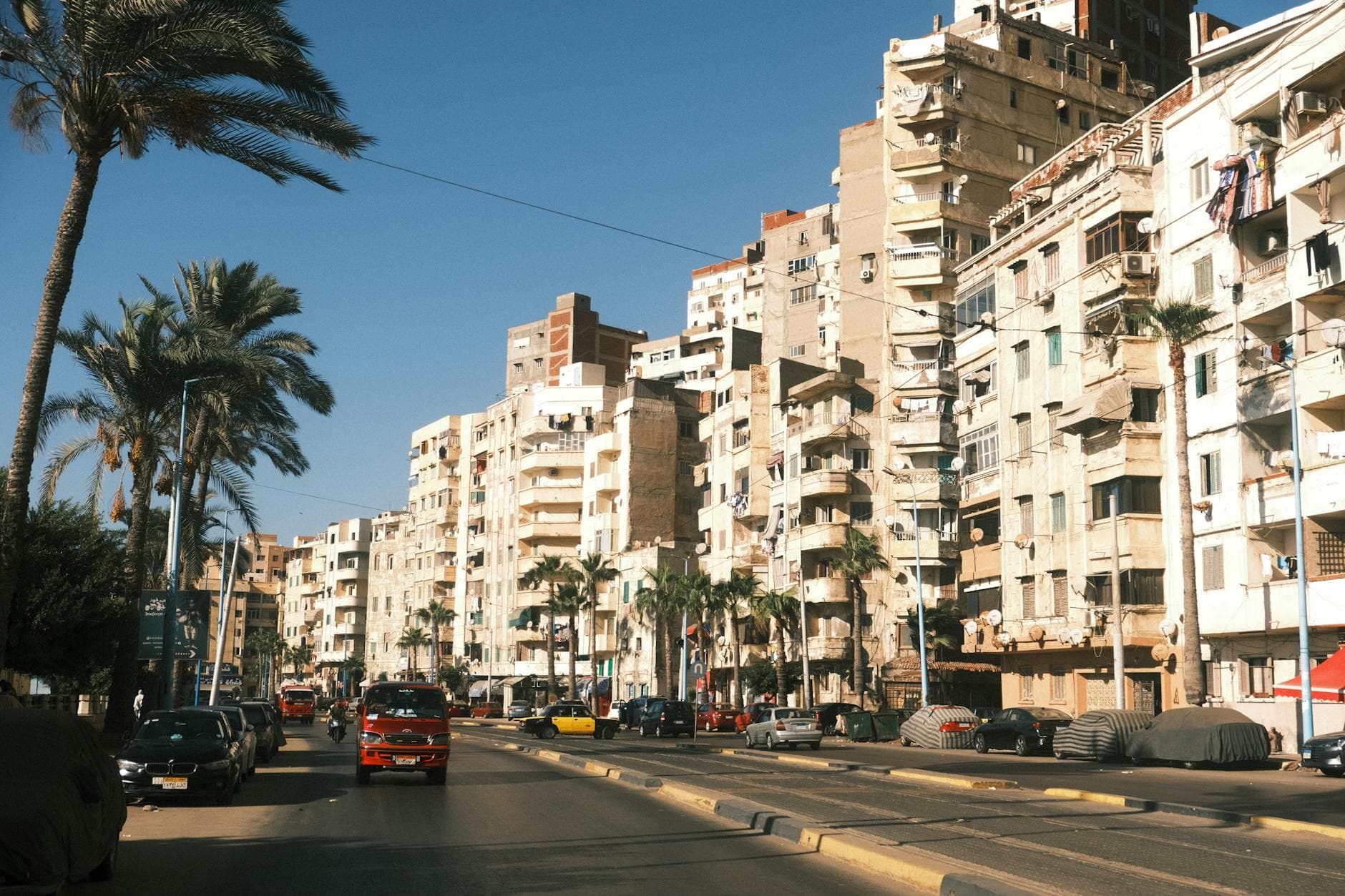
At the 1927 Egyptian census, Alexandria counted roughly 100,000 Italian residents. They were the single largest European community in the city, outnumbering the Greeks, the French, and the British. They ran fisheries on the Eastern Harbour, built the city's major Catholic churches, founded schools that taught in Italian until the 1960s, and occupied entire apartment blocks along the Corniche that still carry the architectural fingerprints of Milan and Naples transposed onto a North African seafront.
By 1961, after Nasser's nationalization decrees forced foreign businesses and properties into state hands, most had left. The community that had been building Alexandria since the 1820s, when Muhammad Ali actively recruited Italian engineers to modernize his new capital, collapsed within a single decade. Today, the Italian community in Alexandria numbers fewer than 200 people.
What remains is not a heritage district preserved for tourists. It is a working city that happens to contain the sediment of a cosmopolitan civilization most Egyptians under forty have never been told about. The Italian presence in Alexandria is part of the broader story of what this city was before 1952: a genuinely pluralist Mediterranean metropolis where Greek cotton merchants, Jewish bankers, Syrian Christian traders, Italian fishermen, and Egyptian intellectuals shared the same tram lines, the same cafes, and often the same apartment buildings.
Understanding the Italian community of Alexandria is not a niche interest. It is the key to understanding why this city looks, sounds, and operates the way it does today.
---
The Architecture They Left Behind
Walk down Sharia Horreya, once called the Rue Fouad, and you are walking the spine of what was the European city. The buildings on either side were designed and largely constructed by Italian architects and craftsmen between 1880 and 1940. The Bourse building, the old mixed courts, the ornate residential blocks with their wrought-iron balconies and carved stone cornices: all of this is Italian neoclassical and Liberty-style architecture exported to the Egyptian Mediterranean.
The most important single building for understanding this history is the Church of St. Catherine on Midan Mansheya, completed in 1833 and rebuilt in its current form in the early twentieth century. This was the spiritual center of the Latin Catholic community, which was overwhelmingly Italian. The interior holds memorial plaques for Italian families who lived in Alexandria for three and four generations, names like Suarès, Zananiri, and Piccardo, families that accumulated wealth, built institutions, and then vanished within a generation of Nasser's revolution.
Less visited but more quietly affecting is the Salesian Church of Don Bosco in the Cleopatra district, which still runs a school attached to it. The Salesians arrived in Alexandria in 1896, established Italian-language education for working-class immigrant families, and maintained their presence long after most Italian institutions had closed. The church itself is a modest building, nothing like the grandeur of St. Catherine, but its continued operation by an Italian religious order makes it one of the few living links to that community rather than a relic of it.
The apartment blocks along the Corniche between Sidi Gaber and Stanley Bay were also substantially built and occupied by Italian families. Look up at the facades: the decorative plasterwork, the proportioned windows, the rooftop balustrades. They are peeling now, and most have been subdivided beyond recognition, but the bones of a specific architectural ambition remain visible.
---
The Cemeteries: What Numbers Cannot Convey
If you want to grasp the scale of what the Italian community of Alexandria actually was, go to the Chatby Cemeteries. The complex on Sharia Port Said contains separate sections for Greek Orthodox, Latin Catholic, Protestant, Jewish, and Armenian communities, each reflecting the cosmopolitan structure of old Alexandria in the most direct way possible: the dead stayed sorted by community even after the living had scattered.
The Latin Catholic section, predominantly Italian, is the largest European section in the complex. The oldest inscriptions date to the 1820s and record the deaths of Italian engineers, sailors, and merchants who came to Alexandria in the earliest years of Muhammad Ali's modernization drive. The most recent Italian burials are from the 1990s, a century and a half of continuous presence compressed into a few acres of walled burial ground.
The tomb architecture itself tells the story of a community's arc. Early nineteenth century graves are modest, functional, in the style of Neapolitan working-class cemetery design. By the 1880s and 1890s, the monuments grow larger, more elaborate, some with portrait medallions and imported Italian marble. After 1952, the scale drops suddenly. Smaller stones, simpler inscriptions, sometimes just a name and two dates. The money had left. Then the people had left. Then only the bones remained.
A caretaker, usually an elderly Egyptian man who has been maintaining these graves for decades with no institutional support, can sometimes tell you which family names recur most often. The Suarès family, Sephardic Jews with Italian citizenship, appear in both the Latin Catholic and Jewish sections depending on which branch of the family you are looking at. This alone is a reminder that the categories of Alexandria were always more complicated than they appeared.
---
The Connections
The Italian presence in Alexandria did not begin with European colonialism in the conventional sense. It began earlier, and through a different door.
Muhammad Ali, the Albanian-born Ottoman governor who effectively founded modern Egypt after 1805, had a deliberate policy of importing European technical expertise. Italian engineers designed and built the Alexandria to Cairo railway line, completed in 1856, the first railway on the African continent. Italian hydraulic engineers worked on the early Nile irrigation projects that would later be expanded into the Aswan dams. The community that grew into 100,000 by 1927 had its roots in a utilitarian state decision made a century earlier.
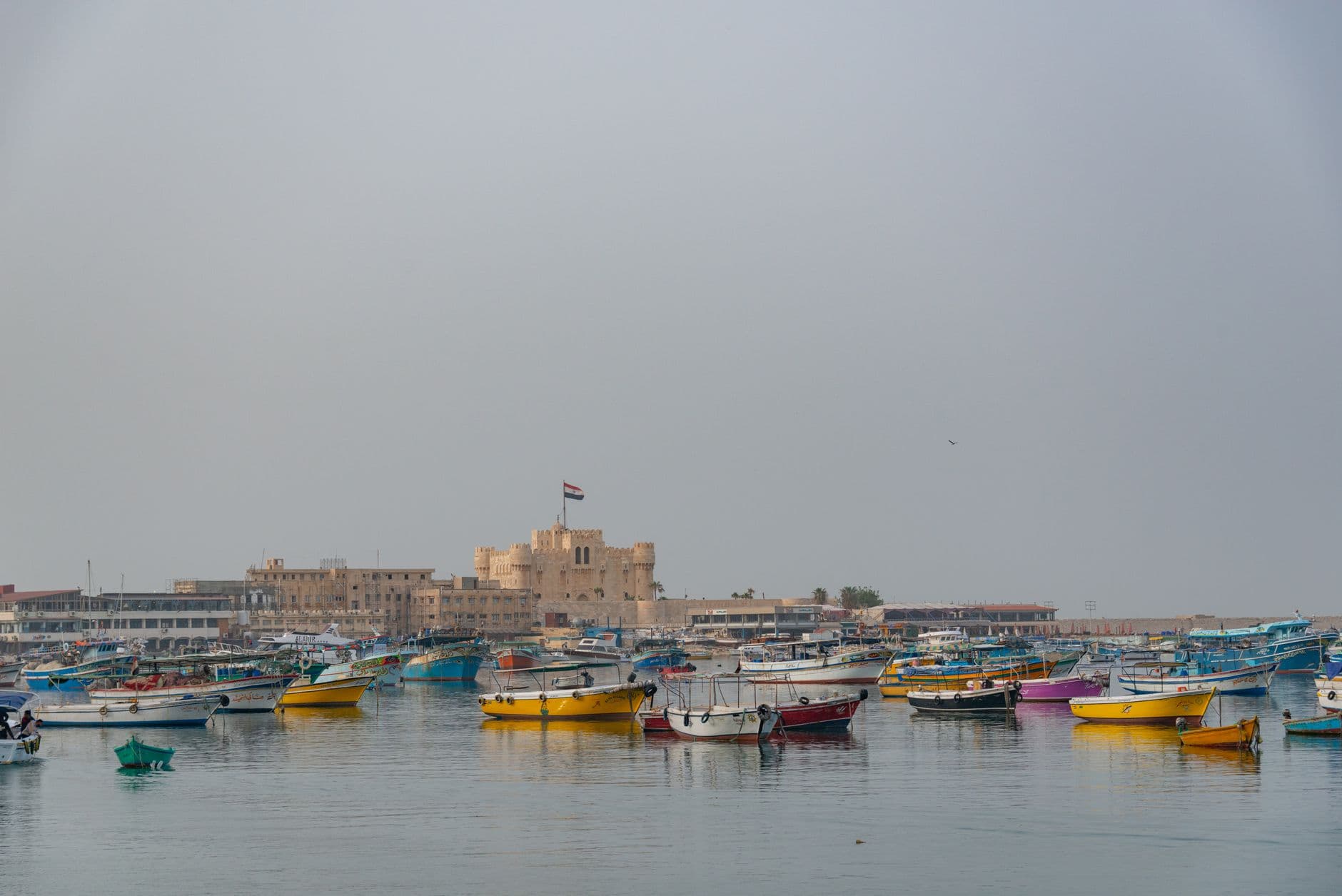
The Italian fishing community of the Eastern Harbour connects directly to modern Alexandrian cuisine. The fish market near Abu Qir Bay still operates in rhythms that go back to when Italian and Greek fishermen set the terms of how Alexandrian seafood was caught, sold, and prepared. The specific technique of cooking fish with cumin and preserved lemon that you will find in seafront restaurants today shows traces of southern Italian and North African coastal cooking fused over generations.
The Italian Cultural Institute on Sharia Horreya, still operating, represents a direct institutional continuity. It was established in 1934, at the height of fascist Italy's interest in its overseas communities as political assets. Today it runs language courses, cultural events, and a library, functioning as one of the last live institutional connections between contemporary Italy and a city that once felt, to many Italians, like a second homeland.
Alexandria's connection to other cosmopolitan Mediterranean cities follows the same logic. The Sephardic Jewish community that fled Alexandria in the 1950s and 1960s carried Alexandrian Arabic, Italian loan words, and Greek expressions into communities in France, Brazil, and Italy. The cultural DNA of Alexandria's cosmopolitan era is scattered across four continents.
---
Common Mistakes
Confusing nostalgia tourism with actual history. Several tour operators offer "cosmopolitan Alexandria" experiences that amount to photographing Corniche buildings while a guide explains how beautiful the old days were. This is not history. It is selective sentiment. The cosmopolitan era was also an era of profound economic inequality between European community members and Egyptian workers. A complete understanding of the Italian community in Alexandria includes both the architecture and the labor conditions that produced it.
Skipping the cemeteries. Most visitors to Alexandria on a day trip from Cairo spend their time at the Catacombs of Kom el-Shuqafa or the Bibliotheca Alexandrina and never reach Chatby. This is a significant loss. The Chatby complex tells you more about what Alexandria actually was as a multi-community city than any monument does.
Relying on the Italian Cultural Institute's public programming without booking ahead. The Institute runs excellent lectures and occasional walking tours of Italian-associated sites, but these are announced with little lead time on their social media and fill quickly with the local Italian-interested community. Check their Facebook page a week before you arrive.
The Corniche tourist walk is overrated. Walking the full length of the Corniche is sold as the essential Alexandrian experience. It is a 20-kilometer promenade that is loud, exhaust-filled, and offers distant views of buildings you cannot enter. Walk it for thirty minutes to understand the seafront, then move inland into the old European quarters where the actual texture of the city survives.
Not talking to the older residents. Alexandrians in their seventies and eighties who grew up in mixed neighborhoods often have direct memories of Italian neighbors, Italian-owned shops, and Italian-language signage. These conversations, which you can have in any coffee shop in the Attarine or Mansheya districts, are irreplaceable sources that no guidebook contains.
Assuming the story ended with Nasser. The Egyptian government nationalized Italian properties and businesses, yes. But some Italian families converted to Egyptian citizenship and remained. Their descendants, now thoroughly Egyptian in language, culture, and identity, still carry Italian surnames you will occasionally see on shop signs and professional plaques. The community did not end. It transformed into something new.
The sound and light show at the Citadel of Qaitbay costs EGP 150 and has nothing to do with the Italian community or with any serious history of Alexandria's European period. If you are spending limited time in the city focused on this history, skip it entirely.
---
Practical Tips
The best starting point for this history is not a site but a book. Get a copy of Michael Haag's "Alexandria: City of Memory" before you arrive. It is specific enough to use as a walking reference and honest enough to avoid the nostalgia trap.
The Attarine antique market, a few blocks south of Midan Mansheya, occasionally surfaces objects from old Alexandrian European households: Italian-language books, devotional objects from Latin Catholic families, pre-1952 photographs. The quality and authenticity vary, the prices require negotiation, and you should not expect guaranteed provenance, but the market itself is a physical layer of the city's discarded cosmopolitan past.
For food connected to the Italian fishing community's legacy, the restaurants around Abu Qir Bay, about 20 kilometers east of central Alexandria and reachable by microbus from Sidi Gaber Station for EGP 5 to 8, serve fish in styles that carry direct traces of Mediterranean coastal cooking brought by Italian and Greek fishermen. Zephyrion restaurant in Abu Qir has been operating since 1929, which means it was serving Italian and Greek customers before most of the community had left.
Speak Arabic if you have any. Even basic greetings open conversations in Alexandria that stay closed to visitors who arrive with only English. The Alexandrian dialect is slightly softer and more Mediterranean-influenced than Cairene Arabic, and older residents notice and appreciate the effort.
Crowd levels at the Italian-associated sites are generally low. This is not a heavily touristed circuit. You will often have the Chatby Cemetery's Latin section entirely to yourself. This is both a gift and a measure of how thoroughly this history has been forgotten.
Frequently Asked Questions
The Weekly Dispatch
More on Egypt, every Friday.
Cultural depth and places most guides never mention.
No spam. Unsubscribe anytime.