The Italian Community of Alexandria, Egypt: A History Guide
At its peak, Alexandria had 100,000 Italian residents. Most Egyptians today have never heard of them. Their cemeteries, clubs, and churches are still standing.

Quick Facts
- Best time to visit
- October to December: lower humidity, sharp Mediterranean light, uncrowded sites
- Entrance fee
- Most sites free. Royal Jewelry Museum EGP 200 (approx $6.50 USD). Greek Patriarchate Museum EGP 50 (approx $1.50 USD). Cathedral of Saint Catherine: free.
- Opening hours
- Chatby cemeteries daily 8am to 5pm. Cathedral of Saint Catherine Mon to Sat 9am to noon and 3pm to 5pm. Royal Jewelry Museum Wed to Mon 9am to 5pm, closed Tuesday.
- How to get there
- Train from Cairo Ramses Station to Alexandria Misr Station: EGP 70 to 150 (approx $2 to $5 USD). Within Alexandria: tram from Raml Station EGP 3, taxis between sites EGP 30 to 60 per trip.
- Time needed
- Half-day for cathedral, Chatby cemeteries, and Horreya Road walk. Full day to include Royal Jewelry Museum and an evening at the Trianon Café.
- Cost range
- Budget EGP 200 to 500 per day including all site fees, transport, and a sit-down meal. The most historically significant parts of this itinerary are free or nearly free.
Quick Facts
Best time to visit: October to April, when Alexandria's Mediterranean humidity drops and the city's European-era architecture looks its sharpest in the low winter light.
Entrance fees: Most Italian-legacy sites are either free or charge nominal fees. The Greek Orthodox Patriarchate Museum (which holds documentation relevant to the entire Mediterranean community period) charges EGP 50 (approx $1 USD). The Latin Catholic Cathedral of Saint Catherine on Tahrir Square is free to enter. The Italian Cemetery in Chatby charges no entry but requires respectful dress.
Opening hours: The Chatby Necropolis and surrounding cemeteries are accessible daily from 8am to 5pm. The Cathedral of Saint Catherine holds mass on Sundays at 9am and is otherwise open to visitors 9am to noon and 3pm to 5pm Monday through Saturday.
How to get there: From Cairo, take the Egyptian National Railways train from Ramses Station to Misr Station Alexandria. Express trains cost EGP 70 to 150 (approx $2 to $5 USD) depending on class. Within Alexandria, the Italian-legacy sites cluster around Raml Station, Chatby, and Ibrahimiyya. A tram from Raml costs EGP 3. Taxis between sites run EGP 30 to 60.
Time needed: A focused half-day covers the cathedral, the Chatby cemeteries, and a walk along the former Rue des Ptolémées (now Horreya Road). A full day allows for the Royal Jewelry Museum, which sits inside a former Italian-community villa, and a proper sit-down at one of the remaining Greek-Italian cafes on the Corniche.
Cost range: Budget EGP 200 to 500 per day including transport and food. The most meaningful parts of this itinerary cost almost nothing.
---
Why This Place Matters
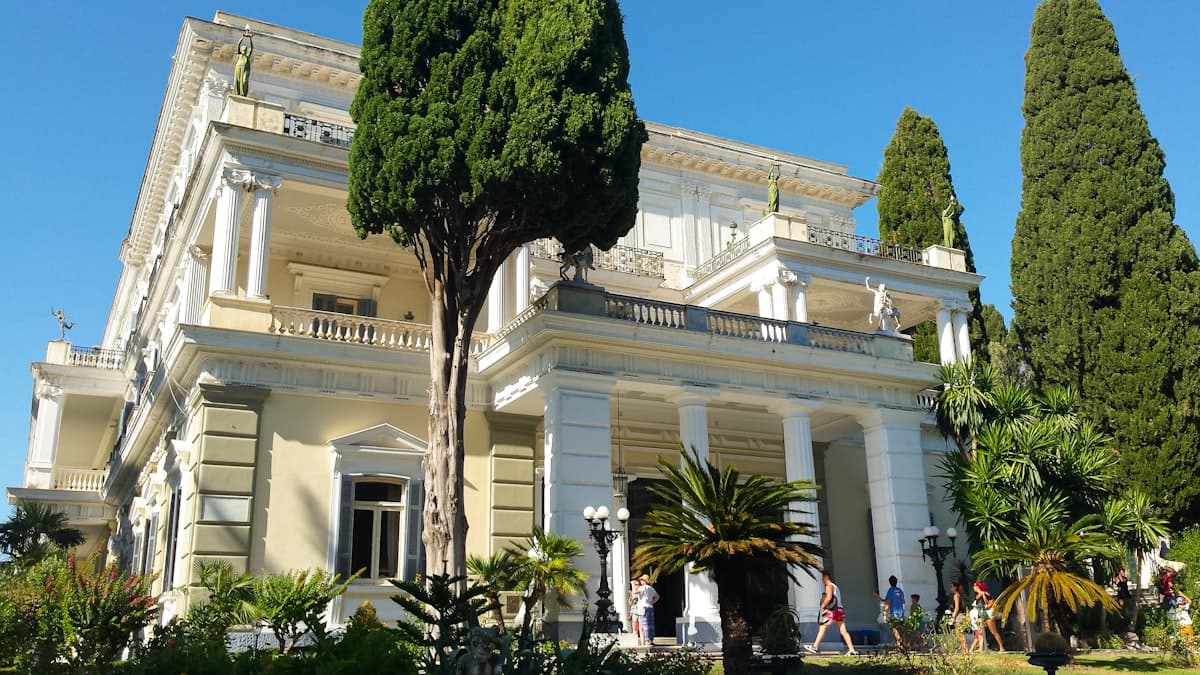
At the moment of its peak population in the 1920s and 1930s, Alexandria held approximately 100,000 Italian residents. They were the second-largest foreign community in the city after the Greeks, and they outnumbered the British by a ratio of nearly four to one. They built banks, ran newspapers, managed textile factories, composed operas performed at the Zizinia Theatre, and died in city cemeteries that are still maintained today, visited by almost nobody.
This is not ancient history dressed up in papyrus. It is the recent past, within living memory, and it ended with a speed that most cosmopolitan cities never recover from. Between 1956 and 1961, as Nasser nationalized foreign assets and redefined Egyptian citizenship along narrower lines, Alexandria lost roughly 80 percent of its European population in under a decade. The Italians left or were expelled. They took their language and their furniture and their professional networks, and they left behind buildings that Alexandrians now walk past every morning without knowing who built them or why.
Understanding the Italian community of Alexandria is not an exercise in nostalgia for a colonial arrangement that served Egyptian workers poorly. It is a way of reading the city correctly: recognizing that the building your microbus passes on the way to the Bibliotheca was once a Venetian merchant's warehouse, that the grid of streets in Raml Station district follows a plan drawn by an Italian municipal engineer in 1882, and that the word most Alexandrians use for a sidewalk cafe, "kafeterya," arrived from Italian by way of a community that no longer exists here.
The Italian community of Alexandria Egypt history is one of the most specific and least examined chapters in the story of the Mediterranean's last genuinely cosmopolitan city.
---
What They Built and What Survives
The Cathedral of Saint Catherine on Tahrir Square (still called Mansheyya by most Alexandrians) is the most visible Italian monument left standing. It was designed by the Italian architect Francesco Mancini and consecrated in 1833, making it one of the oldest Catholic churches in Egypt built during the Muhammad Ali era. The interior is cooler than the street outside by about ten degrees and smells of old incense and floor wax. The frescoes behind the altar were restored by Italian volunteers in the 1990s and show a quality of draughtsmanship that surprises most visitors who expect something provincial.
The Zizinia Theatre, built in 1863 by Count Étienne Zizinia and designed in full Italian opera-house style, no longer exists in its original form. It stood at the intersection of what is now Saad Zaghloul Street and Nabi Daniel Street, hosted Verdi and Donizetti before audiences dressed in European formal wear, and was demolished in the 1960s. What replaced it is a cinema that has itself since closed. This is the pattern in Alexandria: the Italian layer was removed, and what came after has also, in many cases, not survived.
The Chatby Necropolis district holds the most concentrated physical evidence of the community's long presence. The Latin Catholic cemetery contains family tombs that read like a directory of Italian merchant Alexandria: Manzoni, Dorini, Robecchi, Schiaffino. The Schiaffino family alone built a shipping empire that at one point controlled a significant portion of the Alexandria-to-Genoa freight route. Their mausoleum at Chatby is the size of a small chapel and is largely unknown to the tourists who visit the nearby Greco-Roman Museum.
The Royal Jewelry Museum in Zamalek... wait. The Royal Jewelry Museum is in Alexandria's Gleem district, not Cairo's Zamalek, which is itself a common confusion. It occupies the former Villa Saroukhan, built in 1919 in an Italianate style that incorporates Moorish arched windows, Venetian floor mosaics, and a staircase banister of Spanish wrought iron. The building predates its museum function by decades and was lived in by members of the Egyptian royal family. It costs EGP 200 (approx $6.50 USD) to enter and is open Wednesday to Monday, 9am to 5pm. Most visitors go for the jewelry. Pay attention to the building instead, or as well.
---
The Human Stories Inside the Silence
The most instructive Italian Alexandrian you can read about before visiting is Giuseppe Ungaretti, the poet who became one of Italy's most significant modernist voices. He was born in Alexandria in 1888 to Italian parents who had emigrated from Lucca to work in the bakery trade. He grew up speaking Arabic-inflected Italian in the Moharrem Bey district, attended the École Suisse Jacot, and left for Paris in 1912. His first poetry collection, "Il Porto Sepolto," published in 1916, carries Alexandria's buried layers in its title even when it is describing the trenches of World War One.
Ungaretti is not commemorated anywhere in Alexandria that a casual visitor would find. There is no plaque on the building where he grew up. The house is gone. But the district is not, and walking through Moharrem Bey today, which still has its pre-war apartment building proportions and its corner shops that look like they were designed for a narrower street than now exists, gives you the physical grammar of the world that made him.
The newspaper "L'Imparziale," founded in Alexandria in 1862, published in Italian for a readership that by the 1930s was among the most literate per capita of any community in the eastern Mediterranean. It ran cultural criticism, shipping news, Italian parliamentary analysis, and local Alexandria crime reports in the same edition. It ceased publication in 1941. A near-complete archive is held at the Bibliotheca Alexandrina, and the library's staff will pull issues for researchers who ask specifically. Very few do.
The Italian community also ran a hospital, the Ospedale Italiano, which treated patients regardless of nationality and employed Egyptian staff at a time when most foreign institutions did not. It was absorbed into the Egyptian state hospital system after 1956 and still functions, under a different name, in the same location in the Ibrahimiyya district. The building's exterior, with its original tiled entrance arch, is visible from the street.
---
The Connections
Alexandria's Italian community did not arrive into a vacuum. The city that received them in the 1840s and 1850s was already, under Muhammad Ali and his successors, being rebuilt on a partially Pharaonic, partially Roman, partially Ottoman urban skeleton. The street grid of the downtown district follows the Ptolemaic canal system that was itself overlaid on older field boundaries. When Italian engineers arrived to work on the 1882 municipal redesign after the British bombardment, they were drawing new streets over streets that had already been drawn over streets.
The Latin Catholic community intersected constantly with the Greek Orthodox and Coptic communities who had been in Alexandria far longer. The Patriarchate of Alexandria, one of the oldest Christian institutions on earth, had been functioning in this city since the first century. By the time the Italian community was at its peak, Coptic Christians were navigating a city where Italian Catholics, Greek Orthodox, Sephardic Jews, Lebanese Maronites, and Syrian Melkites all maintained separate churches, schools, and cemeteries within walking distance of each other.
The Sephardic Jewish community's main synagogue, the Eliyahu Hanavi on Nebi Daniel Street, was built in 1354 and rebuilt in 1850 by a firm that also contracted on several Italian community buildings. The architect's ledger, if it could be recovered, would show the same craftsmen laying floors in a synagogue and a Catholic school in the same month. This was how cosmopolitan Alexandria actually functioned: not as a celebration of diversity but as a pragmatic labor market where the best tile-layer got the contract regardless of his faith.
The Alexandria that expelled its Italian community in the late 1950s was already a city that had lost its Jewish community, was losing its Greeks, and was in the process of becoming something more nationally coherent and, in terms of Mediterranean complexity, much poorer. This is not a political argument. It is a description of what you are walking through when you trace the Italian community of Alexandria Egypt history on foot today.
---
Common Mistakes
Treating the Greco-Roman Museum as the primary stop. The museum has been partially closed for restoration for years, and when sections are open, the labeling is inconsistent. The cemeteries and churches of the Italian community period are better maintained and more personally affecting. Do not organize your day around the museum.
Skipping the Chatby cemeteries because they sound peripheral. They are the densest surviving record of who lived here and for how long. A single afternoon walk through the Latin Catholic section tells you more about the texture of Italian Alexandrian life than any museum exhibit currently available in the city.
Taking a guided tour that combines "the Italian quarter" with the Catacombs of Kom el-Shoqafa and Pompey's Pillar. These combination tours are sold heavily around Raml Station and they are, uniformly, too fast and too thin. The guide's commentary on the Italian community period will consume about four minutes. You will learn almost nothing. Book a specialist guide or walk independently with a good map and this article.
The sound and light show at the Citadel of Qaitbay costs EGP 300 and contains no material about Alexandria's cosmopolitan period whatsoever. It is about ancient Alexandria and the Pharos lighthouse. If that is what you want, it is adequate. If you came to understand the Italian community of Alexandria, skip it entirely and spend the evening at the Trianon Café on Raml Square instead, which is one of the few establishments that preserves the physical atmosphere of the European-community café culture, even if the staff have no particular awareness of this.
Assuming the Bibliotheca Alexandrina's permanent exhibition covers this period. It does not, not in any depth. The library is worth visiting for its architecture and its temporary exhibitions, but do not expect it to fill in the cosmopolitan-Alexandria story.
Going on a Friday morning. Many of the Catholic sites observe reduced hours on Friday mornings due to proximity to Friday prayer and the attendant street congestion around local mosques. Saturday morning is the quietest time to visit most of the sites described here.
---
Practical Tips
The single best preparation for this visit is reading Lawrence Durrell's "Alexandria Quartet" not as a travel guide, which it should not be used as, but as a record of the sensory atmosphere of a city that was already beginning to mourn itself when he wrote it in the late 1950s. His Alexandria is partially invented and dramatically heightened, but the light he describes, that particular Mediterranean clarity that makes shadows on limestone walls look architectural, is real and is still there.
Bring cash. Most of the sites charge nominal fees that cannot be paid by card. EGP 500 in small notes will cover everything described here with money left over for lunch.
For food near the Chatby area, Mohammed Ahmed on Shakour Street serves fool and ta'ameyya that has been made the same way since 1950. It costs EGP 40 to 60 for a full breakfast. It has nothing to do with the Italian community and everything to do with Alexandria, which is the point.
If you read Italian and want primary source material, contact the Bibliotheca Alexandrina's Special Collections department at least two weeks before your visit. Request access to the Italian-language newspaper archive and the municipal records collection. They are genuinely helpful if approached with specificity.
The best weather for walking these neighborhoods is October through December, when the summer humidity has cleared but the winter rains have not yet started making the limestone streets slick. The light in November specifically, coming off the sea at a low angle in the late afternoon, lands on the Italian-era facades in a way that makes the architectural details legible for the first time.
Frequently Asked Questions
The Weekly Dispatch
More on Egypt, every Friday.
Cultural depth and places most guides never mention.
No spam. Unsubscribe anytime.