Best Time to Visit Egypt: A Month-by-Month Reality Check
Most people get Egypt's seasons backwards. December crowds are brutal. April is nearly perfect. The full breakdown changes most itineraries completely.
Quick Facts
- Best time to visit
- October and November for Upper Egypt and the Nile Valley; March and April are strong alternatives. December is climatically pleasant but overcrowded. Summer (June-August) is viable only in Cairo and on the Red Sea coast.
- Entrance fee
- Valley of the Kings: EGP 360 standard entry (approx $12 USD), individual tombs EGP 100-300 extra. Grand Egyptian Museum: EGP 900 (approx $30 USD) including Tutankhamun galleries. Karnak Temple: EGP 450 (approx $15 USD).
- Opening hours
- Most Luxor and Aswan sites: daily 6am to 5pm (summer), 6am to 6pm (winter). Grand Egyptian Museum: 9am to 9pm daily. Egyptian Museum Cairo: 9am to 5pm daily.
- How to get there
- Cairo to Luxor: EgyptAir or Nile Air flights from EGP 800 one way; first-class sleeper train EGP 900-1,400. Cairo to Aswan: flight from EGP 1,000, or continue by train from Luxor for EGP 150-300. From Europe, direct flights to Luxor available seasonally from several carriers.
- Time needed
- Minimum 10 days to cover Cairo, Luxor, Aswan, and Abu Simbel without rushing. A Nile cruise between Luxor and Aswan requires 4 nights minimum to see the main sites. Cairo alone deserves 3 full days.
- Cost range
- Budget EGP 600-1,000 per day (hostels, local restaurants, public transport). Mid-range EGP 2,000-3,500 per day (3-star hotels, private transfers, guided sites). Comfortable EGP 4,500 and above per day.
Quick Facts
Best months overall: October, November, March, April Worst month for heat: July and August, when Aswan regularly exceeds 45°C (113°F) Worst month for crowds: December, which draws more international visitors than any other single month Nile cruise season peak: October to April Ramadan: Variable; check the lunar calendar before booking Visa on arrival: Available to most nationalities, approximately EGP 850 (approx $28 USD) or $25 USD paid in dollars at the airport Currency: Egyptian Pound (EGP). As of recent rates, $1 USD equals approximately 30-31 EGP, though this fluctuates. Internal flights Cairo to Luxor or Aswan: EGP 800-2,500 one way depending on airline and timing Train (Cairo to Luxor, first class sleeper): EGP 900-1,400 per person Cost range: Budget EGP 600-1,000 per day, mid-range EGP 2,000-3,500 per day, comfortable EGP 4,500 and above
---
Most people plan their Egypt trip around the pyramids and forget that Egypt is not one climate. It is three. Cairo sits in a semi-arid zone with cool winters and genuinely hot summers. Luxor and Aswan are full desert, where summer temperatures are not dramatic metaphor but a medical reality. The Sinai coast operates on a completely different calendar, with Red Sea water temperatures that make October and November the single best diving months on the planet. Understanding which Egypt you are visiting determines almost everything about when to go.
---
Why Timing in Egypt Is Different From Almost Anywhere Else
Egypt receives approximately 14.9 million international tourists per year, and a disproportionate share of them arrive in a six-week window between mid-December and late January. The reason is intuitive: Europeans and North Americans are fleeing winter, and Egypt's winter is genuinely pleasant, with Cairo temperatures averaging 19°C (66°F) in January. But the consequence is that the Valley of the Kings in late December is not a place of contemplation. It is a motorway.
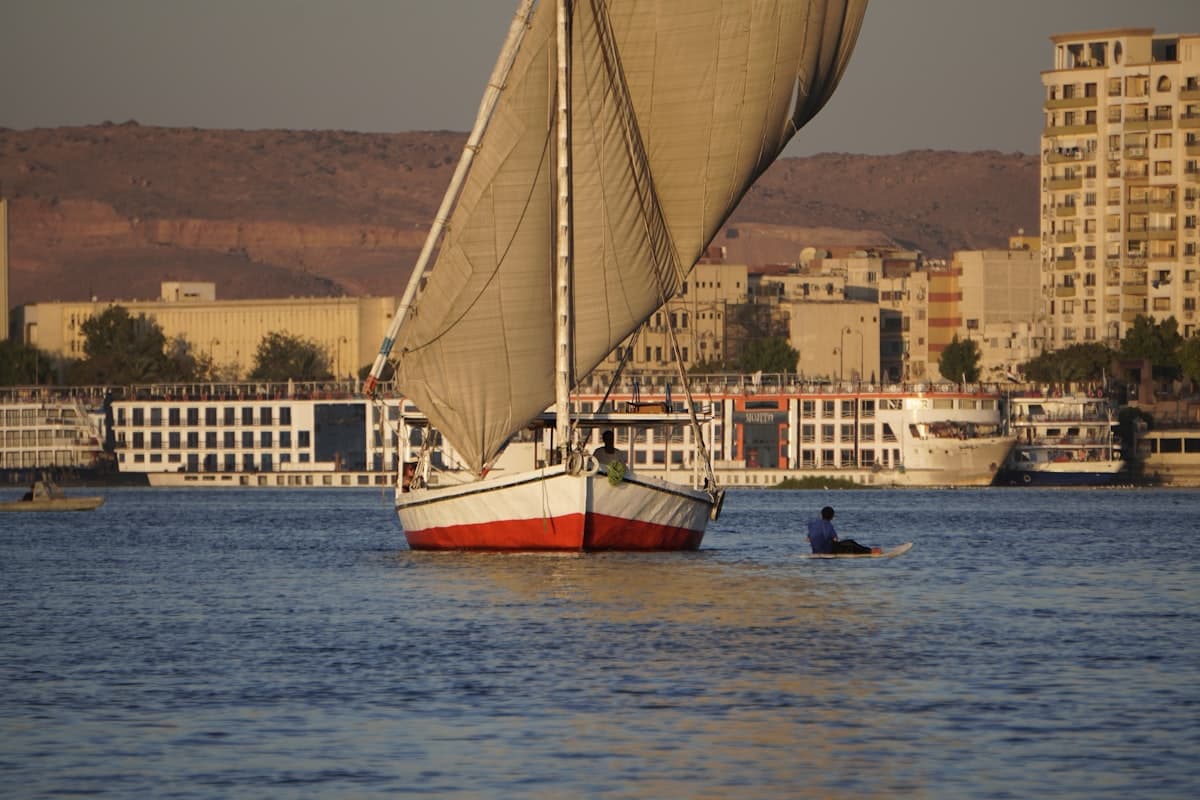
The deeper issue is pharaonic. The ancient Egyptians organized their year around the Nile's flood cycle: Akhet (inundation, June to September), Peret (growing season, October to February), and Shemu (harvest, March to May). The agricultural logic of this calendar still echoes in modern Egypt's rhythms. The Nile Valley in summer is left largely to those who live there, which means the felucca captains, the temple guards, and the tea sellers are all considerably more relaxed and considerably more willing to talk.
There is also Ramadan, which the Egyptian Tourism Authority gently avoids discussing in promotional materials. This is a mistake, and a disservice to travelers. Ramadan Egypt is a different country: quieter during the day, extraordinarily alive after sunset, with food stalls and Sufi performances and the call to prayer carrying a particular weight across the darkness. Restaurants in tourist areas stay open. Hotels serve breakfast behind closed curtains. The discomfort is overstated. The reward is underreported.
---
The Good Months: October, November, March, and April
If you have the flexibility, October and November are the best months to visit Egypt with almost no qualification. The summer heat has broken. Temperatures in Luxor sit around 33°C (91°F) in October, dropping to 27°C (81°F) by November. More importantly, the tourist season has not yet peaked, which means you can stand inside the Hypostyle Hall at Karnak at 7am and hear your own footsteps on 3,300-year-old stone.
November has a specific advantage for Upper Egypt: the light. Photographers and cinematographers who have worked in Egypt consistently identify the weeks between late October and mid-November as having the most extraordinary quality of natural light in the country. The angle of the sun against the limestone cliffs above the Valley of the Kings, the way it catches the painted ceilings inside Dendera's Hathor Temple at around 9am, the color it gives the sandstone of Abu Simbel at the end of the afternoon. The summer haze is gone. The winter clouds have not yet arrived.
March and April replicate many of October's advantages, with one complication: Khamaseen. This is the fifty-day wind season that blows hot grit off the Western Desert into the Nile Valley, typically running from late March through May. A Khamaseen storm is not violent, but it is all-consuming: the sky turns orange-brown, visibility drops, and fine sand finds its way into every sealed bag and every camera lens. It lasts twelve to twenty-four hours per event, and there are usually three to seven events per season. If you are in Luxor during one, go inside a museum. Do not try to visit open sites.
April, once Khamaseen has passed, is genuinely underrated. Egyptian families are on spring break for a portion of the month, so domestic tourism rises, but international visitor numbers are still lower than December or January. The feluccas on the Nile are uncrowded. The prices for everything from hotels to camel rides are negotiable in a way they simply are not in peak season.
---
Summer in Egypt: The Honest Assessment
The tour operators are not lying when they say summer is not recommended for Upper Egypt. They are, however, being somewhat cowardly about the specific numbers. Aswan in July averages a high of 41°C (106°F). That is the average. It regularly reaches 45°C. The combination of direct sun, reflective sand, and limestone that has been absorbing heat since dawn means that standing in the open forecourt of Luxor Temple at 2pm in August is not merely uncomfortable. It is genuinely dangerous if you are not properly hydrated and protected.
That said, Cairo in summer is workable. The Egyptian capital sits in the Nile Delta zone, and its summer temperatures, while hot at 34-36°C, are survivable if you adjust your hours. The Egyptian Museum, the Citadel, Khan el-Khalili in the evening, the Coptic churches of Old Cairo: all of these are reasonable summer activities if you are out before 10am and again after 5pm. The bonus is that summer Cairo belongs to Cairenes. The city is operating at its own rhythm, not yours, and that is often where the best meals and the most honest conversations happen.
Sinai and the Red Sea coast run on a completely separate logic. Hurghada and Sharm el-Sheikh are year-round destinations, but summer water temperatures on the Red Sea reach 28-30°C, which actually brings out pelagic species. August and September are when divers have documented the highest frequency of whale shark sightings off the Brothers Islands. The diving industry's quiet acknowledgment is that summer is peak season for serious divers, not winter.
---
Ramadan: The Season Nobody Tells You About
Ramadan falls approximately eleven days earlier each solar year, which means it cycles through every season over a 33-year period. When it falls in winter (as it will for much of this decade), visiting Egypt during Ramadan deserves serious consideration.
The practical adjustments are minor. Government-run sites maintain the same hours. Tourist restaurants stay open. Hotel breakfasts are served in modified spaces. Alcohol is available in hotels, though not publicly.
What changes is the texture of the country after dark. Egyptian Ramadan evenings center on Iftar, the meal that breaks the fast, and the two to four hours after it. The streets fill. The lights go on. In Cairo's historic Islamic quarter around Al-Azhar, fanous lanterns hang across the lanes, and the smell of konafa, warm cream cheese pastry soaked in syrup, comes from every second doorway. In Luxor, the corniche fills with families who have been indoors all day. The Nile at 9pm during Ramadan is the Nile at its most Egyptian.
The one legitimate concern is service. Staff at attractions are fasting, which means tired and sometimes short-tempered by late afternoon. Be patient. Buy nothing between 3pm and sunset if you want a fair negotiation. And if anyone invites you to Iftar at their home or their stall, accept without hesitation.
---
The Connections: How Season Changes What You Understand
Season is not just logistics. It changes what ancient Egypt becomes legible to you.
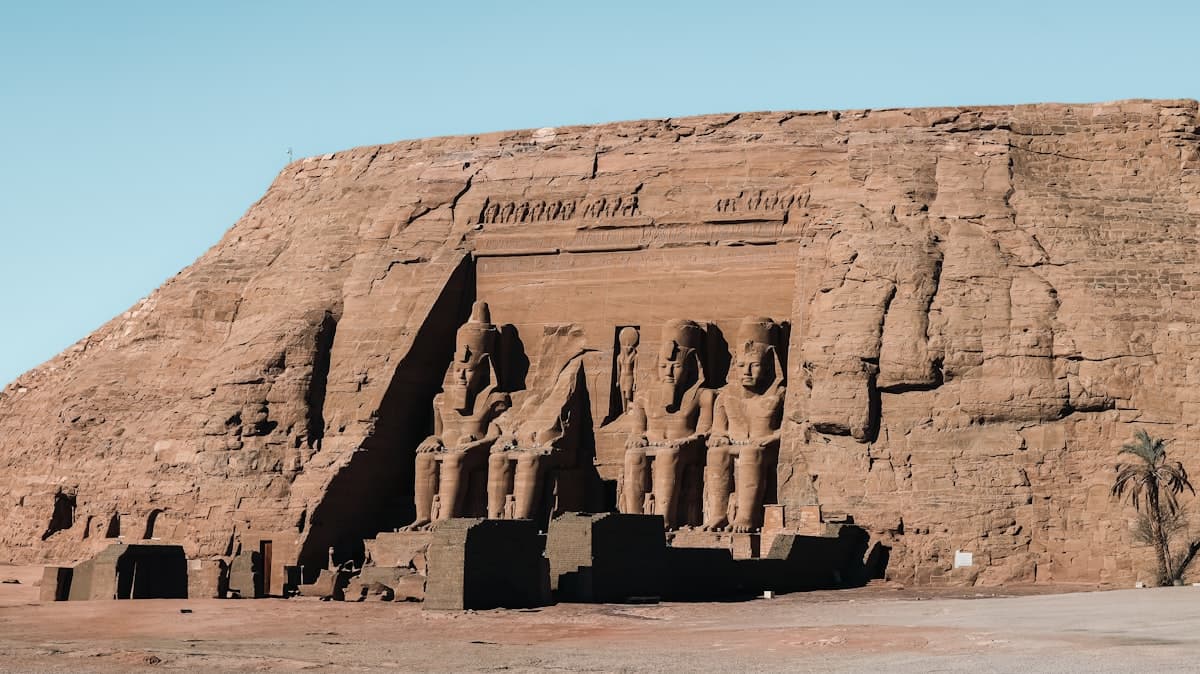
The ancient Egyptians oriented their entire religious calendar around astronomical events tied to season. The temple of Abu Simbel was aligned by Ramesses II's architects so that sunlight penetrates its inner sanctuary and illuminates the statues of the gods exactly twice per year: on what scholars believe was his birthday and his coronation date, around February 22 and October 22. If you arrive on either date, you will be among several hundred people who have planned around this alignment for years. The phenomenon lasts approximately twenty minutes. It is not overrated.
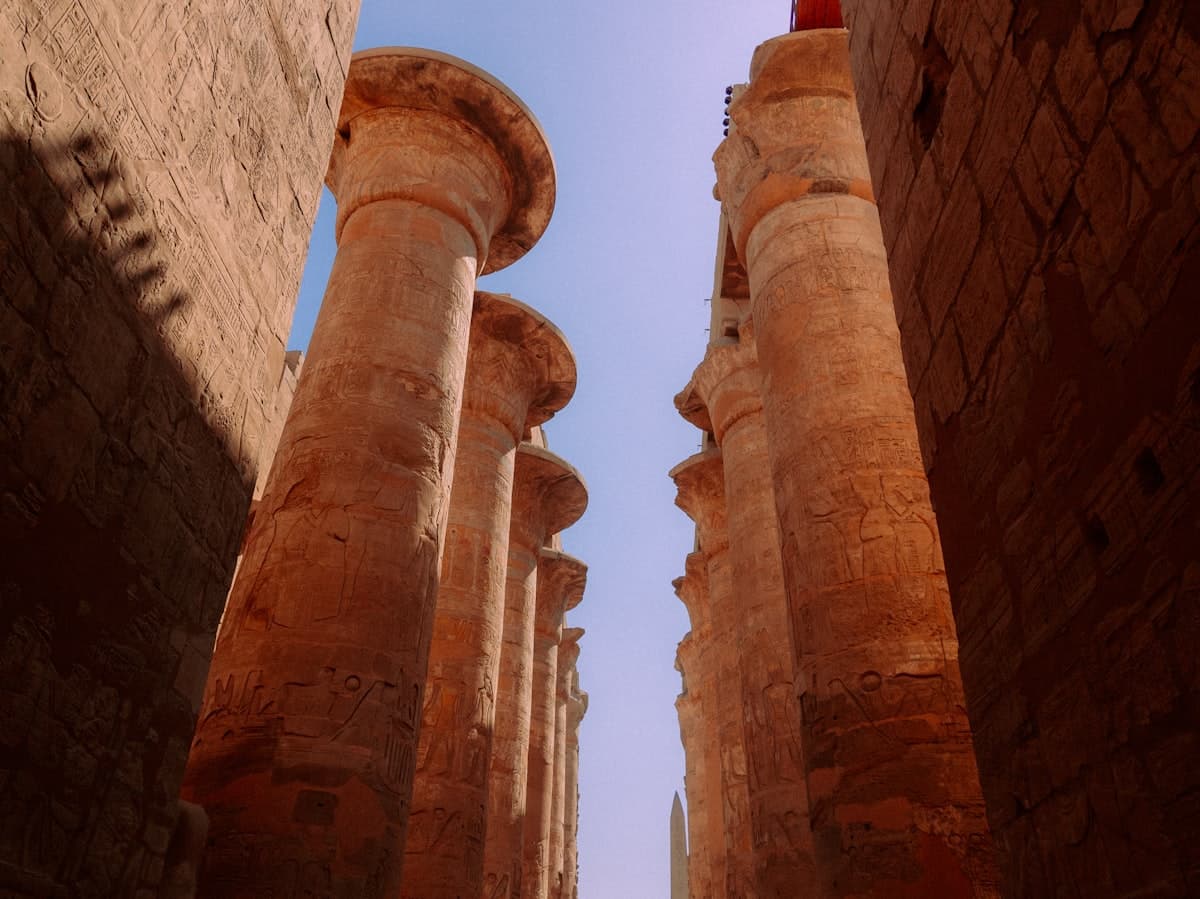
At Karnak, the Hypostyle Hall's 134 massive columns were completed under Seti I and Ramesses II between approximately 1290 and 1224 BC. The hall was designed so that the central nave, higher than the flanking columns, admitted clerestory light onto the processional path. In winter morning light, this effect is visible. In summer midday, it is not, because the sun is directly overhead rather than angled. Understanding this is understanding that the ancient Egyptians were not decorating temples. They were engineering light.
---
Common Mistakes
Treating December as the obvious choice. It is the most popular month precisely because the logic is correct (good weather) but the execution is catastrophic (everyone has the same logic). The Valley of the Kings between December 20 and January 5 is visited by approximately 8,000-10,000 people per day. The tombs were designed for a single priest at a time.
Booking a Nile cruise without checking the water level. The Nile's navigable depth between Luxor and Aswan varies by season. From June to October, post-Aswan High Dam construction, levels are managed, but some smaller cruise vessels have draft limitations that affect itineraries in certain months. Ask your operator specifically whether all scheduled stops are guaranteed year-round.
The sound and light show at the Pyramids. It costs EGP 300-450 (approximately $10-15 USD), runs about 45 minutes, and consists of colored lights and a narration you can find on YouTube. It tells you nothing about the Pyramids that reading for twenty minutes would not tell you better. Skip it. Spend the money on an extra hour inside the Grand Egyptian Museum instead.
Arriving in Luxor in summer without pre-booking an early morning private car. The sites open at 6am. At 6am in August, it is already 33°C. By 9am, it is 38°C. By 11am, the Valley of the Kings is inhospitable. If you are visiting Upper Egypt in summer, your entire schedule must compress into a three-hour morning window. Tourists who do not pre-arrange early transport end up walking in peak heat and missing half of what they came for.
Underestimating Cairo as a year-round destination while overestimating Upper Egypt's summer viability. Many itineraries allocate three days to Cairo and five to Luxor and Aswan. In summer, that ratio should probably invert. Cairo's density of Islamic monuments alone, the Mosque of Ibn Tulun completed in 879 AD, the Citadel of Saladin begun in 1176 AD, the entire district of Al-Muizz li-Din Allah Street, could absorb a week of serious attention in any season.
Ignoring shoulder season at the Red Sea. October and November are, objectively, the best months to be in Egypt's Red Sea resorts. The water is still warm from summer (26-28°C), the wind has not yet picked up to the levels that plague December and January, and the hotels are at 40-60% of their peak capacity. Prices reflect this.
Planning a fixed itinerary without accounting for Ramadan prayer times. Friday noon prayers in particular cause significant closures and crowd patterns in Islamic Cairo. If your only day in the city falls on a Friday, build in a 90-minute gap between 11:30am and 1:30pm where you are near food and not standing outside a closed mosque.
---
Practical Tips
For the Nile Valley sites, the single most important practical decision is whether to book early morning access before the tour groups arrive. Most group tours arrive at the Valley of the Kings between 8:30am and 10am. The site opens at 6am. That 90-minute window is not merely less crowded. It is a different experience.
Dress code matters year-round and is not negotiable at Coptic churches or mosques. For women, shoulders and knees must be covered. For men, shorts below the knee are generally acceptable at mosques if a full dishdasha is not available. At the Citadel complex, scarves are available to borrow at the entrance, but they are visibly overused and bringing your own is basic respect.
For internal travel, the Egyptian National Railways first-class sleeper from Cairo to Luxor departs around 7:30pm and arrives at approximately 7am, which is both practical and genuinely one of the better ways to experience the Nile Delta at dawn from a train window. Book at least two weeks in advance during peak months.
For the Sinai coast specifically, the land border crossings at Taba (with Israel and Jordan via ferry) have variable wait times. The Taba crossing to Eilat typically takes 45 minutes to two hours; budget accordingly if you have a flight connection.
Frequently Asked Questions
The Weekly Dispatch
More on Egypt, every Friday.
Cultural depth and places most guides never mention.
No spam. Unsubscribe anytime.