Egypt Travel Budget Guide: What Things Actually Cost
Egypt costs less than almost anywhere with comparable history. But the tourist price and the local price for the same meal can differ by 800%. Here is how to close that gap.

Quick Facts
- Best time to visit
- October to February. November and December are ideal: cool enough for daytime site visits, warm evenings, and lighter crowds than January. Avoid June through August in Upper Egypt where temperatures exceed 45°C.
- Entrance fee
- Varies by site. Giza complex EGP 540 (approx $11 USD), Great Pyramid interior extra EGP 700 ($14 USD). Karnak EGP 450 ($9 USD). Valley of the Kings base EGP 400 ($8 USD) covering three tombs. Egyptian Museum EGP 450 ($9 USD), Royal Mummy Room extra EGP 500 ($10 USD).
- Opening hours
- Most sites open daily 6am to 5pm (summer) and 6am to 6pm (winter). Egyptian Museum open 9am to 5pm daily. Verify before travel as hours shift seasonally.
- How to get there
- Cairo: fly into Cairo International, Uber to central Cairo EGP 150 to 200. Between cities: overnight sleeper train Cairo to Luxor or Aswan EGP 900 to 1,400 per berth. Within cities: Cairo Metro EGP 10 flat fare, Uber from EGP 30 per trip. Luxor local ferry West Bank crossing EGP 10.
- Time needed
- Cairo minimum 3 days, ideally 4 to 5. Luxor minimum 2 days for East and West Banks. Aswan 1 to 2 days. Abu Simbel day trip from Aswan adds one long day. Full Egypt circuit (Cairo, Luxor, Aswan, Abu Simbel) requires 10 days minimum.
- Cost range
- Shoestring EGP 800 to 1,200 per day ($16 to $24 USD). Comfortable independent EGP 1,500 to 2,500 per day ($30 to $50 USD). Mid-range with guides and private transport EGP 3,500 to 6,000 per day ($70 to $120 USD).
A budget traveler who knows Egypt well will spend less per day in Cairo than in Budapest. A budget traveler who does not know Egypt will spend more than they planned in Budapest, pay three times the market rate for every taxi, and eat at restaurants that exist purely to extract money from people who look like them. The difference between those two experiences is not luck. It is information.
This guide is not about going cheap for the sake of it. Egypt has extraordinary things that are worth full price. The point is knowing which things those are, and which things are a transfer of wealth from your pocket to an intermediary who added nothing to your experience.
Quick Facts
Best time to visit: October to March. Summer temperatures in Upper Egypt regularly exceed 45°C, which is not a climate in which you want to be standing in an unshaded valley.
Daily budget ranges: Backpacker/shoestring: EGP 800 to 1,200 per day (approx $16 to $24 USD) Comfortable independent traveler: EGP 1,500 to 2,500 per day (approx $30 to $50 USD) Mid-range with guides and private transport: EGP 3,500 to 6,000 per day (approx $70 to $120 USD)
Currency: Egyptian Pound (EGP). As of early 2025, approximately 50 EGP to 1 USD, though rates shift. Use official bank exchange counters or ATMs at major banks. The airport exchange rate is acceptable. Street exchanges are not.
How to get cash: ATMs at Banque Misr and CIB branches are reliable. Withdraw large amounts at once because ATM limits and fees eat small withdrawals. Most budget accommodation and restaurants are cash-only.
Getting between cities: The overnight sleeper train from Cairo to Luxor or Aswan costs EGP 900 to 1,400 for a berth (approx $18 to $28 USD) in a private two-person cabin. This is the single best transport value in Egypt. It saves you a night's accommodation and arrives at dawn, which is the correct time to be in Luxor.
Time needed for Egypt: Cairo alone requires a minimum of three days to understand anything. Cairo and Luxor together require six. Cairo, Luxor, and Aswan with the Abu Simbel detour require ten days minimum.
---
Why Your Budget Assumptions About Egypt Are Wrong
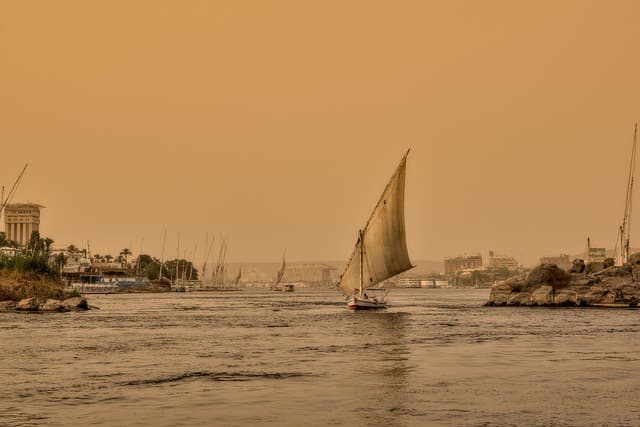
Egypt has two parallel economies running simultaneously, and they overlap in ways that are invisible until someone explains them to you.
The first economy serves Egyptians. A koshari from a street cart costs EGP 20 to 40 (under $1). A metro ticket in Cairo costs EGP 10 regardless of distance, which makes it one of the cheapest urban rail systems in the world. A local microbus ride anywhere in Cairo costs EGP 5. A full meal at a restaurant that does not have an English menu costs EGP 80 to 150.
The second economy serves foreign tourists, and it is priced against European and American incomes. A restaurant near the Giza plateau with an English menu and a view of the pyramids will charge EGP 400 to 700 for the same meal. A taxi driver outside any major hotel will open negotiations at ten times the correct fare.
Neither of these is dishonest in the Egyptian framework. Egyptians negotiate everything. A price that opens at X is an invitation, not a declaration. The problem is that most tourists do not know what X should be, so they cannot recognize when the invitation is reasonable and when it is not.
The archaeological ticket prices are officially tiered. The Giza complex costs EGP 540 for foreign adults (approx $11 USD) for exterior access, with the Great Pyramid interior costing an additional EGP 700 (approx $14 USD). The Valley of the Kings base ticket at EGP 400 (approx $8 USD) covers three tombs, with each additional tomb priced separately at EGP 100 to 500 depending on the tomb. Tutankhamun's tomb, the most visited and arguably the least interesting of the royal tombs given how stripped it is, costs an extra EGP 300. Seti I's tomb, which contains the finest painted reliefs in Egypt, costs an extra EGP 1,500. The ratio of tourists to quality is inverted.
---
Cairo: Where to Spend and Where Not To
Cairo will try to sell you things you do not need. Here is how to navigate it.
Transport: The Cairo Metro runs from Helwan in the south to the airport area in the northeast and covers most of the sites a first-time visitor cares about. Ramses Square to Tahrir Square costs EGP 10. Tahrir to the Egyptian Museum is a three-minute walk. Taxis via Uber or Careem are honest: you see the price before you confirm. Regular street taxis require negotiation, and the starting price will be between three and ten times the real fare. Uber is your friend in Cairo. It is priced in EGP at local rates, not tourist rates.
Food: The best food in Cairo does not come from restaurants that advertise themselves to tourists. Koshary Abu Tarek near Tahrir Square is genuinely famous among Egyptians and costs EGP 35 to 60 for a full bowl of koshari, Egypt's national dish, a layered combination of pasta, rice, lentils, crispy onions, and tomato-vinegar sauce that has been feeding this city since the nineteenth century. Foul and ta'ameya from any bakery-front cart in the morning costs EGP 15 to 25 for a full breakfast. The food is not a compromise. It is often better than the restaurants.
The Egyptian Museum: The entry fee is EGP 450 for foreign adults (approx $9 USD). The Royal Mummy Room inside costs an additional EGP 500 (approx $10 USD). The mummies are worth it. You are standing three meters from Ramesses II, who ruled Egypt for 66 years, fought the Battle of Kadesh against the Hittites in 1274 BC, signed what may be the first known peace treaty in recorded history, and whose face is so well preserved you can see the reddish hair dye he used in old age. That is EGP 950 total, which is $19, which is less than a cinema ticket in London.
What is not worth it in Cairo: The Nile dinner cruise. It costs EGP 600 to 1,200, serves mediocre food, plays amplified music at a volume that precludes conversation, and shows you a stretch of the Nile you can see for free from the Qasr El Nil Bridge. The beledi bread served on that bridge costs EGP 5. The view is identical.
---
Luxor and Aswan: The Budget Calculus Changes
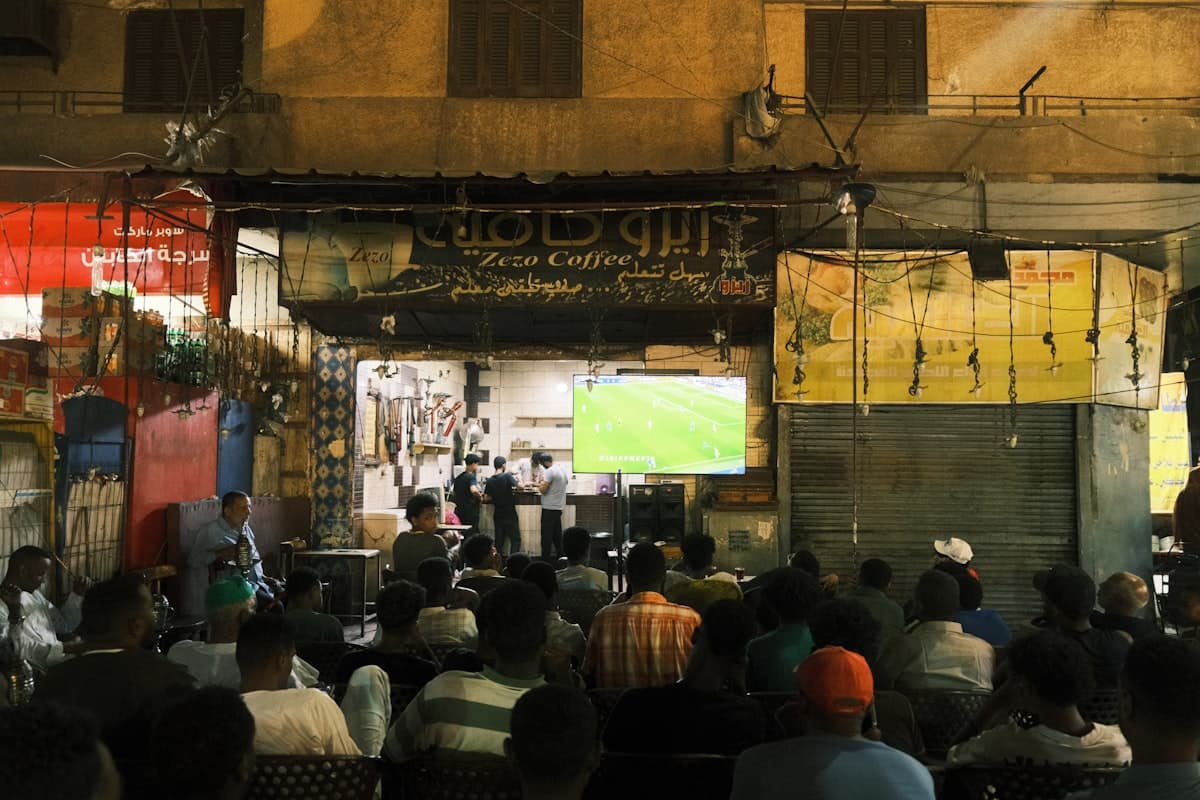
Upper Egypt is where the equation shifts. The sites require more money to enter, and the transport between them rewards those who plan.
Luxor is small enough to bicycle. A one-day bicycle rental costs EGP 80 to 150 and covers the entire East Bank, which includes Karnak Temple (EGP 450 entry, approx $9 USD) and Luxor Temple (EGP 300 entry, approx $6 USD). The West Bank requires crossing the Nile by local ferry, which costs EGP 10 on the public boat versus EGP 80 to 150 on tourist boats. Take the public boat. It leaves from the dock by the Winter Palace Hotel and takes seven minutes.
The Valley of the Kings base ticket (EGP 400) is the floor, not the ceiling. Budget for EGP 800 to 1,200 total once you add the tombs worth seeing. Nefertari's Tomb in the Valley of the Queens is EGP 1,800 (approx $36 USD), which is the most expensive single tomb in Egypt. It is also the most beautifully painted space in the entire country, and the ticket price includes a strict 150-person daily limit, which means you will actually be able to look at the walls without someone's elbow in your ribs. It is worth every pound.
Aswan is cheaper than Luxor. The Nubian villages on Elephantine Island are accessible by local ferry for EGP 15. Philae Temple (EGP 450 entry, approx $9 USD) requires a motorboat to the island, which costs EGP 100 to 150 per person on a shared boat from the dock near the Old Dam. Abu Simbel from Aswan: the tour buses cost EGP 350 to 500 per person and leave at 3am to avoid the heat. The temples themselves cost EGP 540 entry (approx $11 USD). The Ramesses II temple was relocated in its entirety between 1964 and 1968, cut into 20,000 individual blocks and reassembled 65 meters higher on an artificial hill to save it from the rising waters of Lake Nasser. The engineering cost $42 million in 1960s dollars. The ticket price is not the issue.
---
The Connections Between Money and History
Understanding Egypt's price structure requires understanding its history of mass tourism, which began not with the modern era but with Thomas Cook's first organized Nile tour in 1869, the same year the Suez Canal opened. Cook negotiated bulk rates with the Egyptian government, created the template of the packaged Egypt experience, and effectively established the idea that Egyptians were service providers for European curiosity. That structural imbalance runs directly into the present.
The result is a tourist infrastructure that was designed for package tours and has never fully adapted to independent travelers. The sites charge foreigners more because that differential was built into the system in the colonial era and has never been unwound. When you pay EGP 540 to enter the Giza complex and the man beside you pays EGP 60 as an Egyptian national, you are looking at the inherited logic of a system designed when most foreigners arrived by steamship with a fixed budget and no intention of returning.
This is not an argument against paying the price. The revenue funds the Supreme Council of Antiquities, which funds conservation. It is an argument for understanding what you are paying into and why.
---
Common Mistakes That Drain Your Budget
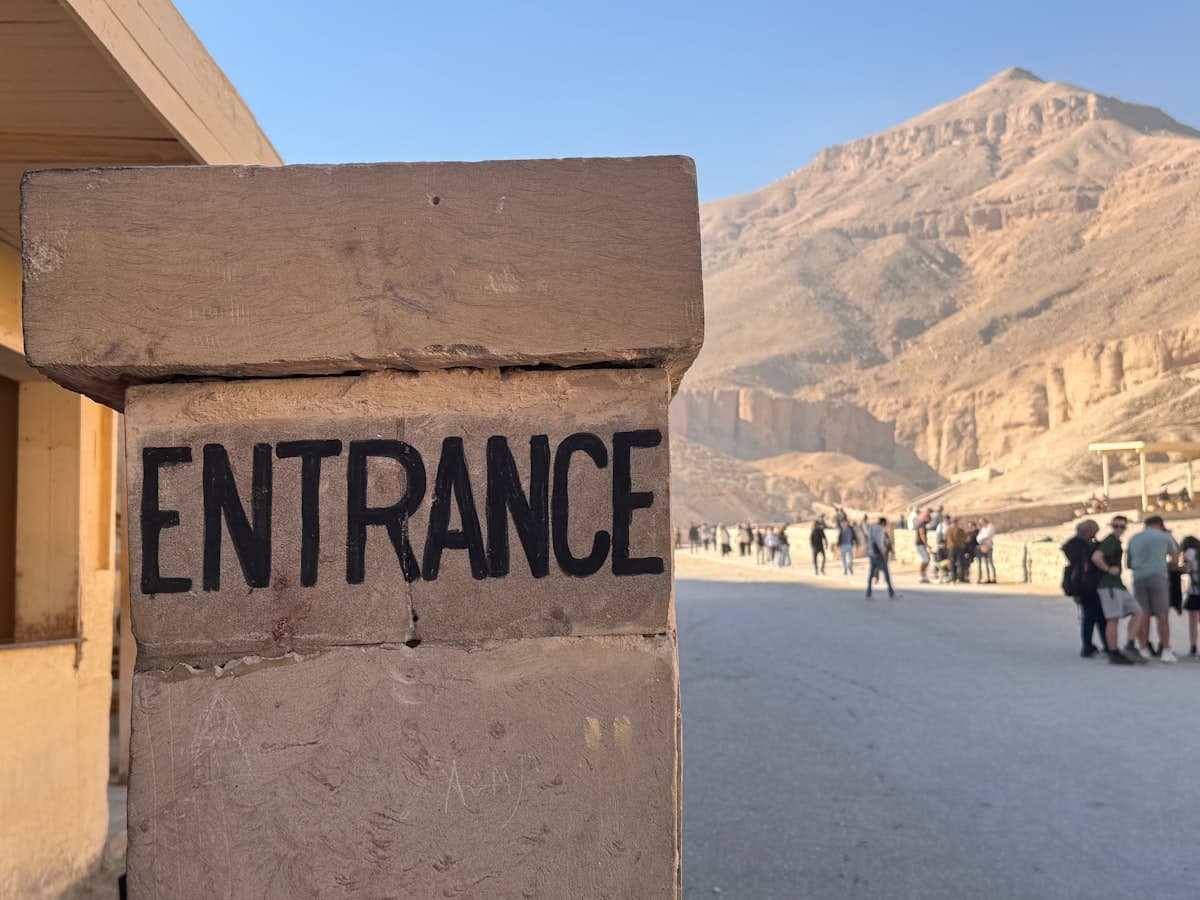
1. Booking accommodation near major sites. Hotels within walking distance of the pyramids, the Valley of the Kings, or Abu Simbel charge a location premium of 40 to 100 percent. The Uber from a cheaper hotel in central Luxor to the West Bank ferry costs EGP 30. The price difference in accommodation more than covers it.
2. Using airport taxis. The official taxi desk at Cairo International sets fares that are two to three times the Uber equivalent. Uber operates normally from the arrivals level. Walk out, open the app.
3. Buying water at tourist sites. A 1.5-liter bottle of water inside the Giza complex costs EGP 50 to 80. The same bottle from a kiosk on the street outside costs EGP 10 to 15. Fill a reusable bottle before you enter anywhere.
4. Taking the sound and light show at Karnak. It costs EGP 350, runs for 75 minutes, and tells you information that the temple walls themselves communicate better in daylight. The show replaces understanding with spectacle. Skip it and use that evening to walk through the Luxor souk instead, which costs nothing and is more honestly Egyptian.
5. Buying antiquities from anyone, anywhere. Leaving aside legality, which is serious, the objects are almost all fake. Egypt produces extraordinarily good reproduction scarabs, ushabtis, and papyrus. The vendors know they are fake. So should you.
6. Not carrying small denomination notes. Every baksheesh transaction, every toilet, every person who opens a door or holds a flashlight or offers unnecessary but unavoidable assistance requires EGP 5 to 20. If you only have EGP 200 notes, you will either overpay or create friction. Break large notes in pharmacies and bakeries, not at sites.
7. Paying for a guided group tour when an audio guide exists. Most major sites now sell official audio guides at the ticket office for EGP 50 to 100. The information is prepared by Egyptologists. It is not as personalized as a good private guide, but it is incomparably better than the inaccurate narratives many low-cost group tour guides deliver at volume while moving everyone too fast to read anything.
---
Practical Notes
The best months are November through February. March and April bring increasing heat and the khamsin, a dry wind that deposits a fine layer of dust on everything including you. October is excellent if you want slightly thinner crowds at major sites.
Carry a small Arabic phrasebook or have Google Translate available offline. The effect of attempting even elementary Arabic on the price of a negotiation is substantial. "Bikam?" (how much?) and "Ghali awi" (too expensive) will serve you in every market in the country.
The Egyptian Pound has depreciated significantly since 2022. All prices in this guide are indicative. Check current rates before travel and adjust your mental calculations accordingly. The structural relationships, the local price versus the tourist price, the affordable train versus the expensive bus, remain constant even as the absolute numbers shift.
Egypt is not expensive. It is only expensive if you let it be.
Frequently Asked Questions
The Weekly Dispatch
More on Egypt, every Friday.
Cultural depth and places most guides never mention.
No spam. Unsubscribe anytime.