Battle of Ain Jalut: How the Mamluks Stopped the Mongols in Egypt
The Mongols had never lost a major battle before Ain Jalut. One Egyptian slave-soldier changed that in September 1260. Here is the full story.

Quick Facts
- Best time to visit
- October through March. Temperatures are tolerable for extended walking in the medieval districts. July and August exceed 40C and the stone retains heat aggressively.
- Entrance fee
- Citadel of Saladin including National Military Museum: EGP 450 (approx $9 USD), students EGP 225. Sultan Hassan Mosque: EGP 100 (approx $2 USD). Museum of Islamic Art: EGP 200 (approx $4 USD), students EGP 100. Mosque of Baybars: free.
- Opening hours
- Citadel daily 8am-5pm. Sultan Hassan Mosque 8am-5pm, closed during Friday prayer (approx 12-1:30pm). Museum of Islamic Art Tuesday-Sunday 9am-5pm, closed Monday.
- How to get there
- Metro Line 1 to Sayyida Zeinab or Mar Girgis for the Islamic district (EGP 7). Taxi from central Cairo to the Citadel EGP 60-100. CTA bus from Tahrir Square approximately EGP 5. Uber available throughout central Cairo.
- Time needed
- Two full days for the core Mamluk circuit. Three days if including the Museum of Islamic Art. Add half a day for a specialist guide briefing if planning to engage the military history in depth.
- Cost range
- Budget EGP 600-900 per day including entrance fees and street food. Mid-range EGP 2,000-3,500 per day with a licensed specialist guide and sit-down meals.
The Day the Mongols Lost for the First Time
The Mongol army had sacked Baghdad in 1258, killing the last Abbasid Caliph by wrapping him in felt and trampling him with horses so that royal blood would not touch the ground. They had taken Damascus. They had taken Aleppo. Their commander, Hulagu Khan, sent a letter to the Mamluk Sultan of Egypt that read, in part: "You have heard how we have conquered a vast empire and have purified the earth of the disorders that tainted it. We have conquered vast areas, massacring all the people. You cannot escape from the terror of our armies." The Mamluk sultan who received that letter was Qutuz. He executed Hulagu's ambassadors, hung their heads on the Bab Zuwayla gate in Cairo, and marched north.
What happened next, at a spring called Ain Jalut in the Jezreel Valley of Palestine on September 3, 1260, was not just a military upset. It was the first time in the Mongol Empire's forty-year history of conquest that its army was defeated and not permitted to regroup. The Mamluks did not just stop the Mongols. They ended the western expansion of the greatest land empire the world has ever seen. And the force that did it was built entirely of men who had been bought as children.
Quick Facts
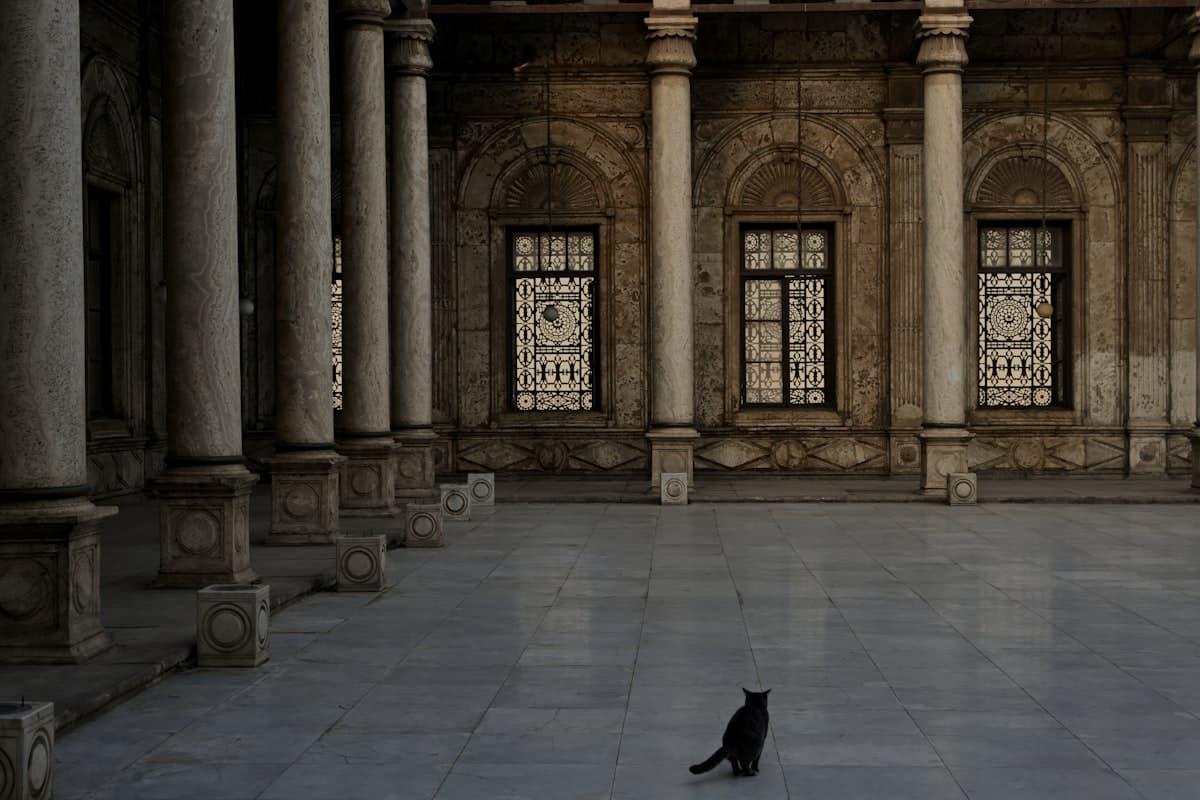
What this is: A historical and cultural itinerary tracing the Mamluk military civilization that won at Ain Jalut, centered on Cairo
Best time to visit Cairo's Mamluk sites: October through March. Summer temperatures exceed 40°C and the medieval stone traps heat without mercy.
Key sites and entrance fees: Citadel of Saladin (includes National Military Museum): EGP 450 (approx $9 USD), students EGP 225 Al-Muizz Street Mamluk monuments: free to walk, individual mosque interiors EGP 30-80 Museum of Islamic Art: EGP 200 (approx $4 USD), students EGP 100 Sultan Hassan Mosque-Madrassa: EGP 100 (approx $2 USD)
Opening hours: Citadel daily 8am-5pm. Sultan Hassan Mosque 8am-5pm (closed during Friday prayer). Museum of Islamic Art Tuesday-Sunday 9am-5pm.
How to get there: Metro Line 1 to Mar Girgis or Sayyida Zeinab for the Islamic district. Taxi from downtown Cairo to the Citadel approximately EGP 60-100. CTA bus 951 runs from Tahrir Square.
Time needed: The Mamluk circuit in Cairo alone requires two full days minimum. Combined with the Islamic Art Museum, allow three days.
Cost range: Budget EGP 600-900 per day including entrance fees and street food. Mid-range EGP 2,000-3,500 per day with a licensed guide.
Why This Battle Matters Beyond the History Books
The Battle of Ain Jalut itself took place in what is now northern Israel, not Egypt. You cannot stand on that battlefield as a tourist. But you can stand inside the civilization it produced, because the Mamluks who won that battle then ruled Egypt for the next 267 years, and they built obsessively. Cairo is, in enormous measure, a Mamluk city.
The word "Mamluk" comes from the Arabic for "owned." These were slave-soldiers, almost exclusively boys purchased from Turkic and Circassian tribes around the Black Sea and the Caucasus, brought to Egypt as children, converted to Islam, trained for a decade in cavalry tactics and Quranic scholarship, then manumitted and integrated into the military elite. The system was designed by Saladin's successors to create absolute loyalty: a soldier who has no tribe, no family, no homeland except the one his master gave him, fights differently than a conscript. The Mamluks proved this at Ain Jalut.
The Mongols' Egyptian campaign was commanded by a general named Kitbuqa, who had about 20,000 men after Hulagu withdrew the bulk of his forces to deal with a succession crisis further east. The Mamluk force under Qutuz and his general Baybars numbered between 10,000 and 20,000. Baybars used a feigned retreat, a tactic the Mongols themselves had perfected, to draw Kitbuqa's cavalry into a valley where the flanks collapsed on them. Kitbuqa was captured and beheaded. For the first time, a Mongol army was not simply defeated but destroyed, with no survivors permitted to carry news of a route back east.
The Man Who Won the Battle, Then Killed the Man Who Ordered It
Baybars is the figure who deserves the longest look. He was born around 1223 in the Kipchak steppe, sold into slavery as a teenager, and purchased for 800 dirhams, which his first buyer reportedly returned him for, claiming he had a flaw: a cataract or unusual coloring in one eye. He ended up in Egypt, trained in the Mamluk system, and became one of the most effective military commanders of the medieval world.
He was also the man who organized the assassination of Sultan Qutuz on the march back from Ain Jalut, less than a month after the victory. The specific story is that Baybars asked Qutuz for a female captive as a reward, and when Qutuz leaned down to embrace him in response, Baybars' conspirators stabbed him. Baybars became Sultan.
As Sultan from 1260 to 1277, Baybars reorganized Egypt's postal relay system so thoroughly that a message could travel from Cairo to Damascus in four days, a speed not matched in the region until the telegraph. He invited a surviving member of the Abbasid family to Cairo and installed him as a ceremonial Caliph, giving Egypt religious legitimacy over the entire Sunni Muslim world. He built and rebuilt constantly: the road network, the harbor at Alexandria, the aqueduct system feeding the Citadel. He personally led 38 military campaigns.
His mosque in Cairo, the Mosque of Baybars al-Bunduqdari, completed in 1269, is worth visiting specifically because it was built to the scale of a man who thought Egypt should be the center of the Islamic world. It is also honest about the Mamluk aesthetic: massive, slightly brutal in its exterior proportions, ornate only where it counts. The interior courtyard has a particular quality of silence even now, on a busy street in the Gamaliya district.
What You Will Actually See in Cairo's Mamluk Layer
The Citadel of Saladin is where Qutuz and Baybars both held court, though neither built the structure. It was begun by Saladin in 1176 using workers who had helped complete the Pyramids' casing stones, which he had dismantled for building material. The Mamluks expanded it continuously for two and a half centuries, and it contains more layers of Egyptian military history than almost any other single site in the country.
The National Military Museum inside the Citadel has a section on the Mamluk period that most visitors walk through in four minutes. Do not do this. The display on Mamluk cavalry tactics, including the training manual called the Furusiyya, which outlined horsemanship, archery, and lance exercises, is the closest you will get to understanding how Ain Jalut was actually won. The Mamluks drilled formations that allowed cavalry to shift between attack and feigned retreat without losing cohesion, a technical skill that took years to produce. The Mongols encountered soldiers who had been practicing this exact maneuver since childhood.
The Sultan Hassan Mosque-Madrassa, built between 1356 and 1363 by a Mamluk sultan who was deposed, reinstated, and deposed again before his assassination, is a case study in how political instability produced architectural ambition. Hassan poured money into this building partly because he could not trust his army. The entrance portal is 38 meters high, the tallest of any Mamluk structure in Cairo. The interior is cool even in summer, with a particular acoustic quality: the call to prayer, when it echoes in that courtyard, sounds less like a religious announcement and more like a physical fact.
The Museum of Islamic Art on Bab al-Khalq Square holds the largest collection of Islamic artifacts in the world, and its Mamluk section includes the actual brass inlaid vessels, ceremonial weapons, and Quran manuscripts that circulated in the Cairo that Baybars built. It reopened in 2017 after extensive restoration following a car bombing in 2014. The damage to several pieces from that bombing is documented in the museum's own notes. That honesty is rare in Egyptian museum culture and worth acknowledging.
The Connections: From Ain Jalut to Ottoman Cairo to Modern Egypt
The Mamluks who stopped the Mongols at Ain Jalut were themselves stopped, eventually, not by another nomadic army but by the Ottoman Empire, at the Battle of Marj Dabiq in 1516 and then decisively at the Battle of Ridaniyya outside Cairo in 1517. The Ottoman Sultan Selim I executed the last Mamluk Sultan, Tuman Bay, by hanging him three times at Bab Zuwayla, the same gate where Qutuz had displayed the heads of Mongol ambassadors 257 years earlier. The Mamluks had come full circle at the same gate.
But the Ottomans did not dissolve the Mamluk system. They kept it. Mamluk beys continued to administrate Egypt under Ottoman governors for another three centuries, until Napoleon arrived in 1798 and defeated a Mamluk cavalry charge at the Battle of the Pyramids with artillery squares that cavalry simply could not break. The era that had begun at Ain Jalut ended, functionally, within sight of Giza.
Muhammad Ali, the Albanian-born Ottoman commander who became Egypt's modernizing autocrat in the early nineteenth century, understood that the Mamluks were his only serious rival for power. In 1811, he invited Mamluk leaders to a celebration at the Citadel and had them killed in the narrow passage on the way out. Between 470 and 500 Mamluk commanders died that day. The street where it happened is still called the Passage of the Mamluks.
Common Mistakes
Treating Ain Jalut as a story that belongs to Palestine. The battle happened outside Egypt, but its consequences are entirely Egyptian. The civilization it protected and the dynasty it produced are walking-distance from your hotel in Cairo. The mistake is spending a day at the Pyramids and zero hours in the Mamluk city those Mamluks were defending.
Booking a general Islamic Cairo tour instead of a specialist guide. Generic tours spend forty minutes at Sultan Hassan and move on. The Mamluk period requires someone who can explain the slave-soldier system, the Furusiyya training culture, and the relationship between military success and architectural ambition. Expect to pay EGP 1,500-2,500 for a half-day specialist. It is worth the differential.
Visiting the Citadel without entering the National Military Museum. Most visitors photograph the Muhammad Ali Mosque (which is Ottoman, not Mamluk, and contains almost nothing relevant to this history) and leave. The military museum is forty meters away and contains the actual documentary and material record of Mamluk military culture. Admission is included in the Citadel ticket.
The sound and light show at the Citadel. It costs EGP 350 and delivers forty-five minutes of narration that covers 1,000 years of Egyptian history in a sequence of colored lights. Skip it entirely. The money buys you dinner and two museum tickets.
Going to the Museum of Islamic Art without reading the collection notes in advance. The museum has 102,000 objects and almost no interpretive signage in English that connects pieces to their political context. Download the museum's PDF catalogue before you go, or the Mamluk rooms will look like beautiful objects in cases rather than a civilization's self-portrait.
Visiting Al-Muizz Street only on a Friday morning. The street is closed to cars permanently, which is excellent. But Friday morning brings school groups and organized tours in volumes that make it difficult to stop and look at anything. Saturday late afternoon, the light comes down the street at an angle that makes the Mamluk stone glow orange-red. That is when to go.
Assuming the battle itself has a memorial you can visit. There is no official monument at the site of Ain Jalut accessible to most travelers. Tour operators occasionally offer expensive cross-border itineraries. Do not pay for them. The battle is not in the landscape anymore. It is in Cairo's stone.
Practical Tips
Hire a licensed Egyptologist guide specifically for Islamic Cairo rather than a general city guide. Ask directly whether they can explain the Mamluk military recruitment and training system. If they cannot answer that question before the tour starts, find someone else.
Wear shoes you can remove quickly. Most Mamluk mosques are still active places of worship, and you will be asked to leave footwear at the entrance. Socks are adequate; you do not need special footwear.
The Mamluk district is densest in the area between the Citadel and Al-Azhar Mosque, roughly two kilometers. This walk is manageable in the morning before 10am in summer, or any time between October and April. In July and August, do it before 9am or after 4pm.
Carry cash. Entrance fees at smaller mosques and some museum annexes are cash only, and ATMs in the medieval district are unreliable. EGP 500 in small bills covers a full day comfortably.
For context before arrival, read David Nicolle's "The Mongol Warlords" and Robert Irwin's "The Middle East in the Middle Ages," which covers the Mamluk Sultanate with the seriousness it deserves. Both are available in English and will transform what the stones mean when you stand in front of them.
Frequently Asked Questions
The Weekly Dispatch
More on Egypt, every Friday.
Cultural depth and places most guides never mention.
No spam. Unsubscribe anytime.