Battle of Ain Jalut: Where Mamluks Broke the Mongol Myth in Egypt
The Mongols had never lost a major battle before September 3, 1260. A slave army from Egypt ended that record forever. Here is the full story.

Quick Facts
- Best time to visit
- October through March. November and February are ideal: cool enough for long walks, dry, and without Ramadan schedule complications in most years.
- Entrance fee
- Citadel complex EGP 450 (approx $9 USD). Sultan Hassan Mosque EGP 100 (approx $2 USD). Museum of Islamic Art EGP 150 (approx $3 USD). Madrasa of Sultan Barquq EGP 60 (approx $1.20 USD). Bab Zuweila EGP 60 (approx $1.20 USD).
- Opening hours
- Citadel daily 8am to 5pm. Most Al-Muizz Street mosques 9am to 5pm, closed to visitors during Friday noon prayers (approximately 11:30am to 1pm). Museum of Islamic Art Tuesday to Sunday 9am to 5pm, closed Mondays.
- How to get there
- Taxi or ride-share from downtown Cairo to the Citadel costs EGP 50 to 80 (approx $1 to $1.60). For Al-Muizz Street, Metro Line 2 to Al-Azhar station, then 5-minute walk. Khan el-Khalili microbus from Ramses costs EGP 5. Avoid driving yourself: parking near Islamic Cairo is not a realistic option.
- Time needed
- Minimum two full days to cover the Citadel, Al-Muizz Street monuments, and the Museum of Islamic Art with any depth. One serious day is possible if limited to Al-Muizz Street north to south plus one major monument.
- Cost range
- Budget EGP 400 to 700 per day including entrance fees, street food, and local transport. Mid-range EGP 1,200 to 2,000 per day with a licensed guide (EGP 600 to 1,000 for half-day) and sit-down meals.
The Day the Mongols Lost for the First Time
The Mongol army that rode into Syria in 1260 had, in living memory, destroyed Baghdad, burned the House of Wisdom, killed the last Abbasid caliph by rolling him in a carpet and trampling him with horses, and reduced cities that had taken centuries to build into rubble fields. They had never, in any major engagement, been defeated. Not once. Not by the Seljuks, not by the Khwarazmians, not by the Rus, not by the Poles, not by the Hungarians. The psychological weight of Mongol invincibility was itself a military weapon: cities surrendered before the first arrow flew.
On September 3, 1260, at a spring called Ain Jalut in the Jezreel Valley of what is now northern Israel, a Mamluk army from Egypt shattered that myth permanently. The commander was Baybars. The sultan nominally in charge was Qutuz. Neither man was Egyptian by birth. Both were enslaved Turkic soldiers who had been bought, trained, and sold through the slave markets of Cairo. And the force they led, the Mamluk sultanate, would go on to rule Egypt for the next 250 years.
You cannot visit the exact spring where the battle happened without crossing into Israel, and the site itself is unmarked. But the story of Ain Jalut is inseparable from Cairo, from the mosques and madrasas of the Mamluk quarter in Islamic Cairo, from the Citadel where Qutuz was assassinated by Baybars on the ride home, and from the Sultan Hassan mosque that Baybars's successors built with stones that may have come from the pyramids. This is where you go to understand what that battle actually produced.
---
Quick Facts
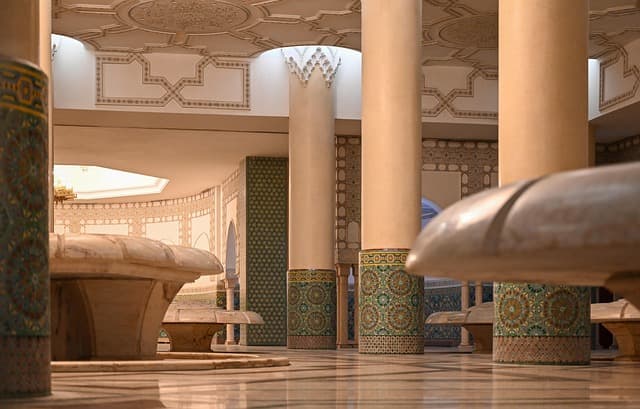
Best time to visit: October through March for Islamic Cairo. Summer heat in Cairo exceeds 38°C and the medieval lanes trap it mercilessly.
Entrance fees: The Citadel complex costs EGP 450 (approximately $9 USD) for foreigners. Individual mosques in Islamic Cairo vary: Sultan Hassan Mosque is EGP 100 (approximately $2 USD). The Madrasa and Mausoleum of Sultan Barquq is EGP 60 (approximately $1.20 USD). Al-Muizz Street itself is free to walk.
Opening hours: The Citadel opens daily from 8am to 5pm. Most mosques in Islamic Cairo are open from 9am to 5pm, though Friday prayers (around noon) close them to visitors for one to two hours.
How to get there: Cairo Metro Line 1 to Mar Girgis station puts you at the southern end of Islamic Cairo for the Coptic quarter. For the Citadel, take a taxi or ride-share from downtown Cairo, roughly EGP 50 to 80 ($1 to $1.60). From Khan el-Khalili, the Citadel is a 15-minute walk uphill via Al-Azhar Street.
Time needed: Al-Muizz Street and the surrounding Mamluk monuments warrant a full day. The Citadel alone is three to four hours minimum.
Cost range: Budget EGP 400 to 700 per day including sites, food, and local transport. Mid-range EGP 1,200 to 2,000 per day if combining with a guide and a sit-down lunch.
---
Why This Battle Still Matters
The Battle of Ain Jalut matters for three reasons, and travel guides typically get only one of them right.
The first: it was the first decisive defeat of a Mongol army in a major field engagement. Historians debate whether the Mongols were at full strength at Ain Jalut. They were not. The Great Khan Möngke had died in 1259, triggering a succession crisis that pulled the bulk of Mongol forces east. The commander at Ain Jalut, Kitbuqa, had perhaps 10,000 to 20,000 men. Qutuz and Baybars had more. This was not a miracle. It was strategy: the Mamluks waited until the odds were manageable, then engineered a battle on terrain they chose.
The second: the Mamluks were not a native Egyptian force defending their homeland. They were a military caste of enslaved and purchased soldiers, mostly Turkic and Circassian, who had been imported specifically because they were considered better fighters than anyone the Nile Valley could produce locally. The peculiar institution of military slavery that the Abbasid caliphs invented in the 9th century to protect themselves ultimately produced the force that stopped the Mongols. Egypt was saved by people who had been bought and sold.
The third, and least discussed: Ain Jalut permanently defined the shape of the Islamic world. If the Mamluks had lost, the Mongols would have entered Egypt, likely destroyed Cairo as they destroyed Baghdad, and pushed into North Africa. The Maghreb, Sub-Saharan Africa, and the western Indian Ocean trade network would all have been exposed. The fact that Cairo became, after 1258, the new seat of the Abbasid caliphate in exile and the undisputed cultural capital of the Arab-Islamic world is a direct consequence of the Mamluks stopping the Mongols at that spring in the Jezreel Valley.
---
Cairo as Mamluk Monument: What to Actually See
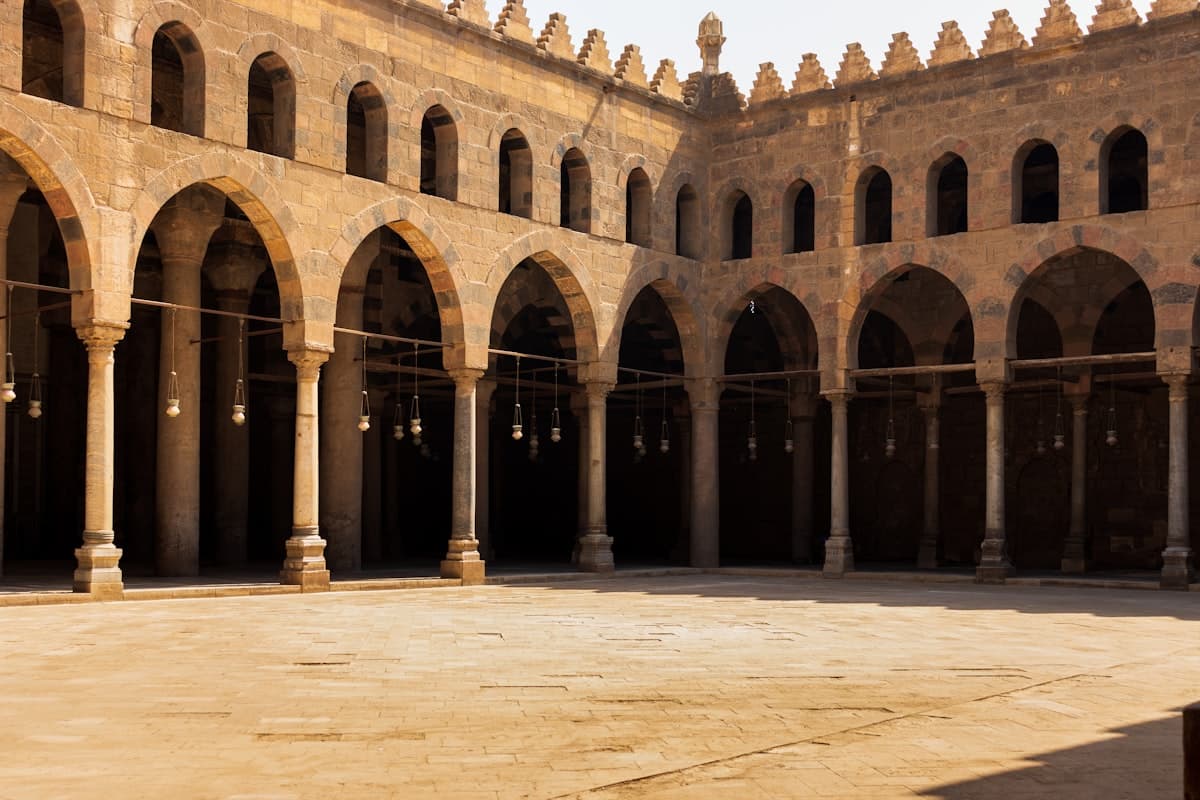
The Mamluks ruled Egypt from 1250 to 1517, and they built compulsively. Cairo's medieval core, the stretch of Al-Muizz Street from Bab al-Futuh in the north to Bab Zuweila in the south, is denser with medieval Islamic architecture than any comparable stretch of street in the world. This is not a casual claim. The monuments include mosques, madrasas, mausoleums, sabil-kuttabs (public fountains with Quran schools above them), and caravanserais, stacked so closely that one building's wall is another building's foundation.
Start at the Mosque-Madrasa of Sultan Barquq, completed in 1386. Barquq was the first Circassian Mamluk sultan, a man who had been enslaved in the Caucasus and sold into Egypt's military system as a child. His madrasa was built on the site of a Fatimid-era palace that itself sat over a much older structure. Inside, the qibla wall is covered with geometric woodwork that took craftsmen years to produce without a single nail: wooden joints interlocking in patterns derived from mathematical principles that European craftsmen would not understand for another two centuries.
Then walk south to the complex of Sultan Hassan, built between 1356 and 1363. It is the largest Mamluk building in Cairo and, by some measures, one of the largest medieval buildings on earth: the main iwan (vaulted hall) reaches 36 meters in height. The stones used in its construction include, according to some Egyptologists, material taken from the outer casing of the Giza pyramids, which were still being quarried for building material well into the medieval period. You are looking at a 14th-century mosque partially built from a 25th-century-BC pyramid. That is the kind of connection Islamic Cairo rewards if you pay attention.
The Citadel: Where Qutuz Died and Mamluk Power Lived
Qutuz did not survive his own victory at Ain Jalut. On the ride back to Cairo, Baybars and several conspirators killed him, reportedly by the simple method of Baybars asking to speak privately with the sultan and then stabbing him. Baybars then rode to Cairo, announced he was now sultan, and began one of the most consequential reigns in Egyptian history.
The Citadel of Cairo, begun by Saladin in 1176 on a spur of the Muqattam Hills, was the seat of Mamluk power for the entirety of their rule. The view from its walls over medieval Cairo to the pyramids beyond is one of the great urban panoramas on earth. The Mosque of Muhammad Ali inside the Citadel, which most visitors photograph, is an Ottoman building from the 1830s and has nothing to do with the Mamluks. The Mosque of al-Nasir Muhammad, built in 1318 and renovated in 1335, is the genuine Mamluk monument on the site, and most tourists walk past it without stopping.
The al-Nasir Muhammad mosque is worth the stop specifically because of its columns: they were looted from pharaonic and Greco-Roman sites across Egypt and Syria. There is a column in the prayer hall that came from a church in Acre. Look at the capitals. They do not match. The Mamluks did not care about stylistic coherence; they cared about demonstrating that every civilization before them had been absorbed into their project.
---
The Connections: From Ain Jalut to Ottoman Conquest
The Mamluk story in Egypt does not end well, and understanding how it ends makes the buildings more poignant.
In 1516 and 1517, the Ottoman Sultan Selim I defeated the Mamluks in two battles: Marj Dabiq in Syria and Raydaniyya just outside Cairo. The Mamluk sultan Tuman Bay was captured and hanged at Bab Zuweila, the southern gate of Fatimid Cairo, a gate that the Mamluks themselves had used for public executions. The Ottomans then governed Egypt for the next three centuries, but they kept the Mamluk beys as a local administrative class. The Mamluks were broken but not erased.
The final erasure came from an unexpected direction. Muhammad Ali, the Albanian-born Ottoman governor who effectively founded modern Egypt in the early 19th century, invited the remaining Mamluk leaders to a reception at the Citadel in 1811, locked the gates, and massacred them. The story that one Mamluk escaped by leaping his horse from the Citadel walls is almost certainly a legend. What is not a legend is that the institution Baybars built at Ain Jalut's victory was extinguished in a closed courtyard 551 years later by a man who understood exactly how dangerous a military caste with its own loyalty structures could be.
Bab Zuweila, where Tuman Bay was hanged, is free to enter and almost nobody climbs to the top. Do it. The view north up Al-Muizz Street and south toward the Citadel makes the city's layered history legible in a way no museum can replicate.
---
Common Mistakes
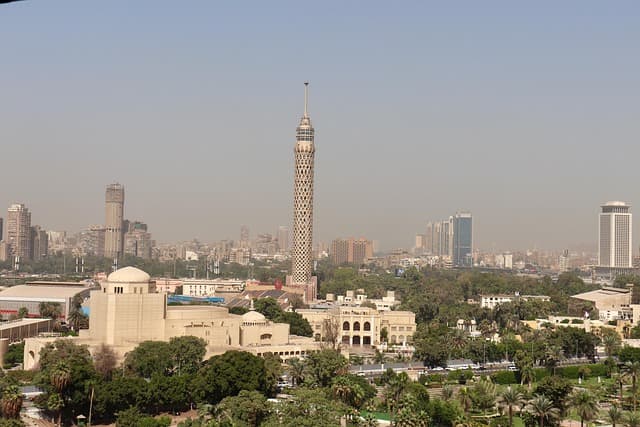
Spending most of your Citadel time in the Muhammad Ali Mosque. It is visually impressive and it is Ottoman. If you came to understand the Battle of Ain Jalut Mamluks Mongols Egypt connection, the al-Nasir Muhammad mosque 50 meters away is the relevant building. Most guides default to the bigger dome.
Skipping the northern section of Al-Muizz Street. The stretch south of Khan el-Khalili gets most of the foot traffic. The northern section, between the Qalawun complex and Bab al-Futuh, is quieter and contains some of the finest Mamluk facades in the city, including the Madrasa of Sultan Barquq and the wikala of al-Ghuri.
Taking a sound and light show at any Cairo venue to understand Mamluk history. None of them cover the Mamluk period in any useful depth. They are produced for general audiences and cost EGP 300 to 450 for information you will get more accurately from this article or from a knowledgeable guide.
Hiring a guide at the Citadel gate. The freelance guides at the entrance vary enormously in quality and some will take you to carpet shops. Book a licensed Egyptologist guide in advance through a reputable agency. Expect to pay EGP 600 to 1,000 for a half-day, which is worth it.
Going to Islamic Cairo on a Friday morning. Friday prayers create a two-hour window from roughly 11:30am when most monuments are inaccessible. Go Thursday or Saturday, or arrive at 9am on Friday before crowds and prayer times converge.
Underestimating the physical reality of Islamic Cairo. The lanes are uneven, the heat is serious from May through September, and the distances between monuments are longer than they look on a map. Wear flat shoes, carry water, and plan for two to three kilometers of walking on irregular stone.
Expecting a conventional battlefield experience. Ain Jalut itself is in northern Israel, near the town of Afula. There is no monument, no museum, and no visitor infrastructure. Cairo is where the battle's consequences live. Manage expectations accordingly.
---
Practical Tips
The Egyptian Museum in Tahrir holds no specific Mamluk collection of note: its focus is pharaonic. For Islamic-period objects, the Museum of Islamic Art near Bab al-Khalq is the correct destination and is consistently undervisited. It holds one of the most significant collections of Mamluk metalwork, glass, and woodwork in the world. Entrance is EGP 150 (approximately $3 USD).
If you want to understand the Battle of Ain Jalut Mamluks Mongols Egypt sequence before walking into Cairo's medieval core, read the relevant chapters of Robert Irwin's "The Middle East in the Middle Ages" or John Man's "The Mongol Empire" before you arrive. Context transforms what would otherwise be a pleasant architectural walk into something that makes sense.
For food near Islamic Cairo, the restaurants directly adjacent to Khan el-Khalili are overpriced and mediocre. Walk two streets east to find local fuul and ta'meya spots where a full meal costs EGP 60 to 100. El Fishawy cafe inside the Khan is genuinely old (it claims to have been open continuously since 1773) and the tea is better than the food, but the atmosphere at dusk is not manufactured.
Finally: the light on Al-Muizz Street in the late afternoon, around 4pm in winter, hits the limestone facades at an angle that makes the carved stone decorations three-dimensional. This is not a metaphor. The shadows in the geometric carvings become readable only at low angles. Arrive early, see the interiors, and be back on the street at 4pm. That is the Mamluk city at its most legible.
Frequently Asked Questions
The Weekly Dispatch
More on Egypt, every Friday.
Cultural depth and places most guides never mention.
No spam. Unsubscribe anytime.