Battle of Ain Jalut: Where Mamluks Stopped the Mongols
In 1260, the Mongols had never lost a major battle. Then a former slave army from Egypt changed that, permanently. The full story almost nobody tells.

Quick Facts
- Best time to visit
- October to March. Heat in Islamic Cairo is serious from May through September, and the narrow streets between monuments trap it. Winter light on Mamluk stone in the late afternoon is exceptional.
- Entrance fee
- Qalawun Complex EGP 100 (approx $2 USD). Baybars Mosque: free, donation of EGP 20-50 appropriate. Citadel combined ticket EGP 450 (approx $9 USD). Bab Zuwayla EGP 60 (approx $1.25 USD).
- Opening hours
- Most Islamic Cairo monuments open 9am to 5pm daily. Friday hours vary; some mosques restrict tourist access during midday prayers (approximately 12pm to 2pm). The Citadel opens at 8am.
- How to get there
- Metro to Ataba station (EGP 7), then 15-minute walk north into the Fatimid core. Taxi from downtown Cairo: EGP 40-70. Uber: EGP 60-90. No direct bus service worth navigating for first-time visitors.
- Time needed
- Half day for Al-Muizz Street core. Full day if combining with Baybars Mosque in Al-Husseiniya and the Citadel. Two days recommended if including the Coptic Museum and Old Cairo for historical context.
- Cost range
- Budget EGP 400-700 per day covering entrance fees, street food, and local transport. Mid-range EGP 1,500-2,200 including a guide, lunch, and taxis.
Quick Facts
Location: Ain Jalut (Ein Harod), Jezreel Valley, modern-day Israel/Palestine. The battle itself did not occur on Egyptian soil, but it was fought by an Egyptian army and decided Egypt's fate. Cairo is the place to understand it.
Best entry point in Egypt: The Mamluk Quarter of Islamic Cairo, specifically the complex of Sultan Baybars I at Al-Husseiniya and the Mosque of Sultan al-Zahir Baybars.
Entrance to Baybars Mosque (Cairo): Officially free, though a small courtesy donation of EGP 20-50 is expected. The mosque is not a formal tourist attraction, which is exactly why you should go.
Sultan al-Mansur Qalawun Complex, Al-Muizz Street: EGP 100 (approx $2 USD) for the full complex including mausoleum and madrasa.
Opening hours: Islamic Cairo sites generally open 9am to 5pm. Baybars Mosque has irregular hours; visiting Friday morning after prayers gives you the best access and the fullest congregation.
How to get there: Metro to Ataba station (EGP 7), then a 15-minute walk into the Fatimid core. Taxis from downtown Cairo cost EGP 40-70. Uber runs EGP 60-90 depending on traffic.
Time needed: Half a day for the Mamluk Quarter properly. A full day if you extend to the Citadel, where Mamluk sultans governed Egypt for over two centuries.
Cost range: Budget EGP 300-600 per day in Islamic Cairo. Mid-range EGP 1,200-2,000 if combining sites with lunch at Naguib Mahfouz Café near Khan el-Khalili.
---
Why This Battle Matters: The Day the Mongols Lost for the First Time
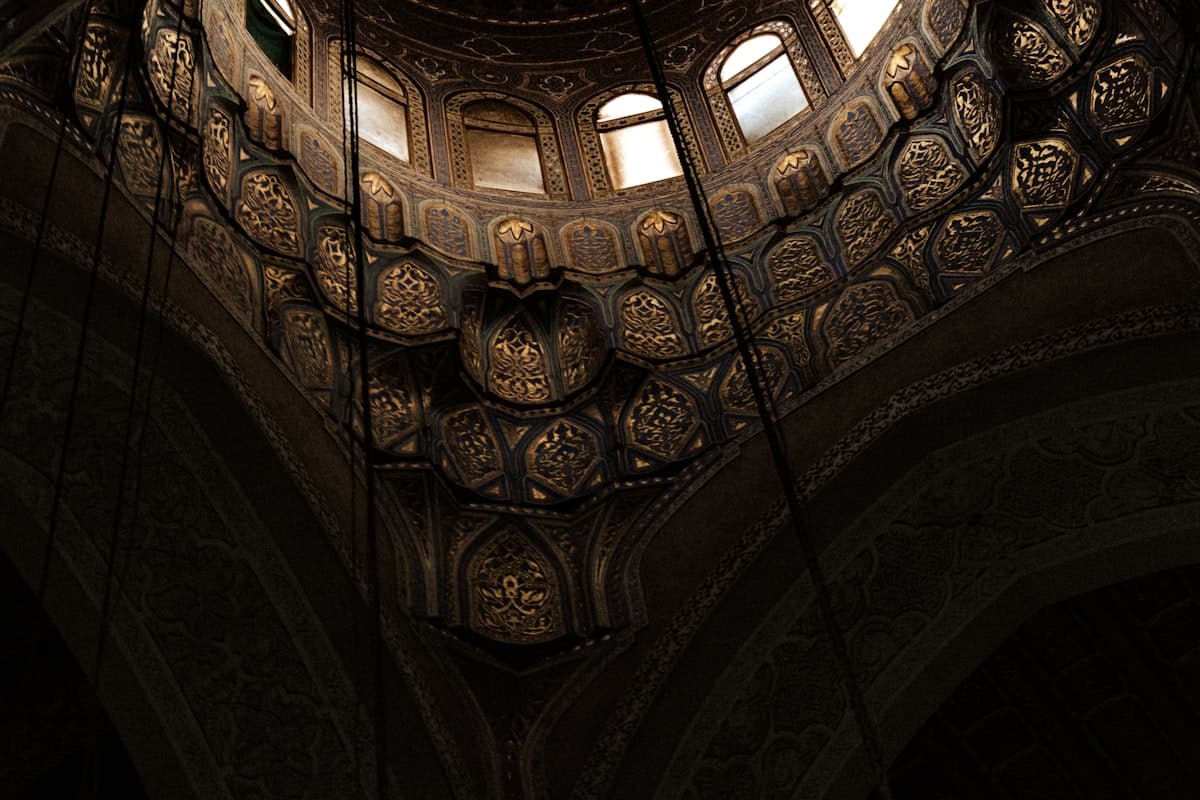
By the summer of 1260, the Mongol Empire had destroyed Baghdad, burned its libraries, killed the Abbasid Caliph by wrapping him in felt and trampling him with horses (so that royal blood would not touch the ground), and swept through Syria in a matter of months. Aleppo fell. Damascus surrendered without a fight. The Mongol commander Kitbuqa sent a letter to the Mamluk sultan in Cairo that was essentially an ultimatum: submit or be erased.
The Mamluks did not submit. On September 3, 1260, at the spring of Ain Jalut in the Jezreel Valley, a Mamluk army under Sultan Qutuz and his general Baybars met the Mongol force and destroyed it. Kitbuqa was captured and executed. It was the first decisive defeat the Mongols had suffered in open battle in forty years of expansion.
The battle of Ain Jalut between Mamluks and Mongols is not simply a military footnote. It is the event that fixed the eastern boundary of Islamic civilization for centuries. Had the Mamluks lost, there was no army between the Mongols and North Africa. Egypt would have been next. The Nile Valley, the libraries of Cairo, the Coptic churches that had survived Arab conquest and Crusade alike, all of it was contingent on what happened at that spring in September.
The people who won this battle were, by any measure, improbable saviors. They were slaves.
---
The Mamluk System: A Slave Army That Outlasted Every Empire
The word "Mamluk" comes from the Arabic for "owned." Mamluk soldiers were purchased as boys, mostly from Turkic, Circassian, and later Caucasian populations around the Black Sea. They were brought to Egypt, converted to Islam, trained in cavalry warfare and martial discipline from childhood, and then freed upon completing their military education. The logic of the system was elegant and brutal: a soldier with no family, no tribe, no homeland, and no loyalty except to his unit and his patron was the most effective soldier you could build.
The Ayyubid sultans, successors of Saladin, built the Mamluk corps as their professional military backbone. By the mid-thirteenth century, the Mamluks had become more powerful than the sultans they served. In 1250, they assassinated the last Ayyubid sultan and took Egypt for themselves. A decade later, they saved it.
Sultan Qutuz, who commanded at Ain Jalut, was himself a Mamluk of Turkic origin, possibly from the Khwarazmian dynasty displaced by an earlier Mongol campaign. He was fighting, in some sense, against the same force that had destroyed his original world. Baybars, his general, was Kipchak Turkic, purchased as a slave in Syria for 800 dirhams. His buyer returned him almost immediately because of a defect in one of his eyes. The man who bought him cheaply as a second-choice slave went on to become the architect of the Mongol defeat.
Baybars did not stop at Ain Jalut. After the battle, he had Qutuz assassinated, seized the sultanate for himself, and proceeded to dismantle the remaining Crusader states, recapture Antioch, and build the most sophisticated postal relay system in the medieval world. His barid, a network of horse relay stations, could carry a message from Cairo to Damascus in four days. The Mongols used a similar system; Baybars simply built a better one.
---
What You Can Still See in Cairo: The Mamluk City
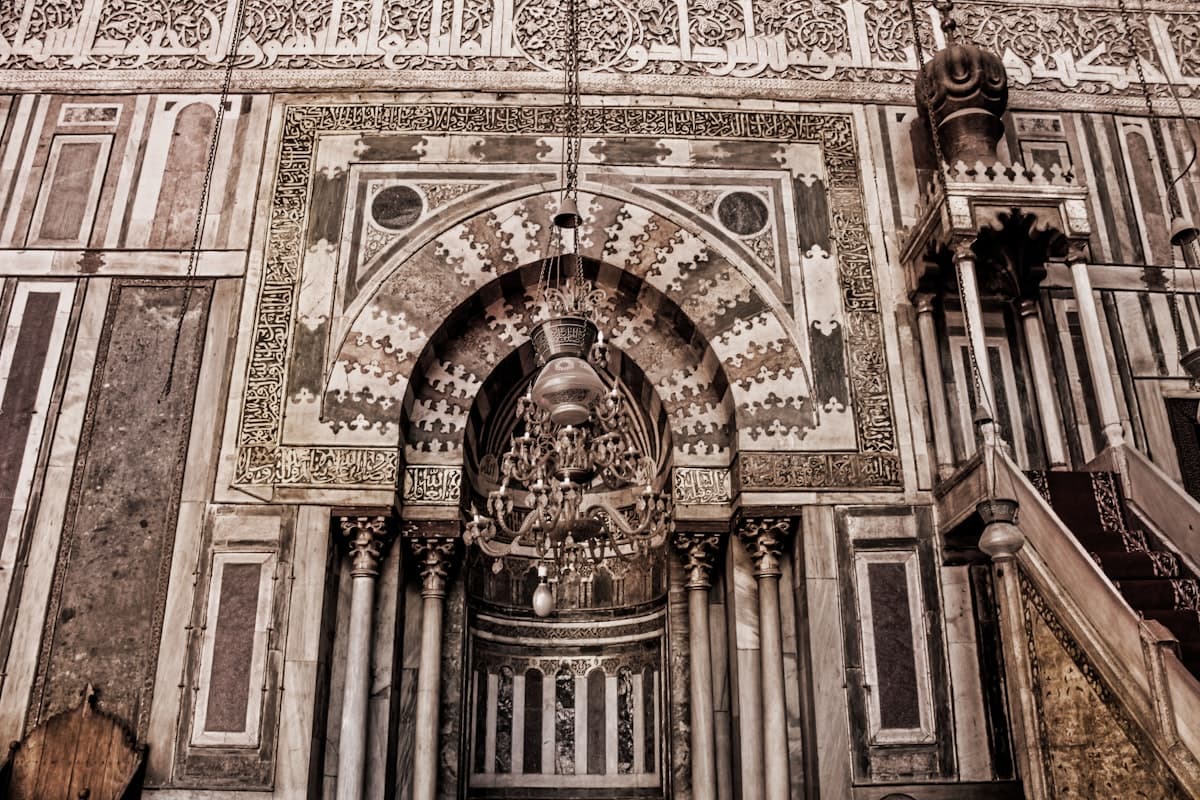
The battle of Ain Jalut between Mamluks and Mongols produced an Egypt that then built for two and a half centuries without interruption. Walking the stretch of Al-Muizz Street between Bab el-Futuh and the Ghuriya complex is walking through that legacy in physical form.
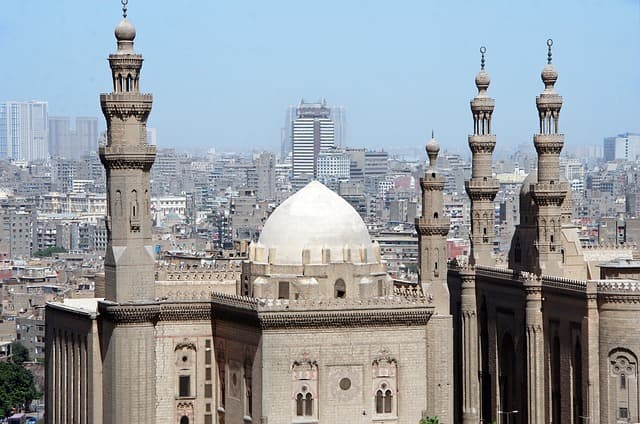
The Mosque of Sultan al-Zahir Baybars in the Al-Husseiniya district is the man's own monument to himself. Built between 1266 and 1269, it was one of the largest mosques in the medieval Islamic world. Napoleon's army used it as a stable. The British later used it as a bakery. It is currently a mosque again, slightly worn, not on most tour itineraries, and entirely worth finding. The pointed arches show early Gothic influence, almost certainly because Baybars was importing craftsmen and aesthetic ideas from the Crusader cities he had just conquered.
The Qalawun Complex on Al-Muizz Street (entrance EGP 100) is architecturally more intact and gives you a fuller picture of Mamluk ambition. Sultan al-Mansur Qalawun, who ruled from 1279 to 1290, built his complex to include a mausoleum, a hospital (maristan), and a madrasa. The maristan treated patients regardless of religion or social class, funded by the endowment income from surrounding properties. The income from shops and baths paid for the doctors. This is an eleventh-century Islamic public health model operating in thirteenth-century Cairo, and almost no tourist pauses long enough to understand it.
The stucco work inside the Qalawun mausoleum is original thirteenth-century carving. The geometric interlace patterns on the mashrabiya screens are intact. The space is dimly lit, cool even in July, and usually empty of crowds because most visitors to Al-Muizz Street are walking toward the more photogenic Khan el-Khalili market 400 meters to the south.
The Citadel, begun by Saladin in 1176 and expanded by every Mamluk sultan thereafter, sits above the city as the administrative capital of Mamluk Egypt. The Mosque of Muhammad Ali (built 1830-1848) dominates the skyline now, but walk past it and find the remnants of the Mamluk-era structures: the Mosque of al-Nasir Muhammad, built in 1318, with its Gothic doorway taken directly from a Crusader church in Acre. Baybars had captured Acre. His successor Qalawun finished the job. The doorway is still there, reassembled into a Cairo mosque, the stone carved with Latin inscriptions that nobody bothered to erase.
---
The Connections: One Battle, Six Centuries of Consequence
The Mongol threat did not fully dissolve after Ain Jalut. The Ilkhanate, the Mongol successor state in Persia and Iraq, remained a rival power for another fifty years, and the Mamluks fought them repeatedly. In 1303, at the Battle of Marj al-Saffar near Damascus, the Mamluks defeated a Mongol force for the last time. By then, the Ilkhan Ghazan had converted to Islam, and the religious framing of the conflict had become complicated. The Mamluks had positioned themselves since Ain Jalut as the defenders of Sunni Islam. The Mongols were now, technically, Muslim too.
The Abbasid Caliphate, destroyed in Baghdad in 1258, was reconstituted in Cairo. A surviving Abbasid prince was installed as a ceremonial caliph under Mamluk protection in 1261, giving the Mamluk sultans religious legitimacy they used to reinforce political authority. The Cairo Abbasid caliphate lasted until 1517, when the Ottoman Sultan Selim I defeated the last Mamluk sultan, Tuman bay II, at the Battle of Ridaniyya outside Cairo, and had him hanged at Bab Zuwayla, a Fatimid gate that still stands in the old city.
Bab Zuwayla is ten minutes' walk from the Qalawun Complex. The hooks where Mamluk-era criminals and rebels were displayed are still visible on the stone. Tuman bay was hanged there three times before the rope finally held. Bab Zuwayla entrance is EGP 60 (approx $1.25 USD). You can climb the minarets.
The Mamluk system itself survived Ottoman conquest in modified form. The Mamluks continued as a governing class under Ottoman suzerainty, and it was a Mamluk bey, Ali Bey al-Kabir, who briefly declared Egyptian independence from the Ottomans in 1769. Napoleon destroyed the last military power of the Mamluks at the Battle of the Pyramids in 1798. Muhammad Ali finished the project in 1811 by inviting the remaining Mamluk leaders to a banquet at the Citadel and having them killed as they left. The exit corridor is still there.
---
Common Mistakes
Treating this as a site visit rather than a city walk. There is no single monument to Ain Jalut in Cairo. The battle happened outside Egypt. What you are doing is reading a city that the battle made possible. Do not arrive looking for a battlefield. Arrive looking for the civilization that survived because of one.
Skipping the Baybars Mosque for the more famous Qalawun Complex. The Qalawun Complex is better preserved and has an entrance ticket system that keeps it manageable. But the Baybars Mosque is larger, stranger, and more honest about what happened to Mamluk monuments over eight centuries. The Napoleon stable period is visible in the stone. Go to both.
Booking the Citadel sound and light show. It costs EGP 350, runs about an hour, and will tell you approximately nothing that reading this article has not already told you. The Citadel itself, visited on a Tuesday morning when tour groups are thin, is worth three hours of your time. The show is not.
Missing Al-Muizz Street on a Friday afternoon. The street is pedestrianized and at its most alive between Friday prayers and sunset. Families walk it, vendors appear, the light on the Mamluk stone turns the color of old brass. This is the best free thing in Cairo.
Assuming the Coptic and Islamic histories here are separate. The Mamluk sultans built on Fatimid foundations which were built on Coptic and Roman foundations. The Ibn Ezra Synagogue in Old Cairo, where Moses Maimonides prayed in the twelfth century, sits 200 meters from the Hanging Church, which sits on a Roman fortress tower. None of these communities existed in isolation. The Mamluks taxed and protected Coptic Christians and Jews as dhimmis. The relationship was unequal and sometimes violent, but it was a relationship, not an absence.
Not accounting for Ramadan hours. Many mosques and Islamic monuments reduce tourist access during Ramadan, particularly in the mornings before noon prayers. Adjust timing accordingly and dress more conservatively than usual.
---
Practical Tips
Wear shoes you can remove quickly. You will enter mosques, and fumbling with laces in a narrow doorway is an act of social aggression in Islamic Cairo.
Covering shoulders and knees is not optional and not negotiable. Women should carry a scarf. Not because anyone will force you, but because entering a working mosque in sleeveless clothing marks you immediately as someone who did not care enough to prepare, and the welcome will be cooler for it.
Hire a local guide for the first half-day and explore independently for the second. A good guide costs EGP 400-700 for three hours and will show you courtyards and staircases that are not on any map. After that, you have enough orientation to walk without one.
The best photographs of the Qalawun mausoleum interior come from arriving right when it opens at 9am, before tour groups. The light through the stucco screens is particular to early morning and does not repeat.
Drink water constantly. In summer, Islamic Cairo in full sun is not forgiving. There are no shade structures between monuments, and the stone radiates heat after 10am. Carry at least 1.5 liters.
If you want to understand the full arc of what the battle of Ain Jalut between Mamluks and Mongols produced, end your day at the Citadel at dusk. Stand at the northern terrace. The city below you, from the minarets of the medieval core to the edge of the Western Desert, was the capital of a slave empire that held the line against the most successful military force the medieval world had ever produced. It did not feel inevitable then. It should not feel inevitable now.
Frequently Asked Questions
The Weekly Dispatch
More on Egypt, every Friday.
Cultural depth and places most guides never mention.
No spam. Unsubscribe anytime.