Coptic Christianity Egypt: A History Guide to the Living Faith
Coptic Christians have been celebrating Easter in Egypt since 42 AD, predating Islam by six centuries. Most visitors walk straight past the evidence.

Quick Facts
- Best time to visit
- October to April for comfortable temperatures. January 7 (Coptic Christmas) and Coptic Easter (April or May) are extraordinary if you can time them, but expect larger crowds at churches.
- Entrance fee
- Coptic Museum: EGP 200 (approx $6.50 USD), students EGP 100. Hanging Church, Abu Serga, and Mar Girgis church complex: free entry, donations welcome. Monastery of Saint Anthony: free, small guided tour donation.
- Opening hours
- Coptic Museum: Daily 9am to 5pm. Hanging Church and Abu Serga: Daily 9am to 5pm. Monastery of Saint Anthony: Daily 7am to 5pm, closed during major fasting seasons.
- How to get there
- Metro Line 1 to Mar Girgis station, EGP 8 from central Cairo (10 minutes). Taxi from downtown EGP 60 to 100. Eastern Desert monasteries require a private vehicle or day-trip hire: EGP 1,500 to 2,500 from Cairo.
- Time needed
- Old Cairo Coptic Quarter: 3 to 4 hours minimum, full day if including Coptic Museum properly. Eastern Desert monasteries: full day each including travel.
- Cost range
- Old Cairo day (metro, museum, lunch, donations): EGP 500 to 800. Day trip to Saint Anthony's Monastery with private car: EGP 2,000 to 3,500 total.
Christianity arrived in Egypt before it arrived in Rome. Saint Mark the Evangelist, traditionally credited with founding the Coptic Church in Alexandria around 42 AD, was preaching along the Nile while Nero was still learning how to be emperor. The word "Coptic" itself comes from the Greek Aigyptios, meaning Egyptian, filtered through Arabic into Qibt. To be Coptic is not to belong to a minority faith that wandered in from somewhere else. It is to be a direct continuation of the ancient Egyptian civilization, in a form that has survived Roman persecution, Arab conquest, Crusader politics, Ottoman neglect, and modern sectarian pressure. Roughly ten million Coptic Christians live in Egypt today. They are not a remnant. They are a root.
Quick Facts
Best time to visit: October through April, when temperatures in Cairo and Upper Egypt are bearable. Coptic Christmas falls on January 7 (the Coptic calendar runs 13 months and sits about 13 days behind the Gregorian calendar), and Easter celebrations in April or May are extraordinary if you can align your travel. The week before Coptic Easter, known as Pascha, involves fasting, night vigils, and liturgies that have not changed substantially since the 5th century.
Key sites and entrance fees: The Hanging Church (Al-Moallaqah), Old Cairo: Free entry, though donations are expected. Open daily 9am to 5pm. Coptic Museum, Old Cairo: EGP 200 (approx $6.50 USD), students EGP 100. Open daily 9am to 5pm. Monastery of Saint Anthony (Eastern Desert): Free entry to grounds, small donation for guided tour. Open daily 7am to 5pm, closed during certain fasting periods. Call ahead: +20 2 25161034. Church of Saint Sergius and Bacchus (Abu Serga): Free entry, open daily 9am to 5pm. Ben Ezra Synagogue (adjacent to Coptic Quarter, relevant for context): EGP 50 (approx $1.60 USD).
Getting there: Old Cairo (Masr el-Qadima) is served by the Cairo Metro Line 1, Mar Girgis station. The journey from central Cairo (Tahrir Square area) takes about 10 minutes and costs EGP 8. Taxis from downtown run EGP 60 to 100 depending on traffic and negotiation. For the Eastern Desert monasteries, you need a private vehicle or an organized day trip; expect EGP 1,500 to 2,500 for a private car from Cairo.
Time needed: Old Cairo Coptic Quarter: 3 to 4 hours minimum. Full day if combining Coptic Museum with the adjacent Ben Ezra Synagogue and the Roman towers of Babylon Fortress, which are embedded in the same site. The Eastern Desert monasteries each require a separate day trip.
Cost range: Budget EGP 600 to 900 per day in Old Cairo combining sites, food, and metro. Day trip to Saint Anthony's monastery: EGP 2,000 to 3,500 including transport.
---
Why This Place Matters: Six Centuries Before the Conquest
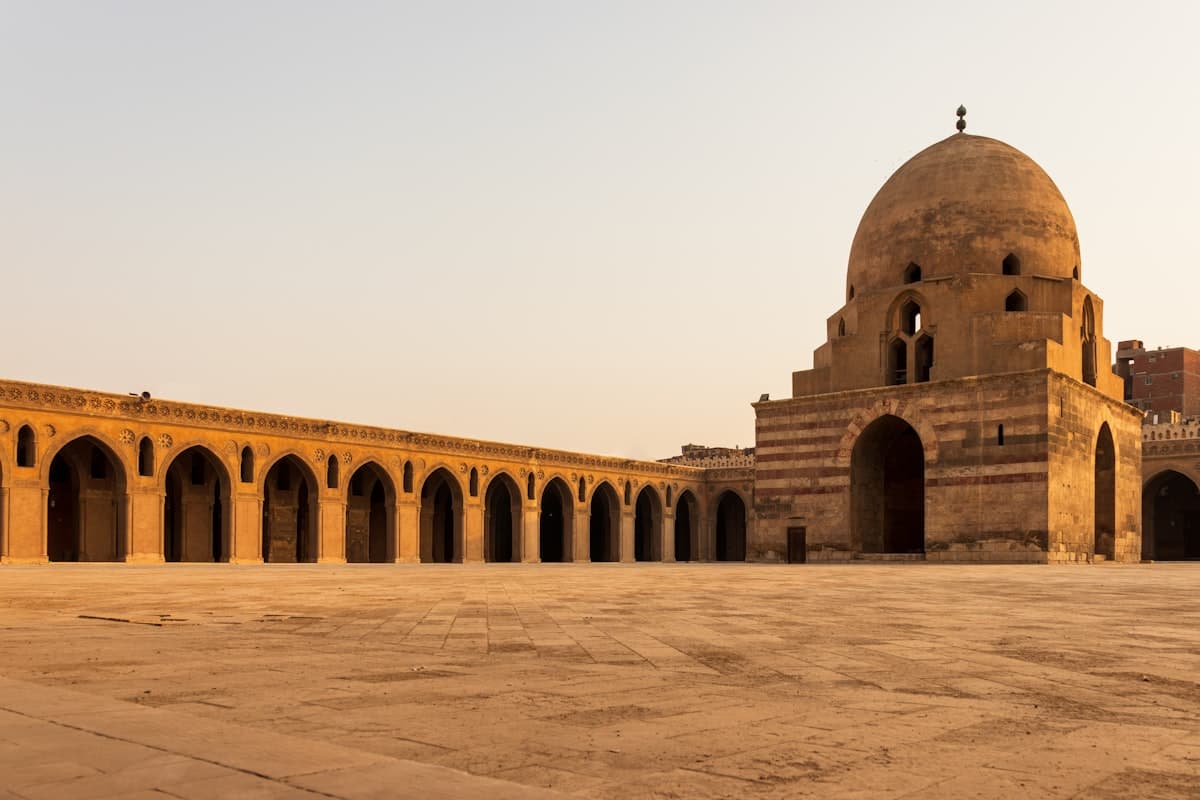
Most visitors to Egypt organize their understanding of the country around two poles: the Pharaonic and the Islamic. This is a reasonable error encouraged by most tour operators, but it leaves out a civilization layer that fundamentally shaped everything that came after it.
The Coptic period, roughly 42 AD to 641 AD when the Arab conquest began, was not a passive waiting room between ancient Egypt and Islamic Egypt. It was the era during which Egypt developed an entirely new writing system (Coptic script, which fused Greek letters with Demotic Egyptian characters), translated the Bible into that script before most of Europe had access to it in any language, and produced the Desert Fathers, a movement of Christian monasticism so influential that it is the direct ancestor of every monastic tradition in the Western world, including Benedictine and Cistercian monasticism. Saint Pachomius, an Egyptian soldier turned monk who died in 346 AD, wrote the first cenobitic (communal) monastic rule in Christian history. The Rule of Saint Benedict, written two centuries later in Italy, is partially derived from it.
Egypt also produced the Nag Hammadi Library: 13 codices containing 52 early Christian texts, found buried in a sealed jar near Luxor in 1945. Among them was the Gospel of Thomas, a collection of 114 sayings attributed to Jesus, with no narrative, no miracles, no resurrection story. It pre-dates most of the canonical gospels in its earliest form. You can see some of the original codices in the Coptic Museum in Old Cairo.
---
What You Will Actually See: Old Cairo's Layered Quarter
The Coptic Quarter in Old Cairo is not a neighborhood that evolved around a church. It is a church that evolved around a Roman fortress. The Fortress of Babylon, built by Emperor Diocletian in the late 3rd century AD on the site of an older Persian fortification, is still partially standing. Its two round Roman towers flank the entrance to the Mar Girgis metro station. You walk between them every time you enter the quarter.
The Hanging Church, Al-Moallaqah in Arabic, is built directly above the southern gatehouse of that fortress. It does not hang in any dramatic engineering sense. Its nave rests on the roof of the gatehouse, which means the floor of the church sits approximately 9 meters above street level. You climb a wide external staircase to enter, usually between stalls selling icons and incense. Inside, the ceiling is constructed to resemble the hull of Noah's Ark, an intentional design choice made during the 9th century reconstruction. The 110 icons on the iconostasis screen date from the 8th through 13th centuries. One of them depicts the Virgin Mary in the manner of ancient Egyptian Isis iconography: enthroned, frontal, with a formalized halo. The visual continuity is not accidental.
The Church of Saint Sergius and Bacchus (Abu Serga), a few minutes' walk south, is older and less visited. A crypt beneath the nave, accessible via a narrow staircase when not flooded by the water table, is traditionally identified as the resting place of the Holy Family during their flight into Egypt. The tradition is recorded in Coptic texts from at least the 5th century. Whether you find the story credible or not, the crypt itself is extraordinary: low-vaulted, lamp-lit, slightly damp, and quiet in a way that the more famous Hanging Church rarely is.
The Coptic Museum: What Most People Skip
The Coptic Museum, opened in 1910, holds the largest collection of Coptic art and artifacts in the world. Most visitors give it 45 minutes. This is a mistake proportional to spending 45 minutes in the Egyptian Museum. The collection spans 14 centuries of Coptic civilization and includes textile fragments so fine that their production methods are still not fully understood, carved wooden friezes that show Pharaonic motifs (the ankh, the lotus) being slowly absorbed into Christian symbolism, and a room dedicated to the Nag Hammadi codices.
The room containing actual Nag Hammadi pages is easy to walk past because the labeling is modest. The texts inside those cases rewrote the scholarly understanding of early Christianity when they were first published in English translation in 1977. Budget at least two hours in the museum, and hire one of the on-site licensed guides rather than reading the captions alone.
---
Into the Desert: The Monasteries That Invented Monasticism
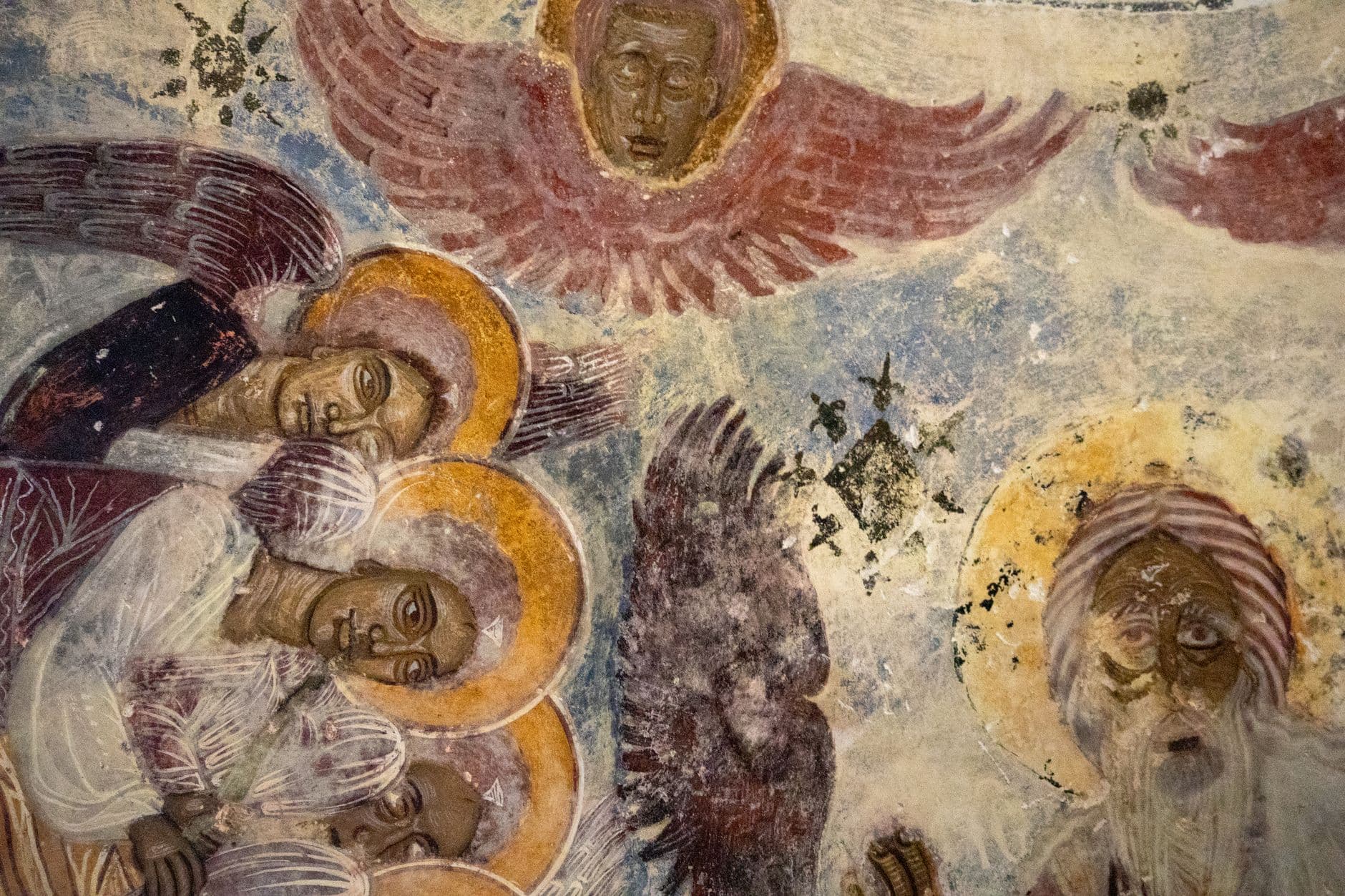
If you have any flexibility in your itinerary, one of the Eastern Desert monasteries deserves a full day. The Monastery of Saint Anthony, founded in 356 AD near the cave where Anthony the Great lived the last decades of his life, is the oldest monastery in the world still in active use. It houses around 120 monks. The Church of Saint Anthony inside the monastery contains frescoes that span from the 7th century through the 13th century, painted in overlapping layers as different monastic generations added to the walls without removing what came before. A 13th century painting of Christ Pantocrator sits above an earlier, fragmentary Coptic inscription. Both survive.
Saint Anthony himself died in 356 AD at the reported age of 105. His life and retreat into the desert inspired a wave of Egyptian hermits who collectively founded the Christian tradition of ascetic withdrawal. When Pope Benedict XVI chose his name in 2005, he was consciously invoking a lineage that traces directly back to an Egyptian monk in the Eastern Desert in the 3rd century.
The journey from Cairo to Saint Anthony's takes about 4 hours by road through the Eastern Desert. The landscape shifts from the Nile Delta into bare canyon country. The monastery appears suddenly at the base of a cliff, its whitewashed walls almost indistinguishable from the limestone above them.
---
The Connections: Nothing in Egypt Stands Alone
The Mar Girgis Coptic Quarter sits on the eastern bank of an ancient Nile branch that has long since silted over. The same geographic pinch point that made it valuable to Romans made it valuable to Arab commanders: Amr ibn al-Aas, who led the Arab conquest of Egypt in 641 AD, camped near Babylon Fortress and later built the first mosque in Africa (the Mosque of Amr ibn al-Aas) approximately 400 meters from the Coptic Quarter's entrance. That mosque still stands. You can visit it in the same morning.
Ben Ezra Synagogue, immediately adjacent to the Coptic churches, was originally a Coptic church sold to the Jewish community in 882 AD when the Coptic pope needed funds to pay a tax imposed by the Abbasid caliph. In 1896, a Cambridge scholar named Solomon Schechter excavated its geniza (a storage room for worn religious documents) and found over 300,000 manuscript fragments, including medieval trade letters, personal correspondence, and religious texts that transformed the understanding of medieval Mediterranean commerce. The synagogue, the mosque, and the churches share a 6-block radius. This is not a coincidence. This is what Egypt does.
---
Common Mistakes
Arriving at noon in summer. Old Cairo's Coptic Quarter has almost no shade. Between June and September, midday temperatures exceed 38°C. Go before 9am or after 4pm.
Skipping the Coptic Museum to spend more time in the churches. The museum provides the framework that makes the churches legible. Do the museum first, then the churches. The correct order matters.
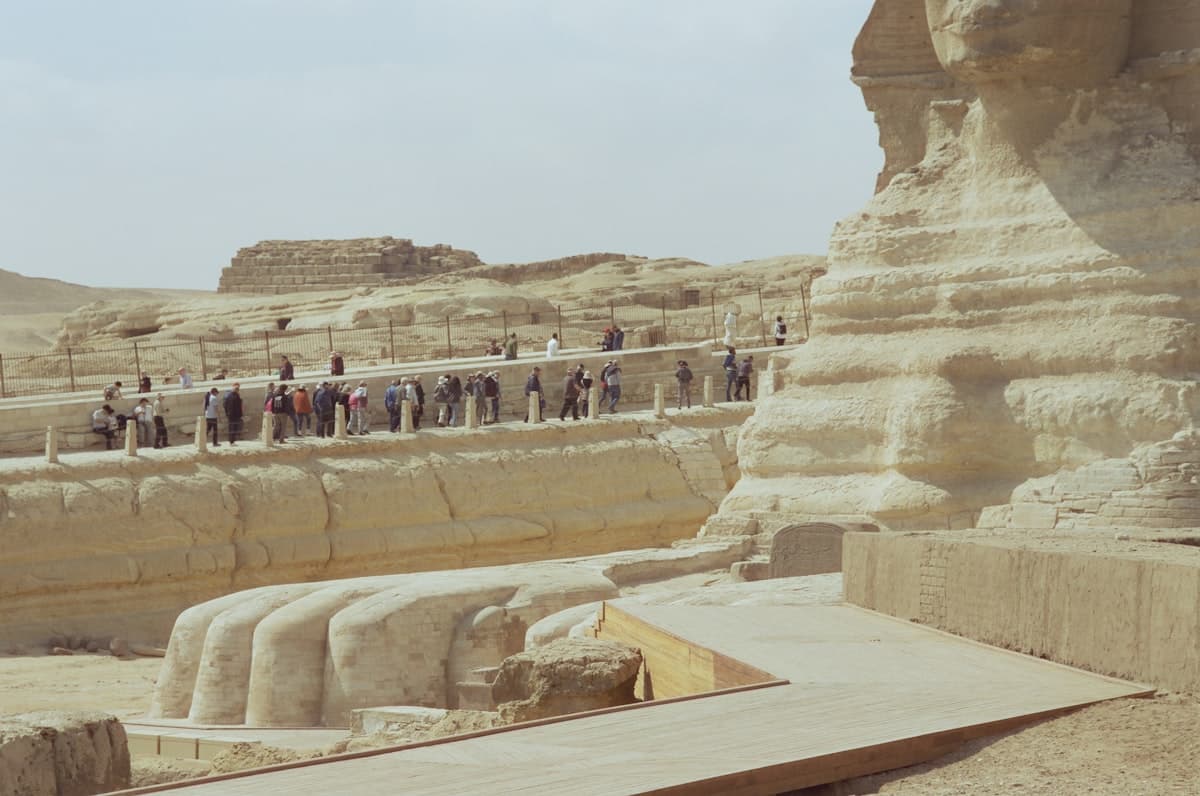
Booking a tour that combines the Pyramids with the Coptic Quarter in one day. Every operator offers this. It sounds efficient. In practice, you will see neither properly. The Pyramids alone require 4 hours if you are not rushing. The Coptic Quarter requires another 3. You will spend most of the day in traffic.
Visiting Saint Anthony's Monastery without calling ahead. The monastery closes to visitors during certain fasting periods (notably the 55-day Apostles' Fast and Holy Week before Coptic Easter) and sometimes restricts access without notice. A phone call the day before saves a 4-hour drive each way.
Paying for a Coptic Cairo tour through a hotel. Hotel-arranged tours of the Coptic Quarter typically cost EGP 800 to 1,500 per person and include guides who cover the surface history and nothing else. Take the Metro for EGP 8, walk in independently, and hire a licensed guide from inside the Coptic Museum for EGP 200 to 300. You will learn three times as much.
The Sound and Light Show at the Pyramids is an entirely different site, but tourists are routinely upsold on it during Coptic Quarter visits as part of a Cairo package. It costs EGP 350, runs 45 minutes, and contains no information you cannot find in a 10-minute article. Skip it.
Treating Coptic sites as a single afternoon. The depth of this civilization layer in Egypt's history is not absorbable in three hours across two churches. If Coptic history is your reason for coming, budget three days minimum across Old Cairo, a monastery, and Luxor's Coptic-era tomb paintings in the West Bank area near the Monastery of Saint Phoibammon.
---
Practical Tips
Dress code is strictly observed in all Coptic churches and monasteries: covered shoulders, covered knees, and shoes removed before entering certain inner sanctuaries. This applies regardless of gender. Carry a scarf.
Sunday morning services in the Hanging Church begin around 8am and last 2 to 3 hours. The liturgy is conducted in a mixture of Coptic (a language spoken by approximately zero native speakers in daily life, but preserved entirely by the Church for liturgical use) and Arabic. Visitors are welcome but should enter quietly and not photograph during active services.
At the Eastern Desert monasteries, food is available in modest refectories open to visitors, and is free or donation-based. The bread baked at Saint Anthony's monastery is made from wheat grown on monastery-owned land irrigated by the spring that Anthony himself reportedly found. Whether or not you find that detail theologically significant, the bread is good.
Bring cash. None of the Coptic sites accept cards. ATMs in Old Cairo are available but sometimes unreliable; withdraw before you go.
Frequently Asked Questions
The Weekly Dispatch
More on Egypt, every Friday.
Cultural depth and places most guides never mention.
No spam. Unsubscribe anytime.