Coptic Christianity Egypt: A History Guide Worth Reading
Coptic Christians preserved the ancient Egyptian language inside their liturgy. When you hear a Coptic priest chant today, you are hearing pharaonic Egypt speak.

Quick Facts
- Best time to visit
- October through April; avoid midday summer heat. January 7 (Coptic Christmas) is extraordinary but crowded.
- Entrance fee
- Coptic Museum EGP 200 adults (approx $4 USD), EGP 100 students. Most churches are free entry. Desert monasteries: free.
- Opening hours
- Old Cairo churches daily 9am to 5pm. Coptic Museum 9am to 5pm, closed Fridays 12pm to 2pm.
- How to get there
- Metro Line 1 to Mar Girgis station, EGP 7 (approx $0.14). Taxis from central Cairo EGP 50 to 80. Desert monasteries require private car, budget EGP 800 to 1,200 with driver.
- Time needed
- Old Cairo circuit: 4 to 5 hours minimum. Desert monasteries: full day or overnight. Both combined: plan 2 days.
- Cost range
- Budget EGP 300 to 600 per day (metro, fees, street food). Mid-range EGP 1,200 to 2,000 per day with private driver.
Coptic Christianity Egypt: A History Guide Worth Reading
When you hear a Coptic priest chant during the Divine Liturgy, you are listening to the last living descendant of the ancient Egyptian language. The Coptic script is essentially demotic Egyptian written in Greek letters, and some of the words spoken in Cairo's churches today carry phonetic roots that stretch back to the time of Ramesses II. No museum exhibit, no sound and light show, no guided tour of Karnak will get you closer to ancient Egypt than sitting in a pew at Saint Sergius and Bacchus Church in Old Cairo on a Sunday morning. That is where this guide starts.
Quick Facts
Best time to visit: October through April, when temperatures stay below 28°C. Avoid Coptic Christmas (7 January) and Easter unless you specifically want to witness the liturgical celebrations, which are extraordinary but extremely crowded.
Key site entrance fees: Coptic Museum, Old Cairo: EGP 200 adults (approx $4 USD), EGP 100 students. Included in the general Old Cairo ticket bundle available at the gate. Hanging Church (Al-Muallaqah): Free entry, though donations to the restoration fund are genuinely needed. Saint Sergius and Bacchus Church (Abu Serga): Free entry. Monastery of Saint Anthony, Eastern Desert: Free entry; donations accepted. Monastery of Saint Paul, Eastern Desert: Free entry.
Opening hours: Most Old Cairo churches open daily 9am to 5pm. The Coptic Museum opens 9am to 5pm, closed on Fridays between 12pm and 2pm for prayers.
How to get there: Metro Line 1 to Mar Girgis station (EGP 7, approx $0.14) deposits you directly at the entrance to Old Cairo. Taxis from central Cairo run EGP 50 to EGP 80. For the desert monasteries, you will need a private car or a seat on a service taxi from Ain Sukhna; budget EGP 400 to EGP 600 round trip with a driver who will wait.
Time needed: Old Cairo as a circuit takes a full half-day, four to five hours minimum if you are reading walls and not just photographing them. The Eastern Desert monasteries warrant an overnight or at minimum a very early start: Saint Anthony's is 330km from Cairo.
Cost range: Budget EGP 300 to 600 per day covering metro, entry fees, and street food. Mid-range EGP 1,200 to 2,000 per day with a private driver and lunch at a decent restaurant in Maadi.
Why This Place Matters
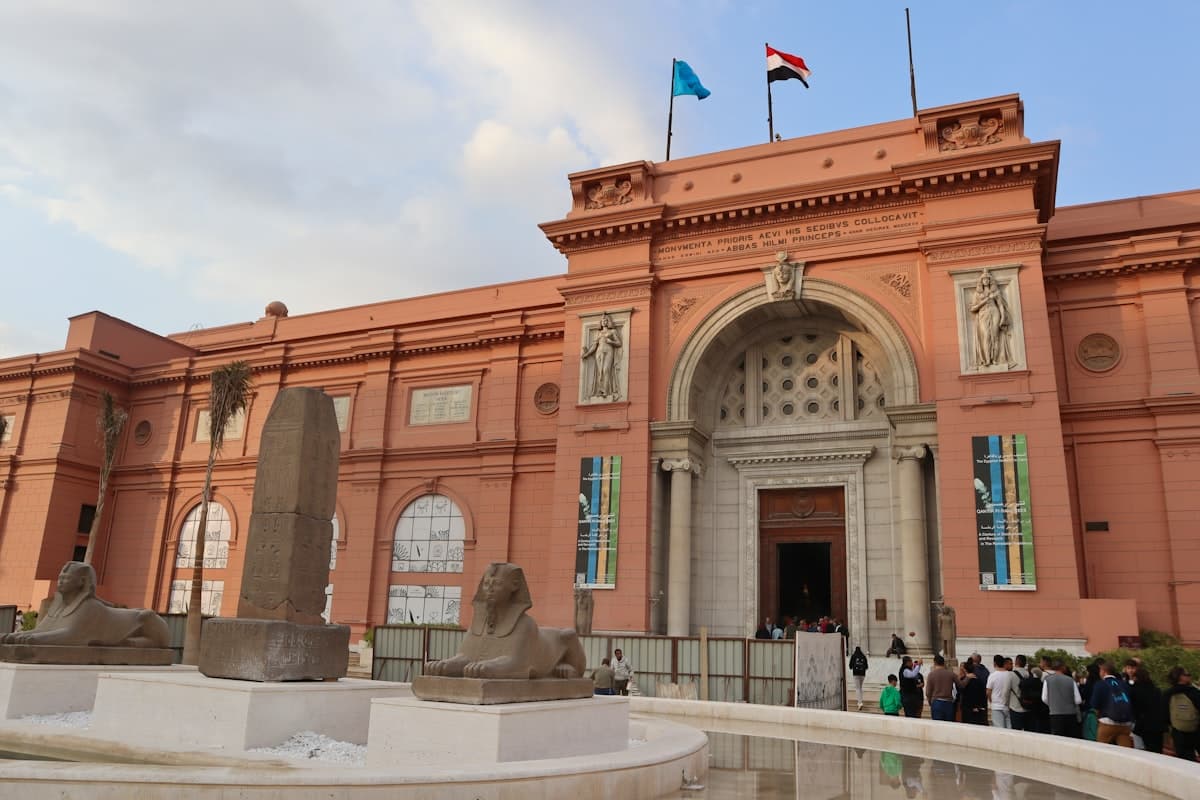
The Coptic Orthodox Church is, by its own reckoning, the oldest continuously functioning national Christian church in the world. It dates its founding to the year 42 AD, when Saint Mark the Evangelist, the author of the earliest Gospel, arrived in Alexandria and converted a sandal-maker named Anianus. That founding claim is not mythology; Alexandria was already the second-largest city in the Roman Empire and a center of Jewish scholarship, making it a plausible early destination for a missionary from Jerusalem.
What most visitors do not know: Egypt produced more Christian theological thought than Rome, Constantinople, and Jerusalem combined during the first four centuries of the faith. Clement of Alexandria and Origen, both based in Alexandria in the second and third centuries, essentially invented Christian philosophy as an intellectual discipline. The Desert Fathers, Egyptian monks who retreated to the Eastern and Western deserts in the third century, created the monastic tradition that would later spread to Ireland, Ethiopia, and every Benedictine abbey in Europe. Anthony the Great, the Egyptian hermit who inspired the first formal monastic communities, was born in the Nile Delta village of Coma around 251 AD. Western monasticism, including every Trappist, Cistercian, and Franciscan monastery you have ever visited, traces its direct lineage to the Egyptian desert.
When the Arab armies arrived in 641 AD under Amr ibn al-As, they found a country that was already deeply suspicious of its Byzantine rulers. The Chalcedonian controversy of 451 AD, a dispute over the nature of Christ so dense that most Christians today cannot explain it, had split the Egyptian church from Constantinople permanently. Many Egyptian Christians initially welcomed the Arabs as preferable to Byzantine tax collectors who persecuted them as heretics. The two communities then spent the next fourteen centuries working out an extraordinarily complex coexistence.
What You Will Actually See in Old Cairo
Old Cairo, the quarter called Misr al-Qadima, sits on the site of the Roman fortress of Babylon, which itself was built over an even earlier Persian fortification. The Romans chose this spot because it controlled the point where the Nile's eastern branch could be crossed and where a canal connecting the Nile to the Red Sea began. Every layer of that history is physically present when you walk through the gate.
The Hanging Church, Al-Muallaqah in Arabic, hangs quite literally over two of the old Roman fortress towers, its nave suspended above the gatehouse. Built in the fourth century and substantially rebuilt in the seventh, it contains a thirteenth-century iconostasis of cedar and ebony inlaid with ivory that is one of the finest pieces of medieval woodwork in Africa. Most visitors photograph the nave and leave. Walk instead to the small chapel at the back, dedicated to the Virgin, where the original Roman towers rise through the floor as exposed masonry. You are standing at the intersection of Roman military architecture, Coptic Christianity, and Arab-Islamic Cairo, all at once.
Saint Sergius and Bacchus Church, Abu Serga, is older than the Hanging Church in its current foundations, and far less visited. A crypt beneath the altar marks the traditional site where the Holy Family sheltered during the Flight into Egypt. Historians debate the claim; what is not debatable is the age of the columns lining the nave, which are pre-Christian in origin, removed from older structures and reused. Look at the column capitals closely: they are not uniform. Each came from a different building. That kind of recycling, spolia in the architectural term, tells you more about how Late Antique Egypt actually functioned than any textbook summary.
The Coptic Museum next door holds the largest collection of Coptic art in the world: 16,000 objects spanning textiles, manuscripts, icons, frescoes, and metalwork. One room, easily missed because it is not well signed, contains the Nag Hammadi codices, the fourth-century papyrus books discovered by a farmer in Upper Egypt in 1945. They include the Gospel of Thomas, a collection of 114 sayings attributed to Jesus that was unknown to the modern world until that discovery. The farmer's name was Muhammad Ali Samman, and he found them while digging for fertilizer.
The Desert Monasteries: Where the Tradition Was Made
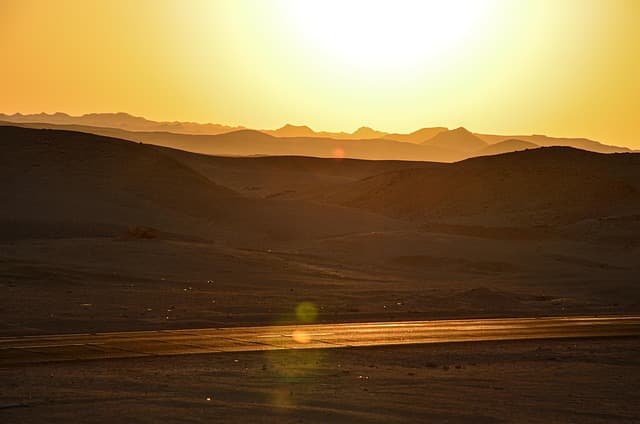
The Monastery of Saint Anthony sits at the foot of the Red Sea Mountains, 330km from Cairo, and it has been continuously inhabited since approximately 356 AD. That makes it the oldest Christian monastery in the world. The walls enclosing it were built high enough and thick enough to withstand Bedouin raids; the monks pulled supplies up on rope-and-pulley systems from holes in the wall when sieges made the gate too dangerous. Inside those walls, a library holds 1,700 manuscripts, some dating to the ninth century, including texts in Coptic, Arabic, Syriac, and Ethiopian Ge'ez that represent the full breadth of Eastern Christianity's interconnected world.
The Church of Saint Anthony inside the monastery contains wall paintings from the thirteenth century, restored painstakingly between 1999 and 2007 by a team that included the Egyptian government and the American Research Center in Egypt. These paintings, uncovered from beneath centuries of accumulated soot and plaster, show a visual language that connects Byzantine iconography directly to the Fatimid Cairo of the same period. The artists were Egyptian. They worked in a Christian monastery. They painted in a style that rhymes with what their Muslim contemporaries were producing in Cairo's mosques. Egypt has always refused neat cultural categories.
The Monastery of Saint Paul, 28km south of Saint Anthony's, is smaller and receives fewer visitors. It was built around the cave where Paul of Thebes, reputedly the first Christian hermit, lived in total solitude for nearly a century, dying around 341 AD. Jerome wrote Paul's biography; Anthony, according to the account, walked through the desert to visit him. The Church of Saint Paul is built directly into the rock face, its altar inside the actual cave. The effect is not decorative. It is geological: Christianity here is literally embedded in the stone.
The Connections
The neighborhood surrounding the Coptic churches in Old Cairo is called Fustat, which was the first Arab capital of Egypt, established by Amr ibn al-As in 641 AD. He built his mosque, the Mosque of Amr ibn al-As, less than 800 meters from the Hanging Church. It was the first mosque built on African soil and remains one of the oldest in the world, though the current structure dates largely to an eighth-century rebuild. The proximity was deliberate: Amr granted the Copts protection and allowed them their churches. The two communities shared the same streets, the same market, and for a long period, the same tax rolls.
Fatimid Cairo, the walled medieval city built north of Fustat beginning in 969 AD, drew on Coptic craftsmen for much of its construction. The woodworking traditions visible in the Hanging Church's iconostasis are the same traditions that produced the carved wooden ceilings of the Mosque of Al-Aqmar and the minbar of the Mosque of Salah al-Din. When Ibn Tulun built his mosque in the ninth century, he is said to have employed Coptic architects, which would explain why the mosque's unusual spiral minaret resembles the minarets of Samarra in Iraq, where Ibn Tulun himself was trained, but also shows construction techniques common in Coptic church building of the period.
The connection runs into the present. Coptic Pope Tawadros II and Al-Azhar's Sheikh Ahmed el-Tayeb have made joint public statements in recent years that have no equivalent in the history of either institution. That relationship, often described as a modern development, is actually a very long continuity with many ruptures in between.
Common Mistakes
Visiting Old Cairo at midday on a Friday. The Coptic Museum closes for two hours on Fridays and the surrounding streets empty in ways that make logistics difficult. Go Thursday morning or Saturday.
Taking a guided group tour of the Coptic churches. The standard tours allocate twenty minutes per church, keep you on a narrow script, and actively prevent you from doing the one thing worth doing: sitting still long enough to watch light move through the old screens. Go independently. The metro costs EGP 7.
Skipping the Coptic Museum in favor of more time in the churches. The museum contextualizes everything. Without it, you will stand in front of extraordinary objects and not know what you are seeing. Spend ninety minutes there before you start the church circuit, not after.
The Nile dinner cruise operators near Old Cairo offer packages that include a Coptic quarter stop. These are not worth your time or money. You will spend forty minutes in each location with a microphone narrating things you could have read. The cruise itself costs EGP 500 to EGP 800 and serves mediocre food. Skip it entirely.
Going to the desert monasteries without calling ahead. Monasteries occasionally close to visitors during Lent, during local feast days, and simply when the monks need solitude. The Monastery of Saint Anthony can be reached at +20 2 2590 0218. Call the week before. Showing up unannounced and finding the gate closed is a five-hour drive's worth of preventable disappointment.
Assuming you need to be Christian or academically inclined to find this meaningful. The Coptic Christian Egypt history you will encounter in Old Cairo is Egyptian history. The theological debates, the art, the language, the survival strategies of a minority community over fourteen centuries, all of it is as much part of understanding this country as anything in the Egyptian Museum on Tahrir Square.
Practical Tips
Dress conservatively in both the churches and the surrounding neighborhood. Women should cover their shoulders and knees; a light scarf is useful for head coverings in some churches. Men in shorts will not be turned away but will feel conspicuous and may be asked to cover up in certain monastic settings.
The best time to experience a Coptic liturgy is early morning on Sunday, when services at the Hanging Church and Abu Serga begin around 7am. The liturgy is in Coptic and Arabic, runs two to three hours, and is not designed as a tourist event. Sit quietly at the back, do not photograph during the service, and leave when you need to. Nobody will stop you or pressure you.
If your trip falls near Coptic Christmas on 7 January or Coptic Easter, which follows the Julian calendar and falls one to five weeks after Western Easter, the liturgical celebrations in Old Cairo are extraordinary. Midnight Mass at the Cathedral of Saint Mark in Abbassiya draws tens of thousands of people. The sensory experience, incense, chanting, candlelight, the weight of a crowd that has been doing this for two millennia, is not replicable by any other means. Plan accommodation within walking distance because taxis will be impossible.
For the Eastern Desert monasteries, bring water for at least two liters per person, sunscreen, and a hat. There is no shade between your car and the monastery gate. Food is sometimes available from small stalls outside the walls, sometimes not. Pack lunch if you are making a day of both Saint Anthony's and Saint Paul's.
Frequently Asked Questions
The Weekly Dispatch
More on Egypt, every Friday.
Cultural depth and places most guides never mention.
No spam. Unsubscribe anytime.