Coptic Christianity Egypt History Guide: The Living Church
Coptic Christians kept a liturgical language dead everywhere else alive for 2,000 years. Their Egypt predates Islam by six centuries. Most visitors never find it.

Quick Facts
- Best time to visit
- October to March for comfortable walking temperatures. January 7 (Coptic Christmas) for atmosphere, though expect crowds.
- Entrance fee
- Coptic Museum EGP 200 (approx $4 USD), students EGP 100. Most churches free, Ben Ezra Synagogue EGP 100 (approx $2 USD).
- Opening hours
- Coptic Museum daily 9am to 5pm. Churches approximately 8am to 4pm, variable on feast days.
- How to get there
- Metro Line 1 to Mar Girgis, EGP 7 (under $0.25 USD). Taxi from Downtown Cairo EGP 80 to 120.
- Time needed
- Full day minimum: 3 hours Coptic Museum, 2 hours churches, 1 hour Amr mosque if combining.
- Cost range
- Budget EGP 400 to 700 per day including transport, admission, and lunch. Mid-range EGP 1,200 to 2,000 with guide.
Quick Facts
Best time to visit: October to March, when Cairo is cool enough to walk between churches without breaking down entirely. Coptic Christmas falls on January 7 and the atmosphere in Old Cairo is unlike anything else the city produces.
Entrance fees: The Coptic Museum costs EGP 200 (approx $4 USD), students EGP 100. Most churches in Old Cairo are free to enter, though a small donation box sits at every door and you should use it. The Hanging Church charges no admission. Ben Ezra Synagogue (which sits inside the same compound and is inseparable from Coptic history) costs EGP 100 (approx $2 USD).
Opening hours: The Coptic Museum opens daily 9am to 5pm. Most churches in Old Cairo open from 8am to 4pm, though hours can shift around feast days and Friday prayers in the surrounding neighborhood. Always confirm before a long journey.
How to get there: From central Cairo, take the Metro Line 1 to Mar Girgis station. The exit deposits you directly in front of the Roman towers that frame the entrance to Old Cairo. Total cost: EGP 7 (under $0.25 USD). A taxi from Downtown will cost EGP 80 to 120 depending on traffic and your negotiating energy. The Metro is faster, cheaper, and more honest.
Time needed: The Coptic Museum alone demands three hours if you are paying attention. Add the churches and the compound and you need a full day. Combine with a late afternoon walk through the Amr ibn al-As mosque next door and you have assembled one of the most complete days Egypt offers.
Cost range: Budget EGP 400 to 700 per day including transport, admission, and lunch at one of the small Coptic-owned restaurants inside the compound. Mid-range EGP 1,200 to 2,000 if you add a guide.
---
Why This Place Matters
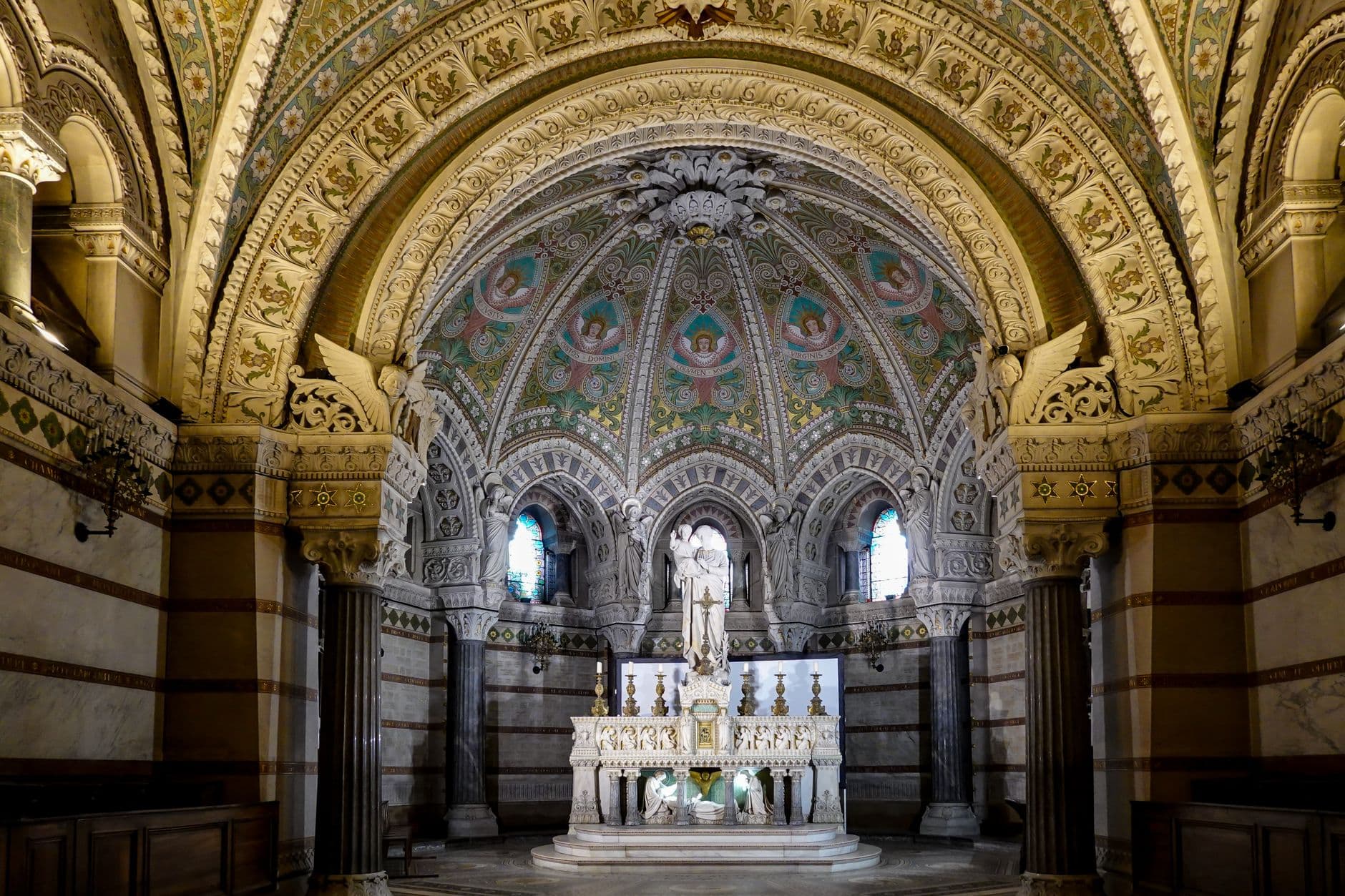
The Coptic Church is not a relic. It is the oldest continuously functioning Christian institution in Africa, established, according to its own founding narrative, by Saint Mark the Evangelist in Alexandria in 42 AD. That is roughly twenty years after the crucifixion, two centuries before Christianity became legal anywhere in the Roman Empire, and thirteen centuries before the first European cathedral was built on Egyptian soil.
The word "Copt" itself comes from the Greek "Aigyptos," which is where we get the word Egypt. To be Coptic was, for centuries, simply to be Egyptian. When Arab armies arrived in 641 AD, the population they encountered was almost entirely Christian. The Islamization of Egypt took three centuries, not three years, and it was never complete. Approximately ten percent of Egypt's population today, somewhere between ten and fifteen million people, remains Coptic Orthodox.
What makes this history extraordinary for a traveler is its layering. Old Cairo, the district known as Coptic Cairo or Masr al-Qadima, sits on top of the Roman fortress of Babylon, which was itself built along a Pharaonic canal connecting the Nile to the Red Sea. The churches that survive here were not built after the Romans left. They were built inside the Roman walls, using Roman columns, over foundations that were already ancient when Constantine converted. The Hanging Church, the most famous of them, takes its name from the fact that its nave is suspended over two towers of the Roman gatehouse. You are standing in a seventh-century Coptic church that sits on a second-century Roman military fortification that was built beside a canal that Pharaonic engineers dug. This is what "Coptic Christianity Egypt history" actually means: not a single thread but a braid.
---
The Coptic Museum: What You Are Actually Looking At
The Coptic Museum was founded in 1910 by Marcus Simaika Pasha, a Coptic notable who recognized that centuries of church objects were being sold off to European collectors and that if someone did not intervene, Egypt's Christian heritage would end up in Berlin and London. The building he commissioned is itself a work of art: moucharabieh woodwork, carved ceilings imported from old Cairene houses, a garden courtyard that smells of jasmine in winter.
The collection spans textiles, manuscripts, metalwork, and stone carvings from roughly the second century to the twelfth. The things to slow down for:
The Nag Hammadi codices (facsimiles). In 1945, a farmer near Luxor digging for fertilizer unearthed a sealed jar containing thirteen leather-bound papyrus books written in Coptic. They turned out to be Gnostic Christian texts, including the Gospel of Thomas, suppressed by the early Church and unknown to modern scholars. The originals are at the Coptic Museum of Cairo, though some are displayed at the Egyptian Museum. The Nag Hammadi library rewrote what we know about early Christianity and it was found by a man looking for dirt to grow crops.
The textiles. Coptic weavers between the fourth and seventh centuries produced linen and wool work of extraordinary technical sophistication. The interlocking geometric patterns they used were absorbed almost directly into early Islamic art after the conquest. If you look at a Coptic tunic fragment from the fifth century and an Abbasid textile from the ninth century side by side, the visual language is nearly identical. Egypt taught its conquerors to weave.
The icons. The Coptic icon tradition differs sharply from Byzantine and Ethiopian traditions in ways that are subtle but instructive. Faces are more frontal, bodies less naturalistic, the gold backgrounds older and more austere. The oldest icons in the collection date from the sixth and seventh centuries, which makes them older than any surviving Western European panel painting.
---
The Churches: What Most Visitors Walk Past
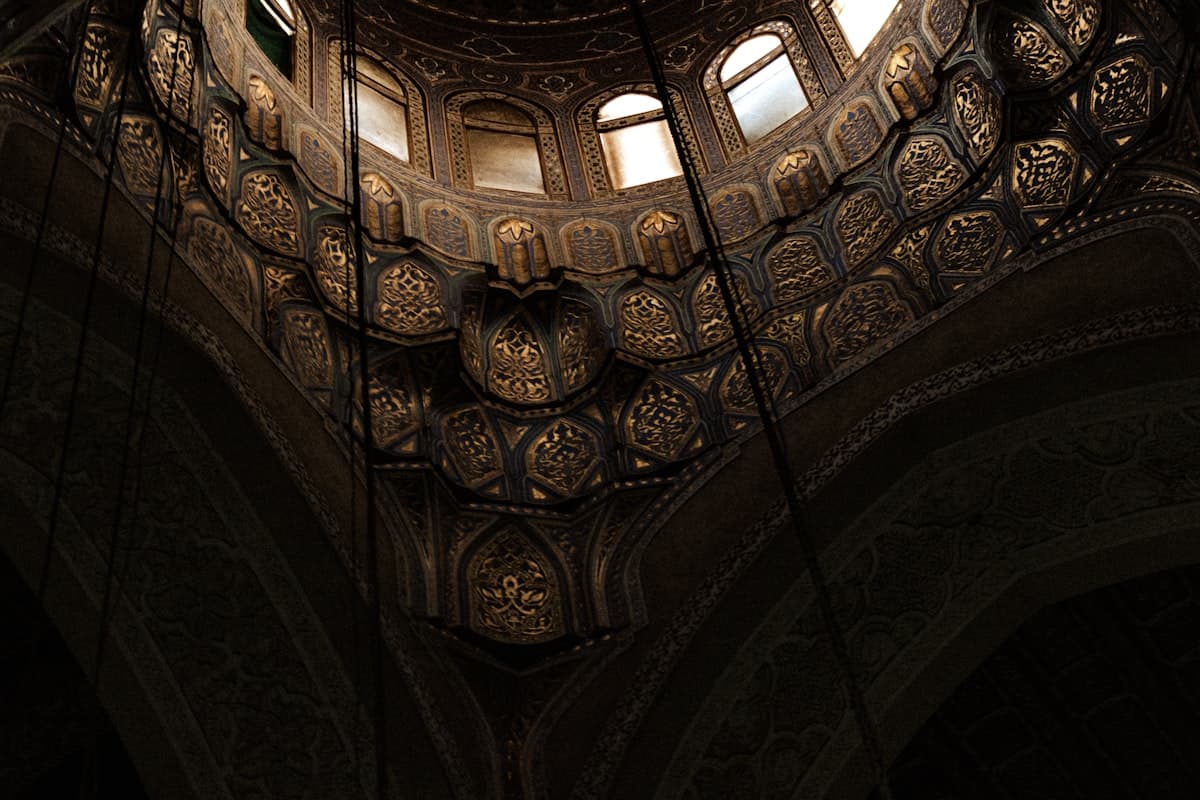
The Hanging Church (Saint Virgin Mary's Coptic Orthodox Church) is the one everyone photographs, and it deserves the attention. But three churches in the same compound are more rewarding to actually spend time inside.
Saint Sergius and Bacchus Church (Abu Serga) is older than the Hanging Church by at least a century, dating to the fifth century in its current form, and contains a crypt where, according to tradition, the Holy Family sheltered during their flight into Egypt. The crypt floods with Nile water seasonally. The columns inside the nave are a study in architectural recycling: twelve granite columns from the Pharaonic and Roman periods, and one marble column that does not match. Tradition says the odd one represents Judas.
Saint Barbara's Church was built on the site of an older church dedicated to Saints Cyrus and John and contains relics of Saint Barbara herself, brought from Nicomedia (now Turkey) in the medieval period. The wooden sanctuary screen here, carved in the eleventh century, is one of the finest examples of medieval Coptic woodwork anywhere.
The Church of Saint George (Mari Girgis) is technically a Greek Orthodox church, not Coptic, which confuses visitors who assume the two are the same. They are not. The Greek Orthodox community in Egypt traces its lineage to Alexandria's Greek-speaking Christians, while the Coptic Orthodox broke from Rome and Constantinople together after the Council of Chalcedon in 451 AD over the question of whether Christ had one nature or two. That sixth-century theological dispute is why Egypt has two ancient Christian traditions today instead of one.
The Ben Ezra Synagogue in the same compound is not a Christian site, but it cannot be separated from Coptic history. In the ninth century, a Coptic bishop sold the synagogue to the local Jewish community to raise money to pay the Abbasid tax on his congregation. In its storeroom, the Cairo Geniza was discovered in the nineteenth century: a collection of roughly 300,000 Jewish manuscript fragments accumulated over a thousand years, containing documents in Arabic, Hebrew, Aramaic, and Judeo-Arabic that transformed the study of medieval Mediterranean history. A Coptic bishop's financial crisis produced one of the greatest archival discoveries in history.
---
The Connections
Almost nothing in Coptic Cairo exists in isolation from the Islamic city that grew up around it. The Mosque of Amr ibn al-As, a ten-minute walk from the Coptic compound, was built in 642 AD by the Arab general who conquered Egypt, making it the oldest mosque on the African continent. Amr chose his site deliberately: he built beside the Roman fortress of Babylon, on the same Nile bank as the Christian community, in a city that was already ancient when he arrived.
The relationship between Coptic Christians and Muslim Egyptians in the medieval period was more complex than either persecution or harmony. Copts dominated the administrative bureaucracy of early Islamic Egypt because they were the literate class, the ones who knew how to run canals, collect taxes, and manage land records. The Arabic word for bureaucrat, "katib," appears in medieval documents applied almost exclusively to Coptic officials. Egypt's Islamic rulers needed Coptic administrators for centuries before Arabic literacy spread widely enough to replace them.
That administrative role made the Coptic community both protected and vulnerable. The Fatimid Caliph al-Hakim bi-Amr Allah, who ruled from Cairo between 996 and 1021, demolished thousands of churches and synagogues across Egypt and the Levant in a campaign of destruction that historians still struggle to fully explain. The Hanging Church was among those destroyed. It was rebuilt, as it had been rebuilt before and would be rebuilt again. This is the pattern of Coptic survival: not triumph, not erasure, but persistence.
Modern Coptic churches in Cairo, including the Cathedral of Saint Mark in Abbasiya, contain relics of Saint Mark himself, returned from Venice in 1968. Venice had held them since 828 AD, when two Venetian merchants bribed the custodians of the saint's tomb in Alexandria and smuggled the relics out under layers of pork and pickled cabbage to discourage inspection by Muslim customs officials. That story is true and the relics are now home.
---
Common Mistakes
Going only to the Hanging Church. It is the most famous but not the most interesting. Saint Sergius and Bacchus is quieter, older, and the crypt alone justifies the visit. Most tour groups stop at the Hanging Church for twenty minutes and leave without entering anything else.
Skipping the Coptic Museum to save time. This is the wrong calculation. The churches make more sense with the museum's context behind you. Do the museum first, then the churches.
Going on Sunday morning. The churches hold services and the compound fills with worshippers. This is genuinely moving to witness, but it is not the moment to wander with a camera or examine architectural details. Go Sunday afternoon or on a weekday.
Hiring a guide at the gate. The unofficial guides who approach visitors at the Mar Girgis Metro exit vary enormously in quality. Some are excellent; most will tell you a single prepared script regardless of your questions. If you want a guide, book through the Coptic Museum directly or through a reputable Cairo operator in advance.
The sound and light show at various Cairo sites. This is not specific to Coptic Cairo but worth stating clearly: any sound and light show you are considering in Egypt costs between EGP 300 and 500 and tells you nothing this article does not. Skip all of them.
Assuming Coptic Cairo is finished at 1pm. The compound and museum are full of slow surprises. The garden between the churches, the shop selling Coptic icons painted by monastery artists, the small cafe where older Coptic women eat sandwiches after Sunday service. Budget more time than you think you need.
Treating this as a single-era experience. If you visit Coptic Cairo without walking to the Amr mosque and without connecting what you have seen to the Pharaonic foundations beneath the Roman towers, you have seen the middle pages of a book and called it the whole story.
---
Practical Tips
Dress conservatively. This is an active religious site, not a museum compound, and visitors in shorts or sleeveless tops will be asked to cover up or will receive pointed looks from worshippers who have every right to be there without treating their church as a backdrop. A scarf for women and long trousers for everyone takes thirty seconds to manage.
The best light for photography inside the churches is between 10am and noon, when light enters through the high windows at an angle that catches the wooden screens and icon frames. After noon the interiors go dark.
Bring cash. The donation boxes inside the churches and the small shops selling Coptic crafts do not take cards. ATMs are available at the Mar Girgis Metro station and inside the Coptic Museum.
If you are in Cairo during Coptic Christmas (January 7) or Easter, the compound holds vigil services that run through the night and draw thousands of worshippers. The atmosphere is extraordinary and the experience is open to respectful visitors. It is also very crowded and very long. Decide accordingly.
Coptic Cairo is in a neighborhood that is still predominantly working-class Muslim. The tension that flares occasionally between Egypt's religious communities in the news does not usually manifest as hostility to tourists, but reading about recent events before your visit is sensible. The compound itself has been a target of violence historically. Security is present and visible.
Frequently Asked Questions
The Weekly Dispatch
More on Egypt, every Friday.
Cultural depth and places most guides never mention.
No spam. Unsubscribe anytime.