Coptic Christianity Egypt History Guide: The Oldest Church
Egypt's Coptic Christians trace their faith to 42 AD, making their church older than the Roman Catholic one by four centuries. Most visitors walk straight past the evidence.

Quick Facts
- Best time to visit
- October to March for comfortable temperatures. January 7 (Coptic Christmas) and Coptic Easter for living tradition, though crowds are significant.
- Entrance fee
- Coptic Museum: EGP 200 (approx $4 USD), students EGP 100. Roman Towers: EGP 100 extra. Most churches: free, donations expected.
- Opening hours
- Coptic Museum daily 9am to 5pm. Churches generally 9am to 4pm. Reduced access during active services on Sunday mornings.
- How to get there
- Cairo Metro Line 1 to Mar Girgis station, EGP 8 (approx $0.16). Taxi from downtown Cairo EGP 80 to 120. The compound is fully walkable from the station.
- Time needed
- Half day for core churches. Full day with the Coptic Museum. Two days to include the Ben Ezra Synagogue and surrounding Roman fortifications in detail.
- Cost range
- Budget EGP 400 to 700 per day including transport and entry. Mid-range EGP 1,500 to 2,500 with a private guide and lunch.
Quick Facts
Best time to visit: October to March, when Cairo is cool enough to walk between sites without suffering. Coptic Christmas (January 7) and Easter are extraordinary if you can handle the crowds.
Entrance fees: The Coptic Museum costs EGP 200 (approx $4 USD), students EGP 100. Entry to the Hanging Church and most active churches is free, though donations are expected and appropriate. The Roman Towers beneath the Hanging Church cost an additional EGP 100 to access.
Opening hours: The Coptic Museum opens daily 9am to 5pm. Most churches in Old Cairo (Coptic Cairo) open 9am to 4pm, with reduced access during Friday prayers at adjacent mosques and during active Coptic services.
How to get there: Take the Cairo Metro Line 1 to Mar Girgis station (EGP 8, roughly $0.16). You surface directly into Coptic Cairo. Taxis from downtown run EGP 80 to 120. The area is walkable once you arrive.
Time needed: Half a day for the core Coptic Cairo sites. A full day if you add the Coptic Museum seriously. Two days if you intend to reach the Church of Abu Serga, the Ben Ezra Synagogue, and the surrounding fortifications with any care.
Cost range: Budget EGP 400 to 700 per day including transport and entry. Mid-range EGP 1,500 to 2,500 if you add a guide and lunch.
---
Why Coptic Christianity in Egypt Actually Matters
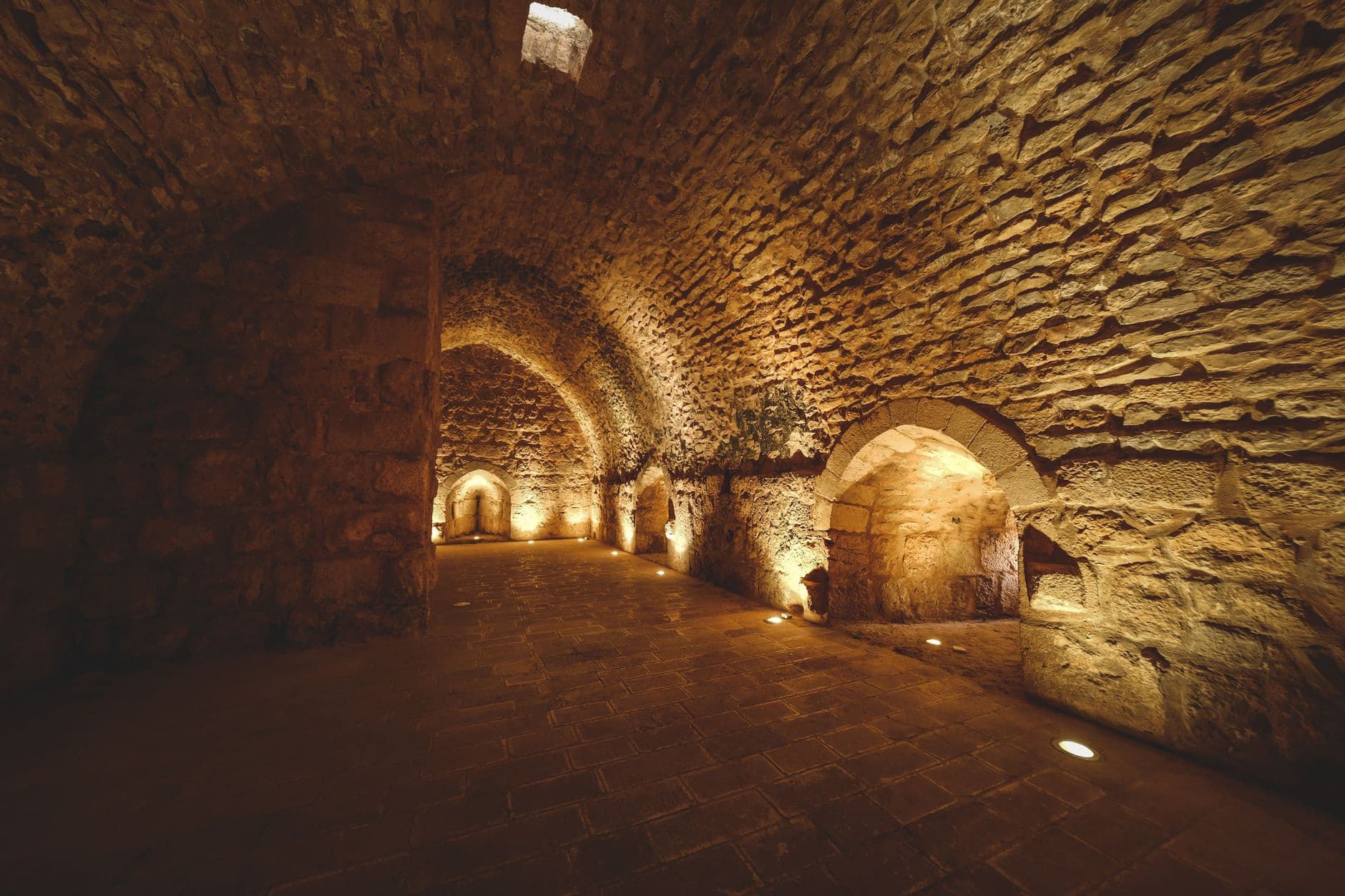
Saint Mark the Evangelist arrived in Alexandria in 42 AD, according to Coptic tradition, and founded what is now one of the oldest continuously functioning Christian institutions on earth. This makes the Coptic Orthodox Church older than Roman Catholicism by the better part of four centuries, and older than most of the theological arguments that created it. When European Christianity was still Roman paganism, Egypt had bishops.
This is the context most visitors miss entirely. They arrive in Coptic Cairo thinking they are visiting a minority enclave, a remnant faith, a historical curiosity. They are actually standing inside the mainstream of early Christian history. The Coptic language, which survives today only in liturgy, is a direct descendant of the language spoken by the ancient Egyptians, written in a Greek-derived alphabet introduced precisely because early Christian missionaries needed to translate scripture for people who could not read hieroglyphics. The word "Copt" itself derives from the Greek "Aigyptos," meaning Egypt. Copts are not a sect within Egypt. They are Egypt, or at least a continuous thread of it running from the Pharaonic period through to the present day.
Approximately 10 percent of Egypt's population today identifies as Coptic Christian, somewhere between 10 and 15 million people depending on which census methodology you accept. They are concentrated in Cairo, Alexandria, and Upper Egypt, particularly around Asyut and Sohag, where ancient monasteries like the White Monastery of Saint Shenouda still draw pilgrims who have been making the same journey for sixteen centuries.
---
What You Will Actually See in Coptic Cairo
The neighborhood called Coptic Cairo sits inside the remains of the Roman fortress of Babylon, built by the Emperor Diocletian around 300 AD. This is the first connection most visitors do not make: the walls you walk past as you enter the compound are Roman military architecture, not Coptic, not Pharaonic, though they sit atop a Pharaonic canal that once connected the Nile to the Red Sea. The Copts inherited this fortress when Roman power collapsed in the East, and they built their churches inside its walls because the walls protected them.
The Hanging Church, known in Arabic as Al-Muallaqah ("the suspended"), is built directly over the southern gate of that Roman fortress. Its nave is suspended above the Roman towers on wooden beams, which is both the literal and poetic origin of its name. The church dates in its current form to the seventh century, though there has been a Christian structure on this site since at least the fourth. Inside, the pulpit rests on thirteen marble columns representing Christ and his apostles. One column is slightly darker than the rest. That column represents Judas Iscariot. The craftsmen who built this pulpit made the theological argument in stone.
The Coptic Museum, opened in 1910 by Marcus Simaika Pasha, contains the largest collection of Coptic art and artifacts in the world: 16,000 objects spanning textiles, manuscripts, metalwork, woodwork, and stone carvings. The most important room, which most guided tours spend approximately four minutes in, contains fragments of the Nag Hammadi codices, the Gnostic texts discovered by a peasant farmer named Muhammad Ali al-Samman near Luxor in 1945. He reportedly used some of the papyrus as kindling before understanding what he had found. What survived changed the academic understanding of early Christianity permanently.
The Church of Abu Serga and the Holy Family
Beneath the Church of Saints Sergius and Bacchus, known as Abu Serga, is a crypt that Coptic tradition identifies as the resting place of the Holy Family during their flight into Egypt. The historical record does not confirm this claim, and the crypt floods every year during the Nile inundation season, which says something about the quality of the ground on which this theology is built. But the tradition is old, documented in texts from at least the fifth century, and the crypt itself is genuine fourth-century construction. You can go down. You should. The air is different at that depth and in that age, and the flooding has done something interesting to the stone.
The church above is dedicated to two Roman soldiers, Sergius and Bacchus, who were executed around 303 AD for refusing to sacrifice to Jupiter. They became among the most widely venerated saints in early Christianity, with churches dedicated to them from Syria to Constantinople to Cairo. This particular church was a stop on the Fatimid Caliph al-Hakim's procession routes in the eleventh century, which is a strange fact to sit with: an Ismaili Muslim caliph who periodically demolished churches, but who also walked past this one as a matter of civic ritual.
---
The Connections: Nothing Exists in Isolation
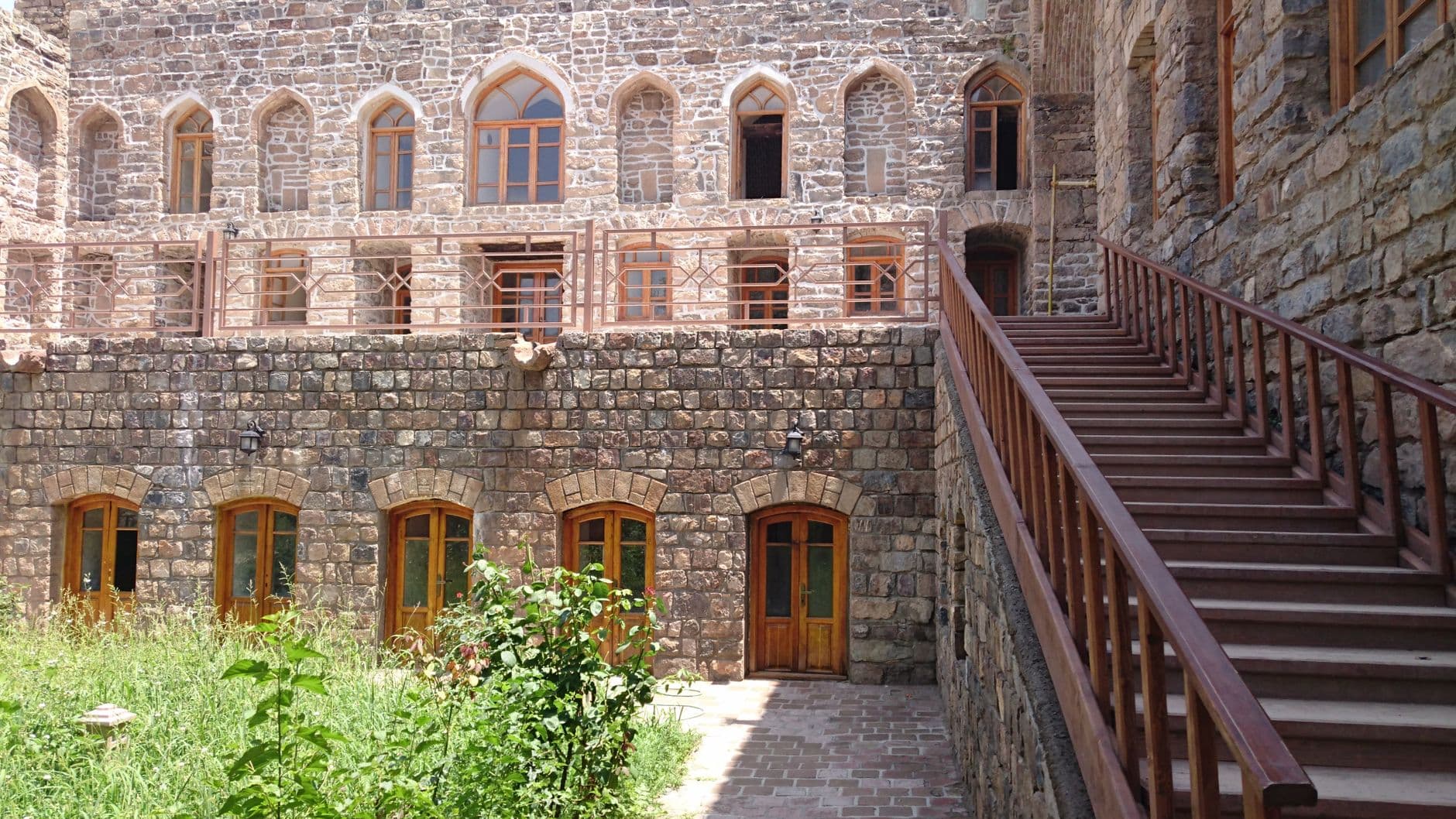
The Ben Ezra Synagogue, which sits directly adjacent to the Coptic churches in Old Cairo, was originally a Coptic church dedicated to Saint Michael. The Copts sold it to the Jewish community in the ninth century, reportedly to pay a tax levied by the Abbasid governor Ahmad ibn Tulun, the same man who built the Ibn Tulun Mosque three kilometers away. That mosque still stands and is one of the best-preserved ninth-century Islamic buildings in the world. The chain of transactions connecting a Coptic church sale to an Abbasid governor's tax policy to one of Cairo's finest mosques is the kind of connection that makes Egypt make sense.
The geniza (storage room) of the Ben Ezra Synagogue, discovered by Cambridge scholar Solomon Schechter in 1896, contained approximately 300,000 manuscript fragments dating from the tenth to the nineteenth century. Among them were documents in Arabic, Hebrew, Aramaic, Judeo-Persian, and Coptic, including records of medieval Jewish merchants, personal letters, and theological texts. The Cairo Geniza documents are now primary sources for the social history of the medieval Mediterranean world. They live mostly in Cambridge, with portions in New York, Paris, and Budapest, which is its own kind of commentary on colonial-era scholarship.
The monasteries of Wadi Natrun, three hours northwest of Cairo in the Western Desert, are not technically part of Coptic Cairo, but they are the intellectual and spiritual backbone of everything you see there. Founded in the fourth and fifth centuries, they produced the monastic tradition that eventually spread to Europe through figures like John Cassian, who visited the Egyptian monks around 385 AD and brought their practices back to Gaul. European monasticism, in other words, is a downstream consequence of Egyptian Christian practice. When you visit a Benedictine monastery in France, you are looking at an institution whose rules derive, at several removes, from what Egyptian monks were doing in the desert outside Alexandria sixteen centuries ago.
---
Common Mistakes
Arriving without understanding the liturgical calendar. Coptic Easter is calculated differently from both Eastern Orthodox and Western Easter, often falling on a different Sunday. If you arrive during Holy Week, access to certain churches will be restricted, crowds will be significant, and services will run for hours. This is either an obstacle or the experience of a lifetime, depending entirely on what you came for.
Paying for a group tour of Coptic Cairo. Most group tours spend forty-five minutes in the entire compound, visit the Hanging Church and the Coptic Museum lobby, and leave. You will learn nothing you could not learn from reading this article. Hire a licensed Coptic guide privately, pay EGP 400 to 600 for three hours, and actually ask questions. The guides who specialize in Coptic history know things that no tour operator has thought to include in a script.
Skipping the Coptic Museum in favor of more churches. This is the most common error and it is a significant one. The museum provides the framework that makes the churches legible. Without understanding the iconographic tradition, the textile patterns, and the manuscript culture, you are looking at beautiful objects without understanding what they are saying. Spend two hours in the museum before you visit anything else.
The sound and light show at various Coptic sites. There is no official sound and light show at Coptic Cairo, but several operators offer evening "tours" that amount to walking through the compound with colored lighting and recorded narration. They cost EGP 250 to 350 and tell you nothing useful. Skip them.
Treating Coptic Cairo as a half-day add-on to the Egyptian Museum. These are not equivalent experiences to be stacked for efficiency. Coptic Cairo requires patience, specifically the patience to sit in a church for a few minutes without photographing anything, to let the incense and the chant and the gold-and-dark iconostasis work on you. Rushing produces nothing except photographs of places you do not understand.
Ignoring Upper Egypt's Coptic sites entirely. The White Monastery of Saint Shenouda near Sohag, founded in the fourth century, contains the largest surviving collection of Coptic architectural stonework outside of Cairo, and almost no international tourists visit it. The monastery is still active. The monks will show you around. The drive from Luxor takes about four hours and is worth every one of them.
Conflating Coptic history with minority history. Copts were the majority population of Egypt until sometime in the tenth or eleventh century. Their shift to minority status was gradual, economically driven, and not primarily the result of persecution. Understanding this changes how you read everything you see. The Coptic church was not built in hiding. It was built by people who considered themselves, correctly, to be the inheritors of Egyptian civilization.
---
Practical Tips
Dress conservatively in Coptic Cairo. Shoulders and knees covered for both men and women. This is not a rule enforced by anyone at the gate; it is a matter of being in a place where people are actively worshipping. The same standards apply as in any mosque.
Friday morning is the worst time to visit Coptic Cairo, not because of Coptic services but because the adjacent mosque draws large crowds that spill into the surrounding streets. Sunday morning from 9am to noon is when Coptic services are most active. This is either an obstacle or the best possible time to visit, depending on whether you want to see the churches as architecture or as living institutions.
Photography inside most Coptic churches is permitted but not during services. Ask before raising your camera. In the Coptic Museum, photography without a tripod is generally permitted; flash is not.
The area immediately outside the Mar Girgis metro station has several coffee shops and small restaurants serving Coptic-owned businesses. The kushari and ful are good. The tourist restaurants on the main street are not.
If you are genuinely interested in Coptic Christianity Egypt history as a subject rather than a tourist itinerary, the Coptic Encyclopedia (eight volumes, published by Macmillan in 1991 and now available online) is the authoritative reference. Aziz Suryal Atiya, an Egyptian-American scholar from Alexandria, edited it. It is not light reading, but it is the real thing.
Frequently Asked Questions
The Weekly Dispatch
More on Egypt, every Friday.
Cultural depth and places most guides never mention.
No spam. Unsubscribe anytime.