Coptic Christianity Egypt: The Complete History Guide
Coptic Christians predate Islam in Egypt by six centuries. Their language is a direct descendant of ancient Egyptian. Most visitors never learn either fact.

Quick Facts
- Best time to visit
- October to March for manageable temperatures. Coptic Christmas (January 7th) and Holy Week before Easter are culturally extraordinary but crowded.
- Entrance fee
- Coptic Museum: EGP 200 (approx $4 USD), students EGP 100. Hanging Church and most churches in Old Cairo: free entry.
- Opening hours
- Coptic Museum daily 9am to 5pm. Most Old Cairo churches 9am to 4pm. Monastery of St. Anthony opens at 9am, confirm days in advance.
- How to get there
- Metro Line 1 to Mar Girgis station, EGP 9 (under $1 USD). Taxi from downtown Cairo EGP 80 to 150. Private car required for Monastery of St. Anthony.
- Time needed
- Coptic Museum alone: 3 hours minimum. Full Old Cairo Coptic quarter: full day. Monastery of St. Anthony: full day round-trip from Cairo.
- Cost range
- Budget EGP 400 to 700 per day including transport and food near Mar Girgis. Mid-range EGP 1,200 to 2,000 per day with guide and restaurant meals.
Coptic Christianity Egypt: The Complete History Guide
The language spoken in Coptic churches today is the closest living relative of the language Ramesses II used to dictate his battle records. Not a cousin, not an influence: a direct descendant, with Greek letters grafted onto a Pharaonic alphabet because Greek was the administrative language when Christianity arrived in Egypt in the first century. When a Coptic priest chants the liturgy in Old Cairo, he is doing something no ancient Egyptian priest ever did, but in a language they would have partially recognized. That is the first thing to understand about Coptic Christianity in Egypt: it does not exist beside ancient Egypt. It grew out of it.
Quick Facts
Best Time to Visit: October to March, when temperatures in Cairo drop below 30°C and church interiors feel manageable. Coptic Christmas (January 7th) and Easter are extraordinary but crowded. Holy Week draws Coptic Christians from across the diaspora back to Cairo.
Key Site Entrance Fees: Coptic Museum, Old Cairo: EGP 200 (approx $4 USD), students EGP 100 Hanging Church (Al-Muallaqah): Free entry Church of St. Sergius and Bacchus (Abu Serga): Free entry Ben Ezra Synagogue (adjacent, worth combining): Free entry Monastery of St. Anthony, Red Sea Mountains: Free, but donations expected
Opening Hours: Coptic Museum opens daily 9am to 5pm. Most Old Cairo churches open 9am to 4pm, though hours shift slightly around services and Coptic holidays. Call ahead for monastery visits, which sometimes require advance permission.
How to Get There: Metro Line 1 to Mar Girgis station drops you at the gate of the Coptic quarter in Old Cairo. Fare is EGP 9 (under $1 USD). Taxis from downtown Cairo run EGP 80 to 150 depending on traffic and your negotiation. The Mar Girgis area is walkable once you arrive.
Time Needed: The Coptic Museum alone deserves three hours. A full sweep of Old Cairo's Coptic quarter, including the Hanging Church, Abu Serga, the Roman towers, and the Ben Ezra Synagogue, takes a full day. Add the Monastery of St. Anthony if you have an extra day and access to a car.
Cost Range: Budget EGP 400 to 700 per day including transport and food near Mar Girgis. Mid-range EGP 1,200 to 2,000 per day if combining with a guide and lunch in a sit-down restaurant.
Why This Place Matters
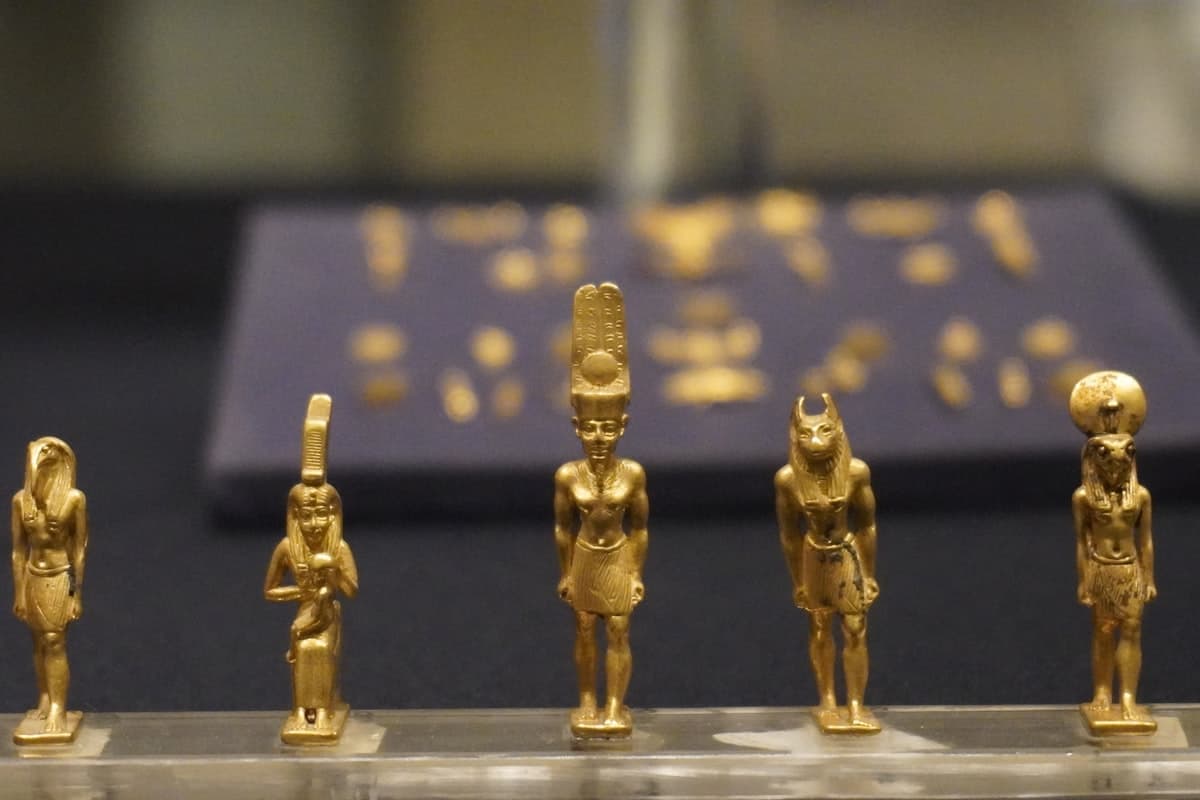
Coptic Christianity arrived in Egypt around 42 CE, traditionally carried by the Apostle Mark, who is said to have landed in Alexandria and healed a shoemaker named Anianus by making a paste of mud and applying it to a wound on his hand. Whether or not you accept the miracle, the timeline is factual: Egypt had a functioning Christian community before Rome did, before the Gospels were fully written down, and before the word "Christian" was widely used as a self-identifier.
The word "Coptic" itself is Greek: Aigyptios, meaning Egyptian, filtered through Arabic into Qibt, and then into English as Coptic. It is not a religious term originally. It is an ethnic one. Being Coptic meant being Egyptian. The religion came to define the people because under Byzantine rule, the Coptic church's insistence on a theology called Miaphysitism, the belief that Christ has one nature both human and divine rather than two separate natures, put it in direct conflict with Constantinople. The Council of Chalcedon in 451 CE formally split the Egyptian church from Byzantine Christianity. Egypt's Christians became defined by a theological position their government rejected. This is the split that still distinguishes the Coptic Orthodox Church from Eastern Orthodox and Catholic traditions today.
By the time the Arab armies arrived in 641 CE under Amr ibn al-As, Egypt's Christians had already spent two centuries being persecuted by their fellow Christians in Byzantium. Many Copts initially welcomed the Arab conquest as relief from the Chalcedonian emperors. That historical nuance goes unmentioned in nearly every tour guide's script.
What You Will Actually See in Old Cairo
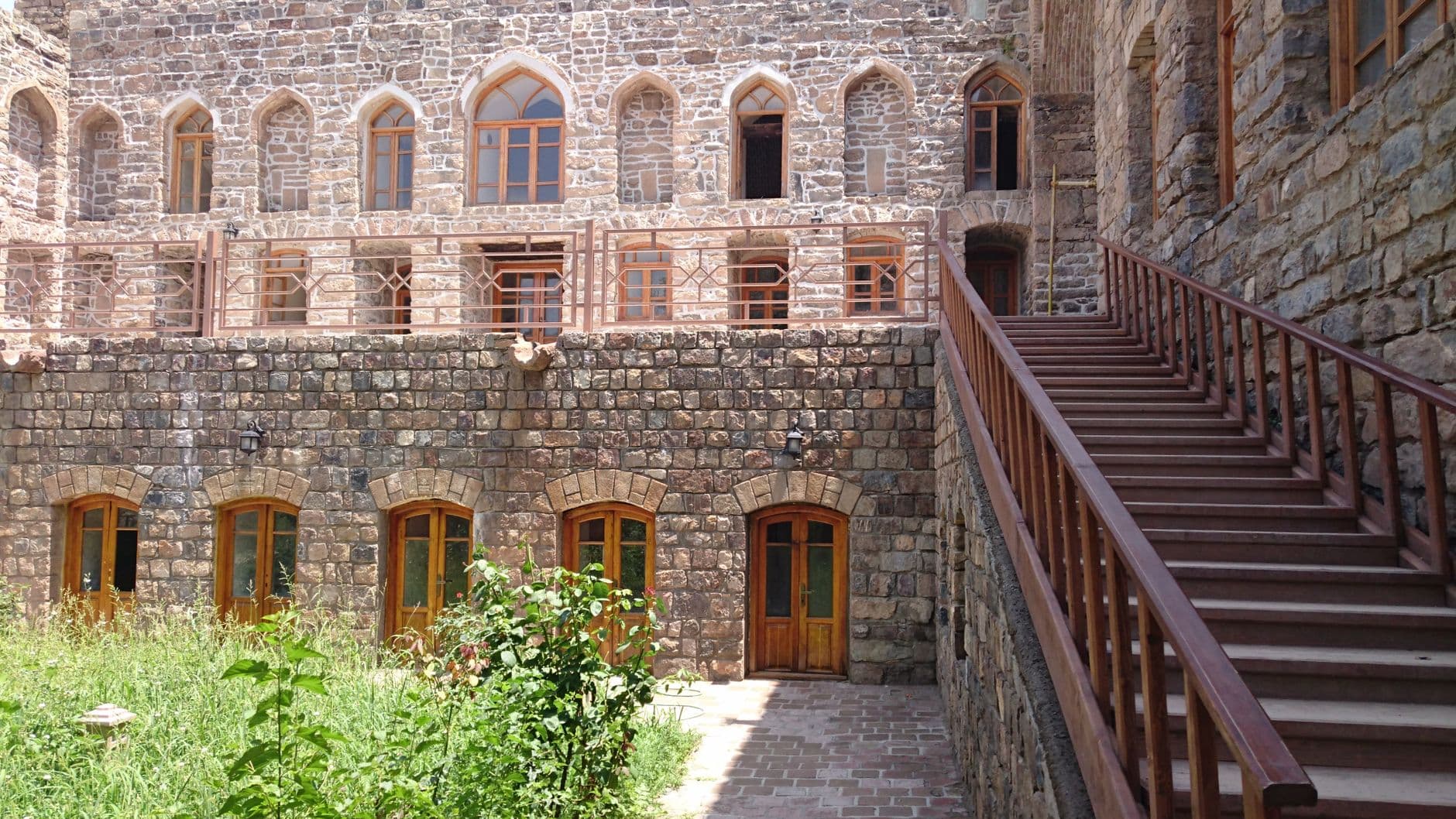
The Coptic quarter in Old Cairo sits inside the ruins of Babylon, a Roman fortress built around 30 BCE whose twin circular towers still stand at the entrance to the Mar Girgis compound. The Hanging Church, officially the Church of the Virgin Mary, is called Al-Muallaqah in Arabic, meaning the suspended one, because it is built directly over the south gate of the Roman fortress, its nave resting on two towers. The wooden nave dates to the seventh century. The screen of ivory and ebony inlaid with crosses is Fatimid work from the 11th century. The altar canopy has Pharaonic proportions. Nothing in this church comes from a single moment in time, and that layering is the point.
Descend into the Church of St. Sergius and Bacchus, known as Abu Serga, and you reach a crypt that predates the church itself. This crypt, tradition holds, is where the Holy Family sheltered during their flight into Egypt. The historical record for that claim is not strong, but the early Christian attachment to Egypt as sacred geography is very real. Egypt appears in Matthew's Gospel specifically as a place of refuge: "Out of Egypt I have called my son." The early church needed Egypt to matter, and Egypt's Christians built their identity around being that place.
The Coptic Museum is where the history becomes tactile and legible. Its collection includes the Nag Hammadi Codices originals, the 4th-century papyrus books discovered in Upper Egypt in 1945 that contained 52 texts, including the Gospel of Thomas, a sayings gospel not included in the New Testament canon. The museum also holds the world's oldest-known dated Christian document, a papyrus letter from 256 CE. Do not rush through the textile and icon galleries on the upper floors. The icons are not Byzantine copies: they have a flat, frontal quality that art historians trace directly to Pharaonic funerary portraits, specifically the Fayum portraits, which were realistic painted faces placed over mummy wrappings from the first to third centuries CE. The Coptic iconographic tradition is the Fayum tradition baptized.
The Desert Monks: Where Coptic Christianity Changed the World
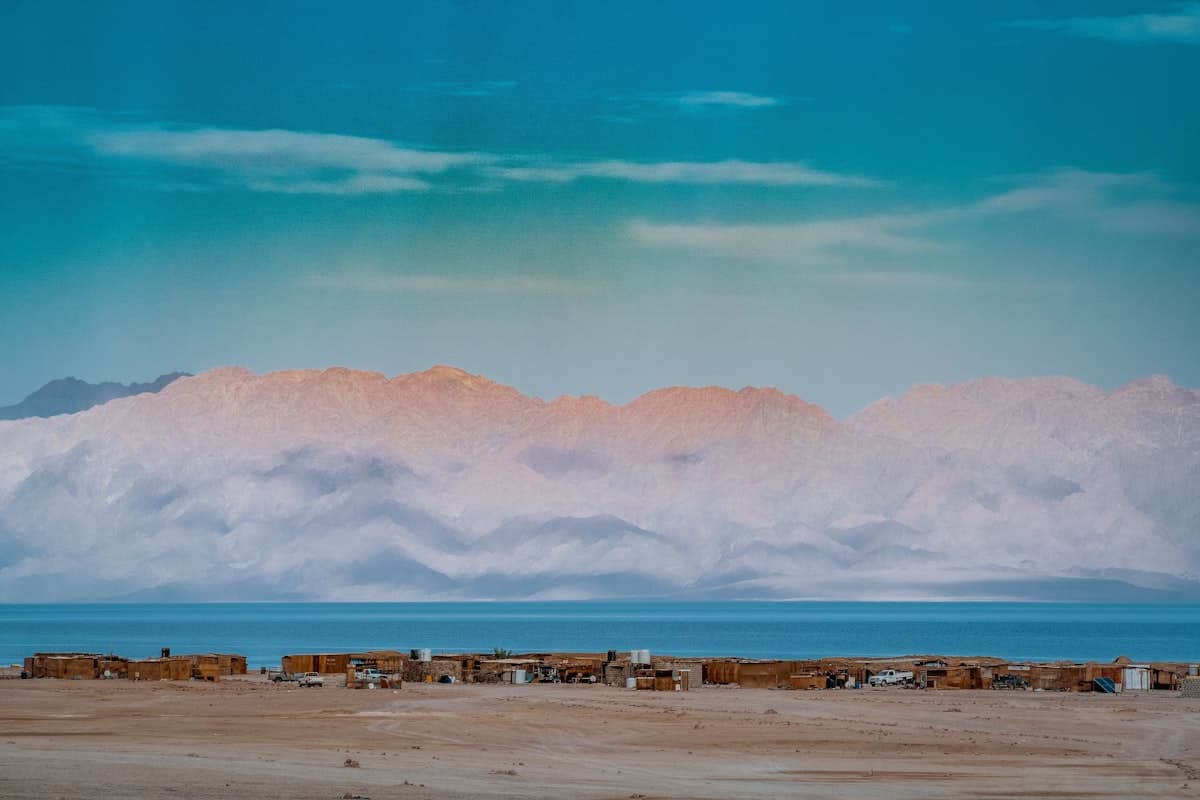
The aspect of Coptic history that most visitors miss entirely is the one that most shaped Christian practice globally. In the third and fourth centuries, Egyptian Christians invented monasticism. Not as a concept but as a practice: the specific idea that a person could withdraw from society, live alone or in a community in the desert, and pursue God through silence, manual labor, and fasting.
Anthony of Egypt, born around 251 CE in Middle Egypt, is the figure credited with formalizing desert solitude as a spiritual discipline. His biography, written by Athanasius of Alexandria around 360 CE, became one of the most widely distributed texts in early Christian history. Augustine of Hippo credited it with accelerating his own conversion. The Rule of Benedict, which shaped Western European monasticism for a thousand years and through it the preservation of classical learning in medieval libraries, drew directly on the Egyptian desert tradition.
The Monastery of St. Anthony in the Red Sea Mountains, about four hours from Cairo by car, is still inhabited. It is the oldest Christian monastery in the world that has operated continuously since its founding in the late fourth century. The wall paintings inside the Church of St. Anthony date from the 13th century and show a mixture of Coptic, Nubian, and Ethiopian influences that reflects the reality of the medieval Coptic world: a church whose authority extended deep into sub-Saharan Africa. The Ethiopian Orthodox Church considers itself a daughter of the Coptic church and historically its patriarch was appointed by the Coptic Pope of Alexandria until 1959.
To get there, hire a car from Cairo or Hurghada. The drive through Wadi Araba is worth it on its own terms. The monastery gate opens at 9am. Dress modestly. Bring water.
The Connections
The Coptic quarter in Old Cairo sits inside Roman Babylon, which was built near an earlier Persian fortress, which was itself built at a strategic bend in the Nile near a Pharaonic settlement. The current Ben Ezra Synagogue, which stands 50 meters from the Hanging Church, was rebuilt in the 9th century on the site of an earlier Coptic church that was sold to the Jewish community after taxes levied by the Abbasid caliph Ahmad ibn Tulun bankrupted the local congregation. The Cairo Geniza, a collection of 300,000 medieval Jewish manuscript fragments discovered in the synagogue's storage room in 1896, contains documents in Arabic, Hebrew, and Judeo-Arabic that are primary sources for the social history of Fatimid and Ayyubid Cairo. The building is Jewish. Its history is Coptic. Its documents illuminate Muslim rule. No site in Cairo is more layered.
The Fatimid caliphs, who built Islamic Cairo's historic core between 969 and 1171 CE, employed Coptic architects and craftsmen extensively. The wooden ceilings of several Fatimid mosques in the al-Muizz street were made by the same workshops producing the ivory-inlaid screens in Coptic churches of the same period. The Coptic and Islamic artistic traditions in Cairo do not run parallel. They were, for several centuries, produced by overlapping labor forces.
Common Mistakes
Treating the Coptic Museum as a quick stop. Most visitors spend 45 minutes inside. The museum needs at least three hours if you are reading the labels, and the labels are worth reading. The Nag Hammadi manuscripts alone deserve 30 minutes of your attention.
Visiting on Friday or during major Coptic feasts without a plan. Churches fill to capacity during Coptic Christmas (January 7th) and Holy Week before Easter. These are extraordinary experiences, but arrive early and expect crowds that make movement difficult.
Skipping the Roman towers at the Mar Girgis entrance. Most visitors walk past them to reach the churches. The towers are the reason the churches are here. Standing between them helps you understand why Roman engineers chose this bend in the Nile and why every subsequent civilization built on the same ground.
Taking a guided tour of the Coptic Museum. The official guides assigned at the museum entrance cover the highlights in twenty minutes and move on. The collection is dense enough to require a specialist or a good book. Jill Kamil's "Coptic Egypt" is the best single-volume preparation, and you can buy it at the museum shop.
The sound and light show at some monasteries is not worth the inconvenience. Skip any packaged "Coptic tour" that promises to cover Old Cairo, the Citadel, and Khan el-Khalili in a single day. You will see nothing properly. Old Cairo alone is a full day. The people selling combined tours are optimizing for turnover, not understanding.
Confusing Coptic Christianity with ancient Egyptian religion. The connection is linguistic and artistic, not theological. The Coptic church is a monotheistic Abrahamic tradition with a specific Christology. It is not a continuation of Isis worship. Guides who suggest otherwise are simplifying to the point of error.
Missing Upper Egypt's Coptic sites entirely. The White Monastery near Sohag, built in the 4th century from the limestone blocks of a Pharaonic temple that stood on the same site, is one of the most significant early Christian buildings in the world. Virtually no tourist visits it. If you are traveling to Luxor or Aswan, Sohag is on the same rail line. A half-day detour costs almost nothing.
Practical Tips
Dress conservatively for all church and monastery visits. Shoulders and knees covered is the minimum. Many churches offer wraps at the entrance, but bringing your own is more respectful and faster.
The Metro to Mar Girgis is the correct choice over taxis unless you have mobility constraints. Traffic in central Cairo between 8am and 10am makes a fifteen-minute taxi ride take an hour. The Metro runs reliably and deposits you directly at the compound entrance.
For the Monastery of St. Anthony, confirm opening days before driving four hours. The monastery occasionally closes to visitors during intensive prayer periods. The monastery's guest phone number is published on the Coptic Orthodox Diocese of Beni Suef website. Call the week before.
If you want to attend a Coptic liturgy, the Hanging Church holds services on Friday mornings starting around 7am and Sunday mornings starting around 8am. The liturgy is conducted in Coptic and Arabic. Non-Christian visitors are generally welcome to observe from the back, but should not approach the altar area or take photographs during the service. Ask before raising a camera at any point inside an active church.
Combine the Coptic Museum with the adjacent Roman towers and the Ben Ezra Synagogue on the same morning. Then eat lunch at one of the small restaurants on the street above the compound before walking into the Hanging Church when the midday crowds thin. Afternoons in the churches are quieter than mornings, and the light through the latticed windows in the Hanging Church is at its best between 2pm and 4pm.
Frequently Asked Questions
The Weekly Dispatch
More on Egypt, every Friday.
Cultural depth and places most guides never mention.
No spam. Unsubscribe anytime.