Coptic Christianity in Egypt: History, Sites, and Guide
Egypt's Coptic Christians are direct descendants of the ancient pharaonic population. Their liturgy still contains words from the language of Ramesses II. Most tourists never hear it.

Quick Facts
- Best time to visit
- October to March for comfortable walking temperatures in Cairo. January 6 to 7 for Coptic Christmas atmosphere, though churches will be crowded.
- Entrance fee
- Coptic Museum: EGP 200 (approx $4 USD), students EGP 100. Most churches in Old Cairo: free entry, donations welcomed.
- Opening hours
- Coptic Museum: daily 9am to 5pm. Old Cairo churches: approximately 9am to 4pm daily, with reduced access during Sunday liturgies.
- How to get there
- Cairo Metro Line 1 to Mar Girgis station, EGP 7 (under $1 USD). Taxi from Downtown Cairo EGP 60 to 100. Car hire for Wadi Natrun monasteries EGP 700 to 1,000 round trip.
- Time needed
- Old Cairo Coptic circuit: 5 to 6 hours minimum. Add Wadi Natrun monasteries as a separate full-day trip. Monastery of Saint Anthony requires an overnight or very early start from Cairo.
- Cost range
- Budget EGP 400 to 700 per day including metro, museum entry, and a local meal. Mid-range EGP 1,200 to 2,000 with a licensed guide and private transport.
Quick Facts
Best time to visit: October to March, when Cairo is cool enough to walk between sites without exhaustion. Coptic Christmas falls on January 7 and is one of the most atmospheric times to attend a service, though churches will be crowded and access may be restricted.
Entrance fees: The Coptic Museum costs EGP 200 (approximately $4 USD), with student discounts at EGP 100. Entry to most Coptic churches in Old Cairo is free, though donations are customary and genuinely appreciated. The Hanging Church (Al-Muallaqah) is free to enter.
Opening hours: The Coptic Museum opens daily 9am to 5pm. Most Old Cairo churches are open daily from approximately 9am to 4pm, though hours shift around liturgical services and feast days. Plan around Sunday morning services if you want the churches quieter.
How to get there: Take the Cairo Metro Line 1 to Mar Girgis station. The journey from Tahrir Square costs EGP 7 (under $1 USD) and deposits you directly at the entrance to Old Cairo's Coptic quarter. Taxis from Downtown Cairo cost EGP 60 to 100 depending on traffic.
Time needed: The Coptic Museum alone requires two to three hours if you are reading anything. A full circuit of Old Cairo's churches, the museum, and the Ben Ezra Synagogue takes a solid five to six hours. Combine with Islamic Cairo the same day only if you have a very high tolerance for sensory overload.
Cost range: Budget EGP 400 to 700 per day including transport, museum entry, and a meal near the site. Mid-range EGP 1,200 to 2,000 if you add a guide.
---
Why This Place Matters
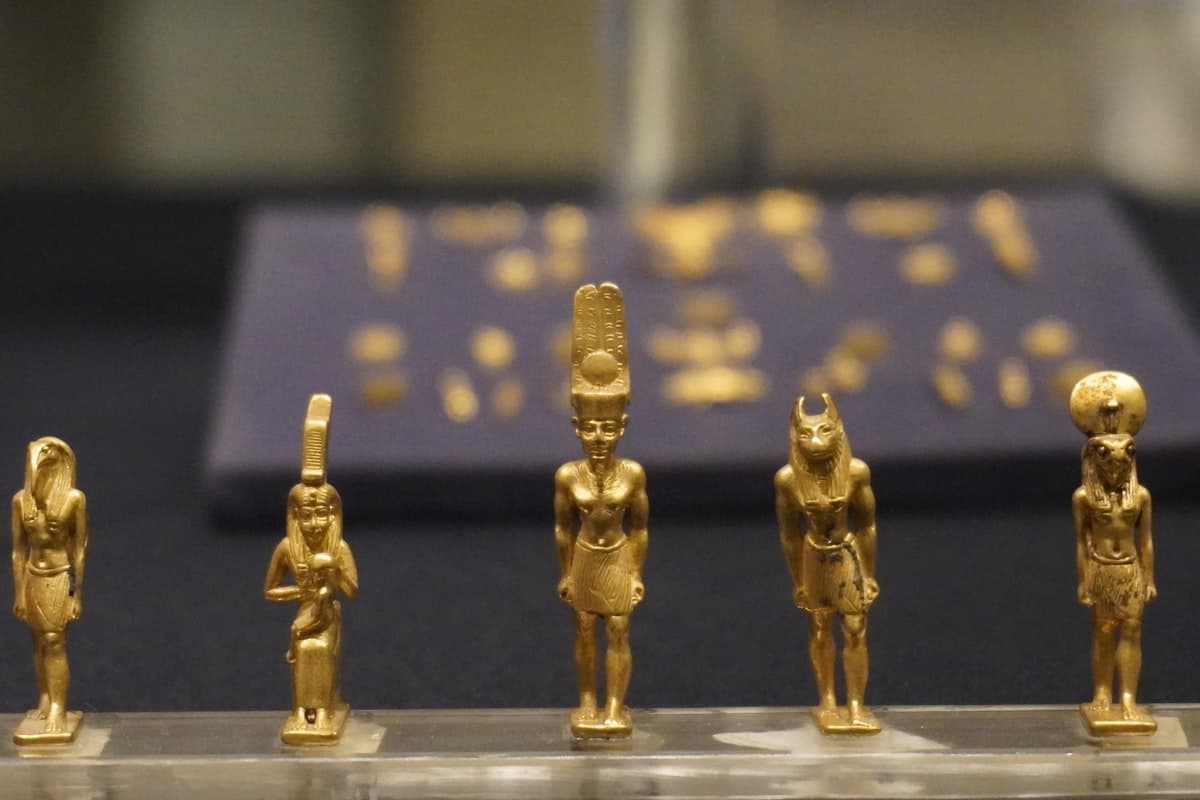
The word "Copt" does not mean Christian. It comes from the Greek "Aigyptos," which is itself a corruption of "Hwt-Ka-Ptah," one of the ancient Egyptian names for Memphis. When the Arabs arrived in the seventh century and asked the Greek-speaking locals what they called themselves, they said "Aigyptios." The Arabs heard "Qibt." Christianity entered the word later. What the word actually preserves is the name of a city founded by the first pharaoh, Menes, roughly 5,000 years ago.
This is what makes the Coptic Christianity Egypt history question so much more layered than it first appears. The Coptic Church is not simply a Christian denomination that happened to establish itself in Egypt. It is, by credible genealogical and linguistic argument, the most direct institutional continuity with pharaonic Egypt that exists. Coptic, the liturgical language still used in services today, is ancient Egyptian written in a modified Greek alphabet. When a Coptic priest says "Amen" at the end of a prayer, he is using a word that appears in texts from the reign of Thutmose III, roughly 1450 BC.
The Church was founded, according to Coptic tradition, by the Apostle Mark in Alexandria around 42 AD. This makes it one of the oldest Christian communities on earth, predating the Roman adoption of Christianity by nearly three centuries. By the time Constantine issued the Edict of Milan in 313 AD, the Coptic Church had already developed a monastic tradition, a distinct theological school in Alexandria, and had suffered multiple rounds of Roman persecution. The Coptic calendar still counts its years from the era of the Emperor Diocletian, who launched the most brutal of those persecutions in 284 AD. They call it the Era of the Martyrs.
---
What You Will Actually See in Old Cairo
The Coptic quarter of Old Cairo sits inside what was once Babylon-in-Egypt, a Roman fortress built in the first century AD on the site of an earlier Persian installation. The Romans built it to control the Nile crossing and the entrance to the canal linking the river to the Red Sea. Beneath the streets of Old Cairo today, the fortress walls still stand, and the foundations of several churches rest directly on Roman stonework. You can see the towers at the entrance to the compound from street level. Most visitors photograph them without registering that they are looking at Roman military architecture from the era of Augustus.
The Hanging Church, called Al-Muallaqah in Arabic, meaning "the suspended one," is built across the gatehouse of the southern tower of that Roman fortress. Its nave is suspended on the ancient walls, which is the literal origin of the name. It dates in its current form to the seventh century, though the site's use as a place of worship is documented earlier. The wooden ceiling is shaped like Noah's Ark, and the inlaid ivory screens separating the sanctuary from the nave are among the finest examples of medieval Coptic craftsmanship in existence. Thirteen columns support the interior, one black among twelve white ones, representing Judas among the apostles.
The Church of Saints Sergius and Bacchus (Abu Serga) is less celebrated but more historically significant to Copts. A crypt beneath the altar is venerated as the place where the Holy Family rested during their flight into Egypt. The crypt floods from the water table during the Nile's inundation season, which historically meant it was seasonally inaccessible. The broader flight of the Holy Family through Egypt is not a minor footnote in Coptic Christianity. It is the foundation myth of the entire tradition. Egypt did not simply receive Christianity through missionaries. Egypt, in Coptic understanding, was chosen before Christ's public ministry began.
The Coptic Museum, opened in 1910 and expanded multiple times, houses the largest collection of Coptic art and artifacts in the world. Its most consequential holding is a portion of the Nag Hammadi library, the collection of Gnostic texts discovered in Upper Egypt in 1945 by a farmer who was digging for fertilizer. He found a sealed clay jar containing thirteen leather-bound codices. They included texts entirely unknown to scholarship, among them the Gospel of Thomas, which contains 114 sayings attributed to Jesus and which the Coptic Church itself does not recognize as canonical. The farmer's mother reportedly used some of the pages to light her oven before anyone understood what had been found.
---
The Desert Fathers and the Monasteries
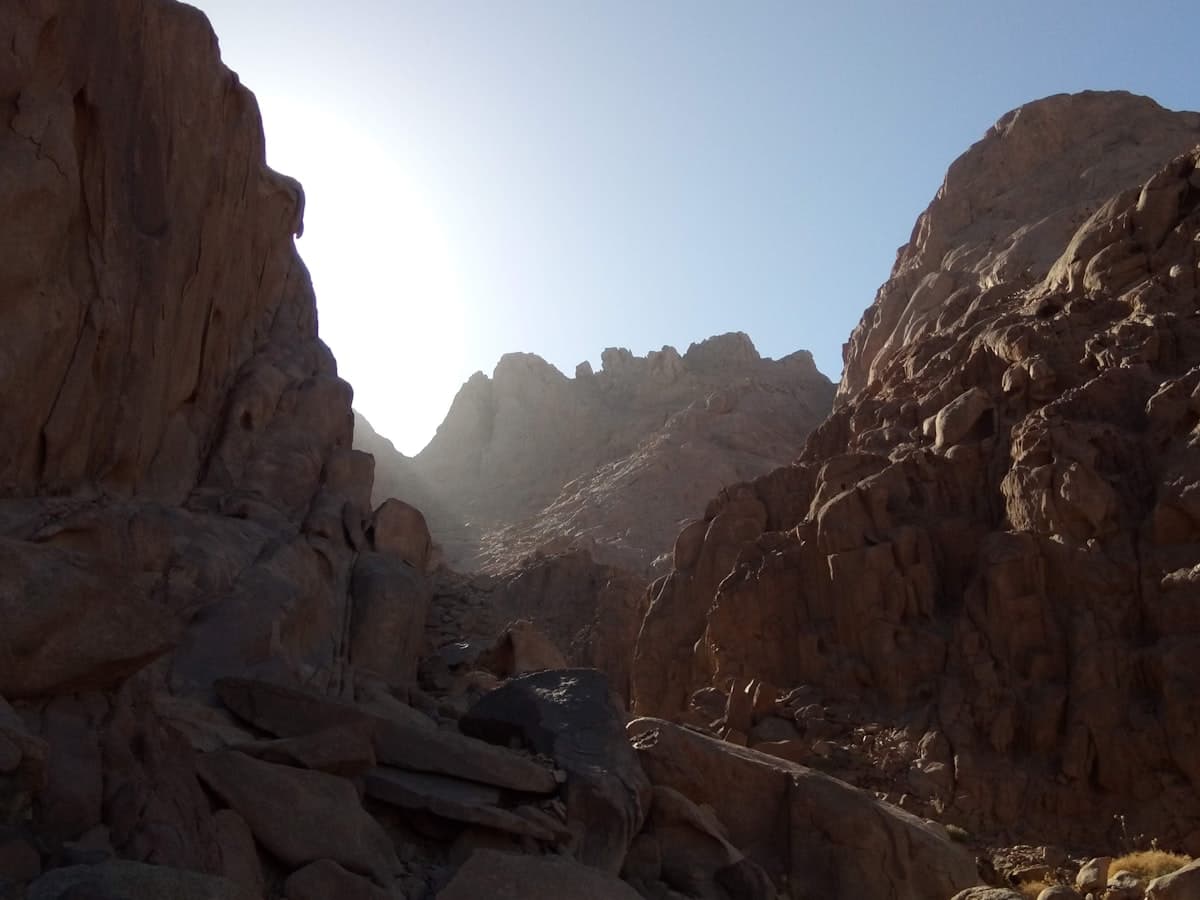
Before there were monks in Europe, there were monks in Egypt. Saint Anthony the Great, an Egyptian Copt born around 251 AD in Middle Egypt, is considered the founder of Christian monasticism. He sold his family's property after hearing the Gospel passage about the rich young man, gave the money to the poor, and walked into the Eastern Desert. His biography, written by Athanasius of Alexandria, became the most widely read text in the early Christian world after the Bible, and it was specifically responsible for the conversion of Augustine of Hippo. Western monasticism traces a direct intellectual lineage to a Coptic Egyptian farmer from Middle Egypt.
The monasteries he inspired still function. The Monastery of Saint Anthony (Deir Anba Antonios) in the Eastern Desert, built over the cave where Anthony lived, is the oldest functioning Christian monastery on earth. It was founded in the fourth century and has operated continuously since then, surviving Persian invasion, Arab conquest, Crusader-era disruption, and Bedouin raids in the 1400s that killed all its monks and required resettlement from Ethiopia. The monastery today houses around 120 monks and receives visitors. It is a five-hour drive from Cairo, which means most tourists who are interested in Coptic Christianity Egypt history never see it. This is a significant loss. Nothing in Old Cairo conveys the experience of the tradition as fully as arriving at those red-ochre walls in the desert at dawn.
Wadi Natrun, closer to Cairo on the desert road toward Alexandria, contains four functioning monasteries: Anba Bishoy, Al-Baramus, Al-Suriani, and Abu Makar. They are accessible by car or service taxi from Cairo in about two hours. Al-Suriani contains murals from the tenth century that were partially described by a Syriac bishop who visited in 927 AD and left written records, meaning we can cross-reference what he saw with what still exists on the walls today.
---
The Connections
The Ben Ezra Synagogue in Old Cairo sits within the Coptic compound. It was originally a Coptic church dedicated to Saint Michael, sold to the Jewish community in the ninth century to pay a tax imposed by the Abbasid governor Ibn Tulun. Ibn Tulun, whose own mosque survives intact in Islamic Cairo and is the second-oldest mosque in Egypt, needed money. The Copts sold their church. The Jewish community converted it, and in its geniza, a storage room for sacred texts that could not be destroyed, scholars discovered in 1896 more than 300,000 manuscript fragments dating from the tenth to the nineteenth century, including personal letters, legal documents, and business correspondence that collectively constitute the most complete record of medieval Jewish life anywhere in the world. A Coptic church became a Jewish synagogue, its document storage room became one of the most important archival discoveries in history, and it sits three minutes' walk from the Hanging Church.
The Coptic community's position in Egypt shifted dramatically with the Arab conquest of 641 AD. Initially treated with the relative tolerance extended to People of the Book, Copts gradually lost political power and, under certain Fatimid and Mamluk rulers, faced periods of serious persecution. The Fatimid caliph Al-Hakim bi-Amr Allah ordered the destruction of the Church of the Holy Sepulchre in Jerusalem in 1009 and also burned Coptic churches in Egypt. His reign is one reason historians treat any simple narrative about Islamic tolerance toward Christians with appropriate skepticism. The reality was variable, political, and dependent almost entirely on which ruler held power in any given generation.
---
Common Mistakes
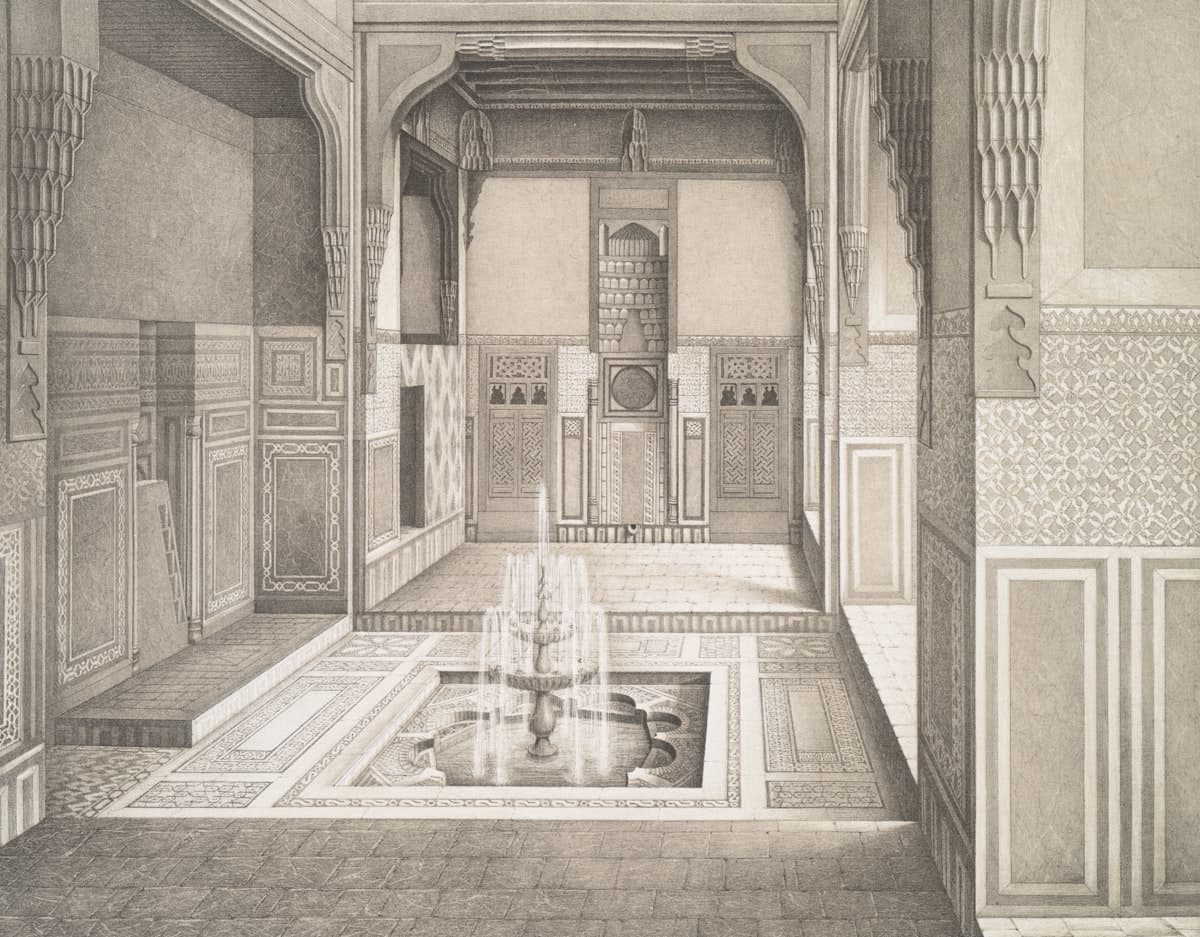
Treating the Coptic Museum as optional. Most tour itineraries spend forty minutes in the museum and two hours in the churches. The correct ratio is the reverse. The museum contains the evidence that rewrites your understanding of everything you will see in the churches. Go there first.
Visiting only Old Cairo and calling it done. Old Cairo is the easiest access point, but it is a compressed and heavily visited slice. The monasteries of Wadi Natrun and the Monastery of Saint Anthony represent the tradition in a completely different register. If you have any genuine interest in Coptic Christianity, budget at least one full day for the desert monasteries.
Going on Sunday morning without checking service times. Several Old Cairo churches hold liturgies that run from the early hours until mid-morning. The Hanging Church during an active service is a genuinely affecting experience, but the nave fills, access to certain areas is blocked, and the acoustics of Coptic chant in that space are something a recorded guide cannot replicate. Arriving at 10am on a Sunday during a major feast day means you may not get in at all.
Paying for the sound and light show at the Coptic Museum. There is no sound and light show. But the equivalent error is hiring one of the unofficial guides who cluster at the Mar Girgis metro exit. They will tell you things that are factually wrong with complete confidence. The museum's official guides are bookable in advance and are worth the cost.
Skipping the Coptic neighborhood outside the compound walls. The tourist circuit stays inside the Roman walls. The streets of Coptic Cairo immediately outside contain workshops, a functioning Coptic school, small churches that receive no visitors, and vendors selling handmade icons in a tradition with documented continuity to the sixth century. Spend thirty minutes walking the immediate neighborhood.
Expecting easy access to Wadi Natrun monasteries without calling ahead. Monasteries have their own rules about visiting hours, dress codes, and guest access. Al-Suriani and Abu Makar in particular require advance contact. Showing up unannounced on a religious feast day and finding the gates closed is a completely avoidable experience.
The contrarian take: Every guide to Old Cairo recommends the Coptic quarter as a half-day add-on to Islamic Cairo. Do not do it this way. The two neighborhoods require completely different mental preparation and physical pace. Attempting both in a single day means you will experience neither properly. Give Old Cairo its own day, go slowly, and eat lunch at one of the small restaurants on Amr Ibn Al-As Street rather than rushing back to Downtown.
---
Practical Tips
Dress conservatively at all sites. Shoulders and knees covered for all genders. This is not a suggestion. Churches that receive tourists regularly will have scarves available at the entrance, but carrying your own is simpler.
The Mar Girgis Metro station is the correct way to arrive. The short taxi ride from Downtown Cairo will deposit you in traffic on a road that is difficult to navigate on foot. The metro takes twelve minutes from Sadat station and costs less than fifty cents.
Photography inside churches depends on the specific church and the specific day. The Hanging Church generally permits photography when services are not in progress. Abu Serga is more restrictive. Ask before raising your camera, and lower it immediately if asked. The rule is the church's, not yours to negotiate.
Coptic Cairo has limited good food options inside the compound. The museum has a small café. For a proper meal, walk five minutes toward the river to the cluster of small restaurants near the water. Fish from the Nile, grilled and served with bread and salad, costs EGP 80 to 150 and is significantly better than anything available in the tourist zone.
If you want to attend a Coptic liturgy as a respectful visitor rather than a tourist, the Cathedral of Saint Mark in Abbassiya in Cairo holds services that welcome non-Copts. The liturgy runs long, often two to three hours, sung entirely in Coptic with Arabic interpolations. It is not an experience you leave unchanged.
Frequently Asked Questions
The Weekly Dispatch
More on Egypt, every Friday.
Cultural depth and places most guides never mention.
No spam. Unsubscribe anytime.