Early Christians in Egypt: A Complete Coptic History Guide
Christianity reached Egypt within decades of the Crucifixion. The Copts never left. Their churches sit on streets older than Islam, older than Rome's fall. Here is what most visitors miss.

Quick Facts
- Best time to visit
- October to March. Cooler temperatures make walking between sites in Old Cairo and traveling to desert monasteries comfortable. Avoid Coptic fasting periods (Lent, Fast of the Virgin in August) if visiting monasteries.
- Entrance fee
- Coptic Museum EGP 200 (approx $4 USD), students EGP 100. Old Cairo churches: free entry, donations of EGP 20 to 50 per church appropriate.
- Opening hours
- Coptic Museum: daily 9am to 5pm, closed 11:30am to 1:30pm Fridays. Old Cairo churches: generally 9am to 4pm daily. Wadi al-Natrun monasteries: 9am to 5pm, closed on Coptic fasting days.
- How to get there
- Cairo Metro Line 1 to Mar Girgis station (EGP 10, under $1 USD) for Old Cairo. Taxi from Downtown Cairo EGP 80 to 120. Microbus from Turgoman bus station to Wadi al-Natrun rest stop EGP 50, then taxi to monasteries EGP 100 to 150.
- Time needed
- Old Cairo churches plus Coptic Museum: 6 to 7 hours minimum. Wadi al-Natrun monasteries: full day from Cairo including travel. Combining both requires two separate days.
- Cost range
- Budget EGP 400 to 700 per day including transport, entry fees, and street food. Mid-range EGP 1,500 to 2,500 including private specialist guide and lunch.
Quick Facts
Best time to visit: October to March, when Cairo temperatures stay below 25°C and the churches are cool enough to linger in properly.
Entrance fees: The Coptic Museum costs EGP 200 (approx $4 USD), students EGP 100. Most functioning churches in Old Cairo are free to enter, though donations are expected and appropriate. The Ben Ezra Synagogue, technically a separate site, is also free.
Opening hours: Coptic Museum daily 9am to 5pm (closed Fridays 11:30am to 1:30pm for prayers). Most Old Cairo churches open 9am to 4pm daily, with limited access during Sunday morning services.
How to get there: The Cairo Metro Line 1 to Mar Girgis station drops you directly in front of the Roman towers that guard the entrance to Old Cairo. The fare is EGP 10 (under $1 USD). A taxi from Downtown Cairo costs EGP 80 to 120 depending on traffic.
Time needed: Old Cairo alone requires a minimum of four hours to do properly. Adding the Coptic Museum stretches that to a full day. If you are combining with the Hanging Church, Ben Ezra Synagogue, and the Church of Abu Serga, you need six to seven hours and comfortable shoes.
Cost range: Budget EGP 400 to 700 per day for entry fees, transport, and street food. Mid-range EGP 1,500 to 2,500 including a guided tour and lunch.
---
Why This Place Matters
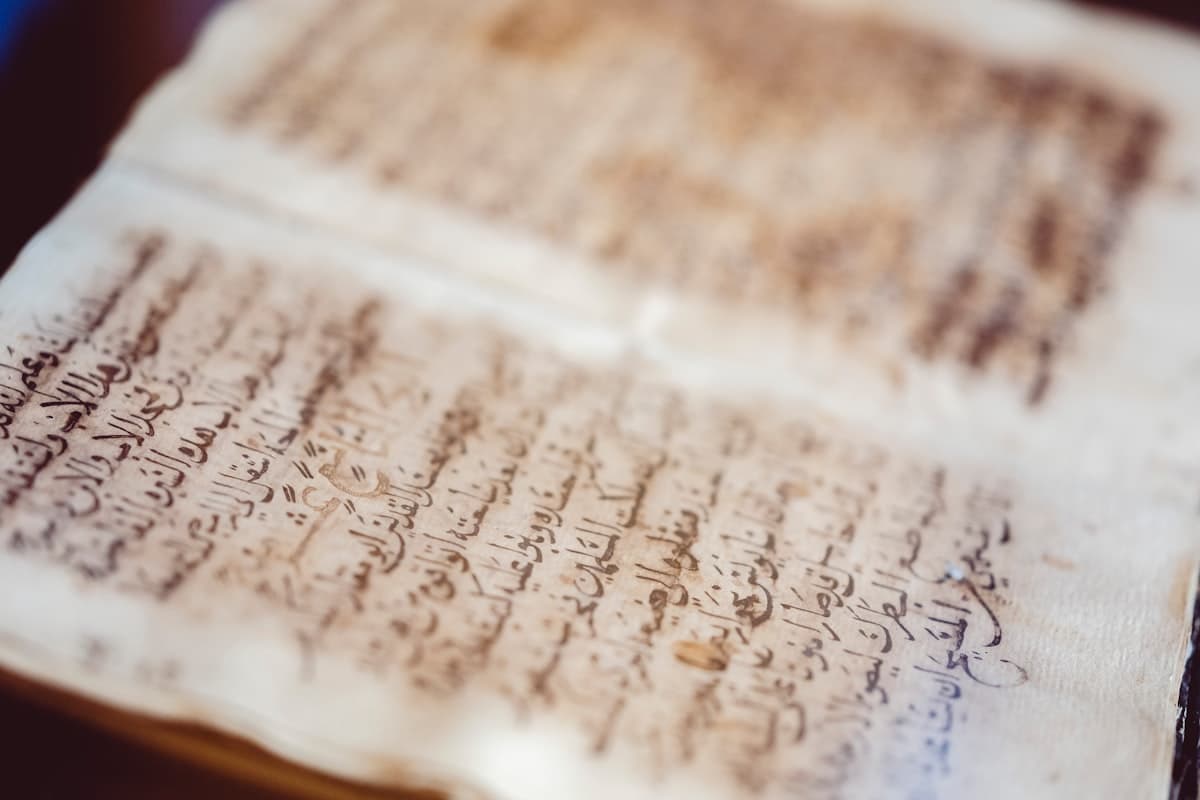
Egypt is the second country Christianity ever touched. Saint Mark arrived in Alexandria, according to Coptic tradition, around 42 CE, roughly twelve years after the Crucifixion. He was killed by a mob in 68 CE, dragged through Alexandria's streets with a rope around his neck. His relics were taken to Venice in 828 CE by two Venetian merchants who bribed their way past Egyptian customs officials by hiding the body under layers of pork and cabbages, knowing Muslim inspectors would not search too thoroughly. The bones are still in St. Mark's Basilica in Venice. The Copts have never entirely forgiven Venice for this.
What that story tells you is that Egyptian Christianity is not a footnote. It is a foundation. The monastic tradition that shaped European Christianity, from Benedict of Nursia to the Irish monks who preserved classical learning during Europe's early medieval period, traces directly to the Egyptian desert. Saint Anthony of Egypt, who retreated to the Eastern Desert around 270 CE and attracted followers who became the world's first Christian monastics, essentially invented the form. The Rule of Saint Benedict, which governed thousands of European monasteries, was written six centuries later and openly acknowledges its debt to the Egyptian model.
The word for monk in most Western languages comes from the Greek monachos, meaning solitary. The thing itself came from the Nile Valley. Every medieval European monastery, every Cistercian abbey, every Irish scriptorium that copied the classical world into the future, carries the DNA of an Egyptian desert father who spoke Coptic, not Latin.
For travelers exploring early Christians in Egypt and the Coptic history they left behind, this is the context that makes the physical sites make sense.
---
Old Cairo: What You Are Actually Walking Through
The neighborhood called Coptic Cairo, or Old Cairo, or Masr al-Qadima depending on who you ask, sits inside what was the Roman fortress of Babylon. Not the Babylon of Mesopotamia. This one was built by Augustus Caesar after he defeated Antony and Cleopatra in 30 BCE, constructed to control the junction of the Nile and the canal connecting to the Red Sea. The Roman walls are still there. You walk through them to enter.
The Hanging Church, officially the Church of the Virgin Mary, is called "hanging" because its nave is suspended over the southern gatehouse of the old Roman fortress. The gatehouse is still below you when you walk through the church's interior. Two of the original Roman towers are visible in the crypt. The church itself was probably built in the fourth century CE, though the current structure dates mainly to the ninth century. Its 13 pillars representing Christ and the 12 Apostles are made of black and white marble and support a wooden ceiling shaped like Noah's Ark. The original ivory and ebony altar screen is 13th century Fatimid craftsmanship, which means Muslim artisans made it for a Christian church during the same century that Europeans were launching Crusades in the name of protecting Christianity from Islam. Egypt has always been more complicated than the headlines suggest.
The Church of Abu Serga, formally the Church of Saints Sergius and Bacchus, makes a specific claim that draws pilgrims from around the world: that the Holy Family rested here during their flight into Egypt. The crypt floods every summer when the Nile rises, which is why it is currently accessible only for brief supervised visits. The church dates to the fifth century CE and sits below the current street level, which tells you how much Cairo has accumulated above its own past.
---
The Coptic Museum: What Most People Walk Past
The Coptic Museum, built in 1908 by Marcus Simaika Pasha with deliberate architectural borrowings from Fatimid and Coptic traditions simultaneously, holds the largest collection of Coptic Christian artifacts in the world. Most visitors spend ninety minutes here and feel they have covered it. They have not.
The thing worth stopping for is the Nag Hammadi texts display. In 1945, a farmer digging for fertilizer near Nag Hammadi in Upper Egypt broke open a sealed jar and found 13 leather-bound books containing 52 texts, including the Gospel of Thomas, written in Coptic in the fourth century CE. These were not the texts the church chose to include in the Bible. They were the other texts, some of them possibly older, including sayings attributed to Jesus that appear nowhere in the canonical Gospels. The farmer's mother used several pages as fire kindling before their significance was understood. What survived upended scholarly understanding of early Christianity's diversity. Originals are in the Coptic Museum. Most visitors walk past without reading the case labels.
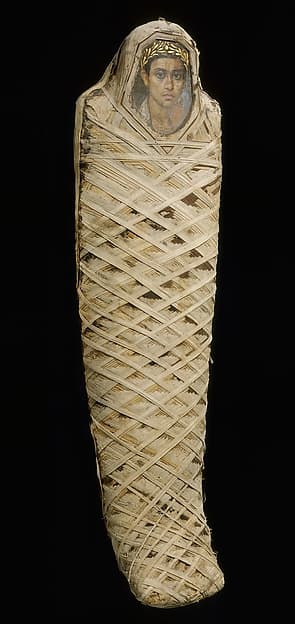
Also worth serious attention: the Roman-era painted portraits, called Fayum portraits, displayed alongside Christian icons to show the direct visual lineage. The Fayum portraits are realistic, individualized, sometimes shockingly modern-looking images of specific people, painted on wooden panels and placed over the faces of mummies between roughly 50 CE and 250 CE. They became the direct visual ancestor of the Byzantine icon tradition, which became the visual tradition of all Eastern Christian art, and eventually influenced Western painting through the medieval period. You can trace an unbroken visual line from a Roman-era mummy portrait in the Coptic Museum to an icon in an Orthodox church to a medieval Italian altarpiece. The line goes through Egypt.
---
The Desert Monasteries: Where Coptic History Actually Lives
For serious engagement with early Christian history in Egypt, Old Cairo is the introduction. The monasteries are the subject itself.
Wadi al-Natrun, a depression in the Western Desert about 100 kilometers northwest of Cairo, contains four still-functioning monasteries: Deir Anba Bishoi, Deir Abu Magar, Deir al-Baramus, and Deir al-Suryan. These communities have existed continuously since the fourth century CE. Deir Abu Magar, founded by Saint Macarius the Great around 360 CE, has produced more Coptic popes than any other monastery in history. The current Coptic Pope, Tawadros II, is a monk of Deir Anba Bishoi.
At its height in the fourth and fifth centuries, Wadi al-Natrun sheltered an estimated 50,000 monks. The number collapsed after Arab tribal raids in the seventh and eighth centuries killed hundreds of monastics and destroyed dozens of communities. What remained consolidated into the current four. The monastic cells of early communities are still scattered across the desert floor, partially buried by sand, unmarked, accessible to anyone willing to walk out from the main monasteries. No ticket booth, no guided tour, no visiting hours.
The monasteries currently welcome visitors, but the experience is not passive tourism. You will be met by monks who will explain their tradition, show you relics kept in caskets dating to the medieval period, and expect genuine engagement. The monks speak Arabic, Coptic in the liturgy, and many speak English. Visiting hours are generally 9am to 5pm daily, with no access on Coptic fast days, which are numerous. Call ahead, or email through the monastery websites. Dress conservatively, meaning covered shoulders and legs for all genders.
Getting there independently: a microbus from Cairo's Turgoman bus station runs to the Wadi al-Natrun rest stop for around EGP 50. From the rest stop, a taxi to the monasteries costs EGP 100 to 150. The total journey takes about two hours each way.
---
The Connections
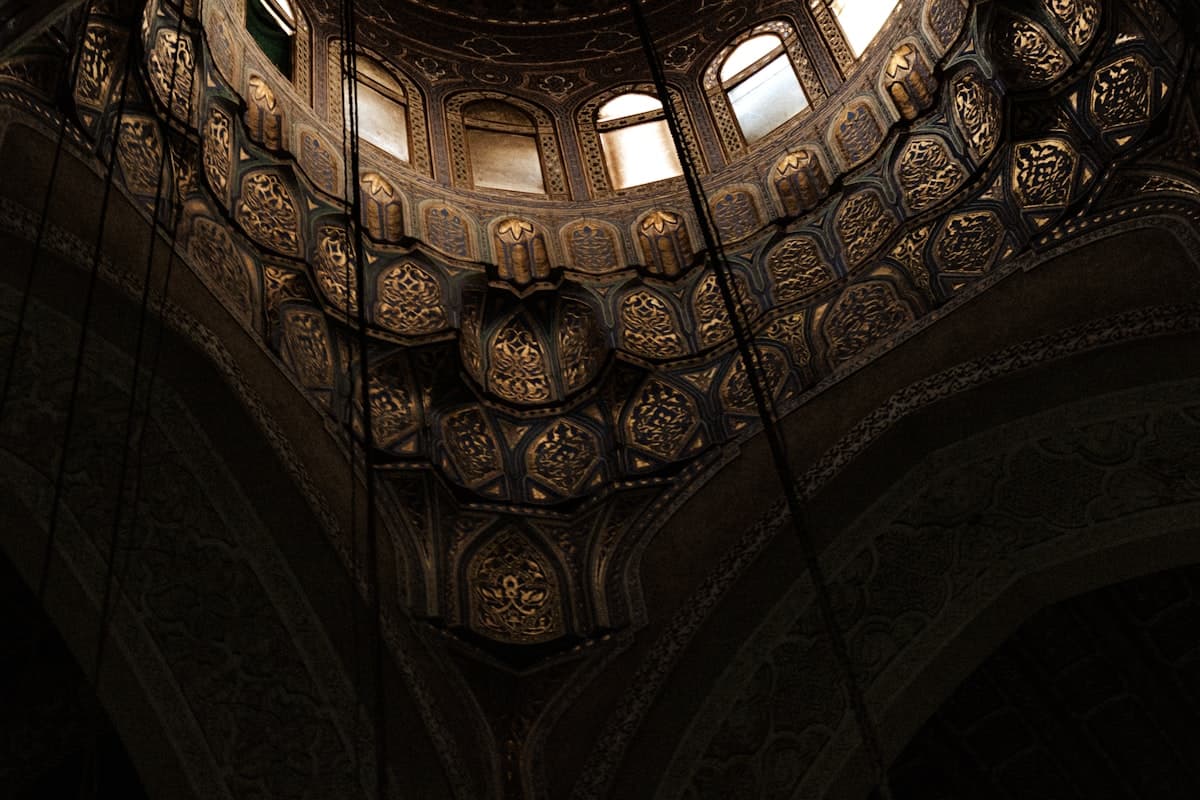
Nothing in Coptic Cairo exists in isolation, and part of understanding early Christians in Egypt means understanding what was built before and after them on the same ground.
The Mosque of Amr ibn al-As, the first mosque ever built on African soil, constructed in 641 CE shortly after the Arab conquest of Egypt, stands about 400 meters from the Hanging Church. Amr ibn al-As was the general who took Egypt from the Byzantine Empire, ending the era when Egypt was a Christian-governed state. He reportedly consulted with Coptic monks during the conquest because they opposed Byzantine rule deeply enough to assist the Arab forces. Byzantine taxation of the Coptic church had been punishing, and the theological dispute over the nature of Christ that split Coptic Christianity from Byzantine Christianity in 451 CE at the Council of Chalcedon had created genuine enmity. The Copts decided an Arab Muslim administration might be easier to live under than a Byzantine Christian one. For several centuries, they were right.
The canal that once ran past this neighborhood connected the Nile to the Red Sea, a precursor to the Suez Canal built 19 centuries later. The Romans used it to ship Egyptian grain west. The early Arab rulers restored it briefly to ship grain east to the Arabian Peninsula. The Coptic Church administered its own community through all of these administrations, maintaining liturgy in Coptic, a direct descendant of the ancient Egyptian language, long after Egypt's population had adopted Arabic for daily speech. Coptic is now a liturgical language only, not a spoken one, which makes it roughly analogous to Latin in the Catholic Church, but older.
---
Common Mistakes
Visiting Old Cairo on a Friday morning. Many churches limit access on Friday mornings because Muslim prayer times affect the surrounding neighborhood's traffic patterns and because some churches hold their own services then. Saturday and Sunday mornings are better for the churches themselves, but go early, before 10am, before tour groups from Nile cruise ships arrive.
Spending your whole Coptic budget on Old Cairo and skipping the desert monasteries. The monasteries are where Coptic Christianity actually breathes. Old Cairo is the museum. The monasteries are the living thing. If you have one day for Coptic Egypt, split it, even if that means a rushed visit to each.
Treating the Coptic Museum as a visual experience. The museum's value is in reading the cases carefully. If you walk through looking at objects without reading about them, you will miss the Nag Hammadi texts, you will miss the early manuscript tradition, and you will come out having seen pottery and textiles without context. Allocate 30 minutes minimum per floor and bring reading glasses if you need them.
Taking the Nile cruise company's "Coptic Cairo half-day tour." These typically include the Hanging Church, Abu Serga, and the Ben Ezra Synagogue in 90 minutes with a guide who has 20 other people to manage. You will hear the highlights and nothing that passes the fact test. Hire a specialist Coptic guide independently through the Coptic Orthodox diocese website, or go alone with this article and the Coptic Museum's own printed guides, which are detailed and accurate.
The sound and light show at the Coptic Museum costs EGP 250 and tells you nothing you will not learn from reading the museum's own exhibit labels more slowly. Skip it.
Not confirming monastery access before driving to Wadi al-Natrun. The monasteries close to outside visitors during Coptic fasting periods, which include Lent (55 days), the fast of the Apostles (variable), the fast of the Virgin (15 days in August), and Advent (43 days). A two-hour drive to a closed gate is a real outcome if you do not call ahead.
Overlooking the Ben Ezra Synagogue because it is not Coptic. It is inside Old Cairo's walls, and its history is part of the same story. According to one tradition, this is the site where Moses was found in the basket. The synagogue was purchased from the Coptic community in the ninth century CE, built on the ruins of a church, which stood on ground associated with earlier Jewish presence. In 1896, Cambridge scholar Solomon Schechter found the geniza, a document storage room, containing 300,000 pages of Jewish manuscripts dating from the ninth century onward, including documents in Hebrew, Arabic, and Judeo-Arabic. They are now distributed across libraries in Cambridge, New York, and Jerusalem. The room is visible. The documents are mostly gone. That is the nature of Egypt's archives.
---
Practical Tips
Dress code at all sites is conservative. This means covered shoulders, covered knees, and for women, a scarf available in case a specific church or monk requests head covering. The Hanging Church provides cloth coverings at the entrance if needed, but bringing your own is more practical.
Most church caretakers and monks appreciate small cash donations, not because they demand them, but because maintaining 5th-century stone churches with 21st-century visitor traffic is expensive and state subsidies are limited. EGP 20 to 50 at each church is appropriate.
Photography is generally allowed in Old Cairo churches without flash, but ask before shooting in any church where a service is in progress. At the monasteries, ask a monk before photographing anything. Some reliquary chambers prohibit cameras entirely.
The best Coptic-focused guide currently operating in Cairo is through the Coptic Orthodox Patriarchate's cultural office. Rates vary but typically start around EGP 1,500 for a half-day private tour. Worth every pound if you are serious about the history.
For travelers who want to connect Coptic history to Upper Egypt, the Monastery of Saint Simeon across from Aswan (currently closed for restoration but expected to reopen) and the White and Red Monasteries near Sohag, built by Shenoute of Atripe in the late 4th century, extend this story another 700 kilometers south. Shenoute was arguably the most important figure in Coptic literary history, producing the largest surviving body of ancient Coptic prose and running a monastic community of 2,200 people. His White Monastery is still standing and still operating, which is extraordinary given that it is 1,600 years old.
Frequently Asked Questions
The Weekly Dispatch
More on Egypt, every Friday.
Cultural depth and places most guides never mention.
No spam. Unsubscribe anytime.