Early Christians in Egypt: A Coptic History Guide Worth Following
Christianity reached Egypt before it reached Rome. The Coptic Church claims Mark the Evangelist founded it in 42 AD. Most tourists never notice this civilization at all.

Quick Facts
- Best time to visit
- October to March for tolerable temperatures. January 7 for Coptic Christmas liturgy if you want to witness an active tradition rather than a historical site.
- Entrance fee
- Coptic Museum: EGP 200 (approx $4 USD), students EGP 100. Most churches in Coptic Cairo: free. Ben Ezra Synagogue: EGP 50 (approx $1 USD).
- Opening hours
- Churches in Coptic Cairo: daily approximately 9am to 5pm. Coptic Museum: Tuesday to Sunday 9am to 5pm, closed Mondays. Wadi Natrun monasteries: generally open to visitors Friday and Sunday mornings, 9am to noon.
- How to get there
- Metro Line 1 to Mar Girgis station, EGP 8 from Tahrir Square, 12 minutes. Taxi from Zamalek approximately EGP 60 to 80. For Wadi Natrun, hire a private driver for EGP 800 to 1,200 for the day.
- Time needed
- Half day for Coptic Cairo churches alone. Full day including the Coptic Museum. A separate full day for Wadi Natrun monasteries.
- Cost range
- Budget EGP 400 to 700 per day covering metro, admissions, and a simple meal. Mid-range EGP 1,200 to 2,000 with a private specialist guide for the Coptic sites.
Quick Facts
Best time to visit: October to March, when Cairo temperatures stay below 25°C and churches are not sweltering. Coptic Christmas falls on January 7 by the Julian calendar, which the Coptic Church still uses, and attending a midnight liturgy at the Hanging Church is an experience the guidebooks underestimate.
Entrance fees: Coptic Museum: EGP 200 (approx $4 USD), students EGP 100. Most churches in Coptic Cairo are free to enter, though donations are welcomed. The Church of the Virgin Mary in Maadi: free. Ben Ezra Synagogue inside Coptic Cairo: EGP 50 (approx $1 USD).
Opening hours: Coptic Cairo churches open daily from approximately 9am to 5pm. The Coptic Museum opens Tuesday through Sunday, 9am to 5pm. Closed Mondays.
Getting there: From Tahrir Square, take Metro Line 1 south to Mar Girgis station. The journey takes about 12 minutes and costs EGP 8. You surface directly in front of the Roman towers that mark the entrance to the fortress of Babylon, which is the heart of Coptic Cairo. Taxis from Zamalek cost roughly EGP 60 to 80.
Time needed: Half a day for Coptic Cairo alone. A full day if you include the Coptic Museum seriously and walk to the Church of Sergius and Bacchus, which most visitors skip entirely. Two days if you add the monasteries of Wadi Natrun, located 110km northwest of Cairo on the desert road to Alexandria.
Cost range: Budget EGP 400 to 700 per day covering metro, admissions, and a meal at one of the small restaurants just outside the Roman towers. Mid-range EGP 1,200 to 2,000 if you hire a private guide, which for this subject is actually worth it.
---
Why This Place Matters
Christianity arrived in Egypt roughly four decades before it arrived in Rome. According to Coptic tradition, Mark the Evangelist, the author of the second Gospel, landed in Alexandria in 42 AD and founded what would become one of the oldest continuously functioning Christian institutions on earth. The Coptic Church does not claim apostolic succession through Rome or Constantinople. It claims Mark himself.
This is not a minor theological footnote. Egypt produced the first monasteries in Christian history. A man named Antony, born in a village in Middle Egypt around 251 AD, sold everything he owned, walked into the Eastern Desert, and spent twenty years living in an abandoned Roman fort. He is now recognized as the father of Christian monasticism, and what he started in Egypt eventually shaped the Benedictine tradition in Europe, the Orthodox tradition in Russia, and every monastic order that came after. The desert monks of Egypt were not marginal figures. They were the architects of a spiritual technology that the medieval world built itself around.
Egypt was also where Christian theology was hammered into its doctrinal shape. The Catechetical School of Alexandria, founded in the second century, produced Origen, Clement, and Athanasius, the men who fought the Arian controversy and produced the Nicene Creed. When the Council of Nicaea was held in 325 AD, the Egyptian bishop Athanasius was its most consequential attendee. The phrase that defines Christian orthodoxy, "of one substance with the Father," exists because of an Egyptian.
None of this is visible from the outside of the Hanging Church. You have to know it to see it.
---
What You Will Actually See in Coptic Cairo
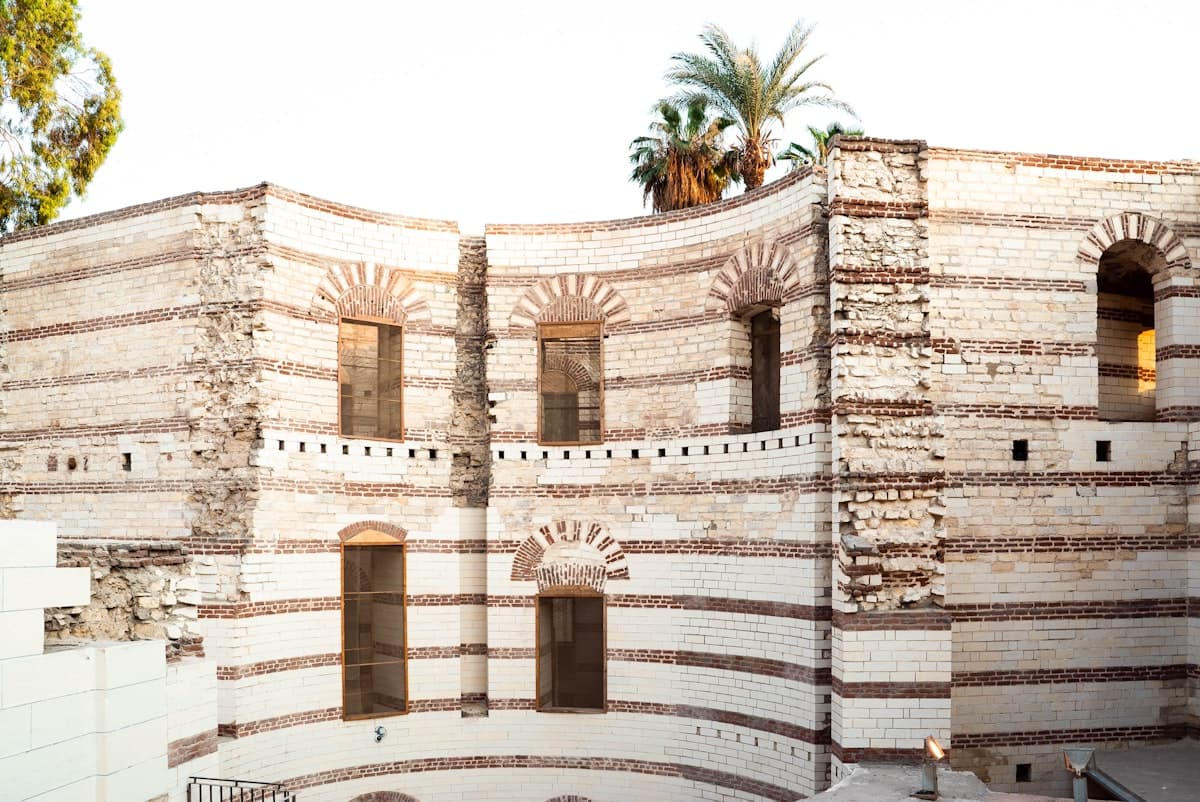
The Roman fortress of Babylon is where this story becomes physical. Built by the Emperor Diocletian in the third century over an earlier Roman structure, which was itself built over a Pharaonic canal that connected the Nile to the Red Sea, the fortress enclosed what became the nucleus of Christian life in Egypt. You enter through a gateway flanked by two round Roman towers. The towers are still largely intact. The stone is original.
The Hanging Church, known in Arabic as Al-Muallaqah, meaning "the suspended," sits on top of the fortress's southern gatehouse. The nave is literally suspended above the Roman structure beneath it, which is why the floor has a slight and slightly disorienting slope. The church dates to the fourth century in its earliest form, though much of what you see was rebuilt in the seventh, eighth, and eleventh centuries. The wooden iconostasis, the screen separating the nave from the sanctuary, was inlaid with ivory in the thirteenth century. Look at the faces on the icons: Egyptian faces, not Byzantine ones. Coptic iconography developed its own visual language deliberately distinct from both Greek and Roman traditions.
Walk fifty meters south of the Hanging Church and you reach the Church of Sergius and Bacchus, known locally as Abu Serga. This is older and less visited, which immediately makes it more interesting. According to Coptic tradition, the Holy Family, Mary, Joseph, and the infant Jesus, rested in a cave beneath this church during their flight into Egypt. Archaeologists have found a crypt beneath the nave. Whether or not you accept the tradition, the crypt is Pharaonic in origin, cut from rock that predates Christianity by centuries. The fact that pilgrims have been coming to venerate this spot for at least 1,600 years is itself worth standing still for.
The Coptic Museum next door holds the world's largest collection of Coptic art and artifacts. The collection spans textiles, manuscripts, metalwork, and sculpture from the second century through the medieval Islamic period. The most important single object in the building may be the Nag Hammadi Codices collection, which the museum holds in part. These leather-bound manuscripts, discovered by a farmer in Upper Egypt in 1945, contain the Gospel of Thomas and fifty other texts that were buried in the fourth century, probably by monks hiding them from orthodox destruction. They rewrote the history of early Christianity.
---
The Desert Fathers and What the Monasteries Actually Are
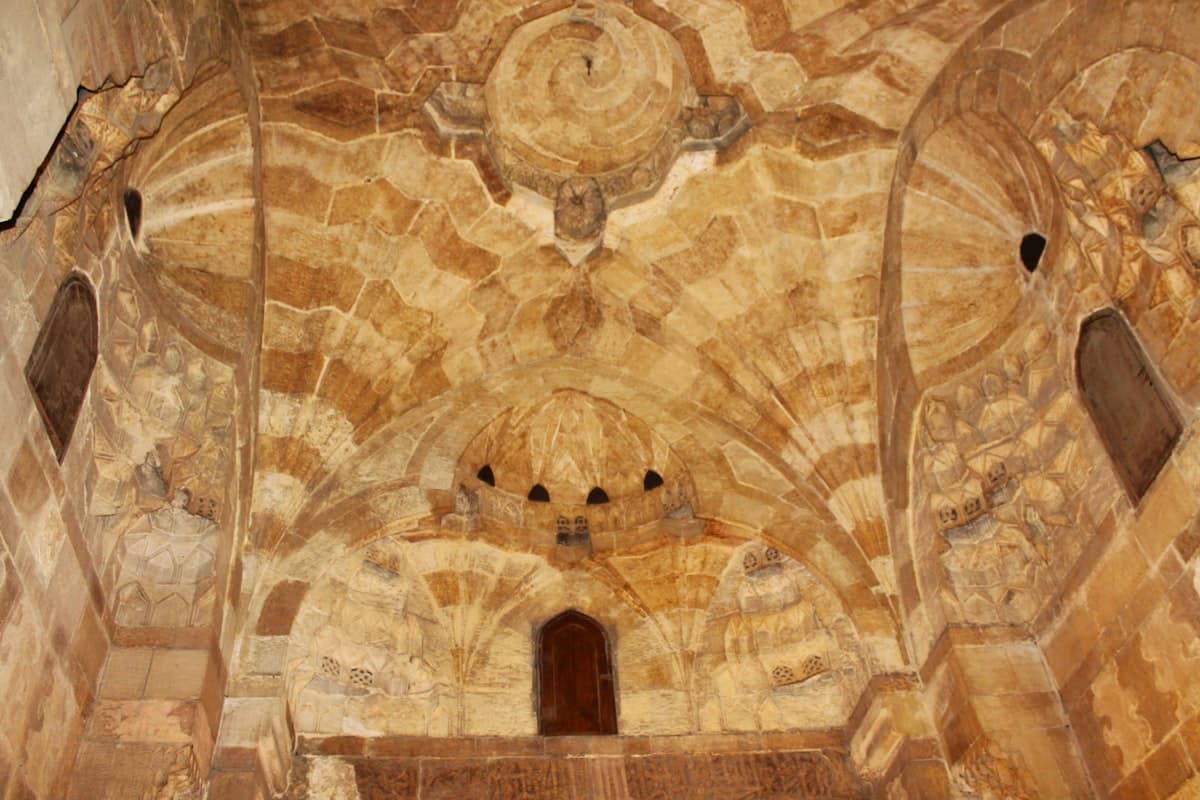
If you have any tolerance for a 110km drive, the monasteries of Wadi Natrun represent the most direct encounter with early Christian history Egypt offers. The four monasteries still functioning there, Deir Anba Bishoi, Deir el-Baramous, Deir el-Suryani, and Deir Abu Makar, were all founded in the fourth century. Deir Abu Makar, the Monastery of Saint Macarius, houses what are believed to be the remains of Macarius the Great, who died around 390 AD and was one of the central figures of desert monasticism. Monks still live and work in all four communities.
Wadi Natrun sits in a natural depression that was famous in antiquity for natron, the salt compound the ancient Egyptians used for mummification. The desert monks knew this history. They moved into a landscape already saturated with Egyptian ritual and transformed it. The monastery walls, thick and fortress-like, were not purely spiritual architecture. Between the fourth and seventh centuries, the desert monks faced repeated raids from Berber tribes from the west. Many monks were killed. The towers inside monastery walls, accessible only by rope ladders that could be pulled up, were designed to preserve both lives and manuscripts during attacks.
This is not ancient history in the passive sense. The Coptic Church today has roughly 10 to 15 million members in Egypt, making it the largest Christian community in the Middle East. Pope Tawadros II, the current Coptic pope, leads a church that survived Diocletianic persecution, Arab conquest, Fatimid rule, Mamluk suppression, and twenty-first century sectarian violence. The Coptic calendar still counts its years from 284 AD, the first year of Diocletian's reign, because his persecution of Egyptian Christians was so catastrophic it became year zero. They call it the Era of Martyrs.
---
The Connections: Nothing Here Exists in Isolation
The fortress of Babylon, which contains the churches of Coptic Cairo, was built on the banks of a canal the Persians had dug in 518 BC. The Romans improved it under Trajan around 100 AD. The Arab general Amr ibn al-As, who conquered Egypt in 641 AD, established his new capital, Fustat, immediately north of the Roman fortress, partly because the fortress controlled the Nile crossing. Old Cairo, as it is now called, therefore contains in approximately one square kilometer: Pharaonic water infrastructure, Persian military engineering, Roman defensive architecture, Coptic Christian sacred sites, and the ghost of the first Arab capital in Africa.
The Ben Ezra Synagogue, which sits inside Coptic Cairo, adds another layer. Its medieval incarnation was built in 882 AD on the site of a church that the Coptic patriarch had sold to the Jewish community to pay a tax levied by the Abbasid governor. In the synagogue's geniza, a storage room for worn-out sacred texts, scholars discovered in 1896 approximately 300,000 manuscript fragments dating back to the eleventh century. The Cairo Geniza, as it is now known, is one of the most important documentary archives in medieval history. It contains letters, contracts, shopping lists, and personal correspondence from a community that lived alongside Coptic Christians and Arab Muslims for centuries. Their daily transactions are preserved 50 meters from where the Coptic pope was once enthroned.
---
Common Mistakes
Arriving without knowing the liturgical calendar. Coptic Cairo on an ordinary Tuesday morning and Coptic Cairo on the eve of a major feast are completely different experiences. The Feast of the Apostles, the Feast of the Virgin, and Coptic Christmas bring communities together in ways that are genuinely moving and entirely open to respectful visitors.
Skipping the Coptic Museum because it sounds like a museum. The Nag Hammadi Codices alone justify the EGP 200 entrance fee. These manuscripts were buried for 1,600 years and contain texts that predate the canonical Gospels in some of their traditions. The textile collection on the upper floor shows how Egyptian motifs, lotus flowers, Horus eyes, and ankh-adjacent symbols, were absorbed into Christian iconography without anyone thinking it strange.
Taking a tour that combines Coptic Cairo with Islamic Cairo and the Citadel in one day. This produces a kind of civilizational blur where nothing lands. Give Coptic Cairo its own morning.
The Coptic Cairo sound and light show at certain cultural events is worth skipping entirely. It summarizes what you can absorb by simply reading for thirty minutes before you arrive. Save the time for sitting in the nave of the Church of Sergius and Bacchus in the actual quiet.
Ignoring the monks at Wadi Natrun. If you visit the monasteries, the monks speak English and are often genuinely glad to talk about the history and theology of their community. Most tourists photograph the towers and leave. A twenty-minute conversation with a monk in Deir Anba Bishoi is the better use of the visit.
Treating the churches as museums rather than active sacred spaces. Liturgies happen here. Dress modestly, which means shoulders and knees covered for everyone, speak quietly, and if you arrive during a service, either wait or enter silently. These are not sites. They are parishes.
Underestimating the Upper Egypt Coptic sites. The White Monastery at Sohag, built by Shenoute of Atripe around 440 AD from recycled blocks of a Pharaonic temple, is one of the most significant early Christian structures in Africa. Most people visiting Luxor are 60km away from it and never go. That is a genuine loss.
---
Practical Tips
Metro Line 1 to Mar Girgis is the only sensible way to reach Coptic Cairo from central Cairo. The station exit puts you directly at the Roman towers. A taxi will often drop you on the wrong side of the road and add ten minutes of walking.
Wear closed shoes. The stone floors in the older churches are uneven and the steps into the crypt of Abu Serga are steep.
For Wadi Natrun, hire a driver for the day rather than taking the bus that stops on the Desert Road. The bus drops you a kilometer from the monastery complex, and the morning light inside Deir el-Baramous is worth arriving early for, which the bus schedule does not allow. A Cairo-based driver for a full day costs approximately EGP 800 to 1,200 depending on negotiation.
If you are interested in a guided experience, the Coptic Orthodox Diocese of Cairo occasionally offers tours with English-speaking deacons. These are not commercialized and require advance contact, but they provide a quality of explanation that no generalist guide can match.
Bring water. The streets between the churches in Coptic Cairo are narrow and there are no cafes inside the compound. There are small shops just outside the Roman tower entrance.
The best single book to read before visiting is "The Monks of Kublai Khan" by E.A. Wallis Budge, or for a more contemporary approach, Stephen Davis's "The Early Coptic Papacy," which traces the first fifteen popes of Alexandria with the detail this subject deserves.
Frequently Asked Questions
The Weekly Dispatch
More on Egypt, every Friday.
Cultural depth and places most guides never mention.
No spam. Unsubscribe anytime.