Early Christians in Egypt: The Complete Coptic History Guide
Egypt had a Christian majority for six centuries before Islam arrived. Most of those churches are still standing. Almost nobody visits them correctly.

Quick Facts
- Best time to visit
- October to March for comfortable temperatures. January 7 for Coptic Christmas liturgies, which are extraordinary but crowded.
- Entrance fee
- Coptic Museum EGP 300 (approx $6 USD), students EGP 150. Most churches free. Ben Ezra Synagogue EGP 100 (approx $2 USD).
- Opening hours
- Coptic Museum daily 9am to 5pm. Churches generally 9am to 4pm, with restricted access Sunday mornings during liturgy (7am to 11am).
- How to get there
- Cairo Metro Line 1 to Mar Girgis station, EGP 7. Taxi from downtown Cairo EGP 30 to 50. Uber from Zamalek EGP 60 to 90.
- Time needed
- 3 to 4 hours for Old Cairo compound and museum. Full day if adding Amr ibn al-As Mosque. Half day additional for Wadi Natrun monasteries.
- Cost range
- Budget EGP 400 to 600 per day including transport and fees. Private specialist guide EGP 800 to 1,200. Wadi Natrun bus EGP 25 to 40 each way.
Christianity did not arrive in Egypt after the Roman Empire. It arrived before Rome even noticed it. The Apostle Mark founded the church in Alexandria around 42 CE, making the Egyptian church one of the oldest continuously functioning Christian institutions on earth. Rome would not officially tolerate Christianity for another two hundred and fifty years. By then, Egypt had already produced the first Christian monasteries, the first systematic biblical theology, and a calendar of saints that Rome would eventually borrow wholesale.
The Coptic Church is not a relic. It has approximately fifteen million members today. It has its own pope. It uses a liturgical language, Coptic, that is the direct descendant of the language spoken in pharaonic Egypt, written with a modified Greek alphabet. When you hear a Coptic priest chanting in Old Cairo, you are hearing something phonetically closer to the court language of Ramesses II than to Arabic. This is the frame you need before you visit anything.
Quick Facts
Best Time to Visit: October to March, when Cairo temperatures are bearable and church interiors are not suffocating. Coptic Christmas falls on January 7, when the churches of Old Cairo are genuinely extraordinary and genuinely crowded.
Entrance Fees: The Coptic Museum costs EGP 300 (approximately $6 USD), students EGP 150. The Hanging Church and most active churches charge no entrance fee, though donations are expected and appropriate. The Church of St. Sergius and Bacchus (Abu Serga) is free. Ben Ezra Synagogue, which sits inside the same compound and connects directly to Coptic history, costs EGP 100 (approximately $2 USD).
Opening Hours: Coptic Museum is open daily 9am to 5pm. Active churches in Coptic Cairo are generally open 9am to 4pm, though hours shift during Lent and Holy Week. Friday and Sunday mornings bring active liturgies and limited tourist access, which is worth knowing before you plan.
How to Get There: The Cairo Metro stops at Mar Girgis station (Line 1, EGP 7 per journey), which deposits you directly in front of the compound walls of Coptic Cairo. From Tahrir Square by taxi, expect EGP 30 to 50. From Khan el-Khalili, a tuk-tuk costs EGP 20 and takes twelve minutes.
Time Needed: Three to four hours minimum for Old Cairo alone. A full day if you add the Coptic Museum seriously and combine with the nearby Amr ibn al-As Mosque, which is the correct way to understand the transition from Coptic to Islamic Egypt.
Cost Range: Budget EGP 400 to 600 per day including transport and entrance fees. A guided private tour covering Coptic Cairo and the museum runs EGP 800 to 1,200 depending on the guide.
Why This Place Matters
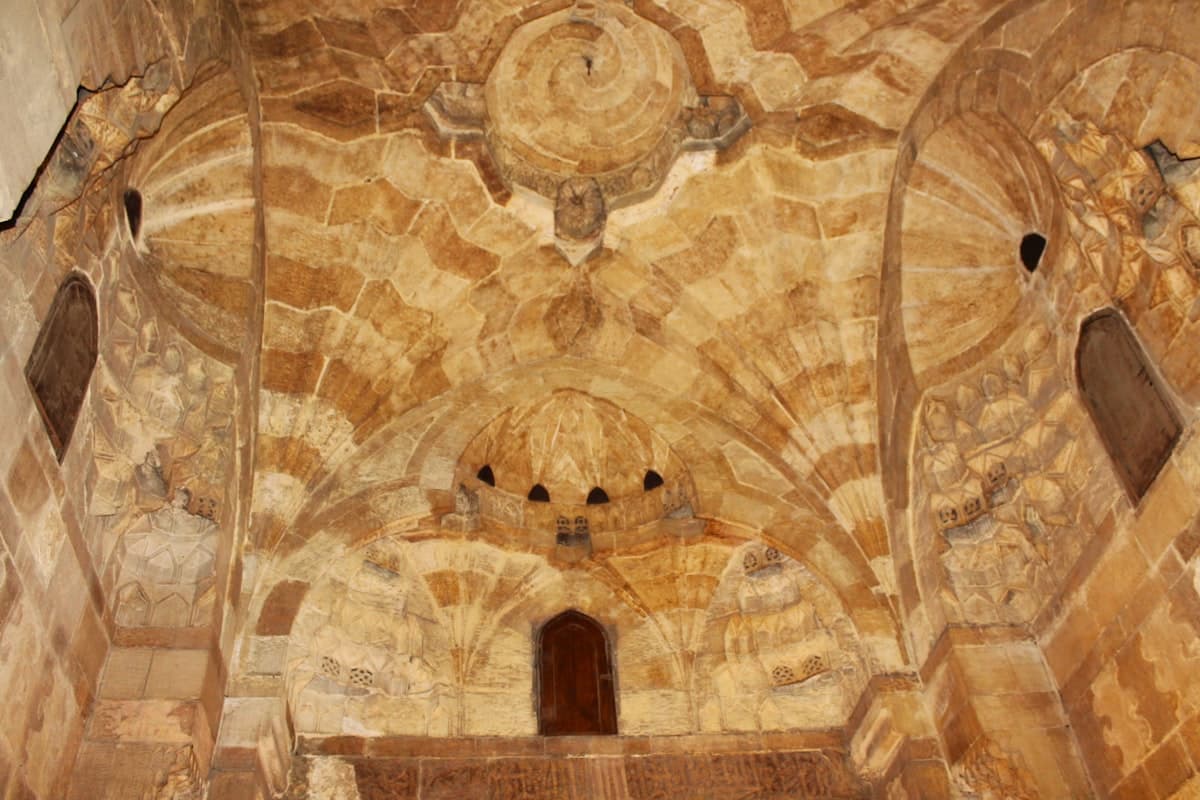
Egypt was a Christian country from roughly the 2nd century CE until the Arab conquest in 641 CE. That is six centuries of majority Christianity, longer than the United States has existed as a nation. The assumption that Egypt is and always was an Islamic civilization erases this entirely, and most tourists arrive with that erasure already installed.
The word "Copt" itself is instructive. It derives from the Greek "Aigyptos," meaning Egyptian. When the Arabs arrived and asked who the native people were, they were told: these are the Copts, the Egyptians. The Copts are not a sect that arrived in Egypt. They are Egypt's indigenous Christian population, predating Islam in this country by six centuries and predating organized Christianity in Rome by decades.
Alexandria was not simply an early Christian city. It was the intellectual center of early Christian thought. The Catechetical School of Alexandria, founded in the late 2nd century, produced Origen, Clement, and Athanasius, three figures who shaped Christian doctrine more fundamentally than almost any writer outside the New Testament. The Nicene Creed, which most Christian denominations still recite, was largely the work of Alexandrian theological arguments. The canon of scripture, meaning the decision about which books constitute the Bible, was significantly shaped by Alexandrian scholars. Egypt did not receive Christianity. It shaped Christianity.
The Desert Fathers added another layer entirely. In the 3rd and 4th centuries, thousands of Egyptians withdrew to the Eastern and Western deserts to live as hermits and monks. St. Anthony of Egypt, who retreated to the Red Sea hills around 270 CE, is considered the founder of Christian monasticism. St. Pachomius, from Upper Egypt, invented cenobitic monasticism, meaning communal monastic life with rules and schedules, the template that became the Benedictine Rule in Europe and every structured monastery in Christian history. Before there was a monastery in France or Ireland or Germany, there were hundreds of them in Egypt.
What You Will Actually See in Old Cairo
Coptic Cairo sits inside the remains of the Roman fortress of Babylon, which occupied this bend in the Nile because it controlled the point where caravans from the Eastern Desert crossed into the Delta. The fortress dates to the 1st century BCE and was expanded by the Emperor Augustus. When you walk through the round stone towers at the compound entrance, you are stepping through Roman military architecture. The Coptic churches were built inside and around those towers across the following centuries.
The Hanging Church, known in Arabic as Al-Muallaqah, is the most visited and the most misunderstood. It is called "hanging" because its nave is suspended over two Roman gatehouse towers, which you can see clearly from the interior staircase. The current structure dates primarily to the 9th and 10th centuries CE, though a church has occupied this site since at least the 4th century. The ivory-inlaid wooden iconostasis at the front of the nave is from the 13th century and is genuinely significant as medieval woodwork, not as tourist spectacle. Look at it carefully. The geometric patterns are identical to those appearing in contemporary Mamluk architectural decoration, because the craftsmen were working from the same Egyptian artisan traditions regardless of religion.
The Church of St. Sergius and Bacchus, known as Abu Serga, is older and less crowded and considerably more important. According to tradition maintained without interruption since late antiquity, the Holy Family rested in the cave beneath this church during the Flight into Egypt. Whether you take this literally or not is your business. What is not in dispute is that a church was built on this site before the Roman Empire became Christian, making it one of the oldest church sites in continuous use anywhere in the world. The crypt is accessible and worth the descent. It floods occasionally from Nile seepage and some years you cannot enter it, but when you can, the sensation of standing in a cave that early Egyptian Christians considered sacred before the word "Christian" was widely used is not easily replicated elsewhere.
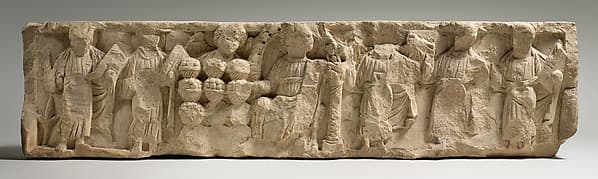
The Coptic Museum, which sits against the compound's southern wall, houses the largest collection of Coptic art in existence. The ground floor alone justifies a separate half-day visit. Look for the carved limestone friezes from Bawit monastery, which show pagan Nile gods and Christian saints sharing the same decorative register in the 6th century, because the craftsmen were Egyptian first and their visual vocabulary did not erase itself overnight. Look also for the Nag Hammadi codices display, or rather note their absence: the actual Nag Hammadi codices, the 4th-century Gnostic gospels discovered in Upper Egypt in 1945 and representing the most significant biblical manuscript find of the 20th century, are kept under controlled conditions and not always on public display. Ask at the desk.
The Living Monasteries: Wadi Natrun and Beyond
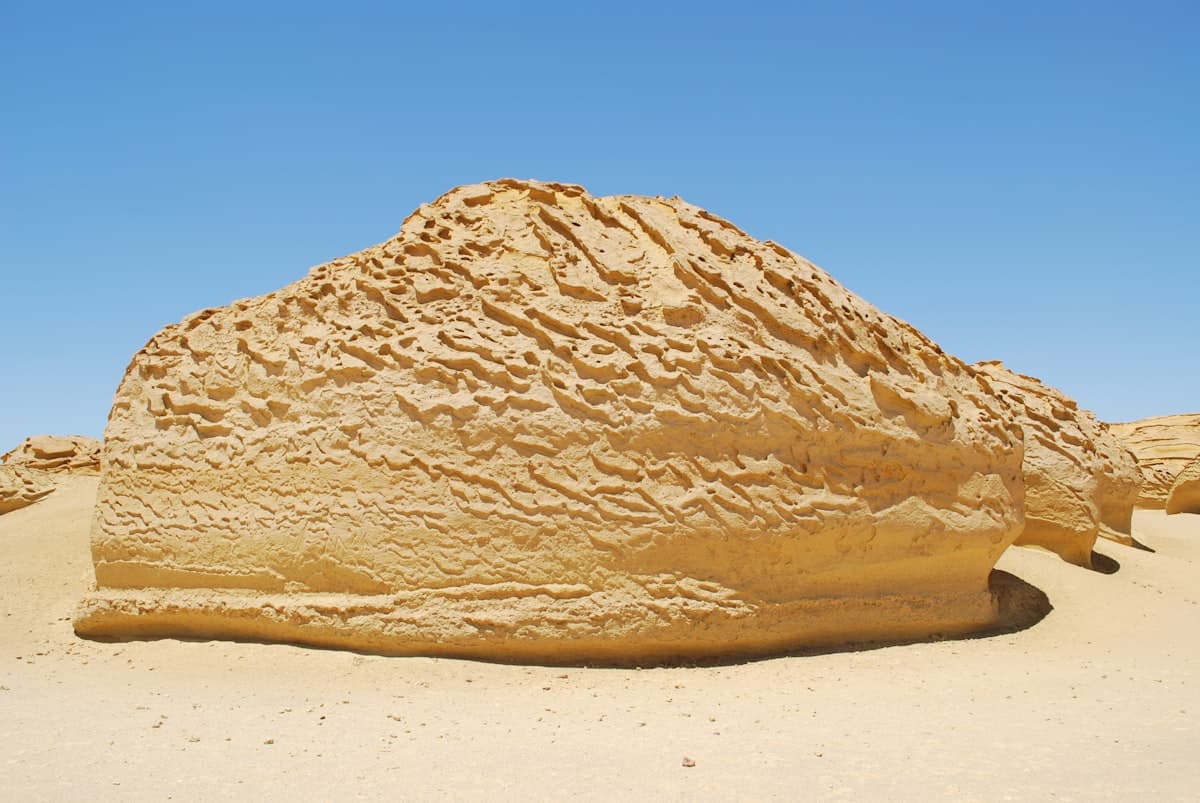
The most important Coptic Christian sites in Egypt are not in Cairo. They are in the desert. Wadi Natrun, a depression in the Western Desert approximately 90 kilometers northwest of Cairo, contains four functioning monasteries that have been operating almost without interruption since the 4th century. Deir Abu Maqar, Deir Anba Bishoi, Deir el-Suryan, and Deir el-Baramus are not museums. They are active monastic communities with hundreds of monks, agricultural operations, scriptoria, and guest facilities.
Deir el-Suryan, the Monastery of the Syrians, holds something specific that most visitors do not know: its library once contained one of the greatest collections of Syriac Christian manuscripts in the world. In the 10th century, a Syrian monk purchased manuscripts there. In the 1830s, a British explorer named Henry Tattam acquired a significant portion of the remaining collection and sold it to the British Museum, where it remains today. The monastery is aware of this. You can visit the library space and understand exactly what was taken.
Getting to Wadi Natrun requires a car or a bus from Cairo's Turgoman station (EGP 25 to 40, roughly one and a half hours). The monasteries are open to visitors Thursday through Sunday, generally 9am to 4pm, and require modest dress. Women must cover their hair inside. There is no entrance fee, but you are a guest in a functioning religious community and should behave accordingly.
The Connections
Nothing in Coptic history exists in isolation from the rest of Egyptian history, which is precisely what most early Christians Egypt tours fail to show you.
The Roman fortress of Babylon, inside which Coptic Cairo sits, was built partly using labor organized through the same administrative system that had managed pyramid construction two thousand years earlier. The system of corvee labor, meaning obligatory state work, runs unbroken from the Old Kingdom through Roman Egypt.
The Ben Ezra Synagogue, which sits inside the Coptic compound and is one of the oldest synagogue sites in Egypt, was originally a Coptic church sold to the Jewish community in the 9th century to pay a tax levied by the Abbasid governor. The sale document still exists. This single transaction tells you more about Fatimid and Abbasid religious economy in Egypt than a week of general reading.
The Amr ibn al-As Mosque, a seven-minute walk from the Coptic compound, was built in 642 CE, one year after the Arab conquest. It is the oldest mosque in Africa. Its first construction reused columns from Coptic and Roman buildings in the immediate vicinity. The mosque has been rebuilt so many times that nothing original remains above ground, but the site continuity is the point: the same bend in the Nile that the Romans fortified, around which the Copts built their churches, is where the first Islamic conqueror of Egypt chose to establish his place of prayer. Location logic does not change with religion.
Common Mistakes
Visiting only the Hanging Church. It is the most famous and the most crowded. Abu Serga is older, quieter, and theologically more significant to Coptic tradition. Spending forty minutes in the Hanging Church and walking past Abu Serga is the standard tourist error in this compound.
Going on a Sunday morning. The churches are active places of worship. Sunday liturgies run from roughly 7am to 11am, during which tourist access is restricted and frankly inappropriate. Go on a weekday.
Skipping the Coptic Museum. Tourists treat it as an optional add-on. It is not. The art inside, particularly the textile collection and the carved stonework from the monasteries of Middle Egypt, provides the visual vocabulary you need to understand everything else in the compound. The entrance is directly off the main courtyard. Budget ninety minutes minimum.
Taking the standard "Coptic Cairo plus Islamic Cairo" day tour. These tours exist to fill a day, not to teach you anything. They spend twenty minutes at each church, skip the museum entirely, and tell you nothing about the Desert Fathers, the Alexandrian theological tradition, or the relationship between Coptic and pharaonic visual culture. If you want the actual early Christians Egypt history, go independently or hire a specialist guide, not a generalist.
The sound and light show at various Cairo sites is not offered here, which is its own recommendation. Coptic Cairo has no theatrical overlay. What you get is the actual place. This is the correct way to experience it.
Not arranging a Wadi Natrun visit. The compound in Old Cairo is important. The living monasteries are irreplaceable. Most visitors to Egypt never go to Wadi Natrun because it requires a half-day excursion and a degree of planning. This is the significant omission in most Coptic itineraries.
Assuming the Coptic community is a historical artifact. Approximately 10 percent of Egypt's population, roughly 10 to 15 million people, is Coptic Christian. The community has faced real pressure and real violence in recent decades. The churches you visit are not heritage sites. They are somebody's active parish. Carry yourself accordingly.
Practical Tips
Dress conservatively at all sites. Shoulders and knees covered for everyone. Women should carry a scarf. This is not an aesthetic preference on the part of the churches. It is a condition of entry that will be enforced at the door.
The Metro to Mar Girgis is the single best transport decision you can make in Cairo. It costs EGP 7, takes fifteen minutes from downtown, and deposits you at the compound gate. The Uber from Zamalek to the same location will cost EGP 60 to 90 and take forty minutes in traffic. Use the Metro.
For Wadi Natrun, the West Delta Bus Company runs services from Cairo's Turgoman terminal roughly every hour from 6am. The journey costs EGP 25 to 40. A private driver for the day will cost EGP 600 to 900 and gives you flexibility between the four monasteries.
If you want to understand the Nag Hammadi Gnostic texts in context, the actual discovery site is near Nag Hammadi in Upper Egypt, accessible from Luxor by car in about ninety minutes. The codices are in the Coptic Museum in Cairo. The cave where they were found is essentially unmarked. This is a pilgrimage for the specifically interested, not a general recommendation.
January 7, Coptic Christmas, is worth planning around if you are in Egypt in winter. The midnight liturgy at the Cathedral of St. Mark in Abbasiya, Cairo's main Coptic cathedral, is attended by tens of thousands of people and occasionally by the Egyptian president. The Old Cairo churches hold their own services from around 10pm. You will not have the sites to yourself, but you will see them functioning exactly as they have for sixteen centuries, which is the point of coming here in the first place.
Frequently Asked Questions
The Weekly Dispatch
More on Egypt, every Friday.
Cultural depth and places most guides never mention.
No spam. Unsubscribe anytime.