Early Christians in Egypt: The Coptic History Guide You Need
Christianity reached Egypt before it reached Rome. The Coptic Church, founded by St. Mark in 42 AD, predates most of Western Christianity by centuries. Here is what that actually means on the ground.

Quick Facts
- Best time to visit
- October through April for comfortable temperatures. January 7 (Coptic Christmas) and Coptic Easter offer unique liturgical access but draw large crowds
- Entrance fee
- Coptic Museum: EGP 300 (approx $10 USD), students EGP 150. Most churches in Old Cairo are free with donations expected
- Opening hours
- Coptic Museum daily 9am to 5pm, closed Friday 11:30am to 1pm. Old Cairo churches generally 9am to 4pm, variable during religious holidays
- How to get there
- Metro Line 1 to Mar Girgis station, EGP 7 (under $0.25 USD) from Tahrir Square. Taxi from downtown Cairo EGP 80 to 120
- Time needed
- Half day minimum for Old Cairo. Full day if combining with Coptic Museum properly. Wadi Natrun monasteries require a separate full-day trip
- Cost range
- Budget EGP 400 to 700 per day for Old Cairo including transport and museum entry. Mid-range EGP 1,500 to 2,500 with private driver or specialist guide
Christianity arrived in Egypt roughly thirty years after the crucifixion, carried by Mark the Evangelist, who landed in Alexandria around 42 AD and was martyred there in 68 AD. This means the Coptic Church is older than the Catholic Church in Rome, older than any Christian institution in Western Europe, and older than the New Testament as a compiled text. Most visitors to Egypt spend three days at Pharaonic monuments and half an afternoon in Coptic Cairo, if they go at all. This is a significant miscalculation.
The word "Coptic" is not a religious term in its origins. It derives from the Greek "Aigyptos," meaning Egyptian. When the Arabs arrived in 641 AD and asked who lived here, the answer was "Qibt," their pronunciation of Aigyptos. Copts are, linguistically and historically, simply Egyptians. The faith they practice is not an import. It was born here, shaped here, and survived here through Roman persecution, Byzantine doctrinal wars, Arab conquest, Mamluk repression, and Ottoman rule. Twenty percent of Egypt's population today, roughly 20 million people, identifies as Coptic Christian.
Quick Facts
Best time to visit: October through April. Cairo's Coptic quarter is walkable year-round but brutal in July and August. If you want to attend a Coptic liturgy, plan around Christmas (January 7 by the Coptic calendar) or Easter, which follows a different calculation than Western Easter and often falls weeks later.
Entrance fees: The Coptic Museum in Old Cairo costs EGP 300 for foreigners (approx $10 USD), EGP 150 for students. The Hanging Church (Al-Muallaqah) is free. The Church of St. Sergius and Bacchus (Abu Serga), where the Holy Family is believed to have sheltered, is free. The Ben Ezra Synagogue within the same compound is free. Most churches in Old Cairo operate on donations.
Opening hours: The Coptic Museum opens daily 9am to 5pm, closed Fridays 11:30am to 1pm for prayers. The churches in Old Cairo generally open from 9am to 4pm, though hours shift during religious holidays. Arrive before 11am on weekdays to avoid tour groups.
How to get there: The Mar Girgis metro station on Line 1 deposits you directly at the entrance to Old Cairo. From Tahrir Square, the journey takes about 12 minutes and costs EGP 7 (under $0.25 USD). A taxi from downtown Cairo runs EGP 80 to 120 depending on traffic and your negotiating patience. Do not hire a tour van unless you want someone else's itinerary.
Time needed: The Coptic Museum alone requires two hours if you are serious. Add three churches and the synagogue, and you need a full morning. Connecting to the Church of St. Barbara and the convent of St. George adds another hour.
Cost range: Old Cairo itself costs almost nothing. Budget EGP 400 to 700 for the day including transport, museum entry, coffee, and lunch at one of the small restaurants near the Mar Girgis exit. Mid-range travelers extending to a guide or private driver should expect EGP 1,500 to 2,500.
Why This Place Matters
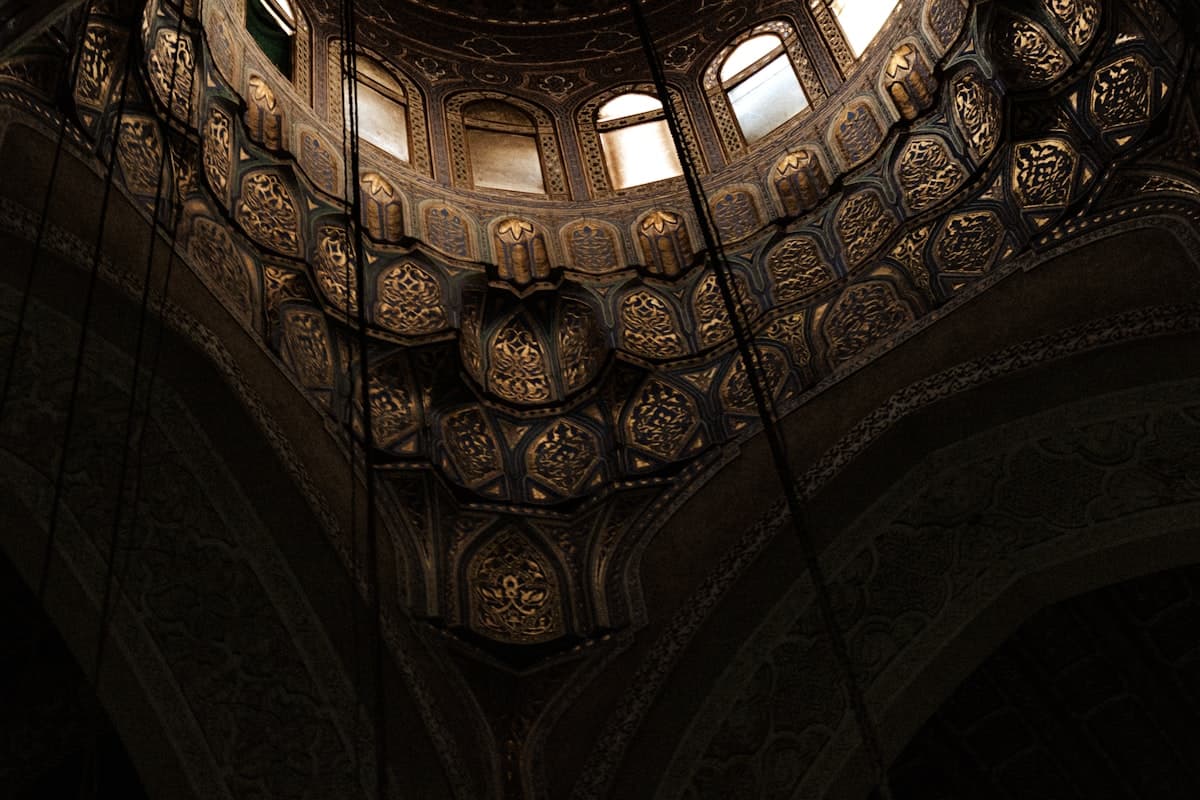
The theological contribution of Egyptian Christianity to the global church is almost entirely unknown to non-specialists, which makes it one of the most underexplored subjects in travel writing.
The concept of the Holy Trinity as Christians understand it today was largely formalized in Alexandria. Athanasius of Alexandria, who served as bishop in the fourth century, spent seventeen years in exile for defending what became Trinitarian orthodoxy against the Arian heresy, which argued that Christ was subordinate to God the Father. The phrase "Athanasius contra mundum" (Athanasius against the world) entered Latin as a lasting expression, because at several points he was literally the last major bishop defending the position that became official Christian doctrine at the Council of Nicaea in 325 AD. Without him, Christianity might look doctrinally different today.
The first Christian monasteries on earth were built in Egypt, not in Palestine, not in Syria. St. Anthony the Great retreated to the Eastern Desert around 270 AD and attracted followers who built communities around him. St. Pachomius, also Egyptian, formalized the communal monastic rule around 320 AD that became the structural template for all subsequent Christian monasticism, including the Benedictine tradition that built medieval Europe. Every monastery in Ireland, France, Germany, and England traces its organizational DNA to a man from Upper Egypt.
The Nag Hammadi library, discovered in 1945 near the town of that name in Upper Egypt, contained 52 Gnostic texts written in Coptic, including the Gospel of Thomas, the Gospel of Philip, and the Gospel of Truth. These texts, buried around 390 AD likely to avoid destruction during the purge of heterodox Christianity, give direct access to forms of early Christian thought that the winning theological tradition actively suppressed. You can see fragments in the Coptic Museum.
What You Will Actually See in Old Cairo
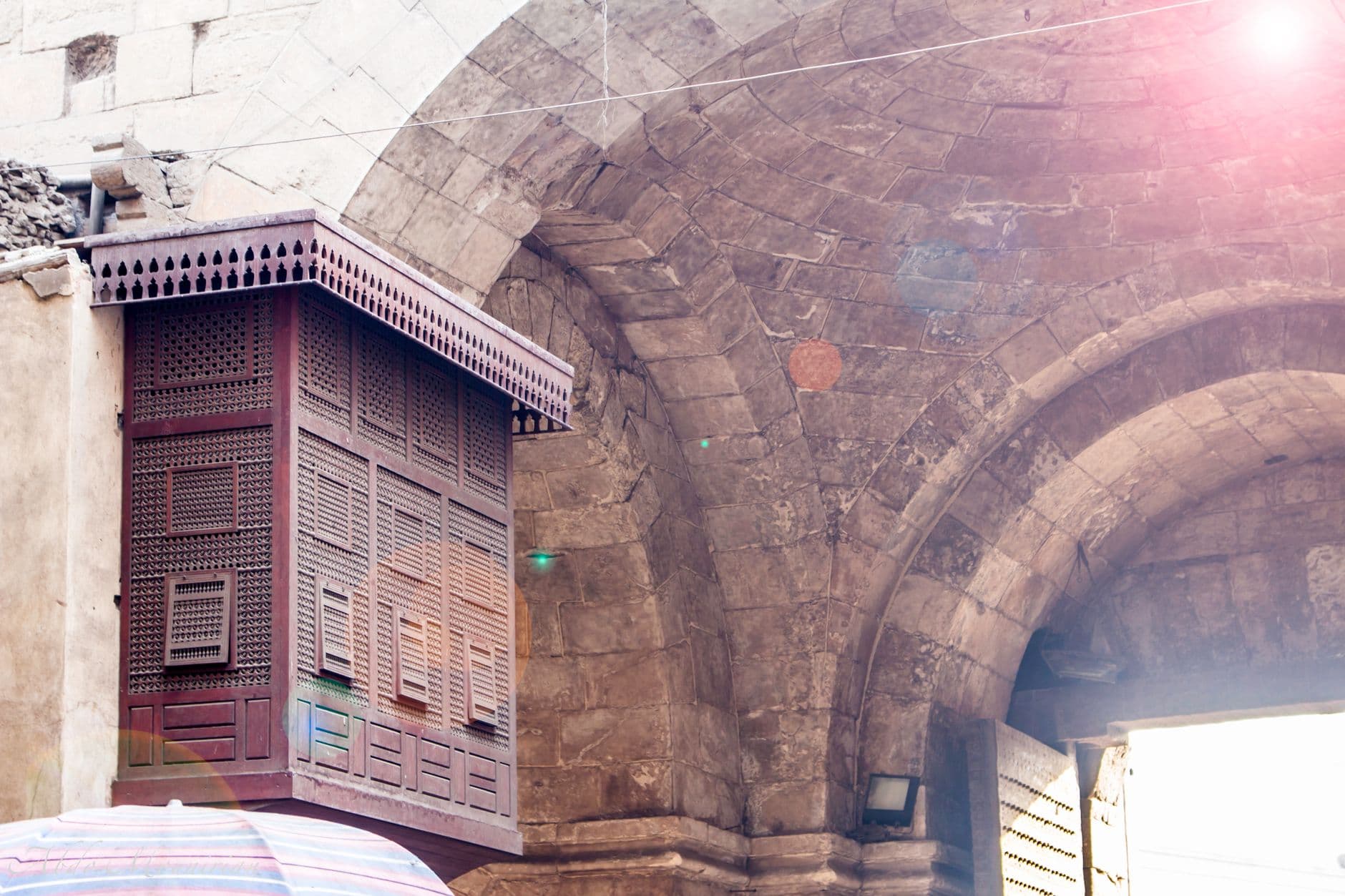
Old Cairo, called Masr al-Qadima in Arabic, sits inside the boundaries of the Roman fortress of Babylon, built during the reign of Augustus Caesar and expanded under Trajan. The fortress walls, still partially visible, were constructed between 98 and 117 AD. When you walk through the stone gateway near Mar Girgis station, you are entering a space that has been continuously inhabited for roughly 2,000 years, which is a different category of old than almost anywhere in Europe.
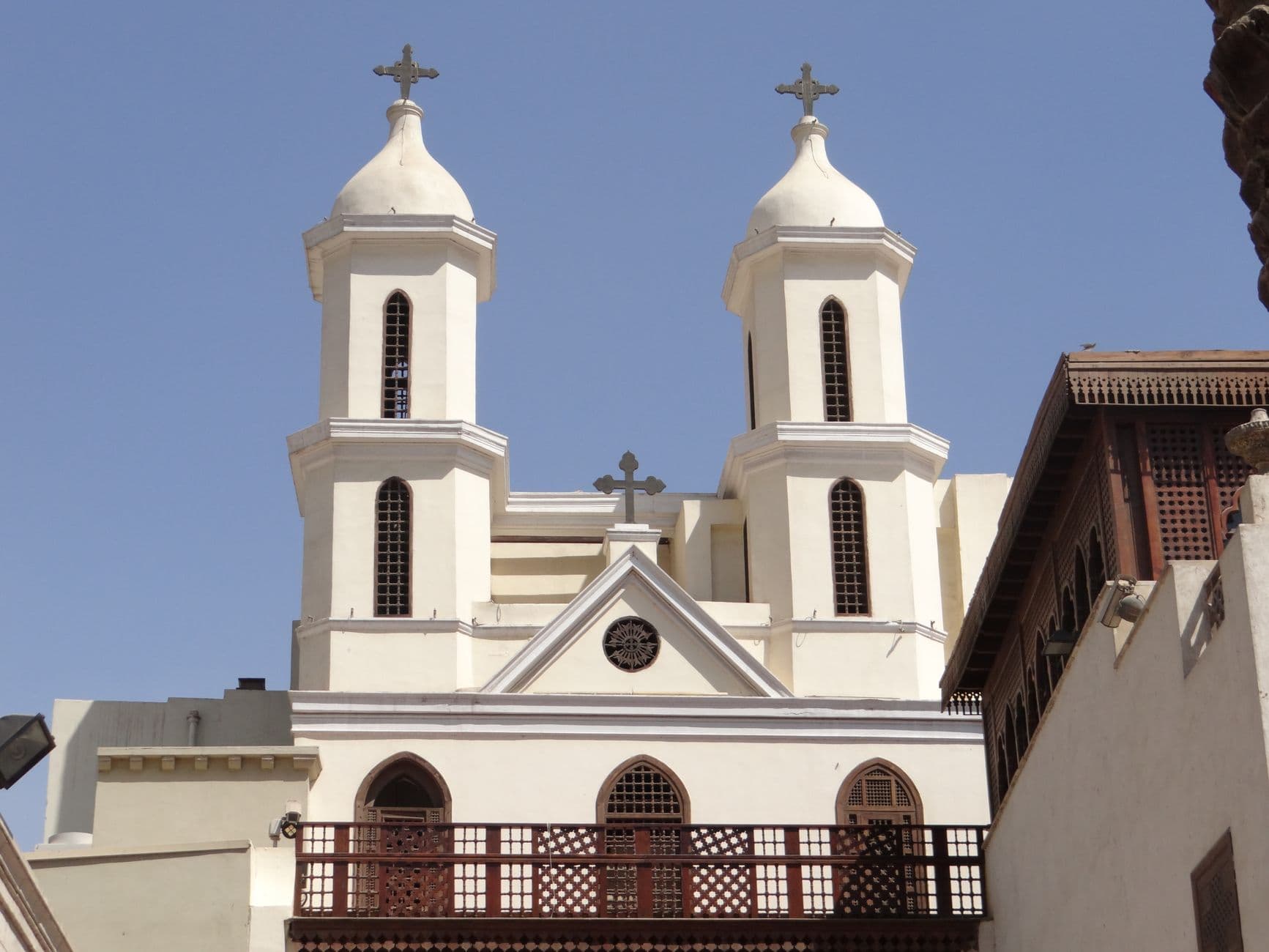
The Hanging Church gets its name from its position: it was built above two of the fortress's old water gates, suspended between the Roman towers. The wooden roof inside is shaped like Noah's Ark, intentionally. The pulpit, supported by thirteen columns representing Christ and the twelve apostles, dates to the 11th century. There is one black column among the white marble ones. Ask a guide which apostle it represents. The answer is Judas Iscariot, and it is the kind of detail that reframes the entire interior.
The Church of St. Sergius and Bacchus, locally called Abu Serga, is built over a crypt where Coptic tradition holds that the Holy Family sheltered during their flight into Egypt. The Biblical account of this flight (Matthew 2:13) is taken very seriously in Coptic Christianity, and Egypt claims a specific, mapped route the family traveled, through sites in the Delta, Cairo, Middle Egypt, and as far south as Assiut. The crypt floods seasonally from Nile water still percolating through the ancient ground, which means access varies by season. During summer, you may not get in.
The Coptic Museum, opened in 1910 by Marcus Simaika Pasha, holds the world's largest collection of Coptic art and artifacts: roughly 16,000 objects. The textile collection alone should stop you cold. Coptic weavers between the 4th and 9th centuries produced linen and wool fabrics with portrait medallions that are compositionally nearly identical to Roman-era Fayum mummy portraits. Same faces, same technique, different spiritual purpose. The transition from Pharaonic to Greek to Roman to Christian visual culture happened in this country faster and more completely than anywhere else on earth, and the museum traces exactly how.
The Desert Fathers and the Monastery Circuit
If you have more than two days and can reach the Wadi Natrun, roughly two hours west of Cairo along the Alexandria Desert Road, you will find four working monasteries that have operated continuously since the 4th century: Deir Anba Bishoi, Deir al-Suryan, Deir Abu Makar, and Deir al-Baramus. The last of these, al-Baramus, is claimed to be the oldest continuously inhabited Christian monastery on earth, founded around 335 AD.
Deir al-Suryan (the Monastery of the Syrians) contains 10th-century frescoes of the Annunciation that were unknown to Western art historians until the 1990s. The monastery was purchased in the 10th century by Syrian merchants who wanted the bones of saints for their own churches, and the resulting exchange of relics created an odd architectural hybrid that still exists. A Coptic monastery with Syrian decorative programs, staffed by Egyptian monks, preserving texts that survive nowhere else.
The library at Deir Abu Makar holds the relics of Pope Cyril VI, who died in 1971 and whose veneration has become one of the most active in contemporary Coptic Christianity. Pilgrims arrive on weekends in numbers that can make the monastery feel less like an ancient site and more like a contemporary shrine. This is not a problem. It is the point. The monastery is not a museum. It is still functioning as it has functioned for 1,700 years.
Entry to the Wadi Natrun monasteries requires advance permission in some cases, or simply arriving during visiting hours (generally Friday and Sunday mornings for non-Copts). No entrance fee, but a donation is expected and appropriate. Dress conservatively: covered arms and legs for all genders.
The Connections
Coptic history does not exist in a sealed compartment marked "Christian." The Ben Ezra Synagogue in Old Cairo stands inside the same Roman fortress as the oldest Coptic churches, and it contains what was arguably the most important archive in medieval Jewish history: the Cairo Geniza, a storage room where Jewish law prohibits the destruction of any document containing the name of God, resulting in 300,000 manuscript fragments accumulating over several centuries. Discovered in 1896 by Solomon Schechter, the Geniza documents revealed the existence of a Hebrew version of the Book of Ben Sira thought lost, and illuminated Jewish life in medieval Cairo and across the Mediterranean trade network with a specificity no other archive has matched.
The same Roman fortress that sheltered early Coptic Christianity was later integrated into the urban structure of Fustat, the first Arab city in Egypt, built in 641 AD just north of Old Cairo after the Arab conquest. Amr ibn al-As, the general who led that conquest, negotiated terms with the Coptic Patriarch Benjamin I, promising security for the churches. Whether that promise was consistently kept over the following centuries is a complicated history, but the foundational negotiation between Islam and Coptic Christianity in Egypt was more pragmatic than violent, a fact usually lost in simplified narratives on both sides.
The Fatimid rulers of Cairo, who built Al-Azhar mosque in 970 AD, employed Coptic architects and craftsmen, which is why certain woodworking and geometric decorative traditions appear across Fatimid Islamic and Coptic Christian buildings of the same period. The artisans did not change their techniques when they changed the patron's faith.
Common Mistakes
Spending money on a Coptic Cairo group tour. The guided tours running from central Cairo hotels spend roughly forty minutes in Old Cairo, hit three sites, and deliver commentary you could get from a Wikipedia article on the bus ride over. The churches and the museum are legible on their own if you do some reading before you arrive. Save the guide budget for a specialist who does Coptic history specifically, not a general Cairo tour with a fifteen-minute Coptic stop.
Skipping the Coptic Museum in favor of more time in the churches. This is backwards. The museum provides the visual vocabulary and historical timeline that makes the churches meaningful. Go to the museum first. The collection of early manuscript pages, funerary stelae, and textiles in the ground floor galleries will change what you see when you stand inside Abu Serga afterward.
Visiting on a Sunday morning. Sunday is the Coptic Sabbath. The churches are in active liturgical use, which means areas may be cordoned off, the sound system is running Coptic chant at substantial volume, and the congregation has a reasonable claim on the space that supersedes your photography schedule. Go on a Tuesday or Wednesday.
The sound and light show at any Pharaonic site billed as connecting Egypt's religious traditions. These shows cost between EGP 300 and 450, run for forty minutes, and contain no information about Coptic or Islamic Egypt at all, despite marketing that implies otherwise. The actual Coptic quarter at night, with the monastery walls and the lit gates, is more atmospheric and costs nothing.
Assuming you need to leave Cairo to understand Coptic history. You do not. The Coptic Museum alone justifies a full morning and contains more primary material on early Christian Egypt than most university libraries. Most visitors to Egypt never enter it.
Ignoring Upper Egypt's Coptic sites. The White Monastery (Deir al-Abyad) near Sohag, built by St. Shenouda in the early 5th century from blocks taken from a Pharaonic temple, once housed 2,200 monks and was the largest monastery in the Christian world at its peak. It is rarely visited by foreign tourists. Sohag is three hours from Luxor by train.
Practical Tips
Dress conservatively throughout Old Cairo regardless of temperature. Covered shoulders and knees are the minimum, and women may be offered a head covering when entering some churches, which you should accept without complaint. This is not a performance for tourists. It is ordinary Coptic practice.
Coptic liturgy is conducted partly in Coptic, an extinct language descended directly from ancient Egyptian written in a Greek-based alphabet, with Arabic added over the centuries. If you attend a service, the experience is sonically unlike anything in Western Christianity, closer in structure and sound to what early Christian worship probably felt like before it was standardized by Rome.
Photography rules vary by site and by day. The Coptic Museum does not allow cameras without a paid photography permit (EGP 50 extra). Most churches allow photography outside of service times. Ask before shooting, every time, without exception.
Food near Mar Girgis is basic but functional. There are two small restaurants just north of the station entrance that serve ful and ta'meya and grilled meats. Do not eat at the tourist-facing cafes that have appeared near the Hanging Church entrance in recent years. The prices are Western, the quality is not.
If you are serious about Coptic history, the single best preparatory text is "The Copts of Egypt" by Gawdat Gabra, available in English. Reading it before arrival will change what you see. The Coptic Encyclopedia, edited by Aziz Suryal Atiya, is the definitive scholarly reference if you want to go deeper.
Frequently Asked Questions
The Weekly Dispatch
More on Egypt, every Friday.
Cultural depth and places most guides never mention.
No spam. Unsubscribe anytime.