Fatimid Cairo, Al-Azhar, and the City Built to Last Forever
Al-Azhar has been running continuously since 972 AD, making it older than Oxford by two centuries. The city that built it was designed to be invisible to ordinary people.

Quick Facts
- Best time to visit
- October to March. Cooler temperatures make walking the stone lanes and sitting in open mosque courtyards genuinely pleasant. April and May are manageable. June to September is hot enough to make extended outdoor walking in Islamic Cairo an exercise in endurance rather than curiosity.
- Entrance fee
- Al-Azhar Mosque: Free. Mosque of al-Hakim: Free. Museum of Islamic Art: EGP 100 (approx $2 USD), students EGP 50. Bab al-Nasr and Bab al-Futuh towers: Free.
- Opening hours
- Al-Azhar Mosque: Daily 9am to 9pm, closed to tourists during Friday prayer approx 11:30am to 1pm. Museum of Islamic Art: Saturday to Thursday 9am to 5pm, closed Fridays. Al-Muizz Street monuments: Generally accessible sunrise to sunset.
- How to get there
- Metro Line 2 to Al-Azhar station, EGP 8 (approx $0.16), then 7-minute walk through the underpass. Uber from Downtown Cairo EGP 50 to 70. Taxi EGP 40 to 80. Bus routes 72 and 951 pass Al-Azhar Street from Tahrir Square for EGP 5.
- Time needed
- Al-Azhar Mosque alone: 90 minutes. Al-Muizz Street corridor including both Fatimid gates: half-day. Combined with the Museum of Islamic Art and Khan el-Khalili: full day.
- Cost range
- Budget EGP 200 to 400 per day covering free mosque entries, museum admission, street food, and metro transport. Mid-range EGP 800 to 1,500 if adding a licensed guide and a sit-down meal.
Quick Facts
Best time to visit: October through March, when the air in the narrow lanes of Islamic Cairo actually moves. Summer heat in the stone corridors is not pleasant and not instructive.
Entrance fees: Al-Azhar Mosque is free to enter. The surrounding Fatimid monuments vary: the Mosque of al-Hakim costs nothing, the Museum of Islamic Art charges EGP 100 (approx $2 USD), students EGP 50. The Khan el-Khalili area is free to walk; you pay only for what you buy.
Opening hours: Al-Azhar Mosque is open daily 9am to 9pm, closed during Friday prayer from approximately 11:30am to 1pm. The Museum of Islamic Art opens Saturday through Thursday, 9am to 5pm; closed Fridays.
How to get there: The Cairo Metro drops you at Al-Azhar station on Line 2 (EGP 8, approx $0.16). From there it is a seven-minute walk east through the tunnel under Al-Azhar Street. A taxi from Downtown Cairo runs EGP 40 to 80 depending on traffic and your negotiating energy. Uber is reliable and typically EGP 50 to 70.
Time needed: Al-Azhar Mosque alone deserves ninety minutes. The full Fatimid corridor from Bab al-Futuh to Bab Zuwayla is best walked in a half-day. Combine it with the Museum of Islamic Art and you need a full day.
Cost range: Budget EGP 200 to 400 per day covering entry, food from street stalls, and transport. Mid-range EGP 800 to 1,500 if you add a guided tour and lunch at a proper restaurant.
---
The Fatimid caliphs who founded Cairo in 969 AD did not build it for their subjects. They built it for themselves. Al-Qahira, the name they chose, translates not as "the city that conquers" in a general sense but as a reference to the planet Mars, al-Qahir, which was rising on the night the city's foundations were laid according to astrological calculation. The ordinary people of Egypt continued living in Fustat, the older Arab settlement to the south. Cairo was a royal enclosure, a forbidden city in the desert, and the mosque at its center was its intellectual engine.
This context changes everything about how you walk through it.
Why This Place Matters
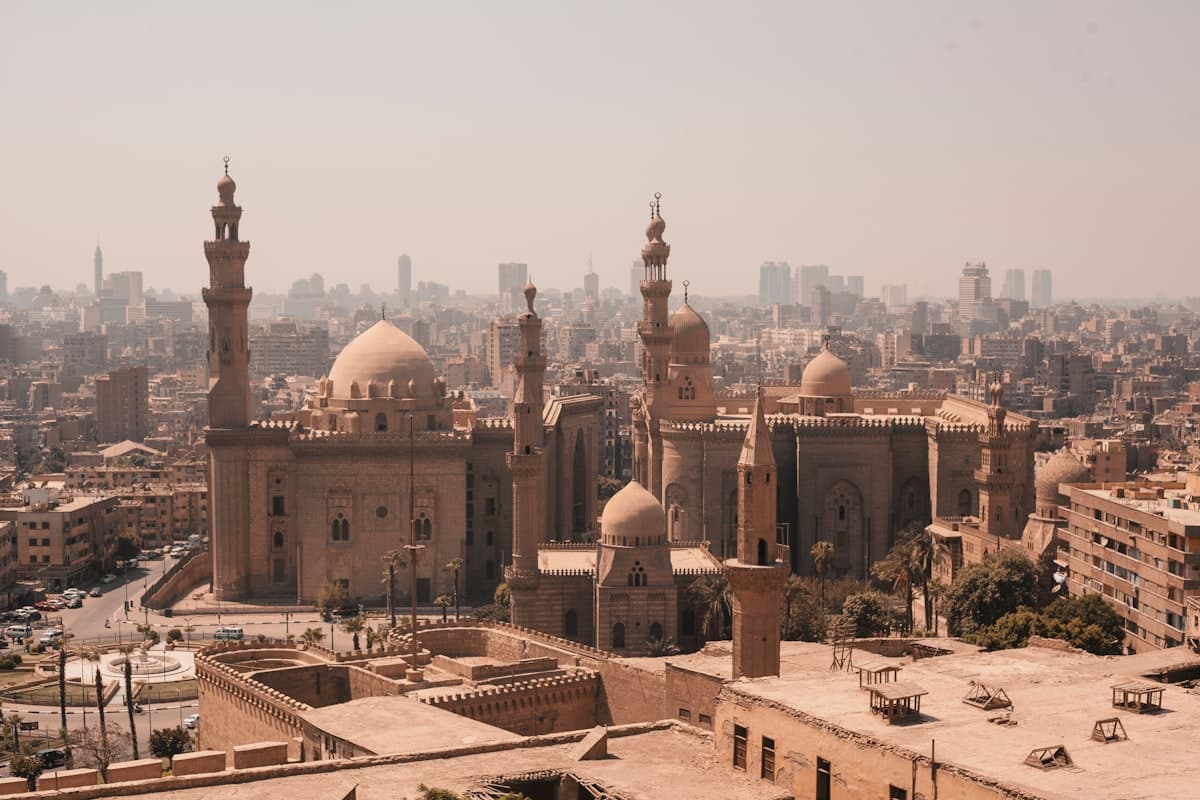
The Fatimids were Ismaili Shia Muslims from North Africa, and when their general Jawhar al-Siqilli marched into Egypt and displaced the Sunni Ikhshidid dynasty, he immediately began construction of a city that would serve as a platform for Ismaili theology to spread eastward. Al-Azhar was founded not as a neutral center of learning but as a specifically Shia institution, a place to train missionaries and propagate Fatimid doctrine across the Islamic world.
Here is what almost no tour guide mentions: for its first two centuries, Al-Azhar was theologically the opposite of what it is today. When Saladin defeated the last Fatimid caliph in 1171 and converted Egypt back to Sunni Islam, he suppressed the Friday sermon at Al-Azhar entirely. The mosque fell silent as a major institution for nearly a century. It was the Mamluks, the former slave-soldiers who came to power after Saladin's Ayyubid dynasty, who restored and rebuilt Al-Azhar in the thirteenth century and transformed it into the Sunni institution that now trains Muslim scholars from Indonesia to Nigeria.
What you are visiting, then, is a place that has survived conquest, theological reversal, political suppression, and eleven centuries of Cairo growing up around it. The fact that it is still functioning, still issuing fatwas, still teaching students who sleep in its old residential wings, makes it one of the most consequential buildings still in active use anywhere on earth.
Walking the Fatimid City: What You Will Actually See
The Mosque Itself
You enter Al-Azhar from the west, through the Barquq Gate, built by the Mamluk sultan Barquq in the fourteenth century and named for him rather than for the Fatimid founders. This is your first lesson in how the place works: every patron who gave money added a door, a minaret, a courtyard, and a name. Al-Azhar has five minarets. They span six centuries. No two look alike, and that is not a design failure. It is an archive.
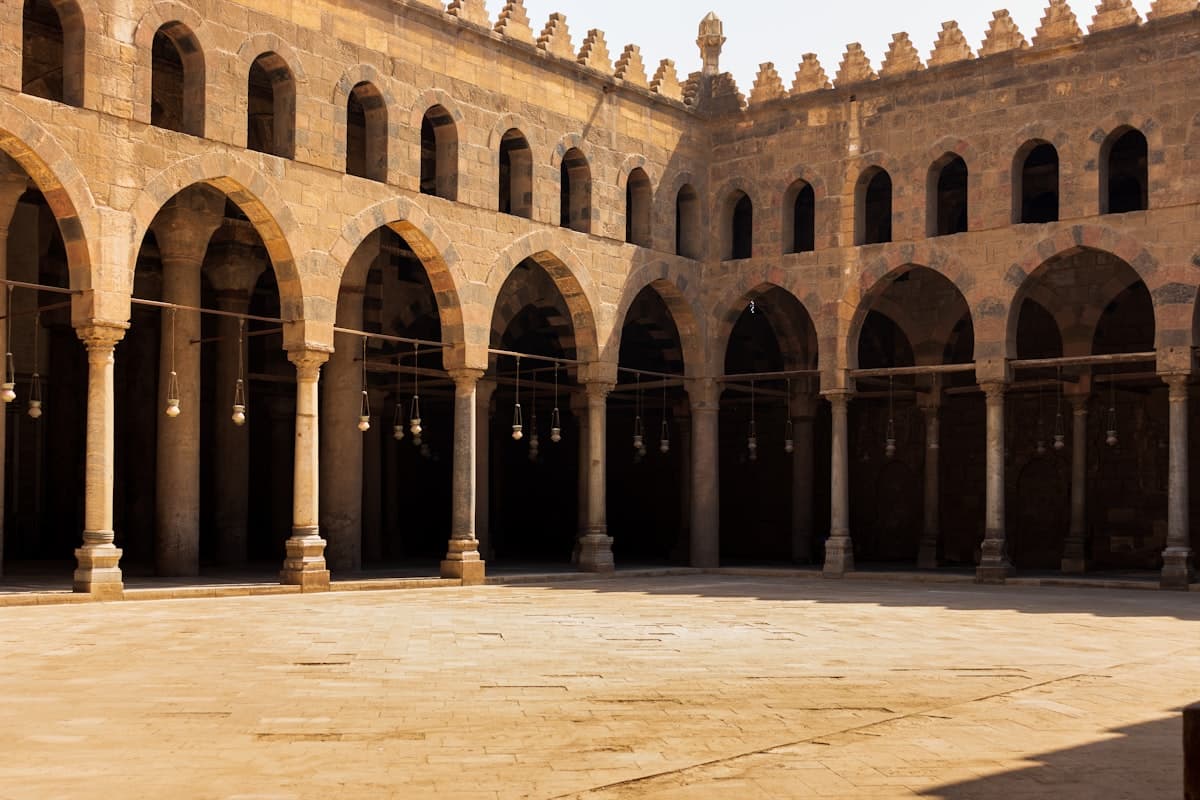
The original Fatimid courtyard is the oldest part, and if you stand in it at 7am before the tour groups arrive, the quality of light coming through the wooden screens is specific to this place and this hour. It is not dramatic. It is calm in a way that the word calm does not quite cover. The stone is pale and worn. Students sit in corners with books. The calls to prayer from the surrounding mosques, all slightly out of sync with each other, layer over the courtyard like a conversation between centuries.
The prayer hall contains columns salvaged from earlier structures. Several are clearly Roman. The Fatimids had no ideological problem incorporating material from what came before, which is either pragmatism or confidence depending on how you read it.
Al-Muizz Street: The Spine of the Fatimid City
The road that runs north from Al-Azhar to the old city gates is named for the Fatimid caliph al-Muizz li-Din Allah, who rode into Cairo in 973 and reportedly brought the bones of his ancestors with him in a box so they could be buried in the new city. He understood that a capital requires continuity, even invented continuity.
Al-Muizz Street today is one of the densest concentrations of medieval Islamic architecture anywhere in the world, and unlike most comparably preserved medieval streets in Europe or Asia, it is not a heritage site frozen in amber. People live above the buildings. Workshops still operate in ground-floor spaces that have been workshops for five hundred years. Coppersmiths, bookbinders, sellers of religious texts and incense and small plastic representations of the Kaaba.
At the northern end stand the two original Fatimid gates, Bab al-Futuh and Bab al-Nasr, completed in 1087 by a Christian Armenian general named Badr al-Jamali, who served as the Fatimid vizier and effectively ran Egypt while the caliph performed his ceremonial functions. Badr al-Jamali imported stonemasons from Syria because Egyptian craftsmen at the time primarily worked in brick, not stone. The gates are therefore Syrian construction technique inside a Fatimid Egyptian city built to house an Ismaili Shia caliph: a summary of how this civilization actually functioned.
You can climb inside the towers of Bab al-Nasr and walk through the medieval passages above the gate. Few tourists do. The view down Al-Muizz Street from there, in the early morning, over the minarets and the washing hung between windows and the first carts being pushed through the lanes below, is the most accurate picture of what Cairo has always been that you will find anywhere in the city.
The Mosque of al-Hakim: Cairo's Most Honest Ruin
Hakim bi-Amr Allah was the sixth Fatimid caliph and by any measure the most erratic. He banned women from leaving their houses, ordered the killing of all dogs in Cairo because their barking disturbed him, prohibited the eating of certain vegetables by decree, destroyed the Church of the Holy Sepulchre in Jerusalem in 1009, and was eventually found in the Muqattam Hills, almost certainly murdered, though his body was never recovered. His followers in the Levant, who became the Druze, venerate him as a divine figure to this day.
His mosque, begun by his father al-Aziz and completed during his reign in 1013, sat derelict for centuries. Napoleon's army used it as a prison. The Mamluks used it as a stable. The walls were stripped of decoration. In the 1980s, the Dawoodi Bohra community, an Ismaili Shia group from India, financed its restoration, returning it to something approximating its Fatimid appearance.
The result is a strange and instructive experience. The mosque is immaculate, quiet, and almost empty. The restoration is thorough but slightly clinical compared to the warm organic disorder of Al-Azhar. It tells you something important: what a mosque looks like before nine centuries of use and adaptation is almost less interesting than what it looks like after.
Entrance is free. Almost nobody goes in. You should.
The Connections: Nothing Here Exists in Isolation
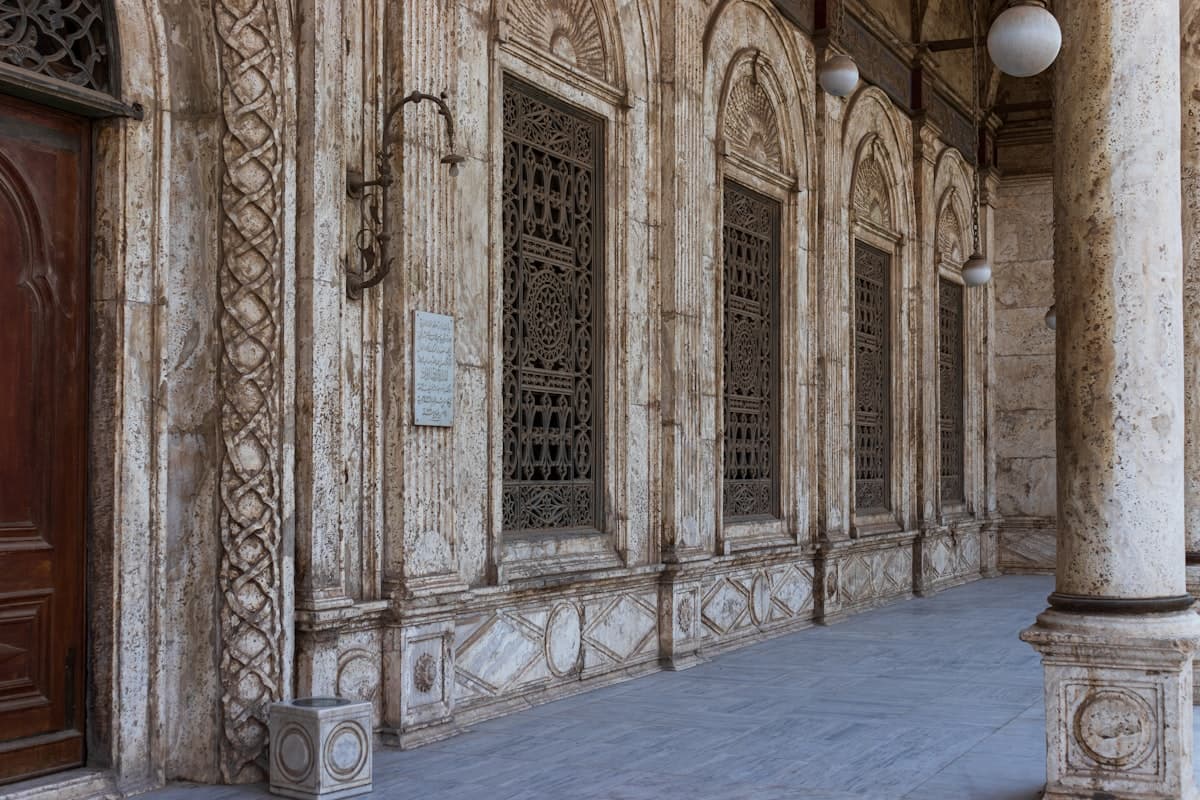
The street on which al-Hakim's mosque stands was built over a Pharaonic drainage canal that carried Nile floodwater east. The Romans incorporated it into their infrastructure. The early Arab settlers used it as an axis for Fustat. The Fatimids paved it and made it the ceremonial entrance to their royal city. When you walk Al-Muizz Street, you are walking a line that has been a line for roughly three thousand years.
Two hundred meters from Al-Azhar stands the Wikala of al-Ghuri, a sixteenth-century Mamluk caravanserai where merchants stored goods and rested during the spice trade. Al-Ghuri was the last significant Mamluk sultan before the Ottomans arrived. He built the wikala and the complex around it in the early sixteenth century, then died at the Battle of Marj Dabiq in Syria in 1516 fighting the Ottoman army of Selim I. His body was never found either, linking him accidentally to al-Hakim across five centuries. The Ottomans who defeated him came to Cairo and reorganized the city but kept Al-Azhar, which they could not afford to disrupt. Al-Azhar's independence was already too embedded in Egyptian Muslim identity to touch.
The Coptic connection is not obvious but it is there. Badr al-Jamali, the Christian general who built the Fatimid gates, also maintained good relations with the Coptic patriarch. The Fatimids, unlike some of their predecessors, were not systematically hostile to Christians or Jews, with the notable exception of al-Hakim's periodic persecutions. The Coptic community in medieval Cairo used the Fatimid period as a relatively stable era in which to build churches, some of which still stand in Old Cairo, twelve minutes by car from Al-Azhar, over the remains of a Roman fortress that was built on the eastern bank of what was then the main Nile channel.
Common Mistakes
Visiting Al-Azhar on a Friday afternoon. The mosque closes to tourists during Friday prayers, and the streets around Khan el-Khalili become genuinely difficult to move through. Go any other day, or go on Friday morning before 11am.
Hiring a guide outside Khan el-Khalili. The men who approach tourists outside the bazaar and offer to guide you to Al-Azhar free of charge are not guides. They are commission-based sales agents whose route passes through shops. The guidance is real enough, but you will spend more time in carpet and papyrus showrooms than in mosques.
Paying for the sound and light show at any of the medieval Islamic sites. There are several on offer. All of them use spotlights and recorded narration to simplify histories that deserve complexity. They cost EGP 200 to 350 and tell you less than reading this article. The real show at Al-Azhar costs nothing and runs at dawn every day.
Skipping the Museum of Islamic Art on the assumption that you will see enough in the mosques themselves. This is a category error. The museum, which reopened in 2010 after years of restoration, contains the actual objects that once furnished these buildings: the woodwork, the lamps, the textiles, the manuscript Qurans. Without those objects, the stripped interiors of the mosques are architecture without context. The museum is EGP 100 and criminally undervisited.
Wearing shoes that are difficult to remove. You will take your shoes off at every mosque entrance. You will do it eight or nine times across a half-day. Bring shoes with no laces. This is not aesthetics advice. It is arithmetic.
Rushing through the khan to reach Al-Azhar. Khan el-Khalili is genuinely old, dating to the fourteenth century, and the coffee shop at its center, El-Fishawy, has been open continuously since 1773. Naguib Mahfouz, who won the Nobel Prize for literature in 1988 and set most of his Cairo novels in these lanes, spent decades writing in the coffeehouse two streets from El-Fishawy. This is not a tourist reconstruction of something old. It is the old thing itself, continuing.
Assuming Al-Azhar operates like a tourist site. It is a functioning mosque and university. Students study here. Scholars teach here. Dress modestly, move quietly, and do not enter spaces that appear to be in active use for teaching unless specifically invited. This is not a museum rule. It is basic behavior in someone else's workplace and place of worship.
Practical Tips
Women must cover their hair inside all mosques. Al-Azhar provides abayas and scarves at the entrance at no charge, but they are shared and have been shared for many years. Bringing your own scarf is more comfortable and more sanitary.
The best street food in the immediate area is at the stalls along the north side of Al-Azhar Street, where koshary and ful are sold from carts for EGP 20 to 40 a portion. Eating there, standing up, surrounded by students from the university, is a more authentic experience of Cairo than anything you will pay for in a restaurant.
The Museum of Islamic Art sits at the western edge of the Islamic Cairo zone, on Port Said Street. Its location is inconvenient relative to Al-Azhar and most visitors skip it as a result. Do not skip it. Build your day to end there, when you have enough visual vocabulary from walking the mosques to understand what the objects on display actually meant.
If you want a guide, contact the Egyptian Tourist Authority's licensed guide bureau and request someone who specializes in Islamic Cairo specifically. The price is approximately EGP 400 to 600 for a half-day. An unlicensed guide who knows this material well is genuinely difficult to find, and the difference between a good guide and a bad one here is the difference between understanding what you are seeing and not understanding it at all.
Come back after dark. Al-Azhar and the surrounding lanes are lit at night, the crowds thin, and the call to prayer at Isha, the final prayer of the day, echoes differently through the empty lanes than it does at midday. The city that was built to be a royal enclosure has, over eleven centuries, become a public one. Walking through it at night, when the workshops are closed and the traffic has subsided, is the closest you will get to understanding what the Fatimids thought they were building here: a city permanent enough to contain their ambitions.
It is still doing that.
Frequently Asked Questions
The Weekly Dispatch
More on Egypt, every Friday.
Cultural depth and places most guides never mention.
No spam. Unsubscribe anytime.