Fatimid Cairo, Al-Azhar, and the City Built to Outlast an Empire
Al-Azhar was founded in 970 AD as a propaganda tool for a Shia dynasty. Today it is the world's oldest university and the seat of Sunni Islam. Cairo contains multitudes.

Quick Facts
- Best time to visit
- October to March for comfortable temperatures in the narrow alleys. Ramadan evenings offer an extraordinary atmosphere with lanterns and street food but draw larger crowds.
- Entrance fee
- Al-Azhar Mosque: free. Bab Zuweila gate and minarets: EGP 100 (approx $3.30 USD). Museum of Islamic Art: EGP 200 (approx $6.50 USD). Al-Azhar Park: EGP 35 (approx $1 USD). Bab al-Futuh and Bab al-Nasr: free.
- Opening hours
- Al-Azhar Mosque: daily 9am to 10pm, with closures during prayer times. Museum of Islamic Art: Saturday to Thursday 9am to 5pm, closed Fridays. Bab Zuweila: daily 9am to 5pm.
- How to get there
- Cairo Metro to Al-Sayeda Zainab station (EGP 10, approx $0.33 USD) then 12-minute walk north. Uber or Careem from Downtown Cairo: EGP 50 to 80. Taxis: EGP 40 to 70. No large tour buses: streets are impassable for them.
- Time needed
- 4 to 5 hours minimum for Al-Azhar, al-Muizz Street, and Bab Zuweila. Full day if adding the Museum of Islamic Art and the northern Fatimid gates.
- Cost range
- Budget EGP 400 to 700 per day including transport and entry fees. Mid-range EGP 1,200 to 2,000 with a guided tour and restaurant lunch.
Quick Facts
Best time to visit: October to March, when afternoon temperatures in the narrow alleys of Islamic Cairo sit around 18 to 22 degrees Celsius rather than the punishing 38 of July. Ramadan evenings are extraordinary if you can handle the crowds: the old city fills with lanterns, food, and a specific kind of noise that has not changed much in a thousand years.
Entrance fees: Al-Azhar Mosque is free to enter. The Al-Azhar Park adjacent to it charges EGP 35 (approx $1 USD). The nearby Bab Zuweila gate and its minarets cost EGP 100 (approx $3.30 USD). The Fatimid walls and towers on the north side, including Bab al-Futuh and Bab al-Nasr, are free. The Museum of Islamic Art, which holds more Fatimid-era objects than anywhere else on earth, costs EGP 200 (approx $6.50 USD) and is worth every piaster.
Opening hours: Al-Azhar Mosque opens daily from 9am to 10pm, with closures during prayer times. The Museum of Islamic Art opens Saturday through Thursday, 9am to 5pm, closed Fridays.
Getting there: The most direct route from central Cairo is the Cairo Metro to Al-Sayeda Zainab station (EGP 10, approx $0.33 USD), then a 12-minute walk north. Taxis from Downtown run EGP 40 to 70 depending on traffic. Uber is reliable and usually cheaper. Do not take a tour bus: the streets around Al-Azhar are physically impassable for large vehicles and you will be dropped 400 meters away anyway.
Time needed: Al-Azhar Mosque alone deserves 45 minutes. The full Fatimid circuit, Al-Azhar, the Khan el-Khalili bazaar founded on a Fatimid royal cemetery, Bab Zuweila, the Hakim Mosque, and the northern gates, runs four to five hours at a serious pace. Allow a full day if you plan to visit the Museum of Islamic Art.
Cost range: Budget EGP 400 to 700 per day including transport and entry fees. Mid-range EGP 1,200 to 2,000 if you add a guided tour and lunch at one of the few good restaurants in the area.
---
Why This Place Matters
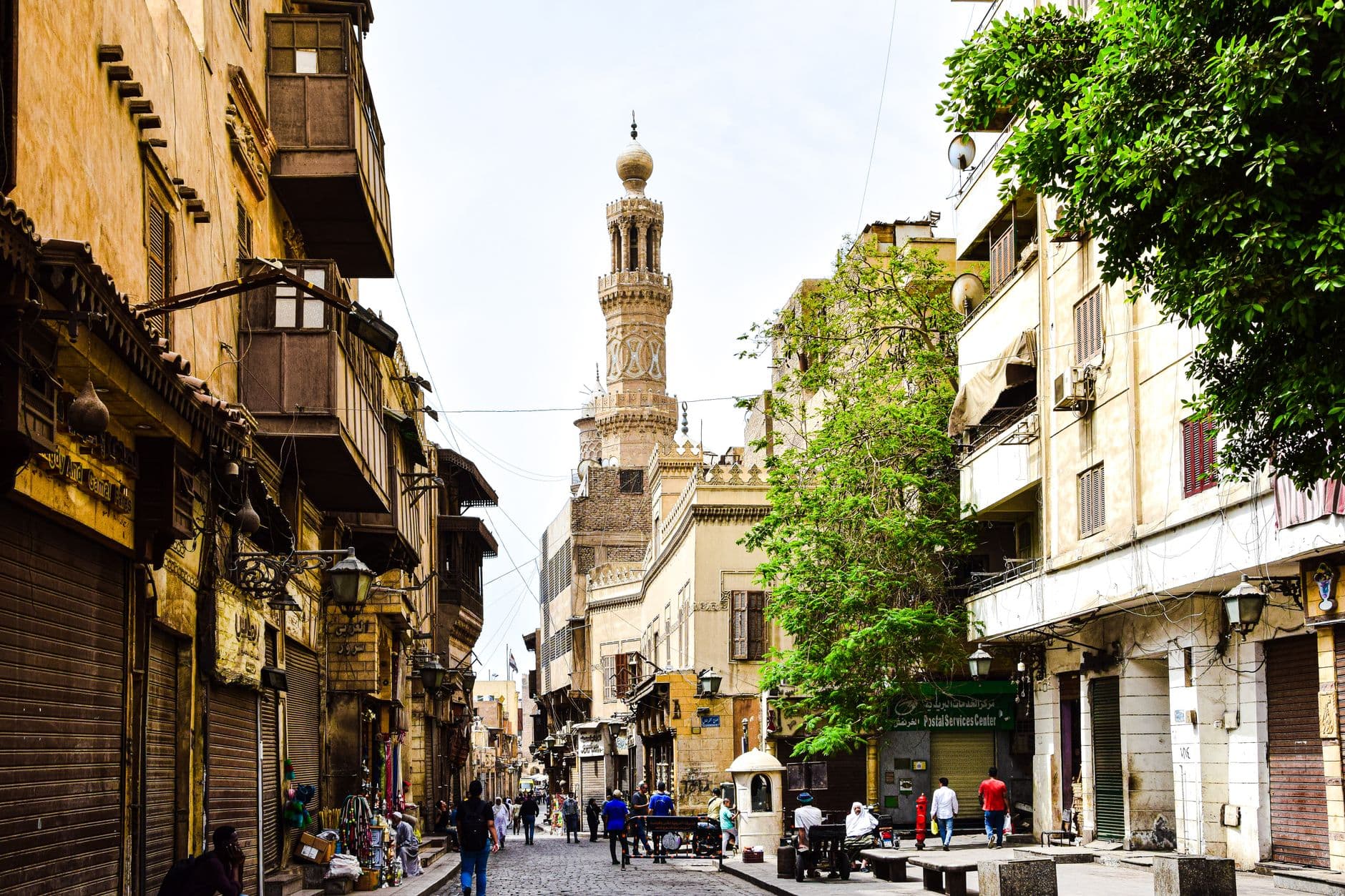
In 969 AD, a general named Jawhar al-Siqilli marched a Fatimid army out of Tunisia, crossed the Western Desert, and took Egypt without serious resistance. The Abbasid caliphate had been weakening for decades and the Ikhshidid governors who held Egypt were in no position to stop him. Within months, Jawhar had broken ground on a new city north of Fustat, the existing Arab capital. He called it al-Qahira, meaning "the Victorious," and he aligned its founding to a specific moment: the entry of Mars into the ascendant, because the Fatimids took their astrology as seriously as their theology.
That city is what you are walking through when you walk through Islamic Cairo today. Not a descendant of it. The actual city. The walls Jawhar built were replaced in stone by the vizier Badr al-Gamali in 1087, and three of his original gates still stand: Bab al-Futuh, Bab al-Nasr, and Bab Zuweila. You can climb them. You can put your hand on the stone and understand that it has been standing for 937 years.
The Fatimids were Ismaili Shia Muslims who claimed direct descent from the Prophet through his daughter Fatima. This was not merely a religious position. It was the ideological foundation of a rival caliphate that contested Abbasid authority from the Atlantic coast to the Red Sea. When Jawhar founded Al-Azhar in 970 AD, just one year after laying out Cairo itself, he built it as the doctrinal engine of that project: a mosque and teaching institution that would train Ismaili missionaries and spread Fatimid influence across the Islamic world.
The project worked, then collapsed, then transformed into something its founders would have found incomprehensible. When Saladin took Egypt in 1171 and ended the Fatimid caliphate, he converted Al-Azhar to Sunni practice and suspended the Friday sermon there for roughly a century. The institution that the Fatimids built to propagate Shia Islam became, under subsequent Sunni rulers, the most authoritative center of Sunni Islamic scholarship in the world. It now has campuses in eleven Egyptian governorates and issues religious rulings that are followed by hundreds of millions of people. The founding irony has never been adequately resolved.
---
What You Will Actually See: Al-Azhar Mosque and Its Accumulated Centuries
You enter Al-Azhar through the Gate of the Barbers, so called because students historically had their heads shaved in the courtyard just beyond it. The gate itself was added in the fifteenth century, which means it postdates the original mosque by nearly five hundred years. This is the essential thing to understand about Al-Azhar before you see it: almost nothing you are looking at is from 970 AD. The mosque has been expanded, damaged, rebuilt, and augmented by virtually every major dynasty that held Egypt. The Fatimids built the core. The Ayyubids altered it. The Mamluks added five minarets, each in a different style separated by decades. The Ottomans rebuilt the arcades. An eighteenth century waqf, a religious endowment, paid for the current entrance structure.
Stand in the central courtyard and look at the minarets. The oldest, on the left as you face the qibla wall, was built in 1309 by Sultan al-Nasir Muhammad ibn Qalawun. The double-finial minaret in the center was added by Sultan Qaytbay in 1483. The triple-tiered minaret on the right dates from 1510. They do not match. They were never meant to. Each was a donation, a statement of piety and patronage, added to a structure that was already four centuries old.
The original Fatimid sections survive in the prayer hall, behind the courtyard's back arcade. The keel-shaped arches are distinctively Fatimid, borrowed from North African Ismaili architecture and not found in the earlier Egyptian Islamic buildings like Ibn Tulun. Look at the stucco work around the mihrab: it is from the Fatimid period, preserved because subsequent renovators built around it rather than over it. It is not labeled. Most visitors photograph the courtyard and leave without entering the prayer hall at all.
Remove your shoes before entering the prayer hall. Women will be offered a robe at the entrance. Both are non-negotiable and both are reasonable. Al-Azhar is not a museum. Students still study here. Sheikhs still teach here. You will see them.
---
The Fatimid City Beyond the Mosque: What Most Visitors Walk Past
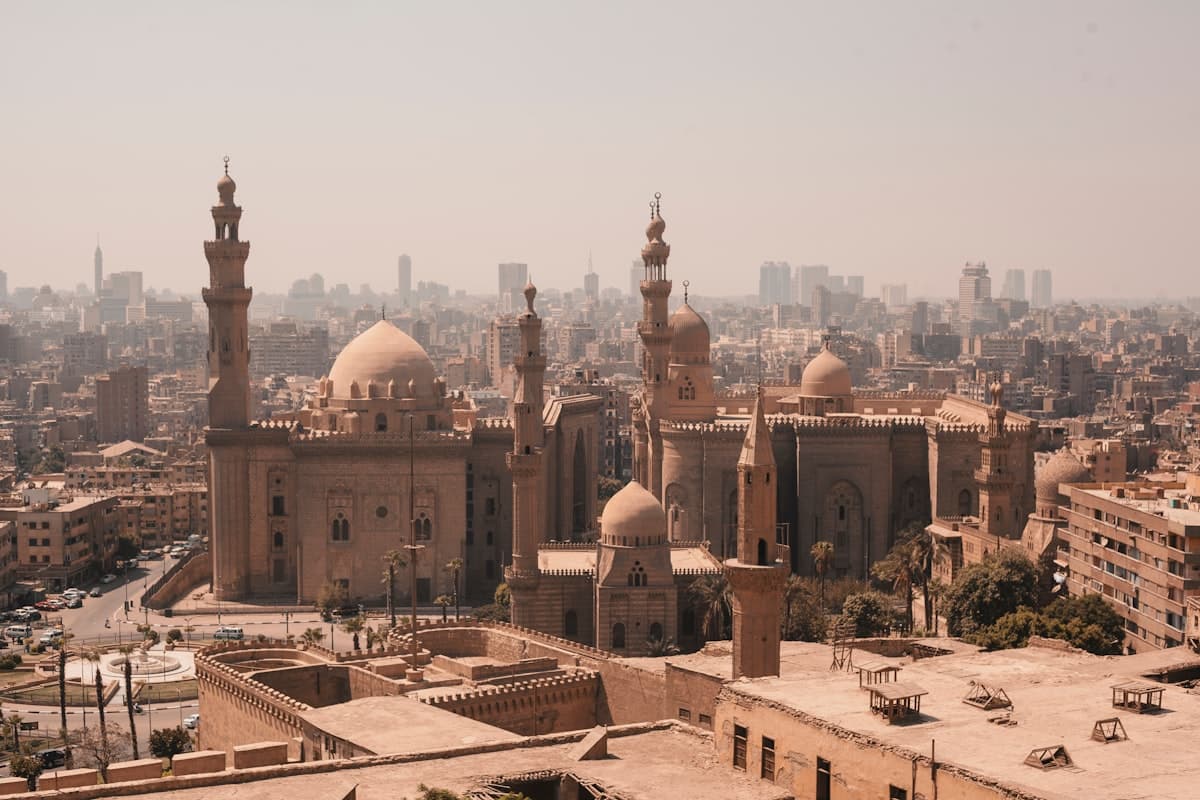
The Fatimid founding of Cairo and Al-Azhar history are usually presented as if they exist only inside the mosque. They do not. The entire urban grid of Islamic Cairo is a Fatimid document.
The main north-south spine of the old city, al-Muizz Street, was the ceremonial axis of the Fatimid capital. It ran between two royal palaces, the Eastern Palace and the Western Palace, that together covered roughly 70,000 square meters at the heart of the city. The palaces are gone, demolished by Saladin who divided the land among his officers. But the street remains, and so does its alignment, and so do several buildings constructed on or within the footprint of those palaces, including the Qalawun complex and the Madrasa of al-Nasir Muhammad, both built in the late thirteenth and early fourteenth centuries by Mamluk sultans who were recycling Fatimid marble, Fatimid columns, and Fatimid spatial logic.
The Khan el-Khalili bazaar, which every tourist visits and most find overwhelming, occupies the site of the Fatimid royal mausoleum, where the caliphs and their families were buried. Sultan Barquq demolished the tomb complex in 1382 to build a caravanserai. The dead caliphs were reburied at the foot of the Muqattam hills. Commerce replaced dynasty. This has always been Cairo's method: build on top, repurpose, absorb.
Bab Zuweila, the southern gate of the Fatimid city, deserves an hour by itself. The two minarets rising from it belong not to the gate but to the Mosque of al-Muayyad, built against the gate in 1420 by Sultan Shaykh al-Muayyad, who reportedly vowed while imprisoned in the building that had occupied that site to build a mosque there if he survived. He survived. The gate itself was where the Mamluk sultan Tumanbay II was hanged by the Ottomans in 1517, ending the Mamluk sultanate. The rope broke three times. By the third attempt, according to contemporary chroniclers, the crowd was weeping.
---
The Connections: Nothing in Cairo Exists in One Century
The Fatimid founding of Cairo did not happen in a vacuum and did not end with the Fatimids. Jawhar built his new city on the floodplain north of Fustat, but Fustat itself had been built on the site of the Roman fortress of Babylon, which was built on a Pharaonic settlement at the point where a canal connecting the Nile to the Red Sea began. That canal, the so-called Canal of the Pharaohs, was used by Ramesses II, restored by the Persian king Darius I, cleaned out by the Ptolemies, and finally silted up for good in the eighth century AD. Cairo's founding geography is a palimpsest running back three thousand years.
The Fatimid caliphs imported craftsmen from Iraq, Syria, and Byzantium to build their palaces and mosques. The carved wooden panels and ivory inlay work that survives in the Museum of Islamic Art shows a technical tradition that has more in common with Abbasid Baghdad and Byzantine Constantinople than with anything previously produced in Egypt. This was intentional. The Fatimids were staging a civilization, not just building a city. The Museum of Islamic Art on Port Said Street holds the best surviving collection of this work. The carved wooden frieze panels from the Western Palace, displayed there, were the only major objects that Saladin's officers did not remove or destroy. They survived because they had already been incorporated into later structures by the time systematic demolition began.
Al-Azhar's connection to other Egyptian eras runs forward as well as backward. Napoleon's scholars visited and documented it in 1798. The Egyptian nationalist leader Ahmad Urabi was educated there. Nasser used its religious authority to legitimize Arab socialism. Today it issues fatwas on cryptocurrency and publishes refutations of extremist ideology. The institution founded as a Fatimid propaganda arm is now Egypt's most powerful soft-power export.
---
Common Mistakes
Visiting Khan el-Khalili without understanding where you are. The bazaar is not a bonus attraction next to Al-Azhar. It is built on the Fatimid royal cemetery. Knowing this changes how you move through it.
Taking a guided tour that packages Al-Azhar with the Citadel and the Pyramids. These three sites represent completely different historical periods separated by centuries and kilometers. A tour that visits all three in one day will give you fragments of each. The Fatimid city alone is a full day. The Citadel is a full day. Combining them produces the illusion of coverage without any actual understanding.
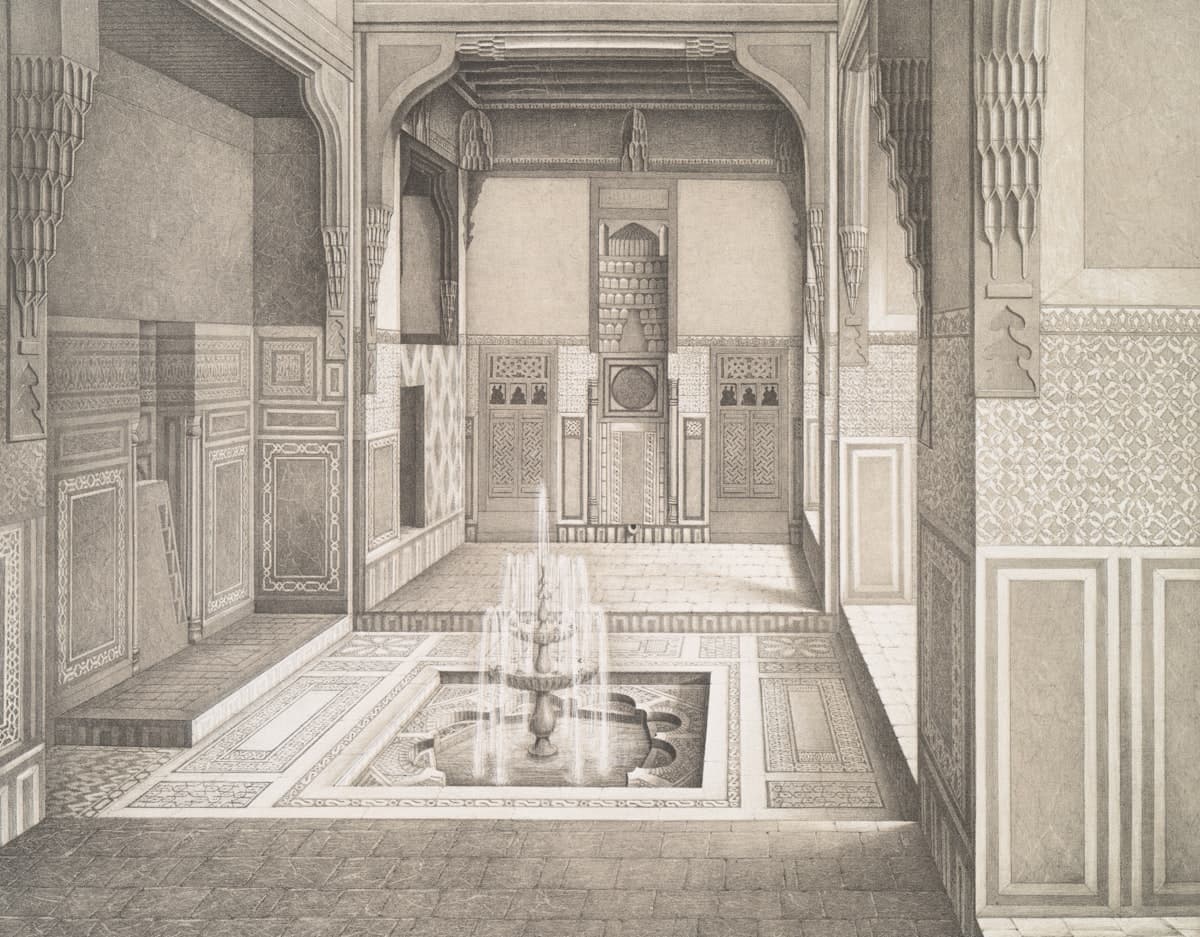
Skipping the Museum of Islamic Art. This is the most undervisited serious museum in Cairo and it is not close to overrated. The collection includes Fatimid woodwork, Mamluk metalwork, Ottoman ceramics, and a Quranic manuscript collection that is genuinely important. It was badly damaged by a car bomb in 2014 and has since been restored. Entry costs EGP 200. Most tourists skip it because it is not on the standard itinerary. This is a mistake with a specific consequence: you will see Al-Azhar and have no visual context for what made Fatimid art distinctive.
The Al-Azhar Park sound and light show. It does not exist, which is fortunate. What does exist is a tendency to spend time in the park itself, which is pleasant but tells you nothing about the Fatimid city below it. The park was built by the Aga Khan Trust for Culture beginning in the 1990s on a site that was previously a massive rubbish dump accumulated over centuries from the city's eastern wall. The rubble removed to create the park revealed 1.5 kilometers of the original Fatimid wall. Visit the wall. The park is secondary.
Visiting Al-Azhar on a Friday midday. The main Friday prayer brings crowds that make meaningful exploration impossible. Come Thursday morning or Saturday morning if you want the prayer hall to yourself.
Not climbing Bab Zuweila. The view from the top of the gate across the rooftops of Islamic Cairo is one of the few places in Egypt where you can visually understand the medieval urban fabric. It costs EGP 100 and almost nobody does it.
Hiring a guide in the Khan el-Khalili. Anyone who approaches you near the bazaar offering to guide you to Al-Azhar is working for a specific shop and will take you there via that shop. This is not a conspiracy. It is the local economy. The mosque is signposted. You can find it without help.
---
Practical Tips
Dress conservatively everywhere in this district, not just inside the mosque. The neighborhoods around Al-Azhar are residential and working-class Egyptian communities, not a tourist zone, and visitors in shorts draw real annoyance from residents. Shoulders covered, knees covered. This takes approximately zero effort and produces a meaningfully better reception.
The best time to photograph the al-Muizz Street corridor is between 8am and 9am, before the stalls open and before tour groups arrive. The light comes from the east and catches the Mamluk stonework at an angle that makes the carved facades readable.
Bring cash. Nothing in this district, including the better local restaurants, reliably accepts cards. ATMs exist on the main streets but charge fees. Withdraw before you come.
Eat at Naguib Mahfouz Cafe on the edge of the Khan if you need a tourist-comfortable break. The food is overpriced by local standards but it is clean, the service is competent, and the setting is genuinely old. For better food at honest prices, walk south toward al-Azhar Street and find one of the fuul and ta'meya places open from 7am. A full breakfast costs under EGP 50.
If you are serious about the history, read Naguib Mahfouz's Cairo Trilogy before you come. It is set in these exact streets in the early twentieth century. The social geography he describes is still partially legible in the built environment. This is not a casual recommendation. It will change what you see.
Frequently Asked Questions
The Weekly Dispatch
More on Egypt, every Friday.
Cultural depth and places most guides never mention.
No spam. Unsubscribe anytime.