Fatimid Cairo, Al-Azhar, and the City Built to Outshine Baghdad
Al-Azhar was founded in 970 AD not as a university but as a Shia propaganda machine. It outlasted the dynasty that built it by 850 years. Here is the full story.

Quick Facts
- Best time to visit
- October to March. Cooler temperatures make the long walks between Fatimid sites manageable. April and September are acceptable shoulder months. July and August are genuinely difficult: heat exceeds 38C and humidity compounds it.
- Entrance fee
- Al-Azhar Mosque: free. Fatimid gates (Bab Zuweila, Bab al-Futuh, Bab al-Nasr): EGP 100 each (approx $2 USD). Museum of Islamic Art: EGP 200 (approx $4 USD), students EGP 100.
- Opening hours
- Al-Azhar Mosque: daily 9am to 9pm, closed to non-Muslims during Friday prayer approx 11:30am to 1pm. Fatimid gates: daily 9am to 5pm. Museum of Islamic Art: Tuesday to Sunday 9am to 4pm, closed Monday.
- How to get there
- Metro Line 1 to Ataba then 15-minute walk east (EGP 8 metro fare). Taxi from Downtown EGP 40 to 70. Uber EGP 55 to 80. From Giza hotels, allow 45 to 60 minutes by car.
- Time needed
- Minimum 4 hours for Al-Azhar, the main gates, and Al-Muizz Street. Full day if adding the Museum of Islamic Art and the Al-Hakim Mosque.
- Cost range
- EGP 400 to 600 for a full day including all entrance fees, local food, and transport from central Cairo. One of the most affordable serious historical days in Egypt.
Quick Facts
Best time to visit: October to March. The medieval lanes of Islamic Cairo become genuinely unpleasant in July and August, when heat pools between the stone facades and the crowds double.
Entrance fees: Al-Azhar Mosque is free for all visitors. The Fatimid gates (Bab Zuweila, Bab al-Futuh, Bab al-Nasr) each cost EGP 100 (approx $2 USD). The Al-Azhar Park adjacent area is EGP 30 (approx $0.60 USD) for Egyptians, EGP 80 (approx $1.60 USD) for foreigners. The Museum of Islamic Art on Port Said Street, which holds Fatimid-era objects including a remarkable brass ewer from 1000 AD, costs EGP 200 (approx $4 USD) and is almost always empty.
Opening hours: Al-Azhar Mosque: daily 9am to 9pm, closed during Friday prayer for non-Muslims (roughly 11:30am to 1pm). Bab Zuweila and the other gates: daily 9am to 5pm. Museum of Islamic Art: Tuesday to Sunday, 9am to 4pm, closed Monday.
Getting there: The most direct route from central Cairo is metro Line 1 to Ataba, then a 15-minute walk east through Khan el-Khalili. A taxi from Downtown will cost EGP 40 to 70 depending on traffic. Uber is typically EGP 55 to 80. From Giza, budget a minimum of 45 minutes by car in mid-morning. Do not attempt this by car at rush hour.
Time needed: Al-Azhar Mosque alone warrants 45 minutes. Add Bab Zuweila and its minaret views, the Al-Hakim Mosque, and the street between Bab al-Futuh and Bab Zuweila (the original Fatimid spine of the city), and you need a full four to five hours. Combine with the Museum of Islamic Art and you have filled a serious day.
Cost range: This is among the cheapest serious historical experiences in Cairo. Budget EGP 400 to 600 for entrance fees, food, and transport across a full day in Islamic Cairo.
---
Why This Place Matters
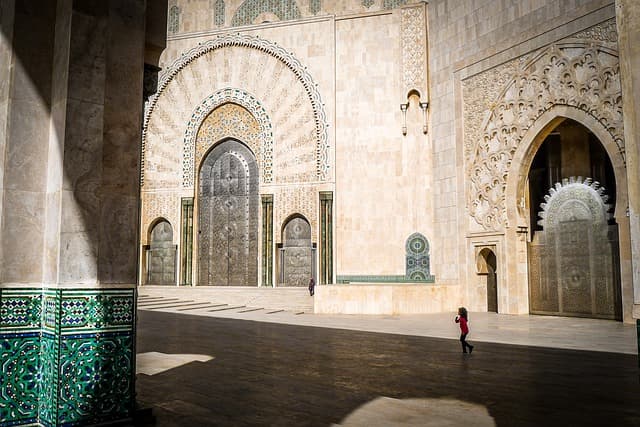
In 969 AD, a Fatimid general named Jawhar al-Siqilli marched into Egypt with an army of 100,000 men and founded a new capital north of the existing city of Fustat. He named it Al-Qahira, meaning the Conqueror or the Vanquisher, a reference to the planet Mars, which was in a dominant position in the sky on the night the city's foundations were marked out. Cairo, in other words, was named after a planet. This is not a metaphor. It was a cosmological statement, and the Fatimids were very serious about their cosmology.
The Fatimids were Ismaili Shia Muslims, which placed them in direct theological opposition to the Sunni Abbasid Caliphate in Baghdad. When they founded Al-Qahira, they were not simply building an administrative city. They were building a rival center of Islamic civilization, designed to draw scholars, merchants, and believers away from Baghdad toward a new pole of power in North Africa. Al-Azhar, completed in 972 AD, was the institutional weapon in that campaign. It was the world's first degree-granting university, or close enough to it that the distinction barely matters, and its original function was to train Ismaili Shia missionaries who would be dispatched across the Islamic world to spread Fatimid doctrine.
That plan failed, at least theologically. In 1171, Saladin ended Fatimid rule, suppressed Shia practice in Egypt, and transformed Al-Azhar into a Sunni institution, which it has remained ever since. The Fatimid dynasty vanished. The university they built to destroy Sunni dominance became one of the most influential Sunni institutions in the world. The irony is the kind Egypt specializes in.
The Fatimid Cairo founding and Al-Azhar history are inseparable, but they are also inseparable from everything else layered on this ground: the Pharaonic canal that once ran through what is now Khan el-Khalili, the Roman fortress of Babylon three kilometers south, the Coptic churches built inside its walls, the Mamluk mosques that filled the spaces between Fatimid landmarks after the dynasty fell. Nothing here was built on empty land. Everything was built on what came before.
---
What You Will Actually See: Al-Azhar and the Fatimid Core
Entering Al-Azhar Mosque from the street, you pass through the Gate of the Barbers, a Mamluk addition from the 15th century that the Fatimids never saw. This is the first of many moments in Islamic Cairo where centuries collapse on each other without warning. The original mosque interior, however, retains its Fatimid bones: the keel-arched arcades, the stucco medallions in the qibla wall, and the mihrab niche that dates to 970 AD. Scholars debate exactly how much of the original fabric survives, but enough does that you are standing inside a structure that was already old when the Black Death swept through Cairo in 1348.
Al-Azhar currently enrolls approximately 500,000 students across its various faculties and affiliated schools worldwide. It issues religious rulings that influence Muslim communities from Indonesia to Senegal. Its Sheikh is appointed by the Egyptian president and holds a position of religious authority roughly analogous, in terms of institutional weight, to the Archbishop of Canterbury for Anglicans. All of this descends from a prayer hall built in two years by a Fatimid general who was himself probably a freed slave of Sicilian origin, which is what "al-Siqilli" means: the Sicilian.
Three minutes' walk north of Al-Azhar, along the spine of the original Fatimid city, you reach Al-Hakim Mosque. Built between 990 and 1013 AD, it is named for Al-Hakim bi-Amr Allah, the Fatimid caliph who is, even by Egyptian standards, a genuinely strange historical figure. Al-Hakim banned the sale of women's shoes, ordered all dogs in Cairo killed, and prohibited the eating of mulokheya, the jute leaf soup that Egyptians have eaten since Pharaonic times. He later declared himself divine, which split the Fatimid religious community and gave rise to the Druze faith, whose followers in Lebanon and Syria still regard Al-Hakim as a messianic figure. The mosque named after him was restored in the 1980s by the Dawoodi Bohra community, a Shia sect from India and Pakistan who consider it a sacred site. Their restoration work is excellent, though it gave the interior a slightly new quality that sits oddly against the medieval exterior.
---
The Gates: Bab al-Futuh, Bab al-Nasr, and Bab Zuweila
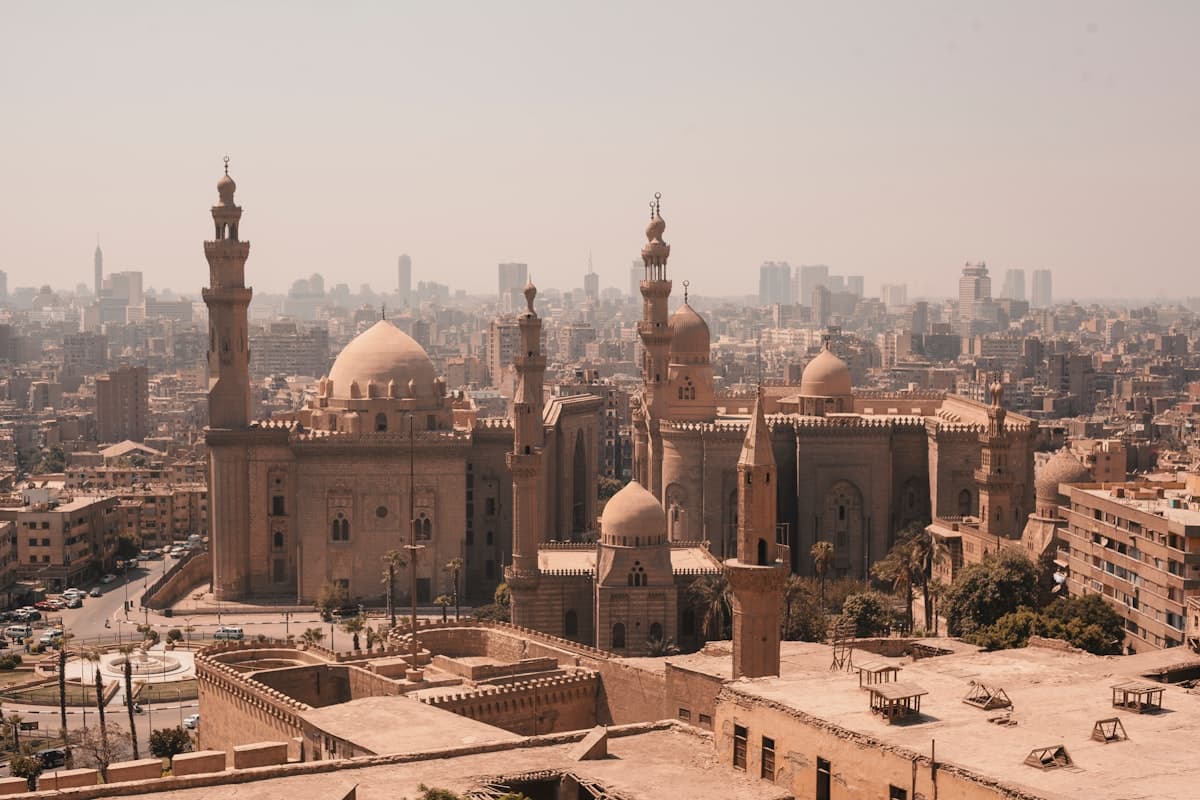
The three surviving Fatimid gates are the clearest physical evidence of what Al-Qahira was intended to be: a walled royal city, not a public city. The original Al-Qahira was closed to the general population. Ordinary Cairenes lived in Fustat to the south. The Fatimid city was for the caliph, his court, his army, and his missionaries. This exclusivity is why so much of it survived: it was not overbuilt by commercial pressure in the way that Fustat was.
Bab al-Futuh (Gate of Conquest) and Bab al-Nasr (Gate of Victory) were built in 1087 by an Armenian Christian general in Fatimid service named Badr al-Jamali, who served as the effective ruler of Egypt for twenty years while a succession of weak caliphs held nominal power. The engineering inside the towers of Bab al-Nasr is worth examining closely: the vaulted ceilings use techniques that were standard in Armenian church construction but unusual in Islamic military architecture. Badr al-Jamali imported Armenian stonemasons from his homeland, and their fingerprints are literally in the stone.
Bab Zuweila, the southern gate built in the same period, is the most theatrically satisfying of the three. Its twin minarets belong not to the original gate but to the Mosque of Sultan Muayyad, added in 1415, making the gate a collaboration across four centuries. Climbing to the top costs EGP 100 and takes about ten minutes. The view over Islamic Cairo from the minaret platform, looking north along the street that was once the Fatimid processional route, is one of the better urban views in Cairo, and almost nobody lingers long enough to take it in properly.
---
The Connections: Fatimid Cairo in the Longer Story of Egypt
The street that runs from Bab al-Futuh to Bab Zuweila, known today as Al-Muizz Street after the Fatimid caliph who authorized the conquest of Egypt, follows a path that has been a major urban artery since at least the Roman period. A Pharaonic canal, the Canal of Amun, ran roughly parallel to this route, carrying water from the Nile east toward Heliopolis. The Romans built their fortress of Babylon at the southern end of this water system. The Fatimids built their royal city along its northern extension. The Mamluks and Ottomans filled the spaces between. When you walk Al-Muizz Street, you are walking a line drawn by Pharaonic engineers and traced over, again and again, for three thousand years.
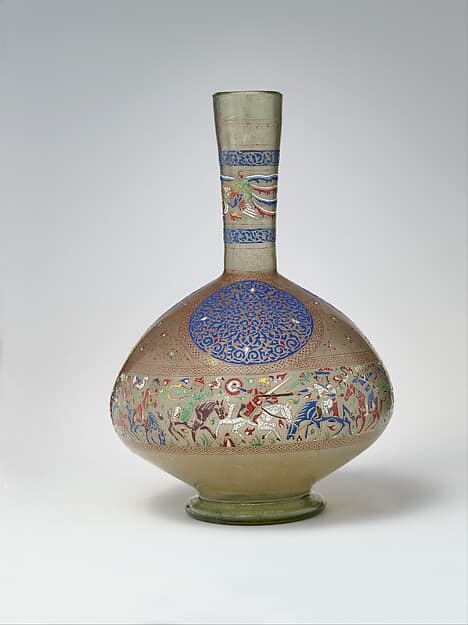
The Museum of Islamic Art, which holds the world's largest collection of Islamic artifacts from this period, is the single most overlooked resource for understanding what the Fatimid Cairo founding and Al-Azhar history actually meant materially. The Fatimid objects there, including carved ivory panels from caliphal palaces, lustrous ceramics with human figures (unusual in Islamic art, and a point of theological controversy), and bronze animal sculptures of a quality that rivals anything produced in medieval Europe, make clear that Al-Qahira was not just administratively ambitious. It was aesthetically ambitious in ways that shaped Islamic decorative arts for centuries.
When Saladin dismantled Fatimid power in 1171, he reportedly auctioned off the contents of the Fatimid palace library, which contained 120,000 volumes, to pay his troops. Some of those books ended up in Crusader hands. Some made their way to Sicily, where the Norman king Roger II was building his own hybrid Islamic-Christian court. The Fatimid intellectual legacy, dispersed by Saladin's accountants, seeded libraries across the Mediterranean world.
---
Common Mistakes
Visiting Al-Azhar only as a mosque. The attached university campus is open to respectful visitors and gives you a sense of Al-Azhar as a living institution, not a historical monument. Students in white robes memorizing Quranic texts in the courtyard arcades are not a performance. They are doing what students have done here since 975 AD.
Going to Khan el-Khalili and stopping there. Khan el-Khalili is a Mamluk bazaar built in 1382 on the site of a Fatimid royal mausoleum. It is worth twenty minutes of orientation and then you should leave. The shops sell things you do not need at prices inflated for tourists. The actual Fatimid Cairo is ten minutes' walk north, and it is almost always less crowded.
Skipping the Museum of Islamic Art. Most tour itineraries omit it entirely. This is a significant failure. The museum's Fatimid collection is genuinely world-class in the sense that no other institution in the world holds more material from this period. It is also air-conditioned and quiet, which counts for something after two hours in the summer heat of Al-Muizz Street.
The sound and light show at the Citadel, which several operators bundle with Islamic Cairo tours, costs EGP 350 and tells you nothing about Fatimid history that you will not learn from reading this article. The Citadel itself was built by Saladin after he dismantled Fatimid power, so the combination is not without logic, but the show is pure spectacle with no substance. Skip it and use the time for Bab Zuweila at sunset instead.
Arriving at Al-Azhar on Friday morning. The mosque closes to non-Muslim visitors during Friday prayer. Many tourists discover this at the gate at 11:45am and waste an hour waiting in the heat. Go Thursday evening or Saturday morning.
Hiring a guide from outside the gates. Self-appointed guides in the Khan el-Khalili area are aggressive and frequently inaccurate. If you want a guide, book through the Egyptian Tourist Authority office near Midan Tahrir, or arrange through your hotel with a licensed guide who specializes in Islamic Cairo. The difference in knowledge is significant.
Treating Al-Muizz Street as a single attraction. It is four kilometers long and contains work from every major period of Islamic architecture in Egypt. Most visitors do the central section between the two Mamluk complexes and miss the northern Fatimid section entirely, which is quieter, less restored, and more honest about the age of what you are looking at.
---
Practical Tips
Dress conservatively for Al-Azhar: shoulders and knees covered for both men and women. Scarves are available at the entrance for women who need one, but bringing your own is faster. Remove your shoes before entering the prayer hall.
The light in Islamic Cairo is best between 7am and 9am, when the angle of the sun catches the carved stone facades and the streets are quiet enough to hear your footsteps. By 10:30am in any season, the tour groups arrive and the quality of the experience changes sharply.
Carry cash in small denominations. The gates charge EGP 100 per person and change for a 200-pound note is often unavailable. ATMs in the Khan el-Khalili area are unreliable; withdraw cash before you arrive.
For food, avoid the tourist restaurants on the main square and walk instead to the small fuul and falafel places on the side streets north of Al-Azhar. A full breakfast costs EGP 40 to 60 and is eaten standing up at a counter, which is the correct way to do it. Naguib Mahfouz Cafe, despite its name and literary associations, serves overpriced mediocre food in a setting designed to resemble what tourists think Islamic Cairo looks like. The real Islamic Cairo is outside its door.
Frequently Asked Questions
The Weekly Dispatch
More on Egypt, every Friday.
Cultural depth and places most guides never mention.
No spam. Unsubscribe anytime.