Greco-Roman Alexandria: Egypt's Most Misread City Guide
Alexandria was the world's largest city for three centuries. Almost nothing of that city survives above ground. What remains is stranger and more interesting than the myths.

Quick Facts
- Best time to visit
- October to April. Spring and autumn offer moderate Mediterranean temperatures and far smaller crowds than the summer influx of Cairo visitors.
- Entrance fee
- Catacombs of Kom el-Shoqafa: EGP 360 (approx $7.50 USD), students EGP 180. Pompey's Pillar site: EGP 360 (approx $7.50 USD). Alexandria National Museum: EGP 200 (approx $4 USD). Bibliotheca Alexandrina Antiquities Museum: EGP 120 (approx $2.50 USD).
- Opening hours
- Most sites 9am to 5pm daily, last entry 4:30pm. Catacombs close Friday midday for approximately 90 minutes. Confirm hours before visiting.
- How to get there
- From Cairo: intercity train from Ramses Station, first class EGP 150 to 200 each way, approximately 2 hours. Within Alexandria: white taxis EGP 40 to 80 between central sites, Uber available and more price-predictable.
- Time needed
- Full day for the core circuit (Catacombs, Pompey's Pillar, National Museum). Two days to add Bibliotheca Alexandrina, Anfushi Tombs, and the Coptic quarter.
- Cost range
- Budget EGP 600 to 900 per day including transport, entry fees, and lunch. Mid-range EGP 1,800 to 2,800 including a private guide and waterfront dinner.
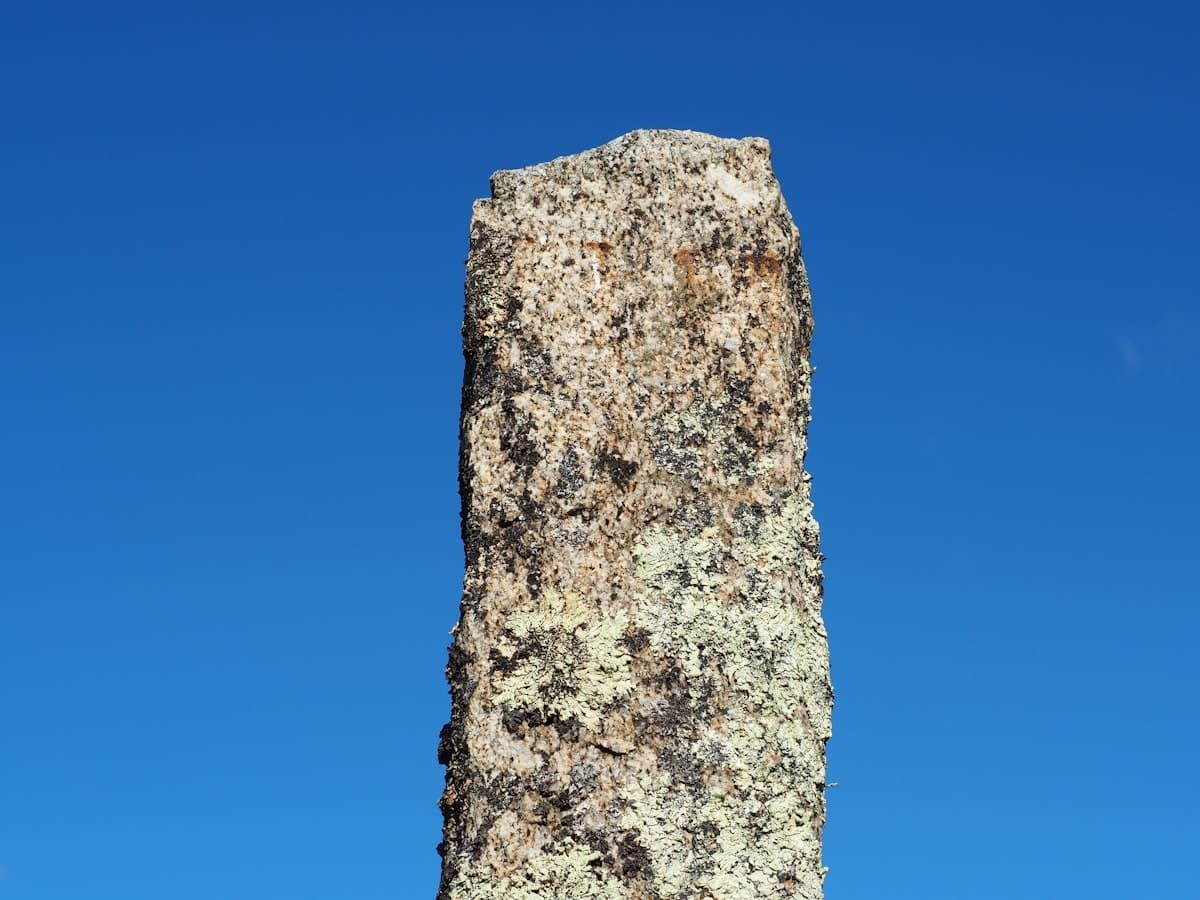
The city Alexander founded in 331 BC became, within a generation, the largest city on earth. At its peak under the Ptolemies, Alexandria held perhaps one million people, a figure Rome would not match for another two centuries. The Great Library held between 400,000 and 700,000 scrolls, depending on which ancient source you trust. The Lighthouse of Pharos was tall enough that sailors could see its flame from 56 kilometers offshore. All of it is gone. What survived is underground, underwater, or so thoroughly built over by Roman, Byzantine, Arab, Ottoman, and colonial layers that the Greco-Roman city exists today as a kind of archaeological rumor, glimpsed in basements, catacombs, and a single improbable pink granite column standing alone in a neighborhood that smells of diesel and ful.
This is not a tragedy. It is the actual story of Alexandria, and it is far more interesting than the myths.
Quick Facts
Best time to visit: October through April. Alexandria sits on the Mediterranean coast and gets genuinely cold, grey winters by Egyptian standards, but summer is humid and crowded with Egyptian tourists from Cairo escaping the heat. Spring and autumn give you moderate temperatures and thinner crowds at the sites.
Key entrance fees: Catacombs of Kom el-Shoqafa: EGP 360 (approx $7.50 USD), students EGP 180 Pompey's Pillar and Serapeum site: EGP 360 (approx $7.50 USD), students EGP 180 Greco-Roman Museum (when fully open after renovation): EGP 300 (approx $6.25 USD) Royal Jewelry Museum (useful context for the later Ptolemaic period): EGP 200 (approx $4 USD) Alexandria National Museum: EGP 200 (approx $4 USD)
Opening hours: Most sites run 9am to 5pm daily, with last entry at 4:30pm. The Catacombs close Friday lunchtimes for about 90 minutes. Confirm hours before visiting as Egyptian cultural site schedules shift without notice.
Getting there: Alexandria is 225km from Cairo. The best option is the Spanish-built Talgo or regular intercity trains from Cairo Ramses Station; a first-class ticket costs EGP 150 to 200 (approx $3 to $4 USD) and takes about two hours. Within Alexandria, white taxis charge EGP 40 to 80 between most central sites. Uber operates in the city and is more reliable for pricing. A tuk-tuk from the Catacombs to Pompey's Pillar costs about EGP 20.
Time needed: The core Greco-Roman circuit, meaning the Catacombs, Pompey's Pillar, and the Alexandria National Museum, takes a full day. Add the underwater archaeology at the new Bibliotheca Alexandrina exhibitions and you need a second morning.
Cost range: Budget EGP 600 to 900 per day including transport, entry fees, and a proper lunch. Mid-range EGP 1,800 to 2,800 if you add a decent waterfront dinner and a private guide.
Why This Place Matters
Most visitors come to Alexandria looking for the Greeks. They should be looking for the Romans, the Jews, the Egyptians, and the early Christians all at once, because ancient Alexandria was deliberately polyglot in a way that was unusual even by ancient standards.
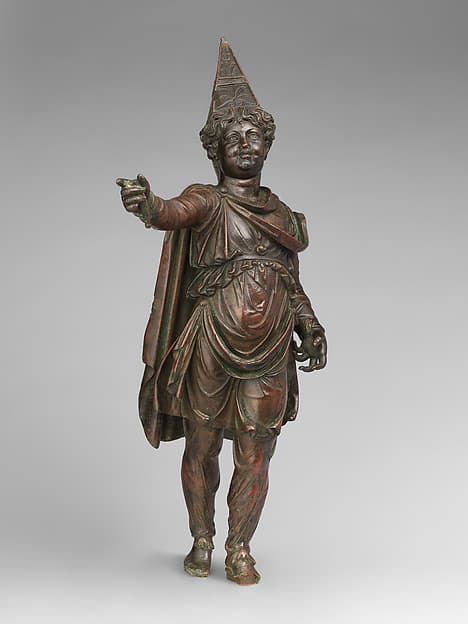
Ptolemy I, Alexander's general who took Egypt after the conqueror's death in 323 BC, understood something his successors often forgot: that you cannot rule Egypt without the Egyptians. The Ptolemies presented themselves to their Greek subjects as Macedonian kings and to their Egyptian subjects as pharaohs. The same ruler appears on coins with a Greek profile and on temple walls at Edfu offering to Horus in the full pharaonic posture. This was not hypocrisy. It was the political architecture that kept the country functional for 275 years, until Cleopatra VII, the last Ptolemaic ruler and the first member of her dynasty to actually speak Egyptian, lost everything to Rome in 30 BC.
What Rome took was not just a kingdom but the intellectual capital of the world. The Library was not a single building. It was an institution embedded in the Mouseion, a research campus that functioned like a state-funded university. Eratosthenes calculated the circumference of the earth here in the third century BC and was accurate to within two percent. Euclid wrote the Elements here. Archimedes studied here before returning to Syracuse. Alexandria was not decoratively scholarly. It was the place where the Mediterranean world's knowledge was systematized, translated, and transmitted.
The Library did not burn in a single dramatic fire, despite what the popular story insists. It declined across several centuries through neglect, funding cuts, political upheaval, and the gradual shift of the city's intellectual gravity toward Constantinople after the Roman imperial capital moved east. The real loss is less cinematic and more instructive.
What You Will Actually See: The Catacombs of Kom el-Shoqafa
The Catacombs were discovered in 1900 when a donkey fell through the ground. This is documented fact and it remains the most Alexandria thing that has ever happened.
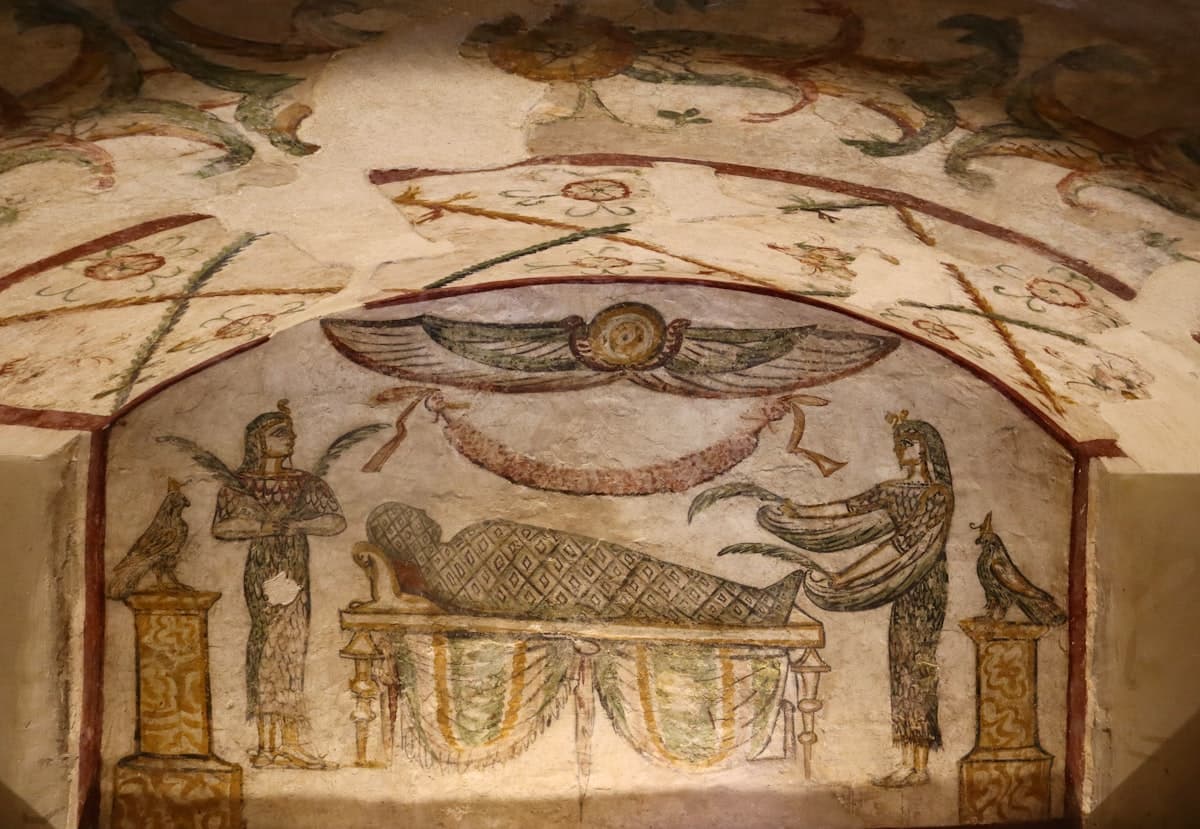
What the donkey revealed was a three-level tomb complex cut into the bedrock in the second century AD, during the Roman period, and it is the most visually specific evidence you will find anywhere in the city of how completely Greco-Roman Egypt fused its inherited traditions. Descend the spiral staircase and you enter a space where the burial niches are framed by Corinthian columns, but the reliefs above the main tomb entrance show Anubis, the jackal-headed Egyptian god of the dead, wearing Roman legionary armor. Next to him stands Thoth, the ibis-headed god of wisdom, also in Roman military dress. The sarcophagus in the central chamber is carved in pure Roman style, but the scenes flanking it show the mummification rituals of ancient Egyptian religion.
This was not confusion or cultural carelessness. It was a specific, deliberate synthesis made by a community that held multiple inheritances simultaneously and saw no contradiction in honoring all of them at once. The family buried here almost certainly spoke Greek at home, worshipped Egyptian gods, and lived under Roman law.
The Hall of Caracalla adjacent to the main catacombs holds the bones of horses as well as humans. Ancient sources record that the Emperor Caracalla, visiting Alexandria in 215 AD, invited the city's youth to a banquet and then had them massacred, ostensibly in revenge for satirical pamphlets mocking him. The horse bones are unexplained. Archaeologists have theories. None are settled.
Skip this: The so-called Pompey's Pillar sound and light experience, if it is running when you visit, costs extra and adds nothing. The pillar itself is worth ten minutes of your time. The surrounding Serapeum site is worth twenty more if you look carefully at the underground galleries where the sacred Apis bulls were housed in scroll form, literally: rows of carved niches for papyrus manuscripts, not animals. But paying for a narrated show at a site this stripped of original context is a poor use of either time or money.
What You Will Actually See: The Underwater City and Its Archives
In 1996, a French marine archaeologist named Franck Goddio began systematic excavation of Alexandria's Eastern Harbor and found the royal quarters of the Ptolemaic city lying in four to eight meters of water, collapsed by a series of earthquakes beginning in the fourth century AD. The finds included sphinxes, colossal statues of Ptolemaic rulers, red granite columns, and the probable site of Cleopatra's palace complex. None of this is visible to regular tourists. The Egyptian government has long debated an underwater museum; it has not been built.
What you can see is at the Bibliotheca Alexandrina, the modern library that opened in 2002 on the approximate site of the ancient Mouseion. The Antiquities Museum inside the library building contains pieces from the harbor excavations alongside a broader Greco-Roman collection. The building itself, designed by a Norwegian architectural firm and shaped like a tilted disc representing the sun rising from the sea, is worth entering even if you have limited interest in the exhibitions. The reading rooms are open to the public. Sitting in them with a coffee, knowing roughly what once stood within a few hundred meters of your chair, is one of the more quietly affecting things you can do in any Egyptian city.
The Alexandria National Museum on Tariq al-Hurriya, housed in a former Italian consulate building, has a coherent collection organized by period, including a solid Greco-Roman floor with portrait mummies from the Fayum, which were found outside Alexandria but represent exactly the same cultural fusion the catacombs display: Egyptian mummification technique, Roman-style painted portraits of the deceased, Greek funerary inscriptions.
The Connections
The Pompey's Pillar site stands on the ancient acropolis of Alexandria, which was itself built over a small Egyptian settlement called Rhakotis that predated the Greek city. The pillar, which has nothing to do with Pompey, was erected in 297 AD in honor of the Emperor Diocletian. The Serapeum temple complex that once surrounded it was one of the largest in the ancient world, dedicated to Serapis, a god the Ptolemies invented: a deliberate hybrid of Osiris and Apis bull worship, given a Greek visual form to be accessible to both populations. The temple was destroyed by a Christian mob in 391 AD following an imperial edict by Theodosius I permitting the destruction of pagan temples. The monk Theophilus of Alexandria, who ordered the assault, is a significant figure in early Christian history and nearly unknown to modern tourists.
The Coptic community of Alexandria traces its founding to Saint Mark, who by tradition arrived in the city around 48 AD and was martyred in 68 AD. The Coptic Orthodox Patriarchate was based in Alexandria for the first four centuries of the church's existence, making this city, not Rome or Constantinople, the seat of the oldest continuously functioning Christian institution. The Cathedral of Saint Mark in the Coptic quarter holds relics of the evangelist returned from Venice in 1968, where they had rested since Venetian merchants removed them from Alexandria in 828 AD, reportedly concealing them under layers of salt pork to discourage Muslim customs inspection. The story may be apocryphal. The relics are real.
When the Arab general Amr ibn al-As entered Alexandria in 642 AD, he found a city that had already been Christian for three centuries and Greek for nearly a thousand years. His letter to the Caliph Omar describing Alexandria is one of the more remarkable documents in medieval Arabic literature: he counted 4,000 palaces, 4,000 baths, 400 theaters, and 12,000 sellers of vegetables. The numbers are certainly exaggerated. The astonishment is not.
Common Mistakes
Spending your main afternoon at Pompey's Pillar. The pillar is a single column on a scrubby hill with a partial view of a petrochemical plant. The underground galleries of the Serapeum are genuinely interesting and almost nobody goes down into them because the entrance is poorly marked. Go underground first, look at the pillar for five minutes, leave.
Ignoring the Alexandria National Museum in favor of the Greco-Roman Museum. The Greco-Roman Museum has been under renovation for years and has had only partial, unpredictable openings. Check its status before building your day around it. The National Museum is consistently open and its collection is underrated.
Taking a tour that covers Greco-Roman Alexandria in half a day. The combination of the Catacombs, the National Museum, a walk through the Anfushi district where a separate set of Ptolemaic-era tombs sits in a residential neighborhood, and the Bibliotheca Alexandrina is a full eight-hour day done properly. Four-hour tour packages skip everything that requires explanation.
Assuming the Corniche is the city. The waterfront boulevard is pleasant and the sea view is real, but the actual texture of Greco-Roman Alexandria lies inland, in the basements of the Attarine antiques market, in the street grid that still follows the Ptolemaic city plan Alexander's architect Dinocrates laid out, in the neighborhood names that echo older settlement patterns. Walk two blocks from the water.
Paying for the sound and light show at any Alexandria site. This is the specific contrarian take: unlike Karnak or Philae, where the shows at least illuminate an intact monument, the Alexandria versions are projected onto ruins so fragmentary that the theatrical framing actively misleads more than it clarifies. The EGP 300 to 400 entry fee buys you less accurate history than 45 minutes with a good book at the Bibliotheca Alexandrina cafe.
Missing the Anfushi Tombs. These Ptolemaic-era tombs in the working-class Anfushi district are decorated in a style that imitates Egyptian alabaster using painted plaster, an economic substitution that tells you something specific about who could actually afford tombs in Ptolemaic Alexandria. They receive perhaps one-tenth the visitors the Catacombs do and require no advance planning.
Visiting in July or August. Alexandria in summer is legitimately crowded and humid. The same sites, the same sea air, the same quality of late afternoon Mediterranean light on white plaster walls, are all available in October or March without sharing the Catacombs entrance with a hundred Cairo families on summer holiday.
Practical Tips
A private guide who specializes in Greco-Roman Alexandria rather than general Egyptian history makes a measurable difference here. The period is specific enough that generalist guides often fill gaps with misinformation. Ask specifically about their knowledge of the Ptolemaic dynasty and the Roman administrative period before booking. Expect to pay EGP 800 to 1,500 for a half-day.
The Catacombs involve a significant descent and the interior is cool and damp. Bring a layer regardless of surface temperature. Photography is permitted without flash throughout the complex.
Alexandria's café culture is one of the city's genuine pleasures and the most culturally continuous thing about it: the city has been a coffee and conversation town since the Ottoman period built on the Ptolemaic tradition of the Mouseion as a place of public intellectual exchange. The old Brazilian Coffee Store on Saad Zaghloul Square has been operating since 1929. Sitting there after the Catacombs, watching the square that sits approximately where the ancient agora once stood, is the closest thing to a throughline the city offers.
Frequently Asked Questions
The Weekly Dispatch
More on Egypt, every Friday.
Cultural depth and places most guides never mention.
No spam. Unsubscribe anytime.