Greco-Roman Alexandria: Egypt's Other Ancient World
Alexandria was the world's largest city for 300 years. Almost none of it survives above ground. What remains is stranger and more layered than the textbooks suggest.

Quick Facts
- Best time to visit
- October to April. Mediterranean humidity makes July and August uncomfortable. October offers ideal temperatures around 24C with thinner crowds.
- Entrance fee
- Greco-Roman Museum EGP 300 (approx $6 USD), students EGP 150. Catacombs of Kom el-Shoqafa EGP 180 (approx $3.60). Pompey's Pillar EGP 180. Anfushi Tombs EGP 100. Bibliotheca Antiquities Museum EGP 120.
- Opening hours
- Most sites daily 9am to 4:30pm. Greco-Roman Museum closed Mondays. Hours shift seasonally; confirm locally.
- How to get there
- Spanish Train from Cairo Ramses Station to Alexandria Misr Station, approximately 2 hours, EGP 150 to 250. Within Alexandria, day hire of private car EGP 600 to 800 recommended as sites are dispersed across the city.
- Time needed
- Minimum 2 full days for serious Greco-Roman coverage. Day trips from Cairo are possible but leave inadequate time.
- Cost range
- Budget EGP 600 to 1,000 per day including entry fees, local transport, and food. Mid-range EGP 2,000 to 3,500 including Corniche hotel.
At its peak, Alexandria held perhaps one million people, making it the largest city on earth. Rome, which would eventually absorb it, was smaller. The Library alone is estimated to have held 700,000 scrolls. Today you can walk across the entire footprint of ancient Alexandria in under an hour, mostly through apartment blocks and traffic, and find almost nothing. What little survives is odder and more interesting than the famous myths. This is the real Greco-Roman Egypt Alexandria history guide: what the city was, where it went, and what you can actually see.
Quick Facts
Best Time to Visit: October through April. Alexandria's Mediterranean climate makes summer (June to August) genuinely unpleasant: humid, crowded with domestic tourists, and hot enough to make archaeological sites miserable. October offers mild temperatures around 24°C and manageable crowds.
Entrance Fees: Greco-Roman Museum: EGP 300 (approx $6 USD), students EGP 150 Pompey's Pillar and Serapeum complex: EGP 180 (approx $3.60 USD) Catacombs of Kom el-Shoqafa: EGP 180 (approx $3.60 USD) Royal Ptolemaic Tombs at Anfushi: EGP 100 (approx $2 USD) Alexandria National Museum: EGP 200 (approx $4 USD)
Opening Hours: Most sites open daily 9am to 4:30pm. The Greco-Roman Museum recently reopened after a decade of renovation; confirm hours before going as they occasionally shift.
Getting There: From Cairo, the best option is the Spanish Train (air-conditioned express), which runs from Ramses Station to Alexandria Misr Station in around 2 hours and costs EGP 150 to 250 depending on class. Taxis within Alexandria are cheap: EGP 30 to 60 will cover most cross-city rides. The sites are spread across the city, so budget for transport between them.
Time Needed: A serious Greco-Roman itinerary requires two full days. Most visitors try to compress it into a day trip from Cairo. This is a mistake addressed in the Common Mistakes section.
Cost Range: Budget EGP 600 to 1,000 per day including entry fees, transport, and food. Mid-range EGP 2,000 to 3,500 with a decent hotel on the Corniche.
Why This Place Matters
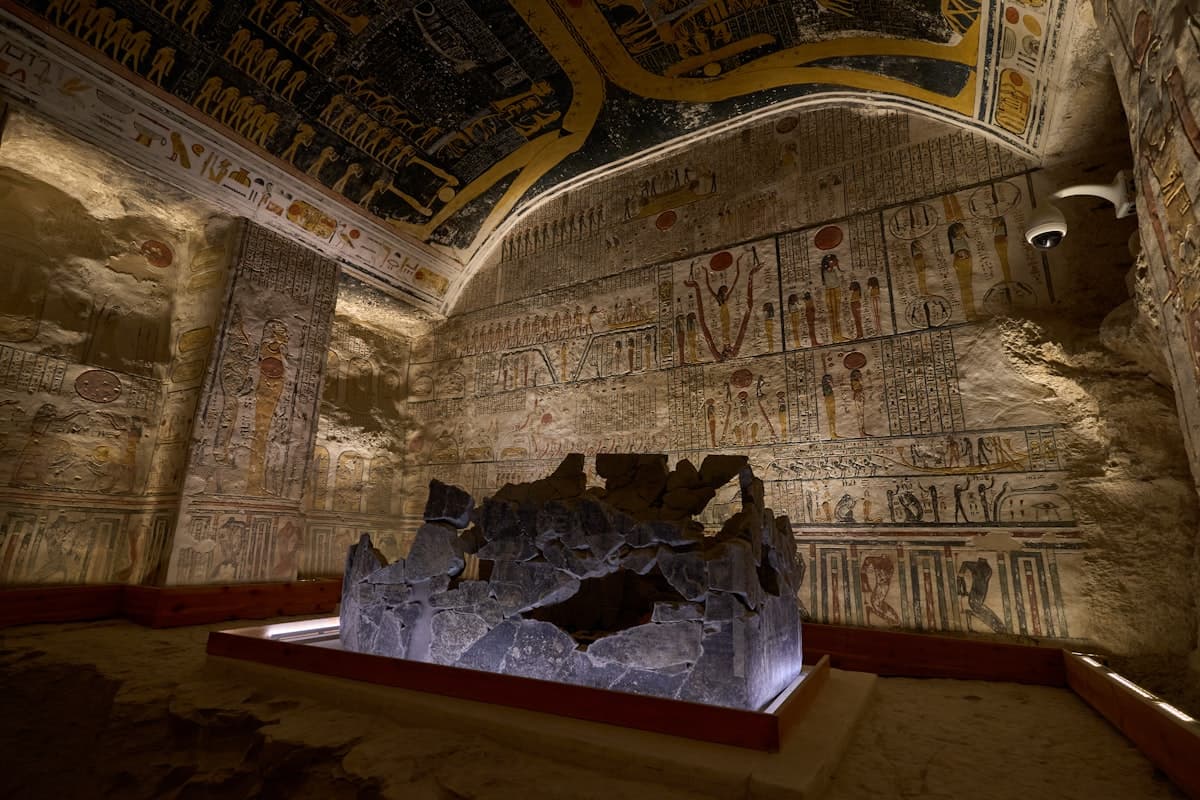
Alexander the Great founded Alexandria in 331 BC, but he never saw it finished. He was already moving east, and he died in Babylon in 323 BC at the age of 32. The city was built and made magnificent by the Ptolemies, the Macedonian dynasty that ruled Egypt for nearly three centuries after Alexander's death. Ptolemy I declared himself pharaoh, wore Egyptian regalia for his Egyptian subjects, and simultaneously ran a cosmopolitan Greek-speaking court. This double performance defines everything about Greco-Roman Egypt: nothing was purely one thing.
The Ptolemies understood something that Roman administrators would later fumble: Egypt's population would accept foreign rulers if those rulers respected Egyptian gods. So Ptolemy III built temples at Edfu and Philae that are indistinguishable, stylistically, from Pharaonic structures built 1,500 years earlier. The god Serapis, invented under Ptolemy I as a deity that could appeal to both Greeks and Egyptians, combined Osiris and Apis the bull with visual attributes of Zeus. This was deliberate religious policy, and it worked for 275 years.
Alexandria was not typical of Egypt. It was emphatically not in Egypt according to its official administrative designation: the phrase used in ancient documents was "Alexandria near Egypt," not "in Egypt." The rest of the country was governed separately. This tells you something important about how the Ptolemies conceived of their own capital: as a Greek city that happened to sit at the edge of an ancient African civilization they were also responsible for managing.
What the City Was: Layers Most Visitors Never See
The reason so little of ancient Alexandria survives above ground is partly fire, partly earthquake, partly sea-level rise, but mostly ordinary urban overwriting. People kept living here. Every generation built on the last. The column known as Pompey's Pillar, which stands in the courtyard of the ruined Serapeum temple, is a useful illustration of this.
First: it is not Pompey's pillar. Pompey the Roman general was murdered on an Egyptian beach in 48 BC, and the column was erected in his honor by medieval travelers who had no idea what they were looking at. It was actually raised in 297 AD in honor of Emperor Diocletian, who had just suppressed a revolt in Alexandria and restored grain distributions to the city. The inscription on the base says this plainly. The column is 26.85 meters tall, carved from a single piece of Aswan red granite, and it is the largest monolithic column in the ancient world outside of Rome. For centuries, European visitors photographed it and called it by the wrong name, and that name stuck.
The Serapeum that surrounded it was one of the most important temple complexes in the ancient world. It held a subsidiary library when the great Library burned. Theophilus, the Patriarch of Alexandria, ordered it destroyed in 391 AD under Theodosius I's edict against pagan temples. The destruction was carried out with considerable violence by Christian crowds. What you see today is a plateau of rubble, a few sphinxes, and the pillar standing alone. Bring the mental architecture yourself.
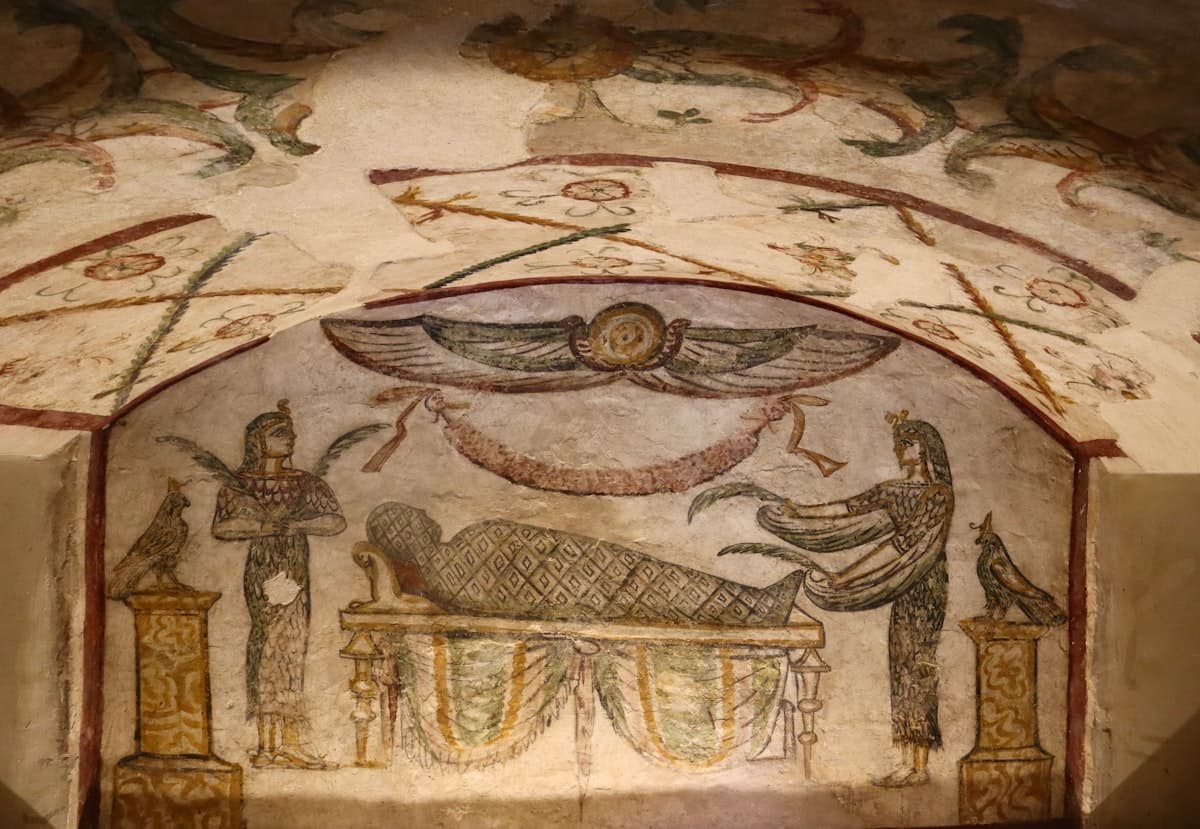
The Catacombs of Kom el-Shoqafa are the most surprising thing in Alexandria and among the most undervisited serious archaeological sites in Egypt. They were discovered in 1900 when a donkey fell through the ground. What the donkey had stumbled into was a three-level tomb complex cut into the rock in the 2nd century AD, used for perhaps two centuries, and capable of holding the bodies of several hundred people. The first level contains a triclinium: a dining room where families came to eat funerary meals with their dead. This was a Roman practice. The tomb decorations below are purely Pharaonic in style: Anubis wearing Roman armor, Thoth carrying the caduceus of Hermes. The inscriptions are in both Greek and Egyptian. Nobody who was buried here seems to have experienced any contradiction in any of this.
The Museum That Finally Reopened
The Greco-Roman Museum in central Alexandria closed for renovations in 2005 and sat behind scaffolding for nearly twenty years. It reopened in 2023. This matters enormously to anyone researching Greco-Roman Egypt Alexandria history, because the collection is genuinely outstanding and has been largely inaccessible for a generation.
The museum holds more than 40,000 objects, including the largest collection of Tanagra figurines outside Greece: small terracotta figures of women in everyday poses, made between the 4th and 2nd centuries BC, that tell you more about ordinary Ptolemaic life than any monumental inscription. There is a mummy of a crocodile here wearing a gilded headdress, because Sobek the crocodile god was worshipped in the Fayum and his mummified remains were sent to Alexandria as religious gifts. There is a marble bust of Serapis, the invented hybrid god, that became the template for later depictions of Jesus Christ: the long hair, the full beard, the serene forward gaze. Art historians have noted this connection since the 19th century. Theologians find it uncomfortable. The resemblance is not coincidental.
The Connections: Alexandria Across Epochs
The Bibliotheca Alexandrina, the modern library opened in 2002 on the approximate site of the ancient one, is an obvious connection and not the most interesting one. Consider instead the Mosque of the Prophet Daniel, a small Ottoman-era mosque in central Alexandria built on a site that medieval Arab geographers identified as the location of Alexander the Great's tomb. His body, after years of dispute between his successors, was brought to Alexandria by Ptolemy I and housed in a gold sarcophagus. It was reportedly visited by Julius Caesar and Augustus, both of whom came to pay respects. It disappeared from historical record in the 3rd century AD. The mosque sits on whatever is below.
The Anfushi tombs on the western harbor, cut into rock during the 3rd century BC, are painted with Egyptian motifs executed in a style that manages to look both authentically Pharaonic and slightly wrong, in the way that someone who learned a tradition from books rather than inheritance sometimes reproduces it. These were likely tombs for wealthy Greek Alexandrians who wanted to be buried in the Egyptian manner because Egyptian burial practices were associated with resurrection and afterlife in ways Greek traditions were not. Religious pragmatism again.
The Coptic community of Alexandria traces its founding to St. Mark, who by tradition arrived here around 48 AD and was martyred in 68 AD. His relics were kept in Alexandria until 828 AD, when Venetian merchants smuggled them out of the city by hiding them under layers of pork and cabbage, knowing Muslim customs officers would not search too thoroughly. St. Mark's body is now in the Basilica di San Marco in Venice. The Coptic Pope still carries the title "Pope of Alexandria." The chain from Ptolemaic religious syncretism to early Christianity to the medieval Coptic church runs directly through this city.
Common Mistakes
Treating Alexandria as a day trip from Cairo. The train journey takes two hours each way. By the time you arrive, orient yourself, and visit two sites, you have four hours of actual content before you need to leave to catch the last reasonable train. Alexandria requires an overnight stay minimum, two nights ideally.
Starting with Pompey's Pillar. It is the most famous site and the least interesting in isolation. The Catacombs of Kom el-Shoqafa, a five-minute walk away, are the most architecturally remarkable thing in the city. Visit them first, then walk to the pillar for context.
Skipping the Greco-Roman Museum because of its long closure reputation. It is open. The collection is extraordinary. This is now one of the two or three best museums in Egypt and most visitors overlook it entirely because the reputation of perpetual renovation persists.
Taking the Stanley Bridge seafood tour instead of the Anfushi tombs. Every Alexandria itinerary aimed at tourists defaults to the Corniche walk, seafood lunch, and Montaza Palace gardens. The Anfushi tombs on the western harbor take 45 minutes, cost EGP 100, and contain 2,200-year-old painted chambers that almost nobody visits.
Paying for a guided tour of Qaitbay Citadel expecting Greco-Roman content. The citadel, built in 1477 by the Mamluk Sultan Qaitbay, was constructed using the stones of the ancient Pharos lighthouse after it collapsed in a 14th-century earthquake. There is almost nothing Ptolemaic to see inside. The view of the harbor is excellent and the building itself is historically interesting on its own terms, but if your interest is specifically in Greco-Roman Alexandria, this is not a priority.
Believing the Bibliotheca Alexandrina ticket includes the antiquities museum. The modern library complex contains four separate museums, each requiring its own ticket. The Antiquities Museum inside the Bibliotheca (EGP 120, approx $2.40) is worth the extra cost: it displays objects found during construction, including a Ptolemaic sphinx, and its underground setting is genuinely atmospheric. But you will not see it on the standard library tour.
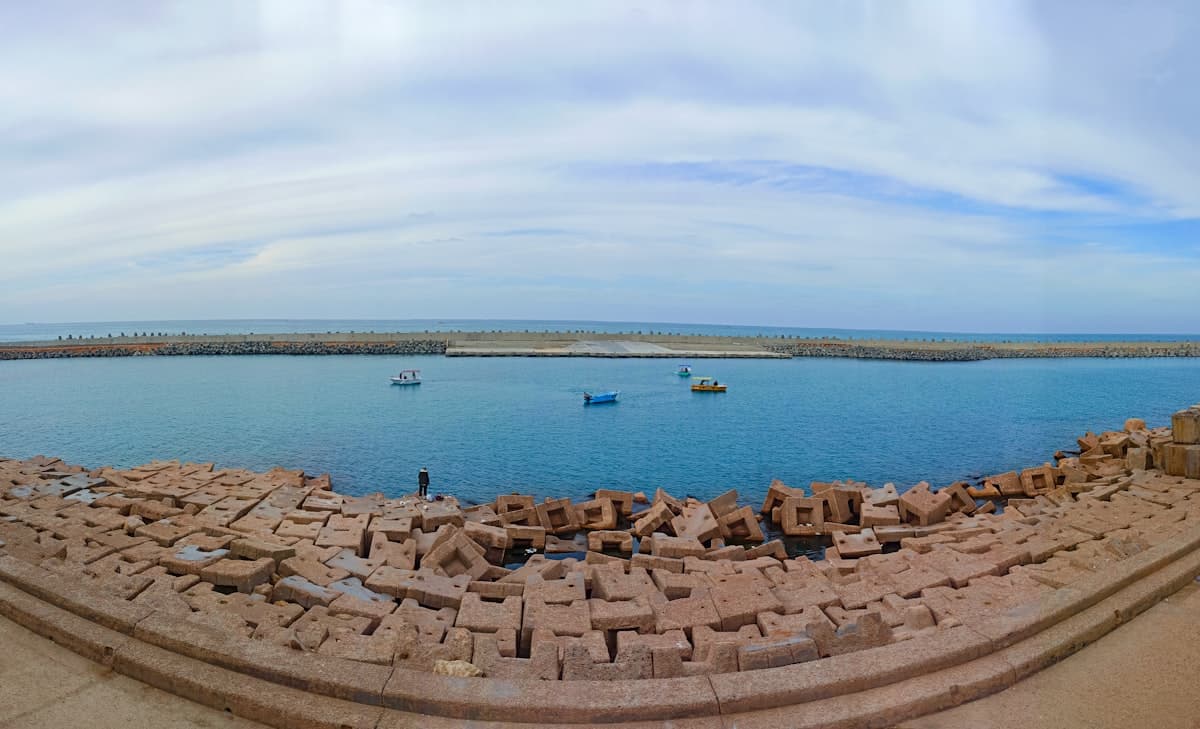
Ignoring the underwater archaeology. The eastern harbor of Alexandria contains submerged ruins of the ancient royal quarter, including what is believed to be the location of Cleopatra's palace. You cannot dive there without joining an organized expedition through the Egyptian authorities, but the Bibliotheca Alexandrina has published detailed maps of the underwater sites. Study them before you go. It changes how you stand on the Corniche.
Practical Tips
The sites of Greco-Roman Alexandria are spread across the city in a way that requires planning. The Catacombs and Pompey's Pillar are in the same neighborhood (Karmouz, western Alexandria) and can be combined in a half-day. The Greco-Roman Museum, the Alexandria National Museum, and the Anfushi tombs are each in different parts of the city and require individual transport.
Hire a driver for the day rather than flagging taxis between sites. A full-day driver with an air-conditioned car should cost EGP 600 to 800 arranged through your hotel, or slightly less if you negotiate directly on the street. This is more efficient than trying to explain each address to individual taxi drivers.
The Greco-Roman Museum is closed Mondays. Confirm this and all other hours on arrival, as Egyptian museum hours shift seasonally and occasionally without online notice.
Alexandria's traffic is genuinely difficult between 4pm and 7pm on weekdays. Schedule your last site visit to end by 3:30pm if you are catching an evening train to Cairo.
The city's kafeneions, the old Greek-style coffeehouses that once served Alexandria's substantial Greek community (which numbered 100,000 people as late as the 1950s and dwindled to almost nothing after Nasser's nationalizations), are mostly gone. Pastroudis on El-Horreya Avenue is the last credible remnant: opened in 1923, still serving Turkish coffee and pastries, still with its original wood paneling. Sit there after the museum. It is doing more historical work than most of the official sites.
Frequently Asked Questions
The Weekly Dispatch
More on Egypt, every Friday.
Cultural depth and places most guides never mention.
No spam. Unsubscribe anytime.