Islamic Golden Age Cairo: A History Guide to the Old City
Cairo's medieval quarter contains more medieval Islamic monuments than any city on earth. Most tourists spend 90 minutes here. That is the mistake.

Quick Facts
- Best time to visit
- October through March. Temperatures are manageable (15-22C), the light on pale limestone is at its clearest, and outdoor walking between monuments is not punishing. Avoid July and August when midday heat exceeds 38C and the monuments themselves trap warmth.
- Entrance fee
- Al-Azhar Mosque: free. Citadel complex (includes Muhammad Ali Mosque): EGP 450 (approx $9 USD), students EGP 225. Sultan Hassan and Al-Rifa'i Mosques combined: EGP 180 (approx $3.50 USD). Individual Sharia al-Muizz monuments: EGP 100-180 each. Combined monument ticket for select sites: EGP 350 (approx $7 USD).
- Opening hours
- Most monuments daily 9am to 5pm. Citadel opens 8am. Al-Azhar closes to non-worshippers during Friday prayer (approx 11:30am to 1pm). City of the Dead tombs accessible from sunrise to sunset.
- How to get there
- Metro Line 1 to Al-Sayeda Zeinab or Mar Girgis stations, then taxi (EGP 15-25) to Bab Zuweila or Al-Azhar. Uber or Careem from Downtown Cairo: EGP 40-80. Bus 72 from Tahrir Square: EGP 5. From the airport, budget EGP 180-250 by Uber.
- Time needed
- Sharia al-Muizz alone: 3-4 hours minimum. Citadel: 2 hours. Full Islamic Cairo circuit including City of the Dead: full day (7-8 hours). Two days if combining with Coptic Cairo and Ibn Tulun Mosque.
- Cost range
- Budget EGP 400-700 per day including monument entries, street food, and local transport. Mid-range EGP 1,200-2,000 adding a private guide and a restaurant meal. Private full-day guided tour of Islamic Cairo: EGP 800-1,500 depending on guide.
Quick Facts
Best time to visit: October through March, when temperatures sit between 15 and 22 degrees Celsius and the light on limestone is at its most particular.
Entrance fees: Al-Azhar Mosque is free. The Citadel (including the Mosque of Muhammad Ali) costs EGP 450 (approximately $9 USD), students EGP 225. Individual monuments in Islamic Cairo such as the Madrasa of Sultan Hassan cost EGP 100-180 (approximately $2-3.50 USD) each. The combined ticket for select monuments is EGP 350 (approximately $7 USD) and covers six sites.
Opening hours: Most mosques and monuments open daily from 9am to 5pm. Al-Azhar Mosque closes during Friday prayer (roughly 11:30am to 1:30pm). The Citadel opens at 8am.
Getting there: From Downtown Cairo, take the Metro Line 1 to Saad Zaghloul or Mar Girgis, then a short taxi or tuk-tuk ride (EGP 15-30). An Uber from central Cairo runs EGP 40-80 depending on traffic, which on Sharia al-Muizz can mean the difference between 10 minutes and 45. The 72 bus from Tahrir Square costs EGP 5 and drops you near Al-Azhar.
Time needed: Two hours is enough to feel you have visited. Five hours is enough to begin to understand. A full day, covering the Citadel, Sharia al-Muizz, and the City of the Dead, is the minimum for anyone who came to Cairo for the Islamic Golden Age and not just the Pyramids.
Cost range: Budget EGP 400-700 per day including entry fees, street food, and local transport. Mid-range EGP 1,500-2,500 if you add a guided tour and a meal at Naguib Mahfouz Café.
---
Cairo contains more surviving medieval Islamic monuments than any other city on earth. Not Istanbul, not Damascus, not Baghdad. Cairo. UNESCO counted 600 listed monuments in the historic district alone, and that figure is decades old. The reason most visitors process this neighborhood in an afternoon, snap a photo on Sharia al-Muizz, and leave is not a lack of time. It is a lack of orientation. The streets do not explain themselves. This guide is the explanation.
Why This Place Matters
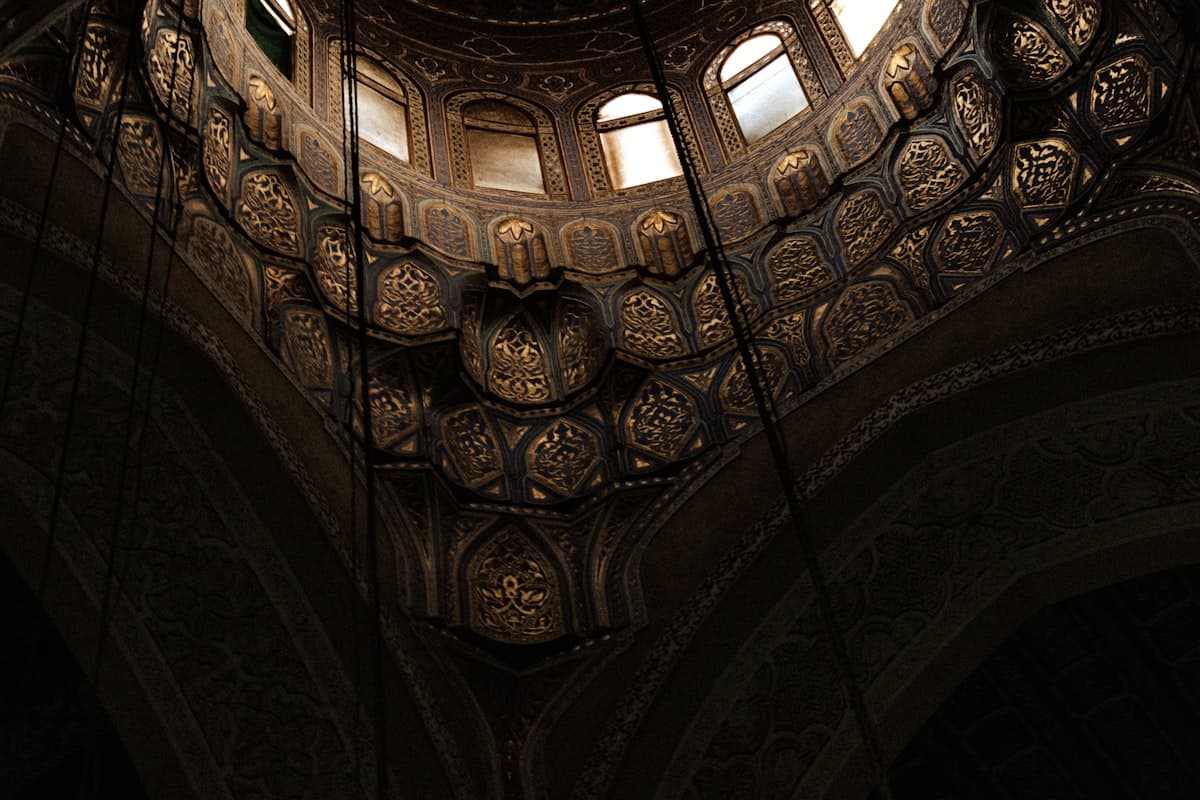
When Jawhar al-Siqilli, the Fatimid general, founded al-Qahira in 969 CE, he was not building a city for ordinary Egyptians. He was building a royal enclosure for the Fatimid caliph, deliberately separate from the existing city of al-Fustat to the south. The name means, loosely, "the conqueror," though it also referred to the planet Mars, which was rising at the moment construction began according to the court astrologer. The ordinary population was not permitted inside for the first 200 years.
What came after that founding is the story of the Islamic Golden Age in Cairo: a 600-year accumulation of Fatimid, Ayyubid, and Mamluk architecture and scholarship that transformed this planned royal precinct into the intellectual and commercial capital of the medieval Islamic world. At its peak in the 14th century, Cairo was the largest city west of China, with a population estimated at 500,000. London at the same time held perhaps 50,000 people.
The Mongol destruction of Baghdad in 1258 accelerated Cairo's rise. When the Abbasid caliphate fell, the Mamluk sultan Baybars reconstituted a shadow caliphate in Cairo, making the city not just the political but the spiritual center of Sunni Islam. Scholars, craftsmen, and merchants who had fled Central Asia and the Levant flooded in. The physical result is still standing. That is the part that requires some adjustment in your thinking when you walk these streets: this was not a peripheral outpost of Islamic civilization. For roughly two centuries, it was the center.
Sharia al-Muizz: The Spine of a Medieval World
Sharia al-Muizz li-Din Allah was the main artery of Fatimid Cairo, running roughly north to south through the old walled city between the gates of Bab al-Futuh and Bab Zuweila. Named for the Fatimid caliph who ordered Jawhar to conquer Egypt, it is today described by UNESCO as an open-air museum, which is accurate but undersells the disorientation of walking it for the first time.
The street is not curated. You will pass a working copper workshop between a 12th-century mosque and a Mamluk madrasa. A woman will be hanging laundry from a window cut into a medieval minaret. This is not staged for tourists. People live in these structures and have for centuries.
The most important stop on the northern stretch is the Mosque of al-Hakim bi-Amr Allah, completed in 1013 CE. Al-Hakim was the sixth Fatimid caliph and one of the most controversial rulers in Islamic history: he banned chess, ordered the killing of all dogs in Cairo because their barking disturbed him, prohibited women from leaving their homes for stretches of his reign, and then, late in his life, began to claim divinity. He disappeared in 1021 while on one of his nocturnal rides into the Muqattam Hills and was never found. The Druze religion, which traces its founding to this period, venerates him as a divine figure who went into occultation rather than died. The mosque that bears his name was used as a prison during the Crusader period, a stable by Saladin's army, a warehouse by Napoleon's troops, and a school in the 20th century. It was restored by the Bohra Ismaili community of India in the 1980s, which is why the interior now has a certain clean marble quality that reads as slightly out of time.
Further south, at the midpoint of the street, the Qalawun complex demands more time than most visitors give it. Sultan Qalawun built his madrasa, mausoleum, and hospital between 1284 and 1285, in a single year, reportedly because he wanted it completed before he died in battle. He survived the construction but died on campaign in 1290. The hospital, the Bimaristan al-Mansuri, was the most sophisticated medical institution in the medieval world at the time of its construction: it treated both men and women, separated wards by diagnosis, employed music therapy, and was free to all patients regardless of social status. It remained operational for 600 years, closing only in the 19th century. A partial ruin of it still stands behind the main complex.
The Citadel and the Mamluk State Machine
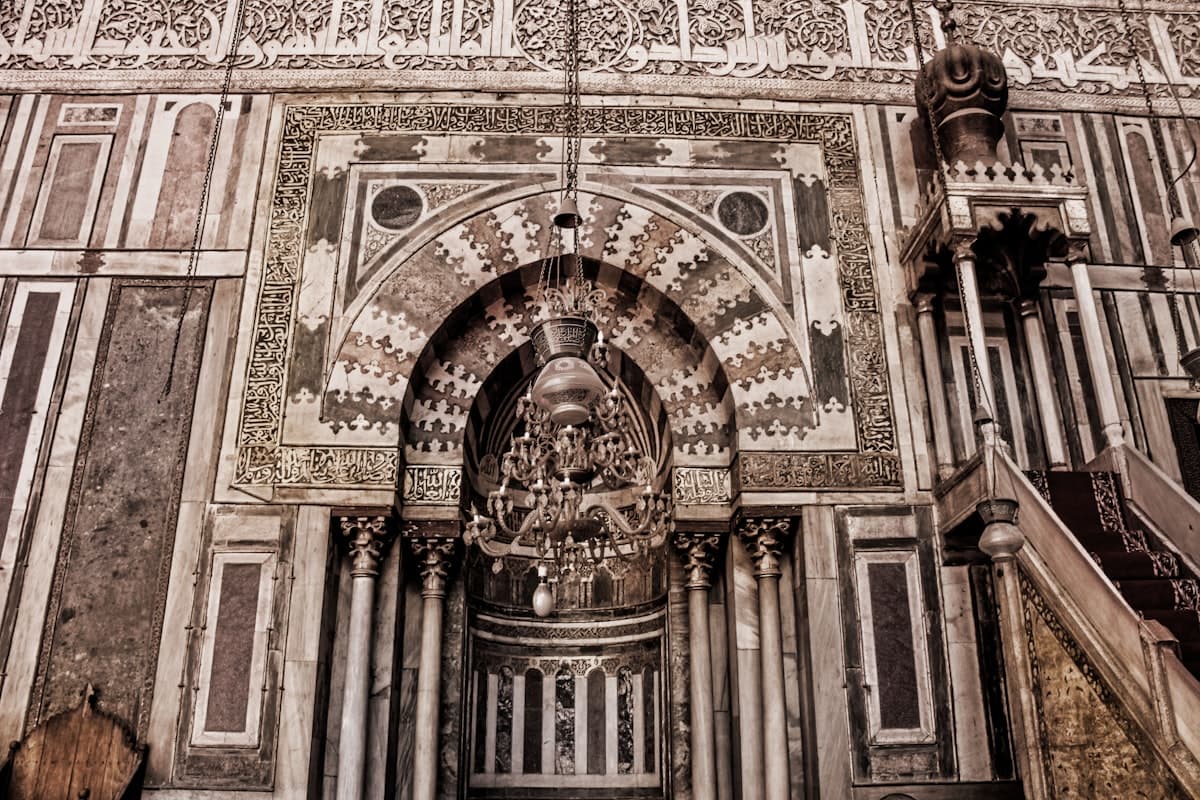
Saladin began building the Citadel in 1176 CE on a spur of the Muqattam Hills, using stone quarried from the smaller Giza pyramids, a fact that is either pragmatic or sacrilegious depending on your orientation. The structure took decades to complete and became the seat of Egyptian government for 700 years, from Saladin's Ayyubids through the Mamluks to Muhammad Ali's dynasty in the 19th century.
The Mamluks who ruled from this hill between 1250 and 1517 were, in the most literal sense, former slaves. The word "mamluk" means "owned" in Arabic. They were predominantly Circassian and Kipchak Turkic boys purchased from the slave markets of the Black Sea region, converted to Islam, trained as cavalry soldiers, and eventually granted freedom upon completing their military service. The system was self-perpetuating and, by any conventional logic, should not have produced stable governance. Instead it produced the only military force to defeat a Mongol army in the field, at the Battle of Ain Jalut in 1260, and a 267-year dynasty that built more significant architecture in Cairo than any other ruling group before or since.
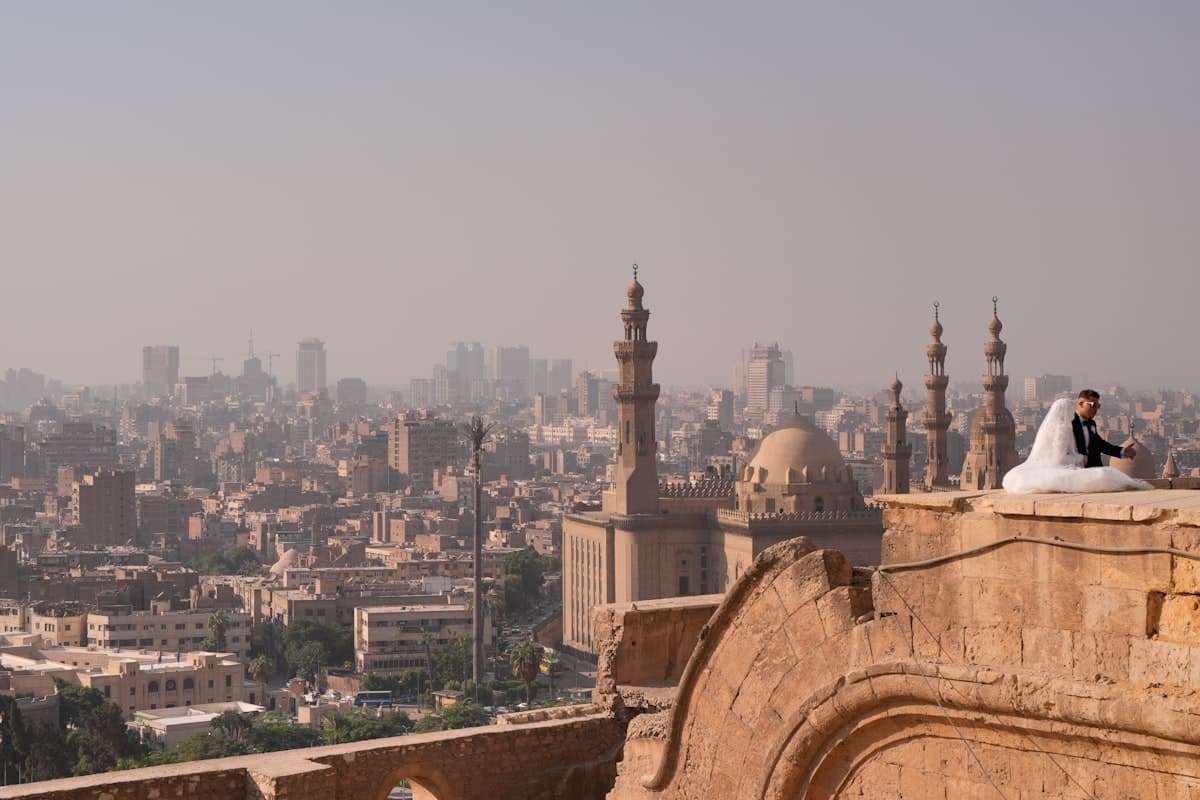
At the Citadel, skip the National Military Museum (it tells you almost nothing about the periods that matter here) and go directly to the Mosque of Muhammad Ali, then exit to the northern terrace for the view over the city. The Muhammad Ali Mosque, completed in 1848, was deliberately built to eclipse the Mamluk mosques visible from the Citadel walls. Muhammad Ali had twelve leading Mamluk emirs murdered in a corridor of the Citadel in 1811, ending their power permanently, and then built a mosque in the Ottoman style to announce the new order. The alabaster covering the lower interior walls came from Luxor. The clock in the courtyard was a gift from King Louis-Philippe of France; it has never worked.
The Mosque of Sultan Hassan, visible from the Citadel's northern gate and a ten-minute walk down the hill, is the better building. Commissioned in 1356, it was built partly from stones looted from the outer casing of the Pyramids. The four iwans of its courtyard correspond to the four Sunni legal schools, each containing a madrasa. The height of the main entrance portal, 38 meters, remained the tallest doorway in Islamic architecture for two centuries. The acoustic quality of the interior, particularly during the call to prayer when the sound wraps around the stone and folds back on itself, is the closest thing in modern Cairo to understanding what these spaces were designed to produce.
The Connections: What Sits Beneath and Alongside
The Islamic Cairo that visitors walk through was not built on empty ground. The Fatimid walls incorporated Roman towers that had formed part of the Byzantine city of Babylon. The area around the southern gate, Bab Zuweila, sits directly above a network of Pharaonic-era canals that fed into the Nile before the river migrated westward over millennia. The Coptic neighborhood of Coptic Cairo, a 15-minute walk south, contains the Church of St. Sergius built over a crypt where tradition holds the Holy Family sheltered during the Flight into Egypt. That church sits on Roman fortress foundations. A single walk of 45 minutes connects four distinct civilizations occupying the same narrow strip of ground.
Al-Azhar University, founded by the Fatimids in 970 CE, is the oldest continuously operating university on earth, predating the University of Bologna by roughly 100 years. It began as a Shia Ismaili institution under the Fatimids. When Saladin took Cairo in 1171, he converted it to Sunni teaching. It has been Sunni ever since. Students from across sub-Saharan Africa, Southeast Asia, and Central Asia have been coming to study here for over a millennium. The cafes around Al-Azhar Park today serve Malian students studying fiqh alongside Egyptian students studying engineering. The composition of that crowd is itself a document of Islamic Cairo's continued function as a node in a global network.
Common Mistakes
Doing the Citadel and Sharia al-Muizz in the same morning. They are not the same neighborhood and they require different mental modes. The Citadel is a large site that rewards slow reading of the architecture. Sharia al-Muizz is a sensory environment that rewards wandering. Compress them and you will do both badly.
Taking a group tour of Islamic Cairo. Most group tours cover four monuments in three hours and spend the remainder of the time in the Khan el-Khalili bazaar, which is the correct moment to buy papyrus if buying papyrus is your goal, but not a substitute for understanding the neighborhood. Hire a licensed private guide (EGP 400-700 for a half day) or use this article and walk alone.
The Khan el-Khalili sound and light show. It costs EGP 300, runs 45 minutes, and conveys no information you will not have after reading three paragraphs of context. The better use of that evening is to sit in a cafe on Sharia al-Muizz after 8pm when the tourist traffic has cleared, the residents come out, and the minarets are lit from below. That costs EGP 25 for tea.
Visiting on Friday morning. Al-Azhar and most working mosques have restricted access during Friday prayers. The crowds after prayer ends are significant. Thursday evening or any weekday morning is the correct time.
Ignoring the City of the Dead. The northern and southern Qarafa cemeteries, running along the eastern edge of the historic city, contain some of the finest Mamluk funerary architecture in existence, including the Mausoleum of Qaitbay, built in 1474, whose stone lacework dome is technically more accomplished than anything in the central tourist circuit. Approximately 500,000 people live among the tombs today, a settlement that began forming in the medieval period when families built homes adjacent to their ancestors' graves. Most tour itineraries omit it entirely.
Wearing the wrong shoes. The streets between Bab al-Futuh and Bab Zuweila are uneven stone, centuries-old cobbles, and occasional wooden planks over gaps. Sandals are appropriate inside mosques where you remove your footwear. Anything that cannot handle three hours of uneven stone at walking pace is a problem.
Assuming everything is open. Several significant monuments are under restoration at any given time and may be closed with no advance notice online. Build flexibility into the itinerary and treat a closed door as an instruction to find the smaller mosque on the same block that nobody is visiting.
Practical Tips
Dress conservatively throughout. This means covered shoulders and knees for all genders. Women will be offered a robe at mosque entrances if needed, but carrying a large scarf is faster and more comfortable. Remove shoes before entering any mosque; bring a small bag to carry them rather than leaving them at the door if your shoes are expensive.
Cash is essential in this neighborhood. Most monument ticket offices and all street vendors operate in EGP only. The nearest ATMs to Sharia al-Muizz are on the perimeter streets toward Al-Azhar. Bring more than you think you need.
Photography is permitted in most monuments but not during active prayer. In working mosques with congregants present, ask before photographing people. In empty architectural spaces, photograph freely.
The best street food anchor points are the foul and ta'meya carts on the side streets off Sharia al-Muizz (EGP 10-20 per sandwich) and the fuul stalls near Bab Zuweila. Avoid the sit-down restaurants immediately adjacent to the major monuments, where prices are elevated and quality is not.
For a guided approach that goes beyond the standard circuit, contact the Association for the Preservation of Islamic Cairo (ARCE in collaboration with Egyptian authorities has produced detailed walking route maps available free at some monument ticket offices) or connect with licensed local guides through the Egyptian Tourism Authority's registered guide directory.
Frequently Asked Questions
The Weekly Dispatch
More on Egypt, every Friday.
Cultural depth and places most guides never mention.
No spam. Unsubscribe anytime.