Islamic Golden Age Cairo: The Living City Most Tourists Miss
Cairo's medieval quarter contains more intact medieval architecture than any city on earth. Most visitors spend 90 minutes there. Here is what that costs you.

Quick Facts
- Best time to visit
- October to April. October and March offer cool temperatures and good light without summer heat or Ramadan schedule disruptions.
- Entrance fee
- Area is free to walk. Sultan Hassan EGP 100 (approx $2 USD). Ibn Tulun EGP 80 (approx $1.60 USD). Gayer-Anderson Museum EGP 150 (approx $3 USD). Citadel complex EGP 450 (approx $9 USD). Bab Zuweila EGP 60 (approx $1.20 USD).
- Opening hours
- Most mosques daily 9am-5pm, closed briefly for Friday noon prayer. Citadel 8am-5pm (winter), 8am-6pm (summer).
- How to get there
- Metro Line 1 to Mar Girgis then microbus EGP 5-10. Uber or taxi from Downtown Cairo EGP 40-70. Walking from Coptic Cairo via Mar Girgis is 30 minutes and worthwhile.
- Time needed
- One full day minimum, two days recommended. Three days for serious architectural or historical interest.
- Cost range
- Budget EGP 300-600 per day covering entrance fees, street food, and local transport. Mid-range EGP 1,200-2,000 per day with private guide and restaurant meals.
Quick Facts
Best time to visit: October through April. October and March are ideal: cool enough to walk for hours, light good for photography, crowds manageable before the European school holiday surge.
Entrance fees: The area itself is free to walk. Individual monuments vary. The Mosque-Madrassa of Sultan Hassan costs EGP 100 (approx $2 USD). The Mosque of Ibn Tulun is EGP 80 (approx $1.60 USD). The Gayer-Anderson Museum, attached to Ibn Tulun, costs EGP 150 (approx $3 USD) for foreigners. The Citadel complex, which anchors the southern end, costs EGP 450 (approx $9 USD) and includes the Mosque of Muhammad Ali.
Opening hours: Most mosques are open daily from 9am to 5pm, closing briefly for Friday prayer around noon. The Citadel opens at 8am and closes at 5pm (winter) or 6pm (summer).
How to get there: From Downtown Cairo, take the Metro Line 1 to Saad Zaghloul or Mar Girgis, then a microbus (EGP 5-10) toward the Citadel. A taxi or Uber from Downtown runs EGP 40-70 depending on traffic. The walk from Mar Girgis through Coptic Cairo to Islamic Cairo is itself worth doing: thirty minutes on foot, a thousand years of layered civilization.
Time needed: One full day minimum. Two days to do it properly. Three if you want to spend time inside rather than just photographing facades.
Cost range: Budget EGP 300-600/day covering entrance fees, street food, and local transport. Mid-range EGP 1,200-2,000/day if you add a licensed guide (worth it here, genuinely) and sit-down meals.
---
Why This Place Matters
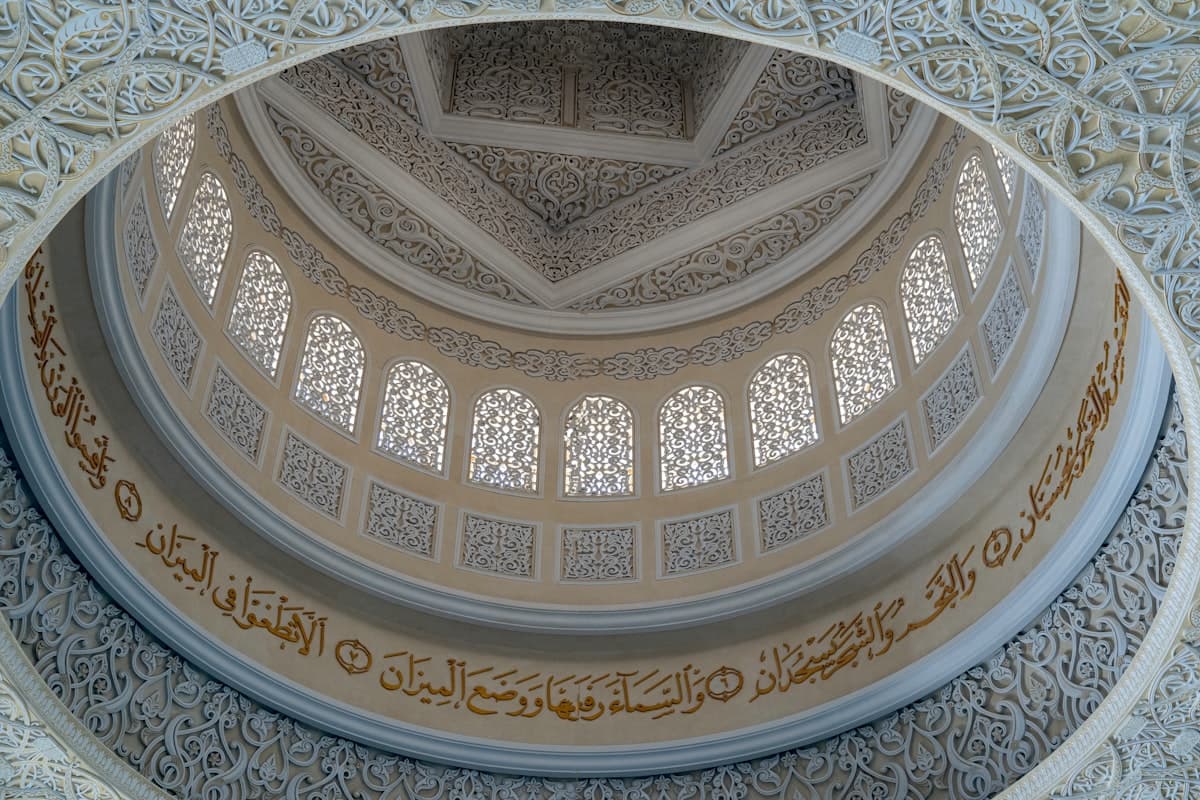
The term "Islamic Golden Age" usually conjures Baghdad, the House of Wisdom, the translation movement of the eighth and ninth centuries. Cairo is rarely the first city named. This is an error of framing.
When the Mongols sacked Baghdad in 1258 and executed the last Abbasid caliph, Cairo absorbed the shock. The Mamluk sultans who ruled Egypt invited the surviving Abbasid heir to Cairo, made him a ceremonial caliph, and positioned Cairo as the new center of the Sunni world. The city held that role for two and a half centuries. During that period, scholars, architects, physicians, and theologians from across the fractured Islamic world converged on a single square kilometer of urban space that still exists, still functions, and is walkable in an afternoon if you know what you are looking at.
The medieval core, roughly bounded by Bab Zuweila to the south and Bab al-Futuh to the north, was designated a UNESCO World Heritage Site in 1979. It contains over six hundred registered monuments. Most Western tourists see four of them, and only from the outside.
---
What the Mamluk Sultans Actually Built, and Why It Survived
The Mamluks were not Egyptian by origin. They were enslaved soldiers, mostly Circassian and Turkic, purchased as boys, trained in military compounds on an island in the Nile, converted to Islam, and eventually freed to form the military aristocracy that would rule Egypt from 1250 to 1517. The word "mamluk" means "one who is owned." Thirty-five sultans from this system ruled Egypt, and they built obsessively.
The reason so much survives is structural rather than romantic. Mamluk builders used stone, not mud brick. They built tall, which meant their minarets became neighborhood landmarks that communities organized around and therefore maintained. They attached their buildings to religious endowments called waqf, legal instruments that tied the income from surrounding property to the upkeep of the monument in perpetuity. A sultan's tomb mosque typically came bundled with a madrassa, a hospital, and a Quran school, all funded by the rent from nearby shops and caravanserais. The Ottoman conquest of 1517 ended Mamluk rule but did not dissolve these endowments. Some are still legally active today.
The Mosque-Madrassa of Sultan Hassan, completed in 1363, is the clearest demonstration of what this ambition produced. It stands 36 meters at its highest point and was the tallest building in Cairo for centuries. Its four iwans, the vaulted halls arranged around a central courtyard, represent the four schools of Sunni jurisprudence: Hanafi, Maliki, Shafi'i, and Hanbali. Students from each school lived, prayed, and studied in their designated iwan. The building was a university, a mausoleum, a congregational mosque, and a political statement, all in one structure.
Sultan Hassan himself was murdered before the mosque was completed and was never actually buried in the tomb chamber he built for himself. His body was never found.
---
The Street That Explains Everything: Al-Muizz li-Din Allah
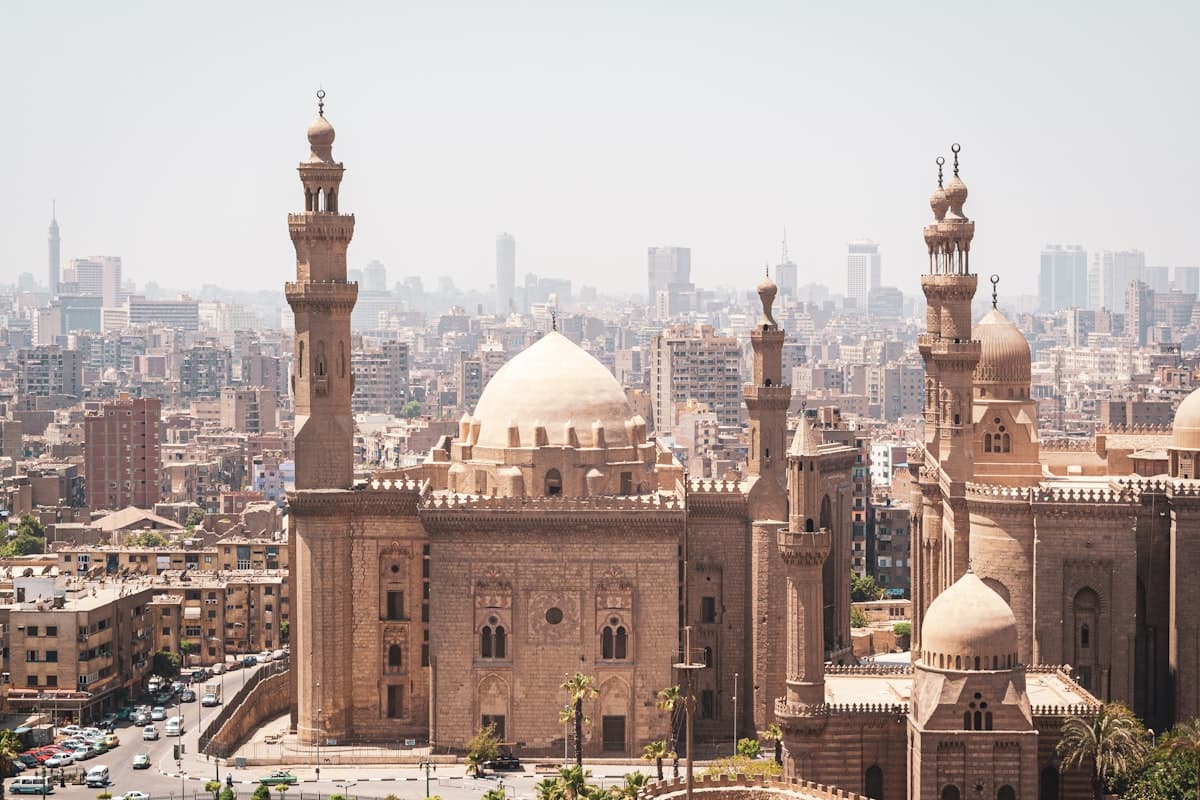
Al-Muizz Street is sometimes called an open-air museum, which undersells it and also misrepresents it. Museums are static. This street is the nervous system of a living neighborhood.
It was laid out by the Fatimid general Jawhar al-Siqilli in 969 CE when he founded Cairo, which was originally a royal enclave forbidden to ordinary Egyptians. The city the Fatimids built around it, Fustat, predated Cairo by three centuries and had been Egypt's Islamic capital since the Arab conquest of 641. The Fatimids built north of Fustat, built walls around their palace complex, and called it al-Qahira, "the victorious," for the planet Mars rising at the moment the city's foundation was laid. The name Cairo is simply the Italian mispronunciation of al-Qahira that Portuguese merchants brought to European maps.
Walking Al-Muizz from south to north, you pass through six centuries of Islamic architecture in sequence. The Mamluk monuments cluster around the center. The Fatimid city gates, Bab Zuweila in the south and Bab al-Nasr and Bab al-Futuh in the north, frame the street. The gates were built in 1087 under the Fatimid caliph al-Mustansir, and their architect was a Syrian Christian named Badr al-Jamali, who had previously served as the military governor of Acre. He brought Syrian stonemasons with him to Cairo, which is why the gates look nothing like Egyptian architecture of the same period and everything like Crusader-era Syrian military construction.
Climb Bab Zuweila. This costs EGP 60 (approx $1.20 USD) and takes ten minutes. From the top, you see the entirety of what follows in this article laid out below you. Do this first.
---
Ibn Tulun: The Mosque That Predates All of It
Before the Fatimids, before the Mamluks, there was Ibn Tulun.
The Mosque of Ahmad ibn Tulun was completed in 879 CE, making it the oldest intact mosque in Egypt and one of the oldest in the world. It was built by Ahmad ibn Tulun, the Abbasid governor who eventually declared semi-independence from Baghdad and ruled Egypt as his own domain. He was himself the son of a Turkic slave, which makes his story a precursor to the Mamluk pattern by four centuries.
The mosque covers 2.5 hectares. Its design is not Egyptian and not Arabian. It is Samarran: the spiral minaret is a direct copy of the minaret of the Great Mosque of Samarra in Iraq, where Ibn Tulun grew up. He brought the architectural memory of his childhood to Cairo and built it at scale. The legend says he designed the mosque himself to avoid using the wood of any church, synagogue, or Christian institution in its construction, insisting on baked brick instead. Whether or not the story is true, the result is a building that looks like no other mosque in Cairo.
The attached Gayer-Anderson Museum, technically two connected Ottoman-era houses from the seventeenth century, was restored by British Major Robert Grenville Gayer-Anderson, who lived there from 1935 to 1942 and filled it with antiques, Persian carpets, and objects he collected obsessively across Egypt. It was used as a filming location for the 1977 James Bond film "The Spy Who Loved Me." It is the most unexpectedly absorbing ninety minutes in Islamic Cairo and almost nobody under fifty who visits knows it exists.
---
The Connections: Nothing Here Stands Alone
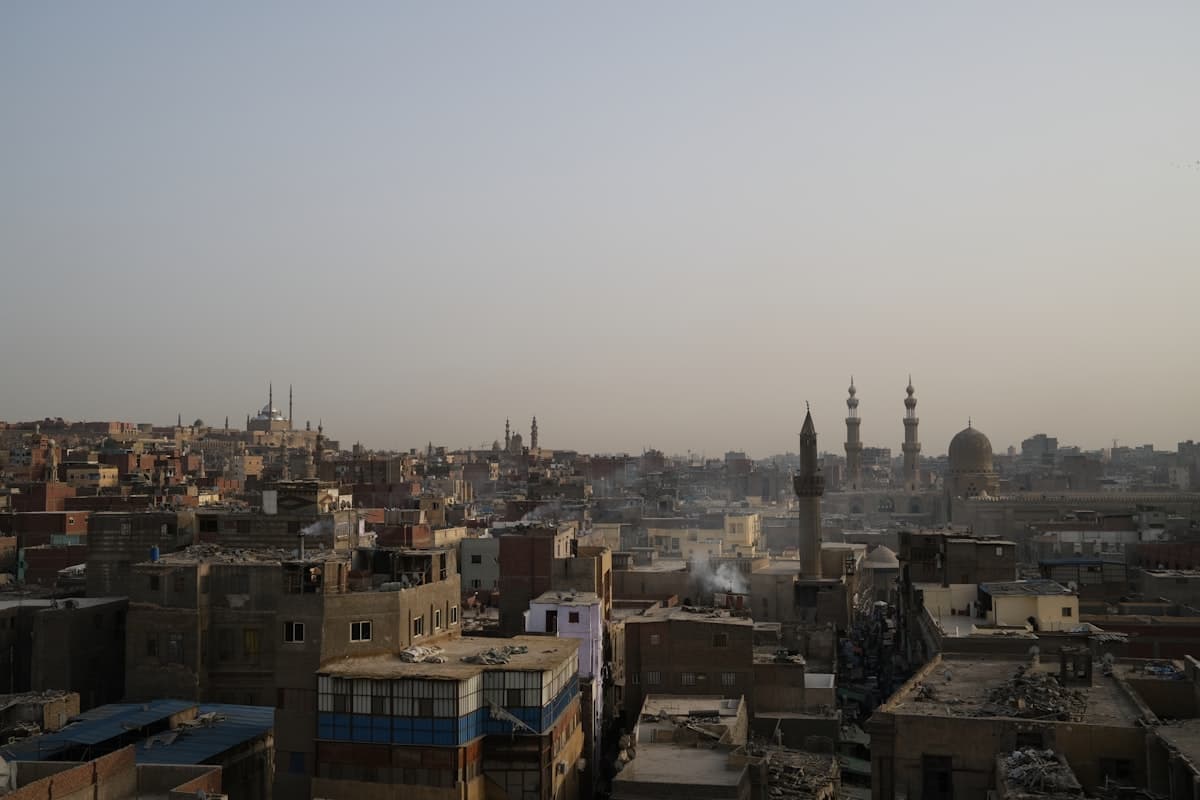
The Citadel that anchors the southern edge of Islamic Cairo was built by Saladin, starting in 1176, using stones quarried from the smaller pyramids at Giza. You can still see the pyramid casing stones repurposed in the lower courses of the Citadel walls if you look at the right sections. Saladin also dismantled the Fatimid royal palaces that had stood on Al-Muizz Street, clearing the political landscape as thoroughly as the physical one.
The Mosque of Muhammad Ali inside the Citadel is Ottoman, completed in 1848, designed by a Greek architect named Yusuf Boshna in the style of Istanbul's Sultan Ahmed Mosque. It used to be a Mamluk mosque on the same site, which Muhammad Ali demolished to erase the architectural memory of the dynasty he had massacred in 1811. He invited the surviving Mamluk beys to the Citadel under a pretext of reconciliation and killed four hundred and seventy of them in one afternoon.
The area between the Citadel and Ibn Tulun contains the Sabil-Kuttab of Qaytbay, a public water fountain and Quran school built in 1479 over the ruins of a hospital that was itself built over a Roman-era irrigation infrastructure. This layering is not metaphor. It is the literal geology of the place.
---
Common Mistakes
Spending the morning at the Egyptian Museum instead. The Egyptian Museum is five kilometers and three millennia away from Islamic Cairo. These are full-day experiences that punish combination. Pick one per day.
Taking a group tour. The standard Islamic Cairo tour covers the Citadel, the Mosque of Muhammad Ali, Sultan Hassan, and Al-Rifa'i Mosque in four hours. It skips Ibn Tulun, Al-Muizz Street, the city gates, and everything that makes the area worth a dedicated day. A licensed Egyptologist guide hired privately for EGP 600-900 for a half day will take you inside buildings, explain inscriptions, and find unlocked doors. The group bus cannot do this.
The sound and light show at the Citadel. It costs EGP 350, runs fifty minutes, and tells you nothing you will not learn from reading this article. The money is better spent on entrance fees and street food.
Visiting only the interiors. The exterior stonework on Mamluk buildings, particularly the joggled voussoirs above doorways and the intricate stone muqarnas on portals, is more technically impressive than most of what is inside. Slow down at thresholds.
Arriving after 11am in summer. The heat between noon and 4pm is genuinely debilitating for anyone not acclimatized, and the streets lose their quality of light. Start at 8am and finish by noon. Rest. Return at 4pm when the light changes and the streets come back to life.
Buying anything near the Citadel entrance. The papyrus shops and alabaster vendors within 200 meters of the Citadel gate charge three to five times the price of identical items in Khan el-Khalili, which is itself not cheap. The actual craftsmen working in the alleyways north of Al-Muizz Street sell directly and negotiate honestly.
Skipping Friday. Most guides tell you to avoid Friday because of prayer crowds. The opposite is true if you time it right. Arrive at 10am, before the Friday sermon. The mosques are being prepared, the light is extraordinary, and you will have Sultan Hassan almost to yourself. Leave by 11:30am, find a street lunch, and return at 2pm when prayers end and the neighborhood exhales.
---
Practical Tips
Dress conservatively regardless of your religion or gender. Shoulders and knees covered is the baseline. Mosques will provide robes or coverings at the door if needed, but they are often synthetic and unpleasant in heat. Bring your own light linen layer.
Wear shoes you can slip on and off quickly. You will remove them at every mosque entrance. Sandals with a back strap are ideal. Sneakers with complicated laces will slow you down and annoy everyone behind you.
The air quality in Islamic Cairo is poor. The narrow streets trap diesel exhaust from the surrounding traffic. If you are sensitive to particulate matter, a simple cloth mask is not excessive.
Carry small denomination bills. Entrance kiosks for minor monuments are cash only and rarely have change for EGP 200 notes. EGP 20 and 50 notes are the currency of this neighborhood.
Hydration: the street vendors selling sugarcane juice (asir asab) near Bab Zuweila are operating clean, visible equipment. The juice costs EGP 15-20 and is cold and real. The bottled water sold near tourist entrances costs EGP 30-40 for the same half-liter. The math is obvious.
For navigation, Google Maps works adequately on the main streets. The interior alleyways of Darb al-Ahmar, the residential neighborhood east of the Citadel, are not well mapped and the only good strategy is to get slightly lost and not be alarmed by it. The neighborhood is safe. The residents are accustomed to curious visitors and will redirect you without being asked.
Frequently Asked Questions
The Weekly Dispatch
More on Egypt, every Friday.
Cultural depth and places most guides never mention.
No spam. Unsubscribe anytime.