Khedival Cairo Belle Epoque Architecture: The Full Guide
Khedive Ismail spent 32 million gold francs building a European city on top of a medieval one in under a decade. Most visitors walk through it without realizing it exists.

Quick Facts
- Best time to visit
- October to March. The walking distances are real and the summer heat above 35C makes extended pavement time unpleasant. Winter mornings offer the best facade light and comfortable temperatures for three-hour walks.
- Entrance fee
- The streets and exterior architecture are free. Baron Empain Palace EGP 200 (approx $4 USD). Manial Palace Museum EGP 300 (approx $6 USD). Cafe Riche interior: cost of a coffee or tea, roughly EGP 60 to 80.
- Opening hours
- The district is accessible at all hours as a living neighborhood. Weekday mornings 8am to 11am are optimal for building access and manageable foot traffic. Cafes open from around 9am. The Synagogue requires advance arrangement.
- How to get there
- Metro Line 1 to Sadat Station (EGP 10, approx $0.20), one block from Tahrir Square and the heart of the district. Taxis from Zamalek EGP 60 to 80. Uber and Careem from Heliopolis or New Cairo approximately EGP 150 to 200.
- Time needed
- Minimum 3 hours for the core Talaat Harb and Qasr el-Nil circuit. Full day if combining with Adly Street, the Immobilia Building, and a sit-down lunch at one of the surviving khedival-era restaurants.
- Cost range
- Walking the district costs almost nothing beyond Metro fare. Budget EGP 400 to 700 for Metro, one or two palace entries, coffee, and a mid-range lunch. The neighborhood rewards time more than money.
Quick Facts
Best time to visit: October to March, when the air is cool enough to walk for three hours without stopping. The facades read better in low winter light than in the flat glare of July.
Entrance fees: The streets are free. The interiors that matter, such as the Baron Empain Palace (EGP 200, approx $4 USD) and the Manial Palace Museum (EGP 300, approx $6 USD), charge separately. The Egyptian stock exchange building and the old Shepheard's Hotel site cost nothing but your attention.
Opening hours: The district is a living neighborhood, accessible at all hours. Aim for 8am on a weekday, before the traffic on Talaat Harb Street becomes impassable.
Getting there: Metro Line 1 to Sadat Station (EGP 10, approx $0.20) puts you at the center of Downtown Cairo, one block from Tahrir Square. Taxis from Zamalek cost roughly EGP 60 to 80. Ride-hailing apps (Uber, Careem) are reliable and metered.
Time needed: Half a day for the core streets. A full day if you are entering buildings and sitting in the cafes that have survived.
Cost range: Walking the district costs almost nothing. Budget EGP 400 to 700 if you include palace entries, coffee at Cafe Riche, and a mid-range lunch. The neighborhood rewards slowness more than spending.
---
Why This Place Matters
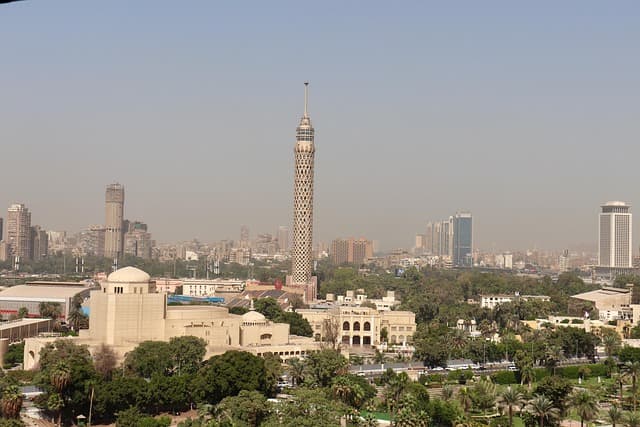
In 1867, Khedive Ismail attended the Paris Exposition Universelle and came home with an idea that was, depending on your perspective, either visionary or delusional: he would build a second Cairo, a European one, on the agricultural land west of the medieval city, and he would do it in time for the opening of the Suez Canal in 1869. He had roughly two years and a budget that ultimately contributed to Egypt's bankruptcy and his own deposition in 1879.
What he built in that compressed, spendthrift window is what Cairenes now call Khedival Cairo, the grid of Haussmann-influenced boulevards, Italian-designed apartment blocks, Second Empire facades, and Neoclassical government buildings that occupies the area between Tahrir Square and Ramses Street. The neighborhood is sometimes called Downtown Cairo, sometimes Wust el-Balad, but Khedival Cairo is the more precise term for the architectural district that Ismail commissioned as an explicit copy of Paris.
The fact that usually stops people: Ismail hired Pierre Grand, a French urban planner who had worked directly under Baron Haussmann during the redesign of Paris, to lay out the street grid. The wide diagonal boulevards that cut through Downtown Cairo, including what is now Talaat Harb Street and Qasr el-Nil Street, are direct translations of Haussmannian planning into Egyptian soil. The man who remade Paris in the 1850s sent his own student to remake Cairo in 1869.
What almost nobody knows when they arrive: the khedival Cairo belle epoque architecture guide you will find in most tourist pamphlets focuses on the buildings. The more interesting story is what was demolished to build them. Ismail's new city was not built on empty farmland alone. Parts of the old Fatimid city, including markets, mosques, and entire residential quarters, were cleared to make way for the grid. The medieval and the modern have been in tension in Cairo ever since.
---
The Streets You Actually Need
Start at Midan Talaat Harb. The square is named after the Egyptian nationalist economist who founded Bank Misr in 1920, and his statue stands at its center, which is already a compressed story about the khedival period and its aftermath: a square built to celebrate European Cairo now carries the name of the man who argued that Egyptians should own their own economy.
The buildings surrounding the square are a catalogue of early twentieth-century styles layered over Ismail's original 1860s framework. Look at the upper floors, not the ground-level shops, which have been refaced with no regard for the original proportions. The cornices, balconies, wrought-iron railings, and carved stone cartouches are all still there, four and five storeys up, largely untouched because nobody has found a reason to remove them yet.
Walk north on Talaat Harb Street toward Ramses. On your left, roughly 200 meters from the square, you will pass the former headquarters of the Egyptian Gazette, founded in 1880 and still publishing, making it the oldest continuously published English-language newspaper in Africa. The building itself has been modified, but the institutional weight of the address is real.
Turn onto Adly Street to find the Sha'ar Hashamayim Synagogue, completed in 1907 and designed by the same architectural firm, Faccioli and Co., responsible for several of the khedival era's most important buildings. The synagogue seats 700 and was built for a Jewish community that numbered around 80,000 in Egypt at its peak in the 1940s. Fewer than 10 Jews remain in Cairo today. The Egyptian government restored the building in 2020, which is either a gesture of historical preservation or an awkward acknowledgment that the community it was built for no longer exists here. It is probably both.
---
The Buildings Most Visitors Walk Past
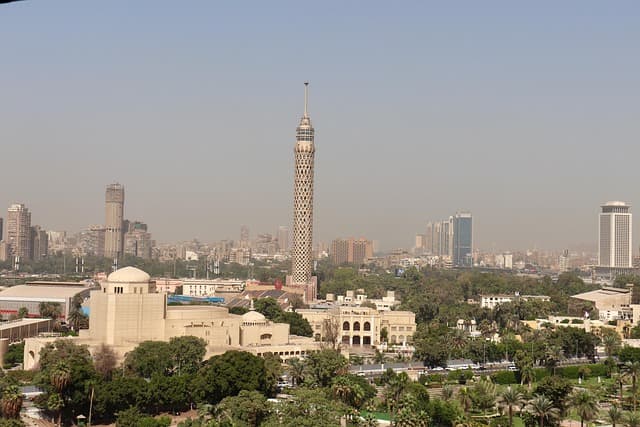
The Immobilia Building on Qasr el-Nil Street, completed in 1939, is the most important piece of Art Deco architecture in Cairo and receives almost no attention in standard itineraries. Its curved corner tower, geometric reliefs, and horizontal banding are as accomplished as anything built in Miami or Rotterdam in the same decade. Designed by the Italian firm Levi and Torok, it was the tallest building in Cairo at the time of its completion and served as headquarters for an Egyptian real-estate company that managed much of the khedival-era property stock. You can walk into the lobby, which retains its original terrazzo floors and brass fittings, during business hours.
Cafe Riche on Talaat Harb Street has been open since 1908, which makes it one of the oldest continuously operating cafes in Cairo. It was, at various points in the twentieth century, a meeting place for Egyptian nationalists, a preferred haunt of Naguib Mahfouz, and, reportedly, a location used by Egyptian intelligence during the 1952 revolution. The coffee is average. The ceiling is original. Go once, in the morning, before the lunch crowd, and order tea.
The Cosmopolitan Hotel building on Ibn Taalab Street was designed in 1929 by the architect who also designed the Egyptian Stock Exchange, which tells you something about the scale of European commercial ambition in interwar Cairo. The khedival Cairo belle epoque architecture guide you hold in your hand, or read on your phone, will not tell you that the hotel's rooftop bar was the location where Evelyn Waugh reportedly drank himself into a diplomatic incident in 1935. Whether that story is fully documented or partly legend is a matter of some dispute among Cairo historians, but the bar is still there, and the view of Downtown's roofline at dusk is not.
---
The Connections
Ismail did not build on empty land in any sense. The agricultural land west of the medieval city that he converted into boulevards and apartments sat atop a Fatimid-era drainage network, which itself traced the course of a Ptolemaic canal called the Canal of Alexandria, which earlier followed the line of a Pharaonic waterway that carried Nile floodwaters into the desert. The straight lines of khedival Cairo are, in a geological sense, extremely old.
The connection most visitors do not make: the iron used in the khedival period's ornamental balconies and railings was largely imported from Belgian foundries. The same foundries supplied ironwork to Haussmann's Paris. The wrought-iron balcony on a Downtown Cairo apartment building and the balcony on a Second Empire building in the Marais district of Paris may have been cast in the same Belgian workshop in the 1870s. Cairo and Paris share a supply chain as well as an aesthetic.
The khedival project also intersects with Coptic Cairo in an underappreciated way. Several of the landowners displaced by Ismail's grid were Coptic Christian families who had held urban property in the western districts since the Ottoman period. Some of that displaced capital was reinvested into the Coptic quarter around Old Cairo, which is why the late nineteenth century saw a burst of Coptic church construction in the Maadi and Old Cairo areas, funded in part by families whose downtown property had been bought out by the khedival development authority.
---
Common Mistakes
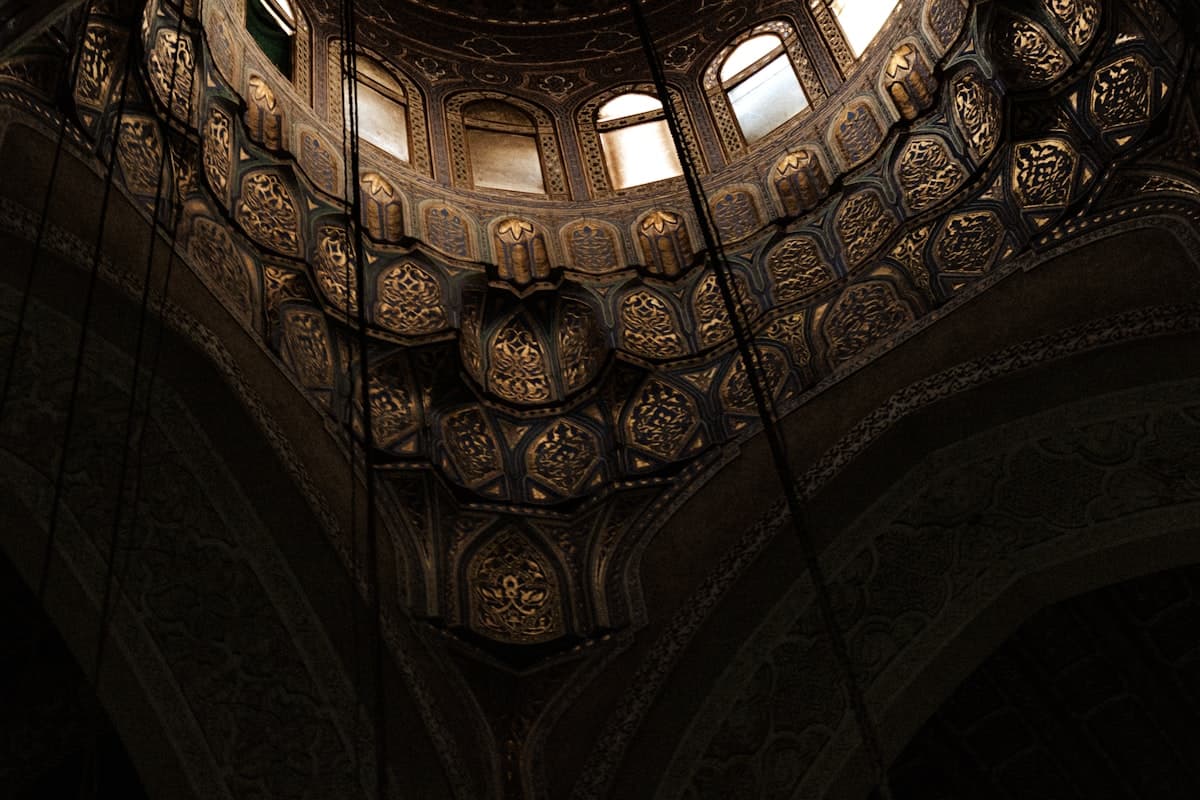
Visiting only the exteriors and skipping the courtyards. Many of the khedival-era apartment blocks have internal courtyards with original staircases, tiled floors, and light wells that are more interesting than the street-facing facades. The doors are often unlocked during the day. Walk in. In Cairo, curiosity is rarely unwelcome.
Taking a guided tour instead of walking with a good map. The standard guided tour of Downtown Cairo covers five buildings in ninety minutes and spends most of that time on the street. The neighborhood rewards three hours of slow walking with a specific building list. The Society for the Preservation of Architectural Resources in Egypt (SPARE) publishes a walking map that is more useful than any tour group.
The evening sound and light experience at Midan Opera. Several tour operators sell a package that combines a felucca ride with a guided evening walk through Downtown, marketed as a belle epoque experience. It costs EGP 850 to 1,200 per person and ends at a rooftop bar that could not be less khedival if it tried. Walk the streets yourself at sunset for free and spend the money on dinner.
Assuming the buildings are empty. Khedival Cairo is not a museum district. People live in these buildings, run offices in them, operate pharmacies and law firms and print shops in their ground floors. Photograph the architecture without photographing residents without permission. This is both ethical and practical: Cairenes are generally patient with tourists until they are not.
Going on a Friday morning. The streets are quiet, which sounds good, but most of the building lobbies, cafes, and small shops that animate the district are closed or half-staffed. A Tuesday or Wednesday morning gives you the buildings and the life inside them.
Overlooking the Jewish and Greek quarters. The area around Adly Street and Emad el-Din Street was the center of Cairo's Greek, Jewish, and Armenian communities during the khedival and interwar periods. The buildings here are as interesting as anything on Talaat Harb, and the foot traffic is thin enough that you can actually look at them.
Spending money on the Baedeker-style illustrated heritage books sold outside the Egyptian Museum. They are printed on low-quality paper, their architectural attributions are sometimes wrong, and the SPARE walking guide costs less and is more accurate.
---
Practical Tips
Wear shoes you can walk in for three hours on uneven pavements. The Downtown sidewalks are genuinely rough in places, with raised tiles, broken curbs, and the occasional open utility access point.
The best light for photographing the facades is between 8am and 10am in winter, when the sun is low and the street shadows are still long. By midday the light is flat and the traffic is dense enough to make wide-angle street shots nearly impossible.
Bring cash. The cafes and small restaurants in the district are almost uniformly cash-only, and the ATMs on Talaat Harb Street are functional but sometimes have queues.
If you want to see the interiors of private buildings, the most reliable approach is to ask the bawab, the building doorman, directly. A tip of EGP 20 to 50 will usually get you access to the staircase and courtyard. This is not a guarantee. It is a Cairene social transaction.
The Egyptian Center for Housing Rights has published a detailed photographic archive of khedival-era buildings, available online and free, that is the single most useful reference document for anyone seriously interested in the district's architecture. Download it before you go.
Frequently Asked Questions
The Weekly Dispatch
More on Egypt, every Friday.
Cultural depth and places most guides never mention.
No spam. Unsubscribe anytime.