Mamluk Egypt: A History and Cairo Guide Worth Your Time
The Mamluks ruled Egypt for 267 years and built more of Cairo than any other dynasty. Most visitors walk past their greatest monuments without stopping.

Quick Facts
- Best time to visit
- October to March for comfortable walking temperatures. Ramadan evenings add atmosphere but require flexibility with site hours.
- Entrance fee
- Sultan Hassan Mosque-Madrasa: EGP 100 (approx $2 USD). Al-Rifai Mosque: EGP 80 (approx $1.50 USD). Qalawun Complex madrasa and mausoleum: free. Citadel complex: EGP 450 (approx $9 USD).
- Opening hours
- Most Mamluk mosques 9am to 5pm daily, 8am to 6pm in summer. Closed to visitors during Friday midday prayer (approx 11:30am to 1:30pm).
- How to get there
- Metro Line 2 to Sayyida Zeinab (EGP 8) for Sultan Hassan. Metro Line 1 to Ataba (EGP 8) for Al-Muizz Street. Taxi from Downtown Cairo EGP 50 to 80.
- Time needed
- One full day for the core Mamluk circuit. Two days if combining with Ibn Tulun Mosque and the Citadel.
- Cost range
- Budget EGP 400 to 700 per day including entry fees and street food. Mid-range EGP 1,200 to 2,000 including a licensed guide and a sit-down lunch.
Quick Facts
Best time to visit: October through March. The Islamic monuments of medieval Cairo are best experienced in cool, low-humidity months when you can walk between sites without collapsing. Ramadan adds a layer of atmosphere that rewards the patient traveler.
Entrance fees: The Mamluk complexes in Islamic Cairo vary. The Sultan Hassan Mosque-Madrasa costs EGP 100 (approx $2 USD). The Al-Rifai Mosque, directly opposite, charges EGP 80 (approx $1.50 USD). The Qalawun Complex on Al-Muizz Street is free to enter the madrasa and mausoleum, though the maristan (hospital) section requires coordination. The Mosque of Ibn Tulun, often grouped with Mamluk sites, is Abbasid but essential context: EGP 100.
Opening hours: Most mosques and complexes open 9am to 5pm daily, closing briefly for Friday midday prayer. Al-Rifai and Sultan Hassan open 8am to 5pm in winter, 8am to 6pm in summer.
Getting there: Take the Cairo Metro Line 2 to Sayyida Zeinab station (EGP 8) and walk fifteen minutes north to Sultan Hassan. For Al-Muizz Street, Metro Line 1 to Ataba (EGP 8) then a ten-minute walk east. Taxis from Downtown Cairo should cost EGP 50 to 80 depending on your negotiating mood. Avoid the tourist minibuses: they give you forty minutes at each site, which is nowhere near enough.
Time needed: One focused day to cover the Qalawun Complex, the Mosque of Al-Nasir Muhammad, Sultan Hassan, and Al-Rifai. Two days if you want to understand what you are looking at.
Cost range: Budget EGP 400 to 700 per day including entry fees and street food. Mid-range EGP 1,200 to 2,000 including a guide and lunch at Naguib Mahfouz Cafe in Khan el-Khalili.
---
Why Mamluk Egypt Matters
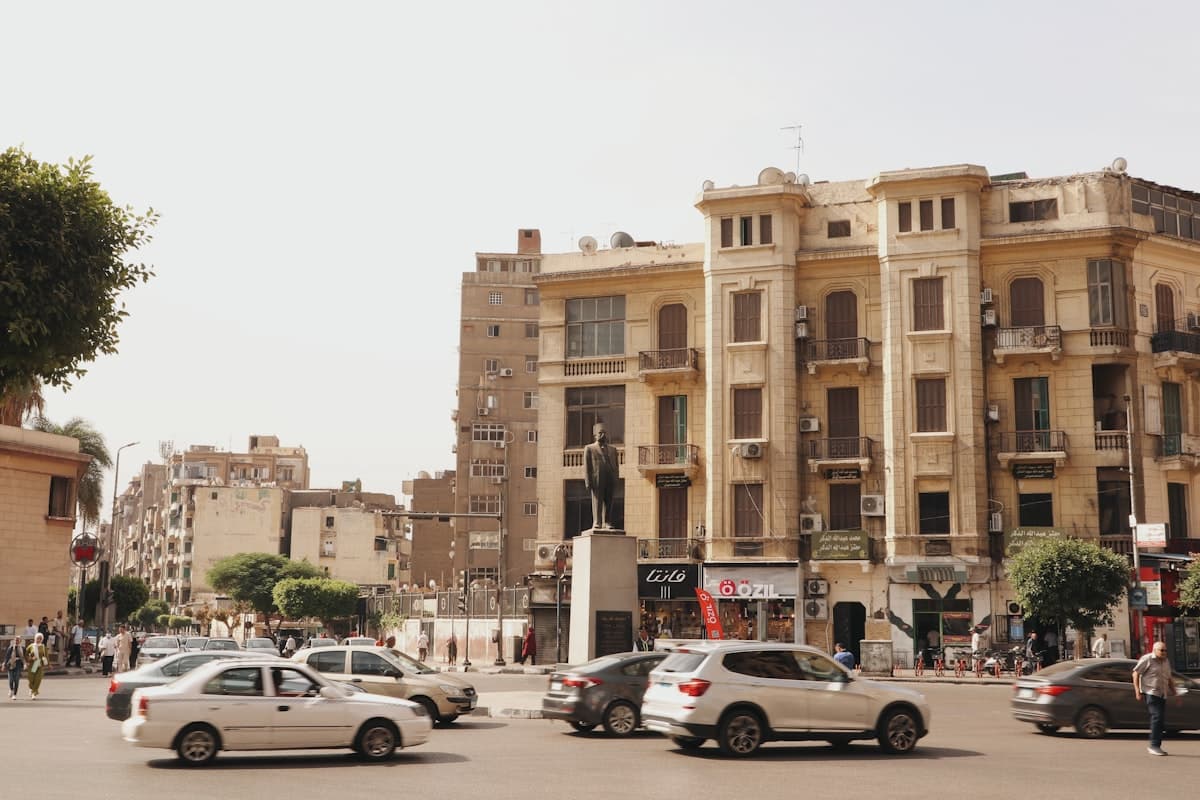
The word Mamluk translates as "owned" in Arabic, which tells you something important before you look at a single building. The men who ruled Egypt from 1250 to 1517 were purchased as boys, mostly from the Caucasus and the Eurasian steppe, trained as soldiers under an existing Mamluk sultan, and then, not infrequently, killed that sultan and took his throne. It was an extraordinary system: a ruling class that could not inherit power through blood, because their own children were legally excluded from the sultanate. Every sultan had to build his own legitimacy from scratch.
This is why Cairo looks the way it does. When a Mamluk sultan built a mosque-madrasa-mausoleum complex, he was not expressing piety alone. He was writing his name permanently into the city. The building was his political resume and his insurance policy. A sultan who built well, who endowed a Quran school and a hospital and paid for scholars, had a better chance of being remembered favorably after his inevitable assassination.
Of the forty-seven Mamluk sultans who ruled Egypt, very few died peacefully. Understanding this explains the almost frantic quality of Mamluk architecture: the intricate stone inlay, the carved stone stalactites in doorways called muqarnas, the sheer scale of complexes built in the middle of already-dense cities. These men were building against time.
The Mamluk period also produced the Egypt that repelled the Mongols. In 1260, at the Battle of Ain Jalut in what is now northern Israel, the Mamluk sultan Qutuz and his commander Baybars defeated the Mongol army of Hulagu Khan, ending the westward expansion of an empire that had already sacked Baghdad and destroyed the Abbasid caliphate. It was the first significant Mongol military defeat in history. Egypt under the Mamluks became the center of the Islamic world by default: the place where the caliphs fled, where the scholars came, where the trade routes reorganized after the Mongols shattered everything east of Cairo.
---
What You Will Actually See: The Qalawun Complex and Al-Muizz Street
Al-Muizz Li-Din Allah Al-Fatimi Street is the spine of medieval Cairo, named for the Fatimid caliph who founded the city in 969 CE. By the Mamluk period, it was already three centuries old and fully built up. The Mamluks did not clear space: they inserted themselves into an existing urban fabric, which is why their buildings feel so compressed and vertical, rising in narrow plots between earlier structures.
The Qalawun Complex, built between 1284 and 1285 by Sultan Al-Mansur Qalawun, contains three separate institutions in a single facade: a mausoleum for Qalawun himself, a madrasa for legal education, and a maristan, meaning a hospital. The maristan treated both Muslim and non-Muslim patients, housed the mentally ill in separate wards from the physically sick, and reportedly had separate sections for men and women. At its peak it treated four thousand patients per day. This was not charity in a modern sense: Qalawun funded it from the revenues of confiscated Crusader properties in the coastal cities his armies had just retaken.
Walk through the mausoleum on a weekday morning before tour groups arrive and stand under the wooden dome. The stucco screens filtering light from high windows use geometric patterns derived from Roman opus sectile work, which the Mamluk craftsmen encountered in Byzantine churches they converted or inherited. The design is completely Islamic in organization but carries Roman geometry inside it, which is the architectural equivalent of Cairo itself: layer after layer, each one using the materials of what came before.
The facade of the Qalawun Complex is 67 meters long, which made it the longest single facade in medieval Cairo. Qalawun modeled it deliberately on the facade of the Crusader Church of the Holy Sepulchre in Jerusalem, which he had visited after recapturing the city. He wanted to signal that the center of gravity had shifted permanently.
---
The Sultan Hassan Mosque-Madrasa: What Most People Miss
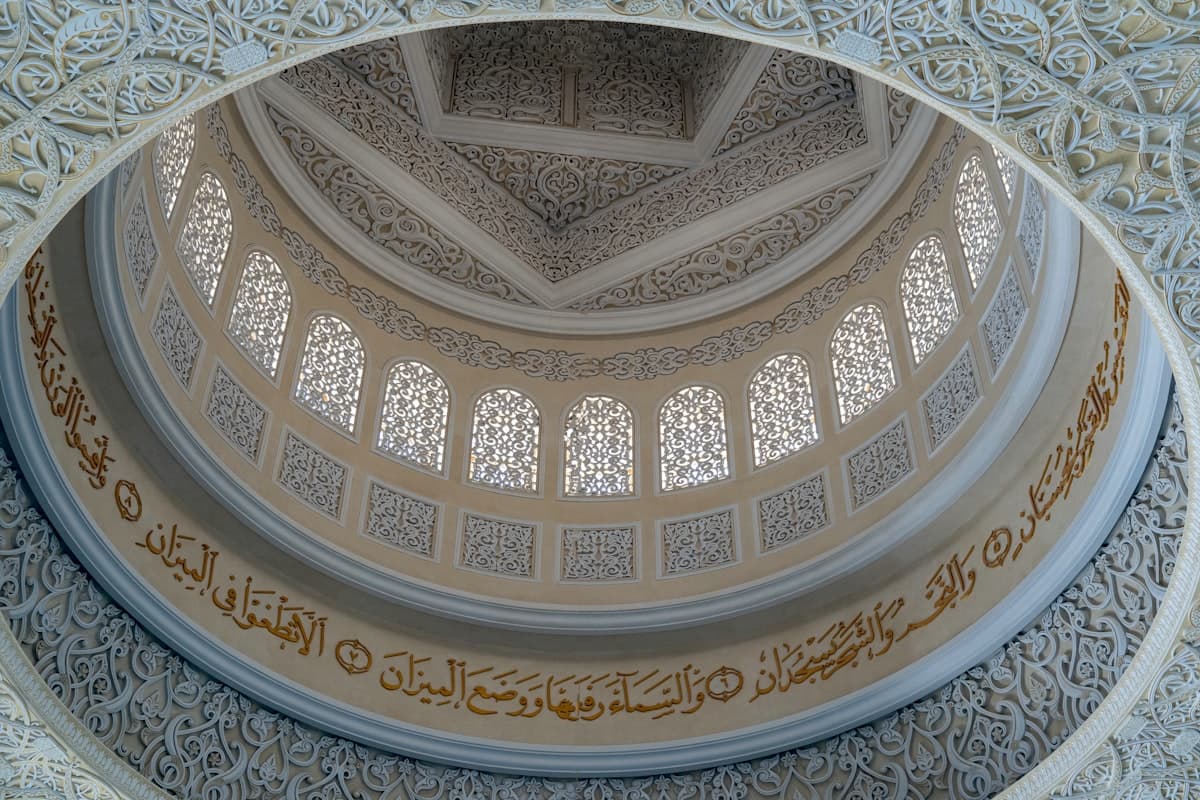
You can see the Sultan Hassan Mosque-Madrasa from the Citadel above it, which is helpful because it lets you appreciate the scale before you are inside it. Built between 1356 and 1363, it covers 7,900 square meters and its main portal is 38 meters high, the tallest doorway in the medieval Islamic world. The stone was quarried partly from the casing stones of the Giza pyramids, which were being dismantled for construction material throughout the medieval period. The original white limestone you see on the upper courses of the Pyramids today is what survived because it was too high to reach easily. The Mamluks took the rest.
Sultan Hassan himself never saw the mosque completed. He was assassinated in 1361, two years before it was finished, and his body was never recovered, which means the enormous mausoleum he built for himself stands empty of the man it was built to contain. His successors refused to allow his burial there as a final political insult.
The interior is organized around a cruciform courtyard with one iwan, meaning a vaulted hall open on one side, for each of the four Sunni schools of Islamic law. Students of the Hanafi, Maliki, Shafi'i, and Hanbali traditions each had their own iwan, their own cells above it, and their own entrance. It was a theological university and a city block simultaneously. The chains hanging in the entrance portal originally supported oil lamps. There were, according to contemporary accounts, twelve thousand students enrolled at its peak.
Most visitors photograph the main iwan and leave. Walk instead to the qibla wall and look at the marble inlay around the mihrab. The craftsmen who carved it used a technique called cosmatesque work, the same geometric marble inlaying used in Italian medieval churches, because the trade routes between Cairo and Venice in the fourteenth century meant that Egyptian and Italian craftsmen were looking at each other's work and stealing from it constantly.
---
The Connections: What Mamluk Cairo Links To
The Al-Rifai Mosque, directly across the square from Sultan Hassan, looks Mamluk but is not. It was built between 1869 and 1912 by order of the Khedive Ismail's mother, specifically to be buried in, and its architects copied Mamluk decorative vocabulary so closely that most visitors assume they are looking at medieval buildings on both sides of the square. Al-Rifai contains the tomb of King Farouk, Egypt's last monarch, and also the tomb of Shah Mohammed Reza Pahlavi of Iran, who died in exile in Cairo in 1980. Anwar Sadat granted him asylum. The juxtaposition of a faux-Mamluk building containing a deposed Egyptian king and a deposed Iranian shah, sitting opposite a genuine fourteenth-century monument, is a concentrated example of how Egypt layers its histories without always announcing what it is doing.
The Mamluk sultans built the Citadel up from an Ayyubid fortification that Saladin began in 1176. The Ayyubids built on a rocky spur that Fatimid Cairo had left undeveloped. The Fatimids built their city on the ruins of earlier Islamic capitals, Fustat and Al-Askar and Al-Qata'i, which sat on top of Roman Babylon, which sat on top of the old Pharaonic road to Heliopolis. When you stand in the Al-Nasir Muhammad Mosque inside the Citadel, built by the longest-reigning Mamluk sultan between 1318 and 1335, you are standing on approximately three thousand years of continuous urban occupation.
The Mamluks were defeated by the Ottomans in 1517 at the Battle of Ridaniyya, north of Cairo. The Ottoman sultan Selim I had Mamluk Sultan Tuman Bay hanged at the Zuwayla Gate on Al-Muizz Street, the same gate the Mamluk sultans had used for ceremonial processions for two and a half centuries. It was a deliberate choice of location.
---
Common Mistakes
Visiting on Friday afternoon. Friday midday prayer closes most mosques to visitors between roughly 11:30am and 1:30pm. Friday is also when Cairo's own residents visit these sites. Go Thursday morning instead.
Hiring a guide at the gate. The unofficial guides who approach you at Sultan Hassan or along Al-Muizz Street are often knowledgeable, but the good ones are booked in advance through reputable agencies or through recommendations. The ones who approach you are working on commission from shops in Khan el-Khalili. Your historical education will be interrupted by detours to carpet merchants.
Skipping the Qalawun Complex for Sultan Hassan. Sultan Hassan is larger and more dramatic, but Qalawun's mausoleum is more intimate and its hospital history is genuinely remarkable. Most group tours skip it entirely. This is a mistake.
The sound and light show at the Citadel costs EGP 300 and lasts one hour. It tells you nothing you would not learn in twenty minutes of reading before your visit. Skip it entirely and use that evening to walk Al-Muizz Street after dark, when the medieval facades are lit and the foot traffic drops.
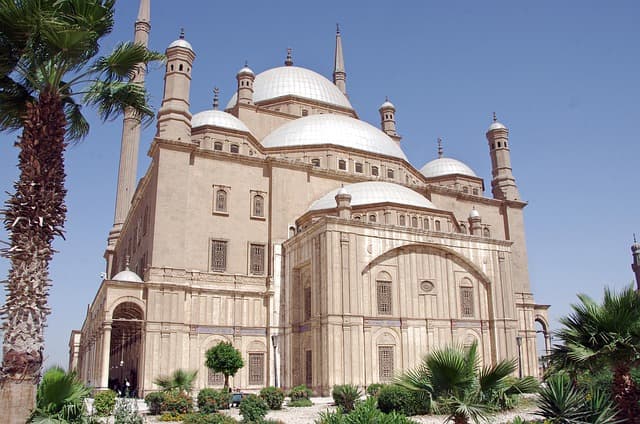
Treating the Citadel as the main event. The Citadel is useful for orientation and the Mohammed Ali Mosque has an extraordinary interior, but the Mamluk period is better understood on street level in the old city than from the hilltop fortification. Spend two hours at the Citadel and the rest of your day below it.
Not dressing for the sites. Men in shorts will be offered robes at the entrance, which is inconvenient and slightly humiliating. Women covering only with a scarf borrowed at the door are cold in winter and uncomfortable in summer. Bring your own covering. It is not optional and it is not negotiable.
Confusing medieval Islamic Cairo with Khan el-Khalili. The bazaar is adjacent to the historical monuments but is primarily a tourist retail district. It has been a market since the Mamluk period, which is genuinely interesting, but the experience of shopping for papyrus and alabaster is not the same as understanding Mamluk Cairo. Do not let an afternoon in the bazaar substitute for the actual monuments.
---
Practical Tips
Wear shoes you can remove quickly and repeatedly. Most Mamluk mosques require you to remove shoes at the entrance, and you will be doing this six or seven times in a day of serious walking.
Bring cash in small denominations. Many sites still do not accept cards reliably, and the men who watch your shoes at mosque entrances expect a tip of EGP 5 to 10.
The best single morning in Mamluk Cairo goes like this: arrive at the Qalawun Complex by 9am, spend forty-five minutes inside. Walk south on Al-Muizz to the Ghuri Complex, another fifteen to twenty minutes. Continue to Sultan Hassan, arriving by 11am. Cross to Al-Rifai immediately after. Eat koshari or ful from any of the street stalls near the Sultan Hassan square, which will cost you under EGP 50 and is better than anything in Khan el-Khalili's tourist restaurants.
Photography inside the mosques is generally permitted but avoid photographing worshippers. The light inside Sultan Hassan's main iwan is best between 10am and noon when it comes directly through the upper windows. The mausoleum of Qalawun is darker and needs a phone with a decent camera in low light.
If you have a second day, extend north along Al-Muizz to the Mosque of Al-Hakim, Fatimid rather than Mamluk but essential context, and then east to the Mosque of Ibn Tulun in Sayyida Zeinab, the oldest intact mosque in Cairo at over eleven hundred years old. The Mamluk Cairo you have been looking at was built in the shadow of Ibn Tulun's enormous courtyard, and understanding the scale and austerity of that earlier building makes the Mamluk love of ornament make immediate sense.
Frequently Asked Questions
The Weekly Dispatch
More on Egypt, every Friday.
Cultural depth and places most guides never mention.
No spam. Unsubscribe anytime.