Mamluk Egypt History: Cairo's Forgotten Empire of Stone
The Mamluks were slaves who became sultans and built more of Cairo than anyone else. Most tourists walk past their finest work to reach the pyramids.
Quick Facts
- Best time to visit
- October to March. Cooler temperatures make walking the stone-floored courtyards and climbing the Citadel far more manageable. April and September are acceptable. July and August inside Mamluk stone buildings without air conditioning is an endurance exercise.
- Entrance fee
- Sultan Hassan and Al-Rifa'i: EGP 250 together (approx $5 USD). Citadel complex: EGP 450 (approx $9 USD). Qalawun complex: EGP 100 (approx $2 USD). Al-Muayyad and Bab Zuweila towers: EGP 100 (approx $2 USD). Cairo Pass: EGP 1,100 (approx $22 USD), covers most sites.
- Opening hours
- Most sites daily 9am to 5pm. Al-Muayyad Mosque closes at 4pm. Hours shift around Friday noon prayer (approx 12pm to 1:30pm), during which non-Muslim visitors wait outside.
- How to get there
- Taxi from downtown Cairo to Sultan Hassan or Citadel: EGP 50 to 80. Metro Line 1 to Mar Girgis (EGP 10), then taxi or 20-minute walk north. Microbus from Tahrir to Ataba: EGP 5, then 15-minute walk to Al-Muizz Street.
- Time needed
- Half day minimum for Citadel alone. Full day for Al-Muizz walking route with monument interiors. Two days recommended for serious coverage of Mamluk Cairo history sites.
- Cost range
- Budget EGP 400 to 700 per day including transport and entry fees. Mid-range EGP 1,200 to 2,000 with licensed guide and lunch.
Quick Facts
Best time to visit: October through March. Summer heat inside stone courtyards is not romantic.
Entrance fees: Individual Mamluk monuments range from EGP 100 to EGP 450 (approx $2 to $9 USD). The Sultan Hassan and Al-Rifa'i complex tickets are sold together at the gate for EGP 250 (approx $5 USD). The Cairo Pass at EGP 1,100 (approx $22 USD) covers most Islamic monuments and is worth it if you plan three or more days in Old Cairo.
Opening hours: Most mosques and mausoleums open daily 9am to 5pm, though hours shift with prayer times. Al-Muayyad Mosque, accessed through the Bab Zuweila gate towers, closes by 4pm.
Getting there: A taxi from downtown Cairo to the Citadel runs EGP 50 to 80. The metro to Mar Girgis station (Line 1, EGP 10) puts you near the southern wall of Islamic Cairo; from there, walking north takes you through the densest concentration of Mamluk architecture in the world. A CTA microbus from Tahrir heading to Ataba costs EGP 5 and drops you near Khan el-Khalili, the traditional starting point for walking the historic district.
Time needed: Half a day for the Citadel alone. A full day minimum if you walk the spine of Islamic Cairo from Bab Zuweila to the Fatimid gates at Bab al-Futuh. Two days if you want to do this properly.
Cost range: Budget EGP 400 to 700 per day including transport and entry fees. Mid-range EGP 1,200 to 2,000 if you add a guide and lunch in the district.
---
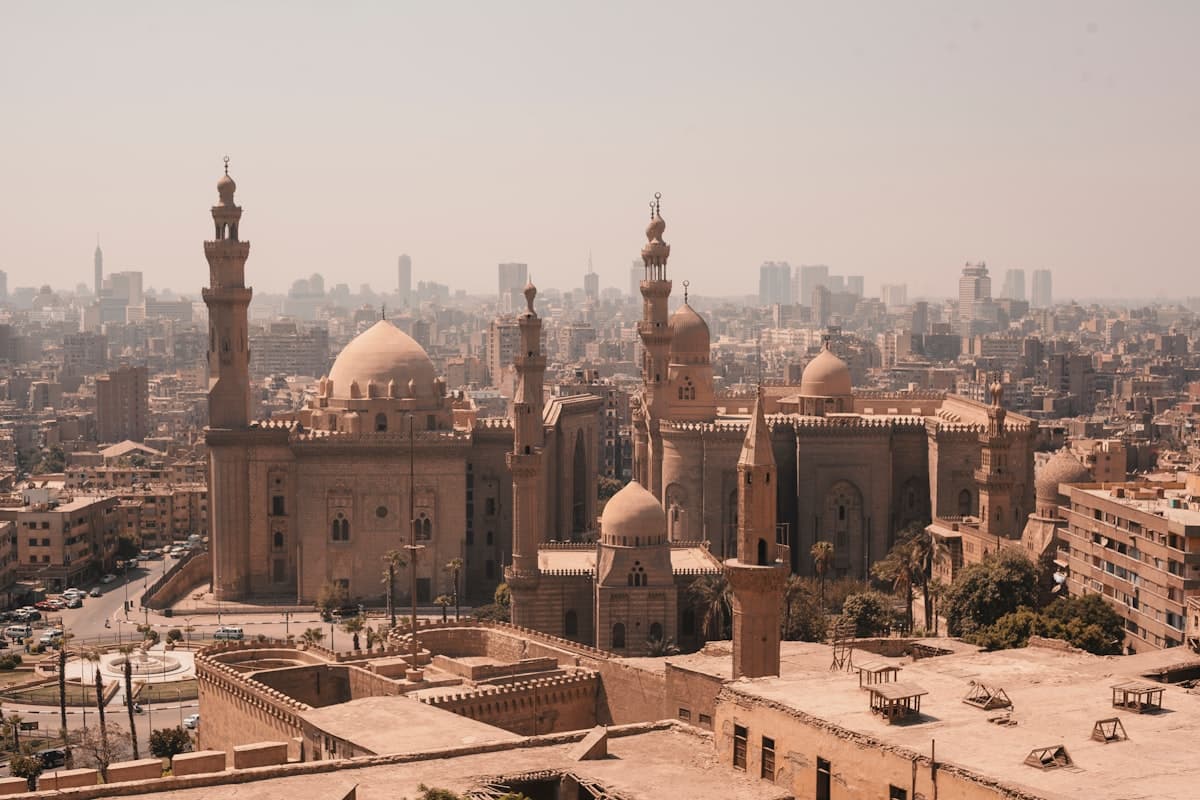
The man who commissioned the largest medieval mosque in the world was executed before the roof was finished. Sultan Hassan ibn Muhammad ibn Qalawun broke ground on his mosque-madrasa complex in 1356, and by 1361 he was dead, almost certainly murdered on the orders of a Mamluk amir who feared what an ambitious sultan with a monument that large might do next. The minaret Hassan built is still the tallest in Cairo. His tomb sits inside the building, but his body was never placed in it. Nobody knows where he is buried.
This is Mamluk Egypt: colossal ambition, violent interruption, and stone that outlasted everyone.
Why This Place Matters
The word Mamluk translates roughly as "one who is owned." Between 1250 and 1517, Egypt was ruled by a succession of men who had been purchased as children in the slave markets of the Black Sea coast, Central Asia, and the Caucasus, trained as soldiers in Cairo, converted to Islam, and then, in a political system that was entirely unique to medieval Islamic civilization, elevated to command and eventually to the sultanate itself. Forty-seven sultans in 267 years, most of them killed by the men who replaced them.
What they left behind is not a footnote to Egyptian history. The Mamluks built or renovated over 600 structures in Cairo. They introduced the striped stonework technique called ablaq, which you now see on every grand Islamic facade in the city. They built the first purpose-designed hospital in Africa at the Qalawun complex in 1284, which functioned as a working medical institution for nearly 700 years. They defeated the Mongols at the Battle of Ain Jalut in 1260, a victory that many historians argue saved Islamic civilization from the fate that had already erased Baghdad.
And then the Ottomans arrived in 1517, hung the last Mamluk sultan Tuman Bay from the Bab Zuweila gate for three days, and Cairo became a provincial capital instead of an imperial one. The Mamluk era ended not with a slow decline but with a body swinging from a gate that the Mamluks themselves had built.
For a traveler interested in Mamluk Egypt history in Cairo, the question is not whether there is enough to see. The question is how to move through six centuries of layered power and not just collect facades.
The Citadel and the Architecture of Intimidation
Saladin began the Citadel in 1176, but the Mamluks turned it into something extraordinary. The structure you see today from the road below, the one that looks like it was always there, was largely the work of al-Nasir Muhammad ibn Qalawun, who ruled three separate times between 1293 and 1341 and spent the intervals of his removal plotting his return. Al-Nasir rebuilt the palace complex, constructed his own mosque in 1318 (the surviving one with the Gothic doorway, which was looted from a Crusader church in Acre), and essentially redesigned the Citadel as a statement that the institution of Mamluk rule was permanent.
It was not permanent, but the mosque is still there.
Inside the Citadel, most tourists walk directly to the Muhammad Ali Mosque and stop there. This is understandable. It is a large Ottoman dome and the view of Cairo from the terrace is the view that appears in every photograph. But the Ottoman mosque was built between 1830 and 1857 over the site of al-Nasir's demolished Mamluk palace, and understanding that fact changes how you see the building. The Ottomans did not build on empty ground. They erased something.
The National Military Museum, housed in the former Harim Palace within the Citadel grounds, contains displays on the Mamluk military system that most visitors skip. This is a mistake. The Mamluk cavalry training system, called the furusiyya, was so advanced that their horsemanship manuals were studied by European military academies centuries later.
The Mosque-Madrasa of Sultan Hassan: Standing Inside the Ambition
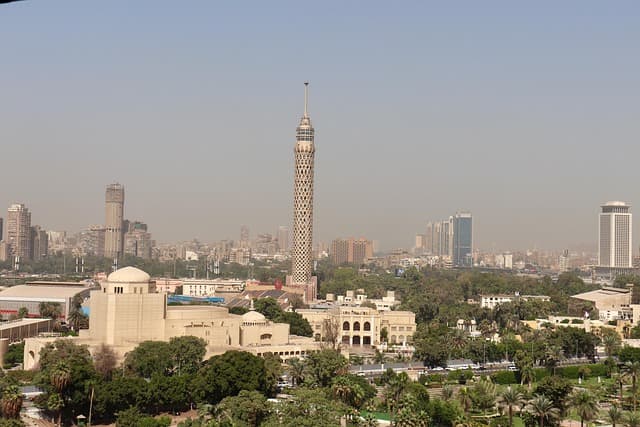
You enter Sultan Hassan from the street below the Citadel, through a doorway that is 38 meters tall. This was deliberate. The entrance portal is higher than the dome of any contemporary European cathedral. In 1356, when this was built, the entire point was that you would feel small walking in.
Inside, the plan is a cruciform courtyard with four iwans, one for each of the four schools of Sunni Islamic law. Students lived in the cells above, each iwan belonging to a separate legal tradition. The Shafi'i, Maliki, Hanbali, and Hanafi schools were all housed here simultaneously. This was not just a mosque; it was a university designed to train the religious and legal class that would staff Mamluk institutions. Power required doctrine, and Sultan Hassan was paying for both.
The bronze door of the main entrance is gone. It was removed in 1416 by the Mamluk sultan Mu'ayyad Sheikh and installed in his own mosque near Bab Zuweila. You can still see it there, which means the Sultan Hassan complex and the Al-Muayyad Mosque are connected not just architecturally but by a specific act of theft between two rulers separated by 55 years.
The adjacent Al-Rifa'i Mosque, which looks Mamluk but was actually completed in 1912 for Khedive Ismail's mother, is where the last Shah of Iran, Mohammad Reza Pahlavi, was buried in 1980 after being expelled from the United States. The irony that a deposed Iranian monarch ended up in a fake-Mamluk Cairo mosque built for an Ottoman viceroy's family is exactly the kind of layering that makes this city impossible to summarize.
Walking the Muizz: What You Are Actually Looking At
Al-Muizz li-Din Allah Street is one kilometer long and contains more medieval Islamic monuments than any other street in the world. The UNESCO designation is accurate. The tourist experience of it is frequently not.
Here is what most guided tours do not stop to explain. The street follows the spine of the Fatimid city of al-Qahira, founded in 969 AD. The Mamluks built on top of the Fatimid city. The Fatimids built on top of the earlier Abbasid settlement. Below the Abbasid settlement there is evidence of a Roman road. The stones under your feet on Al-Muizz are not just old. They are a cross-section of every major political era in Egyptian Islamic history, compressed into one walking route.
The Qalawun complex at the northern end of the street, built between 1284 and 1285, is the most important structure most visitors underestimate. Sultan Qalawun was the father of al-Nasir Muhammad and the architect of the longest Mamluk dynasty within the larger Mamluk period. His bimaristan, the hospital, treated patients regardless of gender, religion, or wealth. Contemporary accounts describe it housing over 8,000 patients, with separate wards for different conditions, a pharmacy, lecture halls, and a library. It was operational in some form until the 19th century. The mausoleum next to it contains Qalawun's tomb and is one of the finest surviving Mamluk interiors in Egypt: painted wood screens, marble floors, and a stillness that the souvenir sellers outside cannot quite reach.
The Connections
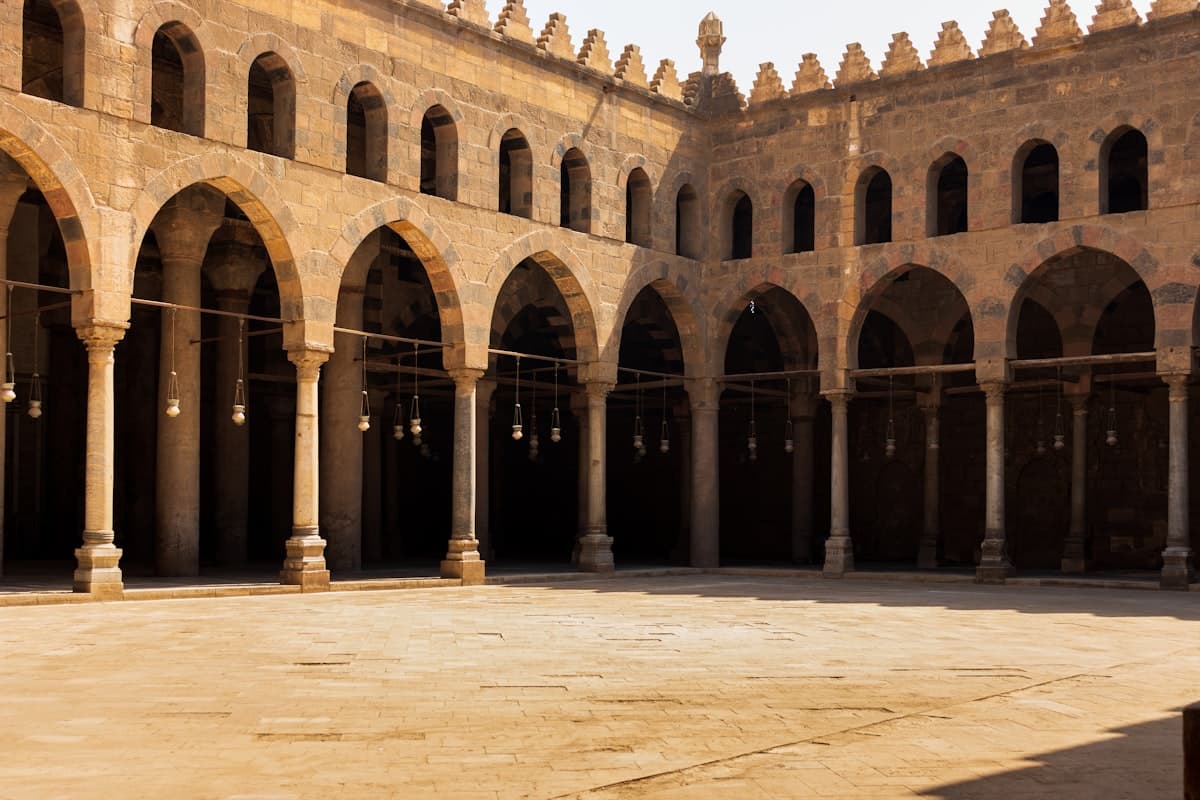
The Mamluk period connects to almost every other layer of Cairo in ways that most tours ignore.
The Bab Zuweila gate, completed in 1092 under Fatimid rule, became the place where Mamluk sultans watched military parades, where condemned men were executed, and where Tuman Bay, the last Mamluk sultan, was hanged by the Ottomans in 1517. The gate is Fatimid in origin, Mamluk in use, and Ottoman in its final meaning. Climbing the towers costs EGP 100 (approx $2 USD) and gives you a view of the two minarets of Al-Muayyad Mosque that were built directly onto the gate's towers, because the sultan wanted a mosque at that location but did not want to demolish the gate to build it.
The Mamluk water system, a network of sabils (public fountains) built into the ground floors of religious complexes across Cairo, was the city's primary source of clean water for centuries. You will see their ornate grilled windows on dozens of streets. The sabil attached to the Qaitbay complex near Al-Azhar is particularly fine. Sultan Qaitbay, who ruled from 1468 to 1496, was the last great Mamluk builder; his name appears on monuments from Cairo to Jerusalem to Medina. He also built the fort at Alexandria that stands on the site of the ancient Pharos lighthouse, using stones from the lighthouse's collapsed ruins as building material.
The connection between Mamluk Cairo and the rest of Egypt does not stop at Islamic monuments. The Mamluk agricultural taxation system, which extracted maximum revenue from Upper Egyptian grain production, is one reason the infrastructure of Upper Egypt was so underdeveloped for centuries. The monuments in Cairo were partly funded by the poverty of the south. That is not a comfortable fact, but it is the kind of fact that a serious engagement with Mamluk Egypt history in Cairo should sit with.
Common Mistakes
Going to the sound and light show at the Citadel. It costs EGP 350 and delivers a narrated history that is less accurate and less interesting than reading this article. The Citadel at night from the outside, lit against the Cairo sky from Salah Salem road, is free and better.
Trying to see Al-Muizz and the Citadel in one morning. You will rush both and remember neither. The Citadel alone warrants three hours minimum. Al-Muizz needs at least two hours to walk slowly and enter the major monuments. Do them on separate days.
Hiring a guide at the Citadel gate. Unofficial guides at the entrance vary enormously in quality and will frequently charge EGP 200 to 400 for a tour that covers only the Ottoman mosque. If you want a guide for the full Islamic Cairo district, book through a licensed agency or your hotel the night before.
Visiting Khan el-Khalili as a cultural site. It is a bazaar, and a tourist-oriented one at that. The Mamluk-era commercial architecture of the caravanserais (wikalahs) around it is genuinely interesting. The perfume sellers inside are not.
Skipping the Qalawun complex because the Sultan Hassan mosque looks more dramatic. Sultan Hassan is larger and more photographed. Qalawun is more historically consequential and far less crowded. The mausoleum interior is one of the finest rooms in Cairo.
Wearing shoes that slip on marble. Every Mamluk monument requires removing your shoes at the threshold. Polished medieval marble floors are extremely slippery in socks. Shoes with grip or sandals that slip on and off easily are not optional.
Arriving at 11am on a Friday. Friday prayer fills every mosque in Islamic Cairo from approximately 12pm to 1:30pm. Non-Muslim visitors are asked to wait outside during prayers. Plan to arrive by 9am or after 2pm.
Practical Tips
The Cairo Pass is sold at major sites and at some hotels. Buy it on day one if you plan serious time in Islamic Cairo.
Photography inside most Mamluk mosques is permitted, but some attendants will tell you it requires a separate fee. This is not official policy at sites covered by the Cairo Pass. A polite reference to the Ministry of Tourism regulations usually resolves this.
The medieval district around Al-Muizz is best walked from south to north, starting near Bab Zuweila and ending at the Fatimid gates of Bab al-Futuh. This means you are moving with the logic of the city's history, from the later Mamluk additions toward the Fatimid foundations.
Fatigue is real. The concentration of detail in this district, the inscriptions, the geometry, the layering of eras, is genuinely demanding. Build in a sit-down break at one of the traditional coffeehouses near Al-Azhar. Coffee there costs EGP 20. The rest it provides is priceless in a less promotional sense of the word.
Water and sunscreen are not suggestions. Cairo sun in an open courtyard at noon in March is not the same as sunlight anywhere else you have been.
Frequently Asked Questions
The Weekly Dispatch
More on Egypt, every Friday.
Cultural depth and places most guides never mention.
No spam. Unsubscribe anytime.