Mamluk Egypt History: Cairo's Forgotten Empire Quarter
The men who built Cairo's most extraordinary monuments were slaves. Circassian and Turkic captives who became sultans, then built mosques to outlast their own dynasties. Most tourists walk past them.

Quick Facts
- Best time to visit
- October to March for walkable temperatures. Ramadan evenings are the most atmospheric the city offers, with lit mausoleums and post-iftar street life, but adjust daytime plans for reduced hours.
- Entrance fee
- Sultan Hassan Mosque: EGP 200 (approx $4 USD), students EGP 100. Al-Rifa'i Mosque: EGP 100 (approx $2 USD). Northern Cemetery mausoleums (Qaytbay and Barquq combined): EGP 100 (approx $2 USD), students EGP 50.
- Opening hours
- Most sites daily 9am to 5pm. Sultan Hassan closes some evenings for prayers; arrive before 4pm. Al-Rifa'i occasionally closed for official functions without advance notice.
- How to get there
- Metro Line 1 to Sayyida Zeinab, then tuk-tuk to Salah al-Din Square (EGP 10 to 15). Uber or Careem from central Cairo: EGP 40 to 80. For the Northern Cemetery, tuk-tuk from Sultan Hassan: EGP 15 to 20.
- Time needed
- Half day for Sultan Hassan and Al-Rifa'i corridor. Full day if adding Northern Cemetery mausoleums. Two days for a thorough understanding of Mamluk Cairo.
- Cost range
- Budget EGP 600 to 900 per day including transport and entry fees. Mid-range EGP 1,500 to 2,500 if adding a licensed guide and sit-down meal.
Quick Facts
Best time to visit: October to March, when the air in Islamic Cairo is cool enough to walk for hours without stopping. Summer mornings before 9am are survivable; afternoons are not.
Entrance fees: The main Mamluk monuments are priced individually. The Sultan Hassan Mosque and Madrasa costs EGP 200 (approx $4 USD). Al-Rifa'i Mosque costs EGP 100 (approx $2 USD). The Mamluk section of the Northern Cemetery, including the mausoleums of Qaytbay and Barquq, is EGP 100 combined (approx $2 USD). Student discounts of 50% apply with an ISIC card.
Opening hours: Most sites open daily from 9am to 5pm. Sultan Hassan closes some evenings for prayers; arrive before 4pm to be safe. Al-Rifa'i is occasionally closed for official functions with no advance notice.
How to get there: Take the Cairo Metro Line 1 to Sayyida Zeinab station, then a tuk-tuk or on foot (15 minutes) to the Salah al-Din Square complex. Alternatively, take a Uber or Careem from central Cairo for EGP 40 to 80 depending on your starting point. From Tahrir Square, the walk through Sayyida Zeinab is itself instructive.
Time needed: Half a day for the Citadel-Sultan Hassan corridor. A full day if you add the Northern Cemetery. Two days if you want to understand what you are looking at.
Cost range: Budget EGP 600 to 900 per day including transport and entry. Mid-range EGP 1,500 to 2,500 if you hire a licensed guide, which is worth every pound.
---
Why Mamluk Egypt History Matters More Than You Think
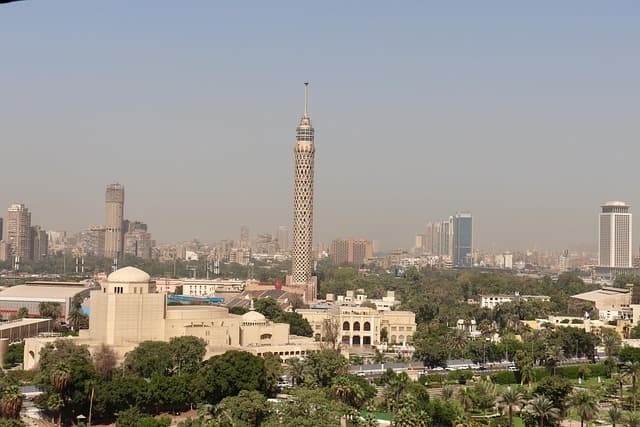
Here is a fact that most Egyptian history courses skip entirely: the Mamluk sultans who ruled Egypt from 1250 to 1517 were not Egyptian, not Arab, and not free men when they arrived. They were purchased. Boys from the Caucasus, the Pontic steppe, and Central Asia, bought at slave markets, converted to Islam, trained in military academies called kuttab, and eventually elevated to command armies and governments. The word mamluk in Arabic means simply "one who is owned."
And yet these owned men stopped the Mongols.
In 1260, the Mongol army under Hulagu Khan had already sacked Baghdad, burned its libraries, and reportedly killed the Abbasid Caliph by rolling him in a carpet so that royal blood would not touch the ground. It was the most devastating single event in medieval Islamic civilization. Then the Mongols moved toward Egypt. The Mamluk sultan Qutuz and his general Baybars met them at Ain Jalut, in what is now northern Israel, and defeated them. It was the first major military defeat the Mongols had suffered in their westward expansion. The world that produced Cairo's Mamluk architecture existed because of that battle.
What followed was 267 years of intense, often violent, occasionally brilliant rule. The Mamluks built obsessively. Mosques, mausoleums, madrasas, sabil-kuttabs (public fountains with Quranic schools above), and entire urban quarters. They built as a form of legitimacy, since a sultan who had been a slave could not claim royal bloodlines. He claimed God's favor instead, demonstrated through stone.
---
Sultan Hassan: The Building That Should Not Exist
Stan in Salah al-Din Square and look up at the facade of Sultan Hassan Mosque and Madrasa. The entrance portal rises 38 meters. When it was completed in 1363, it was the tallest structure in Cairo. The building contains enough stone that, according to contemporary Arab historian al-Maqrizi, when Sultan Hassan was assassinated before its completion, the stones intended for the two remaining minarets were never used and the project was abandoned mid-symmetry. You can still see the asymmetry if you know where to look: the southwest minaret is missing.
The interior is organized around a cruciform courtyard, one of only two such plans in Cairo. Four iwans, vaulted halls open to the courtyard, face each compass direction, each housing one of the four Sunni legal schools: Hanafi, Maliki, Shafi'i, and Hanbali. Students lived in the cells above, arranged in four stories around each iwan. The building was a university, a mosque, a mausoleum, and a social welfare institution simultaneously.
Sultan Hassan himself never rested in his own mausoleum. He was murdered in 1361, two years before completion, and his body was never recovered. The tomb chamber, one of the largest in Mamluk architecture, has held other bodies over the centuries. The original patron is absent from his own monument.
Across the square, Al-Rifa'i Mosque is newer, completed in 1912, and deliberately built to echo the Mamluk style. It contains the tombs of the last Egyptian khedives and, in a detail that surprises most visitors, the tomb of Mohammad Reza Shah Pahlavi of Iran, interred here in 1980 after Anwar Sadat offered him refuge when no other country would. An Islamic republic's deposed shah, buried in a pseudo-Mamluk mosque in Cairo. Egypt accumulates these ironies the way other cities accumulate traffic.
---
The Northern Cemetery: Where Cairo's Dead Outlived Its Living
East of the Citadel, stretching several kilometers toward the Muqattam Hills, is what Cairenes call the City of the Dead, though that name, used in tourist literature, obscures what it actually is. The Northern Cemetery is a functioning neighborhood where approximately half a million people live among Mamluk and later mausoleums. Families moved into tomb courtyards initially out of necessity during housing crises, and several generations later, the arrangement is permanent. Children play football between 15th-century carved stone facades.
The Mausoleum of Sultan Qaytbay, built in 1474, is the site that Mamluk Egypt history most rewards in the cemetery. Qaytbay ruled for 28 years, the longest reign of any Burji Mamluk sultan, and he built continuously throughout. His mausoleum's stone dome, carved with an interlocking arabesque pattern of extraordinary precision, is considered the highest achievement of Mamluk decorative stonework. No two arabesque units in the dome pattern are identical. The craftsmen who carved it are unknown. Their work is on the 50-piastre coin.
What most visitors do not know: Qaytbay financed part of this construction by melting down the minbar, the carved wooden pulpit, from the Prophet's Mosque in Medina, which had been damaged by fire and sent to Cairo for repairs. He used the funds during an era when the spice trade routes were shifting, Ottoman pressure was increasing, and the Mamluk treasury was under strain. The mausoleum that looks like an expression of confidence was built during a slow collapse.
The Mausoleum of Barquq, the first Burji Mamluk sultan, completed in 1411 by his son Faraj, sits further north and is visited by almost nobody on a typical tour. It has two domes, also carved in stone, flanking a central prayer hall. The quality of light inside in the morning, filtering through mashrabiya screens onto blue and white tilework, is the kind of thing you remember months later without being able to explain why.
---
The Connections: Nothing in Cairo Was Built in Isolation
The Citadel of Saladin, which overlooks the entire Mamluk quarter, was begun by Saladin (Salah al-Din al-Ayyubi) in 1176 on a spur of the Muqattam Hills. The Mamluks were Saladin's successors: his Ayyubid dynasty used Mamluk soldiers as its military backbone, and when Sultan Shajar al-Durr, a Turkish concubine-turned-queen, orchestrated the last Ayyubid sultan's overthrow and married a Mamluk commander, the transition was less a revolution than a staff mutiny that became permanent.
The ground beneath the Mamluk monuments is older still. Fustat, Egypt's first Islamic capital founded in 641 CE, lies beneath and around Islamic Cairo. Archaeological surveys have identified Fatimid-era structures beneath several Mamluk foundations, and Roman and Coptic remains beneath those. The Ben Ezra Synagogue in Coptic Cairo, a short walk southwest, was built on a site where Jewish tradition holds the infant Moses was found. It was sold to the Coptic community in 882 and converted to a church, then sold back and converted again. The layers are not metaphorical.
The Mamluks themselves were ended by the Ottomans in 1517, when Sultan Selim I defeated the last Mamluk sultan, Tuman Bay, at the Battle of Ridaniyya, fought just northeast of Cairo. Tuman Bay was captured and hanged at the Bab Zuwayla gate, the great Fatimid southern gate of Cairo that still stands and still bears the traces of Ottoman graffiti scratched by soldiers who camped nearby. The Ottoman conquest did not end the Mamluk presence: many Mamluk families retained administrative power under Ottoman governors, and a Mamluk revival in the 18th century produced the beys who negotiated with Napoleon when he arrived in 1798. Egypt is not a place where things end cleanly.
---
Common Mistakes Visitors Make in Mamluk Cairo
Doing the Citadel and calling it done. The Citadel's Mohammed Ali Mosque, a 19th-century Ottoman-style building with a clock tower gifted by France that has never worked, is what most tours prioritize. It is visually impressive and historically thin. You are in the capital of Mamluk Egypt history and you are spending three hours in an Ottoman mosque built to imitate Istanbul. Descend to Sultan Hassan instead.
Skipping the sound and light show at the Citadel. This is not a mistake because it is dangerous. It is a mistake because it costs EGP 350 and tells you nothing you will not learn from reading this article or hiring a guide for one hour. Skip it.
Hiring a guide at the gate. Unlicensed guides at the entrances to Sultan Hassan and the Citadel will offer excellent prices and provide theatrical but often historically unreliable commentary. Egypt's Ministry of Tourism licenses guides with specific specializations. Ask to see the license before negotiating, and expect to pay EGP 400 to 700 for two to three hours with someone qualified.
Visiting the Northern Cemetery without a local contact. Not because it is unsafe, but because without context it is disorienting. The families who live there are not a tourist attraction. Go with a guide who has relationships in the neighborhood, or join one of the walking tours run by Cairo's Megawra architecture collective, which leads thoughtful, community-sensitive visits.
Going in Ramadan without adjusting your timing. Many sites close early or operate on reduced hours. But the evenings in Islamic Cairo during Ramadan, when the streets fill after iftar and the mausoleums are lit and the sound of Quran recitation comes from every minaret, are the most atmospheric the city gets. The mistake is not going during Ramadan. The mistake is going at 2pm.
Reading only Pharaonic history before arriving. Tourists who arrive with three books on the New Kingdom and nothing on the medieval Islamic world spend their time in Islamic Cairo feeling lost. Nasser Rabbat's work on Mamluk architecture, available in excerpts online, and Robert Irwin's "The Middle East in the Middle Ages" will transform what you see.
Paying the "foreigner price" at the Qaytbay mausoleum without knowing the student rate exists. It is printed on the ticket window in Arabic only. Ask. The cashier will not volunteer it.
---
Practical Tips
Dress conservatively. Both Sultan Hassan and the mausoleums in the Northern Cemetery are active religious sites. Shoulders and knees covered for all genders; women should carry a scarf. Shoes come off at every entrance, so slip-ons will save you significant inconvenience over a full day.
The best light for photography inside Sultan Hassan is between 10am and noon, when the sun angles through the courtyard openings and hits the carved stone of the qibla iwan. The mausoleum chamber is dim; bring a phone with a capable low-light camera or accept that you will remember it better in your memory than in your photographs.
Arab-language signage at most Mamluk sites is more detailed than the English translations. If you read any Arabic, even slowly, the inscriptions on the portal of Sultan Hassan include the full text of the Throne Verse from Surah Al-Baqara, carved in floriated Kufic script across a band 50 meters long. That inscription alone is worth twenty minutes.
Water is sold at most sites for EGP 10 to 15. Bring your own from your hotel to save the cost and the plastic. There are no cafes inside any of the mausoleums. The koshary restaurant on the street behind Sultan Hassan, unmarked except by the queue, charges EGP 35 for a full bowl and is the correct lunch.
If you are combining Sultan Hassan with the Northern Cemetery in one day, do the cemetery first, in the morning, before the heat and before the school groups arrive at Sultan Hassan around 11am. Take a tuk-tuk between the two areas for EGP 15 to 20 rather than trying to navigate the streets on foot with a map. The drivers know the mausoleums by name.
Frequently Asked Questions
The Weekly Dispatch
More on Egypt, every Friday.
Cultural depth and places most guides never mention.
No spam. Unsubscribe anytime.