Mamluk Egypt History: Cairo's Most Overlooked Empire
The Mamluks were slaves who became sultans and built Cairo's most sophisticated skyline. Their mosques still stand. Most tourists walk past them to reach the Pyramids.

Quick Facts
- Best time to visit
- October to March, when temperatures stay below 25C and walking through dense urban neighborhoods is manageable. Avoid July and August, when afternoon heat inside stone monuments without ventilation is genuinely difficult.
- Entrance fee
- Sultan Hassan Mosque: EGP 150 (approx $3 USD), students EGP 75. Combined Islamic Cairo cluster ticket: EGP 450 (approx $9 USD). Museum of Islamic Art: EGP 200 (approx $4 USD). Northern Cemetery mausoleums: free.
- Opening hours
- Most Mamluk mosques daily 9am to 5pm. Closed to visitors during Friday midday prayers approximately 11:30am to 1:30pm. Museum of Islamic Art open Sunday to Thursday and Saturday 9am to 5pm, closed Friday.
- How to get there
- Uber or Careem from central Cairo to Sultan Hassan: EGP 40 to 70. Metro Line 1 to Sadat station then microbus to Bab Zuweila: EGP 10 to 15 total. Taxi from Giza Plateau: EGP 80 to 130. Walking from Khan el-Khalili: 15 minutes south through Al-Muizz Street.
- Time needed
- Minimum two full days. Day one for Al-Muizz Street corridor and Islamic Art Museum. Day two for Sultan Hassan, Citadel area, and Northern Cemetery.
- Cost range
- Budget EGP 600 to 900 per day including entry fees, local transport, and street food. Mid-range with licensed specialist guide: EGP 2,000 to 3,500 per day.
The sultan who built Cairo's greatest medieval mosque was a Circassian slave purchased in the markets of Crimea as a child. Barquq, who seized power in 1382 and founded the Burji Mamluk dynasty, spent his early life as property. He died the ruler of Egypt, Syria, and the Hejaz. His mausoleum in the Northern Cemetery is still there, its stone dome unmarked on most tourist maps, pigeons circling the same carved arabesque that his craftsmen finished six centuries ago. This is what Mamluk Egypt history in Cairo actually looks like: a civilization of extraordinary complexity built by people who were legally owned when they arrived, and who then constructed the finest Islamic architecture the medieval world produced.
Quick Facts
Best time to visit: October through March, when the temperature in Cairo drops below 25°C and walking through the narrow lanes of Islamic Cairo is not a physical ordeal. The Mamluk monuments are in dense urban neighborhoods. Summer heat in those stone corridors is serious.
Entrance fees: The Islamic Cairo heritage area operates on a cluster-ticket system. The combined ticket for major Mamluk monuments including the Sultan Hassan Mosque and Al-Rifa'i Mosque costs EGP 450 (approximately $9 USD). Individual sites vary: the Mosque-Madrasa of Sultan Hassan is EGP 150 (approx $3 USD) alone. The Northern Cemetery mausoleums are free but require a registered guide or independent navigation. Students with valid ISIC cards pay half price at most sites.
Opening hours: Most Mamluk mosques are open daily from 9am to 5pm, with closures during Friday midday prayers (approximately 11:30am to 1:30pm). The Qalawun Complex on Al-Muizz Street sometimes extends to 6pm in cooler months.
How to get there: From Tahrir Square, take the Cairo Metro Line 1 to Sadat station, then a microbus or taxi (EGP 15 to 25) toward Bab Zuweila or Midan Salah al-Din. An Uber from central Cairo runs EGP 40 to 70 depending on traffic. Do not attempt to drive yourself into the Al-Muizz Street area. The lanes do not accommodate cars and the parking situation near the Citadel is designed to confuse.
Time needed: A serious engagement with Mamluk Cairo requires at least two full days. One day for the Al-Muizz Street corridor and the Qalawun and Barquq complexes. One day for the Citadel area, Sultan Hassan, and the Northern Cemetery. Most tours give visitors three hours total. This is not enough to understand anything.
Cost range: Budget EGP 600 to 900 per day (entry fees, local transport, food from street stalls). Mid-range with a specialist guide: EGP 2,000 to 3,500 per day.
Why This Place Matters
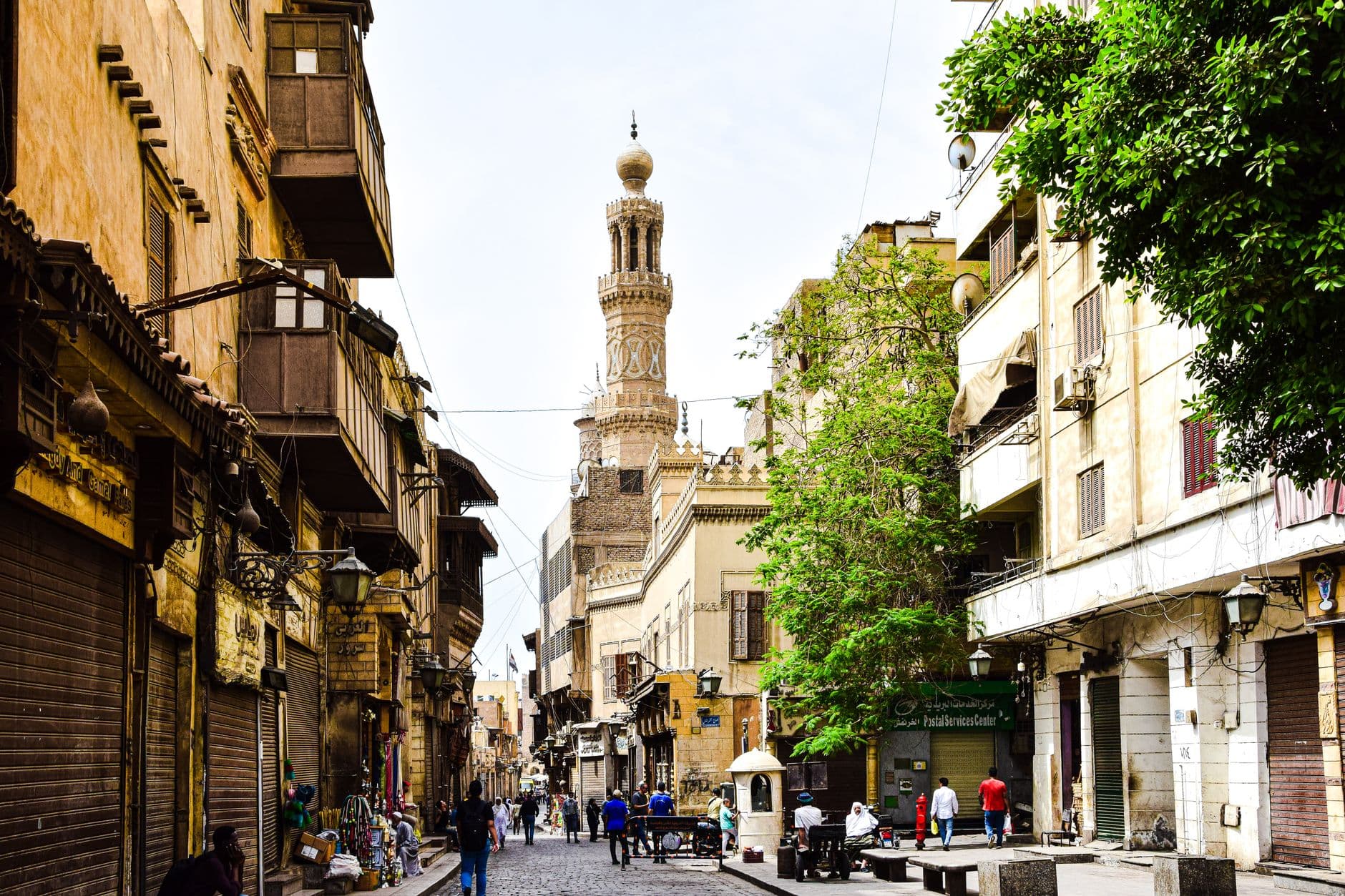
The Mamluk sultanate ran Egypt from 1250 to 1517, which is longer than the entire modern United States has existed. During those 267 years, Egypt became the cultural and intellectual capital of the Islamic world, largely because the Mamluks were the force that stopped the Mongols. At the Battle of Ain Jalut in 1260, a Mamluk army under Sultan Qutuz defeated a Mongol force that had already sacked Baghdad, destroyed the Abbasid caliphate, and burned the great library at Baghdad. The center of Islamic civilization shifted to Cairo as a direct result. Every mosque, madrasa, and mausoleum you walk past in Islamic Cairo exists partly because of what happened at a spring in Palestine on September 3, 1260.
The Mamluks were not Egyptian by origin. They were military slaves, purchased as children from the Caucasus, Central Asia, and the Eurasian steppe, converted to Islam, trained as cavalry, and then used by whoever purchased them as a fighting force. The system was designed to create soldiers without family loyalties who would fight exclusively for their master. What actually happened is that the slaves became more powerful than the masters, seized the sultanate, and proceeded to produce one of the most architecturally sophisticated dynasties in Islamic history. The entire edifice of Mamluk Cairo is built on this central contradiction: a civilization created by people brought to Egypt in chains.
The Ottoman conquest of 1517 ended Mamluk political power, but Mamluk architectural influence persisted for another century, absorbed into Ottoman Cairo's building vocabulary. Understanding Mamluk Egypt history in Cairo means reading not just the monuments but the layered logic of a city that never fully abandoned its previous inhabitants.
What You Will Actually See: The Al-Muizz Street Corridor
Al-Muizz li-Din Allah Street is the spine of medieval Cairo, running approximately one kilometer from Bab al-Futuh to Bab Zuweila. The Fatimids built it in the tenth century. The Mamluks rebuilt most of what lines it. Walking south from the northern gate, you pass through a compressed history of Islamic architecture that no other street in the world replicates.
The Qalawun Complex, completed in 1285, is the structure most visitors underestimate. From outside it presents a single facade. Inside it is three separate institutions: a madrasa, a mosque, and a maristan, which is a hospital. The maristan served patients regardless of religion, gender, or ability to pay, and its endowment documents specified that patients should be entertained by musicians during recovery. In thirteenth-century Cairo, the state was funding music therapy in a public hospital. This is not a detail that fits easily into the standard narrative of medieval Islam, which is precisely why it matters.
Three doors down, the complex of Sultan Barquq (completed 1386) was the first structure in Cairo built with a dedicated place for Sufi ceremonial ritual on the upper floor. The minaret above it shows the shift from earlier Mamluk minarets: three distinct stages, each in a different geometric vocabulary, stacked into a form that architectural historians describe as the most developed version of the Egyptian minaret tradition.
The light inside these buildings in the morning, before the tour groups arrive at around 10am, is a specific shade of filtered grey-gold that comes from the mashrabiyya screens filtering the street outside. It smells of old stone and, faintly, of incense from the prayer times.
The Sultan Hassan Mosque: One Building, Three Impossible Facts
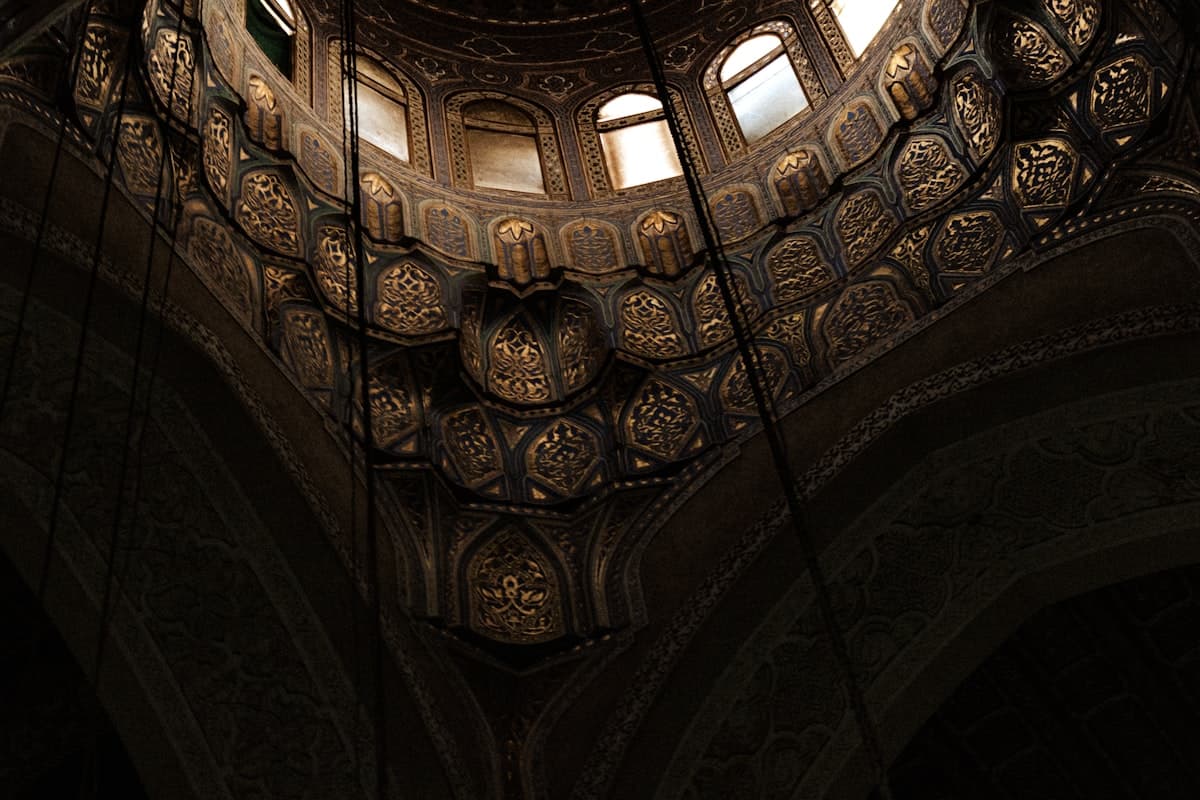
Sultan Hassan ibn al-Nasir Muhammad commissioned his mosque-madrasa in 1356. It was completed in 1363, two years after he was assassinated, at the age of roughly 27. He did not live to see it finished. The building he never saw contains the largest Mamluk-period interior space in Cairo and was, at the time of its completion, probably the largest mosque in the Islamic world by volume.
The first fact that stops most architects who visit: the dome over the mausoleum chamber was rebuilt in the eighteenth century after the original collapsed, but the muqarnas portal at the entrance, a honeycomb-vaulted gateway approximately 38 meters high, is original fourteenth-century stonework. There are no structural supports visible inside it. The muqarnas holds itself up through geometric compression, the same engineering principle as a Roman arch applied in three dimensions.
The second fact: Sultan Hassan financed this building partly by confiscating the estates of nobles who died during the Black Death, which reached Cairo in 1348 and killed an estimated one-third of the city's population within two years. The plague money built the mosque. This is documented in the waqf records.
The third fact: the mosque directly faces the Citadel, which at the time of its construction was the seat of Mamluk power. The building was deliberately positioned so that anyone attacking the Citadel from this direction could use the mosque's roof as a firing platform. The Mamluk sultanate understood this and tried, at various points, to prevent the mosque's completion for exactly this reason. The building exists partly because the sultan's architects moved faster than the politics.
The Northern Cemetery: Where the Mamluks Actually Buried Themselves
The City of the Dead, as it is sometimes called, is a working neighborhood of Cairo where approximately half a million people live among and adjacent to Mamluk funerary monuments. This is not a recent development. Families have inhabited the cemetery structures since the Mamluk period itself, when the complexes were designed with residential quarters for caretakers and scholars.
Barquq's tomb complex in the Northern Cemetery (not the same as his mosque on Al-Muizz Street; he built both) was completed by his son Faraj in 1411 and contains two stone domes. The carved stone domes of the Northern Cemetery are the technical achievement that Mamluk architecture is least known for and most deserves recognition for. Carving geometric interlace patterns into stone domes at that scale requires a level of precision that European cathedral builders of the same period were not attempting. The dome of Barquq's mausoleum has a carved surface that, photographed up close, looks like lacework.
Most Cairo itineraries do not include the Northern Cemetery. This is a mistake. It is free, it is a twenty-minute taxi ride from the Citadel, and it contains the highest concentration of fourteenth and fifteenth-century Islamic funerary architecture in Africa. The fact that people's laundry is hanging between the mausoleums is not a problem. It is accurate.
The Connections: Nothing in Cairo Exists Alone
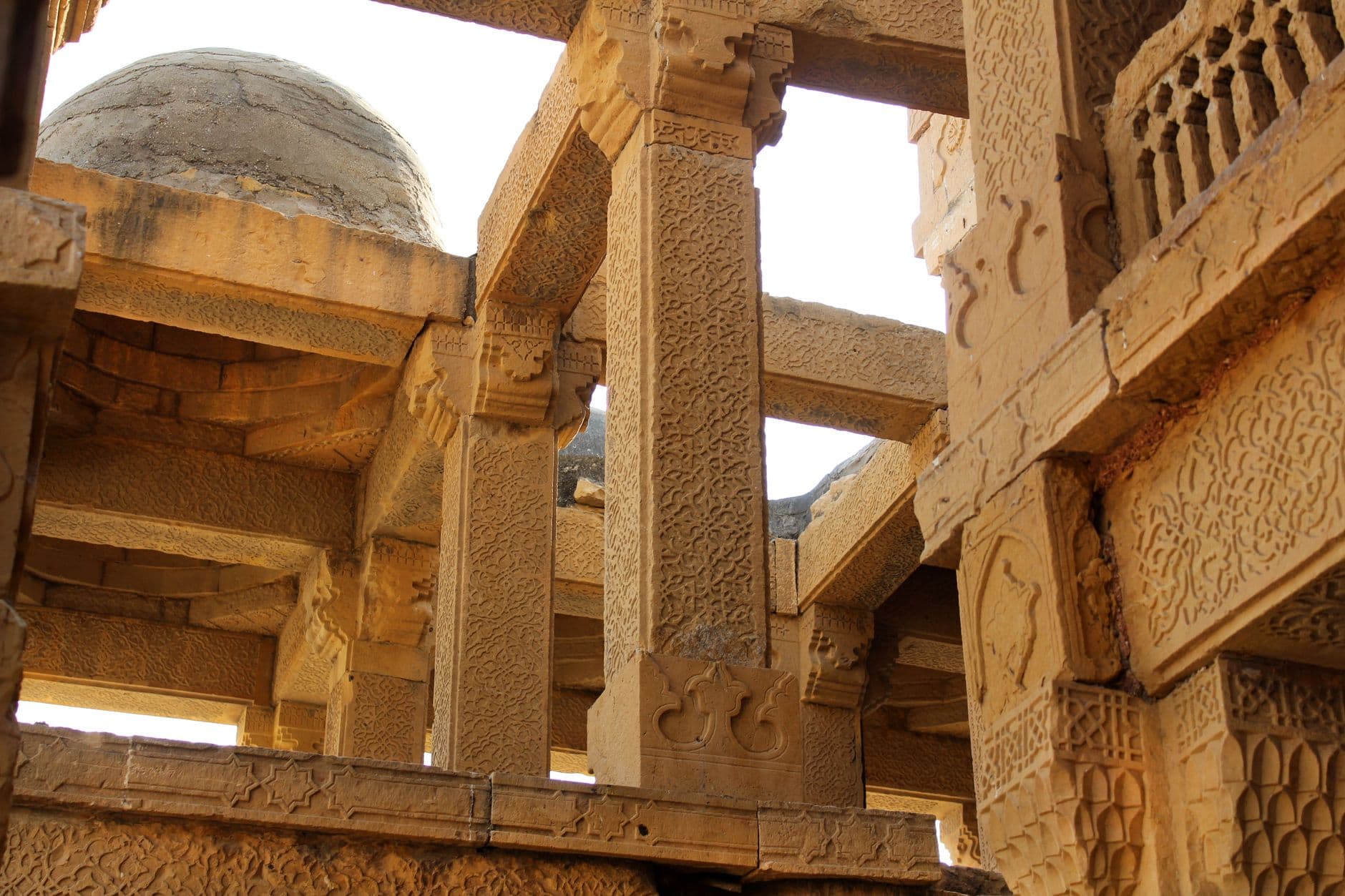
The Mamluk mosque of Amir Aqsunqur, built in 1346 and better known as the Blue Mosque after a seventeenth-century Ottoman renovation that tiled its interior in Iznik blue, sits on foundations that incorporate remains of a Fatimid structure. The Fatimid structure was itself built partly over a former Coptic Christian cemetery. The Christian cemetery occupied land that had been used for Pharaonic-period agricultural storage. Four civilizations, one patch of Cairo earth.
The Citadel that the Mamluks inherited and expanded was originally built by Saladin between 1176 and 1183, using workers and stones from smaller pyramids at Giza. You can still see pyramid casing stones in the lower courses of the Citadel walls. The Mamluks who took power from Saladin's Ayyubid dynasty found themselves literally living inside a structure made of pyramid fragments. When the Ottoman governor Muhammad Ali demolished the Mamluk-built structures inside the Citadel in the nineteenth century to build his own alabaster mosque, he was continuing a pattern of architectural cannibalism that every Cairo dynasty practiced.
The Mamluk network also extended to trade. Cairo under the Mamluks controlled the spice route between the Indian Ocean and Europe. When Vasco da Gama found a sea route around Africa to India in 1498, he did not just open a new trade path. He destroyed the economic foundation of Mamluk Cairo. The Ottoman conquest of 1517 was made easier because the Mamluk sultanate was already financially hollowed out by Portuguese shipping. The minarets of Islamic Cairo are also, in a sense, monuments to a trade route that Portuguese navigation killed.
Common Mistakes
Taking a standard group tour of Islamic Cairo. The group tours that depart from major hotels spend approximately forty-five minutes in Sultan Hassan and another forty-five in Khan el-Khalili bazaar, which is not a Mamluk monument at all. You will see two buildings and buy a papyrus. Hire a specialist guide (expect EGP 800 to 1,200 for a half day) or use this article and walk independently.
Visiting on a Friday morning. Friday prayers at Sultan Hassan and the Al-Muizz Street mosques draw large local congregations. Non-Muslim visitors are typically asked to wait outside during the prayer period. This is not a problem if you plan around it, but most itineraries do not.
Skipping the Qalawun Complex to spend more time at Sultan Hassan. Sultan Hassan is larger and more famous. The Qalawun Complex is more historically consequential and contains more that most visitors have never been told. The maristan documents alone justify an hour.
The sound and light show at the Citadel costs EGP 300 and delivers a dramatized history that actively simplifies the Mamluk period into a sequence of battles. It will not tell you about the maristan, the plague financing, or the trade route collapse. Read instead. Your evening is worth more than that.
Ignoring the inscriptions. Every major Mamluk monument has Quranic inscriptions carved at the entrance. The choice of verses was deliberate. The verse above the Sultan Hassan portal is from Surah Al-Tawbah and relates to the establishment of mosques by believers. This was a political statement about legitimacy as much as a religious one. A guide who reads Arabic can tell you what the stones are actually saying.
Wearing shoes that slip off easily. You will remove your shoes at every mosque, often on stone thresholds that are cold or rough, sometimes with nowhere to set things down. Shoes with simple slip-on design and socks you do not mind getting dusty are practical. Sandals that require unbuckling four straps are not.
Assuming the Northern Cemetery is unsafe. It is a neighborhood. Like all Cairo neighborhoods, it requires standard urban awareness. The residents there are accustomed to visitors at the major mausoleums. Go in the morning, go without a large camera bag that signals expensive equipment, and go.
Practical Tips
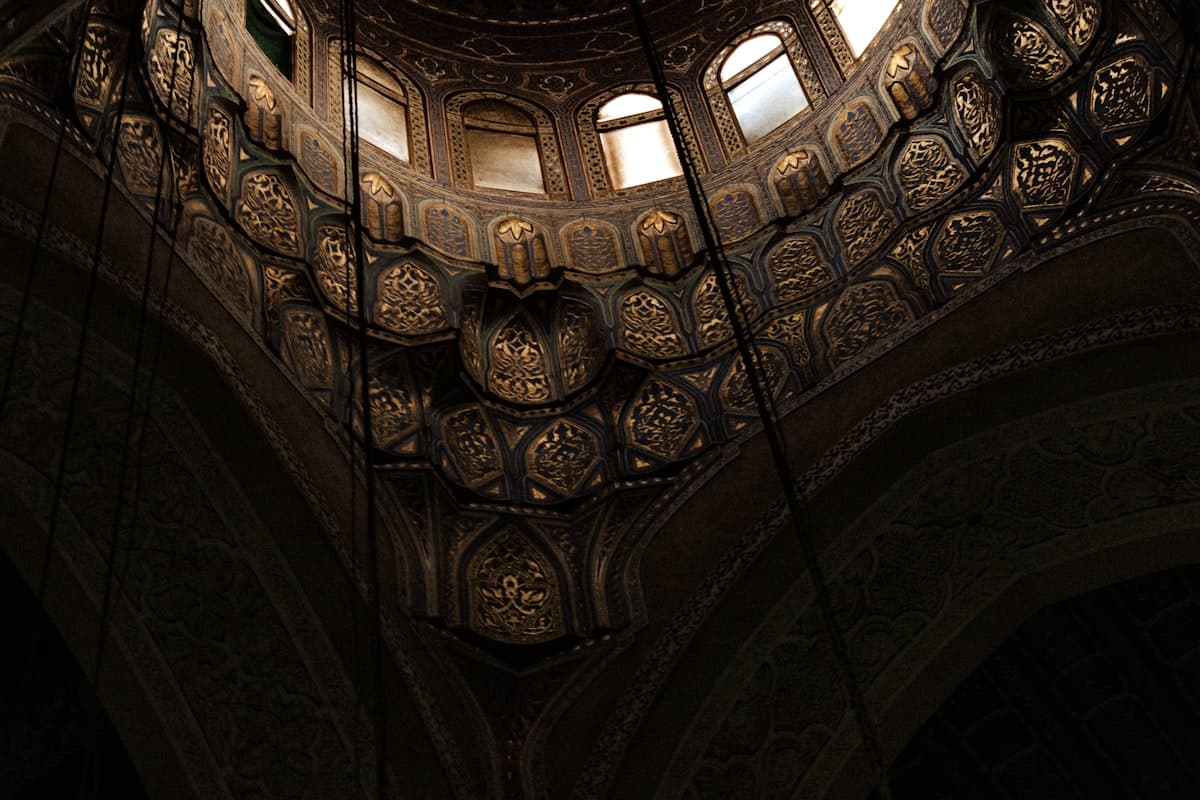
The single most useful thing you can bring to a day in Mamluk Cairo is a fully charged phone with offline maps downloaded and the book "The Mosques of Egypt" by the Survey of Egypt, which is available as a scan through various academic library resources and contains measured plans of almost every structure you will visit. The combination of a good offline map and a floor plan makes it possible to navigate these buildings independently without a guide.
Water: carry at least one liter per person. There are no cafes inside the monuments and the street vendors outside some sites charge EGP 15 to 25 for water that costs EGP 5 elsewhere. Drink before you go in.
Photography is permitted at most sites. Some mosques ask EGP 20 to 50 for a camera permit if you are carrying a professional-looking camera. A phone is never questioned.
If you hire a guide, verify that they have a license from the Egyptian Tourism Authority before agreeing on a price. Licensed guides have studied the history formally. The unlicensed men who approach tourists near Bab Zuweila know the landmarks but not the waqf documents, the trade economics, or the architectural details that make a day in Mamluk Cairo genuinely illuminating.
Combine your second day in the area with a morning at the Museum of Islamic Art near Bab el-Khalq, which holds the world's largest collection of Islamic artifacts and contains Mamluk-period metalwork, glass, and textiles that give material context to everything you will see in the monuments. Entry is EGP 200 (approx $4 USD). It opens at 9am and is almost never crowded.
Frequently Asked Questions
The Weekly Dispatch
More on Egypt, every Friday.
Cultural depth and places most guides never mention.
No spam. Unsubscribe anytime.