Modern Egypt and the 1952 Revolution: A Cairo History Guide
Nasser's officers took Egypt in a bloodless coup at 7am on July 23. The king was gone by noon the next day. Cairo still carries every scar and monument of what followed.

Quick Facts
- Best time to visit
- October through April for walkable temperatures. July 23 anniversary brings public commemorations to Tahrir and other squares.
- Entrance fee
- Egyptian Museum EGP 450 (approx. $9 USD), students EGP 225. Abdeen Palace Museum EGP 100 (approx. $2 USD). Ar-Rifa'i Mosque free. Tahrir Square and street sites free.
- Opening hours
- Egyptian Museum daily 9am to 5pm. Abdeen Palace Museum Saturday through Thursday 9am to 3pm, closed Fridays. Public sites accessible at all hours.
- How to get there
- Metro Line 1 or 2 to Sadat Station for Tahrir (EGP 10 to 15). Taxi from Cairo Airport EGP 200 to 300. Ride-share apps (Uber, Careem) EGP 150 to 250 from airport. Local ride-share between sites EGP 30 to 100.
- Time needed
- Minimum two full days to cover Tahrir, Egyptian Museum, Garden City, Abdeen Palace, and Citadel district meaningfully. One focused day possible if starting before 9am.
- Cost range
- Budget EGP 500 to 900 per day (metro, entry fees, local food). Mid-range EGP 1,800 to 3,000 per day including private guide and sit-down meals.
Modern Egypt and the 1952 Revolution: A Cairo History Guide
The last king of Egypt packed thirty-two suitcases before boarding his yacht at Alexandria on July 26, 1952. Farouk I, a man who had once been called the most eligible bachelor in the world and later the most corrupt monarch in the Arab world, sailed into Italian exile with his infant son, his medals, and almost nothing else. He was gone within three days of the coup. The officers who replaced him had been planning for four years. Cairo had been burning for six months.
This is the entry point into modern Egypt's most consequential story: not a date in a textbook, but a city that still organizes itself around the politics, architecture, and mythology of what happened when a group of young military men decided the old order was finished. If you want to understand why Cairo looks and feels the way it does today, why certain neighborhoods sit behind concrete walls, why specific statues face certain directions, why the Nile Corniche has the width it does, you have to understand July 1952 and everything that came after.
Quick Facts
Best Time to Visit: October through April, when Cairo's heat is bearable and outdoor walking around Tahrir, Garden City, and Heliopolis is genuinely pleasant. July, the anniversary month of the revolution, brings commemorative events to public spaces.
Key Sites and Entrance Fees: Egyptian Museum (Tahrir Square): EGP 450 (approx. $9 USD), students EGP 225. Closed Fridays before noon prayer. Abdeen Palace Museum (includes Revolution Gallery): EGP 100 (approx. $2 USD), students EGP 50. Royal Jewelry Museum (Alexandria, if extending the trip): EGP 100. Ar-Rifa'i Mosque, where Farouk's family tombs are held: Free entry, modest dress required. Tahrir Square and street-level sites: Free.
Opening Hours: Egyptian Museum daily 9am to 5pm. Abdeen Palace Museum Saturday through Thursday 9am to 3pm, closed Fridays. Street-level and public sites are accessible around the clock.
Getting There: Tahrir Square is on Cairo Metro Line 1 and Line 2, Sadat Station. From Cairo Airport, a metered taxi runs roughly EGP 200 to 300 (approx. $4 to $6). Ride-share apps (Uber, Careem) are more reliable and cost similar amounts. The metro is EGP 10 to 15 per journey regardless of distance.
Time Needed: Allow two full days to move meaningfully through the revolutionary Cairo landscape. A single focused day can cover Tahrir, the Egyptian Museum, Garden City, and Abdeen Palace if you start before 9am.
Cost Range: Budget EGP 500 to 900 per day covering transport, entry fees, and local food. Mid-range EGP 1,800 to 3,000 per day including a guide and sit-down meals.
Why This Place Matters
The 1952 Revolution, which its architects officially called the July 23 Revolution, was not simply a change of government. It ended 2,500 years of foreign rule over Egypt in a single morning. From the Persian conquest of 525 BC through Alexander the Great, the Ptolemies, Rome, Byzantium, the Arab Caliphates, the Ottomans, and finally the British, Egypt had not been governed by Egyptians. Gamal Abdel Nasser and the Free Officers changed that fact permanently.
The movement had been organizing since 1949, partly in response to the 1948 Arab-Israeli War, which Egyptian officers fought in and which they widely considered lost due to palace corruption and inadequate arms. Farouk had bought defective weapons from a supplier connected to his own court. Soldiers died for it. The officers remembered.
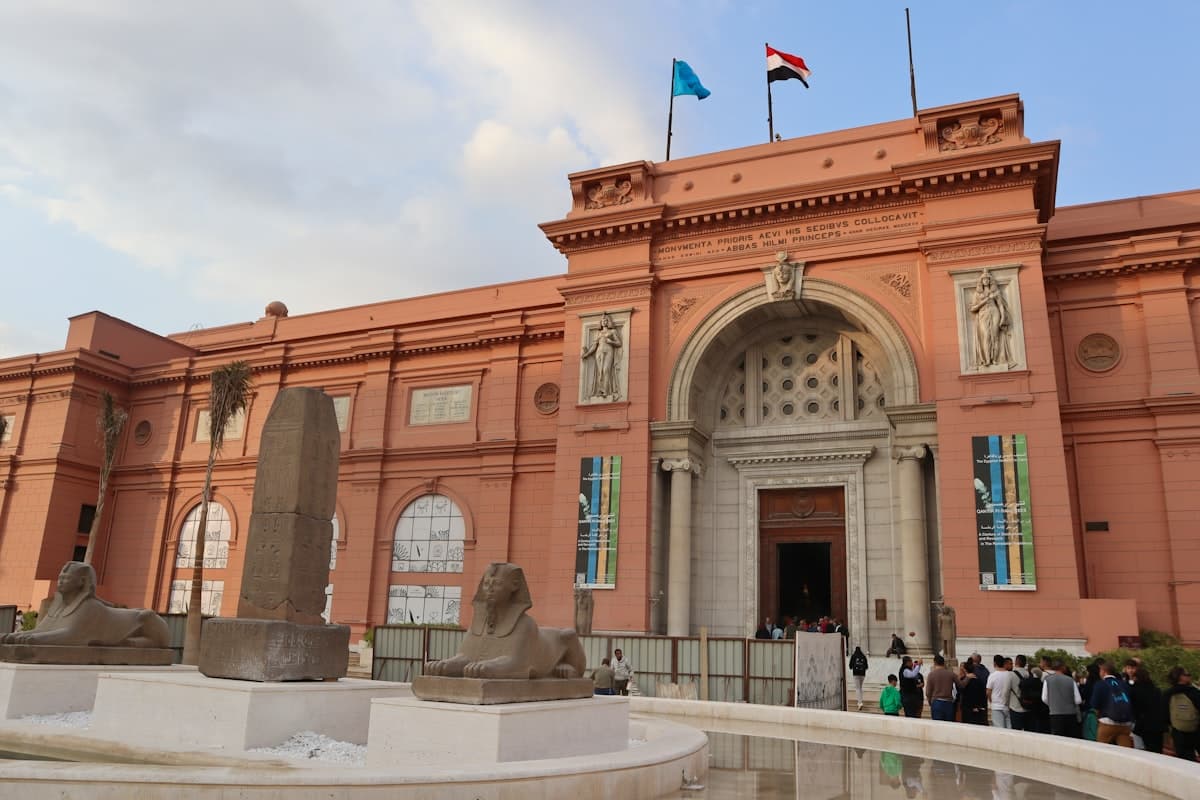
What makes Cairo specifically the right place to engage with this history is that the city was physically remade in the revolution's image. Tahrir Square, now known worldwide from the 2011 protests, was actually called Ismailia Square until the revolution renamed it Liberation Square. The Egyptian Museum that sits on its northern edge was built in 1902 under Khedive Abbas II, but the political theater that has played out in front of it has layered meanings that span from Pharaonic antiquity through colonial architecture to the twenty-first century uprisings that world media photographed from its steps.
The modern Egypt revolution 1952 history is not archived only in museums. It is built into the street grid.
Tahrir Square and Garden City: Reading the City
Stand at the center of Tahrir Square on a Thursday evening and you are standing at the intersection of at least four Cairos. The Egyptian Museum behind you was built to house French archaeologist Auguste Mariette's collection. The Mugamma, the hulking Soviet-assisted government administration building to your south, was completed in 1952, the same year as the revolution, and represents the bureaucratic state Nasser would expand into one of the largest public employment systems in the developing world. At peak Nasserist employment, roughly one in three working Egyptians was on the government payroll.
Walk south from Tahrir into Garden City, the crescent-shaped neighborhood laid out in 1906 by Belgian developers on a curve of the Nile, and you enter what was once the most exclusive address in Cairo. The British Embassy has anchored its eastern edge since the colonial period. The old villas of pashas and beys, many now converted to embassies or crumbling behind high walls, tell the story of the class that the revolution dismantled. Between 1952 and 1961, Nasser nationalized land holdings over 200 feddans (a feddan is approximately one acre), then over 100 feddans, then essentially redistributed the agricultural wealth that had kept the pre-revolutionary elite intact for generations. The families who once owned these Garden City properties often lost their land in the Delta simultaneously.
The British Barracks site near Qasr el-Aini has an additional resonance few visitors know: Egyptian medical students and nurses used the same street in February 1946 to march on the Qasr el-Nil Bridge during the Istiqlal (Independence) demonstrations, where British troops and Egyptian police both opened fire on the crowd. The casualty count radicalized a generation of young Egyptians including several who would later become Free Officers. The revolution was not spontaneous. It was six years of accumulated fury.
Abdeen Palace: The Furniture of Power
Most visitors skip Abdeen Palace entirely, which is a serious error. Built between 1863 and 1874 under Khedive Ismail, who also commissioned the Suez Canal's opening ceremony and drove Egypt into the debt that justified British occupation, Abdeen served as Egypt's seat of government until the revolution. The palace contains 500 rooms, and its public museum sections include the Arms Museum, the Silver Museum, and most relevantly, a display of documents and objects from the revolutionary period.
On February 4, 1942, British Ambassador Sir Miles Lampson surrounded Abdeen Palace with tanks and armored cars and gave King Farouk an ultimatum: appoint the British-preferred prime minister or abdicate. Farouk complied. The humiliation was witnessed, discussed, and never forgiven. Anwar Sadat, later Egypt's president, called it the day he decided revolution was the only answer.
The palace museum's silver and weapons collections are genuinely worth examining independently of the political history. The arms collection includes gifts from European monarchies, Ottoman sultans, and regional rulers across four centuries. The silverware hall documents the extraordinary wealth of the Khedival court through objects that were later seized by the revolutionary government and placed under state ownership.
The Egyptian Museum: Ancient Authority and Modern Propaganda
The Egyptian Museum at Tahrir is usually visited for its Tutankhamun galleries and mummies. This is fine. The Tutankhamun collection, seized from Howard Carter's excavation between 1922 and 1932, contains 5,398 individual objects. The solid gold innermost coffin of Tutankhamun weighs 110.4 kilograms. These numbers warrant the visit alone.
But the museum's relationship to the revolution is more interesting than most guides explain. Nasser's government used Pharaonic imagery deliberately and systematically as political legitimacy. The Pharaoh who resonated most was Thutmose III, the warrior-king who expanded Egypt's empire furthest into Asia and Africa, whom Nasser's cultural ministry actively promoted in school curricula. The Aswan High Dam, Nasser's most significant infrastructure project, was framed explicitly as a Pharaonic act of national will, the modern equivalent of pyramid-building. When the Dam flooded Nubia and displaced 60,000 to 100,000 Nubian people from their ancestral villages, this framing was used to justify it.
The museum's second floor houses one of the least-visited but most historically resonant collections in Cairo: the Amarna Period rooms, containing objects from Akhenaten's revolutionary monotheist experiment in the fourteenth century BC. Nasser's cultural advisers were aware of the Akhenaten parallel and were not entirely comfortable with it. A pharaoh who tried to remake Egyptian religion by decree and was subsequently erased from history was an uncomfortable precedent for a leader remaking Egyptian society by decree.
The Connections: What 1952 Was Built On
The modern Egypt revolution 1952 history cannot be understood without its layers. Cairo's revolutionary geography sits directly over older political architectures.
The Qasr el-Nil Barracks, where British troops were stationed until 1947 and which became a flashpoint for anti-colonial demonstrations, stood on the site of a Khedival palace that itself replaced an Ottoman military installation. The Nile Corniche, built in its current form under Nasser, runs along a riverbank that Islamic-era Fatimid Cairo never touched because the Nile's western channel was then a swamp. Nasser's engineers moved earth that Saladin's engineers had left alone.
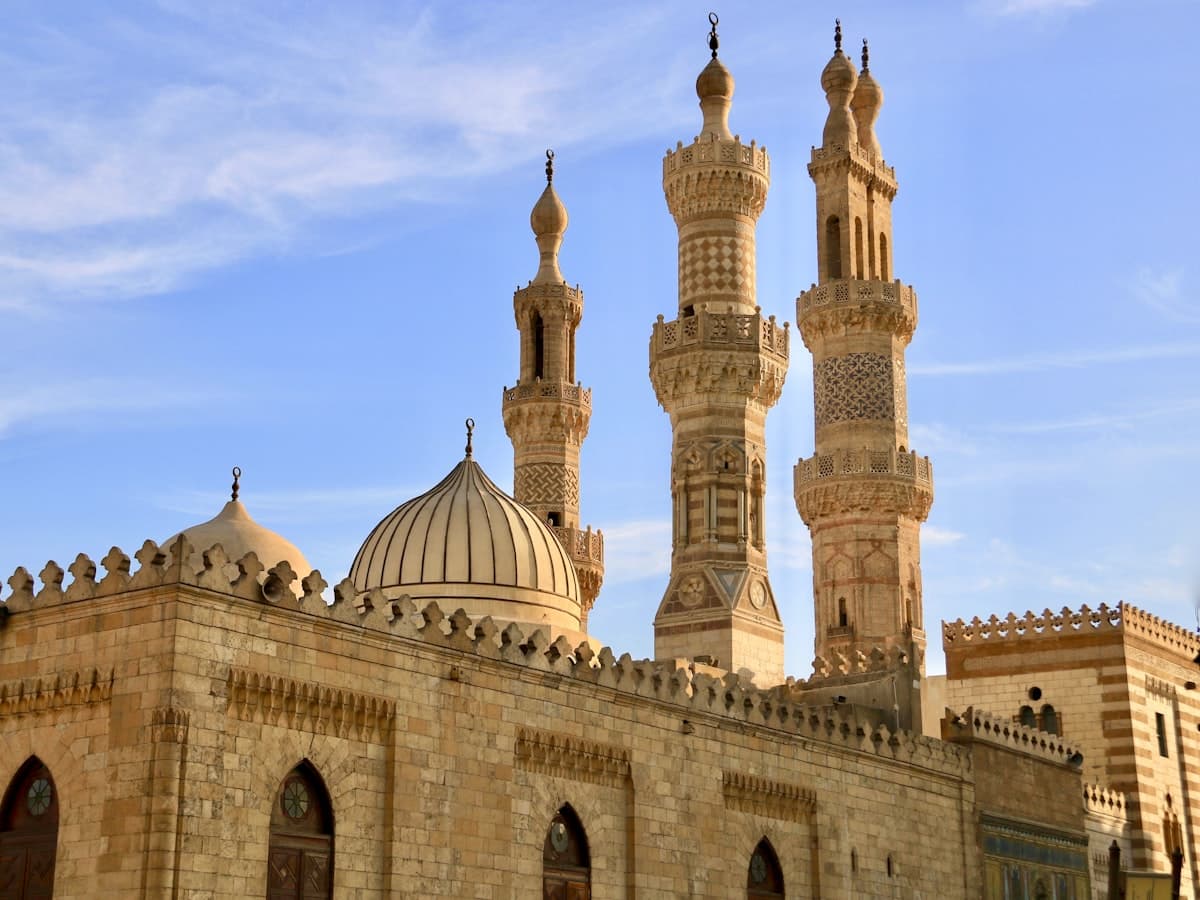
The Ar-Rifa'i Mosque in the Citadel district, completed in 1912, contains the tombs of Egypt's last Khedives and Kings, including Farouk himself, who was brought back to Egypt for burial in 1965. The mosque was built next to the medieval Sultan Hassan Mosque, completed in 1363, which itself stands in the shadow of Saladin's Citadel, begun in 1176 on a spur of the Muqattam Hills where earlier Fatimid fortifications already existed. The revolutionary government that exiled Farouk alive eventually accepted his body back and placed it in a mosque built by the same dynasty it overthrew. Egypt absorbs its contradictions without resolving them.
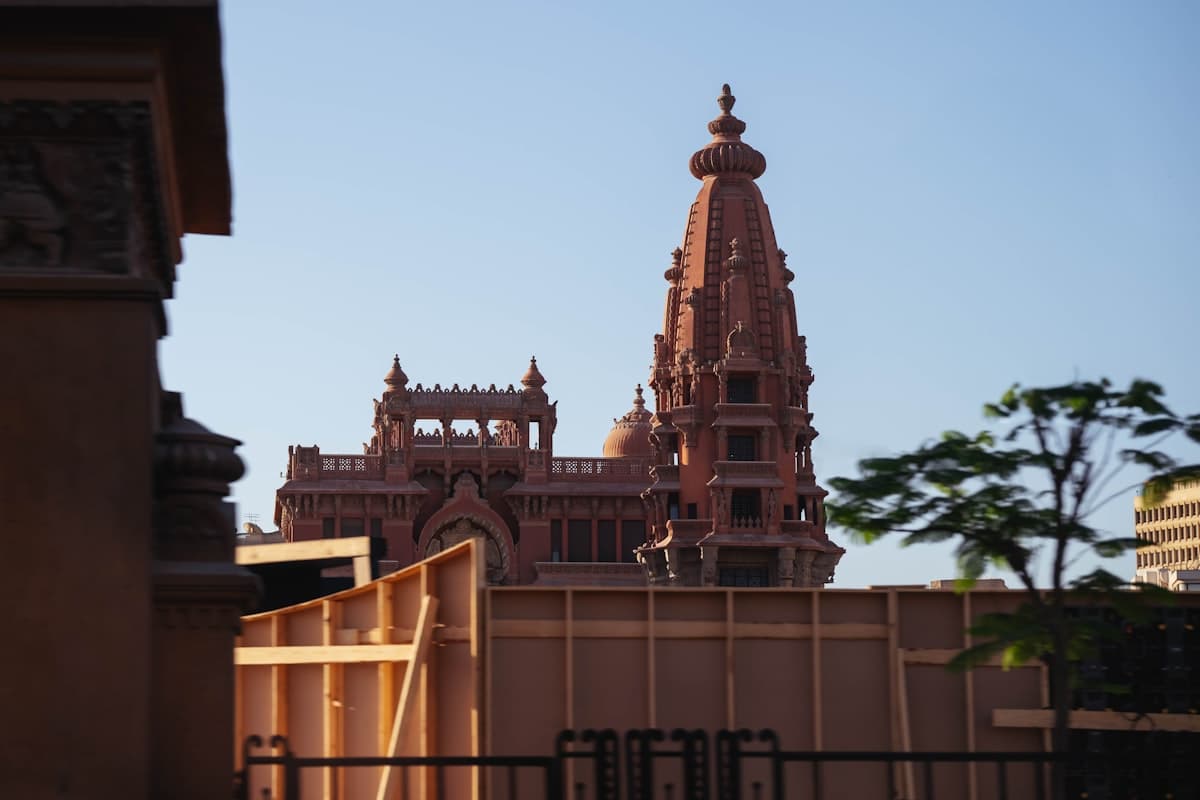
Heliopolis, Cairo's northeastern suburb built by Belgian industrialist Edouard Empain between 1905 and 1910 as a private city-within-a-city, became the neighborhood where many Free Officers were stationed and where the revolution's planning meetings took place. Empain's Hindu-Moorish-Byzantine palace still stands on the suburb's edge, empty and deteriorating, a monument to the colonial-era private capital that Nasser would systematically dismantle.
Common Mistakes
Treating Tahrir Square as a destination rather than a starting point. The square itself offers nothing to look at. Its significance is political and historical and needs to be walked outward from, into Garden City, into Zamalek, into downtown Cairo's Khedival-era grid. Spending more than twenty minutes in the square itself is time you could spend in the neighborhoods it organizes.
Going to the Egyptian Museum without allocating at least half your time to the non-Tutankhamun collections. The Amarna rooms, the Old Kingdom statuary on the ground floor, and the daily life objects in the outer galleries are consistently uncrowded and consistently more interesting than the queues around Tutankhamun's gold.
Booking a revolution-themed tour that follows a script rather than a map. Several Cairo tour operators offer "1952 Revolution history tours" that amount to a drive past three buildings with a recited paragraph at each stop. Hire instead a private guide with a specific background in modern Egyptian history or political science. The Egyptian Guides Syndicate can refer qualified specialists. Expect to pay EGP 800 to 1,500 for a half-day private guide.
Visiting Abdeen Palace on a Friday. It is closed. Saturday through Thursday only, and close early at 3pm. Many visitors arrive to a locked gate because they did not check.
The sound and light show at the Citadel costs EGP 300 and covers Ottoman history with the depth of a Wikipedia summary read aloud over recorded music. Skip it. The Citadel itself, explored on foot with a good guidebook during daylight, will give you more in an hour than the show delivers in ninety minutes.
Assuming the revolution's story ends in 1954. Nasser's Egypt ran until 1970. Sadat's adjustments ran until 1981. Mubarak's long stasis ran until 2011. Walking revolutionary Cairo without understanding that the 2011 Tahrir uprising was explicitly framed by its participants as completing the unfinished work of 1952 is like reading only the first chapter of a novel.
Ignoring Nubian Cairo entirely. The revolution's Aswan High Dam project displaced an entire civilization's worth of monuments and people. The Nubian Museum in Aswan covers this comprehensively, but Cairo's own Nubian community in Manshiyat Naser and the displacement objects now housed in the Egyptian Museum's lesser-visited storage annexes give you the Cairo end of that story.
Practical Tips
The Egyptian Museum will begin transferring portions of its collection to the Grand Egyptian Museum at Giza as that facility reaches full operational capacity. Check current status before planning your visit, as some specific objects may have moved.
Downtown Cairo's Khedival grid, the area between Tahrir and Ramses Station, is navigable on foot and worthwhile at street level. The architecture from the 1860s through the 1920s, including the still-functioning Groppi cafe on Talaat Harb Square, the facade of the old Shepherd's Hotel site, and the Cinema Radio building, gives the pre-revolutionary urban order a physical form. The original Shepherd's Hotel was burned on Black Saturday, January 26, 1952, six months before the coup, when Cairo mobs burned 750 buildings in a single afternoon. The fire started at the hotel's bar.
For context before you arrive, read Khaled Fahmy's "In Quest of Justice" for Ottoman and Khedival Cairo, and Joel Gordon's "Nasser's Blessed Movement" for the Free Officers period. Both are readable by non-specialists and will transform what you see on the street from architecture into argument.
Dress conservatively when entering the Ar-Rifa'i Mosque or any other active religious site connected to these historical layers. Shoulders and knees covered, shoes removable. The mosque custodians are not hostile to visitors but they are also not tour guides and should not be treated as such.
Frequently Asked Questions
The Weekly Dispatch
More on Egypt, every Friday.
Cultural depth and places most guides never mention.
No spam. Unsubscribe anytime.