Mohamed Ali Mosque: Albanian History and Egypt's Ottoman Soul
Mohamed Ali was Albanian, spoke no Arabic, and never intended to stay. He ended up founding a dynasty that ruled Egypt for 150 years. His mosque is the proof.

Quick Facts
- Best time to visit
- October to April, arriving before 9am to avoid tour groups and experience the alabaster courtyard in clear morning light
- Entrance fee
- EGP 200 (approx $4 USD) for the full Citadel complex including the mosque. Students EGP 100 with valid ID.
- Opening hours
- Daily 8am to 5pm. Prayer times restrict interior access, particularly Friday midday. Hours may shift during Ramadan.
- How to get there
- Taxi from Downtown Cairo: EGP 60 to 80. Uber from Tahrir Square: EGP 50 to 70. Metro to Mar Girgis then microbus: approximately EGP 10 total.
- Time needed
- 2 hours for the mosque and terrace. 4 hours for the full Citadel complex. Half-day if combining with Ibn Tulun Mosque afterward.
- Cost range
- Budget visit EGP 400 to 600 including transport. Mid-range with lunch EGP 1,200 to 1,800.
Quick Facts
Best time to visit: October to April, arriving before 9am to beat school groups and tour buses. The morning light inside the alabaster courtyard is worth the early start.
Entrance fee: EGP 200 (approximately $4 USD) for general admission to the Citadel complex, which includes the mosque. Students with valid ID pay EGP 100. The fee covers the entire Citadel area, not just the mosque.
Opening hours: Daily 8am to 5pm. During Ramadan, hours shift and the mosque fills with worshippers in the evening. Plan accordingly.
How to get there: From Downtown Cairo, a taxi to the Citadel costs EGP 60 to 80. The metro to Mar Girgis station followed by a microbus up Salah Salem Road is roughly EGP 10 total but involves a walk. Uber runs EGP 50 to 70 from Tahrir Square depending on traffic. Do not pay more than EGP 100 from anywhere central.
Time needed: Two hours minimum for the mosque and its terrace alone. Allow four hours if you intend to walk the full Citadel, including the Military Museum and the southern enclosure walls.
Cost range: Budget EGP 400 to 600 for the visit including transport and a tea afterward in the surrounding neighborhood. Mid-range, adding lunch at a Citadel-area restaurant, brings you to EGP 1,200 to 1,800.
---
Mohamed Ali Pasha arrived in Egypt in 1801 as a junior officer in an Albanian regiment of the Ottoman army, sent to reclaim the country from Napoleon's retreating forces. He did not speak Arabic. He had no particular claim to Egyptian loyalty. He was, by the standards of the court he would later dominate, entirely unremarkable. By 1805 he had maneuvered, murdered, and negotiated his way to becoming Wali of Egypt. By 1811 he had invited the Mamluk leaders, who still constituted the real military power in the country, to a celebratory procession at the Citadel and had them all killed in the narrow gate passage at the bottom of the hill. Contemporary accounts put the number at 470 men. One Mamluk, a man named Amin Bey, reportedly jumped his horse from the walls and survived.
The mosque Mohamed Ali built over the next thirty years was not an act of piety. It was a statement of permanence from a man who had arrived as a foreigner and intended to be remembered as a founder.
---
Why This Place Matters
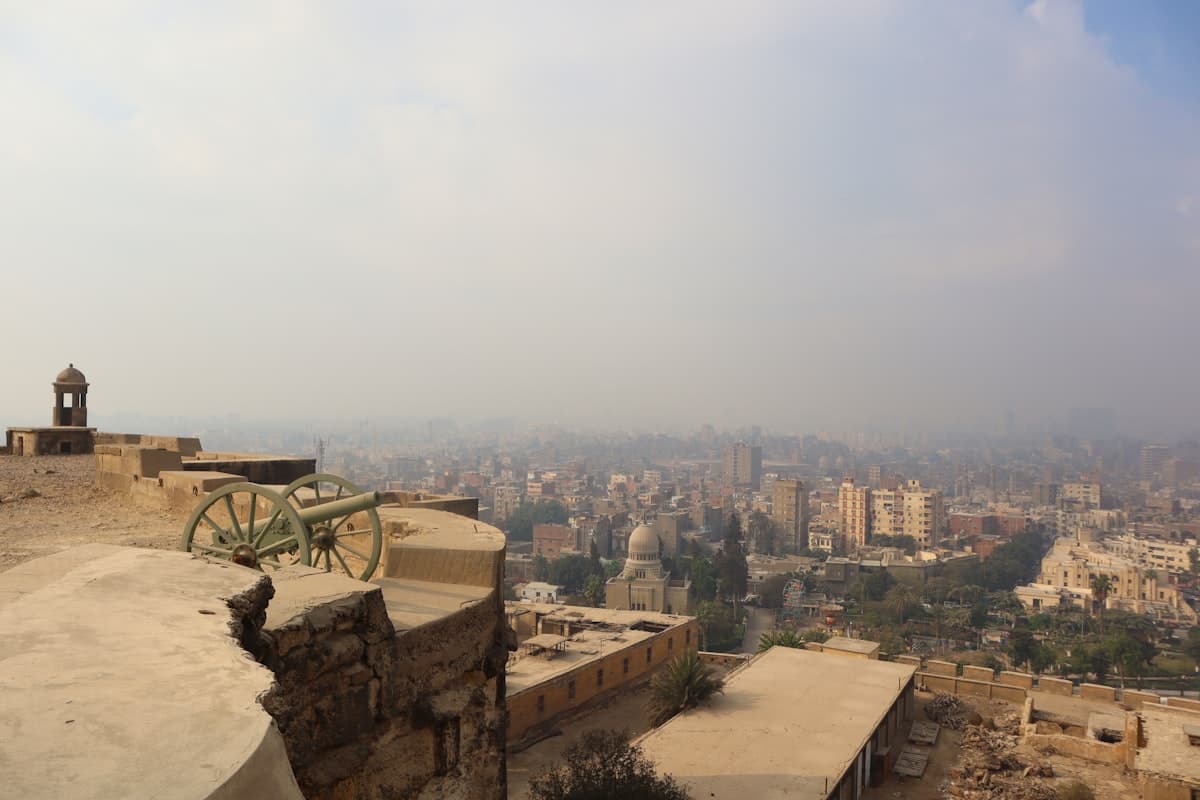
The Citadel of Saladin, on which the mosque sits, has been the military and administrative heart of Cairo since 1176. Saladin built it to consolidate power after deposing the Fatimid Caliphate, using stones quarried from the smaller Giza pyramids and, according to some medieval accounts, from the outer casing of the Great Pyramid itself. The hill was chosen because it catches the wind that clears Cairo's dust, a practical consideration that medieval chronicler Abd al-Latif al-Baghdadi noted in his detailed account of Egyptian geography around 1200.
Every subsequent ruler of Egypt used the Citadel as their base. The Ayyubids expanded it, the Mamluks built palaces inside it, the Ottomans garrisoned it, and Napoleon's forces briefly occupied it in 1798. When Mohamed Ali began constructing his mosque in 1830, he was deliberately erasing his Mamluk predecessors: he demolished the Mamluk-era mosque of al-Nasir Muhammad, which had stood on the same site since 1318, to make room.
The architectural choice was itself a political message. Mohamed Ali hired a Greek-Ottoman architect named Yusuf Boshna and modeled the mosque explicitly on the Sultan Ahmed Mosque in Istanbul, the Blue Mosque, completed in 1616. He was telling the Ottoman Sultan, his nominal overlord, that Cairo was a capital worthy of the same grandeur as Istanbul. He was also telling Egyptians that he was not going anywhere.
The alabaster that sheathes the mosque's lower interior walls and its entire courtyard is local: it was quarried at Hatnub, near Amarna in Upper Egypt, the same site that supplied alabaster to Pharaonic workshops for over three thousand years. The quarry has been in near-continuous use longer than almost any industrial site on earth.
---
What You Will Actually See
From the outside, the mosque's two slender minarets and the bulging central dome read as Istanbul transplanted to a Cairo hilltop. This is not accidental. Up close, the Ottoman silhouette sits on a base of honey-colored local stone, and below it, if you look toward the northern enclosure wall, you can see courses of Pharaonic limestone blocks still embedded in the Citadel's medieval fortifications.
Entering the ablution courtyard, the dominant material is the alabaster that gives the mosque one of its informal names, the Alabaster Mosque. The courtyard contains a French clock tower, gifted to Mohamed Ali in 1846 by King Louis-Philippe of France in exchange for the obelisk that now stands in the Place de la Concorde in Paris. The clock has never worked reliably, a fact that Cairenes find locally amusing and that tour guides occasionally forget to mention.
Inside the prayer hall, the space is genuinely large: the central dome rises 52 meters and is flanked by four semi-domes, a layout that owes everything to Sinan, the Ottoman master architect whose influence spread across the entire Islamic world in the sixteenth and seventeenth centuries. The light that comes through the hundreds of small windows is particular in the morning hours, diffuse and warm, moving across the painted medallions and gilt inscriptions in a way that changes the room every twenty minutes.
Mohamed Ali's tomb is in the southeast corner behind a marble screen. It is easy to walk past. Most visitors do. The tomb is modest by the standards of the room around it, which is precisely the point: the mosque itself was the monument, not the man's grave.
The Terrace and What It Tells You About Cairo
The terrace on the mosque's western side is the reason to time your visit carefully. From here, on a clear morning before the smog thickens, you can see the Pyramids of Giza to the southwest, the minarets of medieval Cairo directly below, the silver thread of the Nile beyond them, and the desert plateau extending south toward Saqqara and Dahshur. You are looking at four thousand years of Egyptian civilization arrayed in a single sightline: Pharaonic, Coptic, Islamic, Ottoman, and modern, layered on top of each other on the same strip of inhabitable land along the same river.
The view alone justifies the visit. The smog justifies the early morning.
---
The Albanian Connection: Mohamed Ali's World
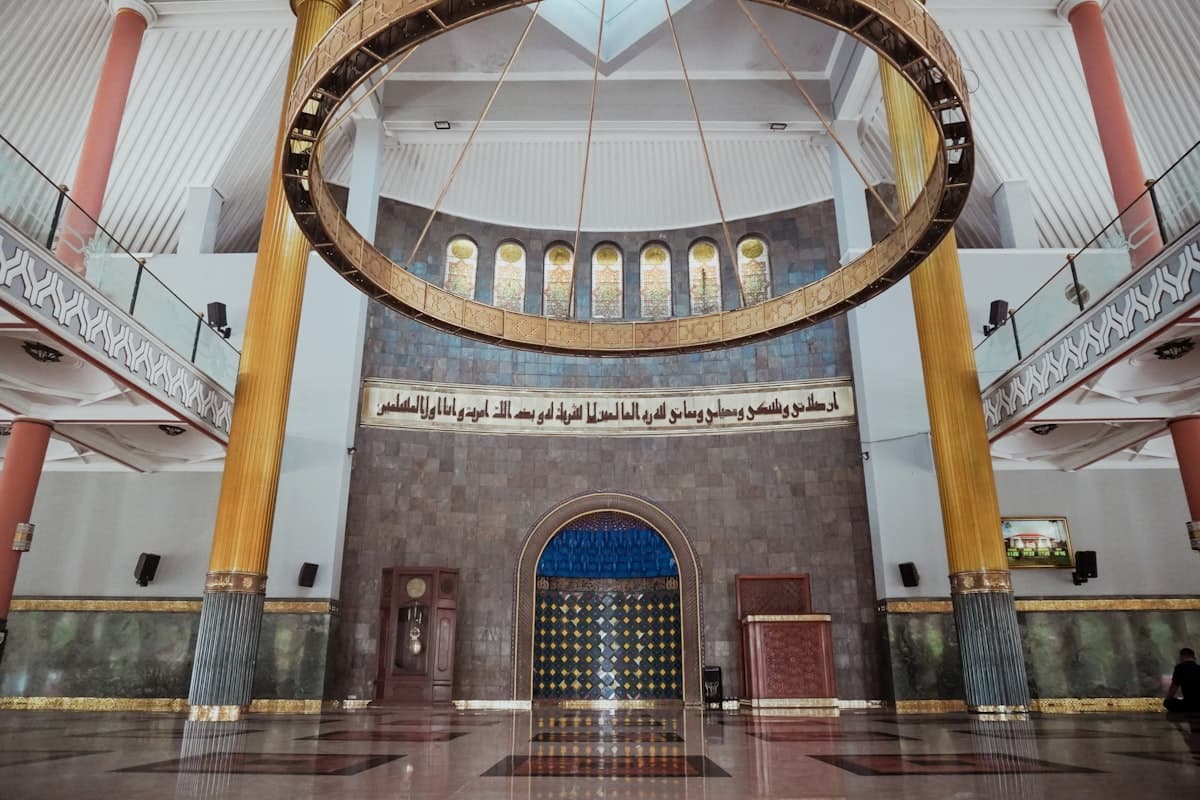
Understanding the Albanian history behind the Mohamed Ali Egypt story requires placing it in context most guides skip. Mohamed Ali was born around 1769 in Kavala, a port city in what is now northern Greece, then part of the Ottoman Empire's Albanian-populated territories. He was not ethnically Greek, not Ottoman Turk, and not Arab. He was Albanian, from a community that had supplied the Ottoman military with soldiers, governors, and administrators for centuries.
His early career was in tobacco trading, not soldiering. He joined the military only in 1798, part of the Ottoman response to Napoleon's invasion of Egypt. When the French withdrew, the power vacuum they left behind created an opportunity that Mohamed Ali, with considerable ruthlessness and political intelligence, seized completely.
His dynasty, the Muhammad Ali dynasty, ruled Egypt from 1805 until the revolution of 1952, which deposed his great-great-grandson King Farouk. In those 147 years, the dynasty produced a man who modernized Egypt's military and created its first state school system, a man who built the Suez Canal (Khedive Ismail, his grandson), and a man who led Egypt into World War One on the British side. All of them were Albanian in origin, spoke Turkish as their court language throughout the nineteenth century, and governed a country where the majority spoke Arabic and Coptic Christianity had been practiced continuously since the first century.
The mosque on the Citadel is the most visible surviving monument to that dynasty's particular position: foreign in origin, Ottoman in style, Egyptian in ambition, and built to last.
---
The Connections
The ground beneath the Citadel was not empty before Saladin arrived. Medieval geographers record a Pharaonic settlement on this spur of the Muqattam hills, and Roman-era water cisterns were incorporated into Saladin's construction. The Mamluk sultans who expanded the Citadel from the thirteenth century onward were themselves, like Mohamed Ali, originally foreigners: the word Mamluk means "owned", referring to their origins as enslaved soldiers purchased from Turkic and Circassian populations in Central Asia and the Caucasus. Sultan al-Nasir Muhammad, whose mosque Mohamed Ali tore down, was the son of a Circassian slave soldier. The man who replaced al-Nasir's mosque was himself the descendant of Albanian conscripts.
Three kilometers north of the Citadel, in the City of the Dead, the mausoleum of Sultan Barquq contains the tombs of the first Circassian Mamluk sultan, who seized power in 1382. His dynasty and Mohamed Ali's share the same fundamental biography: outsiders who came to Egypt by force or circumstance and built monuments to prove they had arrived for good.
The Coptic connection is less obvious but real. The Muqattam hills were, according to medieval tradition, the site of the miracle attributed to the Coptic saint Simon the Tanner, whose prayers reportedly caused the mountain to move in 975 AD, during the reign of the Fatimid Caliph al-Muizz. The cave church complex dedicated to Simon is carved into the hillside directly below the Citadel's southern walls, visible from the terrace of Mohamed Ali's mosque if you know where to look. The mountain that Saladin fortified, that the Mamluks expanded, and that Mohamed Ali crowned with his Ottoman dome is the same mountain Coptic Christians consider sacred ground.
---
Common Mistakes
Arriving after 10am. Tour buses from Giza and Downtown begin arriving at the Citadel around 9:30am. By 10am, the courtyard is crowded enough that the alabaster and the proportions of the space are lost. The mosque was designed to be understood in relative quiet. Come before 9am.
Paying for a guide at the gate. The unofficial guides who approach at the entrance will offer their services for EGP 200 to 300. Most will tell you the clock doesn't work and that the obelisk in Paris is Egyptian and not much else. Read this article instead.
Skipping the rest of the Citadel. The Police Museum, housed in a former Mamluk palace on the northern side, contains a small exhibit on the assassination of Anwar Sadat that is more direct and less sanitized than anything in the main Egyptian history museums. It costs nothing beyond your admission ticket and takes thirty minutes.
The sound and light show. It costs EGP 350, runs for forty-five minutes, and uses a narration that was apparently written in the 1970s and never updated. It adds nothing to what you already know and takes place in the cold. Skip it without guilt.
Wearing shoes that slip on marble. The floors of the prayer hall and the courtyard are polished marble and alabaster. In winter they are cold and slippery. Practical flat-soled shoes matter more than you would think.
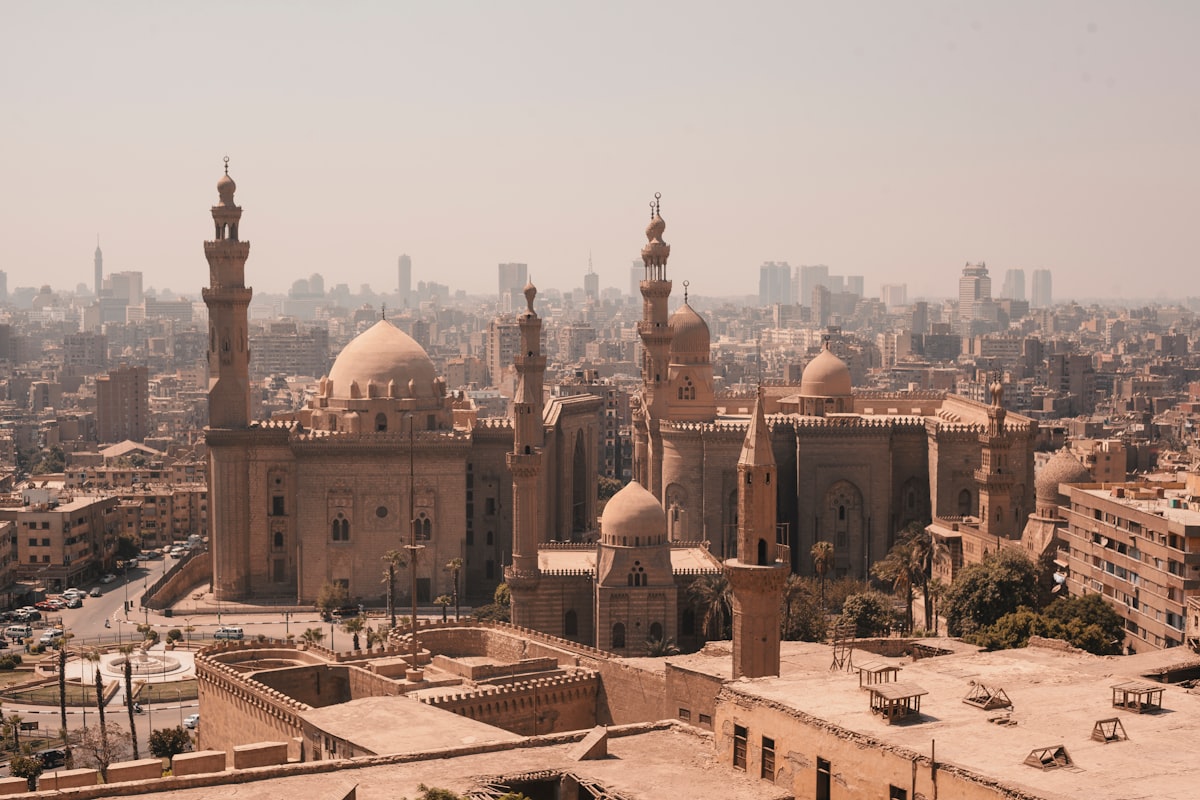
Not looking down at the medieval city. Most visitors photograph the Pyramids view from the western terrace and miss the northern terrace view, which looks directly down over the medieval city of Cairo, the minarets of Sultan Hassan, al-Rifai, and the Ibn Tulun mosque. This is the more historically interesting view and it is almost always less crowded.
Confusing the Mohamed Ali Mosque with the Mohamed Ali Palace in Manial. They are different places, different eras, on different sides of the city. The Manial Palace, on Rhoda Island, was built by a different Mohamed Ali (Prince Mohamed Ali Tewfik, great-grandson of the Pasha) in the early twentieth century. Both are worth visiting, but they are not the same visit.
---
Practical Tips
Dress conservatively. The mosque is an active place of worship, and the robes available at the entrance for women who need to cover are low quality and shared. Bring your own scarf and wear long sleeves regardless of season. Men in shorts will be given a wrap at the door.
The Citadel sits at the edge of a neighborhood called al-Khalifa, one of Cairo's older residential quarters. After the mosque, walk ten minutes downhill to the area around the mosque of Ibn Tulun, the oldest mosque in Cairo to survive in its original form, built in 879 AD. Admission is minimal and the space is extraordinary. This combination, the Citadel in the morning and Ibn Tulun before lunch, is one of the best half-days in Cairo and most tour itineraries miss it entirely.
Bring water. The walk from the Citadel gate to the mosque is longer than the map suggests, and the terrace offers no shade in summer.
The Citadel neighborhood restaurants are generally overpriced for their quality. Walk down to the streets near Ibn Tulun for better food at a third of the cost. A plate of kushari or a fuul sandwich at a local spot will cost EGP 30 to 60 and will be considerably better than anything served near the tourist entrance.
Frequently Asked Questions
The Weekly Dispatch
More on Egypt, every Friday.
Cultural depth and places most guides never mention.
No spam. Unsubscribe anytime.