Mohamed Ali Pasha and the Making of Modern Egypt: Cairo's Living Legacy
He massacred the Mamluks at a dinner party, then rebuilt Cairo in their image. Mohamed Ali's Egypt is stranger, bloodier, and more brilliant than the textbooks admit.

Quick Facts
- Best time to visit
- October to March for cool temperatures and optimal light on the mosque between 9am and 11am. Avoid July and August on the exposed Citadel plateau.
- Entrance fee
- Citadel complex: EGP 450 (approx $9 USD), students EGP 225. Shubra Palace: EGP 60 (approx $1.20 USD). Both cash-preferred, Citadel increasingly accepts cards.
- Opening hours
- Citadel: daily 8am to 5pm (winter), 8am to 6pm (summer). Shubra Palace: Saturday through Thursday 9am to 4pm, closed Friday. Arrive before noon on Fridays at either site due to prayer schedules.
- How to get there
- Citadel: Metro to Sayyida Zeinab (Line 2), then tuk-tuk EGP 10 to 15, or taxi from Tahrir EGP 40 to 60. Shubra Palace: Metro Line 1 to Shubra el-Kheima station, five-minute walk.
- Time needed
- Citadel alone: 3 to 4 hours minimum. Shubra Palace: 1.5 to 2 hours. Combining both sites in one day is possible with an early start.
- Cost range
- Budget EGP 600 to 900 per day including transport, entry, and street food. Mid-range EGP 1,800 to 2,800 including a private guide and sit-down lunch.
Quick Facts
Best time to visit: October through March, when the Citadel plateau is cool enough to walk without wilting and the light on the alabaster mosque turns honey-gold by mid-morning.
Entrance fee: The Citadel complex (which includes the Mosque of Mohamed Ali and the Military Museum) costs EGP 450 for adults, approximately $9 USD at current exchange rates. Students with ID pay EGP 225. The Mohamed Ali Palace in Shubra costs EGP 60 (about $1.20 USD) and is absurdly underpriced for what you get.
Opening hours: The Citadel is open daily from 8am to 5pm in winter, 8am to 6pm in summer. The Shubra Palace is open Saturday through Thursday, 9am to 4pm. Fridays are complicated at both sites due to congregational prayer schedules, so arrive before noon.
How to get there: From downtown Cairo, take the metro to Sayyida Zeinab station (Line 2), then a tuk-tuk or microbus up Salah Salem toward the Citadel for EGP 10 to 15. A taxi from Tahrir Square runs EGP 40 to 60. The Shubra Palace is in Shubra el-Kheima, accessible by metro on Line 1, exit at Shubra el-Kheima station, then a five-minute walk.
Time needed: The Citadel alone deserves three to four hours if you want to understand what you are looking at. Add two hours for Shubra Palace. Combining both in one day is possible but exhausting.
Cost range: Budget EGP 600 to 900 per day covering transport, entry, and street food. Mid-range EGP 1,800 to 2,800 including a sit-down lunch near the Citadel.
---
Why This Place Matters
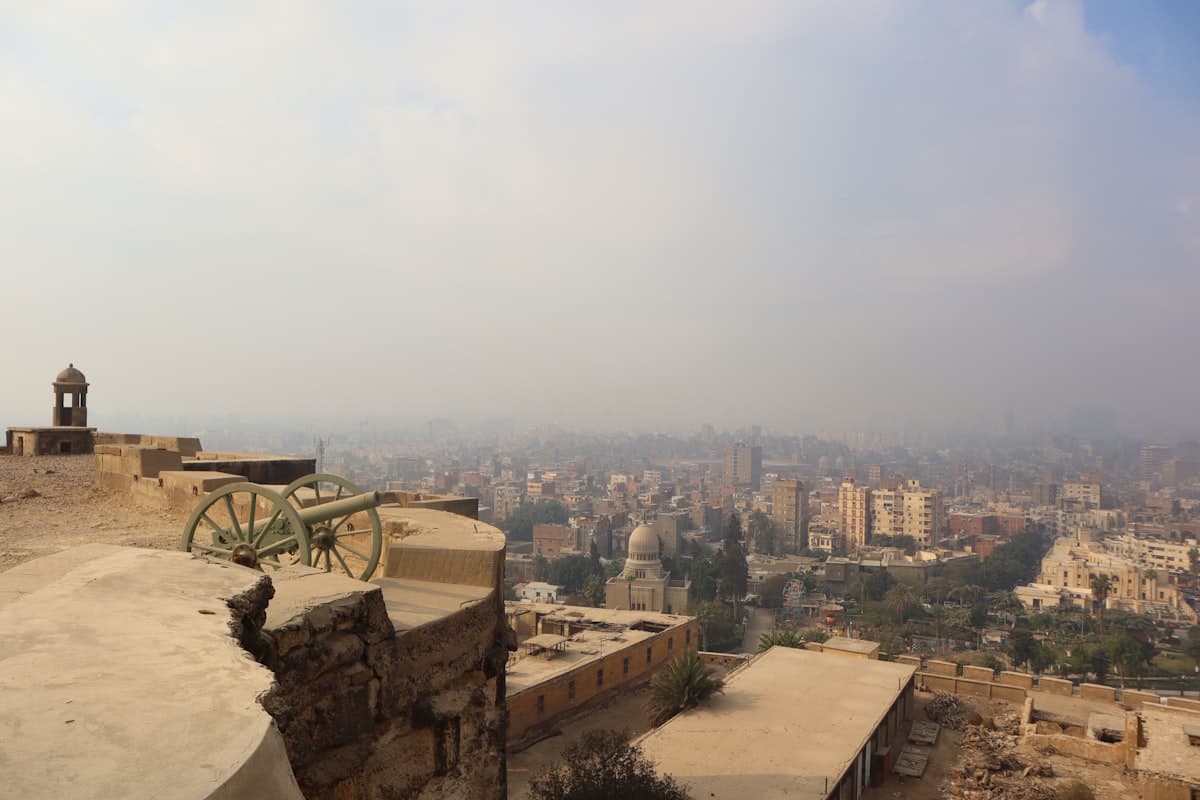
Mohamed Ali Pasha did not come to Egypt as a liberator. He came as an Ottoman officer, part of a force sent to dislodge Napoleon's army after the French occupation ended in 1801. Within four years, he had outmaneuvered the Ottomans, the British, and the remnant Mamluk beys to become governor of Egypt. Within ten, he was effectively running a sovereign state that the Ottoman Sultan in Istanbul could barely control.
What makes Mohamed Ali Pasha's modernizing of Egypt history worth understanding is not the familiar story of a reformer who sent students to Paris and built factories. It is the specific, often brutal logic beneath those reforms. He dismantled the Mamluk ruling class not through a military campaign but through an invitation. In March 1811, he hosted the Mamluk leaders at a banquet in the Citadel to celebrate his son's appointment as commander of a campaign against the Wahhabis in Arabia. When the guests descended the narrow lane now called the Massacre Corridor, the gates closed behind them and his soldiers opened fire from the walls above. Approximately 470 Mamluks died. One, a man named Amim Bey, reportedly rode his horse off the Citadel wall and survived. The corridor still exists. Most tour groups walk through it without being told what happened there.
That act of calculated violence cleared the path for everything that followed. Mohamed Ali seized their estates, abolished the tax farming system that had enriched them, and redirected those revenues into a state-building project unlike anything Egypt had seen since the Ptolemies. He sent forty-four Egyptian students to France in 1826, the first organized educational mission of its kind. He built a printing press, a medical school staffed by French doctors, a military academy, and textile factories powered by Nile flooding. He even hired a French officer, Colonel Sève (who converted to Islam and became Suleiman Pasha al-Faransawi), to rebuild the Egyptian army along European lines. The obelisk in the Place de la Concorde in Paris was a diplomatic gift from Mohamed Ali to France in 1833, exchanged for a clock that still sits in the Citadel mosque courtyard and has never worked.
---
The Citadel: Layers You Are Not Supposed to Notice
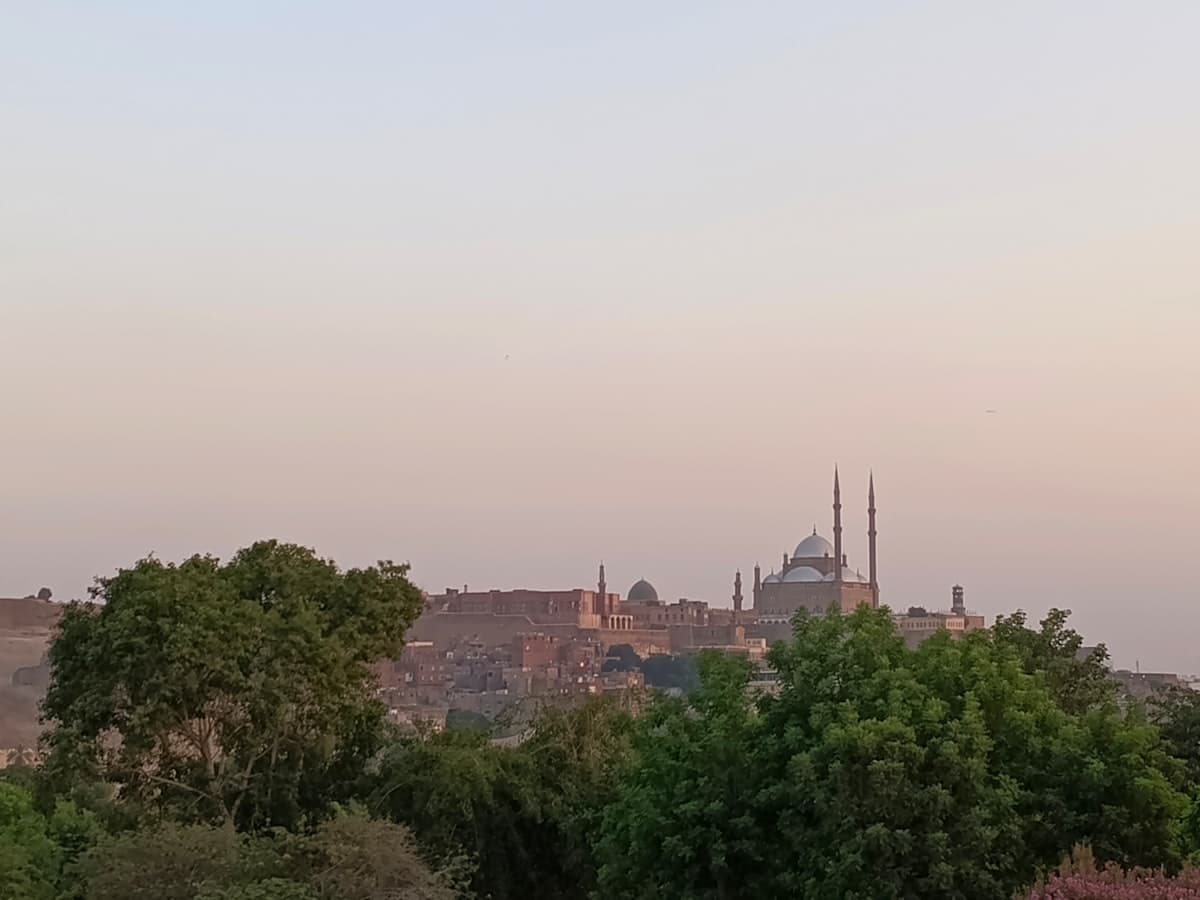
Saladin built the Citadel in 1176, using stone quarried from the smaller pyramids of Giza. The workers who built it were, in part, Crusader prisoners. The Mamluks expanded it over five centuries. Then Mohamed Ali tore down most of what they had built and replaced it with the mosque that now defines Cairo's skyline, a building so deliberately Ottoman in style that it looks like it belongs in Istanbul rather than Egypt.
This was the point. Mohamed Ali wanted to signal continuity with Ottoman imperial architecture while simultaneously asserting that Egypt was its own civilizational center. The mosque took eighteen years to complete (1830 to 1848) and was still unfinished when he died. Its interior is covered in alabaster quarried from Beni Suef, a town on the Nile between Cairo and Minya, which is why the building glows from within in a way that standard limestone construction cannot replicate.
What most visitors miss entirely is the Mosque of al-Nasir Muhammad, which sits just below the alabaster mosque and represents what Mohamed Ali deliberately eclipsed. Al-Nasir, who ruled Egypt three separate times between 1293 and 1341, built one of the finest Mamluk structures in the Citadel. Its minarets are covered in faience tilework in a style borrowed from Persia. Mohamed Ali stripped the marble from its interior and shipped it to his new mosque in Alexandria. The shell that remains is still beautiful, largely ignored, and completely free once you have paid the Citadel entrance fee.
The Military Museum, housed in the old Harem Palace that Mohamed Ali built for his family, contains his actual throne room. The painted ceilings are original. A display case near the entrance holds one of his pipes. This is not a museum anyone is sent to, and it shows in the attendance. You may have it nearly to yourself.
---
The Shubra Palace: The Egypt He Wanted to Become
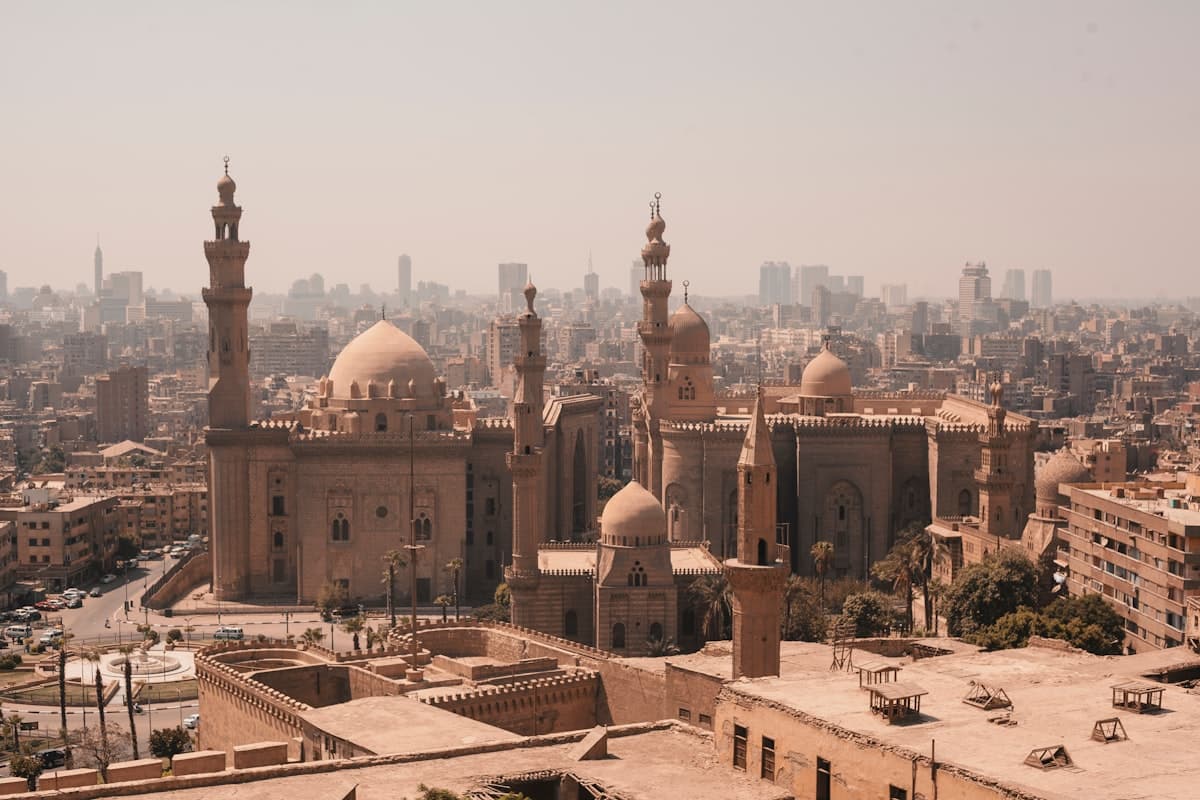
If the Citadel mosque shows what Mohamed Ali wanted to project outward, the Shubra Palace shows what he wanted for himself. He built it in 1808 in a district north of Cairo that was then orchards and farmland, connected to the city by a road lined with sycamore trees. The road is now a congested arterial. The orchards are apartment blocks. But the palace survives, and it is one of the strangest and most undervisited buildings in Cairo.
The centerpiece is a fountain hall enclosing an enormous pool, surrounded by colonnaded galleries that mix Ottoman, Italian baroque, and French neoclassical elements in a way that looks deliberately hybrid rather than confused. Mohamed Ali received European dignitaries here. He wanted them to see an Egyptian ruler who could speak their architectural language while remaining unmistakably himself.
The pool was fed by a canal system Mohamed Ali's engineers dug specifically to supply the palace gardens. A century later, Khedive Tewfik used the same palace for receptions. The building fell into state hands after the 1952 revolution, was used as a children's nursery for several decades, and opened as a museum relatively recently. The restoration is imperfect and ongoing. Some rooms feel like a building site. Others feel like you have walked into a scene that has been waiting for you specifically.
Visit on a weekday morning. There is a real chance you will be alone.
---
The Connections: Nothing in Cairo Exists Alone
Mohamed Ali's project of modernizing Egypt did not happen in a vacuum. It happened on top of five thousand years of accumulated infrastructure, ideology, and institutional memory, and he used all of it.
The Citadel itself sits on a spur of the Muqattam Hills directly above Fustat, the first Islamic capital of Egypt, founded in 641 AD by the Arab general Amr ibn al-As. Fustat's ruins lie roughly two kilometers south of the Citadel. The Romans had a fortress nearby called Babylon, which still exists inside the Coptic Cairo district. The Fatimids built Cairo proper in 969 AD two kilometers north. The Mamluks fortified all of it. Mohamed Ali inherited a city that was already a thousand years of Islamic urbanism laid over a thousand years of Roman administration laid over three thousand years of Pharaonic civilization.
His cotton economy, which generated the revenue that funded everything else, depended on the Nile irrigation system the Pharaohs had organized and the Arab geographers had mapped. His medical school at Qasr al-Aini (which still functions as a hospital today) was located on a site that had been a Mamluk pleasure garden. His printing press at Bulaq, established in 1820, stood on a Nile island that had been a major port since at least the medieval period.
The French scholars who came with Napoleon's expedition (1798 to 1801) produced the Description de l'Egypte, a twenty-three volume survey of Egyptian geography, history, and antiquities. Mohamed Ali used it as a planning document. He understood that European powers would value Egypt in proportion to their understanding of its past, and he managed access to antiquities accordingly, gifting obelisks and statues to France, Britain, and the Ottoman court as diplomatic instruments. The obelisk that now stands in the Place de la Concorde in Paris was one of a pair from the Luxor Temple. The other is still in Luxor. France has never returned the first one despite occasional requests.
---
Common Mistakes
Skipping the Massacre Corridor entirely. Tour guides often hurry groups past the narrow descending lane without naming it. Ask specifically to stop there. The physical space, enclosed walls, sharp angle, limited visibility, makes the 1811 event comprehensible in a way that no written account quite achieves.
Spending all your time in the mosque and none in the Mamluk section. The Mosque of al-Nasir Muhammad and the remnant Mamluk palace buildings are included in your ticket. They receive perhaps ten percent of the visitor attention the alabaster mosque receives. This is a waste of a rare opportunity.
The sound and light show at the Citadel. It costs EGP 300 and narrates a simplified version of Egyptian history that you will have already learned from better sources. The view of the city lights from the Citadel walls at dusk is genuinely good. You do not need to pay EGP 300 to access that view. The show adds nothing.
Visiting the Shubra Palace without calling ahead. The opening hours listed online are not always honored. Call the palace directly or have your hotel call the day before to confirm the building is open. Arriving to find it locked is a real and reported experience.
Treating Mohamed Ali as purely a hero or purely a villain. Guides sometimes push one or the other. He suppressed Sudanese populations through brutal military campaigns, forced Egyptian peasants into corvée labor on his irrigation projects, and reorganized land ownership in ways that benefited his family for generations. He also built the institutional infrastructure that made a modern Egyptian state possible. These things are not in tension. They are the same project.
Missing the clock in the mosque courtyard. The non-functioning French clock given in exchange for the Paris obelisk is labeled but rarely explained. It is a perfect symbol of the entire Mohamed Ali era: an exchange that looked balanced and was not, a gift that never quite worked as advertised, a thing that is still there if you look for it.
Arriving without cash. The Citadel ticket office has become more reliable about accepting cards, but the smaller sites, including Shubra Palace, operate cash only. Bring EGP in small denominations.
---
Practical Tips
October through February gives you manageable temperatures and the best light on the alabaster mosque between 9am and 11am. July and August on the Citadel plateau are punishing, and the rock surface radiates heat even in shade.
Friday mornings bring congregational prayer crowds to the mosque interior. If you want to examine the interior slowly, go Saturday through Thursday before noon. The mosque is a functioning place of worship. Remove shoes, dress conservatively, and move quietly near the prayer hall even when services are not in session.
Hire a private guide for the Citadel specifically rather than joining a group tour. The difference in what you learn is not marginal. A knowledgeable guide will take you into the Mamluk sections, explain the corridor, point out the clock, and connect the building to the broader arc of Mohamed Ali Pasha's modernizing of Egypt history in ways that a group tour simply does not have time for. Expect to pay EGP 400 to 600 for two to three hours.
For the Shubra Palace, no guide is formally required and the site is small enough to navigate independently. But bring your own water. There is no reliable refreshment vendor inside the palace grounds.
The walk from the Citadel down through the Darb al-Ahmar district, past the Mamluk street architecture and into the Khan al-Khalili area, takes about forty minutes on foot and passes some of the finest medieval Islamic streetscape in the city. Do it in the late afternoon when the light comes from the west and the street vendors are setting up for the evening trade. This walk is the best free thing you can do in Cairo.
Frequently Asked Questions
The Weekly Dispatch
More on Egypt, every Friday.
Cultural depth and places most guides never mention.
No spam. Unsubscribe anytime.