Mohamed Ali Pasha and the Modernization of Egypt: A Cairo Guide
He executed 470 Mamluk lords at a single dinner party and used the proceeds to build a modern nation. The Citadel still holds both stories.

Quick Facts
- Best time to visit
- October through March. The Citadel ridge is exposed and unshaded; summer heat makes the site uncomfortable by 10am. Winter mornings offer clear views of the Giza plateau from the northern terrace.
- Entrance fee
- EGP 450 (approx $9 USD) for the Citadel complex including the Mohamed Ali Mosque. Students with valid ID pay EGP 225. National Military Museum inside the grounds is an additional EGP 75.
- Opening hours
- Daily 8am to 5pm. Mosque closes briefly during each of the five daily prayer times. Arrive before 9am to see the alabaster interior without crowds.
- How to get there
- Taxi or rideshare from Tahrir Square: approximately EGP 30 to 50. Bus 951 from Abdel Moneim Riad terminal near Tahrir: EGP 5. Metro Line 2 to Sadat Station then taxi. No direct metro stop at the Citadel.
- Time needed
- 2 to 3 hours for the Citadel and Mohamed Ali Mosque. Half-day if combining with Al-Nasir Muhammad Mosque, Military Museum, and walk through Al-Khalifa district to Ibn Tulun Mosque.
- Cost range
- Budget EGP 600 to 900 per person including entry, transport, and a meal in Islamic Cairo. Mid-range EGP 1,500 to 2,200 with a licensed guide and restaurant lunch.
He ruled Egypt for 43 years, spoke no Arabic until he was middle-aged, and is buried in a mosque he never lived to see completed. Mohamed Ali Pasha arrived in Egypt in 1801 as an Albanian soldier in an Ottoman army sent to expel Napoleon. By 1805 he had outmaneuvered both the French legacy and the Ottoman governor, and appointed himself ruler of a country he had entered as a foreign conscript. He would spend the next four decades dismantling one Egypt and building another, at a cost that the history books tend to undercount.
The Citadel of Cairo is where you feel this most directly. Not in the museum labels, which are dutiful but thin, but in the physical accumulation of the place: a medieval fortress on a Pharaonic limestone ridge, expanded by a Mamluk sultan who was himself a former slave, then seized and rebuilt by an Albanian Ottoman commander who decided that the future of Egypt looked like Paris and Manchester, not Constantinople.
Quick Facts
Best time to visit: October through March. The Citadel sits on an exposed ridge at 75 meters above the city, which means the summer heat is unshaded and punishing. Winter mornings offer the clearest views of Cairo below and, on clean days, the Giza plateau to the southwest.
Entrance fee: EGP 450 (approximately $9 USD) for the Mohamed Ali Mosque and Citadel complex. The National Military Museum inside the grounds costs an additional EGP 75. Students with valid ID pay EGP 225 for the main complex.
Opening hours: Daily 8am to 5pm. The mosque closes briefly during Friday noon prayer. Arrive before 9am if you want the main courtyard to yourself.
How to get there: From Tahrir Square, take the Cairo Metro Line 2 to Sadat Station, then a taxi or rideshare to the Citadel (roughly EGP 30 to 50 by meter). Alternatively, bus 951 runs from Abdel Moneim Riad terminal near Tahrir for EGP 5. The Citadel is 8 kilometers from central Cairo, and the road up through the historic quarter of Al-Khalifa is worth taking slowly if you have a driver willing to go the scenic route.
Time needed: Two to three hours for the mosque and main Citadel grounds. Add two hours if you intend to visit the adjacent Al-Nasir Muhammad Mosque (Mamluk, 1318) and the Carriage Museum. A full day combining the Citadel with the nearby Mosque of Ibn Tulun and the Gayer-Anderson Museum makes a coherent historical sequence.
Cost range: Budget EGP 600 to 900 per person including entry, transport, and a meal in the Al-Khalifa district. Mid-range EGP 1,500 to 2,200 if you add a guide, lunch at a restaurant in Islamic Cairo, and a taxi both ways from a hotel.
Why This Place Matters
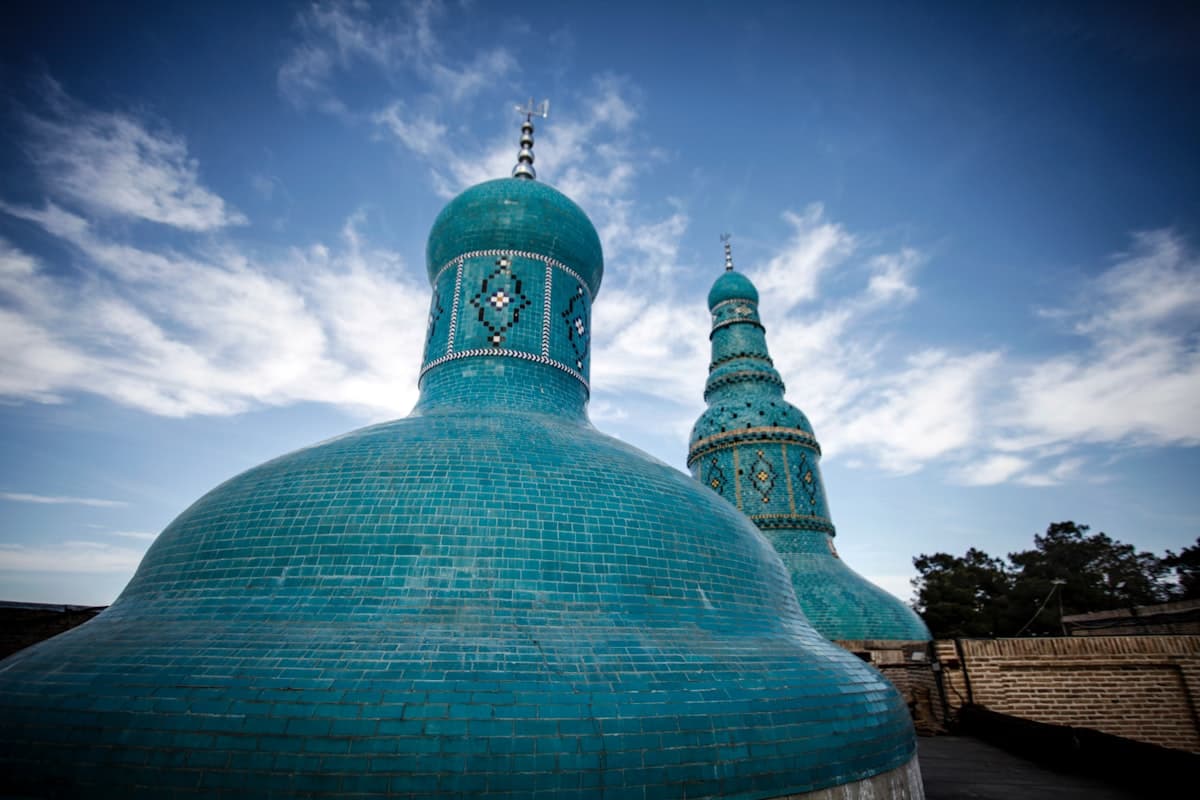
Mohamed Ali Pasha modernizing Egypt history is not a story that begins cleanly, and it does not end cleanly either. It begins, in one sense, with Napoleon. The French invasion of 1798 lasted only three years, but it cracked something open: Egypt's military and administrative weakness was suddenly visible to everyone, including the Egyptians. The Mamluks, who had governed the country as a military caste for five centuries despite nominal Ottoman sovereignty, could not repel the French. The Ottomans who came to remove the French couldn't hold the country afterward. Into that vacuum walked the Albanian brigades, and into that vacuum walked Mohamed Ali.
He consolidated power through a method that has made Egyptian historians uncomfortable ever since. In March 1811, he invited the Mamluk beys, the surviving leadership class of the old order, to a banquet at the Citadel to celebrate his son Tusun's appointment to lead a military campaign in Arabia. Somewhere between 470 and 500 Mamluk lords attended. The gates were closed. Nearly all of them were killed. One account, probably apocryphal but persistent, has a single survivor jumping his horse from the Citadel walls. The Mamluks, as a political and military force, ceased to exist that afternoon. Mohamed Ali seized their landholdings, their revenues, and their administrative networks, and used those resources to fund a program of industrialization and institutional reform that reshaped every layer of Egyptian society.
He built Egypt's first secular schools, sent student missions to Paris (including the future translator and intellectual Rifa'a al-Tahtawi, who came back fluent in French and full of ideas about constitutional government), established a state printing press, reformed land tenure, built a cotton export economy that would define Egypt's economic profile for a century and a half, and created a conscript army trained by French officers. By the 1830s, that army had conquered Sudan, fought the Ottomans to a standstill in Syria, and prompted Britain and Austria to intervene diplomatically because an Egyptian empire was not part of anyone's European strategic plan.
What You Will Actually See at the Citadel
The Mohamed Ali Mosque: Ottoman Form, Egyptian Stone
The mosque that dominates the Citadel's southern end was begun in 1830 and completed in 1848, two years after Mohamed Ali died in a state of mental decline. He is buried inside, in an alabaster tomb in the western vestibule. The building was designed by a Greek-Turkish architect named Yusuf Bushnak in explicit imitation of the Yeni Cami mosque in Istanbul, which is itself modeled on the Hagia Sophia. In other words, the most prominent structure in Mohamed Ali's transformed Egypt is an architectural citation of Byzantine Christian architecture filtered through Ottoman imperial taste, built from alabaster quarried near Luxor.
The alabaster covering on the lower walls of the interior is the detail most visitors move past without registering. Egypt was, and remains, one of the world's major sources of this translucent calcite stone. Mohamed Ali controlled the quarries as part of his nationalization of Egyptian resources, and he used the material here partly as a display of that ownership. The stone is warm in color in the early morning, when light enters from the eastern windows. Come before the tour groups arrive to see it in something close to its intended atmosphere.
The courtyard clock tower is a piece of unintentional comedy. It was a gift from King Louis-Philippe of France in 1846, in exchange for the obelisk from Luxor Temple that Mohamed Ali sent to Paris in 1833. The obelisk stands in the Place de la Concorde and still functions as a landmark. The French clock has never worked correctly. It arrived in Cairo already damaged.
The Citadel's Deeper History: Before Mohamed Ali Got Here
Most visitors to the Citadel treat it as a Mohamed Ali site. It is older by six centuries. Salah al-Din al-Ayyubi, known in European historiography as Saladin, began construction here in 1176 on a limestone spur of the Muqattam Hills that had been identified by his military engineers as the most defensible high ground in the city. He never finished it: he left Egypt on campaign and never returned.
The complex that exists today was largely built by the Mamluk sultans who came after him, particularly Al-Nasir Muhammad ibn Qalawun, who rebuilt and expanded the Citadel three separate times between 1285 and 1341. His mosque, which still stands on the northern end of the Citadel grounds, predates the Mohamed Ali Mosque by five centuries and is architecturally more interesting: the minarets are covered in green and turquoise faience tiles from a cathedral in Acre, brought to Cairo as war trophies after the fall of the Crusader city in 1291.
Mohamed Ali demolished most of the Mamluk structures on the southern half of the Citadel to build his new mosque and palace complex. This was not architectural indifference. Erasing Mamluk physical presence from the seat of Egyptian power was a continuation of what he did at the 1811 dinner party.
The Connections: How the Citadel Holds Egypt Together
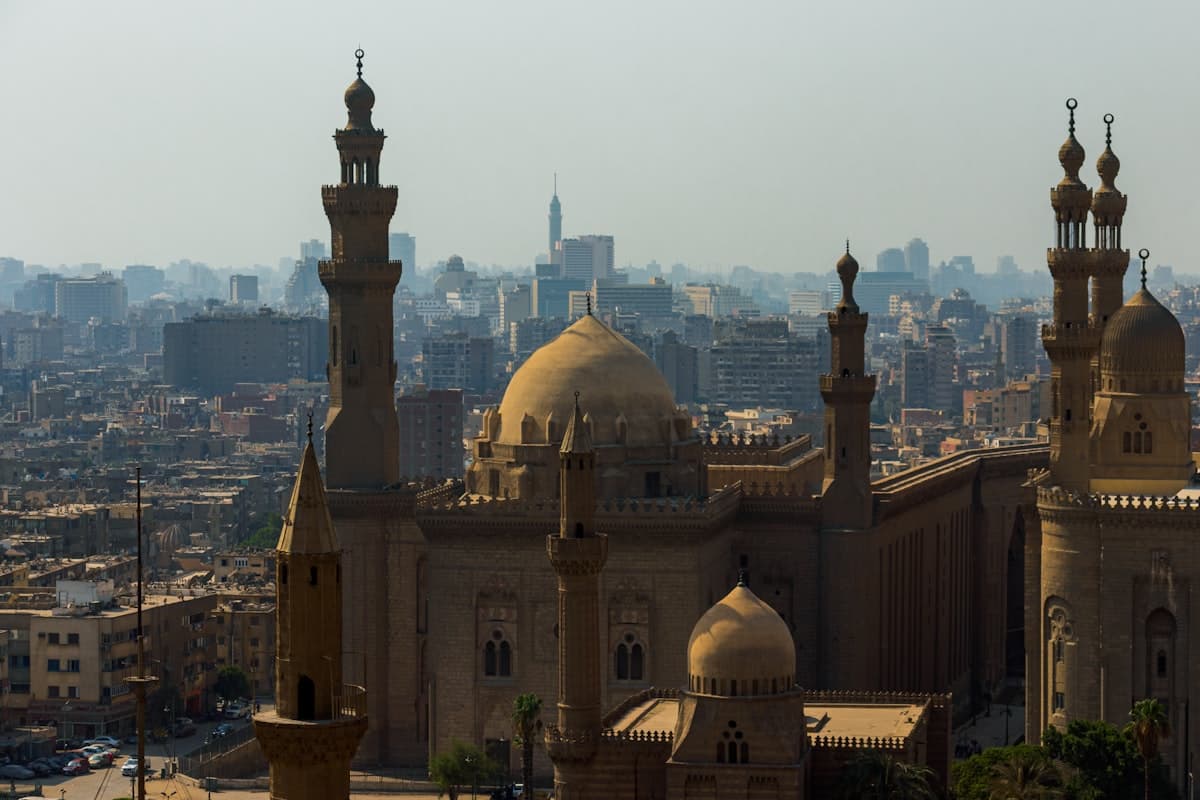
Stand on the Citadel's northern terrace on a clear winter morning and you can see all of Cairo's layers simultaneously. To the northwest, the Giza pyramids. Below you, the minarets of Islamic Cairo, including the Ibn Tulun Mosque (879 AD, built by an Abbasid governor of Turkic origin, the oldest intact mosque in Egypt and eight minutes by taxi). To the east, the Muqattam Hills, where limestone for the pyramid casing stones was quarried. The Pharaonic, the Coptic, the Islamic, and the Ottoman-Albanian all coexist in one sightline.
The Citadel's location on Pharaonic-era limestone is not coincidental. Ancient Egyptian quarry roads ran through this ridge. Roman legions camped at its base. The Fatimid caliphs who founded Cairo in 969 AD built their palace city in the plains below. Saladin's engineers chose this specific spot because four thousand years of human activity had already demonstrated it was the commanding position in the Nile Valley at this latitude.
The Aqueduct of the Citadel, which you can still see sections of running south from the base of the hill through the Al-Khalifa district, was built by the Mamluks in the fourteenth century to carry water from the Nile up to the fortress. It runs directly over the course of a Pharaonic canal. Mohamed Ali eventually replaced it with one of Egypt's first modern water infrastructure projects, a steam-pumped system built with European engineering. The aqueduct became a ruin. The canal beneath it had already been a ruin for a thousand years.
Common Mistakes
Arriving between 10am and 1pm on Friday. The mosque is closed during Friday prayer and the surrounding streets fill with worshippers and then vendors. The Citadel does not shut entirely, but the atmosphere becomes difficult for visiting the interior.
Paying for a guide at the gate. The unofficial guides who approach at the main entrance vary enormously in quality and typically charge EGP 200 to 400 for a tour that covers the most superficial layer of the site. If you want a guide, book one in advance through a licensed operator. The Egyptian Tourist Authority maintains a roster. The savings in time and accuracy are real.
Spending all your time in the Mohamed Ali Mosque and leaving. The Al-Nasir Muhammad Mosque thirty meters to the north is the better building by most architectural measures and is almost always empty. It takes fifteen minutes to walk through and costs nothing beyond the Citadel entry ticket.
Taking the sound and light show. It runs Thursday and Saturday evenings, costs EGP 350, and conveys less historical information than this article. The Citadel at dusk is worth experiencing, but walk the northern terrace for free instead.
Skipping the descent through Islamic Cairo. Most visitors take a taxi or rideshare back to central Cairo directly from the Citadel gate. The better option is to walk down through the City of the Dead, the vast necropolis on the Citadel's eastern slope, where somewhere between 500,000 and one million Cairenes currently live among the medieval tombs, and then through the Al-Khalifa district to the Ibn Tulun Mosque. It takes forty-five minutes on foot and is a more honest encounter with the city than anything you will find on the Citadel itself.
Confusing Mohamed Ali Pasha with Mohamed Ali the boxer. This sounds trivial but the search confusion is real and affects how people contextualize the site before they arrive. The Albanian ruler who modernized Egypt and the Louisville boxer who took a regnal name from the same Arabic honorific share only the name.
Practical Tips
Dress for the mosque: shoulders and knees covered for all genders. Shoe covers are provided free at the mosque entrance but bring clean socks. The alabaster floors are cold in winter and the coverings slip.
The Citadel gift shop near the mosque exit sells reasonable reproductions of Mamluk geometric patterns and affordable Arabic calligraphy prints. The vendors immediately outside the main gate sell the same items at prices they will reduce by forty percent if you walk away once.
Water is available inside but overpriced at EGP 25 to 40 per bottle. Bring your own from a supermarket or kiosk before arrival.
Photography inside the mosque is permitted without a tripod. The light inside is best between 9am and 11am when the eastern clerestory windows are active. The chandeliers, which are original to the nineteenth-century construction, photograph well with a wide lens from the main door looking toward the qibla wall.
Combining the Citadel with the Egyptian Museum and Khan el-Khalili in a single day is the standard tour operator formula and it is too much. The Citadel alone, done properly with the adjacent Mamluk structures and a walk through Al-Khalifa, is a full half-day. The Egyptian Museum is a full half-day. Doing both in one day means doing both badly.
Frequently Asked Questions
The Weekly Dispatch
More on Egypt, every Friday.
Cultural depth and places most guides never mention.
No spam. Unsubscribe anytime.