Mohamed Ali Pasha and the Modernizing of Egypt: A Cairo Guide
He executed 470 Mamluk beys at a single dinner party. Then he rebuilt Egypt from scratch. The Citadel still holds both stories.

Quick Facts
- Best time to visit
- October to March. The Citadel is exposed on a limestone promontory and becomes uncomfortably hot from May onward. January gives the clearest views to the Pyramids from the southern terrace.
- Entrance fee
- EGP 450 (approx. $9 USD) for the full complex. Students with valid ID pay EGP 225. Covers the mosque, Al-Gawhara Palace, Carriage Museum, and Military Museum.
- Opening hours
- Daily 8am to 5pm (winter), 8am to 6pm (summer). Mosque closes briefly during Friday prayers.
- How to get there
- Metro Line 2 to Sayeda Zeinab (EGP 8), then microbus or tuk-tuk to Citadel gate (EGP 5 to 10). Ride-hail from downtown Cairo costs EGP 60 to 100. Avoid tour coaches on Salah Salem Road.
- Time needed
- 3 hours for the Citadel complex alone. Half a day if combining with Sultan Hassan Mosque and Darb al-Ahmar street below.
- Cost range
- Budget EGP 600 to 900 per day including ticket, local transport, and lunch in the neighborhood. Mid-range EGP 1,500 to 2,000 with a licensed guide.
Quick Facts
Best time to visit: October to March. The Citadel sits on a limestone spur above Cairo and catches every wind in summer; midday in July is genuinely punishing.
Entrance fee: EGP 450 (approx. $9 USD) for the full Citadel complex including the Mosque of Mohamed Ali. Students with valid ID pay EGP 225. The ticket covers the Military Museum and the National Police Museum inside the compound.
Opening hours: Daily 8am to 5pm in winter, 8am to 6pm in summer. The mosque itself closes briefly during Friday prayers.
How to get there: The cheapest option is the Cairo Metro to Sayeda Zeinab station (Line 2, EGP 8), then a microbus or tuk-tuk up the Citadel road (EGP 5 to 10). A ride-hail from central Cairo costs EGP 60 to 100. Avoid the tourist coaches on Salah Salem Road; they lock you into a group schedule.
Time needed: Three hours minimum for the mosque and the southern enclosure. A full day if you walk the surrounding district of Darb al-Ahmar afterward, which you should.
Cost range: Budget EGP 600 to 900 per day combining the Citadel with lunch in the neighborhood. Mid-range EGP 1,500 to 2,000 with a licensed guide, which transforms the experience entirely.
---
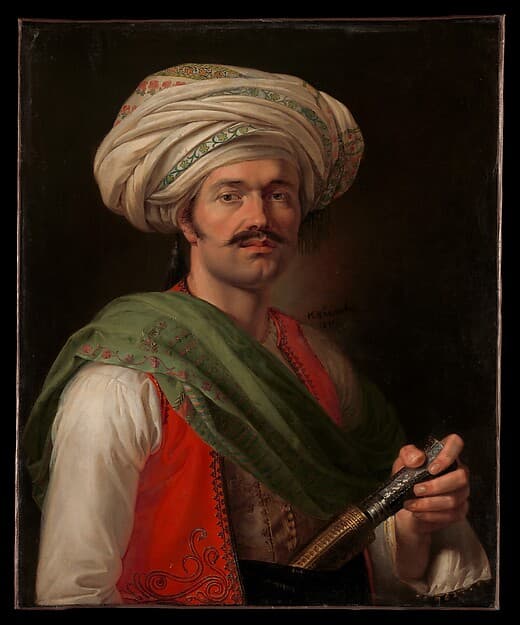
He arrived in Egypt in 1801 as a minor Albanian military commander attached to an Ottoman expeditionary force sent to expel Napoleon. He had no particular claim to power, spoke no Arabic, and controlled perhaps 300 soldiers. By 1805 he was governor of Egypt. By 1811 he had eliminated every political rival capable of challenging him. By the time he died in 1849, the country he left behind had a functioning conscript army, a state-run cotton economy, a medical school staffed by French physicians, and a canal system that prefigured the one Nasser would later nationalize to global headlines. Mohamed Ali Pasha's modernizing of Egypt was not inevitable. It was personal, improvised, and soaked in violence. The Citadel of Cairo holds the physical evidence of all of it.
Why This Place Matters
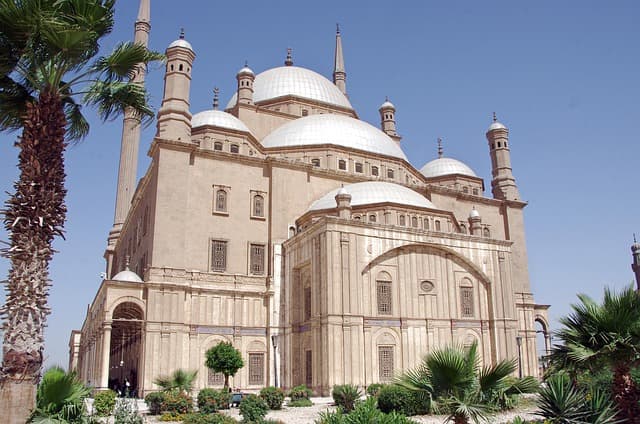
The Citadel was built by Saladin in 1176 as a military fortress overlooking the new city of Cairo. For 700 years, whoever held the Citadel held Egypt. The Ayyubids built it, the Mamluks expanded it, the Ottomans garrisoned it, and Mohamed Ali chose it as the seat of his new government, specifically because its symbolic weight was legible to every Egyptian looking up at the hill from the city below.
The limestone from which Saladin built the original walls came partly from the outer casing of the smaller Giza pyramids, which medieval builders stripped for construction material across Cairo. This fact, which almost no guide mentions, means the Citadel and dozens of medieval mosques in the city are, architecturally, made of the same stone as the pyramids. Cairo cannibalizes itself across millennia.
Mohamed Ali's relationship to the Citadel was both practical and theatrical. He needed a visual statement. The Ottoman-style mosque he commissioned in 1830, which dominates the Cairo skyline to this day and is the first thing most visitors photograph from a distance, was designed by a Greek architect named Youssef Boushnaq. It is modeled closely on the Sultan Ahmed Mosque in Istanbul, which is not an accident. Mohamed Ali was communicating his legitimacy to the Ottoman court while simultaneously building a power base independent of it. Architecture as diplomatic calculation.
The Man Behind the Mosque
The story most visitors carry into the Citadel is roughly this: Mohamed Ali was a great modernizer who dragged Egypt into the 19th century. This is accurate and insufficient.
On March 1, 1811, Mohamed Ali invited the leading Mamluk beys to a celebration at the Citadel for his son Tusun, who had been appointed to command an army being sent to Arabia. The Mamluks, who had controlled Egypt as a military aristocracy for five centuries, attended. As the procession moved through a narrow passage in the Citadel called Bab al-Azab, the gates were closed behind them. Mohamed Ali's soldiers opened fire from the walls above. Between 470 and 500 Mamluk leaders were killed within minutes. One man, a bey named Amin, reportedly escaped by jumping his horse off the Citadel walls, a fall of approximately 25 meters. Whether he survived depends on which account you believe.
Bab al-Azab still exists. It is the large Ottoman gate on the western side of the Citadel, currently closed to tourists and visible from Salah Salem Road. When you stand at the Citadel entrance, you are roughly where the trap was sprung. The passage where the massacre happened is perhaps 80 meters from the main ticket booth. No sign marks it.
Mohamed Ali then sent soldiers across Egypt to kill every Mamluk leader who had not attended the celebration. The operation took weeks. It was thorough. The Mamluk system that had governed Egypt since 1250 effectively ceased to exist.
This context matters because everything that followed, the military reforms, the agricultural restructuring, the medical schools, the conscription of peasant farmers who had never before served in state armies, was possible only because Mohamed Ali had no remaining internal opposition. Modernization and massacre are, in his case, inseparable.
What You Will Actually See
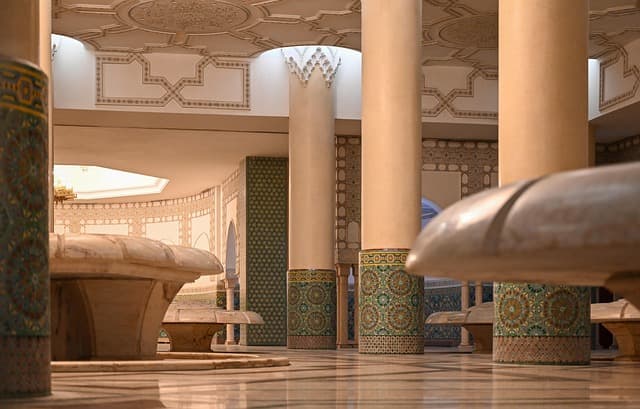
The Mosque of Mohamed Ali is the dominant structure and the one most visitors spend their time in. It is worth it. The interior is covered in alabaster from Luxor, which gives the walls a translucence in morning light that photographs cannot capture accurately. The central dome rises 52 meters. A French clock in the courtyard, a gift from King Louis-Philippe in 1845 in exchange for the obelisk now standing at the Place de la Concorde in Paris, has never worked correctly. It arrived broken and has remained decoratively useless for 180 years, which Egyptians mention with some satisfaction.
Mohamed Ali is buried in the mosque, in a white marble tomb to the right of the entrance. His tomb is modest relative to the building around it, which is either humility or self-confidence depending on how you read the man.
Beyond the mosque, most tourists do not walk to the southern enclosure, which contains the remains of the original Mamluk structures that Mohamed Ali largely dismantled. The Al-Gawhara Palace, which he built as a reception hall, has been converted into a museum of 19th-century royal objects and is genuinely worth 30 minutes. The terrace behind it offers the best panoramic view of Cairo in the city: the medieval minarets of the old city in the foreground, the Nile to the west, the Pyramids of Giza visible on clear winter mornings. On a good January day, you can see all of Egyptian history from a single rooftop.
The Carriage Museum, housed in a former military stable, contains the actual carriages used by Mohamed Ali's dynasty through the reign of King Farouk. It is undervisited and oddly moving: the private vehicles of a ruling family that began with an Albanian soldier and ended with a king whose 1952 exile left Egypt to figure out what it was without them.
The Connections
Mohamed Ali's project of modernizing Egypt did not happen in isolation from what came before or what surrounded him. His medical school at Abu Zaabel, established in 1825 under Antoine Clot, a French physician known as Clot Bey, was the first institution in the Arab world to train physicians using European anatomical methods. It later moved to Cairo and became what is now Kasr Al Ainy Hospital and Medical School, one of the oldest medical faculties in Africa. When I chose not to practice medicine after graduating, I was walking away from an institution that was itself a direct consequence of Mohamed Ali's admiration for French Enlightenment science. The chain from 1825 to the present is unbroken.
The cotton economy he established by forcing the Nile Delta's agricultural communities to shift from subsistence farming to long-staple cotton monoculture created the wealth that paid for his military campaigns in Sudan, Arabia, and the Levant. It also created a dependency on cotton prices set in Liverpool and Manchester that would constrain Egyptian economic sovereignty for another century and a half. The same structural problem that Nasser tried to solve with the High Dam was created, in its modern form, by Mohamed Ali.
The Citadel itself connects to the Mamluk city below it. Walk down through Darb al-Ahmar after your visit. The street runs parallel to the Ayyubid wall and contains 14 medieval structures, including the Mosque of Qijmas al-Ishaqi, built in 1481 by a Mamluk official who was himself a former slave purchased in the Circassian market. The men Mohamed Ali killed in 1811 were the inheritors of that world. Their mosques are still standing.
Common Mistakes
Arriving by tourist bus. Group tours arrive between 10am and noon and the mosque fills completely. If you arrive at 8am when the gates open, you will have the courtyard nearly to yourself and the alabaster walls in morning light, which is a different experience from shuffling through in a crowd.
Skipping the neighborhood. The Citadel without Darb al-Ahmar and the Sultan Hassan Mosque below it is a single data point. Sultan Hassan, built between 1356 and 1363, is architecturally considered one of the finest medieval buildings in the world. It is a four-minute walk from the Citadel entrance. Most tour buses do not stop there.
The sound and light show. It runs Tuesday and Thursday evenings at 7:30pm, costs EGP 350, and adds nothing to your understanding of the site. The narration is theatrical rather than historical, the lighting obscures the architecture rather than revealing it, and the same information is available in any decent book. Skip it.
Not asking about Bab al-Azab. The gate of the 1811 massacre is not on any official tour route. If you hire a licensed guide inside the complex, ask specifically to be taken to the western wall and shown the gate's location. Most will know. Some will have personal opinions about it.
Assuming the museum buildings are secondary. The Al-Gawhara Palace and the Carriage Museum between them tell the story of the dynasty Mohamed Ali founded, from military usurper to constitutional monarchy to overthrow, more vividly than the mosque does. Give them an hour.
Overlooking Mohamed Ali's tomb. Every visitor photographs the dome and the courtyard. Perhaps one in ten stops at the tomb. The man who restructured Egypt is buried there. It takes three minutes and costs nothing beyond your existing ticket.
Confusing efficiency with understanding. The Citadel rewards slow movement. The acoustics of the mosque change depending on where you stand. The view from the terrace requires patience to read: you need someone or something to tell you which minarets belong to which centuries. Budget time for that.
Practical Tips
Hire a licensed guide from the Syndicate of Tourist Guides rather than accepting offers at the gate. The difference in quality is measurable: an unlicensed guide at the entrance will tell you the mosque was built in 1830 and is modeled on Istanbul. A licensed guide will tell you who the architect was, what the political message was, and why the clock in the courtyard has not worked in 180 years. The rate for a three-hour Citadel guide is approximately EGP 400 to 600, negotiated before you enter.
Wear shoes you can remove quickly. The mosque requires removing footwear at the entrance. Plastic bags are provided for carrying your shoes, which is practical but slightly undignified.
Women are not required to cover their heads to enter the mosque, though scarves are available at the entrance if you prefer. Shoulders and knees should be covered. This is a working mosque, not a museum, and the request is made for that reason.
The best photographs of the exterior are taken from the terrace of the Sultan Hassan Mosque below, which gives you the full silhouette of the Citadel against the Cairo sky. This requires buying a second ticket (EGP 200 for Sultan Hassan, approximately $4 USD), but the two sites together form a single coherent argument about power and architecture across six centuries. They should not be separated.
Frequently Asked Questions
The Weekly Dispatch
More on Egypt, every Friday.
Cultural depth and places most guides never mention.
No spam. Unsubscribe anytime.