Pharaonic Egypt History Guide for Travelers: Beyond the Pyramids
Pharaonic civilization lasted 3,000 years. Most travelers see three sites and think they've understood it. They've seen the footnotes.
Quick Facts
- Best time to visit
- October to February. Temperatures are manageable (18 to 28 degrees Celsius in Luxor), crowds are thinner in November and January, and the light quality in Upper Egypt between 6am and 9am in winter is ideal for photography. Avoid July and August entirely if possible.
- Entrance fee
- Giza complex EGP 360 (approx $12 USD), Great Pyramid interior EGP 600 extra (approx $20 USD). Karnak EGP 450 (approx $15 USD). Valley of the Kings EGP 360 (approx $12 USD) for three tombs. Grand Egyptian Museum EGP 1,000 full experience (approx $33 USD). Abydos EGP 360 (approx $12 USD).
- Opening hours
- Most sites daily 6am to 5pm October to April, 6am to 6pm May to September. Valley of the Kings closes at 4pm year-round. Grand Egyptian Museum opens 9am to 10pm.
- How to get there
- Cairo to Luxor: overnight sleeper train EGP 900 to 1,200 per person, or domestic flight EGP 800 to 1,500. Within Luxor: private West Bank driver EGP 400 to 600 per day. Cairo Giza sites: taxi or rideshare from central Cairo approximately EGP 100 to 150 one way.
- Time needed
- Minimum 10 days for Cairo plus Luxor plus Aswan. Add 2 days for Abydos and Dendera. Each major complex (Karnak, Giza, Valley of the Kings) requires 3 to 4 hours minimum for a meaningful visit.
- Cost range
- Budget EGP 1,200 to 1,800 per day including accommodation, transport, and entry fees. Mid-range EGP 3,000 to 5,000 per day with private guides and better hotels.
The workers who built the Great Pyramid were not slaves. We know this because their graffiti survives. One crew called themselves "Friends of Khufu." Another called themselves "Drunkards of Menkaure." They had foremen, medical care, a beer ration, and enough institutional pride to tag their work inside blocks that would never again see daylight. Herodotus got it wrong in 450 BC, and Western civilization has been repeating the error ever since.
This is how Pharaonic Egypt works as a subject for travelers: every assumption you carry in is probably borrowed from someone who didn't know either. The useful thing about coming here with a serious guide to Pharaonic Egypt history is not that it tells you what to look at. It tells you what you've been looking at wrong.
Quick Facts
Best time to visit: October through February. Luxor in July reaches 43°C and the Valley of the Kings becomes an endurance test rather than an experience. Cairo is tolerable year-round but November through March is when you'll actually enjoy walking between sites.
Entrance fees (approximate, subject to change): Giza Pyramids complex: EGP 360 (approx $12 USD). Interior of the Great Pyramid: EGP 600 additional (approx $20 USD). Sphinx enclosure is included in the complex ticket. Karnak Temple, Luxor: EGP 450 (approx $15 USD) Valley of the Kings: EGP 360 (approx $12 USD) covers three tombs. Specific tombs like Seti I cost EGP 1,500 extra (approx $50 USD). Tutankhamun's tomb is EGP 600 extra (approx $20 USD). Egyptian Museum, Cairo (Tahrir): EGP 450 (approx $15 USD). The National Museum of Egyptian Civilization in Fustat: EGP 300 (approx $10 USD). Abydos Temple (Seti I): EGP 360 (approx $12 USD). One of the most significant sites in Egypt and genuinely uncrowded.
Opening hours: Most sites open daily 6am to 5pm in winter (October to April) and 6am to 6pm in summer. The Valley of the Kings closes at 4pm regardless of season. Get there before 7am.
How to get there: Cairo to Luxor: Overnight sleeper train from Ramses Station, around EGP 900-1,200 per person in a two-berth cabin. Flying costs EGP 800-1,500 one-way on EgyptAir domestics. Within Luxor: A private driver for the day on the West Bank costs EGP 400-600. Taxis from Luxor town to the Valley ferry landing cost EGP 30-50. Abydos from Luxor: Two hours north by road, approximately EGP 800-1,000 for a private car round trip.
Time needed: Budget at minimum three days in Cairo (museum plus Giza plus Saqqara), four days in Luxor (Karnak, Luxor Temple, Valley of the Kings, Hatshepsut, Medinet Habu), and add two days if you can reach Abydos and Dendera. Aswan and Abu Simbel require another three days minimum.
Cost range: Budget traveler EGP 1,200-1,800 per day including accommodation, transport, and entry fees. Mid-range EGP 3,000-5,000 per day.
Why Pharaonic Civilization Demands a Different Kind of Attention
Most travelers arrive having processed Egypt through a filter of tomb raiders, Hollywood curses, and a vague sense that it was all very long ago. The actual scale is harder to absorb: Pharaonic civilization ran continuously for approximately 3,000 years, from the unification of Upper and Lower Egypt around 3100 BC under the king Narmer to the death of Cleopatra VII in 30 BC. To put that in proportion, more time separates Narmer from Cleopatra than separates Cleopatra from us.
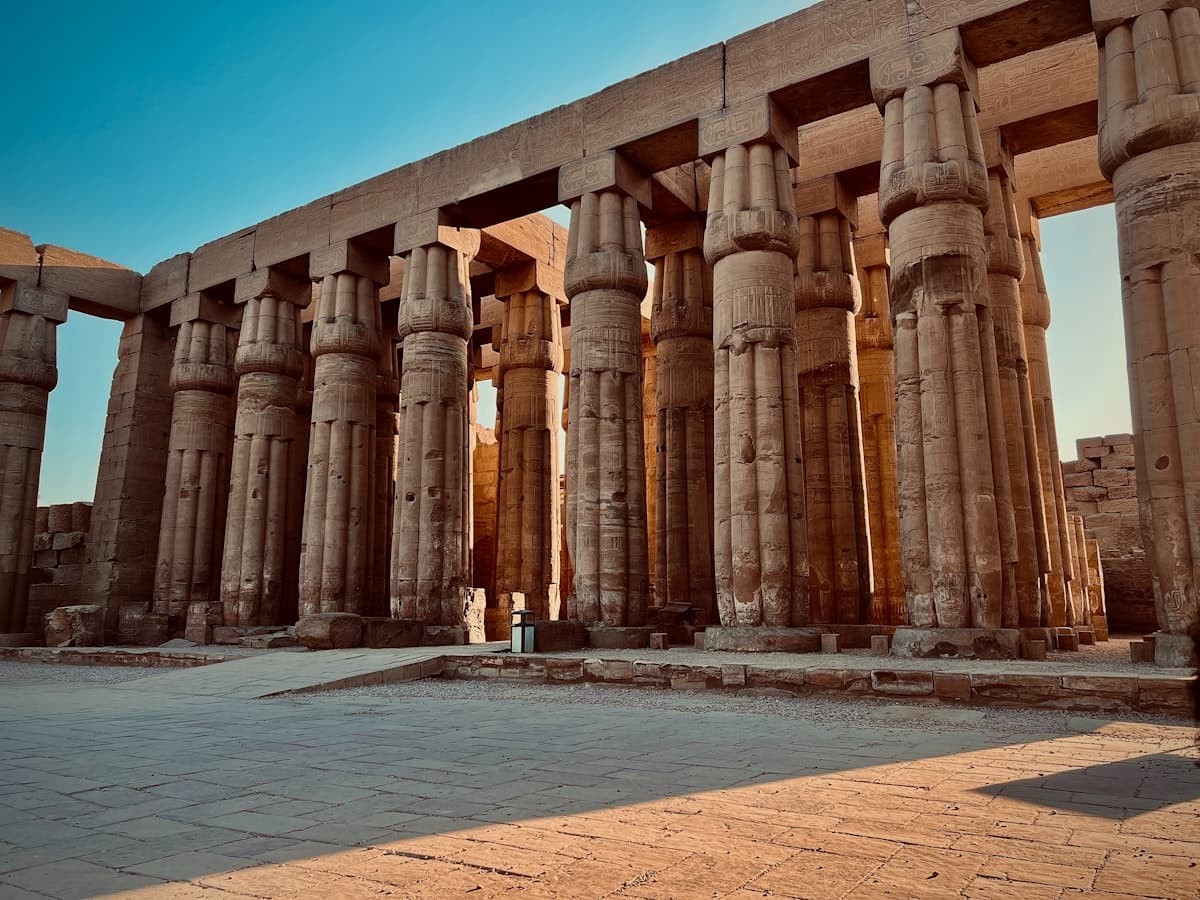
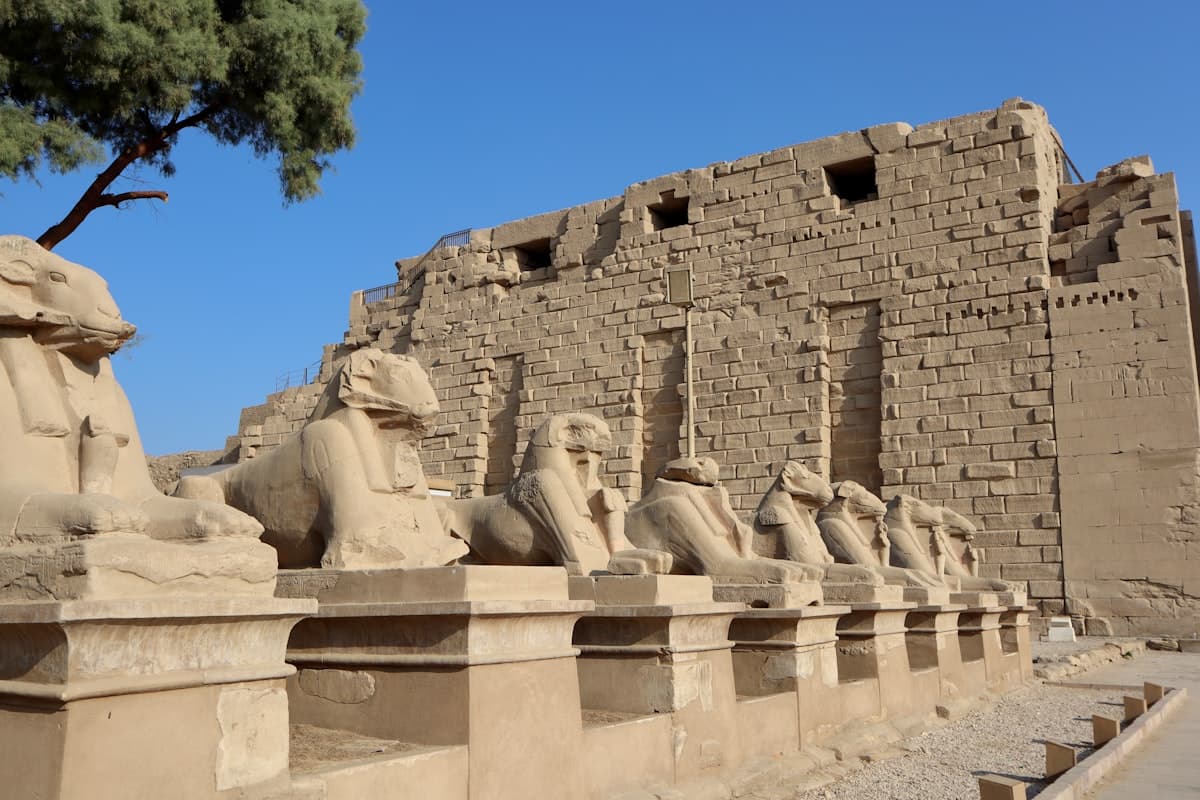
This has a practical consequence for how you move through sites. When you stand in Karnak Temple, you are standing in a building that was under continuous construction for over 1,300 years. Pharaohs added, demolished, and rebuilt sections to assert their own legitimacy. Thutmose III, one of Egypt's greatest military strategists, walled off the obelisks of his stepmother Hatshepsut rather than destroy them, possibly because demolishing a monument dedicated to Amun would have been theologically dangerous. The obelisks were rediscovered during 19th-century excavations when the encasing walls were removed. Both are still there.
The deeper point for anyone using a Pharaonic Egypt history guide as a framework: this is not a dead civilization you are visiting. It is a civilization whose physical remnants have been continuously reinterpreted, reused, and argued over by every culture that followed it. The Copts built churches inside temples. Arab geographers thought the pyramids were granaries. Napoleon's scientists measured everything and removed what they could carry. Understanding that layering is the difference between sightseeing and actually reading the place.
Cairo and the North: Where to Start and What to Prioritize
Saqqara, not Giza, is where Pharaonic monumental architecture begins. The Step Pyramid of Djoser, built around 2650 BC by the architect Imhotep, is the oldest stone building of its size on earth. Imhotep himself became so celebrated that the Egyptians eventually deified him, and the Greeks later identified him with Asclepius, their god of medicine. A man who designed a building is remembered as a god 2,000 years later. Saqqara rewards slower visits than it gets.
Giza is unavoidable and genuinely worth it, but come with corrected expectations. The Great Pyramid of Khufu was the tallest structure on earth for approximately 3,800 years, until Lincoln Cathedral's spire was completed around 1311. That record stands unrepeated in human history. The interior visit (the ascending corridor to the King's Chamber) is claustrophobic and offers no decoration, but the physical experience of standing inside a structure built to contain one man's eternity is not nothing.
The Egyptian Museum in Tahrir is being phased out in favor of the Grand Egyptian Museum at Giza, which opened its main galleries in 2023. The GEM houses the complete Tutankhamun collection for the first time since discovery. Howard Carter's excavation in 1922 found 5,398 individual objects in a tomb that was considered modest even by New Kingdom standards. The complete reassembly in a single purpose-built museum, after a century of partial display, is worth the EGP 1,000 entry (approx $33 USD) that the full experience costs.
What most visitors skip entirely: the Tomb of Mereruka at Saqqara, a vizier from the Old Kingdom whose mastaba contains scenes of everyday life (fishing, farming, children playing) that say more about ancient Egyptian society than any royal monument. Entry is included in the Saqqara ticket.
Luxor: The Most Concentrated Archaeological Zone on Earth
About 1.3 kilometers of the Nile's east bank in Luxor contains more temple square footage than any comparable area in the world. Karnak Temple alone covers 100 hectares, roughly the size of a medium European city's old town. The Avenue of Sphinxes connecting Karnak to Luxor Temple, 2.7 kilometers long and flanked by 1,057 sphinx statues, was fully excavated and opened to foot traffic in 2021. Walking it at dawn, before the tour groups arrive, is one of the better free experiences in Egyptian archaeology.
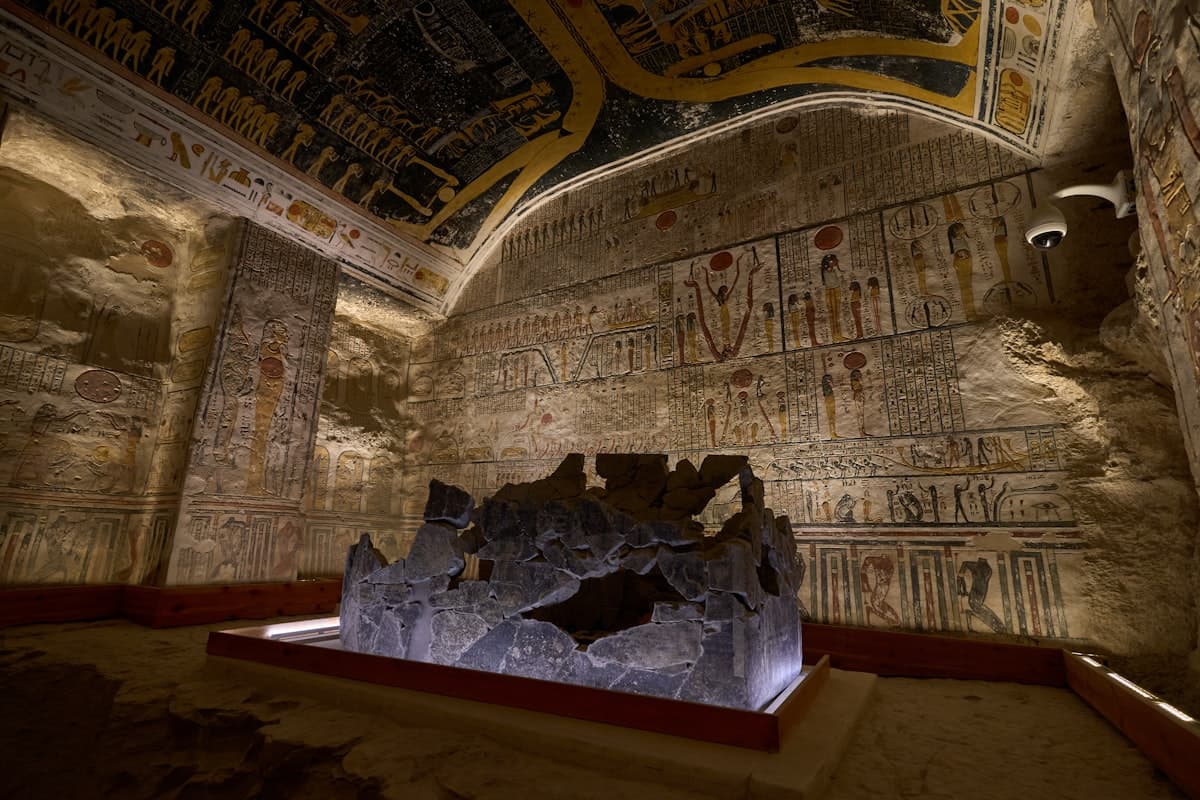
The west bank is where the dead lived. The Valley of the Kings contains 63 known tombs. Most tourists see two, usually Tutankhamun and Ramesses IX, because tour operators design for time, not depth. The tombs of Ramesses III (KV11) and Seti II (KV15) are both included in the standard three-tomb ticket and are almost never crowded. Seti II's tomb has some of the cleanest hieroglyphic work in the valley, undamaged by the centuries of candle smoke that blackened the more popular chambers.
The tomb of Seti I (KV17) costs extra and requires a separate advance booking from the Supreme Council of Antiquities office in Luxor. It is worth doing. Giovanni Belzoni found it in 1817 and removed its alabaster sarcophagus (now in the Sir John Soane's Museum in London). What remains is the most complete decorative program in the entire valley: the full Book of Gates, the full Litany of Ra, and ceiling paintings of astronomical precision. Belzoni also cut his own cartouche into the wall. You will see it. The vandalism is historical record at this point.
Medinet Habu, Ramesses III's mortuary temple on the west bank, receives perhaps a tenth of the visitors that Karnak does and contains material of equal importance. The exterior walls carry detailed reliefs of the Sea Peoples invasion of 1177 BC, the first documented account of a large-scale migration-driven collapse of Bronze Age civilization. It is, among other things, the oldest surviving account of a refugee crisis.
The Connections: Pharaonic Egypt Through Every Later Era
Nothing about Pharaonic Egypt is sealed off from what came after. The Temple of Luxor was a working religious site for 3,000 years: Pharaonic sanctuary, Roman military camp, Coptic church, and finally the Mosque of Abu Haggag, which sits on a platform built directly over the buried temple court. When Gaston Maspero excavated the court in the 1880s, he could not remove the mosque. It is still there, still functioning, now perched visibly above the excavated columns. You pray above the pharaohs.
At Philae, near Aswan, the Temple of Isis was the last functioning Pharaonic religious site in the Roman world. Its priests maintained traditional hieroglyphic ritual until 535 AD, when Justinian's forces closed it. The last dated hieroglyphic inscription anywhere in Egypt was carved at Philae in 394 AD. The temple was dismantled and reassembled on a nearby island (Agilkia) between 1972 and 1980 to save it from the rising waters of Lake Nasser. It is a reconstruction, but the stones are original and the experience is genuine.
Coptic Christians in Upper Egypt built their monasteries using Pharaonic limestone blocks. The Red Monastery near Sohag reused granite column drums from a Pharaonic temple in its nave. Medieval Arab scholars called the pyramids "al-ahram" and believed they were built by a pre-flood civilization of giants. The 14th-century traveler Ibn Battuta visited them and concluded they were magical. Napoleon's 1798 expedition produced the Description de l'Egypte, 23 volumes of documentation that simultaneously launched Egyptology as a discipline and stripped Egypt of an incalculable number of portable objects.
The continuity is the story. Anyone using a Pharaonic Egypt history guide as a framework for travel should resist the temptation to treat the ancient layer as separate from the Islamic or Coptic layers. They are the same civilization in different registers.
Common Mistakes Made by Otherwise Intelligent Travelers
Treating the Egyptian Museum (Tahrir) as the essential museum visit. The collection is extraordinary but the building is overcrowded, poorly labeled, and the storage conditions in visible display cases are genuinely distressing for conservators. Go to the National Museum of Egyptian Civilization in Fustat instead, or spend your Cairo museum hours at the Grand Egyptian Museum. The Tahrir building will likely be converted to other uses eventually.
Paying for the sound and light show at Karnak. It costs EGP 450 and narrates a version of Egyptian history that a confident ninth-grader could have written. The same sum pays for a one-hour private guide at the temple itself during opening hours. The guide is not optional; it is the only way to understand what you're looking at.
Visiting the Valley of the Kings between 10am and 2pm in any season. The valley is a bowl of limestone that concentrates heat. The tombs themselves stay cool, but the walk between them becomes genuinely difficult in summer and unpleasant in winter. Go at 6am when the gates open.
Skipping Abydos. The Temple of Seti I at Abydos, two hours north of Luxor, contains the Abydos King List: a carved register of 76 pharaohs listed in sequence, which is the closest thing to an ancient Egyptian official history. It also contains some of the best-preserved painted relief work in Egypt, including scenes of the afterlife from the Book of Coming Forth by Day. There are almost no tour groups. You will likely have entire halls to yourself. The logistics are a minor inconvenience. The experience is not.
Buying the "combo" tour packages that combine Abu Simbel with Philae and Kom Ombo in one day. This is physically possible and intellectually pointless. Abu Simbel alone, the twin temples Ramesses II cut into a sandstone cliff and had relocated 65 meters uphill between 1964 and 1968 to save from the Aswan High Dam reservoir, deserves three hours minimum. The one-day combo leaves you forty minutes at each site with a tour group microphone in your ear.
Ignoring the undecorated tombs in the Valley of the Kings. The tombs that were never finished tell you something the completed royal tombs cannot: how the work was organized, how long decoration took, what the painters prioritized. KV42, built for Thutmose III's wife, is undecorated and unremarkable by guidebook standards. It is also completely empty of visitors and shows you the raw geological structure of the valley in a way no other tomb does.
Practical Tips
Hire an Egyptologist-licensed guide, not a general tourist guide. Egypt's Ministry of Tourism issues separate licenses for Egyptology specialists. Ask directly before booking: "Do you have an Egyptology license?" A specialist will cost more, approximately EGP 800-1,500 for a half day, but will prevent you from walking past things that matter.
Photography fees are applied inconsistently. The official policy at most sites prohibits tripods and flash but allows phone and camera photography. In practice, guards often request informal fees for photography in less-visited tombs. Carry small bills (EGP 20-50 notes) and don't argue. Save your energy.
Water is non-negotiable. Carry two liters per person at every outdoor site regardless of the season. The vendors inside site boundaries sell water at two to three times the standard price.
For Luxor specifically: stay on the West Bank. The hotels there are quieter and closer to the Valley of the Kings. A bicycle rental (EGP 80-120 per day) lets you move between Medinet Habu, the Ramesseum, and the Colossi of Memnon at your own pace, which is the correct pace.
The Colossi of Memnon, the two seated statues of Amenhotep III that stand in open farmland at the entrance to the West Bank, are free to approach and photograph. They are among the largest surviving statues of any pharaoh and they cost you nothing. Stop.
Finally: read before you go. Erik Hornung's work on Egyptian religious thought, John Romer's histories of the Valley of the Kings, and Joyce Tyldesley's biography of Hatchepsut will each transform what you see from a wall of symbols into an argument someone made about reality 3,000 years ago. That is the only real preparation for Pharaonic Egypt.
Frequently Asked Questions
The Weekly Dispatch
More on Egypt, every Friday.
Cultural depth and places most guides never mention.
No spam. Unsubscribe anytime.