Pharaonic Egypt History Guide for Travelers Who Want the Real Story
The Great Pyramid was the tallest structure on earth for 3,800 years. Most tourists spend 90 minutes there. Here is what that time should actually contain.

Quick Facts
- Best time to visit
- October to February. November and December offer the best balance of comfortable temperatures (18 to 25°C in Luxor), good light for photography, and manageable crowds compared to peak December holidays.
- Entrance fee
- Giza Plateau EGP 540 (approx $11 USD), Great Pyramid interior EGP 900 (approx $18 USD) extra. Valley of the Kings EGP 800 (approx $16 USD) for three tombs. Karnak Temple EGP 450 (approx $9 USD). Grand Egyptian Museum EGP 1,500 (approx $30 USD).
- Opening hours
- Most sites daily 6am to 5pm (winter, October to April), 6am to 6pm (summer). Valley of the Kings may close early once daily visitor capacity is reached, typically by 10am in high season.
- How to get there
- Cairo: Giza plateau by taxi or Uber from central Cairo, approximately EGP 150 to 200. Luxor: overnight train from Cairo Ramses Station EGP 800 to 1,400 first class, or domestic flight EGP 1,500 to 3,000. Local west bank ferry in Luxor EGP 10 per person.
- Time needed
- Giza plateau: full day including Solar Boat Museum. Valley of the Kings: half day minimum, full day to see six or more tombs. Karnak: three to four hours. Abydos combined with Dendera: full day excursion from Luxor.
- Cost range
- Budget EGP 1,200 to 2,000 per day including accommodation, transport, and entry. Mid-range EGP 3,500 to 6,000 per day. Licensed private guide adds EGP 1,200 to 2,500 per half day.
The workers who built the Great Pyramid were not slaves. We know this because their graffiti survived. Gangs of laborers signed their work with names like "Friends of Khufu" and "Drunkards of Menkaure," proud enough of what they were doing to carve the proof into the stones. Zahi Hawass found their village south of the Giza plateau in 1990: bakeries, breweries, a field hospital with evidence of successful amputations. This is not the Egypt of Hollywood. It is stranger, more human, and far more interesting.
This pharaonic Egypt history guide for travelers exists because most visits to ancient Egyptian sites are structured around logistics rather than understanding. You move through the Valley of the Kings in ninety minutes, you photograph the Sphinx, you buy a miniature sarcophagus. You leave knowing roughly what you knew when you arrived. That is a failure of information, and this guide attempts to correct it.
---
Quick Facts
Best time to visit: October through February. Egyptian summer (June through August) means temperatures above 40°C at most inland sites. Luxor in July is a serious health risk if you are spending hours in open valleys. The light in November is extraordinary, particularly in Luxor at dawn.
Key entrance fees (current as of writing, subject to change): Giza Plateau (pyramids exterior): EGP 540 (approx $11 USD). Interior of the Great Pyramid: EGP 900 (approx $18 USD) additional. Valley of the Kings (three tombs included): EGP 800 (approx $16 USD). Tomb of Tutankhamun: EGP 1,300 (approx $26 USD) additional. Tomb of Seti I: EGP 2,000 (approx $40 USD) additional. Karnak Temple Complex: EGP 450 (approx $9 USD). Egyptian Museum, Cairo (pending Grand Egyptian Museum transition): GEM entry EGP 1,500 (approx $30 USD).
Opening hours: Most sites open daily from 6am to 5pm in winter (October to April) and 6am to 6pm in summer. The Valley of the Kings closes to additional visitors once daily capacity is reached, which happens by 10am in high season.
Getting there: Cairo to Luxor by overnight train (EGP 800 to 1,400 for first class, approx $16 to $28). Domestic flight Cairo to Luxor runs EGP 1,500 to 3,000 (approx $30 to $60) booked in advance. Local taxis in Luxor for a full west bank day: negotiate EGP 400 to 600.
Time needed: The Giza plateau warrants a full day if you include the Solar Boat Museum and the workers' village site. Luxor requires three days minimum to do justice to both banks. Abydos and Dendera together require a full day from Luxor.
Cost range: Budget traveler EGP 1,200 to 2,000 per day including accommodation, transport, and entry fees. Mid-range EGP 3,500 to 6,000 per day.
---
Why Pharaonic Egypt Is Not What You Think It Is
Most travelers arrive with a mental image assembled from movies, documentaries, and hotel lobby art: gold, sand, mummies, gods with animal heads. This image is accurate in the way a caricature is accurate. It captures a few features and flattens everything else.
Here is what the flattening removes. Ancient Egyptian civilization lasted roughly 3,000 years. To put that in proportion: the time between Cleopatra and us is shorter than the time between Cleopatra and the construction of the Great Pyramid. When Cleopatra read texts about the pyramid builders, she was reading about people as remote from her as the Roman Republic is from us. The Egypt you visit is not one thing. It is thirty dynasties, dozens of capitals, periods of collapse and reconstruction, foreign invasions absorbed and transformed, a theology that rewrote itself repeatedly while maintaining the appearance of eternal stability.
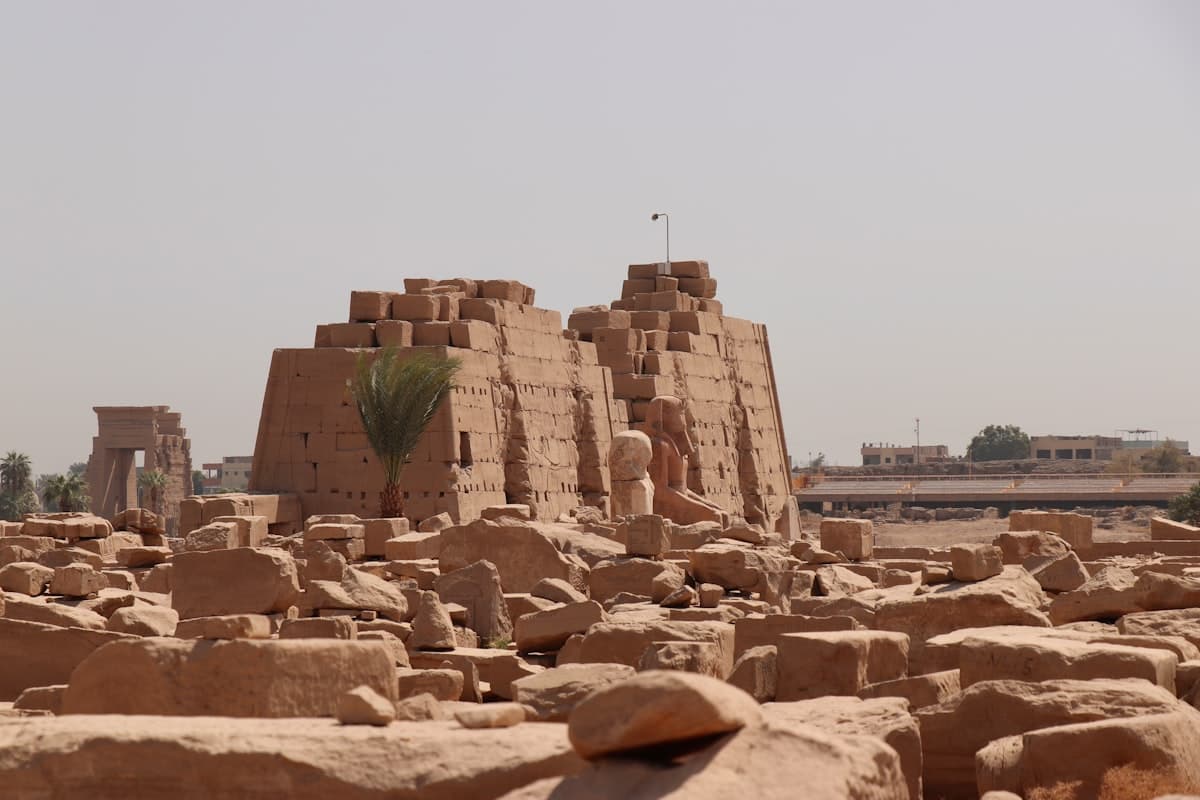
The pharaonic Egypt history guide problem is that sites are usually presented as isolated monuments rather than as evidence of a continuous, contested, sometimes desperate civilization. Karnak Temple was not built. It was accumulated over 2,000 years by rulers who each added a hall, a pylon, an obelisk, partly out of devotion and partly because erasing a predecessor's name and substituting your own was standard political practice. The temple you walk through is a palimpsest of ambition, rivalry, and revision.
The other thing most visitors do not know: Egypt was conquered and ruled by foreigners for the last 2,500 years of its ancient history. The Persians, the Macedonians under Alexander, the Ptolemies (who were Greek and never fully learned Egyptian), the Romans. Cleopatra VII, the famous one, was the first ruler of her dynasty in nearly 300 years to speak Egyptian. The monuments you are photographing were, for much of their active life, trophies of occupation.
---
The Sites That Actually Repay the Effort
Giza: What Everyone Gets Wrong
The Giza plateau is the most visited site in Egypt and one of the most mismanaged tourist experiences in the world. The approach from Cairo is through a grid of concrete apartment blocks that end abruptly at the plateau edge. There is no grand processional. You will be solicited constantly for camel rides, photographs, and unofficial guide services. None of this is the plateau's fault.
Get past the noise and the facts are relentless. The Great Pyramid contains approximately 2.3 million stone blocks. The heaviest weigh 80 tonnes. The average is 2.5 tonnes. The precision of the construction, specifically the leveling of the base to within 2.1 centimeters across 230 meters, was not matched by European engineering until the Industrial Revolution. The internal chambers were sealed and the entrance hidden so successfully that when the Caliph Al-Ma'mun broke into the pyramid in 820 AD, he found no treasure. The Egyptians had removed everything centuries earlier.
The Solar Boat Museum, just south of the Great Pyramid, is where most visitors fail themselves. It contains a 43-meter cedar boat buried beside Khufu around 2500 BC, dismantled into 1,224 pieces and reassembled over fourteen years by Ahmed Youssef Moustafa. The wood still faintly smells of cedar after 4,500 years. This is a more intimate encounter with the ancient world than standing at the base of a pyramid, and almost nobody goes.
The Valley of the Kings: Sixty-Three Tombs, Two Crowds
Sixty-three tombs have been found in the Valley of the Kings. Most group tours visit KV62 (Tutankhamun) and KV9 (Ramesses VI) and call it done. This is understandable and also a waste.
The tomb of Seti I (KV17) is the most beautifully decorated tomb in the valley, with ceiling astronomy that constitutes the oldest complete astronomical chart ever found. It costs an additional EGP 2,000 and most tourists skip it because of the price. This is the wrong calculation. The tomb of Ramesses I (KV16) is small and rarely visited. The tomb of Thutmose III (KV34) requires climbing a steep wooden staircase and is consequently empty of crowds and full of the oldest illustrated version of the Amduat, the guidebook to the underworld. These three alone are worth a morning.
Tutankhamun's tomb, to be direct about it: the burial chamber is small, the decoration is modest by Valley standards, and the boy king is there in his outermost coffin, which is compelling but brief. The treasures that made the discovery famous in 1922 are at the Grand Egyptian Museum in Giza, not in the valley. If your goal is understanding Tutankhamun rather than checking a box, the GEM is the place to go.
Karnak: The Building That Never Stopped
Karnak is not a temple. It is a city of temples covering 100 hectares, the largest religious complex ever built, constructed and expanded by approximately thirty pharaohs over 2,000 years. The Hypostyle Hall alone, built under Seti I and completed by Ramesses II, contains 134 columns, the tallest of which are 21 meters high and 10 meters in circumference. Medieval European cathedrals fit inside it.
The detail that reframes the entire site: Thutmose III, one of Egypt's most successful military pharaohs, spent decades of his reign literally walling up the monuments of his predecessor and co-regent Hatshepsut. He did not destroy them. He hid them inside his own constructions, perhaps because destroying them entirely would have erased the religious power they carried. When the walls crumbled millennia later, Hatshepsut's obelisks and reliefs were perfectly preserved inside them. The attempt at erasure became the mechanism of preservation.
Arrive at 6am. The site opens then, the light is horizontal and red, and for approximately forty-five minutes you will have sections of the complex largely to yourself. By 9am the tourist buses arrive and the Hypostyle Hall becomes difficult to move through.
---
The Connections: Nothing Exists in Isolation
The layering of Egyptian civilization is visible everywhere if you know to look for it. The Mosque of Amr ibn al-As in Fustat, the oldest mosque in Africa, was built in 641 AD on the ruins of a Roman fortress that was itself built atop a Pharaonic settlement. The columns inside the mosque came from earlier structures. The same ground has been continuously sacred or significant for more than 3,000 years.
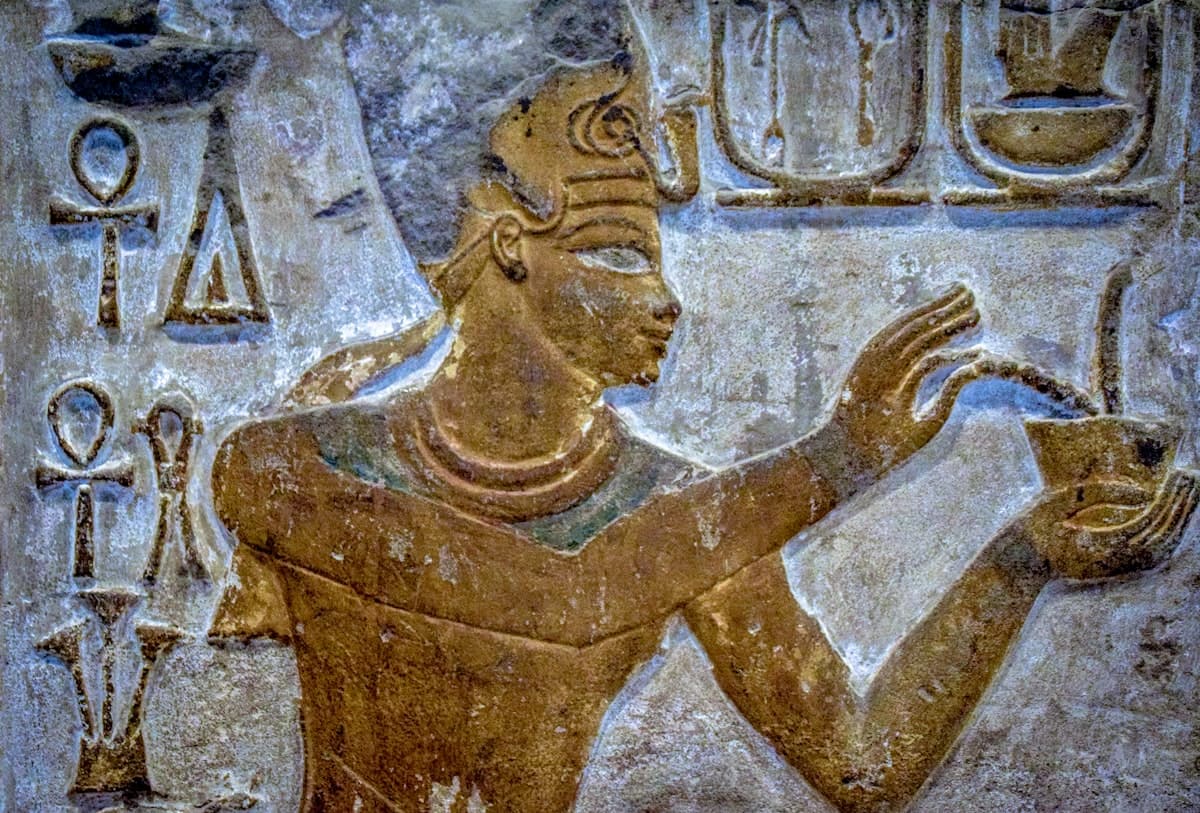
At Luxor Temple, one of the most direct examples of civilizational layering in the world sits in open air. The temple was begun by Amenhotep III around 1390 BC. Alexander the Great added a sanctuary in 323 BC and had himself depicted in the reliefs as a pharaoh, wearing the double crown, making offerings to Amun. The Romans converted part of the complex into a military camp and built a shrine to the Imperial cult. The Christians then built a church inside the Roman section. The Mosque of Abu Haggag sits on top of the original forecourt, its floor level reflecting 2,000 years of accumulated debris that the excavators simply stopped removing. You can see all of this in a single visit if you walk the full length of the temple and look up.
Abydos, 160 kilometers north of Luxor and largely ignored by package tours, contains the Temple of Seti I with the most important document in Egyptology: the Abydos King List, a wall inscription naming 76 consecutive pharaohs. This was not made for tourists or posterity. It was a religious ritual text used in daily offerings to the royal ancestors. It is also where archaeologists first established the chronological sequence of Egyptian dynasties, making it the foundation on which all subsequent Egyptian history rests.
---
Common Mistakes
Booking the sound and light show at Karnak or Giza. The Karnak show costs EGP 350 plus transport and runs for ninety minutes. It tells you nothing specific and the narration is a generalized invocation of mystery. The colored lights actively obscure the architecture. Read two good books on the New Kingdom instead. This is not a close call.
Hiring guides at the gate. Unlicensed guides at major sites vary enormously in quality, and the good ones are not the ones who approach you. Use a licensed Egyptologist guide booked in advance through a reputable agency, particularly for the Valley of the Kings, where the iconography is impossible to interpret without context.
Seeing Luxor in one day on a cruise itinerary. Nile cruises typically dock at Luxor for twelve hours, run passengers through the Valley of the Kings and Karnak in a group, and reboard by evening. This is a reasonable introduction and a poor understanding of either site. If Luxor is a priority, stay independently for three days.
Skipping the Egyptian Museum in Cairo for the Grand Egyptian Museum before the full collection opens. The GEM is extraordinary for the Tutankhamun collection and the scale of display. The old Egyptian Museum in Tahrir Square is chaotic, under-lit, and packed with objects so significant they would be the centerpiece of any other museum in the world. Both are worth your time.
Going inside the Great Pyramid expecting a revelatory experience. The interior consists of the ascending corridor (low, narrow, and warm), the Grand Gallery (genuinely impressive at 47 meters long and 8.5 meters high), and the empty King's Chamber (pink granite, echoing, empty). People with claustrophobia or knee problems should not enter. People expecting decoration will be disappointed. The experience is geological rather than artistic.
Visiting in July or August without understanding the physical reality. The Valley of the Kings in July reaches 48°C by noon. Dehydration happens faster than most visitors expect. If you must visit in summer, enter the valley at opening time and leave by 10am.
Assuming Abydos is too far to bother. It is a 2.5-hour drive from Luxor, easily done as a day trip. The Temple of Seti I has the finest painted reliefs in Egypt, better preserved than almost anything in the Valley of the Kings, and receives perhaps a tenth of the visitors. If you are spending more than three days in Upper Egypt, this trip is non-negotiable.
---
Practical Tips
Cash is essential at most sites. Many ticket offices do not reliably accept cards, and the ATMs at tourist sites are inconsistent. Carry enough EGP for entry fees, food, and tips before leaving your hotel.
The West Bank at Luxor (Valley of the Kings, Hatshepsut's temple, the Colossi of Memnon, the Nobles' Tombs) requires a ferry crossing or a bridge crossing. The local ferry from the corniche costs EGP 10 per person and takes five minutes. The tourist ferry costs more and takes longer. Take the local ferry.
Photography inside most tombs requires purchasing a separate photography permit. In the Valley of the Kings this is EGP 300. It is enforced inconsistently but the fine for photographing without a permit is higher than the permit cost.
For Giza specifically: you can access the plateau from multiple entry points. The southern entry near the Solar Boat Museum is less congested than the main northern gate. The plateau is open, which means full sun with minimal shade. Bring water, a hat, and sun protection regardless of season.
The Grand Egyptian Museum in Giza is accessible by taxi from central Cairo for approximately EGP 150 to 250 depending on traffic. Uber and Careem operate in Cairo and are generally more reliable for pricing than street taxis. Allow ninety minutes minimum for the GEM, three hours if you are serious about the Tutankhamun galleries.
For a pharaonic Egypt history guide to be honest, it must say this: Egypt will not be fully understood in one trip. The sites are too numerous, the context too dense, the layering too deep. Come with a specific focus. Pick three or four sites and understand them fully. Return for the rest.
Frequently Asked Questions
The Weekly Dispatch
More on Egypt, every Friday.
Cultural depth and places most guides never mention.
No spam. Unsubscribe anytime.