Ptolemaic Egypt: A History Traveler's Guide to Alexandria
Alexandria was the world's largest city for 300 years, home to a library holding 700,000 scrolls. Almost none of it survived. What did is stranger than the myth.

Quick Facts
- Best time to visit
- October to April. Mediterranean winters are mild (15 to 20 degrees Celsius), clear, and far less humid than summer. Light quality for photography is best November through February.
- Entrance fee
- Catacombs of Kom el-Shoqafa: EGP 180 (approx $4 USD). Pompey's Pillar and Serapeum: EGP 100 (approx $2 USD). Graeco-Roman Museum: EGP 150 (approx $3 USD). Underwater dive tours: EGP 600 to 1,200 (approx $13 to $26 USD) via licensed operators.
- Opening hours
- Catacombs and Pompey's Pillar: daily 9am to 5pm. Graeco-Roman Museum: Tuesday to Sunday 9am to 5pm, closed Mondays. Bibliotheca Alexandrina: Saturday to Thursday 10am to 7pm, Friday 3pm to 7pm.
- How to get there
- Cairo to Alexandria by Talgo train: EGP 95 to 130 first class, 2.5 hours, from Ramses Station. Within Alexandria: white taxis EGP 20 to 50 per ride, Corniche tram EGP 1. Uber and Careem operate in Alexandria and are reliable for cross-city journeys at EGP 40 to 90.
- Time needed
- Two full days minimum for the core Ptolemaic circuit. Three days if adding the underwater dive or the Abu Mena excursion outside the city.
- Cost range
- Budget EGP 600 to 900 per day including hostel accommodation and street food. Mid-range EGP 1,800 to 2,800 per day with a Corniche hotel and restaurant meals.
The Ptolemies ruled Egypt for nearly three centuries and left almost nothing standing above ground. This is the central paradox of visiting Ptolemaic Alexandria: you are searching for the remains of what was once the most sophisticated city on earth, a place where Euclid invented geometry, where Eratosthenes calculated the circumference of the earth to within 1% accuracy using two sticks and the angle of the sun, where the first critical editions of Homer were compiled and argued over by men who worked in a library holding an estimated 700,000 scrolls. And you are looking for this city beneath a modern metropolis of five million people, in basements, in harbor waters, in a few stones reused in mosques and medieval forts. This guide is for the traveler who finds that situation more interesting than a well-preserved ruin.
Quick Facts
Best time to visit: October to April. Alexandria sits on the Mediterranean and summers are humid and hazy. Winter light on the Corniche is clear and flat, which makes the harbor easier to read visually.
Key sites and entrance fees: Graeco-Roman Museum: EGP 150 (approx $3 USD), students EGP 75. Currently partially open after long renovation; confirm before visiting. Catacombs of Kom el-Shoqafa: EGP 180 (approx $4 USD), students EGP 90. Open daily 9am to 5pm. Pompey's Pillar and Serapeum: EGP 100 (approx $2 USD). Open daily 9am to 4pm. Bibliotheca Alexandrina (modern): free entry to exterior and plaza, paid exhibitions vary from EGP 50 to 150 depending on show. Royal Ptolemaic Quarters (underwater, Eastern Harbor): accessible only via licensed dive operators, roughly EGP 600 to 1,200 per person for a guided session.
How to get there: Cairo to Alexandria by train is the recommended route. First-class seats on the Spanish Talgo trains cost approximately EGP 95 to 130 one way from Ramses Station; journey is 2.5 hours. Avoid the bus unless cost is critical. Within Alexandria, white taxis for short distances cost EGP 20 to 50; the tram running along the Corniche costs EGP 1 and is an experience worth having.
Time needed: Two full days minimum for the Ptolemaic circuit. Three days if you add the underwater dive option or want to read in the Bibliotheca.
Cost range: Budget EGP 600 to 900 per day including accommodation and food. Mid-range EGP 1,800 to 2,800 per day.
---
Why Ptolemaic Egypt Matters to History Travelers
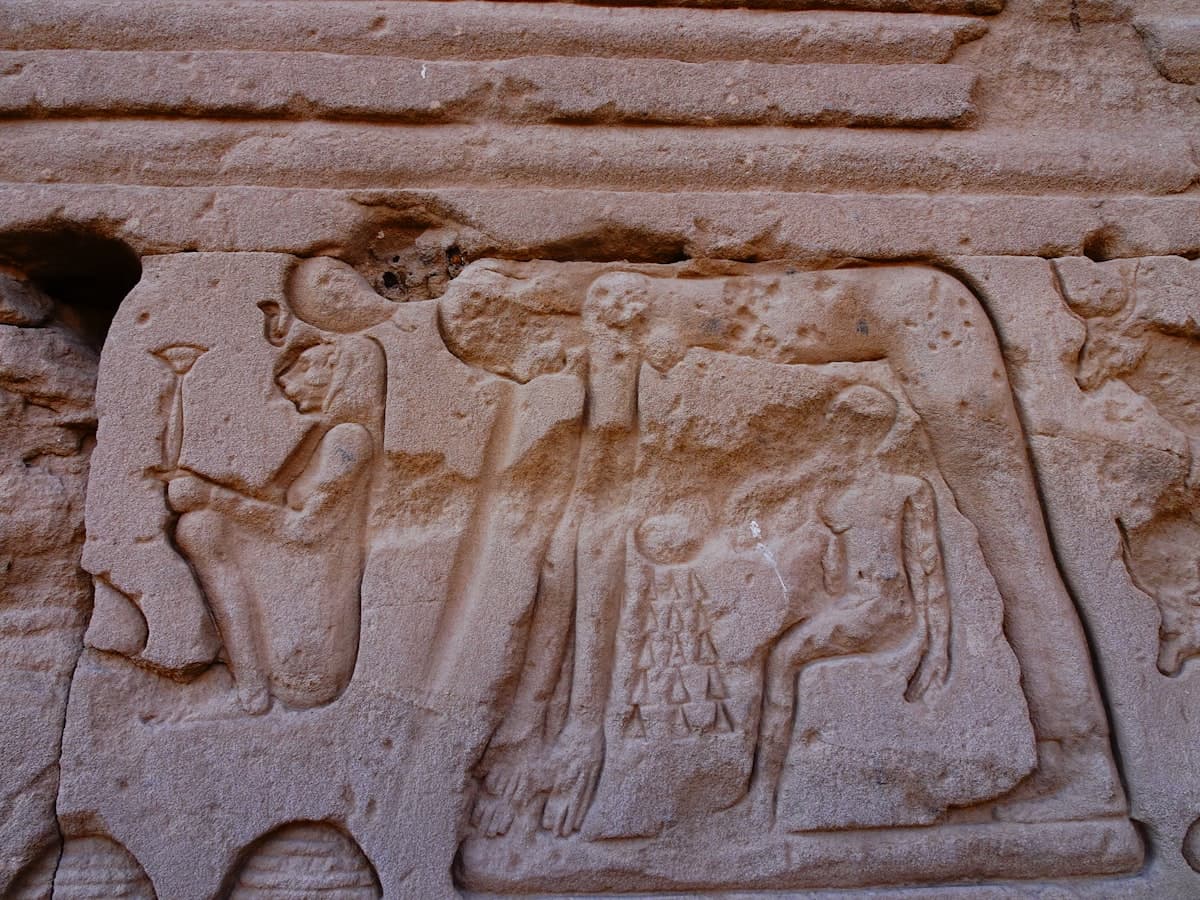
When Alexander the Great died in Babylon in 323 BC, his general Ptolemy made a calculated decision that shaped the Mediterranean world for three centuries: he hijacked Alexander's funeral cortege, redirected the body from Macedonia to Egypt, and used Alexander's corpse as a political foundation for a new dynasty. The Ptolemies were Macedonian Greeks who became Egyptian pharaohs, who funded Jewish scholarship in their library, who commissioned temples covered in hieroglyphs that the Ptolemaic kings themselves could not read, and who eventually produced Cleopatra VII, the first ruler of her dynasty to actually speak Egyptian.
This is not standard colonial history. It is something stranger: a dynasty that chose to be absorbed into the culture it conquered. Ptolemy I's architects designed temples using 3,000-year-old Pharaonic grammar. His successors added their names to the walls of Karnak. The Egyptian priestly class, recognizing political opportunity, consecrated Ptolemaic rulers as sons of Ra and kept the religious bureaucracy running. The result was a civilization that cannot be categorized as either Greek or Egyptian. It is one of history's most productive cultural fusions, and Alexandria was its laboratory.
For the Ptolemaic Egypt history traveler, Alexandria is not a destination with one great monument. It is a detective's city, a place where you reconstruct a lost world from scattered fragments. That makes it more demanding than Luxor and more rewarding than most travelers expect.
---
The Catacombs of Kom el-Shoqafa: Where Three Religions Share a Tomb
Descend three levels underground on a spiral staircase cut into the rock and you arrive at what is possibly the most intellectually dense room in Egypt. The main burial chamber at Kom el-Shoqafa, carved in the 2nd century AD, shows a man being mummified according to Egyptian ritual, watched over by Anubis wearing Roman armor, flanked by Greek decorative columns, inside a space that some scholars believe served both pagan and early Christian families simultaneously.
The catacombs were not discovered by archaeologists. A donkey fell into the shaft in 1900.
Kom el-Shoqafa is sometimes described as Ptolemaic, but it is more precisely late Ptolemaic and early Roman, which in Alexandria means a moment of maximum cultural layering. The Greek-speaking Jewish community held a quarter of the city. Egyptian priests maintained temples. Roman administrators managed the bureaucracy. These catacombs reflect not synthesis but coexistence: three visual languages occupying the same underground room without resolving their differences.
Most visitors spend thirty minutes here. The triclinium, the banquet hall where families ate funeral meals beside their dead, deserves longer attention. The carved niches for reclining at a Roman-style feast, positioned ten meters underground in an Egyptian rock tomb, described by a Greek architectural term: this is Ptolemaic Alexandria in miniature.
---
Pompey's Pillar and the Library That Burned
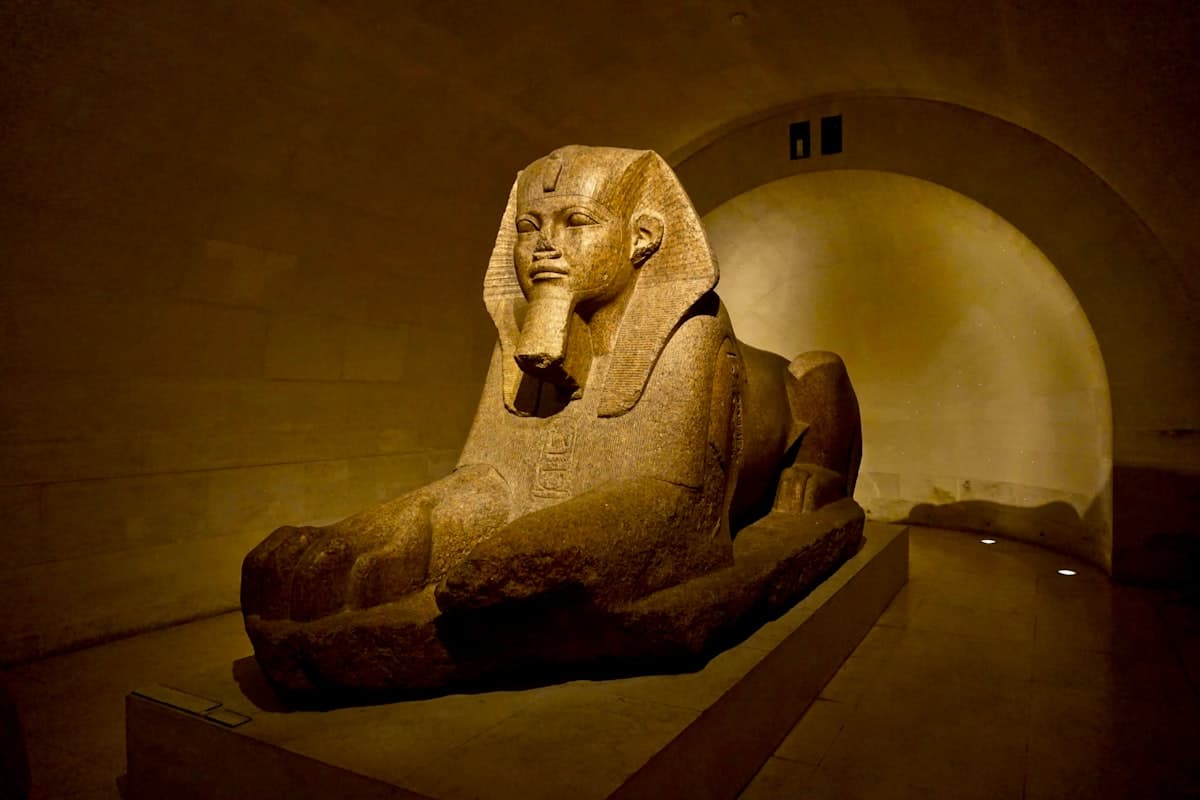
The red granite column standing 27 meters high in what is now a scrubby open lot in central Alexandria is not Pompey's Pillar. Pompey had nothing to do with it. It was erected in 297 AD in honor of the Roman Emperor Diocletian, and it was built using granite quarried at Aswan and transported 900 kilometers north, as virtually all Egyptian monumental granite was.
The column stands on the site of the Serapeum, the temple of Serapis, which was itself built on one of the highest natural ridges in Alexandria. Serapis was a god invented by Ptolemy I, a deliberate hybrid deity combining Osiris and Apis Bull with attributes of Zeus and Dionysus, designed to be worshipped simultaneously by Egyptians and Greeks. The Serapeum housed a subsidiary collection of the Great Library after the main Library was damaged, and when the Christian emperor Theodosius ordered pagan temples destroyed in 391 AD, the Serapeum and its collection burned. The sphinxes you walk past at the site entrance are Ptolemaic originals, recovered from the debris.
The Great Library itself, probably located near the Royal Quarter by the Eastern Harbor, was not destroyed in a single dramatic fire. It declined over several centuries through funding cuts, political instability, and the gradual departure of scholars. Julius Caesar's fire in 48 BC damaged warehouses containing books awaiting export, not the main collection. The romantic image of a single catastrophic burning is historically useful but factually misleading. The Library died slowly, which is in some ways worse.
---
What the Harbor Holds: Underwater Ptolemaic Alexandria
In 1996, the French underwater archaeologist Franck Goddio began mapping the submerged Royal Quarter of Ptolemaic Alexandria in the Eastern Harbor. What he found was not scattered debris. It was a coherent urban landscape: streets, foundations, a royal island called Antirhodos where Cleopatra's palace complex probably stood, sphinxes, columns, and a colossal statue of a Ptolemaic king weighing an estimated six tons, lying intact on the harbor floor.
The submersion happened gradually after a series of earthquakes and tsunamis between the 4th and 8th centuries AD caused land subsidence. Roughly a third of ancient Alexandria is now underwater at depths of four to eight meters, clear enough on a calm day to see the outlines of ancient streets from a glass-bottomed boat.
For the serious Ptolemaic Egypt history traveler, this is the single most significant site in Alexandria, and also the most inaccessible. The Egyptian Supreme Council of Antiquities licenses specific dive operators for the underwater archaeological zone. Bookings require advance arrangement, a dive certification, and an understanding that you are swimming through a protected site where touching anything is prohibited. It costs considerably more than any land site. It is also the only place in Egypt where you can look at a Ptolemaic royal palace with your own eyes.
The Bibliotheca Alexandrina's permanent exhibition on Goddio's discoveries, including recovered artifacts and detailed maps of the underwater site, is the essential preparation for the dive and a worthwhile visit even if you skip the water entirely.
---
The Connections: From Ptolemaic to Coptic to Islamic Alexandria
The neighborhood called Kom el-Dikka, just inland from the main train station, contains the only substantial above-ground ruins of Graeco-Roman Alexandria: a small Roman theater, Roman baths, a Villa of the Birds with mosaic floors. Beneath these Roman layers, Ptolemaic structures have been detected. Above them, medieval Islamic buildings were constructed. This is not a historical sequence. These things are stacked.
The Abu Mena complex, 45 kilometers southwest of Alexandria, was built over a site where the Roman army executed a Christian soldier named Menas in 296 AD. By the 5th century it had become one of the most important Christian pilgrimage sites in the Mediterranean world, drawing pilgrims from as far as Gaul. The pilgrimage economy funded the production of small ampullae, flasks of blessed water and oil, that have been found at archaeological sites across Europe and the Middle East. Abu Mena is now a UNESCO World Heritage Site in danger, slowly sinking into waterlogged soil. The site sits near land that was agricultural in antiquity, converted to intensive irrigation under both medieval and modern Egyptian governments. The water table rose. The foundations are failing.
The pattern repeats across Alexandria: Ptolemaic foundations, Roman adaptation, Christian transformation, Islamic reuse, modern pressure. The Ptolemaic layer is rarely the most visible, but it is almost always the most structurally original.
---
Common Mistakes
Treating the Graeco-Roman Museum as optional. The collection is genuinely important for contextualizing everything else you will see, including the coins, busts, and everyday objects that explain how Ptolemaic culture actually functioned. The building is partially closed and parts of the collection are inaccessible, which is frustrating. Go anyway and see what is open.
Expecting the Library site to be marked. There is no definitive archaeological marker for the Great Library of Alexandria. Anyone who shows you a precise location is speculating. The Bibliotheca Alexandrina was deliberately placed near the likely ancient site as a conceptual gesture, not an archaeological certainty.
Taking the Stanley Bay Corniche walk instead of the Western Harbor Corniche. Stanley is where Alexandrians go to eat. The Western Harbor Corniche, especially the stretch near Fort Qaitbay, gives you the actual spatial relationship between the ancient harbor, the lighthouse island, and the underwater royal quarter. You need to stand there and look at the water to understand the city's logic.
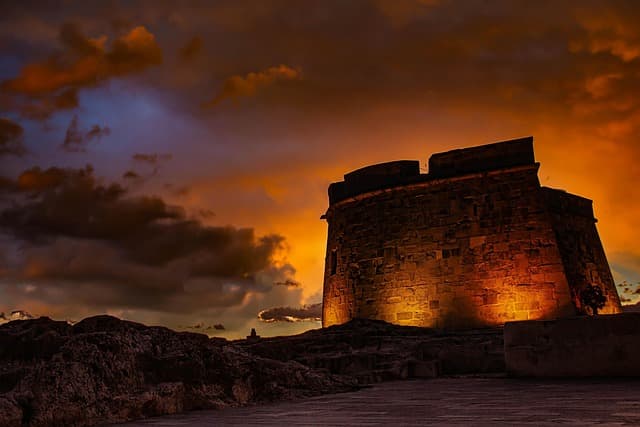
The Fort Qaitbay sound and light show costs EGP 200 and tells you nothing you will not find in thirty minutes of reading before your trip. Skip it. The fort itself, built in 1477 AD by the Mamluk Sultan Qaitbay on the precise foundations of the Pharos lighthouse using the lighthouse's own fallen stones, is worth exploring in daylight for about an hour. The theatrical overlay is a poor use of an evening.
Skipping the Cavafy Museum. The Greek-Alexandrian poet Constantine Cavafy lived in Alexandria until 1933 and wrote about Ptolemaic subjects with more psychological accuracy than most historians. His apartment is now a small museum. The poem "The God Abandons Antony," about Mark Antony hearing the gods leave Alexandria the night before his defeat, takes five minutes to read and will change how you walk through the city.
Arriving without a dive certification if the underwater quarter interests you. The dive window is weather-dependent, the operators require advance booking, and walk-in arrangements are not possible. This requires planning before you leave home.
Underestimating travel time between sites. Alexandria's traffic is not Cairo-level catastrophic, but Kom el-Shoqafa, Pompey's Pillar, Kom el-Dikka, and the Eastern Harbor are spread across a city with inconsistent public transport between them. Budget 25 to 40 minutes between any two sites by taxi.
---
Practical Tips
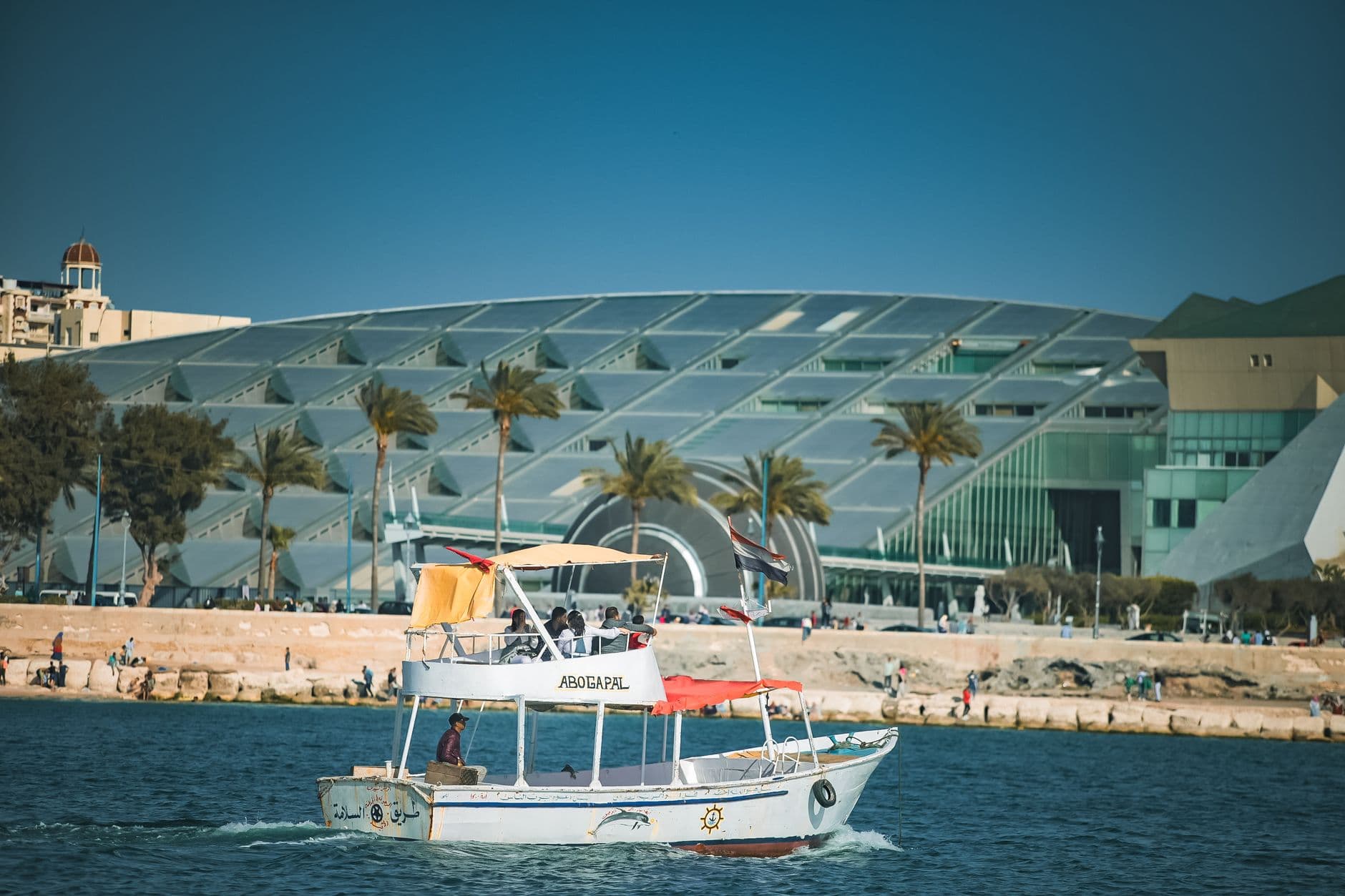
Stay on or near the Corniche between Raml Station and the Eastern Harbor. This positions you within walking distance of the Bibliotheca, the underwater site's glass-bottom boat departure points, and the starting position for the Ptolemaic circuit.
The Graeco-Roman Museum's current renovation status changes frequently. Check the Alexandria governorate's tourism office or ask your hotel reception for the current open sections before budgeting time.
For the underwater harbor, contact the Alexandria diving operators registered with the Supreme Council of Antiquities at least two weeks in advance. Goddio's Institut Européen d'Archéologie Sous-Marine website lists current access protocols.
Alexandria's street food is better than Cairo's for seafood and worse for everything else. The fish market near the Eastern Harbor sells the morning catch; restaurants along the port will grill it for a small fee. This is how Alexandrians have eaten since the Ptolemaic fishing fleets worked the same harbor.
If you read one book before arriving, make it E.M. Forster's "Alexandria: A History and a Guide," originally published in 1922. Forster wrote it while working for the Red Cross in Alexandria during World War One, and it remains the most useful single account of the city's layered history ever written by a non-specialist. It is available as a free PDF through several academic libraries.
Frequently Asked Questions
The Weekly Dispatch
More on Egypt, every Friday.
Cultural depth and places most guides never mention.
No spam. Unsubscribe anytime.