Ptolemaic Egypt: A Traveler's Guide to Alexandria's Forgotten Empire
The Ptolemies ruled Egypt for 275 years and not one of them learned Egyptian. Their capital still exists beneath Alexandria's streets. Here is how to find it.

Quick Facts
- Best time to visit
- October to March. Mediterranean winters are mild at 12 to 18 degrees Celsius, humidity drops sharply from summer levels, and the sites have thinner crowds. April can work but Alexandria's famous sea haze sometimes limits visibility.
- Entrance fee
- Kom el-Shoqafa: EGP 180 (approx $3.60 USD). Serapeum/Pompey's Pillar: EGP 100 (approx $2 USD). Alexandria National Museum: EGP 120 (approx $2.40 USD). Greco-Roman Museum: EGP 200 (approx $4 USD) when fully open.
- Opening hours
- Most sites daily 9am to 5pm. Kom el-Shoqafa ticket sales stop at 4:30pm. Alexandria National Museum open 9am to 4:30pm, closed on major Islamic holidays.
- How to get there
- Train from Cairo Ramses Station: EGP 145 to 200 first class, approximately 2 hours. Within Alexandria, taxis from Misr Station cost EGP 40 to 60 to western sites. The historic tram costs EGP 1 but is slow. Hire a driver for a full day at EGP 500 to 800 to cover all sites efficiently.
- Time needed
- Minimum two full days for serious coverage of Ptolemaic Alexandria. Kom el-Shoqafa alone warrants 90 minutes. Add Serapeum (45 minutes), Alexandria National Museum (2 hours), and Kom el-Dikka (1 hour).
- Cost range
- Budget EGP 800 to 1,200 per day including transport, sites, and street food. Mid-range EGP 2,500 to 4,000 per day with specialist guide and restaurant meals. Accommodation in central Alexandria ranges from EGP 600 budget to EGP 3,500 for seafront hotels.
Quick Facts
Best time to visit: October through March, when Alexandria's Mediterranean climate is mild and the light on stone is softer. Summer humidity is brutal and crowds at the few accessible sites peak in July and August.
Entrance fees: Kom el-Shoqafa Catacombs: EGP 180 (approx $3.60 USD), students EGP 90 Pompey's Pillar and Serapeum site: EGP 100 (approx $2 USD), students EGP 50 Greco-Roman Museum (when fully open after renovation): EGP 200 (approx $4 USD) Royal Jewelry Museum (Ptolemaic artifacts): EGP 100 (approx $2 USD)
Opening hours: Most sites open daily 9am to 5pm. Kom el-Shoqafa closes at 4:30pm. Arrive by 3pm minimum for comfortable exploration.
How to get there: Alexandria is 225km from Cairo. Trains run from Cairo Ramses Station; first-class on the Spanish Talgo costs EGP 145 to 200 (approx $3 to 4 USD) and takes about 2 hours. Within Alexandria, licensed taxis from Misr Station to Kom el-Shoqafa cost EGP 40 to 60. The tram (one of Africa's oldest, dating to 1863) costs EGP 1 and is an experience in itself, though slower.
Time needed: Two full days minimum to cover the major Ptolemaic sites with any depth. One day for catacombs and Serapeum, one day for the Greco-Roman Museum and waterfront archaeology.
Cost range: Budget EGP 800 to 1,200/day including transport, sites, and street food. Mid-range EGP 2,500 to 4,000/day with a guide and restaurant meals.
---
Why This Place Matters
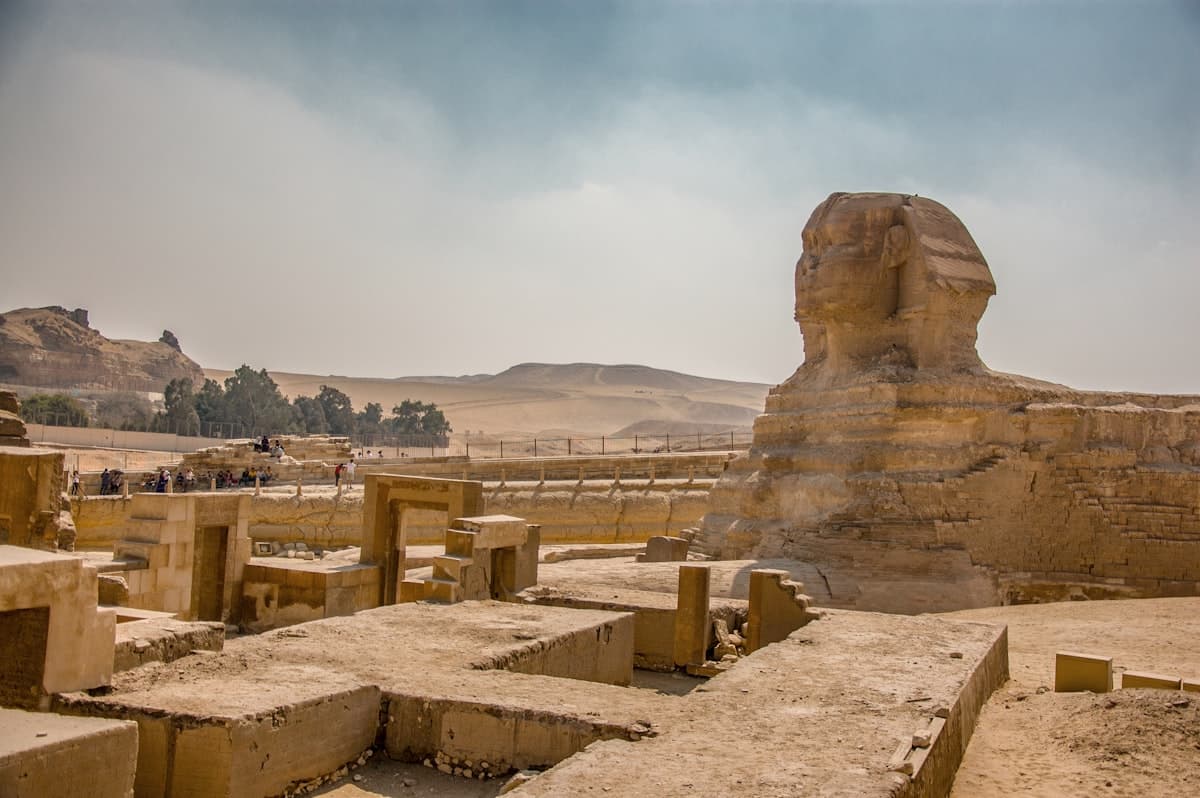
For 275 years, Egypt was ruled by a dynasty that never stopped being Macedonian Greek in private while performing every ritual of the pharaohs in public. When Alexander the Great died in 323 BC, one of his generals, Ptolemy, took Egypt as his share of the fractured empire. He then did something that no conqueror before or since has done quite so deliberately: he invented a new god.
Serapis was a composite deity, part Osiris, part Zeus, part Apis bull, designed to be worshipped by both Egyptians and the Greek settlers flooding into Alexandria. The Serapeum, the temple complex built to house this manufactured divinity, became one of the ancient world's most important religious sites and is now a half-buried ruin on a limestone ridge in western Alexandria. This is what Ptolemaic Egypt history looks like for a traveler: not grand monuments in obvious places but layers of calculated power, buried under a city that has been continuously inhabited for 2,300 years.
No other period in Egyptian history produced this specific friction: two civilizations sharing geography but not language, not values, not even the same concept of the afterlife, managing the tension through architecture, theology, and bureaucracy. The results are some of the strangest and most interesting artifacts anywhere in the Mediterranean world. The problem is finding them.
---
What Survived and Where to Look
Kom el-Shoqafa: The Place Where Two Worlds Refused to Merge
The descent into Kom el-Shoqafa is the descent into exactly what the Ptolemaic experiment eventually became: a fusion so thorough it stopped being either thing. Discovered accidentally in 1900 when a donkey fell through the ground, these catacombs date to the 2nd century AD, near the end of Roman rule but built in a city still shaped by three centuries of Ptolemaic hybridization.
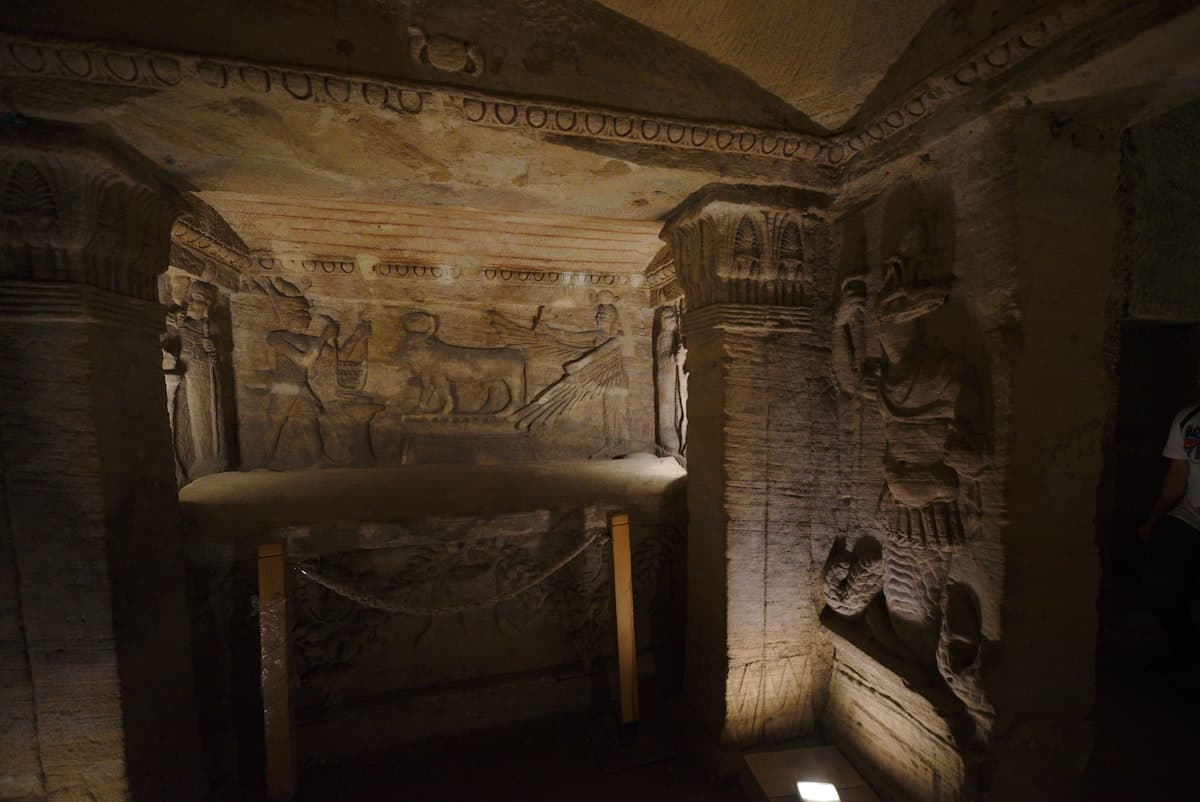
What you see underground is technically Roman period, but the imagery is Ptolemaic in its DNA. Anubis is carved wearing Roman legionary armor. The god Sobek appears in a toga. A relief of the mummification of Osiris is surrounded by architectural molding that belongs in Pompeii. This was not accident or artistic confusion. Alexandrian artists had spent generations synthesizing Greek and Egyptian visual language, and by the time Rome took over, the hybrid was so embedded it simply continued.
The catacombs descend three levels. Most guided tours show you the first two. The third, flooded periodically, is sometimes accessible and worth asking about specifically at the ticket booth. The triclinium on the second level, a dining room where families held funeral banquets, contains carved stone couches and the best-preserved ceiling in the complex. Sit in that room and understand what death meant in a city that had been translating between afterlives for three centuries.
Pompey's Pillar and the Serapeum's Ghost
The single red granite column standing 27 meters tall on the Serapeum ridge has nothing to do with Pompey. He was beheaded nearby in 48 BC, but the column was erected in 297 AD to honor the Emperor Diocletian. The name stuck because medieval European travelers needed someone to blame the column on, and Pompey was the most famous Roman they associated with Alexandria.
What matters is what the column stands in the middle of: the ruins of the Serapeum, the temple that once held the daughter library of the great Library of Alexandria. When the Christian bishop Theophilus led a mob to destroy it in 391 AD, an eyewitness account described the library annex being burned with the temple. The column survived because it was too large and too structurally useful as a landmark to bother toppling. The sphinxes flanking the processional way are original Ptolemaic, moved here from older temple sites across Egypt, as the Ptolemies routinely borrowed the visual authority of earlier dynasties.
The site itself is honestly underwhelming by Egyptian standards. Scattered stone, a few sphinx fragments, some underground galleries used for the sacred Apis bull. But understanding what stood here, and why it was destroyed, makes the emptiness articulate. This is where the Ptolemaic religious project ended.
---
The Greco-Roman Museum: The Most Important Collection You Cannot Fully See
The Greco-Roman Museum closed for renovation in 2005 and partially reopened in 2023, though its full collection remains inaccessible. This is the central tragedy of Ptolemaic Egypt history for the traveler. The museum holds roughly 40,000 artifacts, including the best collection of Ptolemaic royal portraiture in the world, coins showing how each Ptolemaic ruler deliberately aged their features to look more Egyptian as the dynasty matured, and a tantalizing cache of papyri that include administrative documents showing Greek and Egyptian officials working side by side in the same bureaucratic system.
What you can currently see: some sculpture, some coins, some everyday objects. What you should do regardless: visit, pay the entry, and speak to the staff. The curators here are exceptional and often allow access to storage areas for serious researchers or genuinely curious visitors who ask properly and in Arabic, even basic Arabic.
The museum's location in the Kom el-Dikka neighborhood places it near the excavated Roman-era odeon and the residential district called the "Pearl of Alexandria," which has revealed Ptolemaic housing below Roman levels below Byzantine levels. The site is open to walk through and free to enter. The layering of civilizations is visible in the cuts made by archaeologists: limestone on limestone, each century a different color.
---
The Connections
The Ptolemies created Alexandria as a planned city on a grid, unusual for Egypt, reflecting their Macedonian urban sensibility. The grid they drew in 331 BC still roughly structures central Alexandria's street plan today. When you walk from Midan Orabi toward the Corniche, you are following a Roman road that follows a Ptolemaic road that Alexander's architect Deinocrates of Rhodes laid out.
The great Library of Alexandria, which the Ptolemies built beginning under Ptolemy I and expanded under Ptolemy II Philadelphus, was not a passive collection. It was an active instrument of soft power. Ships entering Alexandria's harbor were searched, and any books found were confiscated, copied, and the originals kept. The city's population of scholars received royal stipends. This is why the library held an estimated 400,000 to 700,000 scrolls by some ancient accounts: not because Alexandrians were uniquely literate, but because the Ptolemies understood that controlling knowledge was as useful as controlling the grain supply.
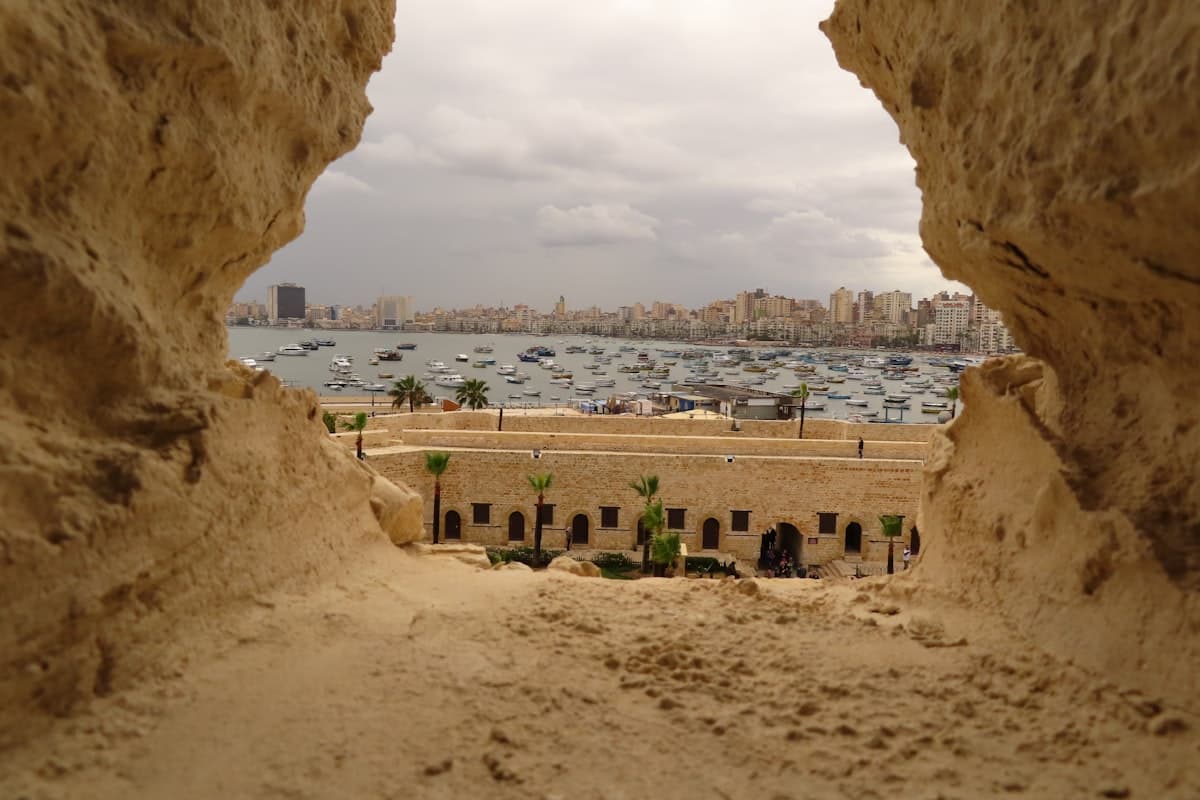
The Pharos lighthouse, one of the Seven Wonders of the ancient world, served the same double function. It made Alexandria's harbor navigable, yes, but it also announced that this was a city whose rulers commanded resources no other Mediterranean power could match. The lighthouse is gone, destroyed in a series of earthquakes between the 10th and 14th centuries, but the Citadel of Qaitbay built on its ruins in 1477 used actual blocks from the lighthouse in its foundations. Underwater surveys since 1994 have found Ptolemaic statuary on the harbor floor beneath the citadel, including colossal figures believed to represent Ptolemaic rulers in pharaonic guise. You cannot dive on this site as a tourist, but the Alexandria National Museum displays some recovered pieces.
The Coptic connection is less obvious but real. The Jewish community in Ptolemaic Alexandria produced the Septuagint, the Greek translation of the Hebrew Bible, completed here around 250 BC because most Egyptian Jews by then spoke Greek rather than Hebrew. That translation became the text early Christian communities used. The Coptic Church traces its founding to Saint Mark's arrival in Alexandria around 42 AD, but he arrived in a city whose intellectual infrastructure, its multilingual scholarship, its tradition of theological synthesis, was a direct inheritance of Ptolemaic culture.
---
Common Mistakes
Spending most of your Alexandria time at the Bibliotheca Alexandrina. The modern library is architecturally interesting and its antiquities museum inside holds some genuine Ptolemaic material. But most travelers spend two to three hours there and forty-five minutes at Kom el-Shoqafa. This is backwards. The modern library is a reference to ancient Alexandria. The catacombs are ancient Alexandria.
Booking a day trip from Cairo. A day trip gives you approximately five hours of actual site time after travel. The Ptolemaic sites require unhurried attention and, ideally, a local guide who can explain what you are looking at rather than what a brochure says you should feel. Stay at least two nights.
Skipping the Alexandria National Museum. Housed in a restored Italian-style palace on Tariq al-Hurriya, this museum holds the best curated overview of Ptolemaic Alexandria, including artifacts recovered from the Eastern Harbor. Entry is EGP 120. Most tour itineraries ignore it because it lacks a famous name. It is better organized and more informative than the Greco-Roman Museum in its current partial state.
Taking a horse carriage tour along the Corniche. They cost EGP 150 to 300, show you nothing of Ptolemaic Alexandria, and the horses are visibly stressed. This is a contrarian take I will be direct about: the carriage tours exist for romantic atmospherics and deliver them poorly. Walk the Corniche yourself or take a taxi to specific sites.
Ignoring Abusir, 45km southwest of Alexandria. This site holds a Ptolemaic lighthouse, smaller than the Pharos but one of the only surviving Ptolemaic lighthouse structures anywhere. It is almost never included in guided tours. Hire a driver for EGP 400 to 600 round trip. The site is fenced but viewable and has a small local archaeological presence worth speaking to.
Treating the food quarter near the central fish market as optional. The Ta'amiya in Alexandria is made with fava beans and herbs in a ratio different from Cairo, a Ptolemaic-era agricultural distinction that persisted through every subsequent civilization. This is not incidental. Eating here is part of understanding how a city retains culture over 2,300 years.
Arriving without any Arabic. Even five words changes every interaction at every site. The ticket sellers, the guards who know which underground gallery is accessible today, the curator who might show you something not on display: none of them will volunteer information to someone who does not try.
---
Practical Tips
Alexandria's sites do not cluster conveniently. Kom el-Shoqafa and the Serapeum are in the west of the city. The Alexandria National Museum and Kom el-Dikka are in the center. The Citadel and harbor archaeology are in the east. Plan routes by geography and do not attempt to combine western and eastern sites in a single morning.
The best local guide for Ptolemaic specifically (not a general Alexandria guide) is worth researching through academic contacts or the Alexandria University archaeology department. A specialist costs EGP 800 to 1,500 for a half day but will unlock access and context unavailable otherwise.
Photography is permitted at most sites with a phone. A camera with a separate lens sometimes triggers a surcharge of EGP 50 to 150. Ask before assuming.
The Ptolemaic material in Cairo's Egyptian Museum is undervisited and underexplained. Room 34 holds Ptolemaic coffins that show the same hybrid imagery as Kom el-Shoqafa. If you are coming from Cairo, spend an hour there before boarding the train north. It will frame everything you subsequently see in Alexandria.
Frequently Asked Questions
The Weekly Dispatch
More on Egypt, every Friday.
Cultural depth and places most guides never mention.
No spam. Unsubscribe anytime.