Ptolemaic Egypt: The Traveler's Guide to Alexandria's Lost World
Alexandria was once the largest city on earth. Almost nothing Ptolemaic survives above ground. Knowing where to look changes everything.

Quick Facts
- Best time to visit
- October through March. Cooler temperatures, lower humidity, and reduced domestic tourism make the sites significantly more comfortable. December and January bring occasional rain but also the best light for photography.
- Entrance fee
- Serapeum complex EGP 150 (approx $3 USD); Catacombs of Kom el-Shoqafa EGP 180 (approx $3.50 USD); Alexandria National Museum EGP 180 (approx $3.50 USD); Bibliotheca Alexandrina with museum access EGP 120 (approx $2.50 USD). Student rates typically 50 percent with valid ID.
- Opening hours
- Most state-run sites daily 9am to 5pm (winter), 9am to 6pm (summer). Catacombs closed Friday mornings until 1pm. Bibliotheca Alexandrina closed Sundays. Hours subject to change; verify at ticket offices.
- How to get there
- High-speed train from Cairo Ramses Station, approximately 2 hours, tickets EGP 120 to 280 depending on class. Within Alexandria, taxis between Karmouz-area sites cost EGP 40 to 80 per trip. The historic tram runs EGP 3 but is slow. Minibuses connect major neighborhoods for EGP 5 to 10.
- Time needed
- Minimum two full days to cover Ptolemaic Alexandria seriously. Three days allows for the Bibliotheca Alexandrina, the National Museum, and unhurried time at the Serapeum and Catacombs.
- Cost range
- Budget EGP 800 to 1,200 per day including site entries, local food, and transport. Mid-range EGP 2,000 to 3,500 per day with a Corniche-facing hotel and one restaurant dinner.
Ptolemaic Egypt: The Traveler's Guide to Alexandria's Lost World
The Ptolemies ruled Egypt for 275 years, built the largest library in the ancient world, fused Greek philosophy with Egyptian theology into something entirely new, and produced Cleopatra VII, the only ruler of her dynasty who actually learned to speak Egyptian. Almost none of it is visible above ground today. Alexandria swallowed its Ptolemaic past under Byzantine churches, Arab foundations, Ottoman mosques, and nineteen centuries of Mediterranean sea-level rise. The royal quarter, the Mouseion, the Serapeum in its first form, the tomb of Alexander the Great himself, all of it is gone or buried or submerged in the harbor. What remains is fragmentary, scattered, and more interesting for that reason. This guide is for the traveler who wants to understand what Alexandria was before it became what it is, and how to find the pieces that survive.
Quick Facts
Best time to visit: October through March. Alexandria's Mediterranean climate means summers are humid and crowded. Spring and autumn give you cool mornings and manageable crowds at the key sites.
Key site entrance fees: Greco-Roman Museum (when fully reopened after restoration): EGP 200 (approx $4 USD), students EGP 100 Pompey's Pillar and Serapeum complex: EGP 150 (approx $3 USD), students EGP 75 Catacombs of Kom el-Shoqafa: EGP 180 (approx $3.50 USD), students EGP 90 Bibliotheca Alexandrina (includes some museum access): EGP 120 (approx $2.50 USD), students EGP 60 Royal Ptolemaic quarter underwater site (Franck Goddio tours, seasonal): booked separately through licensed dive operators, approximately $80-120 USD per person
Opening hours: Most state sites open daily 9am to 5pm in winter, 9am to 6pm in summer. The Catacombs close Fridays until 1pm. Always verify current hours at the ticket window, not third-party websites.
How to get there: Alexandria is 220km from Cairo. The Spanish-built high-speed train departs Cairo Ramses Station and takes approximately 2 hours, with tickets from EGP 120 to EGP 280 depending on class. Within Alexandria, the sites cluster in the western part of the city near Karmouz. Taxis between sites run EGP 40 to 80. The tram, one of the few remaining urban trams in Africa, costs EGP 3 and is an experience in itself, though it runs slowly.
Time needed: Two full days minimum to cover Ptolemaic Alexandria seriously. Three days if you want to include the Bibliotheca Alexandrina's antiquities museum and the Montaza area.
Cost range: Budget EGP 800 to 1,200 per day including food and sites. Mid-range EGP 2,000 to 3,500 per day with a decent hotel on the Corniche.
Why Ptolemaic Egypt Matters to a Traveler in Alexandria
Most visitors come to Alexandria for the Corniche, the seafood, and a vague sense of Cleopatra. That is an understandable impulse and a significant waste of a city.
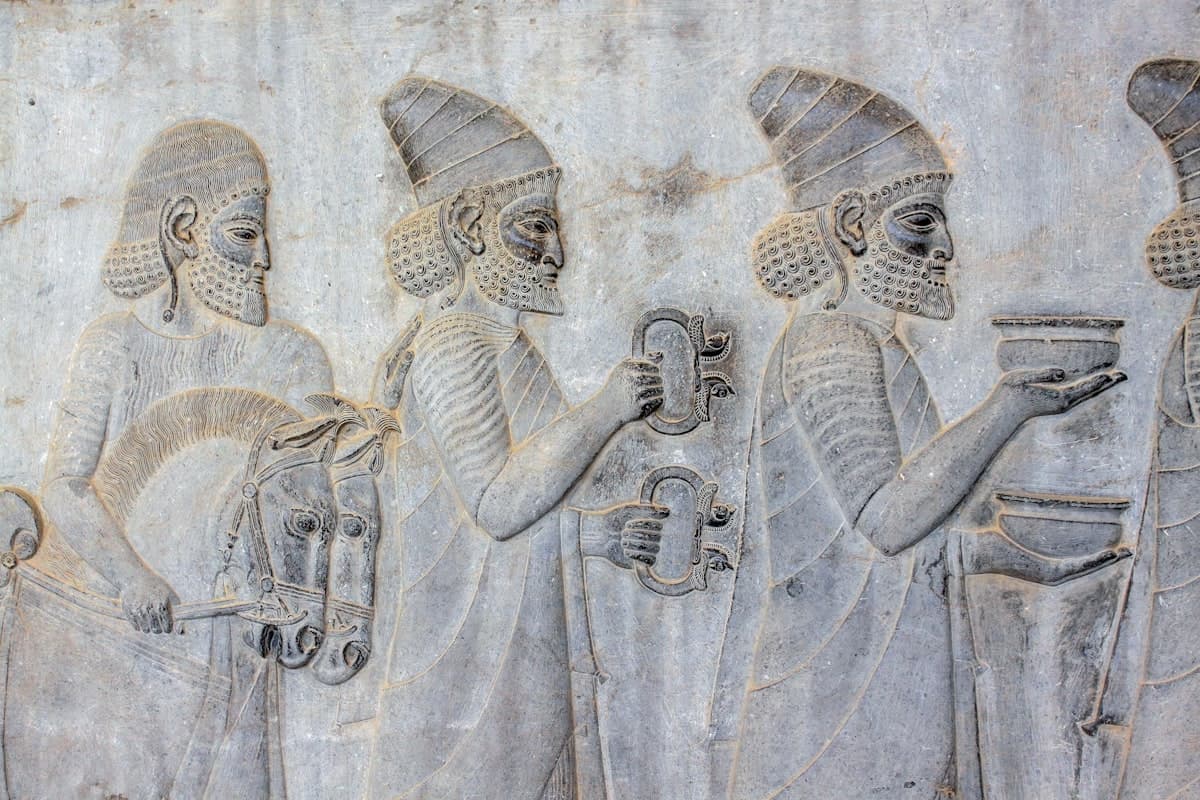
The Ptolemaic period, running from 305 BCE when Ptolemy I declared himself pharaoh after Alexander's death to 30 BCE when Cleopatra VII died and Rome absorbed Egypt as a province, represents one of the most consequential cultural experiments in human history. The Ptolemies were Macedonian Greeks who chose to rule as Egyptian pharaohs. They built temples in the traditional Egyptian style at Edfu, Philae, and Dendera that are among the best-preserved in Egypt, precisely because they were constructed late and then buried by sand. They created the cult of Serapis, a deity deliberately designed to be worshipped by both Greeks and Egyptians, fusing Osiris and Apis with Greek attributes. They established the Mouseion, the institution from which we get the word museum, as a funded research community that at various points included Euclid, Eratosthenes (who calculated the circumference of the earth to within 2 percent in the third century BCE), and Archimedes.
Eratosthenes did this calculation, incidentally, using the angle of shadows in Aswan on the summer solstice compared to Alexandria, and the known distance between the two cities. He arrived at approximately 39,375 kilometers. The actual figure is 40,075. He was working with a stick and geometry.
None of this history appears in front of you when you arrive at Alexandria's Misr train station. You have to go looking.
What Survives: Reading the Layers
The honest answer to what survives of Ptolemaic Alexandria above ground is: very little in its original form. The city has been continuously inhabited for 2,300 years. Every civilization that followed built on, with, or over what the Ptolemies left.
The Serapeum hill is where you begin. The complex now called Pompey's Pillar was the site of the Serapeum, the great temple to Serapis that Ptolemy III completed in the third century BCE. The column itself, 27 meters tall and carved from a single piece of Aswan granite, has nothing to do with Pompey. It was erected in 297 CE to honor the Roman emperor Diocletian. The Ptolemaic temple was destroyed by a Christian mob in 391 CE, an event recorded by the historian Theophilus and considered one of the decisive moments in the Christianization of the Roman world. What you are looking at when you stand at this site is a Roman monument on a Ptolemaic foundation platform scattered with sphinxes, some of which date to the reign of Ptolemy I and bear his image.
The sphinxes matter. Look at them closely. The Ptolemaic sphinx is stylistically distinct from the Pharaonic. The face is more individualized, the headdress sits differently, and several of them were deliberately carved with Greek facial features onto Egyptian bodies. This is the Ptolemaic project made literal in stone: two aesthetic traditions, one object.
The Catacombs of Kom el-Shoqafa, located about 800 meters southwest of the Serapeum, are the most complete physical document of what happened when Ptolemaic religious culture collided with Roman governance and indigenous Egyptian belief. The catacombs date from the first century CE, so strictly they are post-Ptolemaic, but they were carved by Alexandrians who had absorbed 300 years of Greek-Egyptian fusion. The main burial chamber shows Anubis wearing Roman armor. Sobek appears in a toga. Medusa's head decorates the architrave of a chamber dedicated to Osirian rites. This is not confusion. This is a city that had been thinking across cultural systems for three centuries and had created a third thing.
The Library That Wasn't Where You Think
Every traveler to Alexandria wants to see the Library. The Bibliotheca Alexandrina, opened in 2002 on the approximate site of the ancient institution, is architecturally serious and contains good exhibitions, including an antiquities museum in the basement with genuine Ptolemaic material. Visit it. But understand what you are visiting.
The ancient Library of Alexandria was not a single building. It was a research institution, part of the Mouseion complex, and it almost certainly occupied a section of the Royal Quarter now lying under the eastern harbor and the modern city grid around the Shallalat Gardens. Scholars debate its exact location still. The famous burning is also more complicated than the standard narrative suggests. Julius Caesar accidentally set fire to ships in the harbor in 48 BCE, and some ancient sources say the fire spread to warehouses containing books. Whether those were Library books, warehouse stock awaiting export, or something else is contested. The Library likely declined gradually through withdrawal of royal funding as Rome redirected Alexandria's revenues, not in a single dramatic fire.
What the Bibliotheca Alexandrina does have, in its basement antiquities collection, is a Ptolemaic decree stele, coins bearing the faces of Ptolemy III and IV, and several faience objects from the period. The collection is modest but real. Spend an hour there before visiting the site of the Serapeum and the layers will feel less abstract.
One specific fact that most visitors to the Bibliotheca miss: the building's circular disc roof, covered in carved writing from 120 different scripts, was designed by the Norwegian firm Snohetta and positioned so that the roof faces the sea at the precise angle that allows maximum northern light into the reading room. This is a deliberate echo of the ancient Library's orientation toward the harbor from which its scrolls arrived. The architects researched this consciously.
The Connections: Ptolemaic Egypt Across the Country
Understanding Ptolemaic Alexandria changes how you read the rest of Egypt, and this is the point most itineraries miss entirely.
The temples at Edfu (Horus), Dendera (Hathor), and Philae (Isis) are all Ptolemaic constructions or heavy Ptolemaic renovations of earlier structures. They are among the most complete temple complexes in Egypt precisely because they were built or finished late in Egyptian history, then covered by desert sand and Nubian silt before they could be quarried for building material. When you read the hieroglyphic texts at Edfu, which are the most complete surviving record of Egyptian temple ritual, you are reading what Ptolemaic priests chose to record. They were acting as custodians of a tradition they had partially inherited and partially reconstructed.
The Fayoum portrait tradition, those extraordinary painted wooden panels inserted into mummy wrappings that look startlingly modern and are housed in the Egyptian Museum in Cairo, dates from the Roman period but is a direct product of Ptolemaic Alexandria's fusion culture. A Greek painterly tradition applied to an Egyptian funerary practice, producing something that has no precedent in either.
The Rosetta Stone, now in the British Museum and a source of legitimate Egyptian resentment, is a Ptolemaic object. It records a decree issued by the priests of Memphis in 196 BCE during the reign of Ptolemy V, written in hieroglyphics, Demotic, and Greek. It was found at Rosetta (Rashid), 65 kilometers east of Alexandria. A replica is in the Alexandria National Museum, which itself is worth two hours for its Ptolemaic and Roman collections housed in a restored Italian-style palace in the city center.
Common Mistakes
Treating the Bibliotheca Alexandrina as the main event. It is a beautiful building and a functioning library. It is not an archaeological site. Travelers who spend most of their Alexandria day there and skip the Serapeum and Catacombs have misallocated their time significantly.
Expecting visible Ptolemaic remains at street level. Alexandria's Ptolemaic layer is mostly 6 to 8 meters below the current city surface. Several sites, including a recently excavated Ptolemaic residential quarter near the San Stefano area, are accessible only through organized archaeological visits. Check with the Alexandria Archaeological Society before your trip for current access options.
Skipping the Alexandria National Museum. Most tour itineraries omit it in favor of the Bibliotheca. This is wrong. The National Museum's Ptolemaic and Roman floor contains genuinely significant objects, including several underwater-recovered pieces from the sunken Royal Quarter, and it is almost never crowded. Entry is EGP 180 (approx $3.50 USD).
Taking a harbor boat tour and calling it Ptolemaic history. The boat tours of the Eastern Harbor are pleasant. The guides will point at the water and say the Royal Quarter is beneath it, which is true. You will see nothing. The actual underwater archaeological work done by Franck Goddio's team since 1996 has recovered thousands of objects, but the site is not currently accessible to recreational divers without booking well in advance through licensed operators.
The horse-carriage rides along the Corniche. Skip them. They cost EGP 150 to 300, the horses are visibly overworked, and the route teaches you nothing about the city's history that walking would not teach you better. This is one of those things every travel recommendation includes and none defends with a real argument.
Visiting in July or August. The humidity is substantial, the sites are more crowded with Egyptian summer tourists, and the quality of the experience drops sharply. October to December gives you cooler air, lower crowds, and the particular grey Mediterranean light that makes Alexandria feel like itself rather than a postcard.
Assuming the Greco-Roman Museum is open. It has been under restoration for years. Check its current status before building your itinerary around it. When fully open, it holds the most comprehensive collection of Ptolemaic material in Alexandria, including the famous alabaster tomb believed to have been repurposed from Alexander's original burial.
Practical Tips
Bring cash in Egyptian pounds. Many of the smaller state site ticket offices do not take cards reliably. ATMs are available at the train station and throughout the city center.
Hire a local guide for at least one day. The difference between walking through the Serapeum with a knowledgeable Alexandrian guide and walking through it alone is the difference between reading a page and reading a chapter. The Alexandria Tourist Authority maintains a list of licensed guides, and rates run approximately EGP 600 to 900 for a half-day (roughly $12 to $18 USD).
The sites near Karmouz, including the Serapeum and the Catacombs, are not well connected by tourist infrastructure. The streets around them are working-class residential neighborhoods and completely safe, but navigation without a guide or offline map is genuinely confusing. Download offline maps before you go.
For Ptolemaic Egypt history travelers who want the deeper context, the best single preparation is reading Strabo's account of Alexandria in his Geography, written during his visit around 25 BCE, just five years after Cleopatra's death. He describes a city he found already in transition. The Royal Quarter was already restricted under Roman administration. The Mouseion was functioning but diminished. He is the closest thing we have to a contemporary traveler's account of Ptolemaic Alexandria in its final form. It is available free in English translation online and takes about ninety minutes to read.
Alexandria rewards the traveler who comes with questions rather than expectations. The Ptolemaic city is not gone. It is underground, underwater, and embedded in every layer above it. You just have to know you are standing on it.
Frequently Asked Questions
The Weekly Dispatch
More on Egypt, every Friday.
Cultural depth and places most guides never mention.
No spam. Unsubscribe anytime.