7 Day Egypt Itinerary: Cairo, Luxor, Aswan and the Nile
Most 7-day Egypt itineraries send you to the same six sites. The other sixty are often better. Here is the version that treats Egypt as a living place.

Quick Facts
- Best time to visit
- October to February for manageable heat. March and April are acceptable. May through September in Luxor and Aswan involves temperatures above 40C and genuine heat risk.
- Entrance fee
- Pyramids of Giza EGP 540 (approx $11 USD). Egyptian Museum EGP 200 (approx $4 USD). Karnak Temple EGP 450 (approx $9 USD). Valley of the Kings EGP 600 (approx $12 USD, covers 3 tombs). Philae Temple EGP 450 (approx $9 USD). Nubian Museum EGP 180 (approx $3.50 USD).
- Opening hours
- Most archaeological sites open daily at 6am and close at 5pm to 6pm depending on season. Egyptian Museum open 9am to 5pm. Arrive at Giza and Valley of the Kings at opening time.
- How to get there
- International arrivals at Cairo International Airport. Internal flights Cairo to Luxor cost EGP 1,800 to 3,500 each way. Luxor to Aswan by second-class train costs EGP 50 to 90 and takes 3 hours. Airport taxi Cairo to downtown costs EGP 250 to 350 by meter.
- Time needed
- Minimum 7 days for Cairo, Luxor, and Aswan. 10 days allows for Abu Simbel, a day on the Nile by felucca, and a slower pace in Cairo.
- Cost range
- Budget EGP 1,200 to 1,800 per day. Mid-range EGP 3,500 to 6,000 per day. High-end EGP 10,000 and above per day.
Most people who visit Egypt for a week come home having seen the Pyramids, the Egyptian Museum, Luxor Temple by night, and Karnak. They feel they have seen Egypt. They have seen the outline of Egypt, traced in the heaviest pencil, with everything interesting erased. This itinerary is built on a different premise: that seven days is enough time to go deep if you stop trying to go everywhere.
The structure is Cairo for three days, a flight south to Luxor for two days on the East and West Banks, then a felucca or road transfer to Aswan for two days. No cruise ship. No sound and light show. No optional extras that exist only to extract another EGP 350 from your afternoon.
Quick Facts
Best time to visit: October through February. Cairo is bearable, Luxor light is at its best, and you will not spend the hottest hours of your Aswan afternoon genuinely concerned about your health. March and April are transitional and increasingly acceptable. May through September in Upper Egypt is not punishment exactly, but it is not enjoyable either.
Approximate daily costs: Budget traveler (hostels, local food, third-class trains) EGP 1,200 to 1,800 per day. Mid-range (three-star hotels, a mix of local and tourist restaurants, private transfers) EGP 3,500 to 6,000 per day. The gap is wide because Egypt rewards people who are willing to eat where Egyptians eat.
Internal flights: Cairo to Luxor costs EGP 1,800 to 3,500 each way depending on timing. Book through EgyptAir or Nile Air at least two weeks out.
Key entrance fees: Egyptian Museum EGP 200 (approx $4 USD), Mummies Room extra EGP 180. Pyramids of Giza EGP 540 (approx $11 USD), interior of the Great Pyramid an additional EGP 900. Karnak Temple EGP 450 (approx $9 USD). Valley of the Kings EGP 600 (approx $12 USD), includes three tombs. Philae Temple EGP 450 (approx $9 USD).
Opening hours: Most archaeological sites open at 6am and close between 5pm and 6pm depending on season. The Egyptian Museum closes at 5pm. Arrive at Giza and the Valley of the Kings at opening. The sites do not get better as the day goes on.
Why Seven Days Works, If You Use Them Correctly
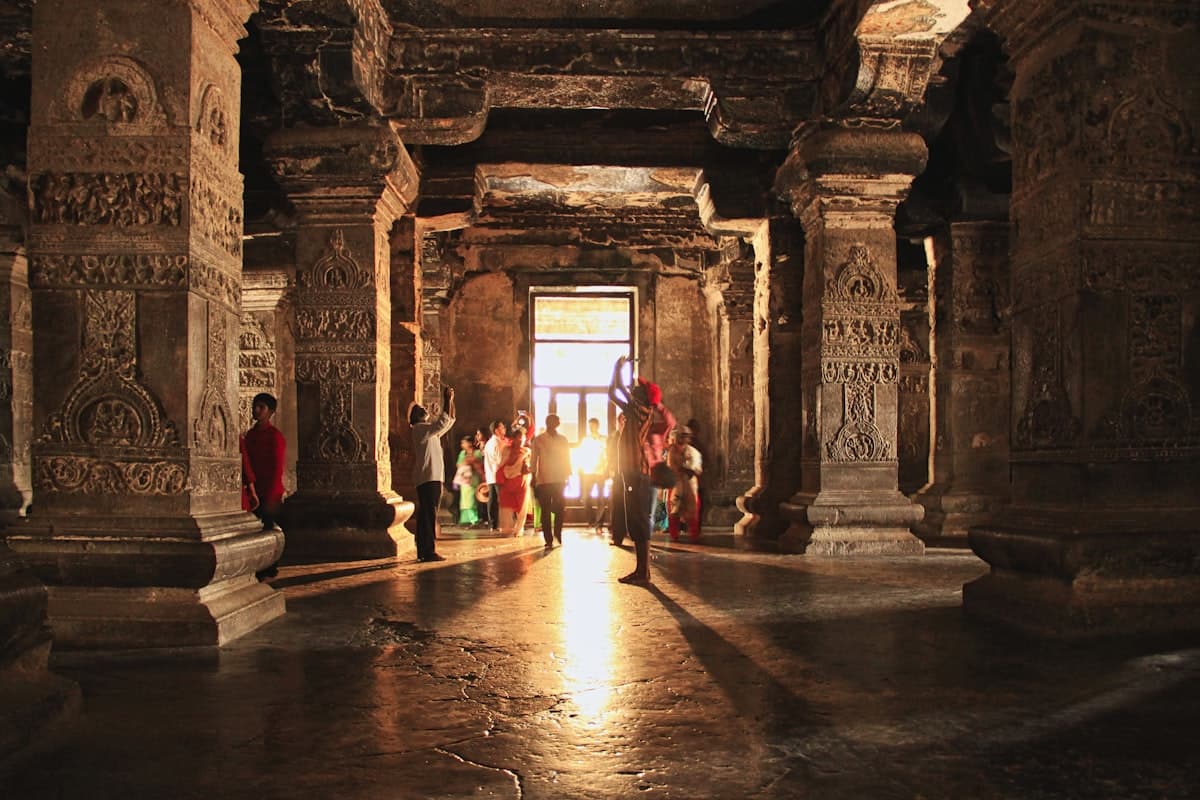
Egypt has been continuously inhabited for longer than almost any other place on earth. Cairo alone contains a Roman fortress, a Coptic church built inside it, a mosque built on top of the church's memory, a Fatimid city wall around all of it, and a Mamluk citadel watching from the hill above. These are not separate chapters. They are the same story told in stone across fourteen centuries of the same square mile.
The reason most seven-day itineraries fail is that they treat Egypt as a checklist rather than a palimpsest. They bounce you from the Pyramids to Luxor to Aswan without giving you time to understand what connects them. The Amun priests of Karnak were the most powerful religious institution in the ancient world for more than five hundred years, controlling somewhere between a third and a fifth of all arable land in Egypt by the end of the New Kingdom. When Akhenaten moved the capital to Amarna in the fourteenth century BC, he was not just changing his theology. He was attempting to destroy the economic power of Karnak's priesthood. He failed. They outlasted him, erased his name from monuments, and reclaimed their land within a decade of his death. Knowing this before you walk through Karnak's hypostyle hall changes what you are looking at.
Days 1 to 3: Cairo
Day 1: Islamic Cairo and What the Fatimids Built
Begin not at the Pyramids but in Islamic Cairo, specifically at Al-Azhar Mosque. Al-Azhar was founded in 970 AD by the Fatimid general Jawhar al-Siqilli within months of the Fatimids' conquest of Egypt. It became the oldest continuously operating university in the world, a claim sometimes disputed by Bologna and others, but Al-Azhar predates all of them by at least a century. Entry is free. Remove your shoes. Walk to the back courtyard in the morning when the light comes through the arcades at an angle that has not changed since the tenth century.
From Al-Azhar, walk the covered market of Khan el-Khalili. This is not a shopping recommendation. It is a geography lesson. The market sits on top of the Fatimid royal cemetery, which sat on top of a much older settlement. The shop owners above do not think about this. You should.
Afternoon: the Citadel of Saladin and the Mosque of Muhammad Ali. The Citadel was begun in 1176 by Saladin, who also built the walls that still ring parts of Old Cairo. Muhammad Ali's mosque inside it was completed in 1848 and was modeled on Ottoman mosques in Istanbul, specifically the Yeni Cami. This is Egypt under Ottoman influence looking back at Istanbul while claiming Egyptian power. The alabaster interior is worth the climb. The view over Cairo is not overrated.
Day 2: The Pyramids and the Egyptian Museum
Giza at 6am. This is not negotiable. By 9am the tour buses arrive in quantities that transform the plateau into something else entirely. At 6am, with the morning light coming from the east and the Sphinx still in partial shadow, you are in a different place.
The fact most visitors do not stop with: the Great Pyramid of Khufu was the tallest structure on earth from approximately 2560 BC until 1311 AD, when the central spire of Lincoln Cathedral was completed. That is 3,800 years of one building holding a single record. Stand in front of it with that number in your head and the scale changes.
Skip the interior of the Great Pyramid unless you have a specific reason to go. The chamber itself is plain, the shaft is steep and hot, and the ticket costs EGP 900. The pyramid does not become more comprehensible from the inside. Spend the money on the Solar Boat Museum adjacent to the complex: EGP 100, and inside is a 43-meter cedarwood boat buried in a pit beside the pyramid around 2500 BC, dismantled into 1,224 pieces and reassembled over fourteen years. It is one of the oldest intact wooden vessels in existence and almost no one goes to see it.
Afternoon: the Egyptian Museum in Tahrir Square. Go directly to the Tutankhamun galleries on the upper floor and work backward. The mask and the coffin are the objects everyone photographs. The painted wooden shrine boxes and the alabaster canopic chest are the objects worth your time. Allow two hours minimum.
Day 3: Coptic Cairo and Old Cairo's Layered World
The neighborhood of Coptic Cairo sits inside the walls of a Roman fortress called Babylon, built during the reign of Augustus to control the Nile crossing. Inside the fortress walls, the Coptic community built churches beginning in the third century AD. The Church of the Virgin Mary, known as the Hanging Church, was built over the Roman gatehouse. Its floor hangs above the original Roman gate towers, which you can see through glass panels in the nave floor. It has been in continuous liturgical use for roughly 1,700 years.
Five minutes' walk away is the Ben Ezra Synagogue, built on the site where, according to tradition, Moses was found in the bulrushes. More concretely, it was purchased by Abraham Ben Ezra, a rabbi from Jerusalem, in 882 AD. In 1896, the Cairo Geniza was discovered in this building: a hoard of approximately 300,000 Jewish manuscript fragments spanning a thousand years of daily life, commerce, law, and correspondence. The Geniza documents are now in libraries across the world and constitute one of the most significant archives of medieval history ever found.
Days 4 to 5: Luxor
The East Bank: Karnak and the Scale of Ambition
Fly to Luxor in the morning. Check in. Go immediately to Karnak before the afternoon heat arrives.
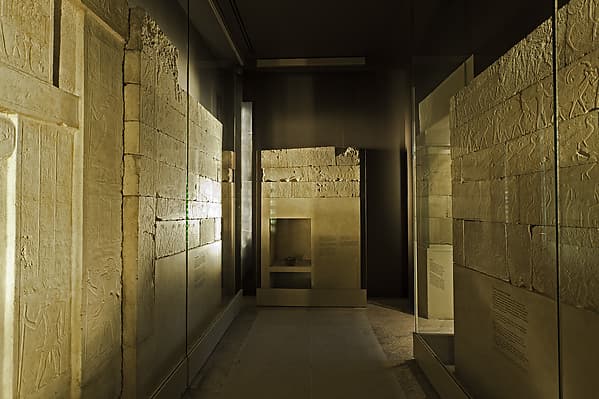
Karnak was built, expanded, demolished, rebuilt, and expanded again by approximately thirty pharaohs over a period of 1,500 years. The hypostyle hall alone contains 134 columns, the largest of which are 21 meters tall and 15 meters in circumference. Seti I began it. Ramesses II finished it and put his name on more of it. This is standard ancient Egyptian practice: a successor completing a predecessor's monument and claiming full credit. Look for the Seti I relief work in the northern section of the hall. It is finer than anything Ramesses II produced and usually uncredited by guides.
The West Bank: Valley of the Kings Without the Crowds
Cross the Nile at dawn by local ferry, EGP 5, not the tourist boat. The West Bank ticket office opens at 6am. Your standard ticket covers three tombs. Choose deliberately: KV62 (Tutankhamun) is nearly empty of decoration because he died young and his tomb was a reused, hastily finished chamber. It is historically significant but visually modest. KV11 (Ramesses III) is 125 meters deep, fully painted, and rarely has a queue. KV57 (Horemheb) has some of the finest unfinished relief work in the valley, showing the carving process at an intermediate stage that no completed tomb can show.
Days 6 to 7: Aswan
Aswan is the most livable city in Upper Egypt and the least ruins-focused stop on this route, which is why it matters. Take the local train from Luxor. The three-hour journey costs EGP 50 to 90 in second class and the Nile is beside you the entire way.
The Nubian Museum in Aswan contains the salvaged history of a civilization partially drowned by the construction of the High Dam in 1970. The dam displaced approximately 90,000 Nubian people and submerged dozens of villages, three towns, and temples including Abu Simbel, which was relocated at a cost of $40 million USD in a UNESCO operation that moved the entire temple 65 meters uphill and 200 meters back from the water. The museum is EGP 180 and is one of the most honest historical institutions in Egypt.
Philae Temple, on an island accessible by motorboat from the Shellal dock (EGP 450 entry, EGP 150 per person for the boat), is the last temple built in the classical Egyptian style. Its final hieroglyphic inscription was carved in 394 AD, the same era the Roman Empire was becoming formally Christian. The priests of Isis at Philae were granted a special exemption from Christianization longer than any other Egyptian temple, which is why the hieroglyphic tradition survived there into the late fourth century.
The Connections
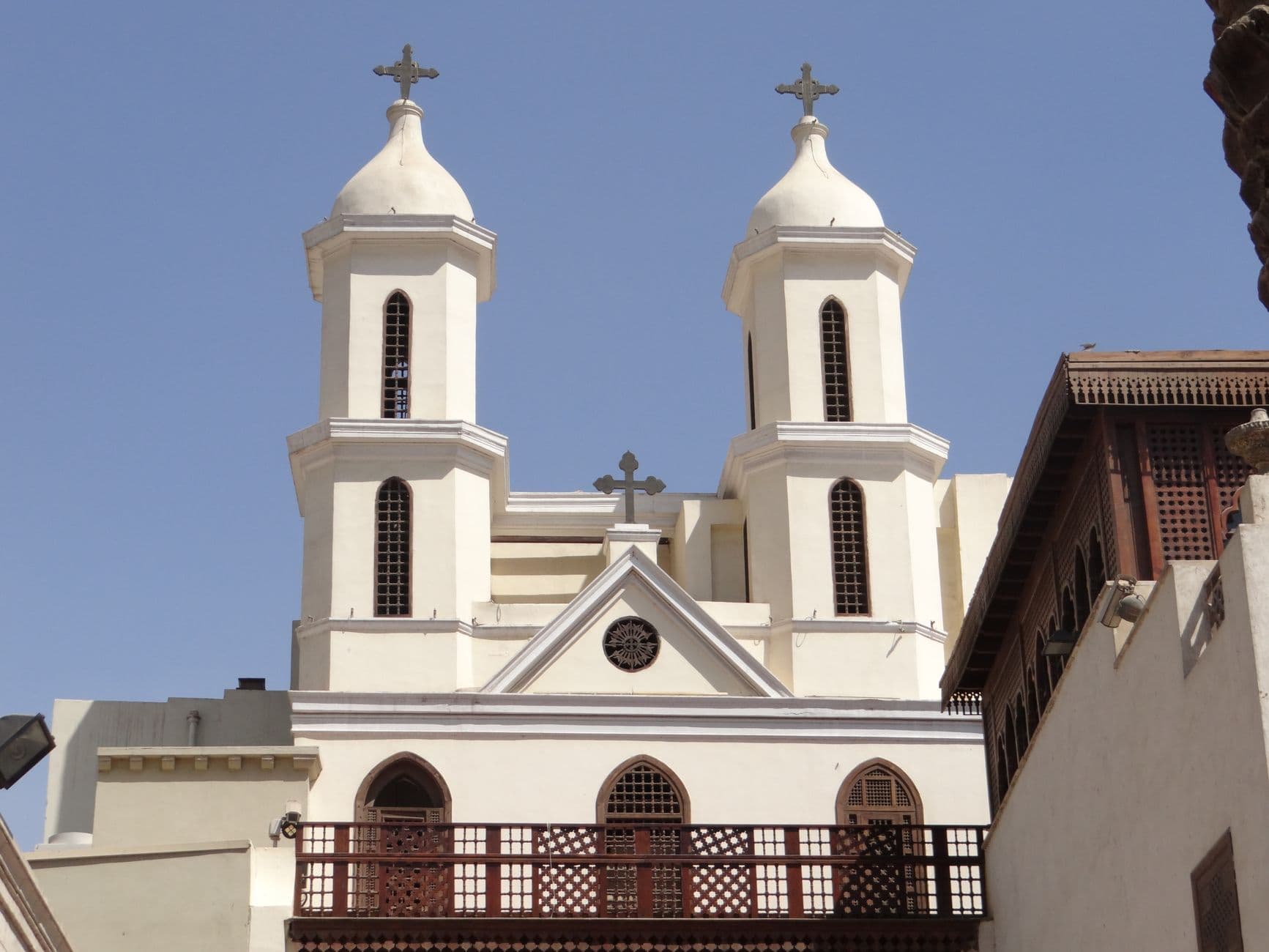
The thread running through this entire itinerary is continuity under pressure. Coptic Christianity survived Roman persecution, Arab conquest, and Crusader-era suspicion to maintain an unbroken liturgical tradition in the same buildings where it started. Al-Azhar survived Saladin's Sunni conversion of Fatimid Egypt and became the institution that defined Sunni scholarship for a millennium. The priests of Karnak survived Akhenaten. The Nubian people survived the High Dam, though they would tell you surviving is not the same as being whole.
This is the story Egypt keeps telling. Not the story of pyramids and pharaohs, though that is real enough. The story of a place that absorbs, adapts, and continues.
Common Mistakes
Booking a Nile cruise for a week-long trip. The itinerary looks efficient on paper: you sleep on the boat and wake up at the temples. In practice, a Nile cruise between Luxor and Aswan takes three to four days of actual sailing time, leaving you with a compressed Cairo stop and no flexibility. Cruises work well for two-week trips. For seven days, fly and use the time on the ground.
Going to the sound and light show at Karnak or Giza. The Karnak show costs EGP 350 and runs for one hour. It tells you nothing you will not learn from reading this article or spending twenty minutes in the actual temple at dawn. The Giza show is worse. Skip both.
Spending a half-day at Luxor Temple instead of Karnak. Luxor Temple is beautiful and photogenic and important. It is also about one-eighth the size of Karnak and contains less of historical substance. If your time is limited, spend four hours at Karnak and ninety minutes at Luxor Temple in the evening when it is lit. Not the other way around.
Hiring a guide through your hotel. Hotel-sourced guides in Egypt receive a commission from every shop and papyrus gallery they bring you to. The commission is factored into your time. Hire guides through licensed agencies or directly through Egypt's official guide association. Ask specifically whether the tour includes any shopping stops. If yes, ask for a tour that does not.
Missing the Nubian Museum in favor of Abu Simbel as a day trip. Abu Simbel requires a 3am bus departure from Aswan, a three-hour drive each way, and EGP 540 entry. The temples are genuine and impressive. They are also completely decontextualized from their original site, having been moved. The Nubian Museum gives you more historical understanding per hour and costs a fraction of the money. If you have to choose between the two, the museum is the better investment of a day in Aswan.
Changing money at the airport. The rate at Cairo International is consistently worse than the rate at downtown exchange offices. Change a small amount at the airport for transport and change the rest in the city.
Underestimating travel time within Cairo. Cairo traffic between 8am and 10am and between 4pm and 8pm is not inconvenient. It is a structural obstacle. Plan museum visits to coincide with opening time or the post-lunch lull, and plan dinner accordingly.
Practical Tips
The local ferry across the Nile at Luxor departs from the dock at the end of Television Street on the East Bank. Cost is EGP 5. The tourist ferry from in front of the Winter Palace Hotel costs EGP 50 to 75 and serves exactly the same crossing. Take the local ferry.
Dress conservatively at all religious sites, including mosques and Coptic churches. This means covered shoulders and knees for everyone. Scarves for entering mosques are available at entrances but bringing your own is less complicated.
Water in the Valley of the Kings: two liters minimum per person for a morning visit in winter, three liters in spring. There are vendors inside but the prices are variable and the shade is scarce.
Book the Valley of the Kings tombs entrance in person at the West Bank ticket office. You cannot book in advance online through official channels. The ticket is valid for one day only and specifies which tombs you may enter.
The Aswan-Luxor train in second class is safe, clean enough, and air-conditioned. It is used by Egyptian professionals and families. Buy tickets the day before at Luxor station. No reservation is required but seats can fill.
Frequently Asked Questions
The Weekly Dispatch
More on Egypt, every Friday.
Cultural depth and places most guides never mention.
No spam. Unsubscribe anytime.