7 Day Egypt Itinerary: Cairo, Luxor, Aswan Done Right
Most 7-day Egypt itineraries waste two days on bad sequencing. Fix the order, skip one famous site, and you see twice as much Egypt.
Quick Facts
- Best time to visit
- October through April. Temperatures are 20-28°C in Upper Egypt. July and August regularly exceed 45°C in Luxor and Aswan.
- Entrance fee
- Cumulative budget EGP 4,000-5,000 per person for full itinerary. Individual highlights: Giza plateau EGP 540, Valley of the Kings (3 tombs) EGP 480, Karnak EGP 540, Philae EGP 450.
- Opening hours
- Most sites open 6am-5pm in winter (Oct-Apr), 6am-6pm in summer. Valley of the Kings opens at 6am year-round. Egyptian Museum Tahrir 9am-5pm.
- How to get there
- International flights to Cairo (CAI). Domestic: Cairo to Aswan by flight (EGP 900-2,200, 1.5hrs) or overnight sleeper train (EGP 1,200-1,500, 12-14hrs). Luxor to Cairo by flight (EGP 900-2,000).
- Time needed
- 7 full days: 2 days Cairo, 2 days Aswan, 1 travel day Aswan to Luxor via Kom Ombo and Edfu, 2 days Luxor.
- Cost range
- Budget EGP 2,500-3,500/day ($50-70 USD). Mid-range EGP 6,000-9,000/day ($120-180 USD). Entrance fees approximately EGP 4,500 ($90 USD) total per person.
Most people who visit Egypt for a week see the same eleven things in the same order and leave feeling vaguely cheated. Not because Egypt failed them. Because their itinerary was designed by someone optimizing coach-bus logistics, not human experience. This guide is built differently. It sequences the same geography to minimize dead time, tells you which iconic site is genuinely not worth your morning, and leaves room for the kinds of encounters that don't appear in highlight reels but become the thing you tell people about for years.
One number to hold in your head before we start: Egypt has over 20,000 registered archaeological sites. The average first-time visitor sees perhaps fifteen. The question isn't whether to be selective. It's whether to be selectively right.
Quick Facts
Best time to visit: October through April. Temperatures in Luxor and Aswan sit between 20-28°C. July and August regularly hit 45°C in Upper Egypt, which is not a heat that sightseeing survives.
Budget range: Budget travelers managing accommodation, domestic flights, and entrance fees can expect EGP 2,500-3,500 per day (roughly $50-70 USD). Mid-range, with a Nile-view hotel in Aswan and private transfers, runs EGP 6,000-9,000 per day ($120-180 USD). The entrance fees alone, if you see everything in this itinerary, total approximately EGP 4,500 ($90 USD) per person.
Domestic flights: Cairo to Luxor or Aswan runs EGP 900-2,200 one-way booked 2-3 weeks ahead on EgyptAir or Nile Air. The overnight train from Cairo to Luxor (sleeper, foreigners' quota, bookable at Ramses Station or online) costs around EGP 1,200-1,500 and is genuinely comfortable.
Visas: Most nationalities purchase an e-visa online before travel for $25 USD, or pay on arrival. Do not leave this to the airport queue.
Time needed: This itinerary is calibrated for seven full days, beginning and ending in Cairo. It is not padded.
Why This Sequence Matters
The standard itinerary goes Cairo, Luxor, Aswan, Abu Simbel, back. This one goes Cairo, fly to Aswan, travel north to Luxor, fly back from Luxor to Cairo. The reason is not contrarianism. It's Nile hydrology.
The Nile flows north. Every ancient Egyptian religious procession, every pharaonic funeral voyage, every Ptolemaic ritual journey moved from south to north because that was the direction of life and the direction of the current. When you travel Aswan to Luxor by road, felucca, or the slow public ferry, you move the way the civilization moved. Sites accumulate meaning instead of presenting themselves as isolated stops. The Temple of Kom Ombo, which you pass midway, makes more sense when you've already stood at Philae and understood the Ptolemaic architectural tradition that built both.
The other structural decision: this itinerary treats Cairo as a two-part destination, days one and two before flying south, and day seven as a return with enough time to see one thing you didn't see at the beginning. Cairo is not a single-day gateway. The city has been continuously inhabited for over 4,000 years and contains, in its Islamic quarter alone, more medieval monuments than any other city on earth. Treating it as a one-day Pyramids stop is the most common and most costly mistake of the seven-day Egypt itinerary.
Days 1 and 2: Cairo
Day 1: Giza and the Egyptian Museum
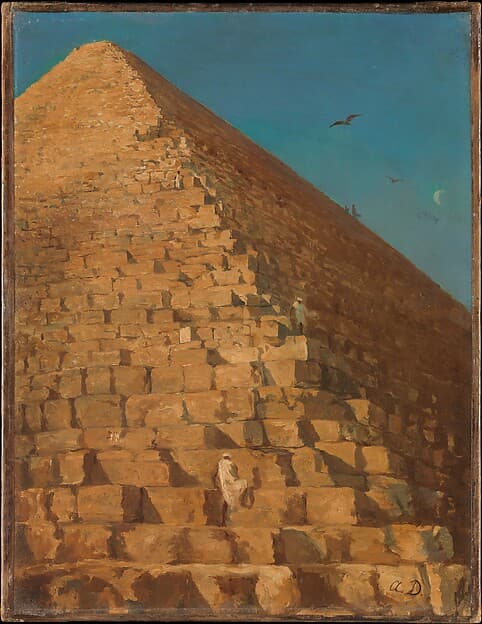
Arrive, sleep, then commit to being at the Giza plateau by 7am when it opens. The light before 9am is genuinely different: low, lateral, picking out the limestone courses of the Great Pyramid in a way that the midday glare obliterates. More importantly, the coaches don't arrive until 9:30am. You will have approximately ninety minutes of comparative quiet.
Enter the Great Pyramid (Khufu's) if you are not claustrophobic. The interior passage is 1.2 meters high in sections and rises at a 26-degree angle for 47 meters to reach the King's Chamber. It smells of old stone and human breath. The chamber itself is empty, stripped in antiquity, and acoustically extraordinary: clap once and listen to what comes back. Entrance to the interior requires a separate ticket, EGP 600 (approximately $12 USD), beyond the plateau fee of EGP 540 ($11 USD).
The Solar Boat Museum beside the Great Pyramid holds the dismantled and reconstructed cedar vessel buried beside Khufu around 2500 BC. It is 43 meters long. Nobody is entirely certain what it was for: some scholars argue it was used for the pharaoh's funeral journey, others that it was a symbolic vessel for the afterlife, others that it was never waterborne at all. The ambiguity is the interesting part. Entrance EGP 100.
Spend the afternoon at the Egyptian Museum on Tahrir Square, not the Grand Egyptian Museum. The GEM is newer and better lit, but the old museum on Tahrir contains the Amarna room, where the radical monotheist Pharaoh Akhenaten stares at you from limestone relief with a face that looks nothing like any other pharaoh before or after him. He attempted to dismantle 1,500 years of Egyptian religion in approximately seventeen years. His successor, Tutankhamun, reversed everything, and every trace of Akhenaten was systematically erased from the historical record. The fact that we know about him at all is largely because his enemies tried so hard to make him disappear. Egyptian Museum, Tahrir: daily 9am-5pm, EGP 450 ($9 USD).
Day 2: Islamic Cairo and Coptic Cairo
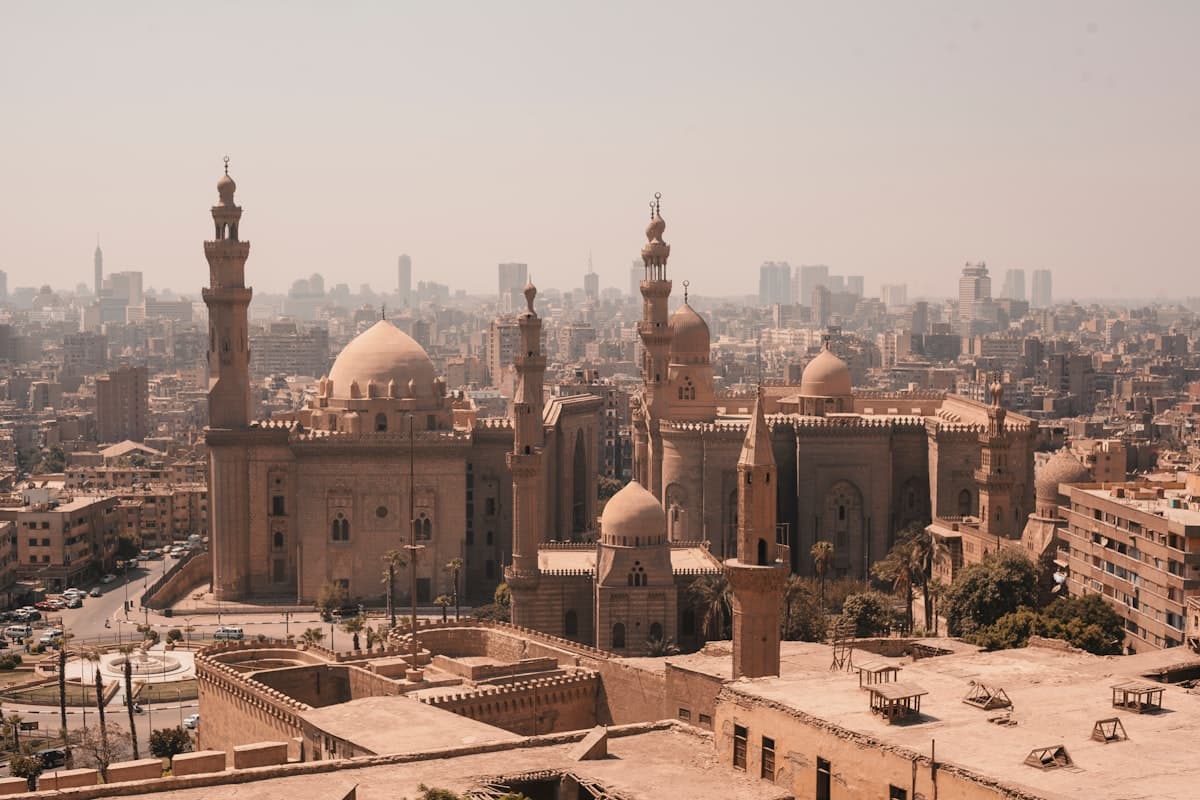
Walk the length of Muizz Street in the morning. This single road contains more intact medieval Islamic architecture per meter than anywhere else on the planet. The Madrasa and Mausoleum of Sultan Barquq, completed in 1386, was the first royal tomb built in a madrasa complex in Cairo. Barquq was the first Circassian Mamluk sultan, which matters because the Circassian Mamluks replaced the Turkic Mamluks after a century of dominance, and the architectural shift you can see in the stonework reflects the new power's different aesthetic priorities. Nobody on a tour bus tells you this. Look for the inlaid marble floors.
In the afternoon, go to Coptic Cairo, specifically the Hanging Church (Al-Muallaqah), built over a Roman-era gatehouse of the Babylon Fortress. The church dates to the 7th century in its current form, though the site has been in use since the 4th century. The wooden iconostasis inside dates to the 13th century and depicts 57 saints. Light candles, walk slowly, and note that the church is still an active place of worship for Cairo's Coptic community, not a museum.
Days 3 and 4: Aswan
Fly from Cairo to Aswan in the morning (approximately 1.5 hours). Aswan is where Egypt becomes Africa, where the light softens and the pace slows and the Nile widens around granite islands strewn with boulders. It is also where you understand granite: almost every hard stone object in the Egyptian Museum came from the quarries here. The Unfinished Obelisk, still lying in its quarry trench, would have been the largest obelisk ever erected at 42 meters and 1,168 tons. A crack appeared during cutting. They left it where it lay. Entrance EGP 180 ($3.60 USD).
Philae Temple, on Agilkia Island, was disassembled stone by stone between 1972 and 1980 and rebuilt on higher ground to save it from the rising waters of Lake Nasser. The UNESCO operation moved 16,000 blocks. When you walk through it, you are walking through a temple that exists in an entirely different location than it was built. This is either a miracle of preservation or a profound philosophical problem, depending on how you think about sacred space. Entrance EGP 450 ($9 USD), plus a motor launch from the dock, approximately EGP 300 return per boat.
Day four: take the public ferry to Elephantine Island (EGP 2 each way) and walk its length. The island has been occupied continuously for at least 5,000 years and contains ruins of every era stacked on top of each other. Hire a local guide from the Nubian village on the island's southern end, not from your hotel. They will take you to houses that predate the Arab conquest and explain why the residents paint their walls with crocodiles.
Day 5: Kom Ombo and Edfu, Arriving in Luxor
This is the transition day, traveling north by road or slow boat. If you have rented a car with driver (approximately EGP 1,500-2,000 for the day from Aswan to Luxor with stops), you control the pace.
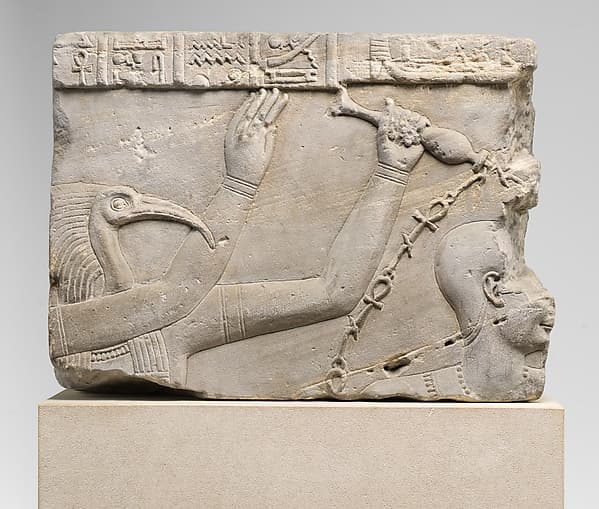
Kom Ombo is a double temple, simultaneously dedicated to Sobek the crocodile god and Horus the falcon god, with two of everything: two entrances, two hypostyle halls, two sanctuaries. It was built during the Ptolemaic period, which means Greek-speaking pharaohs were commissioning temples in perfect ancient Egyptian style as a form of political legitimacy. The carvings on the outer wall include what some Egyptologists identify as the earliest known depiction of medical and surgical instruments, including forceps and scalpels. Whether this is an operating theater or a ritual space remains genuinely contested. Entrance EGP 360 ($7 USD).
Edfu Temple is the best-preserved ancient Egyptian temple in existence, simply because it was buried under Nile silt and a medieval village until excavation began in 1860. Spend an hour here. Entrance EGP 450 ($9 USD).
Arrive in Luxor by evening.
Days 6 and 7: Luxor
The West Bank
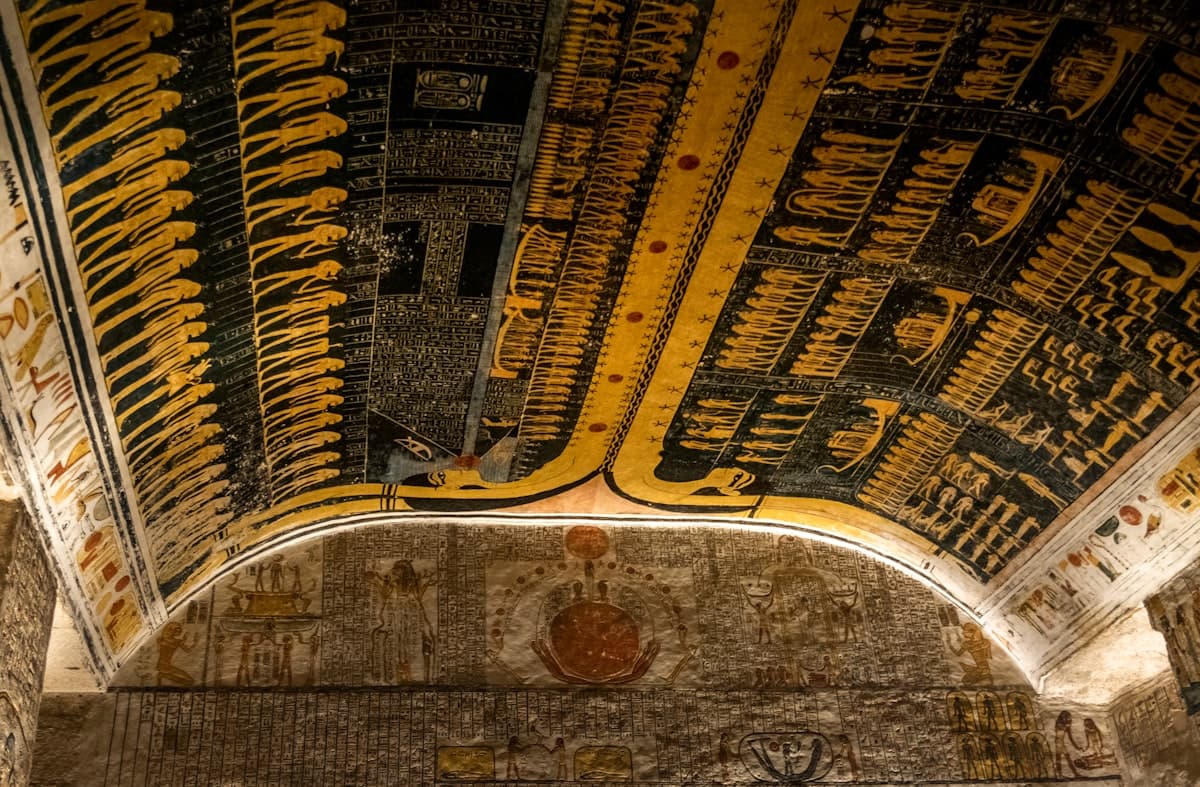
Cross to the west bank at dawn. Luxor light at 6am is specific: thin, rose-colored, coming in at an angle that makes the Theban cliffs glow like heated metal. The Valley of the Kings opens at 6am (EGP 480 for three tombs, additional fees for Tutankhamun EGP 300, Seti I EGP 1,200). The basic ticket covers three tombs from a rotating list. Ramses IV (tomb KV2) and Ramses IX (KV6) are included and undervisited. Their ceilings contain the complete text of the Book of the Night, a cosmological map of the underworld that took scholars over a century to fully translate.
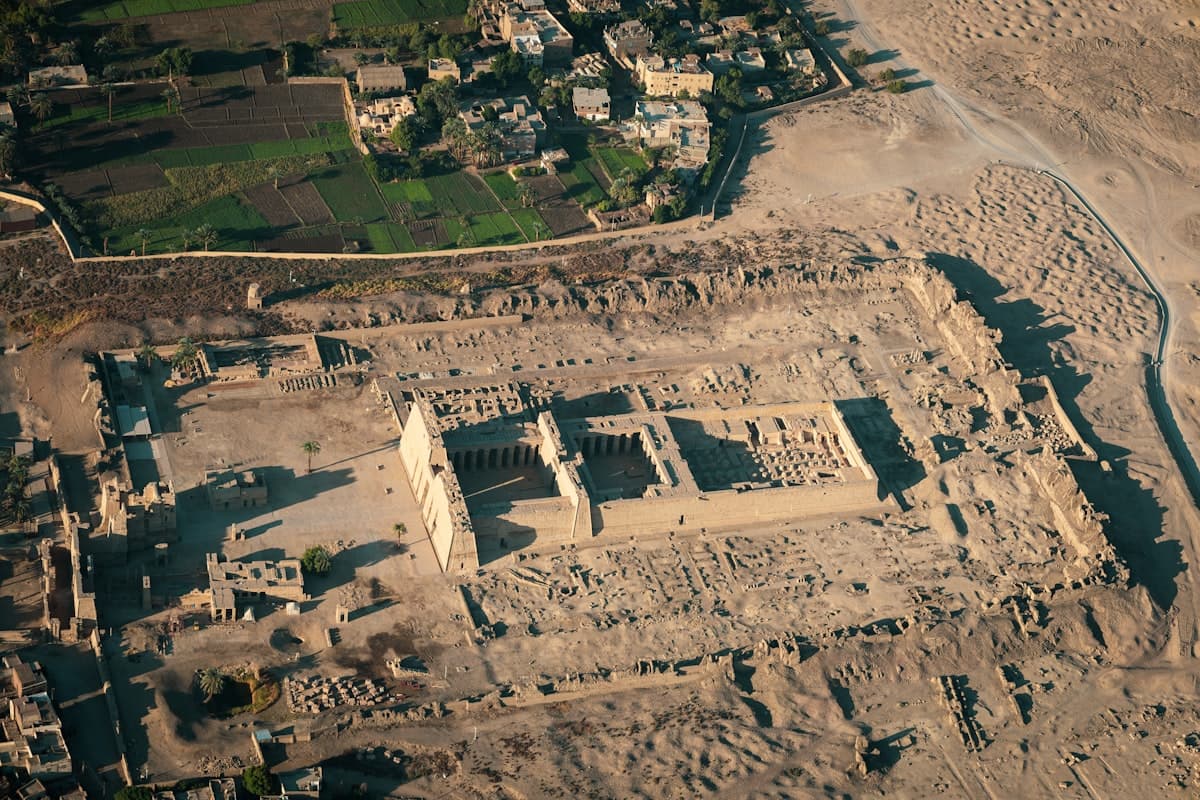
Hatshepsut's mortuary temple at Deir el-Bahari is thirty minutes from the valley by minibus. Hatshepsut ruled Egypt as pharaoh, not regent, for approximately twenty years in the 15th century BC, and her successor Thutmose III subsequently had her image systematically removed from monuments across Egypt. The defacement was incomplete. Enough survived that her existence was rediscovered in the 19th century AD. Entrance EGP 360 ($7 USD).
Skip the Sound and Light Show at Karnak. It costs EGP 350, runs forty minutes, and tells you nothing you cannot learn from a good guide or this article. The narration is theatrical and imprecise. The temple is better experienced in silence at dawn.
The East Bank
Karnak Temple complex is the largest religious building ever constructed. It was built, modified, demolished, rebuilt, and expanded by successive pharaohs over approximately 2,000 years. The Great Hypostyle Hall contains 134 columns, the largest of which are 21 meters tall with a circumference that requires six people to encircle them. Walk through it slowly. Entrance EGP 540 ($11 USD).
Luxor Temple, a 15-minute walk south, was buried under medieval Luxor for centuries. The Abu Haggag Mosque, still active, sits inside the temple complex because the mosque was built on top of the accumulated debris long before excavation revealed what was underneath. When they cleared the temple, they left the mosque in place. It is one of the most honest visual arguments for Egypt as a continuous civilization you will find anywhere. Entrance EGP 360 ($7 USD).
Fly back to Cairo on day seven for departure, or spend a final evening walking the Luxor Corniche.
Common Mistakes
Sequencing Cairo-Luxor-Aswan instead of Cairo-Aswan-Luxor. You lose the logic of the river and the thematic coherence that makes the temples feel connected rather than separate.
Booking all-inclusive Nile cruises without checking the itinerary. Many cruises stop at Esna lock for four hours at 2am and give you forty-five minutes at Edfu. Read the hourly schedule before you book.
Visiting the Valley of the Kings at midday in October through April. Midday is still hot and the popular tombs are standing-room only. The 6am opening is not a suggestion.
Spending day two in Cairo at the Grand Egyptian Museum instead of Islamic Cairo. The GEM is impressive and worth time on a longer trip, but on a seven-day Egypt itinerary, the Islamic quarter is more irreplaceable. The GEM can be visited before an evening flight.
Paying for a licensed guide at the Giza plateau without verifying credentials. Unlicensed touts will approach you within thirty meters of the entrance and offer compelling stories at compelling prices. Insist on seeing the official Tourism Authority badge before agreeing to anything.
Under-budgeting for entrance fees. First-time visitors consistently underestimate the cumulative cost of individual site tickets. Budget EGP 4,000-5,000 ($80-100 USD) per person for the full itinerary, and that's before the Abu Simbel excursion if you add it.
Skipping Coptic Cairo because it seems like a detour. It is not a detour. It is one of the places that makes Cairo legible as a city with three distinct civilizational layers occupying the same few square kilometers.
Practical Tips
Book domestic flights the moment your international flights are confirmed. Aswan and Luxor routes sell out during peak season (November through February) and prices triple in the two weeks before departure.
Carry small denomination Egyptian pound notes constantly. Entrance gates, baksheesh, market stalls, and most transport operates in cash. ATMs exist in Cairo and Luxor; they are rare and sometimes nonfunctional in Aswan's tourist areas.
Wear full-length cotton on the west bank and in mosques. Not as a modesty gesture, though that matters too, but because linen and cotton breathe and the tombs have their own microclimate that shifts dramatically at the entrance point.
The overnight train from Cairo to Aswan (leaving Ramses Station around 7pm, arriving approximately 12-14 hours later) is a legitimate and comfortable option that saves a night's accommodation. Book through the official Egyptian National Railways website or at the station foreigners' desk. The sleeper cabin is clean, the dinner is edible, and waking up to the Nile approaching Aswan is the kind of thing that justifies a seven-day Egypt itinerary in the first place.
Frequently Asked Questions
The Weekly Dispatch
More on Egypt, every Friday.
Cultural depth and places most guides never mention.
No spam. Unsubscribe anytime.