Armenia in Cairo: A Guide to Egypt's Forgotten Community
At its peak, Cairo's Armenian community numbered 40,000. Today it is fewer than 5,000. The churches, schools, and cemeteries they left behind tell a story most Egyptians don't know either.

Quick Facts
- Best time to visit
- October to April. Summer heat makes walking between sites in Downtown and Shubra genuinely unpleasant. Late September is worth targeting for the feast of Saint Gregory the Illuminator, the community's major annual gathering.
- Entrance fee
- Armenian churches: free (donations welcome). Armenian section of Shubra cemetery: EGP 20 to 50 donation (under $1 USD). Manyal Palace (Nubar Pasha context): EGP 150 approx $3 USD.
- Opening hours
- Armenian Evangelical Church: Sunday services 9am to 11am, visits by arrangement outside service times. Shubra cemetery: Saturday to Thursday 9am to 4pm. Armenian Club: by appointment, contact in advance.
- How to get there
- Metro Line 1 to Shubra El Kheima then microbus south to Ramses (EGP 5 to 8) for the Evangelical Church. Taxi from Downtown to Sakakini EGP 30 to 50. Tuk-tuk from Shubra Metro station to cemetery EGP 15 to 20.
- Time needed
- Half day for main churches and club. Full day if including Shubra cemetery and Manyal Palace. Allow extra time if the community council arranges an informal meeting.
- Cost range
- EGP 200 to 400 per person self-guided, including all transport, donations, and a simple lunch near Ramses Square.
Quick Facts
Best time to visit: October to April, when the heat does not punish long walks between sites in Heliopolis and Downtown Cairo.
Entrance fees: The Armenian Evangelical Church on Ramses Street is free to enter during service hours. The Armenian Catholic Church in Sakakini is free. The Armenian cemetery in Shubra requests a small donation, typically EGP 20 to 50 (under $1 USD). The Nubar Pasha museum section in the Manyal Palace costs EGP 150 (approx $3 USD) as part of the general palace admission.
Opening hours: Armenian churches generally hold services on Sundays from 9am to 11am and may be visited respectfully outside service times by arrangement. The Shubra cemetery can be visited Saturday through Thursday, 9am to 4pm. Manyal Palace is open daily except Tuesdays, 9am to 5pm.
How to get there: For the Armenian Evangelical Church, take the Cairo Metro Line 2 to Shubra El Kheima and ride a microbus south to Ramses Square (EGP 5 to 8). For Sakakini, take a taxi from Downtown for roughly EGP 30 to 50. For the Shubra Armenian cemetery, take a tuk-tuk from Shubra Metro station for EGP 15 to 20.
Time needed: A focused half-day for the main churches. A full day if you include the Shubra cemetery, the Sakakini Palace neighborhood, and the Armenian Club on Emad El Din Street.
Cost range: EGP 200 to 400 per person for a self-guided day, including transport, donations, and lunch near Ramses.
---
The Cairo phone directory of 1950 listed forty-two Armenian-owned businesses on a single street in Downtown Cairo. Jewelers, pharmacists, photographers, a lens grinder, a watchmaker, two competing pastry shops. By 1975, the street had been renamed. By 1990, most of the businesses were gone. Today you can walk the entire length of that street without knowing any of this happened, which is precisely the problem with how Cairo treats its own memory.
This is a guide to the Armenian community Egypt built and largely forgot, and to the physical traces that survive in churches, cemeteries, and the bones of neighborhoods that Armenians helped design.
Why This Place Matters
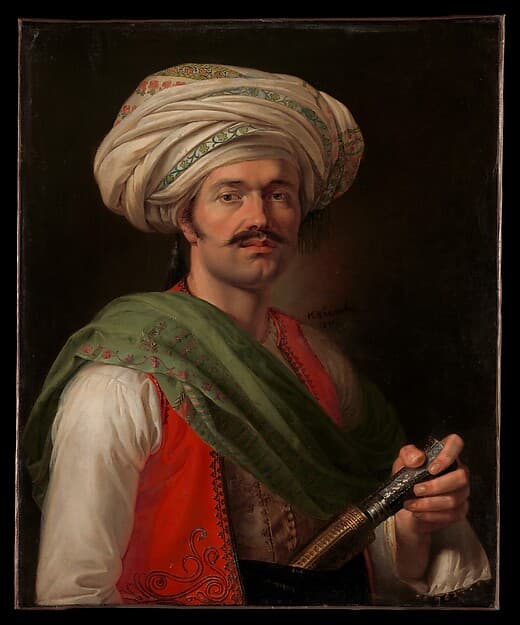
Armenians have lived in Egypt since at least the Fatimid period, but the community that shaped modern Cairo arrived in two distinct waves. The first came in the nineteenth century, drawn by the modernizing ambitions of Muhammad Ali Pasha, who recruited Armenian engineers, architects, and administrators from Constantinople to help remake Egypt in a European image. The second, and far larger wave, arrived between 1915 and 1923, survivors of the Armenian Genocide fleeing Anatolia and Syria. Egypt, then under British protection, accepted them by the tens of thousands.
What followed was one of the most quietly consequential transplantations in Cairo's modern history. The Armenians who arrived destitute in Alexandria and Port Said rebuilt themselves with extraordinary speed. Within a generation they were running some of Egypt's most significant commercial and cultural institutions. Nubar Nubarian, grandson of the man who would become Egypt's first prime minister under the Khedive, founded the Nubar Pasha Foundation in Cairo in 1930, which still funds social services today. The Armenian General Benevolent Union established schools in Cairo and Alexandria that educated not only Armenian children but Egyptian ones. The community newspaper, Arev, published in Armenian, ran for decades and documented a world that is now almost entirely gone.
The numbers tell the arc plainly. At peak, roughly 1920 to 1952, Cairo and Alexandria together held somewhere between 35,000 and 40,000 Armenians, making Egypt's Armenian community one of the largest diaspora communities in the world. Then came 1952, the Free Officers' Revolution, Nasser's nationalization laws of 1956 and 1961, and the slow eviction of all things foreign from Egyptian economic life. Armenians, like the Greeks and the Jews and the Italians before them, packed what they could and left. Most went to Beirut, then to Paris and Los Angeles and Sydney. By 1970, the community had halved. By 1990, it had halved again.
The Churches: What the Stone Remembers
The Armenian Evangelical Church on Ramses Street is the easiest entry point, both geographically and emotionally. Built in 1861, it predates the genocide wave entirely, which means it was constructed by the earlier, more settled community of Armenian merchants and Ottoman-connected administrators who had made their peace with Egypt long before catastrophe sent their cousins southward.
The interior is spare in the Protestant tradition, with wooden pews, a raised pulpit, and a gallery running along three walls. What most visitors do not notice is the memorial board near the entrance listing the names of community members lost in the 1915 genocide. These are not abstract names. Many of them have descendants who attend this church today. The board was added in 1923, eight years after the events it commemorates, which tells you something about how long it took for the survivors to be able to name what had happened to them.
The Armenian Catholic Church in the Sakakini district is architecturally more assertive, part of a neighborhood that was itself partly shaped by Armenian settlement after 1920. Sakakini takes its name from the Sakakini Palace, built by a Lebanese Christian merchant in the 1890s, and the broader area became a zone where minority Christian communities, Copts, Armenians, Greek Orthodox, and Catholics of various rites, lived in a proximity that was practical as much as it was comfortable. The church here holds services in the Armenian liturgical tradition, with its particular combination of ancient Greek musical modes and Syriac linguistic roots, a sound that exists nowhere else in Cairo and that most Cairenes have never heard.
The Apostolic Presence
The Armenian Apostolic Church, which is the mother church of the Armenian Christian tradition established in 301 AD, making Armenia the first nation to adopt Christianity as a state religion, maintains a presence in Cairo that most guides omit entirely. The community's apostolic congregation is small now, perhaps a few hundred families, but their church calendar includes the feast of Saint Gregory the Illuminator, the man who converted the Armenian king Tiridates III, which falls in late September and is one of the few occasions when the full remaining community gathers in one place. If you are in Cairo in late September, this is worth attending with advance permission from the church office.
The Shubra Cemetery: A City of Names
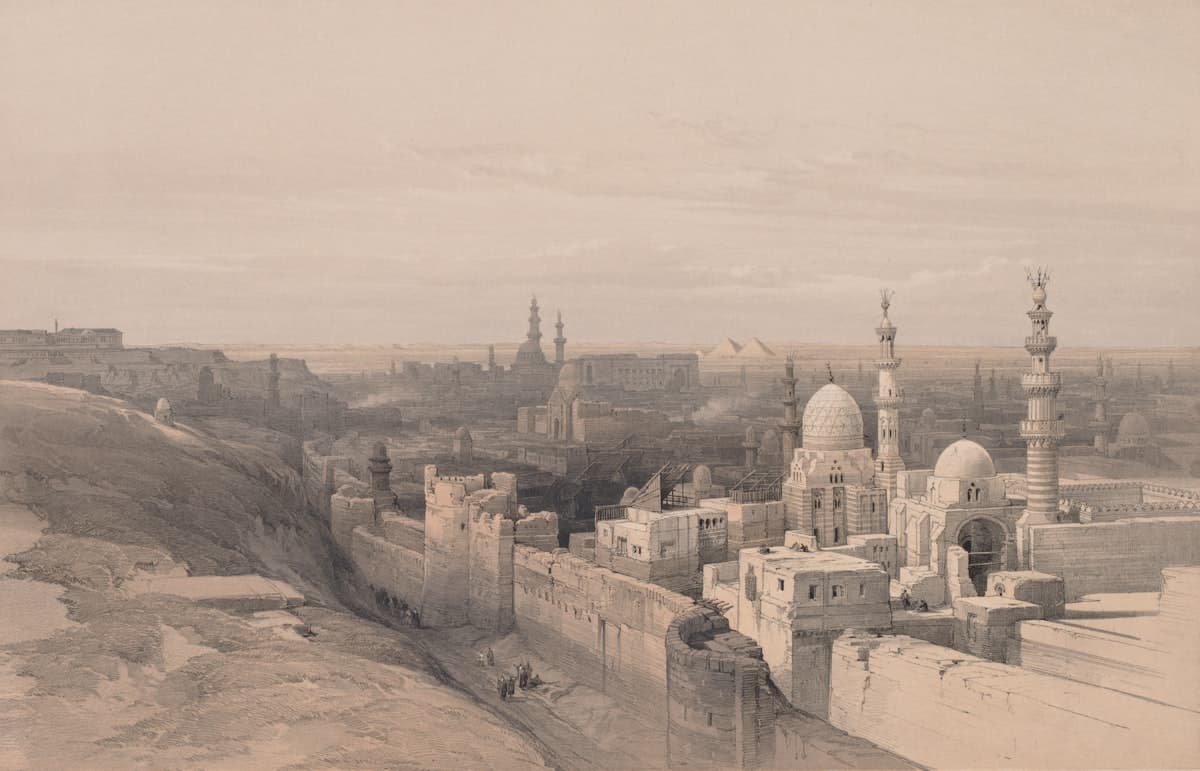
Of all the sites connected to the Armenian community Egypt maintains, the Armenian section of the Shubra cemetery is the one that rewards the most time and repays the effort of getting there.
Shubra itself was a kind of garden suburb in the nineteenth century, the site of Muhammad Ali's summer palace, and the cemetery that grew up alongside it accumulated the dead of Cairo's various Christian minorities over more than a century. The Armenian section occupies a distinct quarter, and the grave markers shift language as you move through it: Ottoman Turkish transcribed in Armenian script on the older stones, then pure Armenian, then French alongside Armenian on the interwar graves, then English appearing on the post-1960 stones as emigration destinations shifted.
The graves of genocide survivors are identifiable by their dates. A man born in Harput in 1893 and buried in Cairo in 1971 lived a life whose middle chapter you can reconstruct from the dates alone. He was in his early twenties when Harput's Armenians were deported in 1915. He arrived in Egypt sometime before 1920. He lived here for fifty years. The stone tells you nothing about what he did in those fifty years, which is why the Armenian community's own archive, held at the Armenian Club on Emad El Din Street, matters: it contains photographs, business records, newspaper issues, and personal papers that restore the texture of lives the grave markers reduce to dates.
One specific grave worth finding: Hagop Hagopian, who served as personal photographer to Khedive Abbas II in the 1900s, and whose portraits of the Egyptian royal court are among the finest photographic documents of that era. His stone is modest. His archive, scattered between the Armenian Patriarchate in Jerusalem and the Bibliotheca Alexandrina's photography collection, is not.
The Connections: How Armenian Cairo Fits Into the Larger Story
The relationship between the Armenian community and Egyptian nationalism is more complicated than simple minority-as-bystander. Boghos Nubar Pasha, son of Nubar Pasha, Egypt's first prime minister, represented Egypt at the Paris Peace Conference of 1919. He also represented the Armenian cause at the same conference, simultaneously, which tells you something about how permeable these identities were for people who held them.
The architect Edouard Matasian, who designed several significant buildings in Heliopolis in the 1920s, trained in Paris and returned to Cairo via Beirut, carrying a set of influences that blended Haussmannian scale with Ottoman decorative registers and Art Deco geometry. His buildings are standing. They are not labeled as Armenian architecture. They are labeled as Heliopolis architecture, which is the correct label, and also an incomplete one.
The connection to Coptic Egypt is less obvious but real. Several Armenian craftsmen worked alongside Coptic artisans in the restoration of Coptic churches in Old Cairo in the 1920s and 1930s, brought in for their expertise in particular woodworking and metalworking traditions that overlapped with Coptic liturgical art. The two Christian traditions, one anchored in Ethiopia and Egypt for two millennia, the other arriving as refugees from Anatolia, found unexpected common ground in workshop practice.
Common Mistakes
Coming only for the churches and skipping the Shubra cemetery. The churches are beautiful but the cemetery is where the community's actual history becomes legible. Set aside two hours minimum for Shubra.
Visiting on a Friday. The Armenian Evangelical Church holds its main community activities on Sundays, and several of the older community members who can answer questions about family history are only reliably present then. A Friday visit to an empty church gives you the architecture but none of the living context.
Relying on general Cairo guides for this topic. Most Cairo guidebooks dedicate fewer than two paragraphs to the Armenian community. The most useful resource is the Armenian Community Council of Egypt, which has a Facebook page (in Armenian and Arabic) and an office that can arrange guided cemetery and archive visits with advance notice.
Skipping the Armenian Club on Emad El Din Street. Most visitors have never heard of it. The club's small archive room is open to researchers and curious visitors by appointment, and the materials there, including bound volumes of the Arev newspaper, community directories from the 1940s, and photograph collections, are nowhere else available in English-language form.
Paying for any organized "minority communities" tour. The two I have encountered both spent more time at the Ben Ezra Synagogue and the Hanging Church than at any Armenian site, reducing the Armenian community to fifteen minutes of commentary while driving past the Ramses Street church. These tours are designed for people who want to tick boxes. If you are reading this guide, that is not you.
Expecting visible signage. Nothing in the Armenian quarter of Shubra, the Armenian church on Ramses Street, or the Armenian Club announces itself in English. Cairo does not curate its minority history for foreign visitors. This is partly neglect and partly just how Cairo works. Bring the address in Arabic.
Practical Tips
Contact the Armenian Community Council of Egypt before your visit, ideally a week in advance. A council member can often arrange informal introductions that make the difference between reading headstones and understanding them.
The Armenian language you will hear in Cairo is Western Armenian, the dialect of the diaspora descended from the Ottoman-era communities, not Eastern Armenian spoken in the Republic of Armenia. If you speak Eastern Armenian, you will be understood but the community will find it slightly charming, the way Cairene Arabic speakers react to a Gulf dialect.
For lunch near the Ramses Street church, the stretch of small restaurants on Orabi Square serves reliable fool and ta'meya for under EGP 60 per person. Do not arrive at the Shubra cemetery hungry. There is nothing near it.
The best single afternoon sequence: Start at the Armenian Evangelical Church on Ramses Street at 10am (outside service hours, so call ahead). Walk or take a short taxi to the Armenian Club on Emad El Din Street. Take a taxi to Shubra cemetery in the afternoon light, which is kinder for reading stone inscriptions. End in Shubra proper with a walk along the Shubra Palace gardens if they are accessible.
Photograph the grave inscriptions rather than transcribing them. The Armenian script is specific enough that photographs can later be translated by any Armenian speaker, while handwritten transcription by a non-reader introduces errors that make names unrecoverable.
Dress conservatively. The community is small and private in the way that communities under demographic pressure tend to become. You are a guest in a living world, not a visitor to a museum.
Frequently Asked Questions
The Weekly Dispatch
More on Egypt, every Friday.
Cultural depth and places most guides never mention.
No spam. Unsubscribe anytime.